
Illinois
Illinois Landlord-Tenant Recording Laws: Camera Rules and Privacy Rights (2026)
Independently fact-checked against primary sources (last audited August 22, 2026). · Reviewed by the RecordingLaw editorial team. · Law checked current as of August 22, 2026. · 6 primary sources cited on this page. How we verify our legal content
In Illinois, recording a private conversation requires the consent of all parties under the eavesdropping statute at 720 ILCS 5/14-2, so neither a landlord nor a tenant may secretly record the other. Landlords also cannot place cameras inside a tenant's private rental unit without violating state law.
Recording disputes between landlords and tenants in Illinois arise frequently, from security camera placement in apartment buildings to tenants recording conversations with property managers. Illinois law does not have a single statute dedicated to landlord-tenant recording. Instead, the legal framework draws from the eavesdropping statute under 720 ILCS 5/14-2, the voyeurism statute under 720 ILCS 5/26-4, general landlord-tenant law, and local ordinances such as the Chicago Residential Landlord and Tenant Ordinance.
Understanding these overlapping rules protects both landlords who want to secure their properties and tenants who want to preserve their privacy.
Landlord Security Camera Rules
Where Landlords Can Install Cameras
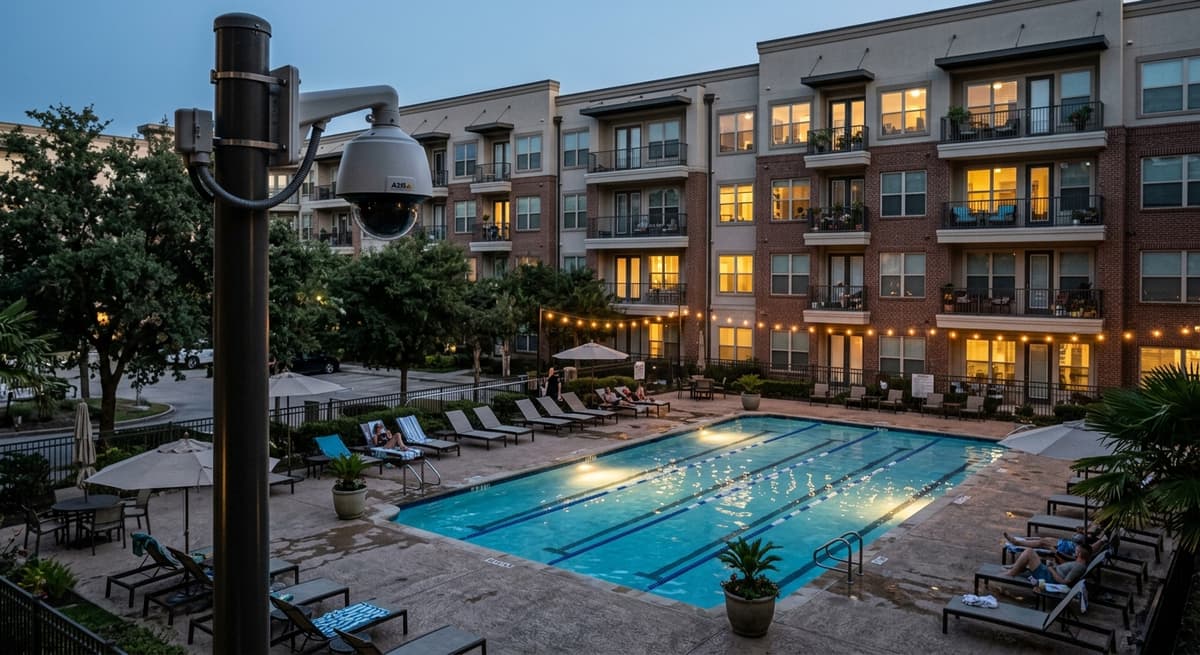
Illinois landlords may install security cameras in common areas of residential properties for legitimate security purposes. Permissible locations include:
- Building lobbies and entryways
- Hallways and stairwells
- Elevators
- Parking garages and lots
- Laundry rooms
- Exterior areas (building perimeters, walkways)
- Mail rooms and package delivery areas
Where Landlords Cannot Install Cameras
Cameras are prohibited in any location where tenants have a reasonable expectation of bodily privacy:
- Inside rental units: A landlord cannot place a camera inside any area of a tenant's private apartment, including living rooms, bedrooms, kitchens, and bathrooms
- Bathrooms and restrooms: All restroom facilities, whether in common areas or units
- Changing areas: Pool changing rooms, fitness center locker rooms, and similar spaces
- Areas where tenants undress: Any enclosed space where a tenant may reasonably be in a state of undress
Placing a camera in any of these locations constitutes a criminal offense under the voyeurism statute (720 ILCS 5/26-4), classified as a Class 4 felony carrying 1 to 3 years in prison.
Audio Recording Restrictions
If building security cameras record audio in common areas, the landlord must address eavesdropping law compliance:
- The eavesdropping statute under 720 ILCS 5/14-2 applies when cameras capture audio of private conversations
- Common area conversations that tenants conduct at normal volume in lobbies and hallways may have a diminished expectation of privacy
- Private conversations between tenants in semi-private settings (quiet corners, secluded hallways) may retain a privacy expectation
- The safest approach is to disable audio recording on common area cameras or post prominent signage notifying tenants that audio recording is in effect
Notice Requirements
While Illinois does not have a specific statute requiring landlords to notify tenants about common area cameras, best practices include:
- Disclosing camera locations in the lease agreement
- Posting signage in areas under video surveillance
- Providing written notice when new cameras are installed
- Including camera policies in building rules and regulations
Some local ordinances, particularly in Chicago, impose additional notice requirements.
Tenant Recording Rights
Can Tenants Record Inside Their Own Units?
Yes. Tenants may install cameras inside their own rental units for security and personal use. This includes:
- Doorbell cameras on apartment doors
- Interior security cameras in living areas
- Nanny cameras to monitor childcare
- Pet cameras
However, tenants must ensure:
- Audio recording within the unit complies with the eavesdropping statute (consent required for recording private conversations with visitors)
- Cameras do not capture footage of other tenants' private areas (such as through windows or into neighboring units)
- Camera installations do not damage the rental property or violate lease terms
Recording Conversations with Landlords
Tenants frequently want to record conversations with landlords, property managers, or maintenance workers. Under Illinois's all-party consent law:
Consent is needed for recording private conversations with your landlord in settings like:
- A closed-door meeting in the landlord's office
- A phone call about lease terms
- A private maintenance discussion inside your apartment
Consent may not be needed for:
- Conversations in public building hallways at normal volume
- Discussions at open tenant meetings
- Interactions in building lobbies where others are present
The Fear of Crime Exception for Tenants
The fear of crime exception under 720 ILCS 5/14-3(i) is particularly valuable for tenants. A tenant may record a private conversation with a landlord without consent when:
- The tenant reasonably suspects the landlord is committing, about to commit, or has committed a criminal offense against them
- There is reason to believe the recording will capture evidence of the crime
- The tenant is not a law enforcement officer
Criminal offenses that may trigger this exception in the landlord-tenant context include:
- Illegal lockouts: Changing locks to force a tenant out without proper legal process
- Utility shutoffs: Illegally disconnecting utilities to coerce a tenant
- Threats of violence: Making physical threats against a tenant
- Fraud: Making fraudulent representations about the property or lease
- Theft: Unlawfully taking a tenant's property
Chicago-Specific Landlord-Tenant Rules
Chicago Residential Landlord and Tenant Ordinance
The Chicago Residential Landlord and Tenant Ordinance (CRLTO) provides tenants in Chicago with protections beyond state law. While the CRLTO does not specifically address recording, it establishes:
- Privacy protections: Landlords must provide reasonable notice (typically two days) before entering a tenant's unit, except in emergencies
- Quiet enjoyment: Tenants have the right to quiet enjoyment of their unit, which supports privacy arguments against intrusive surveillance
- Prohibited practices: Landlords cannot engage in activities designed to harass, intimidate, or force out tenants, which could include targeted surveillance
Entry and Recording
A landlord's right to enter a tenant's unit is limited under Illinois law. When a landlord enters for maintenance, inspections, or showings:
- The landlord should provide reasonable advance notice (typically 24 to 48 hours)
- Entry should occur during reasonable hours
- A tenant's interior cameras may record the landlord's entry
- If the landlord brings recording devices into the unit during entry, the tenant's privacy rights are implicated
Recording During Eviction Disputes
Recording Eviction Proceedings
Eviction proceedings in Illinois take place in court. Recording rules follow Illinois Supreme Court Rule 44, which generally requires judicial permission for courtroom recording (Rule 63 covered this before a December 2020 order moved the language to Rule 44). Outside the courtroom:
- Recording conversations with landlords or attorneys in courthouse hallways (a public setting) does not require consent
- Recording private settlement discussions in conference rooms requires all-party consent
Recording During Lockouts and Self-Help Evictions
If a landlord attempts an illegal lockout or self-help eviction, the tenant may have grounds to record under the fear of crime exception because illegal lockouts and utility shutoffs are criminal offenses in Illinois. Recording evidence of illegal eviction tactics can be valuable in both criminal and civil proceedings.
Security Deposits and Camera Evidence
Using Camera Footage in Disputes
Both landlords and tenants may use security camera footage in disputes over security deposits and property damage:
- Landlords: May use common area footage to document tenant behavior, property damage, or lease violations
- Tenants: May use their own camera footage to document the condition of the unit at move-in and move-out, proving that damage existed before their tenancy or did not exist at move-out
For camera footage to be useful in legal proceedings, it must be:
- Lawfully obtained (no eavesdropping or voyeurism violations)
- Properly stored and unaltered
- Relevant to the disputed issue
- Authenticated through testimony or technical evidence
Landlord Liability for Camera Systems
Civil Liability
Landlords who violate recording laws face civil liability including:
- Eavesdropping civil remedies under 720 ILCS 5/14-6: Injunctive relief, actual damages, and punitive damages
- Invasion of privacy tort claims: Intrusion upon seclusion for cameras placed in private areas
- BIPA liability: If building cameras use facial recognition, the landlord faces BIPA damages of $1,000 to $5,000 per violation
- Lease violation claims: Tenants may argue that intrusive surveillance breaches the implied warranty of habitability or the covenant of quiet enjoyment
Criminal Liability
Landlords face criminal prosecution for:
- Placing cameras in areas where tenants expect bodily privacy (voyeurism: Class 4 felony)
- Audio recording private conversations without consent (eavesdropping: Class 4 felony for a first offense, 1 to 3 years, under 720 ILCS 5/14-2 and 5/14-4; Class 3 felony, 2 to 5 years, for a subsequent offense)
- Entering a tenant's unit to install recording devices without proper notice or authority
Best Practices for Landlords
- Install cameras only in common areas and building exteriors
- Disable audio recording on all common area cameras or obtain proper consent
- Disclose camera locations and recording practices in the lease
- Post visible signage in all monitored areas
- Never install cameras inside a tenant's unit
- If using facial recognition systems, comply with BIPA requirements
- Store footage securely and limit access to authorized property management personnel
- Develop and follow a written data retention and destruction policy
- Respond promptly to tenant concerns about camera placement or privacy
Best Practices for Tenants
- Review the lease for camera and recording disclosures
- Document the condition of your unit at move-in and move-out with your own photos and video
- If you install cameras in your unit, ensure they do not capture other tenants' private spaces
- If you need to record a conversation with your landlord, understand the all-party consent requirement and the fear of crime exception
- If you discover cameras in prohibited locations, report the violation to police and contact an attorney
- Keep copies of all written communications with your landlord
More Illinois Recording Laws
Audio Recording | Video Recording | Voyeurism & Hidden Cameras | Workplace Recording | Recording Police | Phone Call Recording | Security Cameras | Recording in Public | Landlord-Tenant | Dashcam Laws | Schools | Medical Recording
Back to Illinois Recording Laws
More Illinois Recording Topics
More Illinois Laws
Frequently Asked Questions
Can my landlord put cameras inside my apartment in Illinois?
No. A landlord cannot place cameras inside your private rental unit. This includes living rooms, bedrooms, kitchens, and bathrooms. Installing cameras in a tenant's private space violates the voyeurism statute (720 ILCS 5/26-4), a Class 4 felony carrying 1 to 3 years in prison. It may also violate the eavesdropping statute if audio is recorded.
Can my landlord put security cameras in the hallway?
Yes. Landlords may install security cameras in common areas such as hallways, lobbies, stairwells, elevators, and parking areas for legitimate security purposes. Best practice is to disable audio recording, post signage notifying tenants of surveillance, and disclose camera locations in the lease agreement.
Can I record my landlord during a dispute in Illinois?
Recording a private conversation with your landlord requires all-party consent under 720 ILCS 5/14-2. The fear of crime exception allows recording without consent if you reasonably suspect your landlord is committing a crime against you, such as an illegal lockout, utility shutoff, or threats. For conversations in public areas of the building, consent may not be required.
Can I install a doorbell camera on my apartment door?
Generally yes, if the camera faces the hallway and your lease does not prohibit it. The camera should capture only the area immediately around your door. If the camera records audio of conversations in the hallway, the eavesdropping statute applies. Check your lease and building rules for any restrictions on door modifications or camera installations.
What should I do if I find a hidden camera in my rental unit?
Contact the police immediately to report a potential voyeurism offense (Class 4 felony). Do not touch or move the camera, as it is evidence. Document the camera's location with photographs from your own device. Contact an attorney to discuss civil remedies including invasion of privacy and eavesdropping claims. File a written complaint with your landlord if they are not the suspected installer.
Updates
Corrected the penalty for eavesdropping (landlord audio recording), which the page stated as a flat Class 2 felony: it is actually a Class 4 felony for a first offense (1 to 3 years) and Class 3 felony for a subsequent offense (2 to 5 years). Also fixed the fear-of-crime exception citation from 720 ILCS 5/14-3(h) to the correct 5/14-3(i), updated a stale courtroom-recording rule citation from the old Rule 63 to the current Rule 44 (moved there in a December 2020 court order), and replaced a dead BIPA citation link.
Independently fact-checked against the cited primary sources; governing law re-checked for recent changes
Spoke propagation refresh. Corrected eavesdropping penalty from Class 4 to Class 2 felony (up to 5 years) per 720 ILCS 5/14-4 and parent hub audit. Corrected law enforcement eavesdropping penalty from Class 3 to Class 1 felony (4 to 15 years). Corrected fear-of-crime exception from 14-3(i) to 14-3(h) where misattributed. Fixed SourcesList prop (sources to citations). Updated More Illinois Laws anchor text. Added People v. Clark and ACLU v. Alvarez citations where missing.
Spoke propagation refresh (2026-05-15) introduced two errors this pass corrects: basic eavesdropping is a Class 4 felony (1 to 3 years) for a first offense and Class 3 felony (2 to 5 years) for a subsequent offense per 720 ILCS 5/14-4, not a flat Class 2; and the fear-of-crime exception is 720 ILCS 5/14-3(i), not 14-3(h). Also corrected a stale Illinois Supreme Court Rule 63 courtroom-recording citation to Rule 44 and fixed the dead BIPA citation link.
Reviewed and approved by an editor
The Law Behind This Article
This article rests on the statutory provisions below, held in our own legal record and retrieved from the official source. Tap a section to read the operative text.
Illinois Compiled Statutes Chapter 720, Act 5 (Criminal Code of 2012)
§ 14-2Elements of the offense; affirmative defenseIn forcecited in 15 of our articles
(a) A person commits eavesdropping when he or she knowingly and intentionally: (1) Uses an eavesdropping device, in a surreptitious manner, for the purpose of overhearing, transmitting, or recording all or any part of any private conversation to which he or she is not a party unless he or she does so with the consent of all of the parties to the private conversation; (2) Uses an eavesdropping device, in a surreptitious manner, for the purpose of transmitting or recording all or any part of any private conversation to which he or she is a party unless he or she does so with the consent of all other parties to the private conversation; (3) Intercepts, records, or transcribes, in a surreptitious manner, any private electronic communication to which he or she is not a party unless he or she does so with the consent of all parties to the private electronic communication; (4) Manufactures, assembles, distributes, or possesses any electronic, mechanical, eavesdropping, or other device knowing that or having reason to know that the design of the device renders it primarily useful for the purpose of the surreptitious overhearing, transmitting, or recording of private conversations or the…
Official text (excerpt) · last checked 2026-09-16 · Read the full text in our law library · Verify at ilga.gov
Also relied on in: Illinois Recording Laws (2026): All-Party Consent Rules, Illinois Audio Recording Laws: All-Party Consent Rules and Penalties (2026), Illinois Security Camera Laws: BIPA, Audio Rules, and Placement (2026)
Search our full record of US law — 2.1 million sections, every state + federal →
Sources and References
- 720 ILCS 5/14-2 - Elements of Eavesdropping Offense(ilga.gov).gov
- 720 ILCS 5/14-3 - Exemptions(ilga.gov).gov
- 720 ILCS 5/26-4 - Voyeurism Statute(ilga.gov).gov
- 720 ILCS 5/14-6 - Civil Remedies(ilga.gov).gov
- Chicago Renters Services - City of Chicago(chicago.gov).gov
- 740 ILCS 14 - BIPA(ilga.gov).gov