
Italy
Recording Conversations in Italy: When It Is Legal (and When It Is a Crime)
Independently fact-checked against primary sources (last audited July 20, 2026). · 10 primary sources cited on this page. How we verify our legal content
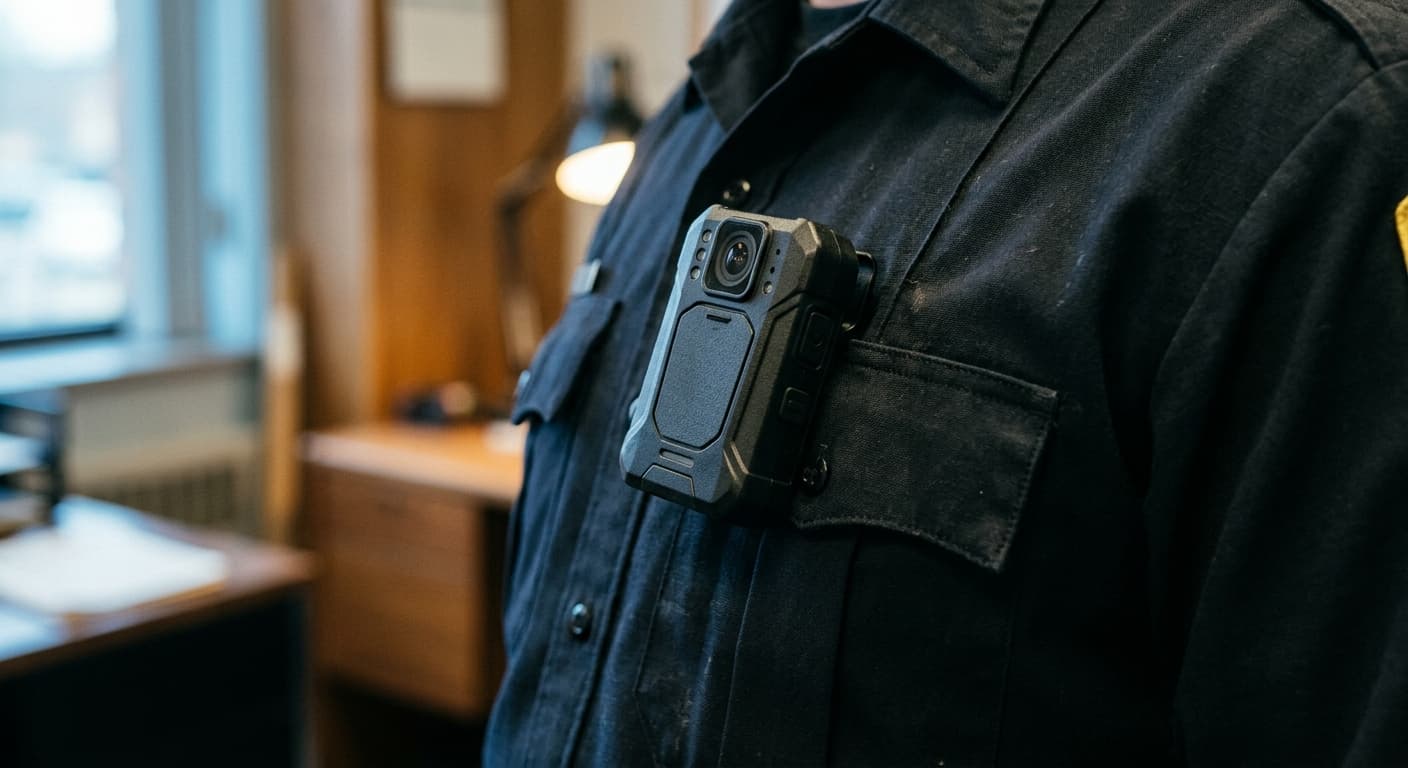
If you search «registrare conversazioni» from Italy, the honest answer is short: recording a conversation you are personally part of is lawful. The harder part, and the part almost every general search result skips, is where that protection stops.
Italian law separates two questions that are easy to blur together. The first, addressed on this page, is whether making the recording is itself an offence. The second, whether a lawful recording can actually be used as evidence, is a different legal question covered on our companion page, recordings as evidence in Italy.
Information verified on 20 July 2026. This page provides general legal information and does not constitute legal advice for an individual situation.
The rule in one sentence: were you part of the conversation?
Italian criminal law asks a single threshold question before anything else: was the person doing the recording a participant in the conversation, or a stranger to it? If you took part, whether in person, by phone, or over a call, you may record it without telling anyone else involved.
If you were not part of the conversation and you captured it anyway, using a hidden recorder or similar equipment, in a place the law protects, a different and much stricter regime applies. That regime is a criminal offence, not a privacy inconvenience.
What makes it lawful: a memoria fonografica, not an intercettazione
The leading authority is Cass. pen., Sezioni Unite, 24 settembre 2003, n. 36747. The Sezioni Unite, the Corte di Cassazione’s highest formation for resolving conflicting case law, held that when a participant records a conversation, the recording is a memoria fonografica di un fatto storico: a phonographic record of something that actually happened to the person making it, not an intercettazione (a wiretap-style interception) of someone else’s communication.
That distinction matters because intercettazioni require prior judicial authorisation and are heavily regulated. A memoria fonografica does not, because the person recording already had a lawful right to be part of, and to remember, the exchange. The Cassazione has repeatedly applied this line since 2003.
Cass. pen., Sez. VI, n. 9253/2025 reaffirmed it in a workplace dispute, holding that a recording made by a participant is prova documentale (documentary evidence) rather than an unlawful interception, and separately holding that an ordinary workplace, open to more than one person, is not a privata dimora for the purposes of the offence discussed below.
What makes it a crime: art. 615-bis c.p.
The offence is interferenze illecite nella vita privata, unlawful interference in private life, at art. 615-bis c.p. It targets someone who, using visual or audio recording instruments, obtains news or images of the private life of others, taking place in a location protected by art. 614 c.p. (broadly, a private dwelling or an equivalent private space), when the person recording is a stranger to what is happening there.
The penalty is reclusione from six months to four years. The same penalty applies to a person who discloses or circulates what was captured that way, separately from the act of recording itself.
The two elements that matter are cumulative: the recorder must be a stranger to the conversation or scene (not a participant), and the setting must be one the law treats as private under art. 614 c.p. Remove either element and art. 615-bis does not apply on that basis, though other rules, covered below, can still bite.
Three scenarios that show the line
A tenant recording a landlord
A tenant who records a phone call or an in-person meeting with their landlord, for example during a dispute over a deposit or repairs, is a participant in that conversation. The recording is lawful to make under the memoria fonografica line, regardless of whether the landlord is told about it in advance. This is by far the most common situation the participant rule covers, and it is squarely lawful.
An employee recording a disciplinary meeting
An employee who is called into a disciplinary meeting and records it on their phone is, again, a participant. Cass. pen., Sez. VI, n. 9253/2025 confirms the same rule applies inside a workplace, and separately confirms that an ordinary work environment is not treated as a privata dimora. Whether the recording can then be used in a labour dispute is the evidentiary question our companion page addresses; making it is not, by itself, an offence.
Leaving a recorder in a colleague’s office while absent
This is the scenario that actually crosses the line. Someone who leaves a recording device running in a colleague’s office, then steps out, is no longer a participant in whatever is said after they leave. The memoria fonografica shield only protects a person’s own lawful presence in an exchange; it does not extend to conversations a person was not part of, simply because the device belongs to them.
Whether this specific act meets every element of art. 615-bis depends on whether the office in question qualifies as a place protected under art. 614 c.p., which is fact-specific and not something a general information page can resolve for a particular office. What is not fact-specific is the loss of the lawful basis itself: the person is no longer recording their own conversation, and the legal footing that protects participant recording is simply not available for what happens after they walk out.
Phone calls and voice messages
The same participant rule extends to phone calls, video calls and voice messages. If you are one of the people on the call, you may record it without the other side’s consent, on the same memoria fonografica reasoning the Cassazione applies to in-person exchanges. If you are not on the call and you intercept it through some other means, that is a different offence area entirely (fraudulent interception of communications), outside the scope of this page.
Recording your employer is not the same question as your employer recording you
These two situations get confused constantly, and they are governed by completely different rules.
An employee recording a meeting they are personally in is participant recording, covered by the rule above. It has nothing to do with the employer’s own surveillance obligations.
An employer installing cameras, keystroke loggers, or other equipment capable of monitoring staff activity remotely is a separate regime under art. 4 L. 300/1970 (the Statuto dei Lavoratori). That equipment can only be installed following an agreement with company union representatives, or, in the absence of an agreement, an authorisation obtained from the Ispettorato del Lavoro. An employer that skips this process is not relying on the participant-recording rule at all; it is operating outside its own separate authorisation requirement.
Once you have a lawful recording, other duties still attach
Making a lawful recording does not end the analysis. A private recording kept for a strictly personal purpose, for example to remember what was said in a dispute, generally sits within the household exemption from ordinary data-protection rules. That exemption narrows sharply the moment the recording is shared, posted online, or otherwise circulated beyond personal use.
Once that happens, obligations under the Codice in materia di protezione dei dati personali (D.Lgs. 196/2003, as amended) and the GDPR (Reg. UE 2016/679) can attach to the person who processes or discloses the recording, including duties tied to purpose and to any legittimo interesse relied on for the disclosure. The Garante per la protezione dei dati personali is the authority that supervises this, separately from the criminal question addressed above.
Separately again, publishing a lawfully made recording can still expose the publisher to a defamation claim if the content damages someone’s reputation without justification. A recording being legal to make and legal to hold privately says nothing about whether broadcasting it is wise or safe.
What this page does not answer
Everything above concerns whether making the recording is an offence. It does not answer whether a recording, once made, can actually be produced in a dispute, whether that is a labour tribunal, a civil claim, or a criminal proceeding, and what happens if the other side disputes that it is accurate. That is a distinct legal question, governed by different articles of the Codice civile and the Codice di procedura penale, and it is the subject of our companion page: recordings as evidence in Italy.
For the broader landscape of Italian recording, surveillance and privacy law beyond this specific question, see our overview of Italy recording laws.
Frequently Asked Questions
Is it legal to record a conversation in Italy without telling the other person?
Yes, if you are a participant in the conversation. Italian courts treat a recording made by a participant as a lawful memoria fonografica rather than an unlawful interception, on the reasoning that a person who converses accepts the risk that the exchange may be documented (Cass. pen., SS.UU., n. 36747/2003). No notice to the other party is legally required for this rule to apply.
Can I record my boss during a meeting?
If you are physically present in the meeting, recording it follows the same participant rule as any other conversation you take part in, including in a workplace setting (Cass. pen., Sez. VI, n. 9253/2025). Making the recording is one question; whether and how you can later use it is a separate one, covered on our companion page about recordings as evidence.
Is it a crime to record someone in Italy?
It can be, but only in a specific situation: when you are not a participant in the conversation and you secretly capture it happening in a place protected under art. 614 c.p., broadly a private dwelling and similar spaces, that is the offence of interferenze illecite nella vita privata under art. 615-bis c.p.
What is the penalty for illegally recording someone in Italy?
Art. 615-bis c.p. sets reclusione from six months to four years for obtaining, through visual or audio equipment, news or images about someone’s private life occurring in a place protected under art. 614 c.p. The same penalty applies to a person who discloses or spreads what was obtained that way.
Can I record a phone call in Italy?
The same participant rule applies to phone calls as to in-person conversations. If you are one of the people on the call, recording it does not require the other party’s consent under Italian criminal law.
Does my employer need permission to install cameras or monitoring software?
That is a different question from participant recording. Audiovisual equipment capable of remote monitoring of employees requires a prior agreement with company union representatives or, absent one, authorisation from the Ispettorato del Lavoro, under art. 4 L. 300/1970.
Is it legal to leave a recorder running in a room I am not in?
That takes you outside the participant-recording rule, because you are not part of the conversation being captured. Whether it also crosses into the art. 615-bis offence depends on whether the space qualifies as a place protected under art. 614 c.p., which is fact-specific, but it is a materially riskier situation than recording a conversation you are actually in.
Updates
Independently fact-checked against the cited primary sources
The Law Behind This Article
This article rests on the statutory provisions below, held in our own legal record and retrieved from the official source. Tap a section to read the operative text.
General Data Protection Regulation (GDPR)
Art. 2Material scopeIn forcecited in 6 of our articles
1. This Regulation applies to the processing of personal data wholly or partly by automated means and to the processing other than by automated means of personal data which form part of a filing system or are intended to form part of a filing system. 2. This Regulation does not apply to the processing of personal data: (a) in the course of an activity which falls outside the scope of Union law; (b) by the Member States when carrying out activities which fall within the scope of Chapter 2 of Title V of the TEU; (c) by a natural person in the course of a purely personal or household activity; (d) by competent authorities for the purposes of the prevention, investigation, detection or prosecution of criminal offences or the execution of criminal penalties, including the safeguarding against and the prevention of threats to public security. 3. For the processing of personal data by the Union institutions, bodies, offices and agencies, Regulation (EC) No 45/2001 applies. Regulation (EC) No 45/2001 and other Union legal acts applicable to such processing of personal data shall be adapted to the principles and rules of this Regulation in accordance with Article 98. 4.
Official text (excerpt) · last checked 2026-08-12 · Read the full text in our law library · Verify at eur-lex.europa.eu
Cited in 60 court opinions in our collectionLatest citing opinion in our collection: 2026
Opinions citing this section in our collection:
- Österreichische Datenschutzbehörde v WK (Court of Justice of the European Union 2024, C-33/22)
- Data Protection Commissioner v Facebook Ireland Limited and Maximillian Schrems (Court of Justice of the European Union 2020, C-311/18)
- European Commission v Republic of Poland (Court of Justice of the European Union 2023, C-204/21)
Identified automatically from the court opinions citing this section — not a ranking of which case controls.
Also relied on in: Ireland Data Protection Law: DPC Complaints, CCTV and Recording, Home CCTV and Doorbell Cameras in Ireland: The Law in 2026, Italian Privacy Law: An Overview
Art. 6Lawfulness of processingIn forcecited in 10 of our articles
1. Processing shall be lawful only if and to the extent that at least one of the following applies: (a) the data subject has given consent to the processing of his or her personal data for one or more specific purposes; (b) processing is necessary for the performance of a contract to which the data subject is party or in order to take steps at the request of the data subject prior to entering into a contract; (c) processing is necessary for compliance with a legal obligation to which the controller is subject; (d) processing is necessary in order to protect the vital interests of the data subject or of another natural person; (e) processing is necessary for the performance of a task carried out in the public interest or in the exercise of official authority vested in the controller; (f) processing is necessary for the purposes of the legitimate interests pursued by the controller or by a third party, except where such interests are overridden by the interests or fundamental rights and freedoms of the data subject which require protection of personal data, in particular where the data subject is a child.
Official text (excerpt) · last checked 2026-08-12 · Read the full text in our law library · Verify at eur-lex.europa.eu
Cited in 42 court opinions in our collectionLatest citing opinion in our collection: 2026
Opinions citing this section in our collection:
- Meta Platforms Inc and Others v Bundeskartellamt (Court of Justice of the European Union 2023, C-252/21)
- Mousse v Commission nationale de l'informatique et des libertés (CNIL) and SNCF Connect (Court of Justice of the European Union 2025, C-394/23)
- Koninklijke Nederlandse Lawn Tennisbond v Autoriteit Persoonsgegevens (Court of Justice of the European Union 2024, C-621/22)
Identified automatically from the court opinions citing this section — not a ranking of which case controls.
Also relied on in: Employer Guide to Wearable Recording Device Policies (2026), Wearable Recording Devices at Work: Complete Legal Guide (2026), Finland Recording Laws: One-Party Consent, NCII, and AI Rules (2026)
Search our record of EU legislation — GDPR, ePrivacy, AI Act and more, from EUR-Lex →
Sources and References
- art. 615-bis c.p., Interferenze illecite nella vita privata (Codice Penale, R.D. 19 ottobre 1930, n. 1398)(normattiva.it).gov
- art. 614 c.p., Violazione di domicilio (Codice Penale, R.D. 19 ottobre 1930, n. 1398)(normattiva.it).gov
- Cass. pen., Sezioni Unite, 24 settembre 2003, n. 36747 (participant recording is a memoria fonografica, not an intercettazione)(cortedicassazione.it).gov
- Cass. pen., Sez. VI, n. 9253/2025 (participant recording in a workplace; a workplace is not a privata dimora under art. 615-bis c.p.)(cortedicassazione.it).gov
- art. 234 c.p.p., Prova documentale (Codice di procedura penale, D.P.R. 22 settembre 1988, n. 447)(normattiva.it).gov
- art. 2712 c.c., Riproduzioni meccaniche (Codice Civile, R.D. 16 marzo 1942, n. 262)(normattiva.it).gov
- art. 4, L. 20 maggio 1970, n. 300 (Statuto dei Lavoratori), impianti audiovisivi e altri strumenti di controllo a distanza(normattiva.it).gov
- D.Lgs. 30 giugno 2003, n. 196, Codice in materia di protezione dei dati personali (as amended by D.Lgs. 101/2018)(garanteprivacy.it).gov
- Regolamento (UE) 2016/679 (GDPR), art. 2, par. 2, lett. c) (household exemption) and art. 6 (lawfulness of processing)(eur-lex.europa.eu).gov
- Garante per la protezione dei dati personali, compiti e funzioni dell’Autorità(garanteprivacy.it).gov