
Canada
Grandparents' Rights in Canada: No Automatic Right to See Grandchildren
Independently fact-checked against primary sources (last audited August 17, 2026). · 12 primary sources cited on this page. How we verify our legal content
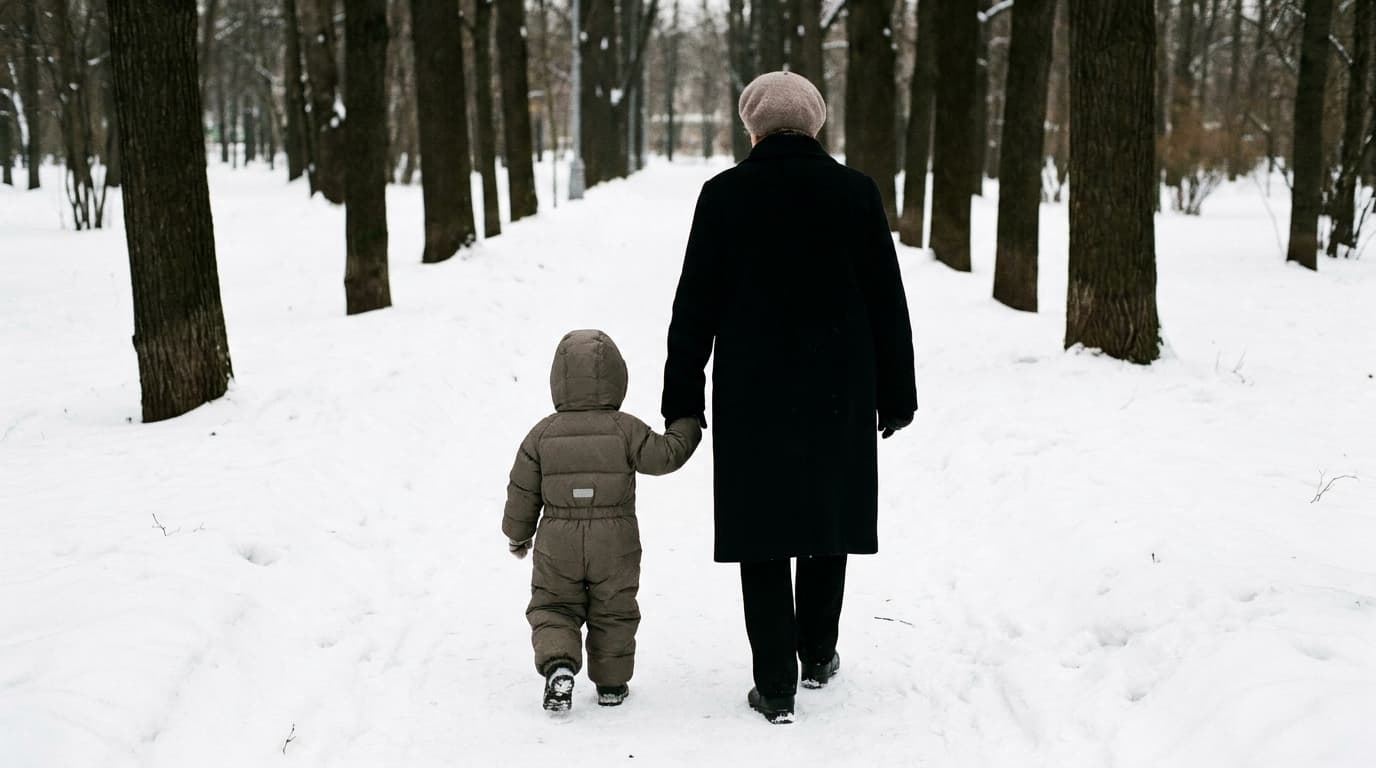
No Canadian jurisdiction gives grandparents an automatic legal right to see their grandchildren. Every route to contact, federal or provincial, requires a discretionary court application decided on the child's best interests, and several provinces additionally require the court's advance permission before a grandparent can even apply.
Information last verified on 2026-08-16. This article has not yet been reviewed by a licensed lawyer.
This article surveys grandparent contact law across Canada: the federal Divorce Act route available only inside a parents' own divorce or variation proceeding, and the general pattern of the ten provinces and three territories under their own family law statutes. For a deep dive into a specific jurisdiction, see Ontario's Children's Law Reform Act, Alberta's Family Law Act, and British Columbia's Family Law Act. This article covers contact, sometimes called access, not custody or guardianship, which involves a different and higher legal bar. It does not address Indigenous customary care arrangements, which involve separate legal frameworks not covered by the statutes surveyed here.
No Jurisdiction Grants Grandparents an Automatic Right to Contact
Every statute examined for this article, the federal Divorce Act and the family law statutes of Ontario, Quebec, British Columbia, Alberta, New Brunswick, Nova Scotia, Manitoba, Prince Edward Island, Newfoundland and Labrador, and the Northwest Territories, frames grandparent contact as something a grandparent must apply for, not something the law hands them by status. A grandparent is not a party a court must consult by default, and no statute in this review creates a presumption in favour of grandparent contact once an application is filed. The court's task in every jurisdiction is to decide what is in the child's best interests, not to vindicate a grandparent's relationship for its own sake. The starting point in Canadian family law is deference to the parents' own decisions about who their child sees, discussed below under Chapman v Chapman. A grandparent bringing an application carries the burden of showing contact serves the child; the parent does not carry a burden of justifying a decision to limit it.
The Federal Route: Divorce Act Contact Orders Under Section 16.5
The Divorce Act, the federal statute that governs divorce across Canada, gives grandparents one route to a court-ordered contact order, but it is a narrow one. Section 16.5(1) allows "a court of competent jurisdiction" to, "on application by a person other than a spouse, make an order providing for contact between that person and a child of the marriage." Grandparents are not named; they fall within the broad "person other than a spouse" category alongside any other relative or family friend.
This route exists only where the child's parents were married and there is or was a divorce proceeding between them, what the Act calls a corollary relief or variation proceeding. A grandparent cannot start a standalone federal case; the application has to attach to the spouses' own proceeding. A grandparent whose adult child was never married, or whose child's separation did not involve a divorce, has no Divorce Act route at all and must use the provincial or territorial statute instead.
Even inside a divorce proceeding, a grandparent cannot simply file. Section 16.5(3) states plainly that "a person may make an application under subsection (1) or (2) only with leave of the court," unless leave was already obtained to apply under section 16.1. Leave, the court's advance permission, is the gate. Section 16.5(4) then directs the court, in deciding whether to make a contact order, to consider "whether contact between the applicant and the child could otherwise occur, for example during the parenting time of another person." A grandparent who could reasonably see the child through a cooperative parent may be told the order is unnecessary.
The 2020 amendments that introduced the current "parenting order" and "contact order" language did not create a freestanding grandparent standing provision. Section 16.5 replaced the pre-2021 concept of "access" with "contact orders," but the leave requirement and the "person other than a spouse" framing carried through unchanged; grandparents gained modernized terminology, not a new or lower threshold to apply. This is distinct from section 16.1, which lets a non-spouse apply for a parenting order, decision making responsibility or parenting time, but only if that person is a parent of the child, stands in the place of a parent, or intends to stand in the place of a parent (16.1(1)(b)), a standard most grandparents providing ordinary visits rather than primary care will not meet, and which also requires leave under 16.1(3).
Best Interests Governs Every Application
Section 16 of the Divorce Act requires the court to "take into consideration only the best interests of the child" in making a parenting order or a contact order, with the child's "physical, emotional and psychological safety, security and well-being" as the primary consideration (16(1), 16(2)). The non-exhaustive factor list at section 16(3) covers the child's needs, the nature and strength of relationships with family members, each parent's willingness to support the child's relationship with others, the history of care, the child's own views, cultural and linguistic upbringing, and family violence. Section 16(3)(b) names grandparents explicitly: "the nature and strength of the child's relationship with each spouse, each of the child's siblings and grandparents and any other person who plays an important role in the child's life." Ontario's statute, discussed below, also names grandparents in its own best interests factor list; the genuine structural difference between the federal Act and Ontario is not whether grandparents are named but whether a grandparent needs the court's leave to apply in the first place.
Section 16(6)'s maximum contact principle, that a child should have as much time with each spouse as is consistent with the child's best interests, is written for the spouses' own parenting time. Nothing in the Act extends that presumption to a grandparent's or other third party's contact application; a grandparent does not benefit from a maximum-contact starting point the way a parent does.
Where Grandparents Apply, and Whether They Need Permission First: A 13-Jurisdiction Comparison
Every province and territory has its own family law statute governing parenting and contact matters outside a Divorce Act proceeding, and each one takes a different approach to whether a grandparent needs the court's leave before applying. The table below reflects the statutory text located and opened for this article. Saskatchewan, Yukon, and Nunavut could not be independently verified this review; their current grandparent contact provisions are not stated as a rule here, and a reader in those jurisdictions should confirm the current law directly with a local family lawyer or the territorial court registry before relying on anything published about them elsewhere.
| Jurisdiction | Governing statute | Section(s) | Names "grandparent"? | Leave of court required to apply? |
|---|---|---|---|---|
| Ontario | Children's Law Reform Act, RSO 1990, c C.12 | ss 21, 24 | Yes | No |
| Quebec | Civil Code of Quebec, CCQ-1991 | art 611 | Yes | Different model; no leave step, the child's own consent governs from age 10 |
| British Columbia | Family Law Act, SBC 2011, c 25 | ss 58, 59 | Yes | No leave requirement found in the sections opened |
| Alberta | Family Law Act, RSA 2000, c F-4.5 | s 35 | Yes | Yes by default; narrow exemption for grandparents in one specific fact pattern (see below) |
| New Brunswick | Family Law Act, SNB 2020, c 23 | ss 50, 57 | Yes, in the best interests factors | Not found in the sections opened |
| Nova Scotia | Parenting and Support Act, RSNS 1989, c 160 | s 18 | Yes | Split by order type (see below) |
| Manitoba | The Family Law Act, CCSM c F20 | s 40 | Yes, as a defined "family member" | No, for a family member; yes, plus exceptional circumstances, for a non-family member |
| Saskatchewan | The Children's Law Act, 2020, SS 2020, c 2 | Not independently verified this review | Not independently verified this review | Not independently verified this review |
| Prince Edward Island | Children's Law Act, RSPEI 1988, c C-6.1 | ss 33, 39, 43 | Yes, in the best interests factors only | Yes, mirrors the federal model |
| Newfoundland and Labrador | Children's Law Act, RSNL 1990, c C-13 | ss 27, 69 | Yes, a required party to the application | Not found in the sections opened |
| Yukon | Not independently verified this review | Not independently verified this review | Not independently verified this review | Not independently verified this review |
| Northwest Territories | Children's Law Act, SNWT 1997, c 14 | s 20 | No, confirmed absent from the text | Ambiguous for a contact application; confirmed required for custody (see below) |
| Nunavut | Not independently verified this review | Not independently verified this review | Not independently verified this review | Not independently verified this review |
A few cells need more explanation than the table can hold.
British Columbia's Family Law Act contains no leave or permission requirement anywhere in sections 58 or 59, the entire "contact with a child" division. Section 59(2) lets the court grant contact to any non-guardian, "including, without limiting the meaning of 'person' in any other provision of this Act, to a parent or grandparent." A grandparent applies for a contact order the same way any other person would; the only gate is the best interests test itself, not a separate threshold hearing. Section 58 also lets a guardian and a grandparent make a private contact agreement without going to court at all.
Alberta's exemption from leave is narrow and conjunctive, not a general carve-out. Section 35(2) requires anyone other than a parent, guardian, or person standing in the place of a parent to get the court's permission before applying, on notice to the guardians. Section 35(3) exempts a grandparent from that permission requirement only where the guardians are the child's own parents, and either they are separated or one has died, and the grandparent's contact with the child was actually interrupted by that separation or death.
A grandparent outside that specific pattern, for example one who was never denied contact, or whose grandchild was never in the sole guardianship of one parent, still needs section 35(2) permission like anyone else. Even a grandparent who is exempt from the leave step must still satisfy the separate section 35(5) merits test, that contact is in the child's best interests and the guardians' denial of it is unreasonable, before any order is made. Exemption from leave is not exemption from the merits test.
Nova Scotia splits the leave requirement by the type of order sought. Under the Parenting and Support Act, a grandparent applying for a parenting order, decision making responsibility or parenting time, needs the court's leave under section 18(1). A grandparent applying only for a contact order does not, under section 18(2), which requires leave only of an applicant who is not a parent, guardian, or specified family member.
Manitoba's Family Law Act defines "family member" to include a grandparent, and section 40(3) lets a family member apply for a contact order without leave. A person who does not qualify as a family member needs leave and must additionally show "exceptional circumstances" under section 40(4) and (6), a materially higher bar than the family member route.
Prince Edward Island's Children's Law Act closely mirrors the federal Divorce Act's structure rather than the more permissive approach several other provinces take. Sections 39(3) and 43(3) require leave for both non-parent parenting order and contact order applications, including by a grandparent, with an in loco parentis style test for parenting orders. Grandparents are named in the best interests factor list at section 33, but not in the leave provisions themselves.
Quebec does not use the parenting order and contact order framework the common law provinces share. Article 611 of the Civil Code of Quebec allows personal relations between a child and grandparents to be maintained or developed to the extent it is in the child's interest, and, if the child is 10 or older, requires the child's own consent unless the child is unable to express it. The terms of ongoing contact can be set out in a written agreement between the grandparents and the child's parent as tutor, the child's own tutor, or the child directly if 14 or older, rather than through the leave and best interests court process used elsewhere. Where the parties disagree, the court decides.
The Northwest Territories table cell above needs a caveat rather than a flat answer. Section 20(1) of the Children's Law Act lets "a parent of a child or any other person" apply for an order respecting "custody of or access to" a child. Section 20(2) then requires the court's leave for "a person other than a parent" to apply, but its wording covers only an application "respecting custody of a child or determining any aspect of the incidents of custody of the child;" it does not repeat "access" from subsection (1). Confirmed by a direct read of the current consolidated Act, this is a genuine textual gap: the leave requirement is worded to reach custody and the incidents of custody, and whether it also reaches a stand-alone access, or contact, application, which is what this cluster is about, is not free from doubt on the statute's plain text. A grandparent in the Northwest Territories should not assume either that leave is required or that it is not for an access-only application, and should confirm the current practice with the territorial court registry or a family lawyer before filing.
What Canadian Courts Have Said About Grandparent Contact
Case law in this area is difficult to verify independently. CanLII blocked every attempt to open a judgment directly for this article, and court websites returned dead links for the specific cases researched. What can be stated with confidence rests on two independently opened secondary sources that quote the same judgment.

The Ontario Court of Appeal's 2001 decision in Chapman v Chapman set the deference baseline still cited today. The court reversed a trial judge's grandparent access order, holding, as quoted in a Department of Justice Canada legal analysis of the case, that "in the absence of any evidence that the parents are behaving in a way which demonstrates an inability to act in accordance with the best interests of their children, their right to make decisions and judgments on their children's behalf should be respected, including decisions about whom they see, how often, and under what circumstances they see them." That holding, not a specific numbered test, is the settled starting point: parents' decisions about grandparent contact are respected unless there is evidence the parent is failing to act in the child's best interests.
Legal commentary describes later Ontario decisions as building multi-factor frameworks on top of Chapman, sometimes summarized as a numbered test for deciding when a court should defer to a parent's decision. This article did not verify that language against the underlying judgments; it is not restated here as a quoted legal test, and readers should not treat any numbered "test" they see cited elsewhere as settled law without checking the actual judgment or a current legal opinion. What is well supported is the underlying principle from Chapman: the burden sits with the grandparent to show why the court should override a parent's decision, not with the parent to defend it.
The Practical Reality: Cost, Relationships, and Mediation First
None of the statutes surveyed for this article provide a summary, low-cost process for a grandparent contact application. Every application, whether under the Divorce Act or a provincial statute, is a full court proceeding subject to the best interests test, which means legal fees on both sides and the real possibility of a costs award against an unsuccessful applicant. Grandparents considering an application should weigh that financial exposure honestly before filing, and should expect the process to take months, not weeks.
There is a relationship cost as well as a financial one. A grandparent contact application is, functionally, litigation against the child's own parent, often the grandparent's own son or daughter, or their spouse. Even a successful application can leave lasting strain on the family relationships the grandparent is trying to preserve contact within.
Several of the statutes surveyed build family dispute resolution into the broader process, and family justice services exist in every province to help resolve access disagreements without a court application. Mediation, a parenting coordinator, or direct negotiation with the parents, ideally with each side represented by a family lawyer, resolves many grandparent contact disputes without ever reaching a judge. Court is the last step, not the first one, and a lawyer experienced in the specific province's family law statute can advise on whether an application is likely to succeed before a grandparent commits to the cost and the relationship risk of filing one.
Disclaimer
This article is informational only and is not legal advice. It surveys grandparent contact law in the federal Divorce Act and the family law statutes of Ontario, Quebec, British Columbia, Alberta, New Brunswick, Nova Scotia, Manitoba, Prince Edward Island, Newfoundland and Labrador, and the Northwest Territories, based on the statutory text located and opened for this article as of 2026-08-16. It does not state Saskatchewan's, Yukon's, or Nunavut's current grandparent contact provisions, because the primary text could not be located and opened this review. It does not cover grandparent custody or guardianship applications, which involve a different and higher legal test than contact. It does not restate the specific numbered case-law tests some legal commentary attributes to Ontario decisions after Chapman v Chapman, because those could not be verified against the underlying judgments for this article. Confirm current requirements and case law directly with a lawyer licensed in the relevant province or territory before relying on anything described here for a specific situation.

Frequently Asked Questions
Do grandparents have a legal right to see their grandchildren in Canada?
No. No federal or provincial law in Canada gives grandparents an automatic right to contact with a grandchild. Every jurisdiction treats grandparent contact as something a grandparent must apply for, decided on the child's best interests, not the grandparent's.
Can grandparents apply for contact under the Divorce Act?
Only if there is or was a divorce proceeding between the child's parents. Section 16.5 of the Divorce Act lets a grandparent apply for a contact order inside that proceeding, but only with the court's leave first, under section 16.5(3).
Do grandparents need the court's permission before applying for contact?
It depends on the jurisdiction. Ontario and British Columbia do not require leave, the court's advance permission, for a grandparent contact application, but the federal Divorce Act, Prince Edward Island, and Alberta, outside a narrow exemption, do.
What happens if a parent refuses to let a grandparent see a grandchild?
The grandparent's option, in most provinces, is to apply to the court for a contact order, or in some jurisdictions first request the court's leave to do so. Courts generally defer to a parent's decision unless there is evidence the parent is not acting in the child's best interests, per Chapman v Chapman.
Which province makes it easiest for grandparents to apply for contact?
British Columbia and Ontario are the two jurisdictions in this review with no leave requirement in their statute text, meaning a grandparent can file a contact application directly rather than first asking the court's permission to apply. Ease of filing is not the same as likelihood of success; the best interests test still governs the outcome in every jurisdiction.
Is Quebec's law different from the rest of Canada?
Yes. Quebec's Civil Code, article 611, does not use the parenting order and contact order framework the common law provinces share. It allows grandparent relations to the extent they serve the child's interest, and requires the child's own consent from age 10, with terms often set by written agreement rather than a leave and best interests court process.
Should a grandparent go to court right away?
Generally no. None of the statutes surveyed provide a low-cost court process, and every application carries legal costs, a possible costs award against an unsuccessful applicant, and a real relationship cost. Mediation, family dispute resolution services, or direct negotiation with the parents resolve many disputes without a court application, and are worth trying first.
What about Saskatchewan, Yukon, and Nunavut?
This article could not independently verify those three jurisdictions' current grandparent contact provisions. Readers there should confirm the current rule directly with a local family lawyer or the territorial or provincial court registry.
Updates
Independently fact-checked against the cited primary sources
Sources and References
- Divorce Act, RSC 1985, c 3 (2nd Supp), ss 16, 16.1, 16.5(laws-lois.justice.gc.ca).gov
- Children's Law Reform Act, RSO 1990, c C.12, ss 21, 24 (Ontario.ca)(ontario.ca).gov
- Civil Code of Quebec, CCQ-1991, art 611 (LegisQuebec)(legisquebec.gouv.qc.ca).gov
- Family Law Act, SBC 2011, c 25, ss 58-59 (BC Laws)(bclaws.gov.bc.ca).gov
- Family Law Act, RSA 2000, c F-4.5, s 35 (Alberta King's Printer)(kings-printer.alberta.ca).gov
- Family Law Act, SNB 2020, c 23, ss 50, 57 (laws.gnb.ca)(laws.gnb.ca).gov
- Parenting and Support Act, RSNS 1989, c 160, s 18 (Nova Scotia Legislature)(nslegislature.ca).gov
- The Family Law Act, CCSM c F20, s 40 (Manitoba Laws)(web2.gov.mb.ca).gov
- Children's Law Act, RSPEI 1988, c C-6.1, ss 33, 39, 43(princeedwardisland.ca).gov
- Children's Law Act, RSNL 1990, c C-13, ss 27, 69(assembly.nl.ca).gov
- Children's Law Act, SNWT 1997, c 14, s 20(justice.gov.nt.ca).gov
- Department of Justice Canada, "Grandparent-Grandchild Access: A Legal Analysis" (quoting Chapman v Chapman, 2001 CanLII 24015 (ON CA))(justice.gc.ca).gov