
Canada
How to Legally Change Your Name in Alberta
Independently fact-checked against primary sources (last audited August 14, 2026). · 4 primary sources cited on this page. How we verify our legal content
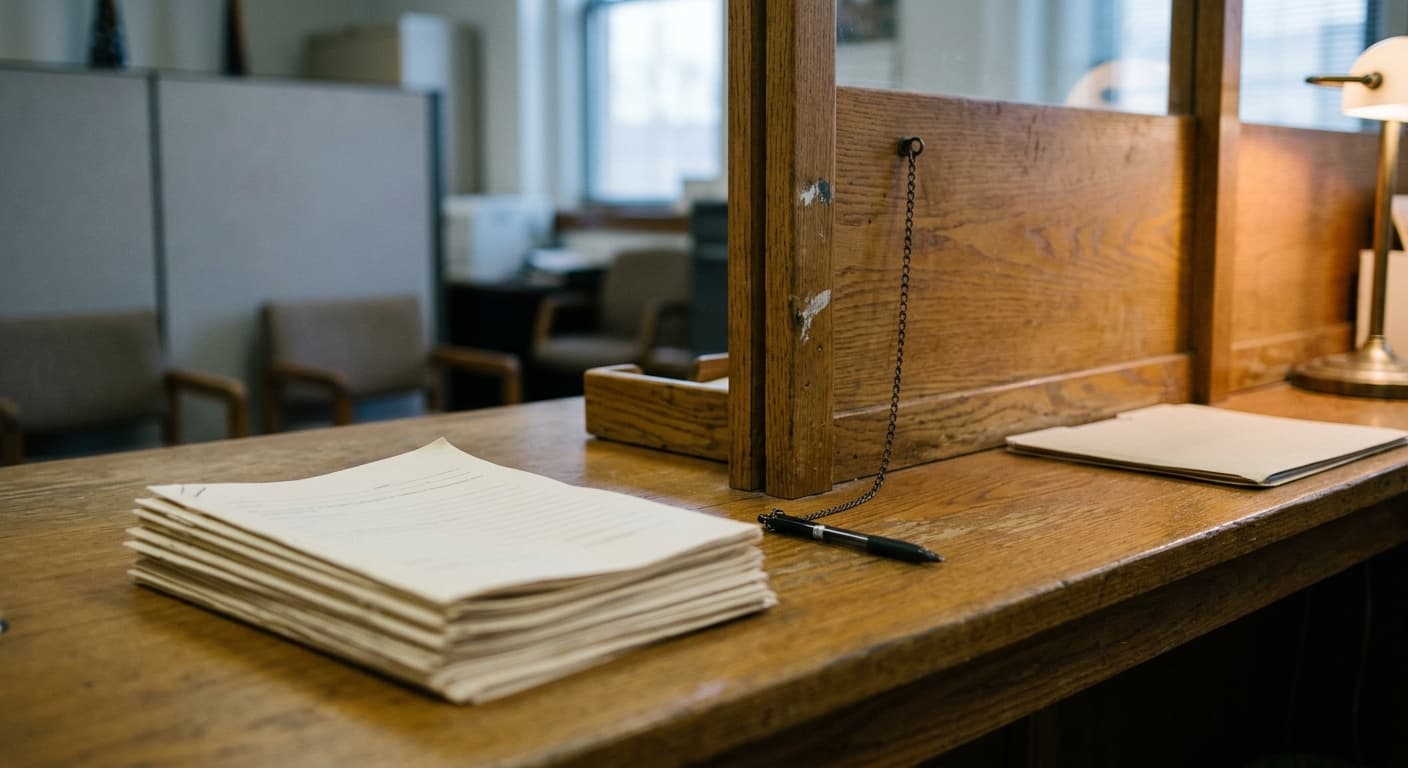
In Alberta, you legally change your name through a registry agent under Part 3 of the Vital Statistics Act, provided you are an Alberta resident and at least 18, or otherwise qualify as a minor applicant.
Name Changes Under Alberta's Vital Statistics Act
Alberta does not have a standalone name-change statute the way BC has its Name Act. Instead, the rules live in Part 3, sections 22 through 28, of the Vital Statistics Act, SA 2007, c V-4.1, a combined vital-statistics law that replaced Alberta's older standalone Change of Name Act. Alberta's Vital Statistics office administers the Act, but in practice you file through a private registry agent rather than directly with the government, and separate regulations fill in some application-level detail this article does not reproduce.
Who Can Apply, and Alberta's Ongoing Residency Test
You can apply on your own behalf once you are an Alberta resident and at least 18. A person under 18 can also apply if they are married, widowed, divorced, an adult interdependent partner, or the parent or guardian of a minor child.

Alberta's residency test works differently than you might expect if you are comparing it to BC. The Act sets no minimum number of months you must have already lived in Alberta. Instead, Alberta's own guidance describes an ongoing test: you must remain an Alberta resident throughout the change-of-name process, and you are not considered a resident if you are only in Alberta temporarily or your regular home is somewhere else. Put simply, BC asks how long you have already lived there; Alberta asks whether you are genuinely and continuously living there right now.
To change a child's or ward's name, you must be the child's parent or guardian. Consent is required from both parents listed on the birth record, unless you affidavit that you are the sole guardian, a court order names different or additional guardians whose consent then governs, or a court dispenses with a parent's consent. A child 12 to 17 must also personally consent to their own name change.
Certain people cannot apply to change their own name, and a parent or guardian cannot get around the bar by applying on the person's behalf either: anyone who has ever been designated a dangerous offender or long-term offender under the Criminal Code, anyone currently listed on the Alberta High Risk Offender Registry, and anyone convicted of specified Criminal Code sex-offence provisions tied to that registry.
How the Application Process Works
Alberta's process runs through registry agents, private businesses under contract to the province, rather than directly through Vital Statistics. The only exception is the no-cost Indigenous name reclamation stream, described below, which applicants pursue by email directly with Vital Statistics.
- Read the government's Change of Name Information Guide before you start.
- Complete the Application for Change of Name form.
- Gather supporting documents: acceptable photo ID, proof of your current legal name, an electronic fingerprint confirmation letter, and a criminal record check or police information check. If you are changing a child's or ward's name, you also need proof of marital status and proof of your relationship to the child.
- If you are 18 or older, get a criminal record check or police information check in person from a recognized law-enforcement agency, dated within 30 days of starting the change-of-name service at a registry agent. Third-party providers are not accepted.
- Everyone 12 or older whose name is changing needs electronic fingerprints, taken at an RCMP detachment, an RCMP-accredited private fingerprinting agency, or a local police service.
- Locate any Alberta birth certificates issued in the current name. Every Alberta birth certificate for anyone whose name is changing must be surrendered with the application; surrendered certificates are replaced free of charge.
- Bring the completed form, ID, fingerprint confirmation letter, criminal record check, birth certificates, and any other required documents to a registry agent office. The agent reviews the application for accuracy and forwards it to Vital Statistics for processing.
- After approval, a Legal Change of Name Certificate is produced for each renamed person and mailed by regular mail. If you were not born in Alberta, Alberta cannot return or reissue your birth certificate; you contact your birth jurisdiction's own vital statistics office separately.
Ordering another copy of a certificate for a name change you have already completed is a separate service, "Order a change of name certificate," offered through registry agents; this article covers the application process itself, not that reprint service.
Fees and Processing Times
Alberta's fee structure is different in shape from BC's, and readers should not assume a single all-in total.
| Item | Amount |
|---|---|
| Government fee | $120, covering everyone listed on one application form |
| Registry agent service fee | Set by the individual registry agent; varies, charged on top of the $120 government fee |
| Fingerprinting fee | Not set by the province; varies by fingerprinting agency |
| Criminal record check / police information check fee | Not set by the province; varies by the issuing law-enforcement agency |
| Indigenous name reclamation | No government fee |
| Replacement birth certificate | Free if an existing Alberta certificate was surrendered with the application; a separate purchase from a registry agent if none was surrendered |
Because the registry agent's service fee is not standardized, the true out-of-pocket cost of an Alberta name change is the $120 government fee plus whatever that agent charges, and this article cannot state a typical total. Ask the registry agent for their fee before you submit.
Alberta's own published guidance also does not state a total processing time the way BC's page states "about 24 weeks." No turnaround estimate is published on the pages this article draws from, so do not assume a specific wait; confirm current timelines directly with a registry agent before applying.
Fingerprinting and Criminal Record Checks
Everyone 12 or older whose name is changing needs electronic fingerprints, taken at an RCMP detachment, an RCMP-accredited private fingerprinting agency, or a local police service. Anyone 18 or older also needs a criminal record check or police information check, obtained in person from a recognized law-enforcement agency and dated within 30 days of starting the registry-agent process. A Certified Criminal Record Check can cover both the fingerprint and the criminal-record-check requirement in a single visit.
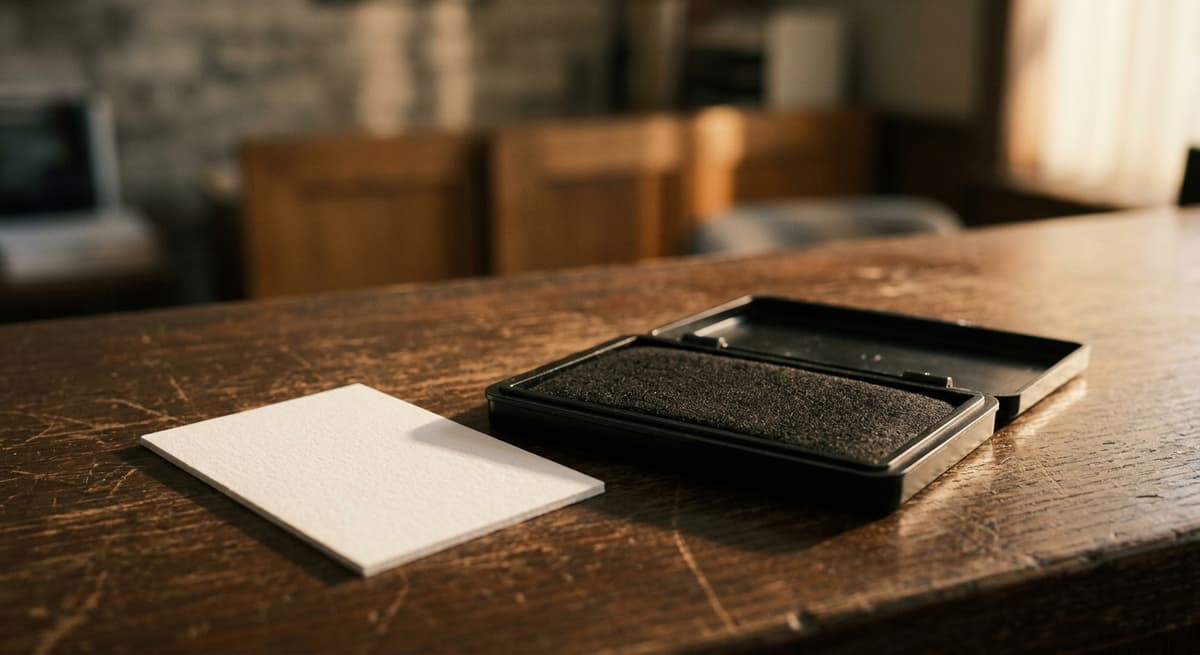
Alberta explicitly does not accept a criminal record check or police information check from a third-party provider, only from a police service, RCMP detachment, or accredited fingerprinting agency. That is worth knowing before you pay for anything: a private online background-check company will not satisfy Alberta's requirement. As in BC, the cost of the check itself is not set by the province and varies by the agency you use.
Marriage and Divorce: Using a Surname vs. Legally Changing It
As in BC, Alberta does not require a legal name change to use a different surname tied to marriage. Alberta's own guidance states plainly that you do not have to legally change your name after getting married; you may assume a married last name instead, using your marriage certificate and other ID rather than filing a Part 3 application.
Correcting an error on a birth record, as opposed to genuinely changing a name, is a separate and cheaper amendment process if you were born in Alberta. If you were born elsewhere, that correction goes through your birth jurisdiction instead, not Alberta.
Alberta's published guidance did not state, the way BC's does, an explicit no-process right to resume a birth surname after divorce. Alberta's Act does give anyone the general right to apply under Part 3 to change their own name at any time, which would cover a formal post-divorce change, but whether Alberta also offers a no-process administrative right to simply resume a birth name after divorce, parallel to the marriage-assumption right above, is not confirmed here. If this applies to you, ask a registry agent or Vital Statistics directly rather than assuming either way.
Publication and Privacy
Alberta's Vital Statistics Act has no Gazette-style publication requirement anywhere in its name-change provisions. A change-of-name record stays behind a confidentiality wall, accessible only to the person who applied, the person whose name changed, anyone whose consent was required, or someone named in a court order, and the Registrar can refuse even that access if it decides withholding it serves the public interest. A change-of-name record only becomes a publicly releasable historical record after 75 years have passed since it was registered, when it may be transferred to the Provincial Archives.
That is a meaningfully stronger default than BC's. Current BC law allows the registrar general to disclose a name change to "qualified applicants" at their own discretion; Alberta's default, by contrast, is non-disclosure for 75 years, with no public-facing publication step at all.
After Your Name Is Changed
Once your Alberta name change is registered, the Registrar immediately updates your Alberta birth record and any Alberta marriage record still in effect. Any Alberta birth certificates you surrendered with your application are replaced free of charge; if you did not surrender one, you can purchase a new one from a registry agent.

If you were born or married outside Alberta, Alberta does not return or reissue certificates for those events. You contact that other jurisdiction's own vital statistics office directly.
Unlike BC's Name Act, Alberta's Act has its own explicit interprovincial mechanism. The Registrar may notify another Canadian jurisdiction's registration office when an Alberta-registered person's record changes here, and may amend an Alberta-held birth or marriage record when it receives proof that a person's name changed under another jurisdiction's law the Registrar considers substantially similar to Alberta's. Alberta's Act also gives a broader general right: once you have the Registrar's certificate and proof of identity, you can use it to have your new name substituted for your old one in any record, contract, or instrument, public or private.
For how other provinces handle name changes, see name changes across Canada and the Canadian family law hub.
Frequently Asked Questions
Who can apply for a legal name change in Alberta?
You must be an Alberta resident and at least 18. A person under 18 can also apply if they are married, widowed, divorced, an adult interdependent partner, or the parent or guardian of a minor child.
How long do I need to have lived in Alberta before applying?
Alberta has no fixed minimum number of months. Instead, you must remain an Alberta resident throughout the application process, not just be temporarily present, which is a different test than BC's three-month residency rule.
How much does an Alberta name change cost?
The government fee is $120 per application form, covering everyone listed on it. Registry agents charge their own service fee on top, and that amount varies by agent and is not capped, so there is no single published total cost.
Do I need fingerprints to change my name in Alberta?
Yes, if you are 12 or older. Anyone 18 or older also needs an in-person criminal record check or police information check from a recognized law-enforcement agency. Third-party background-check services are not accepted.
How long does an Alberta name change take to process?
Alberta's published guidance does not state a total processing time. Confirm current timelines directly with a registry agent before applying.
Will my Alberta name change be made public?
No. Alberta has no public Gazette or public disclosure for name changes. Records stay confidential for 75 years after registration before they can become a public historical record.
Do I need a legal name change to take my spouse's surname after marriage?
No. Alberta lets you assume a married last name using your marriage certificate and other ID, without filing a Part 3 application.
Updates
Independently fact-checked against the cited primary sources
Sources and References
- Vital Statistics Act, SA 2007, c V-4.1 (Office Consolidation)(kings-printer.alberta.ca).gov
- Alberta.ca - Apply for a Legal Change of Name(alberta.ca).gov
- Alberta.ca - Updating Vital Statistics Documents (hub)(alberta.ca).gov
- Alberta.ca - Order a Change of Name Certificate(alberta.ca).gov