
South Korea
South Korea Recording Laws: One-Party Consent Rules and Penalties (2026)
Quick Answer: Is South Korea One-Party Consent?
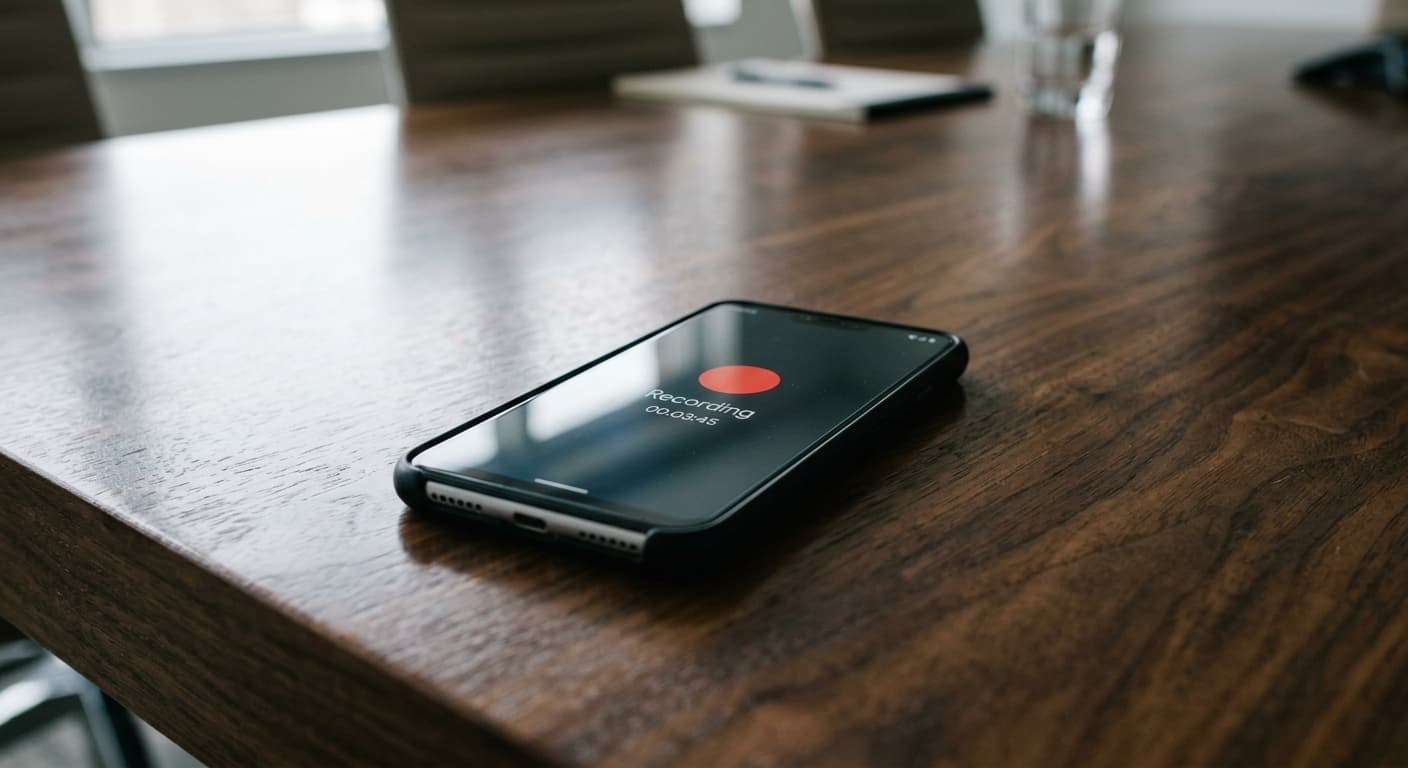
South Korea is a one-party consent jurisdiction for recording conversations. Under Article 3 of the Protection of Communications Secrets Act (PCSA, 통신비밀보호법), any participant in a private conversation may record that conversation without the knowledge or consent of the other parties. The law's prohibition targets only recordings of conversations "between others" (타인간의 대화) that the recorder is not part of. The Supreme Court of Korea confirmed this participant-recording rule in an October 2002 decision and has applied it consistently since. Third-party recording, meaning recording a conversation you are not participating in, carries 1 to 10 years in prison under Article 16 of the PCSA. This page covers the full PCSA framework, Supreme Court case law through 2025, the 2024 deepfake amendment to the Sexual Violence Special Act, PIPA data protection obligations, and cross-border recording considerations.
Jurisdiction scope: This article addresses recording law in the Republic of Korea (South Korea) under the Protection of Communications Secrets Act (Act No. 3510, as amended through Act No. 20735, effective August 1, 2025), the Personal Information Protection Act (Act No. 19234, as amended March 2026), and the Act on Special Cases Concerning the Punishment of Sexual Crimes (as amended September 2024). It does not address North Korea. For US recording laws by state, see US recording laws by state.
Information last verified on 2026-05-15. This article has not yet been reviewed by a licensed Korean lawyer.
The Protection of Communications Secrets Act (PCSA)
The PCSA (통신비밀보호법, Act No. 3510, first enacted December 31, 1993) is South Korea's primary statute governing wiretapping, telecommunications surveillance, and conversation recording. It has been amended multiple times, most recently by Act No. 20735 (promulgated January 31, 2025; effective August 1, 2025). The PCSA establishes which surveillance activities require judicial authorization, which are flatly prohibited, and what criminal penalties apply.
The statute draws a single, sharp line: participant recording is lawful; third-party recording is criminal.

Article 3: The Core Prohibition
Article 3 of the PCSA sets the foundation. It provides that no person shall censor any mail, wiretap any telecommunications, or record or listen to any conversation between others that is not made public, except as authorized by the PCSA itself, the Criminal Procedure Act, or the Military Court Act.
The critical phrase is "conversation between others" (타인간의 대화). The prohibition targets recordings of conversations the recorder is not part of. If you are sitting in a room secretly recording two colleagues talking to each other while you remain silent and uninvolved, you are recording a "conversation between others." That is what the law prohibits.
If you are actively participating in the conversation, the prohibition does not apply. You are not recording a conversation "between others." You are recording your own conversation.
Article 14: Electronic and Mechanical Device Restrictions
Article 14 reinforces the prohibition with specific reference to technology. It states that no person shall record a conversation between others that is not open to the public, or listen to it, through the use of electronic or mechanical devices.
This provision targets hidden microphones, bugging devices, intercepted phone lines, and similar surveillance tools used to capture conversations the operator has no part in. It does not restrict a participant from using their own phone or recording device during a conversation they are genuinely part of.
Government Wiretapping Authorization
The PCSA also governs when law enforcement and intelligence agencies may conduct wiretaps. Article 6 requires a written court order specifying the objectives, targets, scope, and justification for any surveillance measure. Article 8 permits emergency measures without prior authorization when imminent danger exists, subject to mandatory court review within 36 hours.
The January 2025 amendment (Act No. 20735, effective August 1, 2025) strengthened the judicial oversight framework for government access to telecommunications confirmation data (communications metadata), reinforcing procedural safeguards around state surveillance and clarifying the scope of permissible access by intelligence and law enforcement agencies.
Supreme Court Precedent on Participant Recording
The Supreme Court of Korea (대법원) has addressed participant recording in several decisions that have solidified the one-party consent framework.

The 2002 Ruling: Participant Recording Is Not a Crime
In a landmark October 2002 decision, the Supreme Court held that it is not illegal for a party to a phone call to record the conversation secretly without the other party's knowledge. The court reasoned that because the PCSA prohibits recording conversations "between others," a participant who records their own conversation falls outside the scope of the prohibition.
This ruling established the baseline rule: if you are in the conversation, recording it does not violate the PCSA. The same analysis applies regardless of the number of participants. In a group conversation of five people, any one of those five may record without the consent of the other four.
The 2024 Admissibility Ruling: Privacy Limits
In January 2024, the Supreme Court issued a more nuanced decision involving a parent who placed a recording device in their child's backpack to capture a teacher's remarks in a classroom. The court ruled the recording inadmissible.
The reasoning: the parent was not a participant in the classroom conversation. The teacher's remarks were directed at students, not at the parent. Because the parent was a third party, the recording fell under the Article 3 prohibition on recording "conversations between others." Even though the parent's intent was to document suspected child abuse, the recording lacked evidentiary value under the PCSA.
This ruling demonstrated that good intentions do not override the participant requirement. The law asks a simple question: were you in the conversation? If not, the recording is illegal regardless of your reasons for making it.
The February 2025 Ruling: Duplicate Audio Without the Original
On February 27, 2025, the Supreme Court issued a significant ruling on the admissibility of duplicate audio recordings when the original file no longer exists. The court held that the absence of the original does not automatically bar a duplicate from being admitted as evidence. Instead, admissibility turns on whether the duplicate faithfully reflects the original without artificial modification.
Courts must assess authenticity through a comprehensive evaluation of: testimony or statements from individuals involved in creating, transmitting, and storing the file; comparison with any hash value generated at the time of the original or copy; and the results of forensic verification or expert examination. Consistent documentation of the chain of custody is essential.
For practitioners recording workplace or personal conversations in South Korea, this ruling means that proper metadata preservation and documented storage procedures are valuable not only as a matter of good practice but as a condition for eventual evidentiary use.
Admissibility of Legal Recordings
Recordings made lawfully by a conversation participant are generally admissible as evidence in South Korean courts. In civil proceedings, courts have broad discretion to accept participant recordings under the principle of free deliberation (자유심증주의). In criminal cases, the Criminal Procedure Act (Article 308-2) excludes evidence obtained in violation of due process, so an illegally obtained recording would be barred. A lawfully obtained participant recording clears this threshold.
One important qualification: the Supreme Court has indicated that even a lawfully obtained recording could be denied admissibility if it significantly invades personal privacy or dignity. This is a narrow exception, but it signals that courts will weigh privacy interests even when the recording itself was technically legal.
The Failed 2022 All-Party Consent Bill
South Korea's one-party consent framework has not gone unchallenged. In August 2022, Rep. Yoon Sang-hyun of the ruling People Power Party introduced a bill that would have required consent from all parties before a conversation could be recorded.
What the Bill Proposed
The initial version of the bill imposed penalties of 1 to 10 years in prison for recording any conversation without the consent of all participants. This would have effectively converted South Korea from a one-party consent jurisdiction to an all-party consent jurisdiction, criminalizing the very act of participant recording that the Supreme Court had declared lawful.
Yoon had a personal stake in the debate. He had previously been embarrassed when a recorded phone call containing inflammatory remarks was leaked publicly.
Public Backlash
The bill triggered immediate and strong public opposition. A Realmeter poll of 503 adults found that 64.1% opposed the bill, while only 23.6% supported it. Opposition was especially strong among younger respondents and those identifying as politically liberal or neutral.
Critics argued the bill would strip vulnerable people of a crucial self-protection tool. Labor rights advocates pointed to cases where secretly recorded conversations had exposed workplace bullying, wage theft, and verbal abuse by employers. Victims' rights groups warned that requiring all-party consent would make it nearly impossible to document harassment, since asking a perpetrator for permission to record defeats the purpose. For more on how this issue plays out in employment settings, see can an employer record conversations without consent.
Moon Sung-ho, the spokesperson for the People Power Party itself, publicly criticized the bill on social media, calling it "a dangerous law" and questioning whether it protected victims or criminals.
Withdrawal
Facing sustained opposition from the public, legal experts, and members of his own party, Yoon attempted to revise the bill. The revised version proposed fines instead of imprisonment and included exemptions for whistleblowing and corruption reporting. By December 20, 2022, the bill was withdrawn entirely.
As of May 2026, no similar legislation has been reintroduced. South Korea remains a one-party consent jurisdiction.
Phone Call Recording Rules
Recording phone calls in South Korea follows the same one-party framework that governs all conversation recording.
Personal Calls
If you are a party to a phone call, you may record it without telling the other person. This applies to calls made on mobile phones, landlines, and internet-based calling apps like KakaoTalk, LINE, or any VoIP platform. No notification tone, beep, or verbal disclosure is required.
Business and Call Center Calls
Businesses that record customer calls operate under the one-party consent rule for the recording itself. Because the business is a party to the call, the PCSA permits the recording.
However, the Personal Information Protection Act (PIPA) introduces additional requirements for businesses. Voice recordings contain personal data, and PIPA requires businesses to have a valid legal basis for collecting and processing that data. In practice, most South Korean call centers play an automated disclosure at the start of the call informing the customer that the conversation will be recorded. This is driven by PIPA data protection requirements rather than by PCSA consent requirements.
Businesses must also comply with PIPA rules on data retention, access rights, and purpose limitation. Recordings cannot be kept indefinitely and must be stored securely.
In-Person Recording
Face-to-face conversation recording follows the same one-party rule. If you are physically present and participating in a conversation, you may record it.
This covers meetings, negotiations, interviews, and any other scenario where you are an active participant. You do not need to announce that you are recording, place your recording device in plain sight, or obtain anyone's agreement.
The critical factor remains participation. If you leave a recording device running in a conference room and then exit before the conversation begins, you are no longer a participant when the recording captures the discussion. That turns you into a third party, and the recording becomes illegal.
Workplace Recording
Workplace recording is one of the most common real-world applications of South Korea's one-party consent rule, and it is an area where the law has significant practical impact.
Employees Recording Employers
An employee who participates in a conversation with a supervisor, HR representative, or colleague may lawfully record that conversation. This includes performance reviews, disciplinary meetings, salary negotiations, and informal discussions. South Korean labor courts have accepted participant recordings as evidence in disputes over wrongful termination, harassment, and unpaid wages.
The 2022 recording ban bill drew its strongest opposition from workplace contexts. Labor advocates argued that employees are often the weaker party in employment relationships, and that the ability to document conversations without advance warning is one of the few effective tools available to workers facing mistreatment.
Employer Monitoring of Employees
Employers may install CCTV cameras in the workplace, but PIPA requires that employees be informed in advance. Secret surveillance without notice is not permitted except as part of a law enforcement investigation authorized under separate legal authority.
If a CCTV system records audio in addition to video, the more stringent PCSA conversation recording rules apply. An employer who captures audio of employee conversations without being a participant in those conversations risks violating Article 3.
CCTV footage must be stored for a limited period. PIPA provides general guidance suggesting 30 days as a typical retention period, though longer retention may be justified by a specific legal, business, or security need with documented justification.
Recording in Public Places
Recording in public spaces in South Korea is generally permitted. Streets, parks, and other open areas are treated as environments where there is a reduced expectation of privacy.
Photographing or filming in public does not, by itself, violate the PCSA. The law's conversation recording provisions target private, non-public conversations. A conversation held openly in a public park, loud enough for passersby to hear, is not afforded the same protection as a whispered conversation in a private office.
However, South Korea has strict laws against illegal filming of persons (몰래카메라, or "molka"). Article 14 of the Act on Special Cases Concerning the Punishment of Sexual Crimes criminalizes filming another person's body without their consent in a manner that could cause sexual humiliation. The 2024 amendments to this statute, discussed in the following section, significantly expanded these protections.
Voyeurism and the 2024 Deepfake Sexual Crimes Amendments
South Korea's National Assembly passed sweeping amendments to the Act on Special Cases Concerning the Punishment of Sexual Crimes on September 26, 2024, in response to a nationwide deepfake sexual abuse crisis. These amendments represent the most significant expansion of the statute's scope since its enactment and created new criminal liability for conduct that had not previously been expressly prohibited.
What the 2024 Amendments Changed
Before the amendments, the statute focused on the production and distribution of non-consensual intimate imagery and earlier-generation deepfake materials. The 2024 amendments added three critical changes.
First, the amendments removed the requirement to prove intent to distribute deepfake sexual content. Under the prior framework, prosecutors had to show that a person who created such material intended to share it. Under the 2024 amendments, creation alone is a criminal offense, regardless of distribution intent.
Second, the amendments for the first time criminalized the possession, purchase, storage, and knowing viewing of deepfake pornography. A separate clause protects individuals who unknowingly encountered such content from criminal prosecution.
Third, the amendments clarified that complementary platforms face obligations to remove illegal intimate visual depictions within 48 hours of receiving a valid notice from a victim or their representative.
2024 Penalty Structure
| Conduct | Statute | Penalty |
|---|---|---|
| Creating deepfake pornography (with or without distribution intent) | Act on Special Cases, Article 14-2 (as amended September 2024) | Up to 7 years imprisonment |
| Distributing deepfake pornography | Act on Special Cases, Article 14-2 (as amended September 2024) | Up to 7 years imprisonment |
| Possessing, purchasing, storing, or knowingly viewing deepfake pornography | Act on Special Cases, Article 14-2 (as amended September 2024) | Up to 3 years imprisonment or fine up to 30 million won |
| Illegal filming of a person's body (molka) | Act on Special Cases, Article 14 | Up to 7 years imprisonment or fine up to 50 million won |
| Using sexually exploitative material to blackmail a minor | Juvenile Protection Act (as amended 2024) | 3 or more years imprisonment |
| Using sexually exploitative material to coerce a minor | Juvenile Protection Act (as amended 2024) | 5 or more years imprisonment |
In April 2025, the government launched the National Centre for Digital Sexual Crime Response, a 24-hour hub coordinating reporting, counselling, and deletion support across all 17 provinces. The government has committed to sustained enforcement through at least October 2026.
Watch out: The 2024 amendments apply to AI-generated content, not only to digitally altered photographs. A developer or user who generates a sexually explicit deepfake of a real person using an AI tool is subject to the same penalties as someone who creates traditional non-consensual intimate imagery. The "unknowing viewing" exception is narrow and does not protect individuals who actively sought out such content.
PIPA: Data Protection for Voice Recordings
The Personal Information Protection Act (개인정보보호법, or PIPA), enforced by the Personal Information Protection Commission (PIPC), is South Korea's comprehensive data privacy law. It applies to any organization or individual that processes personal data, and voice recordings fall squarely within its scope.
Voice Recordings as Personal Data
PIPA defines personal data as any information that identifies or can identify a natural person. A voice recording of a recognizable individual qualifies. This means that collecting, storing, sharing, or otherwise processing voice recordings triggers PIPA obligations.
Consent and Legal Basis
Before processing personal data, PIPA requires a valid legal basis. The most common bases include:
- Consent from the data subject, which must be specific, informed, and freely given.
- Contractual necessity, where the processing is required to perform a contract.
- Legal obligation, where processing is mandated by law.
- Legitimate interest, added in the 2023 PIPA amendments, allowing processing where the controller's legitimate interest outweighs the data subject's rights.
For businesses that record customer calls, the PCSA permits the recording on one-party consent grounds, but PIPA requires a separate justification for storing and processing the recorded data.
2026 PIPA Amendment: Higher Fines and CEO Accountability
The March 2026 PIPA amendment (effective September 11, 2026) introduces two significant changes for organizations that process voice recordings or other personal data.
Administrative fine ceiling raised to 10% of total turnover. The previous maximum was 3% of relevant revenue. The new 10% ceiling applies when: a controller commits intentional or grossly negligent violations that repeat within a three-year period; intentional or reckless conduct affects 10 million or more data subjects; or a controller fails to comply with a PIPC corrective order, resulting in a subsequent breach. This ceiling is among the highest in the world for data protection enforcement.
CEO personal accountability. The amendment designates the business owner or representative as the "ultimate person responsible for the processing and protection of personal information" and introduces personal supervisory liability for senior executives. The PIPC concluded that financial penalties directed at the entity alone are insufficient to drive compliance without direct executive exposure.
Breach notification expanded. Reporting requirements now encompass not only loss, theft, and leakage of personal information but also forgery, alteration, and damage. Notification is triggered upon becoming aware of a meaningful possibility of a breach, rather than only upon confirmed breach.
The PIPC has also allocated 1.29 billion won (approximately US$926,000) in 2025 to develop detection capabilities for unstructured data, including voice recordings and video, in response to the deepfake sexual abuse crisis.
PIPA Penalties
Before the 2026 amendment takes effect, existing penalties apply: criminal sanctions of up to 5 years in prison or fines up to 50 million won for serious violations such as providing personal information to third parties without consent. Administrative fines currently reach 3% of relevant revenue for systemic violations.
From September 11, 2026, the maximum administrative fine rises to 10% of total turnover for the categories described above.
Cross-Border Recording and Data Transfers
South Korea's one-party consent rule applies within the Republic of Korea. Recording governed by Korean law is permissible on that basis when a Korean-located participant records a conversation. The more complex question arises when recordings or the personal data they contain cross international borders.
Under PIPA, transferring voice recordings or any personal data to an overseas recipient requires explicit informed consent from the data subject. The consent must disclose the identity of the overseas recipient, the purpose of the transfer, the categories of data to be transferred, and the intended retention period in the overseas jurisdiction. A controller cannot rely on the original collection consent to authorize an overseas transfer. A separate, transfer-specific consent is required.
For multinational businesses, this means that a South Korean employee's recorded interview conducted in Seoul cannot be routed to an offshore processing center, a cloud server in another country, or a foreign parent company without either: (a) obtaining explicit consent from the recorded individuals for the specific overseas transfer, or (b) relying on an alternative legal mechanism such as a PIPC-authorized adequacy determination or standard contractual clauses where available.
Failure to obtain proper consent for overseas data transfers exposes controllers to PIPA enforcement, including the enhanced fine ceiling under the March 2026 amendment.
Watch out: Recording a phone call that originates in South Korea but involves a party in the United States or another jurisdiction may trigger the recording laws of the other jurisdiction as well. A call between a Korean participant and a California participant, for example, could implicate California's two-party consent requirement (Cal. Penal Code section 632) depending on where the recording is made and where it is stored. Cross-border calls involving two-party consent jurisdictions require a jurisdiction-specific assessment. See US recording laws by state for the applicable US rules.
Penalties for Illegal Recording in South Korea
The penalty structure under the PCSA is severe by international standards.
| Violation | Law | Penalty |
|---|---|---|
| Recording a conversation between others (third-party recording) | PCSA Article 16 | 1 to 10 years imprisonment; suspension of qualifications up to 5 years |
| Wiretapping telecommunications without authorization | PCSA Article 16 | 1 to 10 years imprisonment; suspension of qualifications up to 5 years |
| Disclosing or leaking contents of illegally recorded conversations | PCSA Article 16 | Criminal punishment (imprisonment or fines) |
| Creating or distributing deepfake pornography | Act on Special Cases, Article 14-2 (amended September 2024) | Up to 7 years imprisonment |
| Possessing, purchasing, storing, or knowingly viewing deepfake pornography | Act on Special Cases, Article 14-2 (amended September 2024) | Up to 3 years imprisonment or fine up to 30 million won |
| Illegal filming of a person's body (molka) | Act on Special Cases, Article 14 | Up to 7 years imprisonment or fine up to 50 million won |
| Processing voice data without legal basis under PIPA | PIPA | Up to 5 years imprisonment or fine up to 50 million won (criminal); up to 10% of total turnover (administrative, from September 2026) |
| Employer installing secret audio surveillance without participant status | PCSA + PIPA | Criminal and administrative penalties |
The 1 to 10 year prison range for third-party recording is notably harsh. It places the offense in the same penalty bracket as serious violent crimes, reflecting the weight South Korean law places on communications privacy.
Business Compliance Checklist
Organizations operating in South Korea that record conversations or handle voice data should take the following steps.
Confirm your participant status. The PCSA permits recording only when the recorder is a genuine participant. A business recording customer calls through its employees satisfies this requirement. A business deploying hidden listening devices to capture conversations it is not part of does not.
Establish a PIPA legal basis. Even though the PCSA allows participant recording, PIPA requires a documented legal basis for collecting and processing the resulting personal data. Identify whether you rely on consent, contractual necessity, legal obligation, or legitimate interest.
Provide notice to customers and employees. Best practice in South Korea is to inform individuals that a recording is being made, even when one-party consent makes notification legally unnecessary under the PCSA. Notice supports PIPA transparency obligations and reduces dispute risk.
Define retention periods. Recordings must not be kept longer than necessary for their stated purpose. Establish clear retention policies and automate deletion when the retention period expires.
Restrict access. Limit access to stored recordings to personnel with a documented business need. Maintain logs of who accesses recordings and when.
Train employees. Staff who handle recordings should understand what constitutes lawful recording, the prohibition on sharing recordings of others, and the data protection obligations under PIPA.
Prepare for data subject requests. PIPA gives individuals the right to access, correct, and delete their personal data, including voice recordings. Build processes to respond to these requests within the legally required timeframe.
Audit AI and deepfake exposure. The 2024 amendments to the Sexual Violence Special Act impose strict liability for creating AI-generated sexual deepfakes of real persons. Any organization using generative AI for video, image, or audio synthesis involving identifiable individuals should review its processes against the amended statute before September 2024 conduct becomes the subject of enforcement.
Prepare for the September 2026 PIPA fine ceiling. The 10% of total turnover maximum takes effect September 11, 2026. Controllers with large-scale voice recording operations should complete a data protection impact assessment and verify that consent records, retention schedules, and breach notification procedures are in order before that date.
Frequently Asked Questions
Is South Korea a one-party or all-party consent jurisdiction for recording?
South Korea is a one-party consent jurisdiction. Under the Protection of Communications Secrets Act, any participant in a conversation may record it without the knowledge or consent of the other parties. The law prohibits only the recording of conversations between others that the recorder is not part of. The Supreme Court confirmed this interpretation in its October 2002 ruling.
What is the penalty for illegally recording someone in South Korea?
Third-party recording of a conversation you are not part of carries 1 to 10 years in prison under Article 16 of the Protection of Communications Secrets Act. The court may also impose a suspension of qualifications for up to 5 years. Disclosing or leaking the contents of illegally recorded conversations carries additional criminal penalties.
Can I record my employer or coworker at work in South Korea?
Yes, if you are a participant in the conversation. South Korea's one-party consent rule permits any conversation participant to record without notifying the other parties. Employees have used this right to document workplace bullying, harassment, wage disputes, and wrongful termination. The recording is admissible as evidence in labor court proceedings.
Did South Korea try to change to all-party consent?
Yes. In August 2022, Rep. Yoon Sang-hyun of the People Power Party introduced a bill that would have required all-party consent for recording, with penalties of 1 to 10 years in prison. The bill faced overwhelming public opposition, with 64.1% against it in polling, and was withdrawn by December 2022. No similar legislation has been reintroduced as of May 2026.
Does PIPA apply to voice recordings in South Korea?
Yes. The Personal Information Protection Act treats voice recordings as personal data when they identify or could identify a natural person. Businesses that collect, store, or process voice recordings must have a valid legal basis under PIPA, provide notice to data subjects, define retention periods, and respond to access and deletion requests. A March 2026 amendment, effective September 11, 2026, raises the maximum administrative fine to 10% of total turnover and introduces CEO personal accountability.
What are South Korea's deepfake recording laws?
South Korea amended the Act on Special Cases Concerning the Punishment of Sexual Crimes on September 26, 2024, to significantly expand liability for deepfake sexual content. Creating or distributing deepfake pornography carries up to 7 years in prison. Possessing, purchasing, storing, or knowingly viewing deepfake pornography carries up to 3 years in prison or a fine of up to 30 million won. A narrow exemption applies to individuals who unknowingly encountered such content. The amendments apply to AI-generated synthetic imagery, not only to digitally altered photographs.
Can I record a police officer or public official in South Korea?
South Korean law does not provide a specific statutory right to record police or public officials. Under the PCSA's one-party consent framework, recording a conversation you are participating in is lawful, including a conversation with a police officer. If you are an active participant in the interaction, you may record it. However, covertly recording a conversation between police officers that you are not part of would constitute third-party recording and violate Article 3 of the PCSA. For any recording of official conduct, retaining the original file with metadata intact supports admissibility under the February 2025 Supreme Court ruling on duplicate audio.
What did the February 2025 Supreme Court ruling say about audio recordings?
On February 27, 2025, the Supreme Court held that a copy of an audio recording can be admissible as evidence even when the original file no longer exists, provided the duplicate's authenticity can be established. Courts assess authenticity through witness testimony, hash value comparison, forensic analysis, and documentation of the chain of custody. The ruling means that proper storage procedures and metadata preservation are important from the moment a recording is made, not only if litigation later becomes likely.
Sources and References
- Protection of Communications Secrets Act (통신비밀보호법), Act No. 3510 as amended by Act No. 20735 - Full Text in English (KLRI)(elaw.klri.re.kr).gov
- Protection of Communications Secrets Act - Amended Act No. 20735, January 31, 2025 (Digital Policy Alert)(digitalpolicyalert.org)
- Personal Information Protection Act (개인정보보호법) - Full Text in English (KLRI)(elaw.klri.re.kr).gov
- Understanding the Use of a Recording as Evidence in Court in South Korea - The Korea Herald(koreaherald.com)
- Bill on Recording Ban Sparks Debate on Privacy, Self-Protection - The Korea Times(koreatimes.co.kr)
- Assembly Passes Bills to Toughen Punishment for Deepfake Sex Crimes - The Korea Herald(koreaherald.com)
- South Korea Amends Privacy Law to Authorize Fines of Up to 10% of Total Revenue - Hunton Andrews Kurth(hunton.com)
- Admissibility of Duplicated Audio Without Originals: February 27, 2025 Supreme Court Ruling - Shin Kim(shinkim.com)
- South Korea Overhauls PIPA and Ties Fines to CEO Accountability - IAPP(iapp.org)
- South Korea Amended PIPA Expands Individuals Control over Personal Data - Library of Congress(loc.gov).gov
- South Korea Data Protection and Privacy 2026 - Chambers and Partners(practiceguides.chambers.com)
- Statutes of the Republic of Korea - Korean Law Research Institute (KLRI)(elaw.klri.re.kr).gov
- Supreme Court of Korea - Official Website(eng.scourt.go.kr).gov
- South Korea Considers Ban on Nonconsensual Recordings - IAPP(iapp.org)