
Virginia
Virginia Dashcam Laws: Installation, Audio, and Evidence Rules
Independently fact-checked against primary sources (last audited August 15, 2026). · Reviewed by the RecordingLaw editorial team. · Law checked current as of August 15, 2026. · 6 primary sources cited on this page. How we verify our legal content
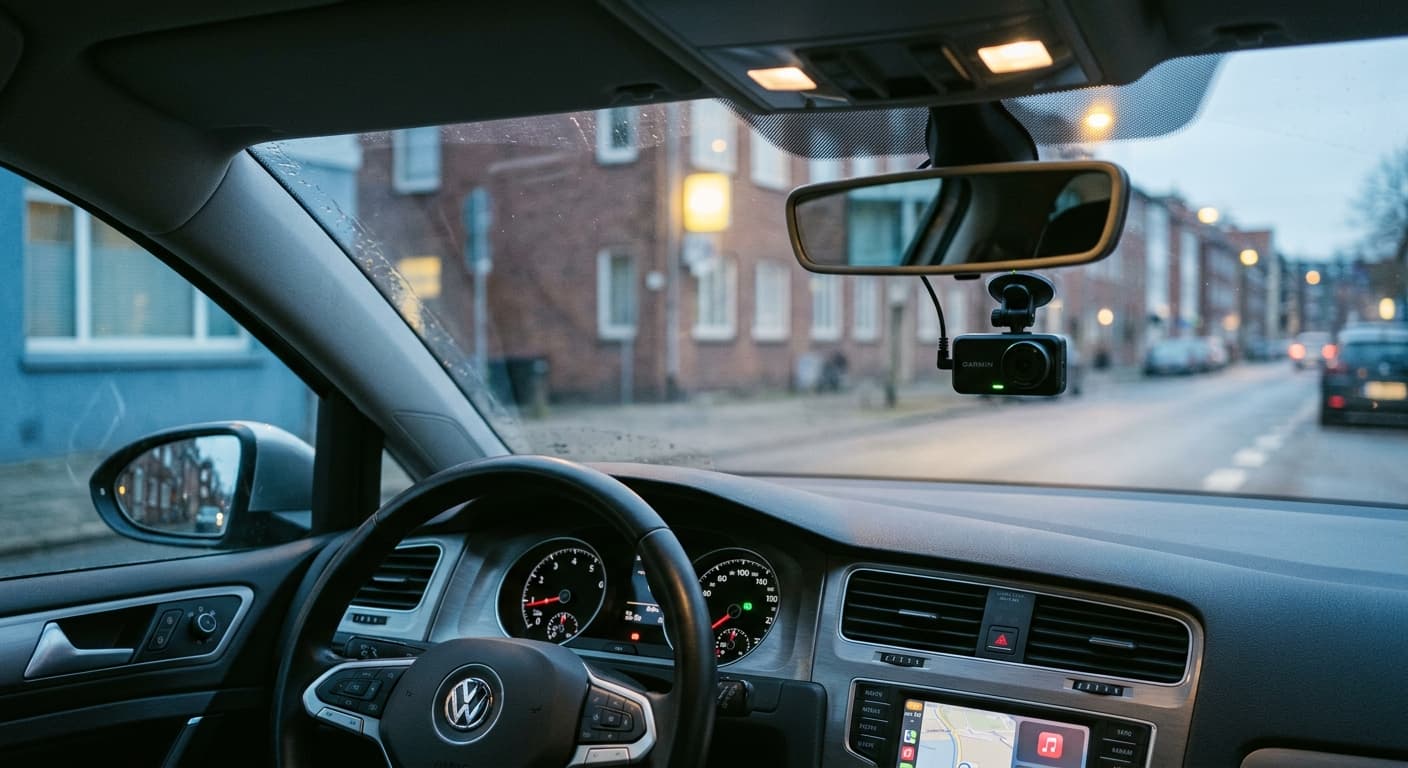
Dashcams are legal in Virginia, and no state statute restricts their use. Audio recording follows Virginia's one-party consent rule under Va. Code 19.2-62, so drivers may record in-vehicle conversations they participate in. A properly mounted dashcam does not implicate Va. Code 46.2-1052, Virginia's windshield tinting/signs statute, though it is still good practice to mount the camera so it does not block your view of the road.
Dashcams are legal in Virginia, and the state has no specific statute that restricts their use. Virginia drivers routinely use dashboard cameras for personal security, accident documentation, and insurance purposes. The primary legal considerations involve audio recording compliance, windshield mounting restrictions, and the admissibility of dashcam footage in legal proceedings.
This guide covers everything Virginia drivers need to know about dashcam legality, installation rules, audio recording issues, using dashcam footage as evidence, commercial vehicle considerations, and interactions with law enforcement.
Dashcam Legality in Virginia
No Specific Dashcam Statute
Virginia does not have a law specifically addressing dashboard cameras. This means dashcams are legal by default. You can install and operate a dashcam in your personal or commercial vehicle without a permit, registration, or notification to any government agency.
Types of Dashcams Permitted
All common dashcam configurations are legal in Virginia:
| Dashcam Type | Legal in Virginia? | Notes |
|---|---|---|
| Forward-facing only | Yes | Most common setup |
| Dual-camera (front and rear) | Yes | Records both directions |
| Interior-facing (cabin camera) | Yes | Common in rideshare vehicles |
| 360-degree cameras | Yes | Captures all angles |
| Rearview mirror-mounted | Yes | Integrated with the mirror |
| Parking mode cameras | Yes | Records while vehicle is parked |
Windshield Mounting Rules
Virginia Law on Windshield Obstructions
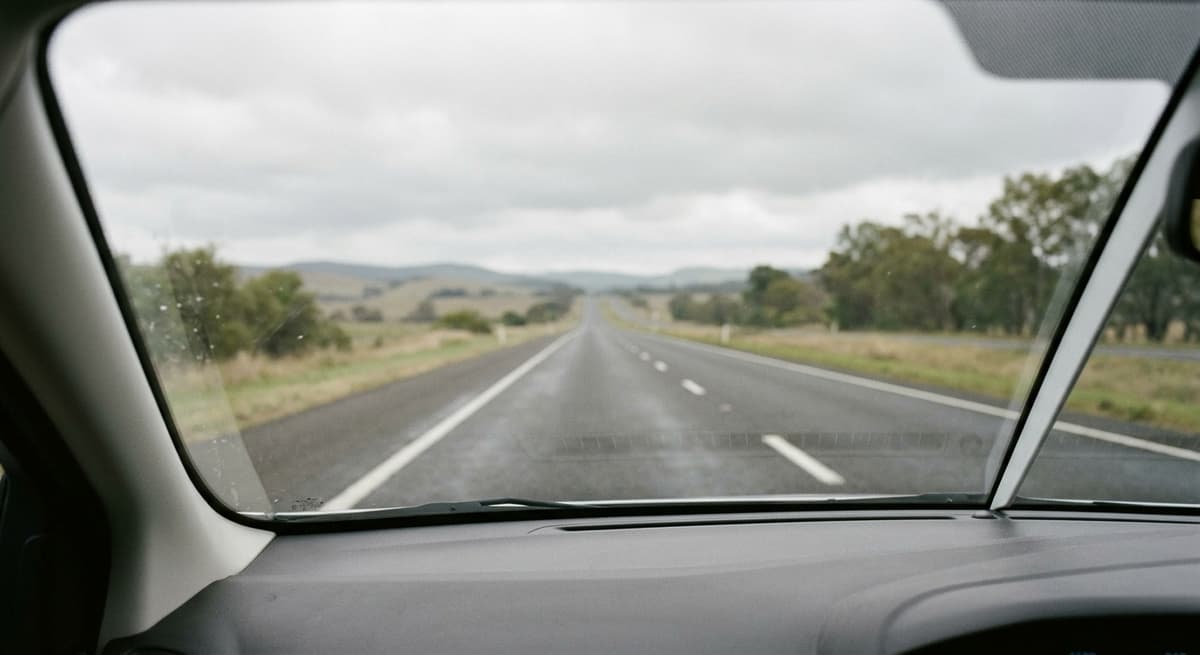
Virginia's windshield statute (Va. Code Ann. 46.2-1052) makes it unlawful to operate a motor vehicle on a highway with a sign, poster, colored or tinted film, sun-shading material, or other colored material on the windshield or windows. It does not by its text address mounted objects like a dashcam or a general obstruction of the driver's view.
The statute does not specifically mention dashcams, and a properly mounted dashcam is unlikely to implicate it. As a practical matter, it is still a good idea to:
- Mount the camera behind the rearview mirror or in a corner of the windshield
- Choose a compact camera model that minimizes visual obstruction
- Ensure the camera does not block your view of the road, mirrors, or traffic signals
- Keep the camera and mount secure so they do not fall while driving
Tinted Windows and Camera Visibility
Virginia regulates window tinting under Va. Code Ann. 46.2-1052.1. If you have a rear-facing dashcam mounted inside your vehicle, window tint may affect image quality but does not create a separate legal issue.
Audio Recording With Dashcams
One-Party Consent Inside Your Vehicle
Most dashcams record audio as well as video. Under Virginia's one-party consent law (Va. Code 19.2-62), you can record audio of conversations inside your vehicle as long as you are present and participating.
This means you can capture:
- Conversations with passengers
- Your own narration of road events
- Interactions during traffic stops (your conversation with the officer)
- Phone calls played through your car's speaker system (you are a participant)
When Audio Creates Legal Risk
Dashcam audio can create issues if:
- You leave your vehicle running with the dashcam recording and passengers continue a conversation without you present
- Your dashcam's external microphone captures private conversations of people outside your vehicle who have a reasonable expectation of privacy
- You record phone conversations played through your speakers with people in two-party consent states (the cross-state issue)
Practical tip: If you are concerned about audio recording issues, you can disable the audio function on most dashcams and capture video only.
The Civil Admissibility Consideration
If your dashcam captures a phone conversation through your car speakers, that audio faces the same Va. Code 8.01-420.2 limitation as any other phone recording in Virginia civil proceedings. In-vehicle conversations that are not phone calls do not face this restriction.
Using Dashcam Footage as Evidence
Traffic Accidents
Dashcam footage is one of the most valuable forms of evidence in Virginia traffic accident cases. It can:
- Establish which driver was at fault
- Document the speed and behavior of all vehicles involved
- Capture traffic signals, road conditions, and weather
- Record the moments before, during, and after a collision
- Preserve witness information (license plates, vehicle descriptions)
Virginia follows a contributory negligence standard, meaning if you are even 1% at fault in an accident, you cannot recover damages from the other driver. Dashcam footage can be critical in proving you bear no fault.
Admissibility Standards
Dashcam footage is generally admissible in Virginia courts if:
- Authenticated: You can testify that the camera was yours, it was functioning properly, and the footage accurately depicts what happened
- Relevant: The footage relates to the matter at issue
- Not unduly prejudicial: The footage does not inflame the jury beyond its evidentiary value
- Unaltered: The footage has not been edited or manipulated
Criminal Cases
Dashcam footage can support criminal prosecutions for:
- Hit-and-run incidents (Va. Code 46.2-894)
- Reckless driving (Va. Code 46.2-852)
- DUI/DWI investigations
- Road rage and aggressive driving
- Vandalism and vehicle theft
- Insurance fraud
Insurance Claims
Dashcam footage can significantly strengthen insurance claims by providing objective documentation of:
- The accident sequence
- The other driver's behavior
- Weather and road conditions at the time
- Damage to vehicles at the scene
- Whether the other driver admitted fault
Many Virginia insurance companies view dashcam footage favorably when evaluating claims. Some insurers offer discounts for vehicles equipped with dashcams, though this varies by company.
Dashcams and Law Enforcement Encounters
Traffic Stops
You can keep your dashcam recording during a traffic stop in Virginia. The recording captures your interaction with the officer, which is protected by both one-party consent and First Amendment principles. Tips for recording during a traffic stop:
- Leave the dashcam running; do not turn it off
- If you also want to record with your phone, you can, but keep your hands visible
- Do not make sudden movements to adjust the camera
- Comply with the officer's lawful instructions while the camera records
Can Police Seize Your Dashcam?
Police may lawfully seize your dashcam or its memory card without a warrant in some circumstances, such as incident to a lawful arrest or on probable cause it holds evidence of a crime. Under the Fourth Amendment and Riley v. California (2014), what they cannot do without a warrant is search its stored digital contents.
However, if your dashcam footage is evidence of a crime you committed, police may be able to obtain a warrant for the footage. You are not required to volunteer the existence of your dashcam to police, but destroying evidence after learning of an investigation can result in obstruction charges.
Police Dashcam Footage
Many Virginia law enforcement vehicles have their own dashboard cameras. Access to police dashcam footage is governed by Virginia's Freedom of Information Act. You can request police dashcam footage through a FOIA request to the specific law enforcement agency. The footage is classified as a criminal investigative file and may be exempt from disclosure during active investigations.
Commercial Vehicle Dashcams
Fleet and Trucking Operations
Virginia does not have state-specific regulations governing dashcams in commercial vehicles beyond the general rules that apply to all vehicles. Commercial fleet operators commonly use dashcams for:
- Driver safety monitoring
- Accident documentation and liability protection
- Route compliance verification
- Training and performance evaluation
- Insurance cost reduction
Rideshare Drivers (Uber, Lyft)
Virginia rideshare drivers can use dashcams, including interior-facing cameras that capture passenger interactions. Under one-party consent, the driver (as a party to conversations with passengers) can record audio. Some considerations:
- Post a visible notice informing passengers about the recording
- Rideshare company policies may address dashcam use
- Recordings of passengers in states of undress would violate voyeurism statutes
- Footage can be valuable in disputes with passengers or the rideshare company
Taxi and Transportation Services
Similar rules apply to taxi drivers and other transportation providers operating in Virginia. Dashcams are permitted, and audio recording is covered by one-party consent when the driver is present and participating in conversations.
Parking Mode and Unattended Recording
What Parking Mode Captures
Many dashcams have a "parking mode" that continues recording when the vehicle is turned off and the driver is absent. This mode typically activates upon detecting motion or impact. Parking mode cameras capture:
- Vehicle break-ins and vandalism
- Hit-and-run incidents against parked vehicles
- Suspicious activity around the vehicle
- Weather events and falling objects
Legal Considerations for Parking Mode
Parking mode video recording is generally legal in Virginia, especially in public parking areas. The same privacy principles apply: you cannot aim a parked vehicle's camera to spy into someone's home or capture activities in areas with a reasonable expectation of privacy.
Audio recording in parking mode raises questions because the vehicle owner is not present to serve as a "party" to any conversations captured. In practice, conversations occurring near a parked car in a public parking lot are unlikely to carry a strong expectation of privacy, but the safest approach is to disable audio in parking mode.
Dashcam Maintenance and Best Practices
Ensuring Footage Quality
To maximize the legal value of dashcam footage:
- Set the correct date and time on your camera
- Use high-quality memory cards rated for continuous recording
- Format the memory card periodically to maintain performance
- Check that the camera is recording before each drive
- Download and back up footage of any significant incidents immediately
Preserving Evidence
If your dashcam captures an accident or other incident:
- Do not turn off or unplug the dashcam
- If possible, remove the memory card and store it safely
- Back up the footage to a computer, cloud storage, or another device as soon as possible
- Do not edit, trim, or alter the footage in any way
- Make multiple copies and store them in different locations
More Virginia Recording Laws
Audio Recording | Video Recording | Voyeurism and Hidden Cameras | Workplace Recording | Recording Police | Phone Call Recording | Security Cameras | Recording in Public | Landlord-Tenant Recording | Dashcam Laws | School Recording | Medical Recording
Back to Virginia Recording Laws
More Virginia Recording Topics
More Virginia Laws
Frequently Asked Questions
Are dashcams legal in Virginia?
Yes. Virginia has no statute prohibiting dashboard cameras. You can install a dashcam in your personal or commercial vehicle without any permit or registration. The camera should not obstruct your view of the road.
Does my dashcam need to record audio in Virginia?
Audio recording is optional. If your dashcam records audio, it must comply with Virginia's one-party consent law (Va. Code 19.2-62). As the driver, you are a party to conversations in your vehicle, so recording audio while you are present is legal. Consider disabling audio in parking mode when you are not in the vehicle.
Can I use dashcam footage as evidence in a Virginia accident case?
Yes. Dashcam footage is generally admissible in Virginia courts if it is authenticated, relevant, and unaltered. It can be particularly valuable in Virginia because the state follows a contributory negligence standard, where establishing you had zero fault is critical to recovering damages.
Can police take my dashcam during a traffic stop in Virginia?
Police may lawfully seize your dashcam or its storage media without a warrant in some circumstances, such as incident to arrest or on probable cause. What the Fourth Amendment requires a warrant for is searching its stored digital contents. If your footage is evidence of a crime, police still need a warrant to search it.
Where should I mount my dashcam in Virginia?
Mount the camera where it does not obstruct your view of the road. Behind the rearview mirror or in the upper corner of the windshield are common positions. Va. Code 46.2-1052 regulates signs, tinted film, and sun-shading material on the windshield and windows, not mounted objects like a dashcam.
Updates
Corrected how the Fourth Amendment and Riley v. California apply to a dashcam: police may lawfully seize the device or memory card without a warrant in some circumstances, but need a warrant to search its stored footage.
Independently fact-checked against the cited primary sources; governing law re-checked for recent changes
Governing law re-checked for recent changes
Corrected the description of Va. Code 46.2-1052: it regulates signs, tinted film, and sun-shading material on the windshield and windows, not a general obstruction-of-view rule that would reach a mounted dashcam.
Corrected the intro paragraph's restatement of the Va. Code 46.2-1052 error: the statute governs windshield tinting, signs, and decals, not a general driver's-view-obstruction rule, and does not reach mounted objects like a dashcam.
Governing law re-checked for recent changes
Reviewed and approved by an editor
The Law Behind This Article
This article rests on the statutory provisions below, held in our own legal record and retrieved from the official source. Tap a section to read the operative text.
Code of Virginia, Title 19.2: Criminal Procedure
§ 19.2-62Interception, disclosure, etc., of wire, electronic or oral communications unlawful; penalties; exceptionsIn forcecited in 21 of our articles
A. Except as otherwise specifically provided in this chapter any person who: 1. Intentionally intercepts, endeavors to intercept or procures any other person to intercept or endeavor to intercept, any wire, electronic or oral communication; 2. Intentionally uses, endeavors to use, or procures any other person to use or endeavor to use any electronic, mechanical or other device to intercept any oral communication; 3. Intentionally discloses, or endeavors to disclose, to any other person the contents of any wire, electronic or oral communication knowing or having reason to know that the information was obtained through the interception of a wire, electronic or oral communication; or 4. Intentionally uses, or endeavors to use, the contents of any wire, electronic or oral communication, knowing or having reason to know that the information was obtained through the interception of a wire, electronic or oral communication; shall be guilty of a Class 6 felony. B. 1.
Official text (excerpt) · last checked 2026-08-31 · Read the full text in our law library · Verify at law.lis.virginia.gov
Cited in 11 court opinions in our collectionLatest citing opinion in our collection: 2025
In the courts (editorial summary, independently checked):Courts read Section 19.2-62 in step with the federal wiretap act. Global Policy Partners, LLC v. Yessin (2009) held that accessing email stored on a destination server is not an intercept, and Wilks v. Commonwealth (1977) held a conversation police recorded through a cooperating coconspirator was not a protected oral communication.
Opinions citing this section in our collection:
- Belmer v. Commonwealth (Court of Appeals of Virginia 2001, 36 Va. App. 448)✓A juvenile arrested for robbery whispered to his mother's boyfriend in a police interview room while a detective listened in; the court found no reasonable expectation of privacy, so Chapter 6, which carries the Section 19.2-62 ban, did not bar the detective's testimony.
- Wilks v. Commonwealth (Supreme Court of Virginia 1977, 217 Va. 885)✓An arson conspirator agreed to be wired and drew the defendant into a taped shop-talk about the fires; the court held the defendant had no justifiable expectation of noninterception, so the talk was not an oral communication protected by Chapter 6 and the tape was admissible.
- Bartnicki v. Vopper (Supreme Court of the United States 2001, 532 U.S. 514)“…16.02 (Supp. 2001); Utah Code Ann. § 77 23a4 (1982); Va. Code Ann. § 19.2-62 (1995); W. Va. Code § 62 -1D-3 (2000)…”
Identified automatically from the court opinions citing this section — not a ranking of which case controls.
Also relied on in: One-Party Consent States: Complete 2026 Guide, District of Columbia Phone Call Recording Laws: Consent Rules and Interstate Calls, Virginia Security Camera Laws: Home, Business, and HOA Rules
Code of Virginia, Title 46.2: Motor Vehicles
§ 46.2-1052Tinting films, signs, decals, and stickers on windshields, etc.; penaltiesIn forcecited in 3 of our articles
A. As used in this article, unless the context requires a different meaning: "Front side windows" means those windows located adjacent to and forward of the driver's seat. "Holographic effect" means a picture or image that may remain constant or change as the viewing angle is changed. "Multipurpose passenger vehicle" means any motor vehicle that is (i) designed to carry no more than 10 persons and (ii) constructed either on a truck chassis or with special features for occasional off-road use. "Prism effect" means a visual, iridescent, or rainbow-like effect that separates light into various colored components that may change depending on viewing angle. "Rear side windows" means those windows located to the rear of the driver's seat. "Rear window" or "rear windows" means those windows that are located to the rear of the passenger compartment of a motor vehicle and that are approximately parallel to the windshield. B.
Official text (excerpt) · last checked 2026-09-01 · Read the full text in our law library · Verify at law.lis.virginia.gov
Cited in 5 court opinions in our collectionLatest citing opinion in our collection: 2016
In the courts (editorial summary, independently checked):United States v. Stewart (2001) held Section 46.2-1052 puts the burden on the driver to prove the pre-July 1987 grandfather exemption by receipts, so a possible exemption does not defeat reasonable suspicion for a stop. United States v. Brooks (2008) applied the statute's 50% front side window limit in upholding a tint-based stop.
Opinions citing this section in our collection:
- United States v. Michael Palmer (Court of Appeals for the Fourth Circuit 2016, 820 F.3d 640)✓An officer stopped a Nissan because its windows looked too dark, and later measured 40% and 25% transmittance against the statute's 50% and 35% limits; the court held the officer's belief the tint was illegal was an objectively reasonable basis for the stop.
- United States v. Billy Howard Stanfield (Court of Appeals for the Fourth Circuit 1997, 109 F.3d 976)“…107 (1955-96); Utah Code, 1953 § 41-6-149 (Michie 1987-96); Code of Virginia § 46.2-1052(C)(1) (Michie 1982-96); Wyoming Stat. 1…”
- United States v. Stewart (District Court, E.D. Virginia 2001, 149 F. Supp. 2d 236)✓An officer stopped a driver in a public library parking lot for tinted windows later measured at 3% transmittance; the court held the lot counts as a highway and that the pre-1987 grandfather clause puts the proof burden on the driver, so suspicion was reasonable.
Identified automatically from the court opinions citing this section — not a ranking of which case controls.
Also relied on in: Virginia Windshield Mounting Laws (2026 Guide), Virginia Window Tint Laws (2026): Legal VLT Limits
§ 46.2-852Reckless driving; general ruleIn force
Irrespective of the maximum speeds permitted by law, any person who drives a vehicle on any highway recklessly or at a speed or in a manner so as to endanger the life, limb, or property of any person shall be guilty of reckless driving.
Official text (excerpt) · last checked 2026-07-29 · Read the full text in our law library · Verify at law.lis.virginia.gov
Cited in 20 court opinions in our collectionLatest citing opinion in our collection: 2025
Opinions citing this section in our collection:
- United States v. Farmer (District Court, W.D. Virginia 1993, 820 F. Supp. 259)“…inia Code provisions which prohibit the offense. See Va.Code Ann. § 46.2-852 (1989 & Supp.1992). 4 Howe…”
- Jose Canales Granados v. Merrick Garland (Court of Appeals for the Fourth Circuit 2021, 17 F.4th 475)“…mport mens rea in Virginia’s reckless driving statute. See Va. Code § 46.2-852. That court interpreted language prohib…”
- United States v. Brooks (Army Court of Criminal Appeals 2006, 64 M.J. 587)“…0; reckless driving on a roadway or highway in violation of Va.Code Ann. § 46.2-852; and reckless driving on a parking lot…”
Identified automatically from the court opinions citing this section — not a ranking of which case controls.
§ 46.2-894Duty of driver to stop, etc., in event of accident involving injury or death or damage to attended property; penaltyIn forcecited in 4 of our articles
The driver of any vehicle involved in an accident in which a person is killed or injured or in which an attended vehicle or other attended property is damaged shall immediately stop as close to the scene of the accident as possible without obstructing traffic, as provided in § 46.2-888, and report his name, address, driver's license number, and vehicle registration number forthwith to the State Police or local law-enforcement agency, to the person struck and injured if such person appears to be capable of understanding and retaining the information, or to the driver or some other occupant of the vehicle collided with or to the custodian of other damaged property. The driver shall also render reasonable assistance to any person injured in such accident, including taking such injured person to a physician, surgeon, or hospital if it is apparent that medical treatment is necessary or is requested by the injured person.
Official text (excerpt) · last checked 2026-07-29 · Read the full text in our law library · Verify at law.lis.virginia.gov
Cited in 8 court opinions in our collectionLatest citing opinion in our collection: 2025
Opinions citing this section in our collection:
- Katz v. Waterman (Virginia Circuit Court 2002, 59 Va. Cir. 182)“…er County for, among other things, felony hit and run under Va. Code § 46.2-894. It was alleged that Waterman fled the…”
- Jerome Arthur Godwin v. Commonwealth of Virginia (Court of Appeals of Virginia 2024)“…s motion to strike the charge of felony hit and run under Va. Code § 46.2-894.” He argues that “the Commonwealth’s e…”
- United States v. Carter (District Court, E.D. Virginia 2004, 349 F. Supp. 2d 982)“…nviction for “hit and run” in the Commonwealth of Virginia, Va.Code § 46.2-894, constitutes a crime of violence for pu…”
Identified automatically from the court opinions citing this section — not a ranking of which case controls.
Also relied on in: Hit and Run Laws in the United States (2026 Guide), Virginia Hit and Run Laws: Penalties and What to Do, Virginia Hit-and-Run Victims Can Now Seek Punitive Damages Even If the Driver Is Never Found
Code of Virginia, Title 8.01: Civil Remedies and Procedure
§ 8.01-420.2Limitation on use of recorded conversations as evidenceIn forcecited in 15 of our articles
No mechanical recording, electronic or otherwise, of a telephone conversation shall be admitted into evidence in any civil proceeding unless (i) all parties to the conversation were aware the conversation was being recorded or (ii) the portion of the recording to be admitted contains admissions that, if true, would constitute criminal conduct which is the basis for the civil action, and one of the parties was aware of the recording and the proceeding is not one for divorce, separate maintenance or annulment of a marriage. The parties' knowledge of the recording pursuant to clause (i) shall be demonstrated by a declaration at the beginning of the recorded portion of the conversation to be admitted into evidence that the conversation is being recorded. This section shall not apply to emergency reporting systems operated by police and fire departments and by emergency medical services agencies, nor to any communications common carrier utilizing service observing or random monitoring pursuant to § 19.2-62.
Official text (excerpt) · last checked 2026-07-29 · Read the full text in our law library · Verify at law.lis.virginia.gov
Cited in 2 court opinions in our collectionLatest citing opinion in our collection: 1991
Opinions citing this section in our collection:
- Leitman v. McAusland (Court of Appeals for the Fourth Circuit 1991, 934 F.2d 46)“…transcript could not be admitted into evidence pursuant to Va.Code § 8.01-420.2. 5 A state evidentiary rule, such as…”
Identified automatically from the court opinions citing this section — not a ranking of which case controls.
Also relied on in: Virginia Audio Recording Laws: One-Party Consent Rules and Penalties, Virginia Landlord-Tenant Recording Laws: Surveillance and Privacy Rights, Virginia Medical Recording Laws: Patient Rights and Healthcare Privacy
Search our full record of US law — 2.1 million sections, every state + federal →
Sources and References
- Va. Code Ann. 19.2-62(law.lis.virginia.gov).gov
- Va. Code Ann. 46.2-1052 - Windshield Tinting, Signs, and Decals(law.lis.virginia.gov).gov
- Va. Code Ann. 46.2-894 - Hit and Run(law.lis.virginia.gov).gov
- Va. Code Ann. 8.01-420.2(law.lis.virginia.gov).gov
- Virginia FOIA(law.lis.virginia.gov).gov
- Va. Code Ann. 46.2-852 - Reckless Driving(law.lis.virginia.gov).gov