Rebel Wilson Wins MacInnes Defamation Case on Australia's Serious Harm Test; Appeal Filed
Independently fact-checked against primary sources (last audited July 26, 2026). · 1 primary source cited on this page. How we verify our legal content

Rebel Wilson Wins MacInnes Defamation Case on Australia's Serious Harm Test; Appeal Filed
The Federal Court of Australia dismissed actress Charlotte MacInnes's defamation case against Rebel Wilson on July 22, 2026, ruling that Wilson's Instagram posts were not defamatory and did not cause serious harm to MacInnes's reputation under section 10A of the Defamation Act 2005 (NSW). MacInnes has appealed.
Information last verified on July 26, 2026. This is a developing story; we update it as the record changes.
Status: The Federal Court entered judgment for Rebel Wilson on July 22, 2026, and ordered Charlotte MacInnes to pay Wilson's costs. MacInnes filed a notice of appeal to the Full Court of the Federal Court on July 23, 2026. The decision is subject to that appeal and is not final as of July 26, 2026.
Jurisdiction scope: This article addresses a defamation ruling under the Defamation Act 2005 (NSW) and the uniform Australian defamation scheme applied by the Federal Court of Australia. It does not address United States defamation law, which uses different standards. For that framework, see how the elements of a defamation claim work in the United States.
What Happened
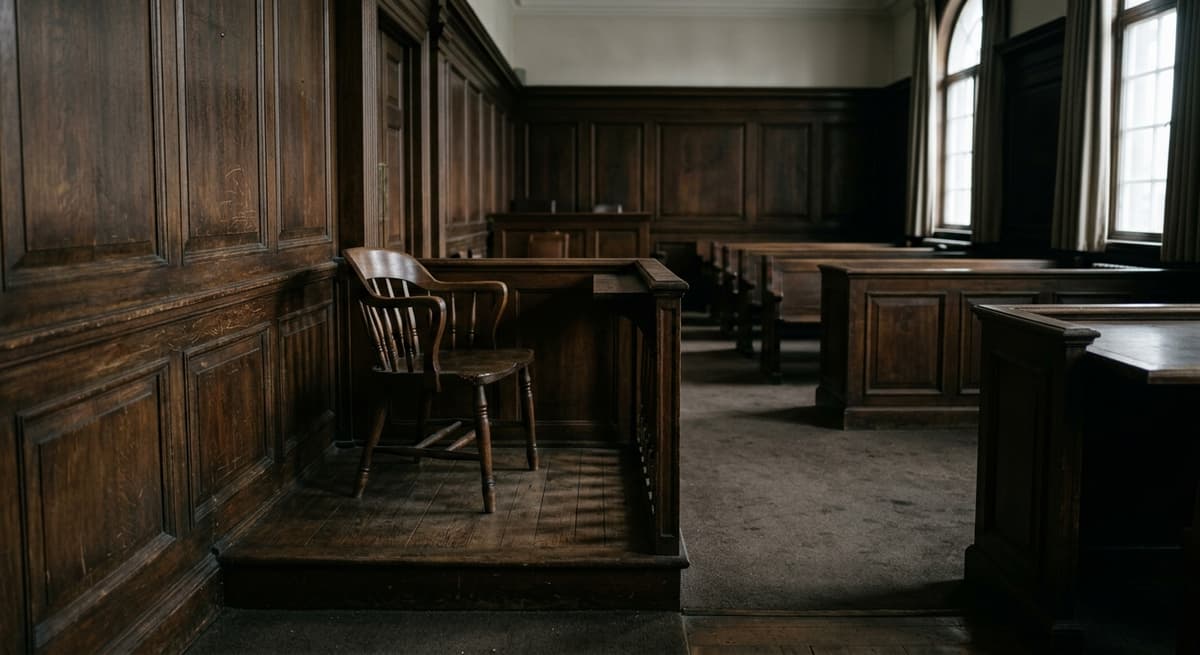
The Federal Court of Australia, sitting in Sydney, dismissed Charlotte MacInnes's defamation and breach-of-confidence claims against Rebel Wilson on July 22, 2026, in MacInnes v Wilson (file NSD 1727/2025). Justice Elizabeth Raper heard the matter in the court's New South Wales registry and ordered MacInnes to pay Wilson's legal costs.
MacInnes had sued over four sets of Instagram posts that Wilson published between September 2024 and July 2025. MacInnes argued the posts conveyed that she was a liar who had walked back a complaint of sexual harassment against a producer of the film "The Deb," Amanda Ghost, in order to advance her own career. According to reporting of the judgment, the court found that the posts conveyed only one imputation capable of a defamatory meaning, concluded that imputation was not in fact defamatory, and separately found that MacInnes had not established that the publications caused, or were likely to cause, serious harm to her reputation. The court also accepted Wilson's defence that the substance of what she published was substantially true.
MacInnes filed a notice of appeal on July 23, 2026, the day after the decision. She has asked the Full Court of the Federal Court to set the ruling aside and enter judgment in her favour, or alternatively to order a new trial or a rehearing before a different judge, arguing the trial judge wrongly assessed the meaning and effect of the posts, underestimated the seriousness of the meanings conveyed, and erred in accepting the substantial truth defence.
What the Law Actually Says
Every Australian state and territory shares a uniform Defamation Act, and the version applied here is the Defamation Act 2005 (NSW). Since the 2021 Model Defamation Amendment Provisions took effect, that scheme has required a plaintiff to clear a new gate before a defamation claim can succeed. Section 10A of the Defamation Act 2005 (NSW) provides that "it is an element of a cause of action for defamation that the publication of defamatory matter about a person has caused, or is likely to cause, serious harm to the reputation of the person."
Two features of section 10A shaped this case. First, serious harm is a distinct element the plaintiff must prove, not a defence the publisher raises; the 2021 reforms introduced it in place of the older defence of triviality, with the stated aim of keeping trivial claims out of court. Second, the statute directs that a judicial officer, not a jury, decides whether the serious harm element is established, and allows the judge to determine the question at any time before trial and to dismiss the proceedings if it is not met. That structure is what lets an Australian court resolve a defamation claim on serious harm without a full jury trial on damages. You can read more about the serious harm threshold Australian courts now apply and how it fits within Australia's uniform, state-by-state defamation scheme.
Beyond serious harm, the court relied on two further steps that are standard in Australian defamation practice. It assessed which imputations the ordinary reasonable reader would draw from the posts, a threshold question in any claim, and it considered the justification, or substantial truth, defence, which defeats a claim where the publisher proves the defamatory imputation is substantially true. Because the posts here began as social media publications, the case also sits within the growing body of defamation claims that start with a social media post.

Analysis: Why This Matters
The following is analysis from the Recording Law Editorial Team.
This ruling is a clear illustration of how Australia's serious harm element now operates as a front-end filter on defamation claims, including claims built on social media. Under the current scheme, a plaintiff cannot rely on the mere fact that a post carried a damaging meaning; the plaintiff must show the publication caused or was likely to cause serious harm to reputation, and a judge can test that question early. Where a court finds either that a post is not defamatory or that any harm falls short of serious, the claim ends without proceeding to a damages trial.
The contrast with the United States is instructive for readers who follow both systems. Most US states have no standalone serious harm element. A US public-figure plaintiff instead must prove that the defendant published with actual malice, meaning knowledge of falsity or reckless disregard for the truth, a constitutional standard that has no counterpart in the Australian statute. The two systems can therefore screen out similar claims for very different reasons, and a result in one country does not predict a result in the other.
Because MacInnes has appealed, the reasoning described here remains open to review by the Full Court. Nothing in this analysis predicts how that appeal will be decided. The value of the decision as it stands is doctrinal: it shows the serious harm element and the substantial truth defence doing the work the 2021 reforms designed them to do.
What Happens Next
The matter now moves to the Full Court of the Federal Court, which sits as a panel of judges to hear appeals from single-judge decisions. On the appeal, MacInnes carries the burden of showing that the trial judge made an appealable error, for example in identifying the imputations, in applying the serious harm test, or in accepting the substantial truth defence. The Full Court can dismiss the appeal, substitute its own findings, or order a new trial. Until the appeal is resolved, the trial judgment stands but is not final. This story will be updated if the Full Court lists the appeal, delivers a decision, or if the costs orders are varied.
How This Affects You
For anyone weighing a defamation claim in Australia over a social media post, the case is a reminder that the serious harm element is now a real hurdle, not a formality, and that a court can decide it early. Courts have generally treated limited-reach posts as less likely to meet the threshold, though the outcome always turns on the specific evidence of reputational harm. For publishers, the decision underscores that identifying the actual imputation a reasonable reader would draw, and being able to prove that imputation is substantially true, remain central to defending a claim. None of this is advice about any particular dispute; the law applies to specific facts, and appeal rights and time limits are strict.
This is general legal information, not legal advice. It addresses a defamation ruling under the Defamation Act 2005 (NSW) and the uniform Australian defamation scheme, and reflects sources verified on July 26, 2026. Laws change, and this story is developing and under appeal; consult a lawyer licensed in your jurisdiction about your specific situation.
Related articles
- The serious harm threshold in Australian defamation law
- Australian defamation law: a state-by-state guide
- Defamation defences in Australia
- Online defamation in Australia
Last updated: 2026-07-26. This is a developing story; details verified as of 2026-07-26.
Frequently Asked Questions
What did the Federal Court decide in MacInnes v Wilson?
On July 22, 2026, Justice Elizabeth Raper dismissed Charlotte MacInnes's defamation and breach-of-confidence claims against Rebel Wilson and ordered MacInnes to pay Wilson's costs, finding the posts were not defamatory and did not cause serious harm under the Defamation Act 2005 (NSW). MacInnes has appealed.
What is the serious harm test in Australian defamation law?
Section 10A of the Defamation Act 2005 (NSW) makes serious harm an element of every defamation claim: the plaintiff must show the publication caused, or was likely to cause, serious harm to reputation. It was introduced by the 2021 uniform reforms and replaced the old triviality defence.
Does a judge or a jury decide serious harm?
A judicial officer decides the serious harm element, not a jury, and can determine it at any time before trial. If the element is not established, the judge may dismiss the proceedings, which is how a defamation claim can end without a full damages trial.
Can Charlotte MacInnes still appeal?
Yes. MacInnes filed a notice of appeal to the Full Court of the Federal Court on July 23, 2026, seeking to set aside the ruling, or a new trial, or a rehearing before a different judge. The trial decision is not final while the appeal is pending, as of July 26, 2026.
Does Australia's serious harm test apply in the United States?
No. Most US states have no standalone serious harm element. A US public-figure defamation plaintiff generally must prove actual malice, meaning knowledge of falsity or reckless disregard for the truth, which is a different standard from the Australian statute.
What is the substantial truth defence the court accepted?
Substantial truth, also called justification, defeats a defamation claim where the publisher proves the defamatory imputation is substantially true. The Federal Court accepted that defence to the single imputation it identified in Wilson's posts.
What were the Instagram posts about?
MacInnes sued over four sets of posts Wilson published between September 2024 and July 2025 that MacInnes said portrayed her as having walked back a sexual-harassment complaint against a producer of the film 'The Deb' to benefit her career. The court found the posts did not defame her.
Updates
Independently fact-checked against the cited primary sources
The Law Behind This Article
This article rests on the statutory provisions below, held in our own legal record and retrieved from the official source. Tap a section to read the operative text.
Defamation Act 2005 (NSW)
s 10ASerious harm element of cause of action for defamationIn forcecited in 3 of our articles
(1) It is an element (the serious harm element) of a cause of action for defamation that the publication of defamatory matter about a person has caused, or is likely to cause, serious harm to the reputation of the person. (2) For the purposes of subsection (1), harm to the reputation of an excluded corporation is not serious harm unless it has caused, or is likely to cause, the corporation serious financial loss. (3) The judicial officer (and not the jury) in defamation proceedings is to determine whether the serious harm element is established. (4) Without limiting subsection (3), the judicial officer may (whether on the application of a party or on the judicial officer’s own motion)—(a) determine whether the serious harm element is established at any time before the trial for the proceedings commences or during the trial, and (b) make any orders the judicial officer considers appropriate concerning the determination of the issue (including dismissing the proceedings if satisfied the element is not established).
Official text (excerpt) · last checked 2026-08-14 · Read the full text in our law library · Verify at legislation.nsw.gov.au
Cited in 33 court opinionsMost recently applied by a court: 2024
Leading cases:
- Selkirk v Wyatt (Full Court of the Federal Court of Australia 2024, [2024] FCAFC 48)
- [2023] NSWCA 287 (NSW Court of Appeal 2023, [2023] NSWCA 287)
- [2022] NSWCA 198 (NSW Court of Appeal 2022, [2022] NSWCA 198)
Identified automatically from the court opinions citing this section — not a ranking of which case controls.
Also relied on in: The Serious Harm Threshold in Australian Defamation Law, Australia's 'Stage 2' Defamation Reforms Take Effect, Rewriting When Online Platforms Are Liable for Other People's Posts
Search our full record of US law — 2.1 million sections, every state + federal →
Sources and References
- MacInnes v Wilson, Federal Court of Australia (NSW registry, file NSD 1727/2025), decision of Raper J, 22 July 2026 (online case file)(fedcourt.gov.au).gov
- Defamation Act 2005 (NSW), s 10A (serious harm element)(austlii.edu.au)
- Rebel Wilson Wins Defamation Case Against Charlotte MacInnes, Variety (July 2026)(variety.com)
- Rebel Wilson Defamation Case Ruling Appealed by Charlotte MacInnes, Variety (July 2026)(variety.com)