
Ireland
Recording Phone Calls in Ireland: What the Law Actually Allows
Independently fact-checked against primary sources (last audited July 20, 2026). · 8 primary sources cited on this page. How we verify our legal content
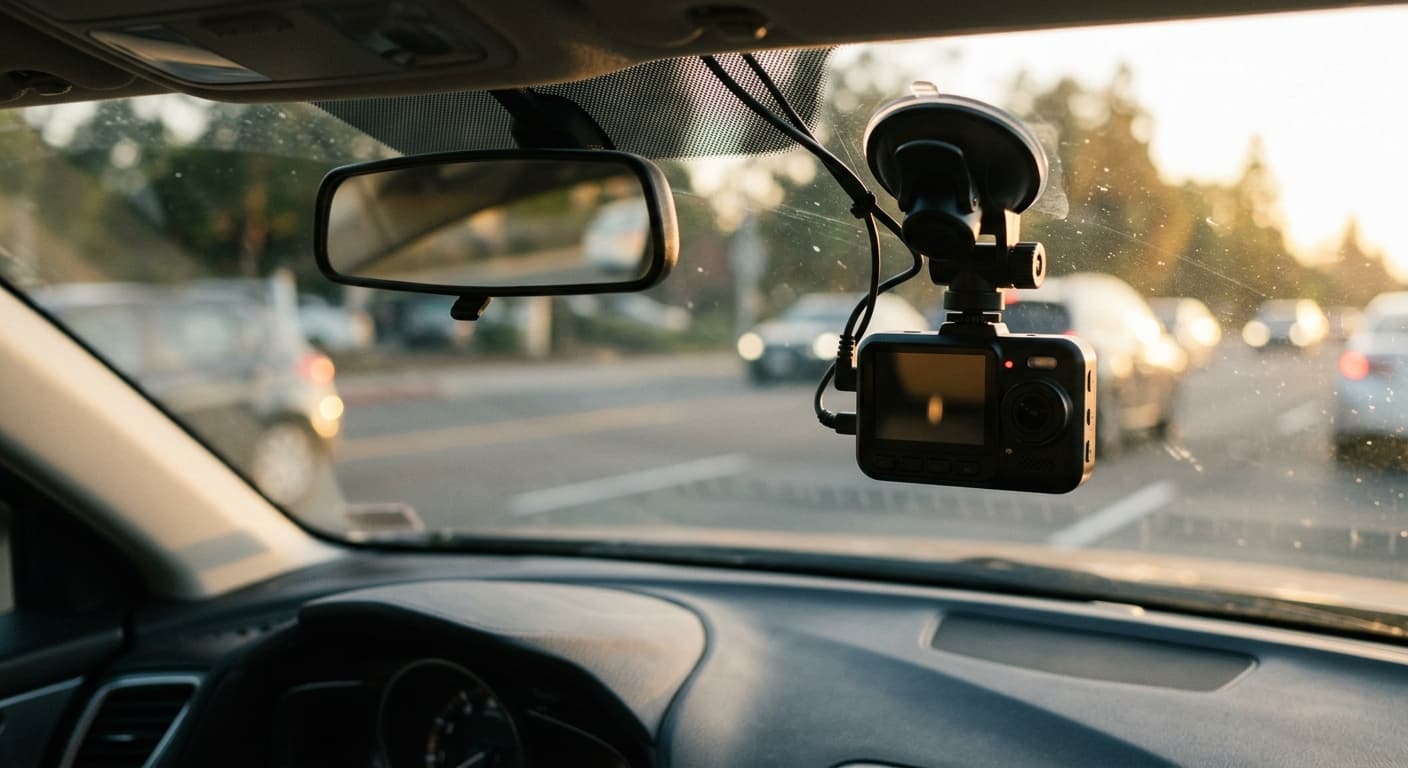
Recording a phone call in Ireland is a topic where the headline is simple and everything underneath it is not. If you are on the call, recording it is not a criminal offence. That is where most Irish coverage stops, and it is where the real problems begin.
Two things actually get people into trouble: recording a call they are not part of, and sharing a recording they made perfectly lawfully. This page covers both, plus the ePrivacy rules for businesses recording customer calls and the data protection duties that attach once a recording leaves your own hands.
Information last verified on 20 July 2026. This page is general legal information for the Republic of Ireland, not legal advice.
Is it legal to record a phone call in Ireland?
The governing provision is section 98 of the Postal and Telecommunications Services Act 1983, and the definition that decides the question is section 98(6), as substituted by section 13(3) of the Interception of Postal Packets and Telecommunications Messages (Regulation) Act 1993, in force since 6 June 1993.
As substituted, to intercept means to listen to, or record by any means, in the course of its transmission, a telecommunications message, but does not include such listening or recording where either the person on whose behalf the message is transmitted or the person intended to receive the message has consented to it.
Two points follow, and they are constantly merged. First, the operative text is section 98(6). The as-enacted section 98(5) carried the older definition and has been substituted, so any source citing section 98(5) for the one-party rule is citing superseded wording. The only later change is a spam-filtering carve-out added by Regulation 23(5) of S.I. No. 535 of 2003, which is why the subsection should be cited as amended.
Second, this is a criminal law proposition and nothing more. It tells you that recording your own call is not an interception offence. It does not tell you the recording is lawful for data protection purposes, or that you may use it or pass it on. Our general Ireland recording laws page covers the headline rule; this page is what sits underneath it for calls.
The offence, and who it reaches
Section 98(1) makes it an offence to intercept or attempt to intercept telecommunications messages, to authorise, suffer or permit another person to intercept them, or to do anything that enables interception. It is also a separate offence under the same subsection to disclose the existence, substance or purport of an intercepted message, or to use for any purpose any information obtained from one. That disclosure limb matters: a person who did no tapping can still commit an offence by publishing what a tap produced.
One objection is worth pre-empting. Section 98 as enacted speaks of messages transmitted by the company, meaning the old State telecoms body, but section 7 of the Postal and Telecommunications Services (Amendment) Act 1999 requires references to the company in section 98 to be read as references to a licensed operator. This is not a dead monopoly-era provision.
A procedural point explains why these cases are effectively never carried through privately: under section 10(1)(a) of the 1993 Act, once a person is charged with a section 98 offence, no further proceedings may be taken except by or with the consent of the DPP.
Recording your own call versus intercepting someone else's
| A call you are on | A call you are not on | |
|---|---|---|
| Section 98, 1983 Act | Not interception: either party's consent suffices | Interception, and an offence under section 98(1) unless the Minister authorised it |
| ePrivacy Regulation 5(1) | Not aimed at you: you are a user | Prohibited: a person other than a user, without the users' consent |
| GDPR | Household exemption likely if purely personal and not published | Household exemption almost certainly unavailable |
| Realistic exposure | Low for the act of recording; it begins when you pass it on | Criminal offence, privacy claim and data protection action |

A Ministerial authorisation under section 2 of the 1993 Act may be given only for criminal investigation or in the interests of the security of the State. The default form is a warrant under the Minister's hand, with an oral authorisation possible in a case of exceptional urgency, to be confirmed by warrant as soon as may be. There is no private route to lawful interception, and none available to a spouse, an employer or a private investigator.
In practice: recording your own call with a builder about a botched job is lawful. Putting your flatmate's phone on speaker and recording her call with her doctor is interception. Installing a call-recording app on a partner's phone is interception too, and in a domestic setting it is likely to raise coercive control issues as well.
What the ePrivacy Regulations 2011 add
The European Communities (Electronic Communications Networks and Services) (Privacy and Electronic Communications) Regulations 2011, S.I. No. 336 of 2011, sit alongside section 98 rather than replacing it. Regulation 5(1) prohibits the listening, tapping, storage or other kinds of interception or surveillance of communications and the related traffic data by persons other than users, without the consent of the users concerned, and it does so expressly without prejudice to section 98 of the 1983 Act and section 2 of the 1993 Act.
The phrase carrying the weight is persons other than users. A participant in a call is a user, so Regulation 5(1) is not aimed at them. It targets third parties and the network side, which is why the ePrivacy rule and the section 98(6) one-party rule do not conflict.
The obvious objection, that the EU confidentiality rule should override an Irish one-party rule, was answered when the earlier instrument was made. The Explanatory Note to S.I. No. 535 of 2003 records that the provisions of Article 5.1 of the Directive relating to confidentiality of communications were not transposed in those Regulations because adequate provisions were already on the statute book by virtue of section 98 of the 1983 Act as amended. An explanatory note is not part of the instrument and does not bind a court, but it shows the deliberate policy choice behind the gap.
The lawful business practice exception
Regulation 5(2)(b) provides that Regulation 5(1) does not affect any legally authorised recording of communications and the related traffic data when carried out in the course of lawful business practice for the purpose of providing evidence of a commercial transaction or of any other business communication.
Read that carefully, because it is routinely oversold. It is a saver, not a permission: it preserves recordings that are already legally authorised, does not itself authorise anything, and does not displace GDPR obligations. Its scope is limited to evidencing a commercial transaction or other business communication, so it does not cover recording staff for performance monitoring or for training.
What notification is actually required
Regulation 5(2)(b) contains no express notification requirement, and no Irish provision or DPC guidance has been located prescribing a particular this call may be recorded announcement. The familiar script about recording for training and quality purposes is not an ePrivacy requirement.
What does require it is GDPR transparency. Articles 12 to 14 require the information at or before the point of collection, which for a call means at the start of it, identifying the controller, the purpose, the lawful basis and the retention period, with fuller detail in a privacy notice. A bare notice that a call is recorded does not by itself satisfy Article 13.
How the Regulations are enforced
Regulation 5 carries no criminal offence of its own. The Data Protection Commission enforces it under Regulation 17 and may serve an enforcement notice, which it is an offence to ignore without reasonable excuse, and Regulation 16(2) entitles a person who suffers loss and damage from a contravention to damages.
Your GDPR duties when you record a call
The DPC's guidance on video and audio recording states that data protection law may apply to anyone who records, and therefore processes, audio about identifiable persons, and that simply recording and storing it could be processing even if no further use is made of the data.
For a private individual the gateway out is the household exemption in Article 2(2)(c), read with Recital 18. The DPC's formulation is that the law does not apply where the data is kept by an individual and is concerned solely with the management of their personal, family or household affairs, as long as it is not used in connection with a professional or commercial activity or made publicly available. Recording your own call and keeping it for your own reference is very likely within that.
If you are a business recording calls, the exemption is unavailable and you are a controller. You need a lawful basis under Article 6, in practice legitimate interests or contract rather than consent where the recording is employee-facing, transparency under Articles 12 to 14 at or before the point of recording, and a proportionate retention period. Recording that captures health information or trade union membership engages Article 9 and, in Ireland, sections 46 and 47 of the Data Protection Act 2018.
Section 47 matters to someone who recorded a call because a dispute was brewing: it makes processing of special category data lawful where necessary for legal advice or in connection with legal claims and prospective proceedings. Where data is processed unlawfully, section 117 creates a data protection action, founded on tort, in which the court may grant an injunction, a declaration or compensation, and our DPC complaint page explains the regulatory route.
Recording businesses versus recording private individuals
Calling a business, it is very probably already recording you and telling you so. Recording your own side is not interception, and a consumer keeping a record of what they were promised is squarely personal use. You can also make an Article 15 access request to the business for the recording, which is often the faster way to prove what was said.

Calling a private individual, the criminal analysis is identical, but the privacy interest on the other side is far higher and the household exemption is much easier to lose. No duty to announce recording applies, but the absence of a duty to tell is not a licence to use it.
For cameras and doorbells rather than calls, see home CCTV and doorbell cameras. If the call is a work call, the employment layer is on our page about recording conversations at work.
Can you share or publish a recording you lawfully made?
This is where the answer flips, and it is where the liability in Ireland actually sits.
The household exemption evaporates on publication. The DPC confines the exemption to data that is not used in connection with a professional or commercial activity or made publicly available. Post the recording into a WhatsApp group, onto Facebook or TikTok, or attach it to a review, and you are outside the exemption on the DPC's own wording. You are then a controller processing another identifiable person's personal data with no lawful basis and no transparency, which exposes you to a DPC complaint and a section 117 action for compensation.
The constitutional right to privacy is actionable against a private defendant. In Herrity v Associated Newspapers (Ireland) Ltd [2008] IEHC 249 the High Court awarded damages arising from the publication of transcripts of private telephone conversations. Be precise about what that case decides, and note that the judgment itself could not be opened from a public source when this page was checked, so what follows is on the reported facts rather than on the text of the judgment. As reported, the calls were intercepted by a third party rather than by either participant, so no party to the call had consented. It is not authority that recording your own call is unlawful. It is authority on publication, and it was argued as a constitutional privacy case.
Defamation. A recording, or a clip of one, that conveys a defamatory imputation is a publication like any other. Editing a recording so that it changes the sense of what was said is the classic route into liability, and it also destroys the evidential value of the recording.
Confidence and contract. A recording of a confidential commercial or professional conversation may be actionable as a breach of confidence quite separately from data protection, and an employment contract, a non-disclosure agreement or a professional code may prohibit disclosure regardless of the criminal position.
Harassment. Repeated publication targeting a particular individual can raise the harassment offence in section 10 of the Non-Fatal Offences Against the Person Act 1997, a section that has been amended since enactment, so check the revised text before relying on any specific penalty.
The line to take away is short. In Ireland, recording your own call is the easy part. The moment you send it on, you trade a criminal law question you have already passed for a civil law question you will probably fail.
Is a recording admissible in Irish proceedings?
Lawfulness and admissibility are different questions. A recording being lawful does not make it admissible, and a recording being unlawfully obtained does not automatically make it inadmissible.
No Irish judgment has been located settling the admissibility of a lawfully made party recording in civil proceedings, so no general rule should be assumed either way. Admissibility turns on authenticity, completeness, relevance and the court's discretion, and a selectively edited clip invites both exclusion and an attack on the credibility of whoever made it. For employment cases at the WRC, where most of these questions arise, see our page on recording conversations at work. Further Irish guides are on our Ireland law hub.

This page is general information about the law in the Republic of Ireland and is not legal advice. Complaints about how a recording of your personal data was handled go to the Data Protection Commission, interception offences are matters for the Gardai and the Director of Public Prosecutions, and anyone planning to rely on or publish a recording should take advice from a solicitor first.
Frequently Asked Questions
Is it legal to record a phone call in Ireland without telling the other person?
Recording a call you are taking part in is not interception, because section 98(6) of the Postal and Telecommunications Services Act 1983, as substituted in 1993, excludes recording where either party has consented. There is no legal duty on a private individual to announce that they are recording their own call. That is only the criminal answer, and it does not decide whether you may use or share the recording.
Can I record a call I am not part of?
No. Recording a call you are not a party to is interception and an offence under section 98(1) of the 1983 Act. The only lawful route is a Ministerial authorisation under section 2 of the 1993 Act, which may be granted only for criminal investigation or the security of the State. Tapping a partner's or housemate's calls, or having someone else do it, is the offence.
Do the ePrivacy Regulations require a calls may be recorded announcement?
No. Regulation 5(2)(b) of S.I. No. 336 of 2011 contains no notification requirement, and no Irish provision prescribing a particular announcement has been located. Businesses announce recording because of GDPR transparency under Articles 12 to 14, which requires the information to be given at or before the point of collection.
Can I post a recording of a phone call online?
That is where the risk sits. The DPC confines the household exemption to data that is not made publicly available, so publishing takes you outside it and makes you a controller with no lawful basis. Publication can also give rise to a claim for breach of the constitutional right to privacy, a defamation claim if the recording conveys a defamatory imputation, and a breach of confidence claim.
Can a business record my call, and can I get a copy?
A business recording customer calls is a controller and needs a lawful basis, a proportionate retention period and transparency at the start of the call. Because the recording is your personal data, you can request a copy through an Article 15 access request, which is often the quickest way to prove what you were told.
Will a court or the WRC accept my recording as evidence?
It is not automatic. Lawfulness and admissibility are separate questions, and no Irish decision has been located settling the point for a lawfully made party recording in civil proceedings. Authenticity, completeness and relevance all matter, and an edited clip invites exclusion as well as damaging your credibility.
Can I be sued for recording my own call even if it is not a crime?
The act of recording a call you are on carries low exposure. Liability tends to arise from what you do next, whether that is sharing the recording, publishing it, or using it for something unconnected with the personal purpose for which you made it.
Updates
Independently fact-checked against the cited primary sources
Sources and References
- Interception of Postal Packets and Telecommunications Messages (Regulation) Act 1993, s. 13(3) substituting s. 98(6) of the 1983 Act (one-party consent definition of intercept)(irishstatutebook.ie).gov
- Postal and Telecommunications Services Act 1983, s. 98 (as enacted) - the prohibition on interception. Note that the subsection (5) shown on this as-enacted print was substituted, and subsection (6) inserted, by s. 13(3) of the 1993 Act, so the operative one-party definition of intercept is s. 98(6) and not the wording reproduced here(irishstatutebook.ie).gov
- S.I. No. 535 of 2003 - European Communities (Electronic Communications Networks and Services) (Data Protection and Privacy) Regulations 2003, Regulation 23(5) inserting the spam-filtering carve-out into s. 98(6) of the 1983 Act(irishstatutebook.ie).gov
- S.I. No. 336 of 2011 - European Communities (Electronic Communications Networks and Services) (Privacy and Electronic Communications) Regulations 2011, Regulation 5 (confidentiality of communications)(irishstatutebook.ie).gov
- Postal and Telecommunications Services (Amendment) Act 1999, s. 7 - references to the company construed as a licensed operator(irishstatutebook.ie).gov
- Data Protection Commission - guidance on video and audio recording(dataprotection.ie).gov
- Data Protection Commission FAQ - What is the household exemption?(dataprotection.ie).gov
- Data Protection Act 2018 (Revised), ss. 46, 47 and 117 - special category data and the data protection action(revisedacts.lawreform.ie).gov