
Nevada
Leyes de Montaje en el Parabrisas de Nevada (Guía 2026)
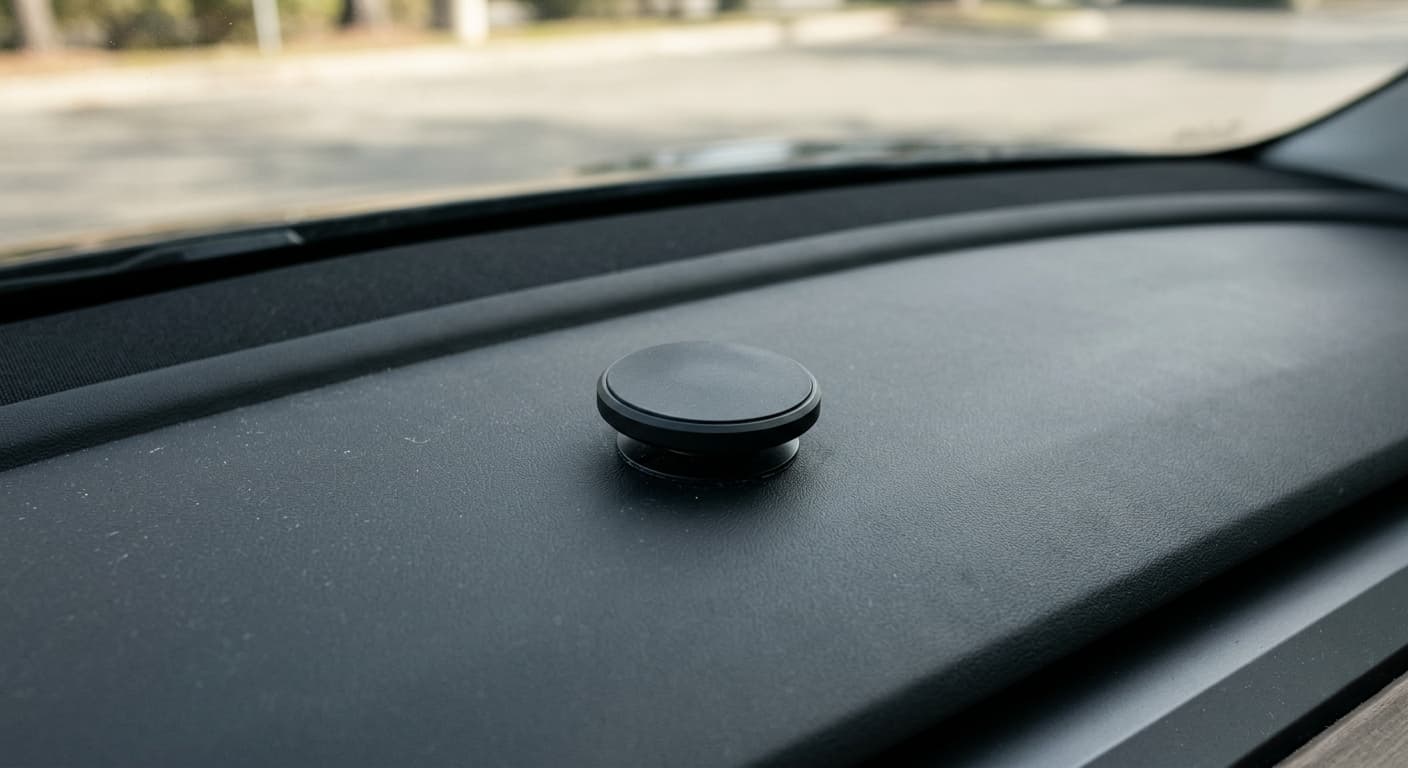
Nevada permite las dashcams, las unidades de GPS y los soportes de teléfono en el parabrisas siempre que no obstruyan la vista clara del conductor bajo el NRS 484D.435. La ley permite cualquier soporte colocado dentro de un cuadrado de 6 pulgadas en la esquina inferior del lado del pasajero; un soporte para el tablero o con clip de ventilación también es totalmente legal.
Nevada regula qué se puede colocar o adherir al parabrisas de un vehículo mediante varios estatutos de los Estatutos Revisados de Nevada (NRS). La ley principal es el NRS 484D.435, que prohíbe el material no transparente en el parabrisas que obstruya la vista del conductor. Una ley separada de manejo con manos libres (NRS 484B.165) controla cómo los conductores interactúan con los teléfonos y los dispositivos de GPS mientras están al volante.
Comprender ambos estatutos es importante para cualquier persona que use un soporte de teléfono de ventosa, un dispositivo de GPS, una dashcam o cualquier otro accesorio montado en el parabrisas mientras conduce en Nevada.
Ley de Obstrucción del Parabrisas de Nevada (NRS 484D.435)
El NRS 484D.435 establece que una persona no debe conducir ningún vehículo motorizado con "ningún cartel, afiche u otro material no transparente sobre el parabrisas delantero, las ventanillas triangulares o las ventanas laterales o traseras" que obstruya la vista clara del conductor hacia la carretera o hacia cualquier carretera que se cruza.
La ley establece dos excepciones a esta prohibición:
- Excepción del cuadrado de 6 pulgadas: se puede exhibir material en el área del cuadrado de 6 pulgadas en la esquina inferior del parabrisas más alejada del conductor. En un vehículo estándar con el volante a la izquierda, esta es la esquina inferior derecha (lado del pasajero).
- Materiales exigidos por ley: cualquier material que la ley federal o estatal exija exhibir en un parabrisas o ventana está exento.
Esto significa que un dispositivo pequeño, una calcomanía o un permiso colocado en la esquina inferior del lado del pasajero del parabrisas está permitido siempre que quepa dentro de un área de 6 por 6 pulgadas. Cualquier cosa colocada en otro lugar del parabrisas no debe obstruir la vista del conductor.
Soportes de GPS y Teléfono
La ley de manos libres de Nevada (NRS 484B.165) exige que todo uso del teléfono celular mientras se conduce sea con manos libres. El estatuto permite explícitamente los "sistemas de GPS/navegación activados por voz adheridos a los vehículos", lo que crea una vía legal para los dispositivos de navegación montados.
Qué Está Permitido
- Un dispositivo de GPS o un teléfono usado para la navegación que esté físicamente adherido al vehículo (montado en el parabrisas, el tablero o la ventilación)
- La operación activada por voz del dispositivo para GPS, llamadas o mensajes de texto
- Tocar brevemente el dispositivo para activar, desactivar o iniciar una función
Qué Está Prohibido
- Sostener físicamente un teléfono o dispositivo mientras se conduce
- Escribir o ingresar texto manualmente en un dispositivo de mano
- Leer o enviar mensajes de texto, correos electrónicos o mensajes instantáneos mientras se sostiene el dispositivo
- Navegar por internet en un dispositivo de mano
Mejor Colocación para los Soportes
La ley de Nevada no especifica una ubicación exacta en el parabrisas para los soportes de teléfono o GPS más allá de las reglas generales de obstrucción del NRS 484D.435. Para mantenerse dentro de la ley:
- Soporte para el tablero: la opción más segura porque evita el parabrisas por completo y no puede generar una citación por obstrucción
- Esquina inferior del lado del pasajero: entra dentro de la excepción del cuadrado de 6 pulgadas del NRS 484D.435
- Soporte con clip de ventilación: mantiene el dispositivo completamente fuera del parabrisas
- Detrás del espejo retrovisor: aunque es comúnmente usado, esta ubicación conlleva cierto riesgo legal porque no está dentro de la excepción del cuadrado de 6 pulgadas y podría considerarse una obstrucción
La prueba legal clave es si el dispositivo obstruye la vista clara del conductor hacia la carretera. Un soporte pequeño y de bajo perfil que no bloquee de manera significativa la visibilidad tiene menos probabilidades de resultar en una citación que un dispositivo grande colocado directamente en la línea de visión del conductor.
Reglas de Dashcam
Nevada no tiene un estatuto específico que aborde las dashcams por nombre. Una dashcam se trata igual que cualquier otro dispositivo montado en el parabrisas bajo el NRS 484D.435. Está permitida siempre que no obstruya la vista clara del conductor.
Las ubicaciones legalmente más seguras para una dashcam en Nevada son:
- Detrás del espejo retrovisor, donde el espejo ya ocupa el campo de visión del conductor
- En el tablero, evitando el parabrisas por completo
- En la esquina inferior del lado del pasajero, dentro del área del cuadrado de 6 pulgadas
Para fines de grabación, Nevada es un estado de consentimiento de una sola parte para la grabación de audio bajo el NRS 200.620. Una dashcam que graba audio dentro del vehículo es legal siempre que al menos una persona en el vehículo (normalmente el conductor) dé su consentimiento para la grabación. Grabar las conversaciones de los pasajeros sin su conocimiento puede generar problemas legales si el conductor no es parte de la conversación.
Polarizado del Parabrisas
El NRS 484D.440 regula el polarizado de ventanas en Nevada:
| Ventana | Regla de Polarizado |
|---|---|
| Parabrisas (área superior) | Se permite polarizado no reflectante en la sección más alta, ubicada al menos 29 pulgadas por encima del asiento del conductor. No debe ser rojo ni ámbar. |
| Ventanas laterales delanteras | Debe permitir al menos 35% de transmisión de luz visible (VLT), con una tolerancia del 7% |
| Ventanas laterales traseras | Sin restricciones de oscuridad |
| Ventana trasera | Permitido si el vehículo tiene espejos laterales dobles que reflejen al menos 200 pies hacia atrás |
Exenciones Médicas
El Director del Departamento de Vehículos Motorizados de Nevada puede autorizar exenciones por reglamento para los conductores con condiciones médicas que requieran una exposición reducida a la luz. Los conductores que busquen una exención médica deben comunicarse con el DMV de Nevada para conocer el proceso de solicitud y la documentación requerida.
Vehículos Anteriores a 1993
La cláusula de derechos adquiridos del NRS 484D.440(4) es más estrecha de lo que suele describirse. Exige dos condiciones a la vez: el vehículo debe tener un año modelo de 1993 o anterior, y el material transparente debe haberse colocado, instalado, adherido o aplicado antes del 1 de julio de 1993. Un vehículo más nuevo no se beneficia de esta exención sin importar la antigüedad de su polarizado. La exención tampoco alcanza más que la prohibición del inciso (b) de la subsección 2, que cubre la operación del vehículo, y no la prohibición del inciso (a) sobre la aplicación del material en primer lugar.
Por separado, el NRS 484D.440(5) exime a un vehículo que se vendió nuevo, o que podría haberse vendido nuevo, con ese tratamiento de ventana como equipo estándar u opcional sin infringir una ley o reglamento federal vigente al momento de su fabricación.
Obstrucción de la Vista del Conductor (NRS 484B.163)
Un estatuto separado, el NRS 484B.163, establece reglas adicionales sobre la obstrucción de la vista del conductor:
- Un vehículo no puede operarse cuando está cargado o cuando hay más de tres personas en el asiento delantero si eso obstruye la vista frontal o lateral del conductor
- Los pasajeros no pueden sentarse en posiciones que interfieran con la visibilidad o el control del vehículo por parte del conductor
- Un vehículo no puede operarse a menos que la visión del conductor a través de cualquier equipo de vidrio requerido sea normal
Este estatuto funciona junto con el NRS 484D.435 para darles a las fuerzas del orden una amplia autoridad para citar a los conductores cuya visibilidad se vea afectada por elementos montados en el parabrisas, vidrio agrietado u otras obstrucciones.
Requisitos sobre la Condición del Parabrisas
Nevada exige que todos los vehículos motorizados equipados con parabrisas tengan un sistema de limpiaparabrisas funcional bajo el NRS 484D.445. Los limpiaparabrisas deben:
- Poder despejar el parabrisas para proporcionar una visión clara en todas las condiciones ordinarias de lluvia, nieve u otra humedad
- Operarse mientras se conduce en condiciones de lluvia, nieve u otra humedad
- Mantenerse en buen estado de funcionamiento
Bajo el NRS 484D.450, un vehículo motorizado fabricado después del 1 de enero de 1970 debe estar equipado con material de vidriado de seguridad en todo lugar donde se use vidriado: particiones, puertas, ventanas, parabrisas o deflectores de viento. Un estatuto separado, el NRS 484D.455, rige el vidrio de reemplazo: es ilegal reemplazar ese vidriado con cualquier material que no sea vidriado de seguridad según lo define el NRS 484D.450.
Un parabrisas agrietado o dañado que afecte la visión normal del conductor puede resultar en una citación bajo el NRS 484B.163 (la visión a través del equipo de vidrio requerido debe ser normal).
Exenciones
| Exención | Fundamento Legal |
|---|---|
| Cuadrado de 6 pulgadas en la esquina inferior del lado del pasajero del parabrisas | NRS 484D.435 |
| Materiales exigidos por ley federal o estatal | NRS 484D.435 |
| Sistemas de GPS/navegación activados por voz adheridos al vehículo | NRS 484B.165 |
| Polarizado de fábrica que cumple con los estándares federales | NRS 484D.440 |
| Año modelo 1993 o anterior con polarizado aplicado antes del 1 de julio de 1993 | NRS 484D.440(4) |
| Exención médica para el polarizado de ventanas | NRS 484D.440 |
| Personal de servicios de emergencia (bomberos, paramédicos) | NRS 484B.165 |
| Oficiales de las fuerzas del orden | NRS 484B.165 |
| Operadores de radioaficionado con licencia durante emergencias | NRS 484B.165 |
| Personas que reportan emergencias o riesgos de seguridad | NRS 484B.165 |
| Empleados de servicios públicos que responden a emergencias | NRS 484B.165 |
Sanciones
Obstrucción del Parabrisas (NRS 484D.435)
El NRS 484D.435 no establece una sanción propia, por lo que rige la disposición general de sanciones. Bajo el NRS 484A.900, realizar cualquier acto prohibido por los capítulos 484A a 484E del NRS, cuando no se declara una sanción específica para esa infracción, "es una infracción civil sancionable conforme al NRS 484A.703 a 484A.705, inclusive." El NRS 484A.7043(1) limita esa sanción a "una multa civil de no más de $500 por infracción", sin pena de cárcel. Por lo tanto, la obstrucción del parabrisas es una infracción civil en Nevada, no un delito menor: la Legislatura reclasificó estas infracciones de tránsito en 2021 (2021 Nev. Stat. 3325). El tribunal también ordena las evaluaciones administrativas estándar además de la multa civil.
El NRS 484B.130 y el NRS 484B.135 duplican las sanciones para una lista específica y cerrada de infracciones, incluidas el NRS 484B.163 (vista obstruida) y el NRS 484B.165 (manos libres), cuando se cometen en una zona de trabajo designada o en una zona de seguridad peatonal. El NRS 484D.435 sobre obstrucción del parabrisas no está entre las infracciones enumeradas en ninguno de los dos estatutos, por lo que esta duplicación no se aplica a una citación por obstrucción del parabrisas.
Infracciones a la Ley de Manos Libres (NRS 484B.165)
| Infracción (dentro de 7 años) | Multa civil |
|---|---|
| Primera infracción | $50 |
| Segunda infracción | $100 |
| Tercera infracción o posterior | $250 |
El NRS 484B.165(4) establece que una infracción de la subsección 1 es una infracción civil, por lo que estos montos son multas civiles y no multas penales. Una primera infracción no se clasifica como una infracción de tránsito en movimiento para fines de la licencia de conducir. El NRS 484B.165 está entre las infracciones enumeradas en el NRS 484B.130 y el NRS 484B.135, por lo que esta multa civil puede duplicarse si la infracción ocurre en una zona de trabajo o una zona de seguridad peatonal.
Infracciones de Polarizado de Ventanas (NRS 484D.440)
Bajo el NRS 484D.440(7), una infracción de la subsección 2 no se clasifica como una infracción de tránsito en movimiento para fines de licencia. El NRS 484D.440 no establece una sanción propia, por lo que aquí también rige el NRS 484A.900: una infracción de polarizado ilegal es una infracción civil que conlleva una multa civil de no más de $500 por infracción, no un delito menor.
Manejo Distraído en Nevada
La ley de manos libres de Nevada está vigente desde el 1 de enero de 2012, después de un período de advertencia que comenzó el 1 de octubre de 2011. La ley se aplica como una infracción primaria, lo que significa que las fuerzas del orden pueden detener a un conductor únicamente por sostener un teléfono mientras conduce.
Según TRIP National Transportation Research, Nevada registró 412 muertes de tránsito en 2024, lo que lo convierte en el cuarto año más mortal registrado. De 2018 a 2022, hubo 46 accidentes fatales relacionados con el manejo distraído en el estado, que resultaron en 47 muertes. La Oficina de Seguridad Vial de Nevada informa que aproximadamente el 58% de los accidentes fatales por manejo distraído en Nevada fueron accidentes de un solo vehículo.
Montar correctamente su teléfono o dispositivo de GPS en lugar de sostenerlo es una de las formas más efectivas de evitar tanto una citación como un accidente por manejo distraído.
Vehículos Comerciales
Los operadores de vehículos motorizados comerciales en Nevada deben cumplir tanto con la ley estatal como con las regulaciones federales. La Administración Federal de Seguridad de Transportistas Motorizados (FMCSA) restringe el uso de dispositivos de mano por parte de los conductores comerciales bajo el 49 CFR 392.82. Los conductores comerciales que usan un teléfono de mano mientras conducen enfrentan sanciones federales de hasta $2,750 por infracción.
Los Dispositivos de Registro Electrónico (ELD) exigidos por la ley federal para muchos vehículos comerciales pueden montarse en el parabrisas o el tablero. Debido a que estos dispositivos son exigidos por regulación federal, entran dentro de la exención de ley federal del NRS 484D.435.
Más Leyes de Nevada
- Leyes de Grabación de Nevada
- Ley Limón de Nevada
- Leyes de Choque y Fuga de Nevada
- Leyes de Asientos de Auto para Niños de Nevada
- Leyes sobre Mordeduras de Perro de Nevada
Preguntas frecuentes
¿Puedo montar mi teléfono en el parabrisas en Nevada?
Sí, con restricciones. El NRS 484D.435 permite material en un área de un cuadrado de 6 pulgadas en la esquina inferior del lado del pasajero del parabrisas. También puede montar un teléfono en el tablero o en un clip de ventilación. La ley de manos libres de Nevada (NRS 484B.165) exige que todo uso del teléfono sea con manos libres, por lo que el teléfono debe estar montado y operarse por voz o con la activación de un solo toque.
¿Son legales las dashcams en Nevada?
Sí. Nevada no tiene un estatuto específico sobre dashcams, por lo que se tratan bajo la ley general de obstrucción del parabrisas (NRS 484D.435). La dashcam no debe obstruir la vista clara del conductor. La colocación más segura es detrás del espejo retrovisor o en el tablero.
¿Cuál es la multa por obstrucción del parabrisas en Nevada?
Es una infracción civil, no un delito menor. El NRS 484D.435 no establece una sanción propia, por lo que rige la disposición general del NRS 484A.900, y el NRS 484A.7043(1) limita una infracción civil a una multa civil de no más de $500 por infracción, sin tiempo en la cárcel. Las leyes de duplicación en zonas de trabajo y zonas de seguridad peatonal (NRS 484B.130 y NRS 484B.135) se aplican solo a una lista específica de infracciones que no incluye el NRS 484D.435, por lo que esa duplicación no se aplica a una citación por obstrucción del parabrisas.
¿Cuáles son las sanciones por usar un teléfono de mano mientras se conduce en Nevada?
Bajo el NRS 484B.165, una infracción es una infracción civil que conlleva una multa civil de $50 por una primera infracción, $100 por una segunda infracción y $250 por una tercera infracción o posterior dentro de un período de siete años. El NRS 484B.165 está enumerado en el NRS 484B.130 y el NRS 484B.135, por lo que la multa civil puede duplicarse en una zona de trabajo o una zona de seguridad peatonal. Una primera infracción no se cuenta como una infracción en movimiento.
¿Puedo polarizar mi parabrisas en Nevada?
Solo se puede polarizar la parte superior del parabrisas. El material polarizado debe ubicarse al menos 29 pulgadas por encima del asiento del conductor y no puede ser rojo ni ámbar. Hay exenciones médicas disponibles a través del DMV de Nevada para las condiciones que califiquen.
Actualizaciones
Se corrigió la clasificación de las sanciones en toda la página: una infracción de obstrucción del parabrisas, de polarizado de ventanas o de la ley de manos libres en Nevada es una infracción civil con una multa civil de hasta $500, no un delito menor con cárcel, conforme a la despenalización de infracciones de tránsito del estado en 2021; también se ajustó la exención de polarizado anterior a 1993 para incluir su condición de año modelo y se atribuyó correctamente la regla de reemplazo de vidriado al NRS 484D.455.
La ley detrás de este artículo
Este artículo se apoya en las disposiciones legales a continuación, conservadas en nuestro propio registro jurídico y obtenidas de la fuente oficial. Toque una sección para leer el texto vigente.
Nevada Revised Statutes, Chapter 484D: EQUIPMENT, INSPECTIONS AND SIZE, WEIGHT AND LOAD OF VEHICLES
§ 484D.435Windshield and windows must be unobstructed.Vigentecitada en 2 de nuestros artículos
1. A person shall not drive any motor vehicle with any sign, poster or other nontransparent material upon the front windshield, side wings or side or rear windows of such vehicle which obstructs the driver’s clear view of the highway or any intersecting highway. 2. This section shall not apply to any sign, poster or other material displayed in the 6-inch square area of the lower corner of the windshield farthest removed from the driver or to any other material required to be displayed on a windshield or window by federal or state law.
Texto oficial (extracto) · verificado el 2026-09-08 · Lea el texto completo en nuestra biblioteca legal · Verifique en leg.state.nv.us
Citada en 3 resoluciones judiciales de nuestra colecciónResolución más reciente que la cita en nuestra colección: 2015
Resoluciones que citan esta sección en nuestra colección:
- State v. Cantsee (Nevada Supreme Court 2014, 2014 NV 24)“…Cantsee because his cracked windshield violated NRS 484D.435. However, MRS 48411435…”
- United States v. Sanders (District Court, D. Nevada 2015, 95 F. Supp. 3d 1274)“…onable suspicion that a traffic offense had been committed. NRS 484D.435(1) requires that windshield and windows…”
- United States v. $102,836.00 in United States Currency (District Court, D. Nevada 2014, 9 F. Supp. 3d 1152)“…and to drive a vehicle with an obstructed front windshield (NRS 484D.435). . The Court notes that because…”
Identificado automáticamente a partir de las opiniones judiciales que citan esta sección; no es un ranking de qué caso prevalece.
§ 484D.440Restrictions on tinting of windshield or side or rear window.Vigentecitada en 3 de nuestros artículos
1. As used in this section, unless the context otherwise requires, “light transmission” means the ratio of the amount of light which is allowed to pass through a product or material to the amount of light which falls on it. 2. Except as otherwise provided in subsections 3, 4 and 5 a person shall not: (a) Place, install, affix or apply upon the windshield or any side or rear window of a motor vehicle which is required to be registered in this State; or (b) Operate on any highway a motor vehicle required to be registered in this State on which there has been placed, installed, affixed or applied upon the windshield or any side or rear window of the motor vehicle, Ê any transparent material which alters the color or reduces the light transmission of the windshield or side or rear window. 3. The prohibition set forth in subsection 2 does not apply to: (a) A window that is to the immediate right or left of the driver if the window is: (1) Nonreflective; and (2) Has a total light transmission through the combination, if any, of transparent material and safety glazing of not less than 35 percent with a tolerance of 7 percent.
Texto oficial (extracto) · verificado el 2026-09-01 · Lea el texto completo en nuestra biblioteca legal · Verifique en leg.state.nv.us
§ 484D.445Windshield wipers.Vigente
1. Every motor vehicle, except motorcycles or mopeds, equipped with a windshield shall be equipped with a self-operating windshield wiper system which shall be so constructed as to be controlled by the driver. 2. The windshield wiper system with which the vehicle is equipped shall be maintained in good operating condition and capable of effectively clearing the windshield so as to provide clear vision through the windshield for the driver under all ordinary conditions of rain, snow or other moisture. 3. The wiper system shall be operated while the vehicle is being driven during conditions of rain, snow or other moisture which obstruct or reduce the driver’s clear view through the windshield. 4. Subsection 1 does not apply to highway maintenance vehicles, special mobile equipment, implements of husbandry, or vehicles manufactured before July 1, 1935, with adequate manually operated windshield wipers.
Texto oficial (extracto) · verificado el 2026-07-29 · Lea el texto completo en nuestra biblioteca legal · Verifique en leg.state.nv.us
§ 484D.450Safety glazing material in motor vehicles and campers.Vigente
1. It is unlawful for any person to sell, offer for sale or drive any motor vehicle manufactured after January 1, 1970, unless the vehicle is equipped with safety glazing material wherever glazing materials are used in the vehicle for partitions, doors, windows, windshields or wind deflectors. 2. It is unlawful for any person to sell or offer for sale any camper manufactured after January 1, 1970, or for any person to drive such a motor vehicle registered in this State which is equipped with a camper, unless the camper is equipped with safety glazing materials wherever glazing materials are used in outside windows and doors. As used in this subsection, “camper” means any structure designed to be loaded onto, or affixed to, a motor vehicle to provide temporary living quarters for recreation, travel or other use. 3. As used in this section, “safety glazing materials” means glazing materials so constructed, treated or combined with other materials as to reduce substantially, in comparison with ordinary sheet glass, the likelihood of injury to persons by objects from exterior sources or by the safety glazing materials when they may be cracked or broken.
Texto oficial (extracto) · verificado el 2026-07-29 · Lea el texto completo en nuestra biblioteca legal · Verifique en leg.state.nv.us
§ 484D.455Replacement of glazing materials.Vigente
It is unlawful for any person to replace glazing materials used in partitions, doors, windows, windshields or wind deflectors in any motor vehicle, or in the outside windows or doors of any camper, as defined in NRS 484D.450, with any glazing material other than safety glazing material, as defined in NRS 484D.450.
Texto oficial (extracto) · verificado el 2026-07-29 · Lea el texto completo en nuestra biblioteca legal · Verifique en leg.state.nv.us
Nevada Revised Statutes, Chapter 484B: RULES OF THE ROAD
§ 484B.165Using handheld wireless communications device to type or enter text, send or read data, engage in nonvoice communication or engage in voice communications without use of hands-free device unlawful; exceptions; penalty; additional penalty for violation committed in certain zones.Vigentecitada en 2 de nuestros artículos
1. Except as otherwise provided in this section, a person shall not, while operating a motor vehicle on a highway in this State: (a) Manually type or enter text into a cellular telephone or other handheld wireless communications device, or send or read data using any such device to access or search the Internet or to engage in nonvoice communications with another person, including, without limitation, texting, electronic messaging and instant messaging. (b) Use a cellular telephone or other handheld wireless communications device to engage in voice communications with another person, unless the device is used with an accessory which allows the person to communicate without using his or her hands, other than to activate, deactivate or initiate a feature or function on the device. 2. The provisions of this section do not apply to: (a) A paid or volunteer firefighter, emergency medical technician, advanced emergency medical technician, paramedic, ambulance attendant or other person trained to provide emergency medical services who is acting within the course and scope of his or her employment.
Texto oficial (extracto) · verificado el 2026-07-29 · Lea el texto completo en nuestra biblioteca legal · Verifique en leg.state.nv.us
§ 484B.163Obstruction of or interference with driver’s view; interference with driver’s control over driving mechanism; vision of driver through required glass equipment; additional penalty for violation committed in certain zones.Vigente
1. A person shall not drive a vehicle when it is so loaded, or when there are in the front seat such number of persons, exceeding three, as to obstruct the view of the driver to the front or sides of the vehicle or as to interfere with the driver’s control over the driving mechanism of the vehicle. 2. A passenger in a vehicle shall not ride in such position as to interfere with the driver’s view ahead or to the sides, or to interfere with the driver’s control over the driving mechanism of the vehicle. 3. Except as otherwise provided in NRS 484D.440, a vehicle must not be operated upon any highway unless the driver’s vision through any required glass equipment is normal. 4. A person who violates any provision of this section may be subject to any additional penalty set forth in NRS 484B.130, 484B.135 or 484B.370.
Texto oficial (extracto) · verificado el 2026-07-29 · Lea el texto completo en nuestra biblioteca legal · Verifique en leg.state.nv.us
Citada en 3 resoluciones judiciales de nuestra colecciónResolución más reciente que la cita en nuestra colección: 2015
Resoluciones que citan esta sección en nuestra colección:
- State v. Cantsee (Nevada Supreme Court 2014, 2014 NV 24)“…vehicle. The State then argued for the first time that NRS 484B.163(3), 2 rather than NRS 4…”
- United States v. Sanders (District Court, D. Nevada 2015, 95 F. Supp. 3d 1274)“…egarded the air fresheners as an obstruction which violated NRS 484B.163. Defense counsel read that statute to t…”
- United States v. $167,070.00 in United States Currency (District Court, D. Nevada 2015, 112 F. Supp. 3d 1108)“…e "as nearly as practicable entirely within a single lane.” NRS 484B.163(3) provides that "a vehicle must not be…”
Identificado automáticamente a partir de las opiniones judiciales que citan esta sección; no es un ranking de qué caso prevalece.
§ 484B.130Double penalty for certain traffic violations committed in work zones; exception in certain temporary traffic control zones.Vigentecitada en 2 de nuestros artículos
1. Except as otherwise provided in subsections 2 and 6, a person who is found to have committed a violation of a speed limit, or convicted of or found to have committed a violation of NRS 484B.150, 484B.163, 484B.165, 484B.200 to 484B.217, inclusive, 484B.223, 484B.227, 484B.300, 484B.303, 484B.317, 484B.320, 484B.327, 484B.330, 484B.403, 484B.587, 484B.600, 484B.603, 484B.650, 484B.653, 484B.657, 484C.110 or 484C.120, that occurred: (a) In an area designated as a temporary traffic control zone; and (b) At a time when the workers who are performing construction, maintenance or repair of the highway or other work are present, or when the effects of the act may be aggravated because of the condition of the highway caused by construction, maintenance or repair, including, without limitation, reduction in lane width, reduction in the number of lanes, shifting of lanes from the designated alignment and uneven or temporary surfaces, including, without limitation, modifications to road beds, cement-treated bases, chip seals and other similar conditions, Ê shall, if the violation is a criminal offense, be punished by imprisonment or by a fine, or both, for a term or an…
Texto oficial (extracto) · verificado el 2026-07-29 · Lea el texto completo en nuestra biblioteca legal · Verifique en leg.state.nv.us
Citada en 1 resoluciones judiciales de nuestra colecciónResolución más reciente que la cita en nuestra colección: 2016
Resoluciones que citan esta sección en nuestra colección:
- CORNELLA (MARY LOU) VS. CHURCHILL CO. (STATE) (Nevada Supreme Court 2016, 2016 NV 58)“…le under certain circumstances set forth in NRS 484B.130. See NRS 484B.657(2). SUPREME COURT…”
Identificado automáticamente a partir de las opiniones judiciales que citan esta sección; no es un ranking de qué caso prevalece.
§ 484B.135Double penalty for certain traffic violations committed in pedestrian safety zones; exception in certain pedestrian safety zones.Vigente
1. Except as otherwise provided in subsections 2 and 4, a person who is found to have committed a violation of a speed limit, or convicted of or found to have committed a violation of NRS 484B.150, 484B.163, 484B.165, 484B.200 to 484B.217, inclusive, 484B.223, 484B.227, 484B.280, 484B.283, 484B.300, 484B.303, 484B.307, 484B.317, 484B.320, 484B.327, 484B.403, 484B.600, 484B.603, 484B.650, 484B.653, 484B.657, 484C.110 or 484C.120, that occurred in an area designated as a pedestrian safety zone may: (a) If the violation is a criminal offense, be punished by imprisonment or by a fine, or both, for a term or an amount equal to and in addition to the term of imprisonment or amount of the fine, or both, that the court imposes for the primary offense. (b) If the violation is a civil infraction punishable pursuant to NRS 484A.703 to 484A.705, inclusive, be punished by a civil penalty in an amount equal to and in addition to the civil penalty that the court imposes for the primary infraction. Ê Any term of imprisonment imposed pursuant to this subsection runs consecutively with the sentence prescribed by the court for the crime.
Texto oficial (extracto) · verificado el 2026-07-29 · Lea el texto completo en nuestra biblioteca legal · Verifique en leg.state.nv.us
Code of Federal Regulations Title 49
§ 392.82Using a hand-held mobile telephone.Vigentecitada en 2 de nuestros artículos
(a)(1) No driver shall use a hand-held mobile telephone while driving a CMV. (2) No motor carrier shall allow or require its drivers to use a hand-held mobile telephone while driving a CMV. (b) Definitions. For the purpose of this section only, driving means operating a commercial motor vehicle on a highway, including while temporarily stationary because of traffic, a traffic control device, or other momentary delays. Driving does not include operating a commercial motor vehicle when the driver has moved the vehicle to the side of, or off, a highway and has halted in a location where the vehicle can safely remain stationary. (c) Emergency exception. Using a hand-held mobile telephone is permissible by drivers of a CMV when necessary to communicate with law enforcement officials or other emergency services.
Texto oficial (extracto) · verificado el 2026-07-28 · Lea el texto completo en nuestra biblioteca legal · Verifique en ecfr.gov
Citada en 5 resoluciones judiciales de nuestra colecciónResolución más reciente que la cita en nuestra colección: 2024
Resoluciones que citan esta sección en nuestra colección:
- Bryson v. United States (District Court, District of Columbia 2019, 381 F. Supp. 3d 124)“…e inspector cited plaintiff and the Company for violating 49 C.F.R. § 392.82 (a) which prohibits drivers from using…”
- Clark v. Whaley (District Court, S.D. Ohio 2022)“…ulations also apply specifically to hand-held devices. See 49 C.F.R. § 392.82 (“No driver shall use a hand-held mobil…”
- Denham v. Bark River Transit, Inc. (District Court, S.D. Texas 2019)“…mobile phones while driving a commercial motor vehicle. 49 C.F.R. § 392.82. Several federal district courts have…”
Identificado automáticamente a partir de las opiniones judiciales que citan esta sección; no es un ranking de qué caso prevalece.
Nevada Revised Statutes, Chapter 484A: TRAFFIC LAWS GENERALLY
§ 484A.703Traffic enforcement agency to provide form for civil infraction citations; duty of chief administrative officer regarding books and electronic devices.Vigentecitada en 3 de nuestros artículos
1. Except for a citation issued for a violation detected by a school bus infraction detection system pursuant to NRS 484A.605, every traffic enforcement agency in this State shall provide in appropriate form civil infraction citations containing notice of the civil infraction which must meet the requirements of NRS 484A.703 to 484A.705, inclusive, and be: (a) Issued in books; or (b) Available through an electronic device used to prepare such citations. 2. The chief administrative officer of each traffic enforcement agency is responsible for the issuance of such books and electronic devices and shall maintain a record of each book, each electronic device and each civil infraction citation issued to individual members of the traffic enforcement agency. The chief administrative officer shall require and retain a receipt for every book and electronic device that is issued.
Texto oficial (extracto) · verificado el 2026-07-29 · Lea el texto completo en nuestra biblioteca legal · Verifique en leg.state.nv.us
§ 484A.7043Penalties.Vigentecitada en 4 de nuestros artículos
1. Except as otherwise provided in this section, a person who is found to have committed a civil infraction shall be punished by a civil penalty of not more than $500 per violation unless a greater civil penalty is authorized by specific statute. Except as otherwise provided in NRS 484A.792, any civil penalty collected pursuant to NRS 484A.703 to 484A.705, inclusive, by a: (a) Municipal court must be paid to the treasurer of the city in which the court is located. (b) Justice court must be paid to the treasurer of the county in which the court is located. 2. If a person is found to have committed a civil infraction, in addition to any civil penalty imposed on the person, the court shall order the person to pay the administrative assessments set forth in NRS 176.059, 176.0611, 176.0613 and 176.0623 in the amount that the person would be required to pay if the civil penalty were a fine imposed on a defendant who pleads guilty or guilty but mentally ill or is found guilty or guilty but mentally ill of a misdemeanor.
Texto oficial (extracto) · verificado el 2026-07-29 · Lea el texto completo en nuestra biblioteca legal · Verifique en leg.state.nv.us
§ 484A.900Penalty for violation of traffic law when no penalty provided in statute; authority of court to order repeat offender to pay for and attend school for driver training.Vigentecitada en 2 de nuestros artículos
1. It is unlawful and, unless otherwise declared in chapters 484A to 484E, inclusive, of NRS with respect to a particular offense, it is a civil infraction punishable pursuant to NRS 484A.703 to 484A.705, inclusive, for any person to do any act forbidden or fail to perform any act required in chapters 484A to 484E, inclusive, of NRS. 2. The court may order any person who, within a 1-year period, is twice convicted of violating, or found to have committed a civil infraction punishable pursuant to NRS 484A.703 to 484A.705, inclusive, for a violation of, a provision of chapters 484A to 484E, inclusive, of NRS to pay tuition for and attend a school for driver training which is approved by the Department for retraining such drivers. The person so ordered may choose from those so approved the school which the person will attend. A person who willfully fails to comply with such an order is guilty of a misdemeanor.
Texto oficial (extracto) · verificado el 2026-07-29 · Lea el texto completo en nuestra biblioteca legal · Verifique en leg.state.nv.us
Nevada Revised Statutes, Chapter 200: CRIMES AGAINST THE PERSON
§ 200.620Interception and attempted interception of wire communication prohibited; exceptions.Vigentecitada en 38 de nuestros artículos
1. Except as otherwise provided in subsection 5 and NRS 179.410 to 179.515, inclusive, 209.419 and 704.195, it is unlawful for any person to intercept or attempt to intercept any wire communication unless: (a) The interception or attempted interception is made with the prior consent of one of the parties to the communication; and (b) An emergency situation exists and it is impractical to obtain a court order as required by NRS 179.410 to 179.515, inclusive, before the interception, in which event the interception is subject to the requirements of subsection 3. If the application for ratification is denied, any use or disclosure of the information so intercepted is unlawful, and the person who made the interception shall notify the sender and the receiver of the communication that: (1) The communication was intercepted; and (2) Upon application to the court, ratification of the interception was denied.
Texto oficial (extracto) · verificado el 2026-08-28 · Lea el texto completo en nuestra biblioteca legal · Verifique en leg.state.nv.us
Citada en 18 resoluciones judiciales de nuestra colecciónResolución más reciente que la cita en nuestra colección: 2025
En los tribunales (resumen editorial, verificado de forma independiente):Nevada interpreta NRS 200.620 como una regla de consentimiento de todas las partes para grabar llamadas, con un límite territorial. Lane v. Allstate Insurance sostuvo que un participante que grabó sus propias llamadas sin el consentimiento de los demás la violó; DITECH FINANCIAL, LLC VS. BUCKLES sostuvo que no alcanza las llamadas grabadas fuera de Nevada.
Resoluciones que citan esta sección en nuestra colección:
- Lane v. Allstate Insurance (Nevada Supreme Court 1998, 114 Nev. 1176)✓Un exempleado grabó en secreto cientos de sus propias llamadas con personal de su exempleador para respaldar su demanda; el tribunal sostuvo que NRS 200.620 prohíbe grabar una llamada sin el consentimiento de todas las partes, y se excluyeron las cintas aunque se revocó la desestimación.
- State v. Reyes (Nevada Supreme Court 1991, 107 Nev. 191)✓La policía puso a un intérprete a escuchar en una extensión telefónica de la estación mientras un informante concertaba una compra de drogas; el tribunal sostuvo que el uso por agentes de equipo telefónico instalado normalmente, en el curso ordinario de sus funciones, no es una interceptación bajo NRS 200.620.
- ABID VS. ABID (CHILD CUSTODY) (Nevada Supreme Court 2017, 2017 NV 94)“…corded phone conversations in violation of NRS 200.620 to obtain evidence to support tort…”
Identificado automáticamente a partir de las opiniones judiciales que citan esta sección; no es un ranking de qué caso prevalece.
También citada en: Leyes de grabación de llamadas telefónicas en Luisiana: lo que debe saber, Leyes de grabación de llamadas telefónicas de Nuevo Mexico: guía de consentimiento de una sola parte (2026)
§ 200.650Unauthorized, surreptitious intrusion of privacy by listening device prohibited.Vigentecitada en 25 de nuestros artículos
Except as otherwise provided in NRS 179.410 to 179.515, inclusive, and 704.195, a person shall not intrude upon the privacy of other persons by surreptitiously listening to, monitoring or recording, or attempting to listen to, monitor or record, by means of any mechanical, electronic or other listening device, any private conversation engaged in by the other persons, or disclose the existence, content, substance, purport, effect or meaning of any conversation so listened to, monitored or recorded, unless authorized to do so by one of the persons engaging in the conversation.
Texto oficial (extracto) · verificado el 2026-08-26 · Lea el texto completo en nuestra biblioteca legal · Verifique en leg.state.nv.us
Citada en 13 resoluciones judiciales de nuestra colecciónResolución más reciente que la cita en nuestra colección: 2025
En los tribunales (resumen editorial, verificado de forma independiente):Los tribunales de Nevada leen la NRS 200.650 como permisiva de una grabación autorizada por un participante. Summers v. State (1986) confirmó una grabación con micrófono oculto porque el informante que participaba la autorizó. Abid v. Abid (2017) sostuvo que la sección no incluye regla de supresión, por lo que un perito de custodia podía considerar grabaciones hechas en violación de ella.
Resoluciones que citan esta sección en nuestra colección:
- Lane v. Allstate Insurance (Nevada Supreme Court 1998, 114 Nev. 1176)✓Un exempleado grabó en secreto cientos de llamadas telefónicas con personal de la empresa; el tribunal interpretó que NRS 200.650 permite grabar conversaciones privadas en persona cuando uno de los participantes lo autoriza, y por contraste sostuvo que NRS 200.620 prohíbe grabar llamadas con el consentimiento de una sola parte.
- Summers v. State (Nevada Supreme Court 1986, 102 Nev. 195)✓La policía colocó un transmisor a un informante, quien grabó su conversación con Summers sobre las armas del homicidio; el tribunal sostuvo que esa grabación no requiere orden judicial mientras se cumpla el requisito de autorización de NRS 200.650, y el informante la había autorizado.
- ABID VS. ABID (CHILD CUSTODY) (Nevada Supreme Court 2017, 2017 NV 94)“…to this recording, the father's actions likely violated NRS 200.650, which prohibits the…”
Identificado automáticamente a partir de las opiniones judiciales que citan esta sección; no es un ranking de qué caso prevalece.
Fuentes y referencias
- NRS 484D.435 - El Parabrisas y las Ventanas Deben Estar Sin Obstrucciones(nevada.public.law)
- NRS 484B.165 - Prohibición del Dispositivo de Comunicación Inalámbrica de Mano(nevada.public.law)
- NRS 484D.440 - Restricciones de Polarizado de Ventanas(nevada.public.law)
- NRS 484B.163 - Obstrucción de la Vista del Conductor(nevada.public.law)
- NRS 484D.445 - Limpiaparabrisas(nevada.public.law)
- NRS 484B.130 - Sanción Doble en Zonas de Trabajo(nevada.public.law)
- NRS 484B.135 - Sanción Doble en Zonas de Seguridad Peatonal(nevada.public.law)
- Oficina de Seguridad Vial de Nevada - Leyes de Tránsito(ots.nv.gov).gov
- DMV de Nevada - Leyes de Tránsito y Seguridad(dmv.nv.gov).gov
- TRIP - Informe sobre la Crisis de Seguridad Vial de Nevada 2024(tripnet.org)
- 49 CFR 392.82 - Restricciones de la FMCSA sobre Dispositivos de Mano(ecfr.gov).gov
- NRS 200.620 - Interceptación de Comunicaciones(nevada.public.law)
- NRS 484A.900 - Sanción por infracción de la ley de tránsito cuando el estatuto no establece una sanción (las infracciones de los capítulos 484A a 484E sin sanción específica son infracciones civiles)(leg.state.nv.us)
- NRS 484A.7043 - Sanciones por infracciones civiles (multa civil de no más de $500 por infracción)(leg.state.nv.us)
- NRS 484D.435 - El parabrisas y las ventanas deben estar sin obstrucciones (texto oficial de la Legislatura de Nevada)(leg.state.nv.us)
- NRS 484D.440 - Restricciones sobre el polarizado del parabrisas o de las ventanas laterales o traseras (texto oficial de la Legislatura de Nevada)(leg.state.nv.us)
- NRS 484D.450 - Material de vidriado de seguridad en vehículos motorizados y casas rodantes(leg.state.nv.us)
- NRS 484D.455 - Reemplazo de materiales de vidriado(leg.state.nv.us)
- NRS 484B.165 - Prohibición del dispositivo de comunicación inalámbrica de mano; la infracción es civil, con multas civiles de $50/$100/$250(leg.state.nv.us)
- NRS 484B.130 - Sanción doble para ciertas infracciones de tránsito cometidas en zonas de trabajo (la lista enumerada no incluye el NRS 484D.435)(leg.state.nv.us)
- NRS 484B.135 - Sanción doble para ciertas infracciones de tránsito cometidas en zonas de seguridad peatonal (la lista enumerada no incluye el NRS 484D.435)(leg.state.nv.us)