
Maryland
Leyes de Grabación de Llamadas Telefónicas de Maryland: Reglas de Consentimiento para Llamadas (2026)
Verificado de forma independiente contra fuentes primarias (última auditoría: 22 de agosto de 2026). · Revisado por el equipo editorial de RecordingLaw. · Ley verificada como vigente al 22 de agosto de 2026. · 6 fuentes primarias citadas en esta página. Cómo verificamos nuestro contenido legal

Maryland es un estado de consentimiento de todas las partes: cada participante en una llamada telefónica debe dar su consentimiento antes de que alguien la grabe. Según el Md. Code, Cts. & Jud. Proc. § 10-402, grabar una llamada sin ese consentimiento es un delito grave, sin importar si la llamada usa una línea fija, un celular o un servicio de VoIP.
Maryland aplica su estricta ley de consentimiento de todas las partes a todo tipo de llamada telefónica. Según el Md. Code, Cts. & Jud. Proc. ss 10-402, grabar una llamada telefónica sin el consentimiento de cada participante es un delito grave. Esto se aplica a las llamadas personales, comerciales, conferencias telefónicas y llamadas realizadas mediante servicios de VoIP.
Esta guía cubre lo que necesita saber para grabar llamadas telefónicas legalmente en Maryland, incluidos los requisitos de consentimiento, las reglas para llamadas interestatales, el cumplimiento empresarial y las penas por infracciones.
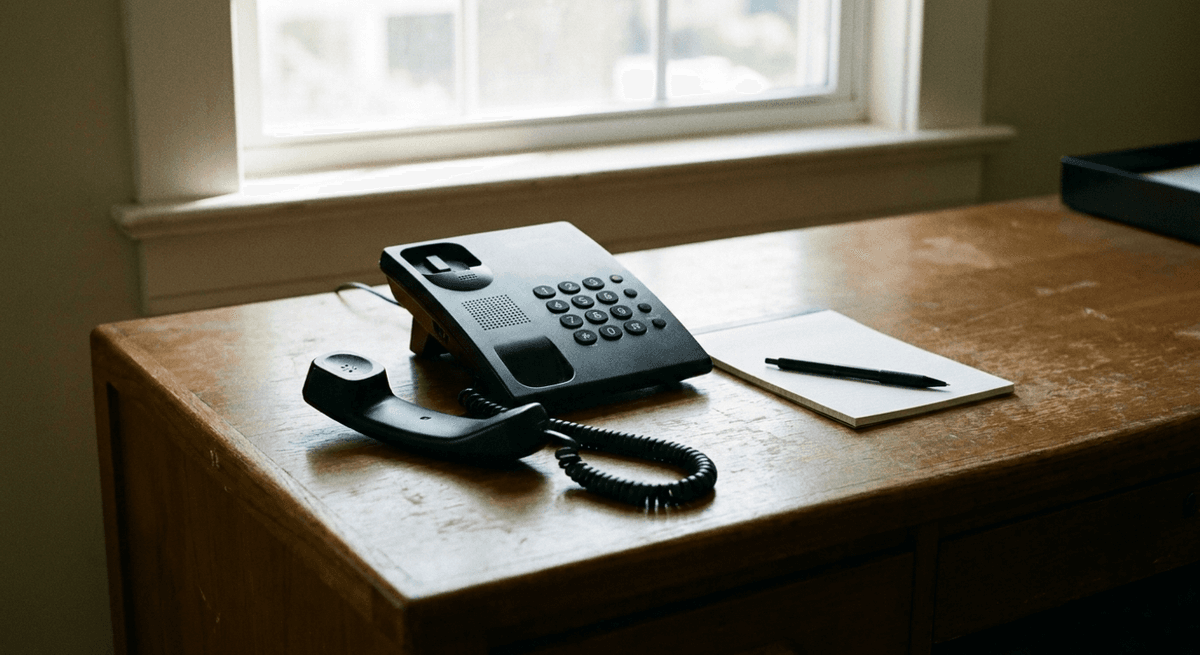
¿Puede grabar llamadas telefónicas en Maryland?
Solo con el consentimiento de todas las partes
Usted puede grabar una llamada telefónica en Maryland, pero solo si cada persona en la llamada da su consentimiento antes de que comience la grabación. El estatuto de escuchas telefónicas de Maryland protege las "comunicaciones por cable", que la ley define ampliamente para incluir cualquier transmisión de voz realizada por cable, cableado o conexión similar. Esto cubre:
- Llamadas tradicionales de línea fija
- Llamadas de celular y móviles
- Llamadas por VoIP (Zoom, Skype, audio de FaceTime, llamadas de WhatsApp)
- Conferencias telefónicas con múltiples participantes
- Llamadas comerciales entre empleados y clientes
- Llamadas realizadas mediante sistemas telefónicos conectados a internet
Cómo obtener un consentimiento válido
Maryland exige un consentimiento explícito y afirmativo. Para grabar legalmente una llamada telefónica:
- Antes de que comience la conversación, indique claramente que tiene la intención de grabar la llamada
- Pida a cada participante que acepte verbalmente la grabación
- Si alguna persona en la llamada no da su consentimiento, debe detener la grabación
- Grabe el intercambio de consentimiento como parte de la llamada para documentar el cumplimiento
Ejemplo de guion: "Me gustaría grabar esta conversación. ¿Está de acuerdo en ser grabado?"
Consentimiento implícito: no es suficiente en Maryland
En muchos estados, continuar una llamada telefónica después de escuchar un mensaje de "esta llamada puede ser grabada" cuenta como consentimiento implícito. El estricto estándar de Maryland puede no aceptar este enfoque. El estatuto exige que el consentimiento de cada parte sea genuino e informado.
Un tribunal de Maryland podría determinar que permanecer pasivamente en una llamada después de un mensaje automatizado no cumple con el estándar de consentimiento afirmativo. El enfoque más seguro para cualquiera que grabe llamadas que involucren a residentes de Maryland es obtener un acuerdo verbal claro.
Grabación de llamadas telefónicas interestatales
¿Qué ley estatal se aplica?
Cuando una llamada telefónica cruza límites estatales, la pregunta de qué ley de grabación se aplica se vuelve crítica. Los tribunales de Maryland han aplicado de manera constante su propio estándar más estricto para proteger a los residentes de Maryland.
Regla clave: si cualquier persona en la llamada está en Maryland, usted debe seguir el requisito de consentimiento de todas las partes de Maryland, sin importar dónde se encuentre usted.
Esto significa que:
- Una persona que llama desde Nueva York (consentimiento de una sola parte) que graba una llamada con un residente de Maryland ha violado la ley de Maryland
- Una persona que llama desde Texas (consentimiento de una sola parte) grabando una llamada con una empresa de Maryland necesita el consentimiento de todas las partes
- Una persona que llama desde California (consentimiento de dos partes) y un residente de Maryland están protegidos por los estándares igualmente estrictos de sus respectivos estados
Consejos prácticos para llamadas interestatales
Si usted regularmente hace llamadas que cruzan límites estatales:
- Identifique dónde se encuentra cada participante antes de grabar
- Aplique el estándar de consentimiento más estricto cuando los estados difieran
- En caso de duda, obtenga el consentimiento de todos en la llamada
- Las empresas deben incorporar mecanismos de consentimiento en sus sistemas telefónicos
Grabación de llamadas telefónicas comerciales en Maryland
Requisitos de cumplimiento
Las empresas de Maryland que graban llamadas con clientes deben tomar medidas específicas para cumplir con el estatuto de escuchas telefónicas:
Operaciones de centro de llamadas:
- Incorpore un aviso de consentimiento interactivo en el sistema telefónico que exija una acción afirmativa (presionar un botón o confirmar verbalmente)
- No confíe únicamente en un anuncio pasivo de "esta llamada puede ser grabada"
- Capacite a todos los empleados para obtener el consentimiento verbal antes de que comience la grabación
- Ofrezca a quien llama la opción de hablar con un representante sin ser grabado
- Documente los procedimientos de consentimiento y mantenga registros de cumplimiento
Llamadas de pequeñas empresas:
- Si graba llamadas manualmente, anuncie su intención y pida el consentimiento al inicio de cada llamada
- Considere si realmente necesita grabar, o si notas escritas serían suficientes
- Consulte con un abogado de Maryland sobre sus prácticas específicas de grabación

Reglas específicas por industria
Algunas industrias enfrentan requisitos de grabación adicionales más allá del estatuto de escuchas telefónicas:
Servicios financieros: los corredores de bolsa y asesores financieros pueden tener obligaciones regulatorias bajo las reglas de FINRA o la SEC de grabar ciertas comunicaciones. Estos requisitos federales no anulan la ley de consentimiento estatal de Maryland, pero crean obligaciones de cumplimiento que deben equilibrarse con la ley estatal.
Atención médica: los proveedores médicos que graban llamadas con pacientes deben cumplir tanto con el estatuto de escuchas telefónicas como con las reglas de privacidad de HIPAA. El consentimiento del paciente debe cubrir tanto la grabación en sí como el manejo de la información de salud protegida.
Seguros: las compañías de seguros que graban llamadas de reclamos deben obtener el consentimiento según el estatuto de escuchas telefónicas. Las regulaciones de la Administración de Seguros de Maryland pueden imponer requisitos adicionales.
Grabación de conferencias telefónicas
Múltiples participantes
Las conferencias telefónicas presentan desafíos especiales bajo la ley de consentimiento de todas las partes de Maryland. Cuando varias personas se unen a una llamada:
- Cada participante debe dar su consentimiento antes de que comience la grabación
- Los nuevos participantes que se unan después de que la grabación haya comenzado deben ser informados y dar su consentimiento
- Si algún participante se opone, la grabación debe detenerse para toda la llamada
- El organizador de la llamada debe mantener un registro de quién dio su consentimiento
Plataformas de reuniones virtuales
Plataformas como Zoom, Microsoft Teams y Google Meet muestran notificaciones de grabación a todos los participantes. Aunque estas notificaciones ayudan a satisfacer el requisito de consentimiento, el estricto estándar de Maryland significa que:
- Los participantes deben tener una oportunidad clara de objetar o salir antes de que comience la grabación
- Una pequeña notificación emergente puede no constituir el "consentimiento explícito" que exige Maryland
- Los organizadores de la reunión deben anunciar verbalmente la grabación y pedir el acuerdo
- Se debe prestar especial atención al consentimiento de los participantes que se conectan desde Maryland
Llamadas al 911 y excepciones de emergencia
Las llamadas al 911 se graban
La ley de Maryland ofrece una excepción para las llamadas de emergencia al 911. Los centros de despacho de servicios de emergencia graban rutinariamente todas las llamadas entrantes, y quienes llaman no están obligados a dar su consentimiento para esta grabación. Esta excepción reconoce el propósito crítico de seguridad pública de mantener registros de las comunicaciones de emergencia.
Otras excepciones de emergencia
El estatuto de escuchas telefónicas también permite grabar sin consentimiento cuando:
- Una orden judicial autoriza la interceptación
- Las fuerzas del orden están investigando delitos graves específicos enumerados en ss 10-402(c)(2)
- La comunicación se realiza a través de canales de servicios de emergencia
Llamadas telefónicas digitales y por VoIP
Se aplican las mismas reglas
El estatuto de escuchas telefónicas de Maryland cubre las "comunicaciones por cable" y las "comunicaciones electrónicas" de manera lo suficientemente amplia como para abarcar los servicios de llamadas digitales y por VoIP. El mismo requisito de consentimiento de todas las partes se aplica a:
- Servicios tradicionales de VoIP (Vonage, magicJack)
- Llamadas basadas en aplicaciones (WhatsApp, Signal, llamadas de voz de Telegram)
- Plataformas de videollamadas (FaceTime, Zoom, Skype) cuando se usan para comunicación de voz
- Sistemas telefónicos empresariales que enrutan llamadas a través de internet
Servicios de grabación en la nube
Varias empresas usan servicios en la nube que graban automáticamente las llamadas telefónicas. Si su empresa usa uno de estos servicios, igual debe cumplir con los requisitos de consentimiento de Maryland. La tecnología de grabación no crea una excepción al estatuto de escuchas telefónicas.
Servicios como Gong, Chorus u otras herramientas de grabación de llamadas con inteligencia artificial que capturan y transcriben automáticamente las llamadas deben configurarse para obtener el consentimiento de todas las partes antes de que comience la grabación.
Penas penales por grabación telefónica ilegal
Grabar una llamada telefónica sin consentimiento en Maryland es un delito grave según el ss 10-402.
| Infracción | Clasificación | Pena máxima |
|---|---|---|
| Grabar una llamada telefónica sin consentimiento | Delito grave | 5 años de prisión, multa de $10,000 |
| Divulgar el contenido de una llamada grabada ilegalmente | Delito grave | 5 años de prisión, multa de $10,000 |
| Usar el contenido de una llamada grabada ilegalmente | Delito grave | 5 años de prisión, multa de $10,000 |
Cada acto separado de grabar, divulgar o usar una llamada telefónica interceptada ilegalmente puede acusarse como un delito grave independiente.
Responsabilidad civil
Según el ss 10-410, las víctimas de grabación telefónica ilegal pueden presentar demandas civiles y recuperar:
- Daños reales con un mínimo de $100 por día de infracción o $1,000, lo que sea mayor
- Daños punitivos por infracciones intencionales o flagrantes
- Honorarios razonables de abogado y costos de litigio
Las empresas que graban llamadas sistemáticamente sin el consentimiento adecuado enfrentan una posible responsabilidad de demanda colectiva, con daños multiplicados por cada persona afectada.
Inadmisibilidad de las llamadas grabadas ilegalmente
Las llamadas telefónicas grabadas en violación del estatuto de escuchas telefónicas son inadmisibles en los tribunales de Maryland según el ss 10-405. Esto significa que:
- Una llamada telefónica grabada en secreto no puede usarse como evidencia en una demanda
- Un empleador no puede usar una llamada grabada ilegalmente para justificar el despido de un empleado
- Un cónyuge no puede usar una llamada grabada ilegalmente en un proceso de divorcio
- Las fuerzas del orden no pueden usar una grabación obtenida indebidamente para procesar un delito
El recurso de exclusión requiere una moción oportuna, pero los tribunales excluyen de manera constante la evidencia obtenida mediante infracciones a la ley de escuchas telefónicas.
Ley federal de grabación telefónica
18 U.S.C. ss 2511: consentimiento de una sola parte
La ley federal según el 18 U.S.C. ss 2511 sigue un modelo de consentimiento de una sola parte. Según la ley federal, una persona que es parte de una llamada telefónica puede grabarla sin el consentimiento de la otra parte. Sin embargo, la ley federal establece un estándar mínimo, y los estados pueden imponer requisitos más estrictos.
La ley de consentimiento de todas las partes de Maryland supera el mínimo federal. Una grabación que es legal según la ley federal puede aun así violar la ley estatal de Maryland. Cuando se aplican ambas leyes, controla el estándar más estricto (el de Maryland).
Consejos prácticos para la grabación de llamadas telefónicas
Para individuos
- Anuncie siempre su intención de grabar al inicio de la llamada
- Obtenga la confirmación verbal de cada persona en la llamada
- Si alguien se niega, respete su decisión y mantenga notas escritas en su lugar
- Almacene las grabaciones obtenidas legalmente de forma segura
Para empresas
- Implemente avisos de consentimiento interactivos que exijan una acción afirmativa (no solo anuncios pasivos)
- Capacite a todos los empleados de cara al cliente sobre los requisitos de consentimiento
- Audite sus sistemas de grabación de llamadas para verificar el cumplimiento
- Consulte con un abogado de Maryland sobre sus prácticas específicas de grabación
- Mantenga documentación de los procedimientos de consentimiento
Para profesionales legales
- Aconseje a los clientes que las llamadas telefónicas grabadas en secreto son inadmisibles en Maryland
- Considere el requisito de consentimiento de todas las partes al planificar estrategias de recopilación de evidencia
- Revise los problemas de grabación de llamadas interestatales cuando los casos involucren partes en múltiples estados
Más leyes de Maryland
- Leyes de Maryland sobre Grabación de Reuniones con IA
- Leyes de Pensión Alimenticia Conyugal de Maryland
- Leyes de Empleo a Voluntad de Maryland
- Leyes de Accidentes de Auto de Maryland
- Leyes de Asientos de Auto para Niños de Maryland
- Leyes de Custodia de Menores de Maryland
- Leyes de Manutención Infantil de Maryland
- Leyes de Matrimonio de Hecho de Maryland
- Leyes de Privacidad de Datos de Maryland
- Leyes sobre Deepfakes de Maryland
- Leyes de Divorcio de Maryland
- Leyes sobre Mordeduras de Perro de Maryland
- Leyes de Emancipación de Maryland
- Leyes de Eliminación de Antecedentes Penales de Maryland
- Leyes sobre Accidentes con Fuga de Maryland
- Leyes de Arrendador e Inquilino de Maryland
Más leyes de grabación de Maryland
Grabación de Audio | Grabación de Video | Voyerismo y Cámaras Ocultas | Grabación en el Lugar de Trabajo | Grabar a la Policía | Grabación de Llamadas Telefónicas | Cámaras de Seguridad | Grabar en Público | Arrendador e Inquilino | Leyes de Dashcam | Escuelas | Grabación Médica
Volver a las Leyes de Grabación de Maryland
Más temas de grabación de Maryland
- Leyes de Grabación de Maryland
- Grabación de Audio de Maryland
- Grabación de Video de Maryland
- Grabación Médica de Maryland
- Grabación Escolar de Maryland
- Grabación en el Lugar de Trabajo de Maryland
- Grabación Policial de Maryland
- Grabación con Cámaras de Seguridad de Maryland
- Grabación de Voyerismo de Maryland
- Grabación entre Arrendador e Inquilino de Maryland
- Grabación con Dashcam de Maryland
- Grabación en Público de Maryland
- Leyes de Privacidad Biométrica de Maryland
- Leyes de Cámaras de Vigilancia
Preguntas frecuentes
¿Es ilegal grabar una llamada telefónica en Maryland?
Grabar una llamada telefónica en Maryland es legal solo si cada persona en la llamada da su consentimiento antes de que comience la grabación. Grabar sin el consentimiento de todas las partes es un delito grave según ss 10-402, castigado con hasta 5 años de prisión y una multa de $10,000. Esto se aplica por igual a las llamadas de línea fija, celular y VoIP.
¿Un mensaje de 'esta llamada puede ser grabada' satisface la ley de Maryland?
Puede que no. Maryland exige el consentimiento explícito y afirmativo de todas las partes. Un anuncio pasivo de que la llamada puede ser grabada, seguido de que quien llama simplemente permanezca en la línea, podría no cumplir con el estricto estándar de consentimiento de Maryland. El enfoque más seguro es exigir que quien llama presione un botón o confirme verbalmente su acuerdo.
¿Puedo grabar una llamada con alguien en Maryland si estoy en otro estado?
Debe seguir la ley de consentimiento de todas las partes de Maryland si cualquier persona en la llamada está en Maryland. Incluso si su estado permite el consentimiento de una sola parte, los tribunales de Maryland aplican su estándar más estricto para proteger a los residentes de Maryland. Obtenga siempre el consentimiento de todos los participantes cuando un residente de Maryland esté en la llamada.
¿Puede usarse en un tribunal en Maryland una llamada telefónica grabada en secreto?
No. Las llamadas telefónicas grabadas en violación del estatuto de escuchas telefónicas son inadmisibles en los tribunales de Maryland según ss 10-405. Un juez debe excluir la grabación si una parte presenta una moción oportuna. Esto se aplica tanto en casos penales como civiles, sin importar lo que contenga la grabación.
¿Se graban las llamadas al 911 en Maryland?
Sí. La ley de Maryland ofrece una excepción para las llamadas de emergencia al 911. Los centros de despacho de emergencias graban rutinariamente todas las llamadas entrantes, y quienes llaman no necesitan dar su consentimiento. Esta excepción reconoce el propósito esencial de seguridad pública de mantener registros de las comunicaciones de emergencia.
Actualizaciones
Verificado de forma independiente contra las fuentes primarias citadas; ley aplicable revisada en busca de cambios recientes
Ley aplicable revisada en busca de cambios recientes
Revisado y aprobado por un editor
La ley detrás de este artículo
Este artículo se apoya en las disposiciones legales a continuación, conservadas en nuestro propio registro jurídico y obtenidas de la fuente oficial. Toque una sección para leer el texto vigente.
Maryland Code, Courts and Judicial Proceedings Article
§ 10-402Vigentecitada en 26 de nuestros artículos
§10–402. (a) Except as otherwise specifically provided in this subtitle it is unlawful for any person to: (1) Willfully intercept, endeavor to intercept, or procure any other person to intercept or endeavor to intercept, any wire, oral, or electronic communication; (2) Willfully disclose, or endeavor to disclose, to any other person the contents of any wire, oral, or electronic communication, knowing or having reason to know that the information was obtained through the interception of a wire, oral, or electronic communication in violation of this subtitle; or (3) Willfully use, or endeavor to use, the contents of any wire, oral, or electronic communication, knowing or having reason to know that the information was obtained through the interception of a wire, oral, or electronic communication in violation of this subtitle. (b) Any person who violates subsection (a) of this section is guilty of a felony and is subject to imprisonment for not more than 5 years or a fine of not more than $10,000, or both.
Texto oficial (extracto) · verificado el 2026-09-23 · Lea el texto completo en nuestra biblioteca legal · Verifique en mgaleg.maryland.gov
Citada en 12 resoluciones judiciales de nuestra colecciónResolución más reciente que la cita en nuestra colección: 2026
En los tribunales (resumen editorial, verificado de forma independiente):Al aplicar la sección 10-402, Fearnow v. Chesapeake & Potomac Telephone Co. (1995) sostuvo que la responsabilidad bajo la Maryland Wiretap Act exige probar que el demandado actuó con dolo, es decir, una violación intencional o el desprecio temerario de un deber legal conocido; que un empleado no verificara si existía una orden judicial fue solo un factor para el jurado sobre ese punto.
Resoluciones que citan esta sección en nuestra colección:
- Fearnow v. Chesapeake & Potomac Telephone Co. (Court of Special Appeals of Maryland 1995, 104 Md. App. 1)✓La policía ocultó una grabadora en la línea telefónica de un oficial en la jefatura, con ayuda de un empleado telefónico y sin orden judicial; el tribunal sostuvo que un reclamo bajo la sección 10-402(a) exige probar una intercepción intencional, y no preguntar por una orden solo pesaba sobre esa intención.
- Maryland Attorney General Opinion 110OAG60 (Maryland Attorney General Reports 2025)“…or wire communications without the consent of all parties. Md. Code Ann., Cts. & Jud. Proc. § 10-402(a). However, the Wiretap Act contains e…”
- Boehner, John A. v. McDermott, James A. (Court of Appeals for the D.C. Circuit 1999, 191 F.3d 463)“…1992); Me.Rev.Stat. Ann. tit. 15, §§ 710, 711 (West 1998); Md.Code Ann., Cts & Jud. Proc. § 10-402 (1998); Mass. Gen. Laws Ann. ch. 272,…”
Identificado automáticamente a partir de las opiniones judiciales que citan esta sección; no es un ranking de qué caso prevalece.
§ 10-401Vigentecitada en 5 de nuestros artículos
§10–401. As used in this subtitle the following terms have the meanings indicated: (1) “Aggrieved person” means a person who was a party to any intercepted wire, oral, or electronic communication or a person against whom the interception was directed. (2) “Aural transfer” means a transfer containing the human voice at any point between and including the point of origin and the point of reception. (3) “Communications common carrier” means any person engaged as a common carrier for hire in the transmission of wire or electronic communications. (4) “Contents”, when used with respect to any wire, oral, or electronic communication, includes any information concerning the identity of the parties to the communication or the existence, substance, purport, or meaning of that communication. (5) (i) “Electronic communication” means any transfer of signs, signals, writing, images, sounds, data, or intelligence of any nature transmitted in whole or in part by a wire, radio, electromagnetic, photoelectronic, or photooptical system. (ii) “Electronic communication” does not include: 1. Any wire or oral communication; 2. Any communication made through a tone–only paging device; or 3.
Texto oficial (extracto) · verificado el 2026-07-29 · Lea el texto completo en nuestra biblioteca legal · Verifique en mgaleg.maryland.gov
Citada en 10 resoluciones judiciales de nuestra colecciónResolución más reciente que la cita en nuestra colección: 2026
Resoluciones que citan esta sección en nuestra colección:
- Davis v. State (Court of Appeals of Maryland 2012, 426 Md. 211)“…f the Maryland Wiretapping and Electronic Surveillance Act, Md.Code Ann. Cts. & Jud. Proc. § 10-401, et seq.? *218 As foretold earlier i…”
- Fearnow v. Chesapeake & Potomac Telephone Co. (Court of Special Appeals of Maryland 1995, 104 Md. App. 1)“…ctronic Surveillance Act (Maryland Wiretap Act or the Act), Md.Code Ann., Cts. & Jud.Proc. § 10-401 et seq. (1989 Replacement Volume & 19…”
- Project Veritas v. Michael Schmidt (Court of Appeals for the Ninth Circuit 2023, 72 F.4th 1043)“…Maine: 15 Me. Rev. Stat. §§ 709(4), (5), 710(1) Maryland: Md. Code Ann., Cts. & Jud. Proc. §§ 10-401(13), 10-402(a)(1), (c)(3); Agnew v. Mar…”
Identificado automáticamente a partir de las opiniones judiciales que citan esta sección; no es un ranking de qué caso prevalece.
§ 10-405Vigentecitada en 11 de nuestros artículos
§10–405. (a) Except as provided in subsection (b) of this section, whenever any wire, oral, or electronic communication has been intercepted, no part of the contents of the communication and no evidence derived therefrom may be received in evidence in any trial, hearing, or other proceeding in or before any court, grand jury, department, officer, agency, regulatory body, legislative committee, or other authority of this State, or a political subdivision thereof if the disclosure of that information would be in violation of this subtitle.
Texto oficial (extracto) · verificado el 2026-07-29 · Lea el texto completo en nuestra biblioteca legal · Verifique en mgaleg.maryland.gov
Citada en 1 resoluciones judiciales de nuestra colecciónResolución más reciente que la cita en nuestra colección: 2013
Resoluciones que citan esta sección en nuestra colección:
- King v. State (Court of Appeals of Maryland 2013, 434 Md. 472)“…that information would be in violation of this subtitle. Md.Code Ann., Cts. & Jud. Proc. § 10-405(a) (1957, 2013 Repl. Vol.).…”
Identificado automáticamente a partir de las opiniones judiciales que citan esta sección; no es un ranking de qué caso prevalece.
También citada en: Grabaciones como prueba: reglas judiciales por estado
§ 10-410Vigentecitada en 11 de nuestros artículos
§10–410. (a) Any person whose wire, oral, or electronic communication is intercepted, disclosed, or used in violation of this subtitle shall have a civil cause of action against any person who intercepts, discloses, or uses, or procures any other person to intercept, disclose, or use the communications, and be entitled to recover from any person: (1) Actual damages but not less than liquidated damages computed at the rate of $100 a day for each day of violation or $1,000, whichever is higher; (2) Punitive damages; and (3) A reasonable attorney’s fee and other litigation costs reasonably incurred. (b) A good faith reliance on a court order or legislative authorization shall constitute a complete defense to any civil or criminal action brought under this subtitle or under any other law.
Texto oficial (extracto) · verificado el 2026-07-29 · Lea el texto completo en nuestra biblioteca legal · Verifique en mgaleg.maryland.gov
Citada en 2 resoluciones judiciales de nuestra colecciónResolución más reciente que la cita en nuestra colección: 2023
En los tribunales (resumen editorial, verificado de forma independiente):Fearnow v. Chesapeake & Potomac Telephone Co. (1995) sostuvo que los daños punitivos bajo la sección 10-410(a) exigen malicia, es decir, una violación consciente y deliberada de la Ley de Escuchas de Maryland, y que el desprecio temerario de un deber legal conocido no basta. También rechazó daños a la reputación no causados por la interceptación misma.
Resoluciones que citan esta sección en nuestra colección:
- Fearnow v. Chesapeake & Potomac Telephone Co. (Court of Special Appeals of Maryland 1995, 104 Md. App. 1)✓Un jefe de policía hizo intervenir la extensión telefónica de un oficial con la ayuda de un técnico telefónico; el tribunal sostuvo que la responsabilidad bajo la sección 10-410 exige probar que el técnico actuó deliberadamente, cuestión del jurado, y que los daños punitivos exigen malicia.
- Think Tank, Inc. v. ITegrity, Inc. (District Court, D. Maryland 2023)“…against Bawa and [Tegrity under the Maryland Wiretap Act, Md. Code Ann., Cts. & Jud. Proc. § 10-410 (West 2022), also related to Bawa’s use…”
Identificado automáticamente a partir de las opiniones judiciales que citan esta sección; no es un ranking de qué caso prevalece.
United States Code Title 18
§ 2511Interception and disclosure of wire, oral, or electronic communications prohibitedVigentecitada en 441 de nuestros artículos
Except as otherwise specifically provided in this chapter any person who— intentionally intercepts, endeavors to intercept, or procures any other person to intercept or endeavor to intercept, any wire, oral, or electronic communication; intentionally uses, endeavors to use, or procures any other person to use or endeavor to use any electronic, mechanical, or other device to intercept any oral communication when— such device is affixed to, or otherwise transmits a signal through, a wire, cable, or other like connection used in wire communication; or such device transmits communications by radio, or interferes with the transmission of such communication; or such person knows, or has reason to know, that such device or any component thereof has been sent through the mail or transported in interstate or foreign commerce; or such use or endeavor to use (A) takes place on the premises of any business or other commercial establishment the operations of which affect interstate or foreign commerce; or (B) obtains or is for the purpose of obtaining information relating to the operations of any business or other commercial establishment the operations of which affect interstate or foreign…
Texto oficial (extracto) · verificado el 2026-09-17 · Lea el texto completo en nuestra biblioteca legal · Verifique en uscode.house.gov
Citada en 2,045 resoluciones judiciales de nuestra colecciónResolución más reciente que la cita en nuestra colección: 2026
En los tribunales (resumen editorial, verificado de forma independiente):Griggs-Ryan v. Smith (1990) aplicó la excepción de consentimiento previo de la Sección 2511(2)(d) y consideró que un inquilino advertido repetidamente de que se grababan todas las llamadas entrantes había consentido de forma implícita. United States v. United States District Court (1972) leyó la entonces vigente Sección 2511(3) como una norma que no confería al presidente poder de vigilancia.
Resoluciones que citan esta sección en nuestra colección:
- Mitchell v. Forsyth (Supreme Court of the United States 1985, 472 U.S. 511)✓El Procurador General autorizó en 1970 una escucha telefónica sin orden judicial por seguridad nacional que captó las llamadas del demandante; la Corte sostuvo que la exención ya derogada de la Sección 2511(3) dejaba la escucha lícita bajo el Título III y reconoció inmunidad calificada a Mitchell.
- United States v. United States District Court for the Eastern District of Michigan (Supreme Court of the United States 1972, 407 U.S. 297)✓El Procurador General aprobó escuchas sin orden judicial a miembros de un grupo estadounidense acusado de dinamitar una oficina de la CIA; la Corte interpretó la Sección 2511(3) como una renuncia del Congreso que no confiere poder de vigilancia y sostuvo que la Cuarta Enmienda exigía aprobación judicial previa.
- Forsyth v. Barr (Court of Appeals for the Fifth Circuit 1994, 19 F.3d 1527)✓La policía de Dallas usó, en una investigación de asuntos internos sobre una agente, llamadas que unos particulares habrían interceptado ilegalmente; suponiendo que fuera ilícito, el Quinto Circuito sostuvo que la Sección 2517(1) y (2) permitía esa divulgación y ese uso, derrotando los reclamos bajo la Sección 2511(1)(c) y (d).
Identificado automáticamente a partir de las opiniones judiciales que citan esta sección; no es un ranking de qué caso prevalece.
También citada en: Leyes de Grabación de Luisiana (2026): Reglas de Consentimiento de Una Sola Parte, Leyes sobre Cámaras de Vigilancia por Estado (Guía 2026), Leyes de grabación de llamadas telefónicas en Luisiana: lo que debe saber
Fuentes y referencias
- Md. Code, Cts. & Jud. Proc. ss 10-402 - Interceptación de Comunicaciones(mgaleg.maryland.gov).gov
- Md. Code, Cts. & Jud. Proc. ss 10-405 - Exclusión de Evidencia(mgaleg.maryland.gov).gov
- Md. Code, Cts. & Jud. Proc. ss 10-410 - Responsabilidad Civil(law.justia.com).gov
- 18 U.S.C. ss 2511 - Ley Federal de Escuchas Telefónicas(law.cornell.edu)
- Md. Code, Cts. & Jud. Proc. ss 10-401 - Definiciones(mgaleg.maryland.gov).gov
- SB 61 (2025) - Reforma de Escuchas Telefónicas y Vigilancia Electrónica(mgaleg.maryland.gov).gov
- Md. Code, Cts. & Jud. Proc. ss 10-410 - Responsabilidad Civil(mgaleg.maryland.gov).gov