
Ecuador
Ecuador Recording Laws: One-Party Consent Rules and Penalties (2026)
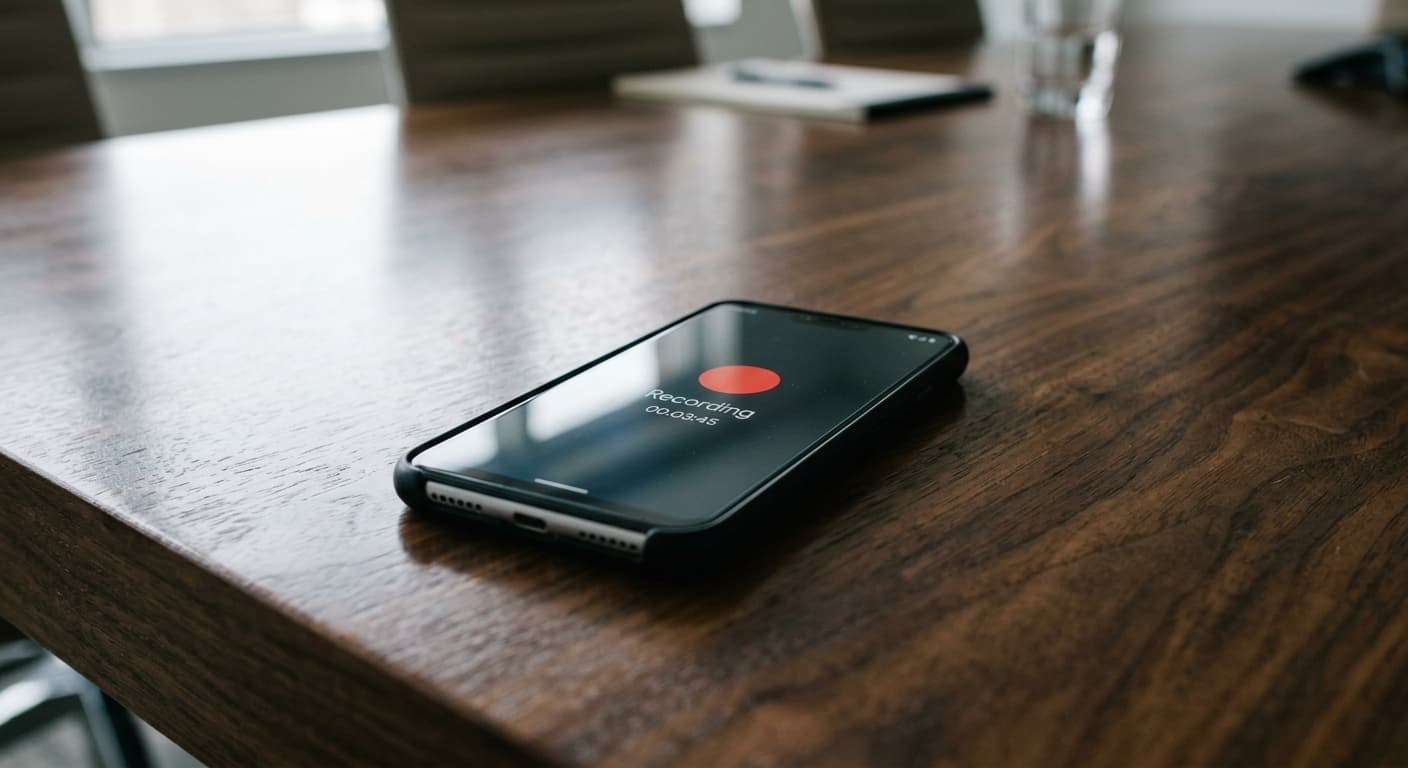
Ecuador is a one-party consent country: under COIP Article 178, any participant in a conversation may record it without notifying the other parties. Non-participants who secretly record private conversations face 1 to 3 years in prison. The same rule applies to phone calls, video calls, and in-person exchanges.
Quick Answer: Ecuador Is a One-Party Consent Country
Ecuador applies a one-party consent rule for recording conversations. If you personally participate in a conversation, whether by phone, video call, or face to face, you may record it without telling the other party. This rule comes directly from COIP Article 178, which exempts participants from its recording prohibitions.
A person who records a conversation they are not part of faces up to three years in prison. Distribution of intimate recordings without consent carries a separate penalty under COIP Article 180. Law enforcement needs a court order to intercept communications under COIP Article 476, though a controversial 2025 intelligence law attempted to remove that requirement (with key provisions provisionally suspended by the Constitutional Court in August 2025).
Ecuador's recording laws apply to everyone on Ecuadorian territory, including foreign visitors and tourists. The Ley Organica de Proteccion de Datos Personales (LOPDP) adds data-protection obligations on top of the criminal rules whenever recordings are stored, processed, or shared.
Constitution of Ecuador: Article 66 N° 21 and the Right to Privacy
Ecuador's 2008 Constitution provides the foundational privacy framework within which all recording laws operate. Article 66 enumerates several rights that directly govern recordings and communications.
Article 66, Numeral 21 establishes the right to inviolability and secrecy of physical and virtual correspondence. This right covers all forms of communication and provides that correspondence cannot be retained, opened, or examined except in the cases provided by law and with prior judicial authorization. The word "virtual" in this provision has been interpreted to encompass email, messaging applications, and other digital communications.
Article 66, Numeral 19 gives every person the right to protection of their personal data, including the right to access data about themselves and to make decisions about how it is used. This provision underpins the LOPDP and the authority of the SPDP.
Article 66, Numeral 20 protects the right to personal and family intimacy. Courts have interpreted this alongside the reasonable expectation of privacy doctrine that the Constitutional Court formalized in Sentencia 2064-14-EP/21.
Article 66, Numeral 6 protects freedom of expression, which includes the right to seek, receive, and disseminate public information. This provision supports the right of citizens to record police officers and public officials performing their duties in public.
Article 18 guarantees the right to seek, receive, exchange, produce, and disseminate truthful and timely information about matters of public interest without prior censorship. Article 18 reinforces the constitutional basis for recording public officials.
Article 76, Numeral 4 establishes the exclusionary rule: evidence obtained in violation of the Constitution or the law has no evidentiary validity. This means recordings obtained in breach of Article 178 or through unauthorized surveillance cannot be used in any legal proceeding, criminal or civil.
The Constitutional Court has interpreted these provisions to create a layered privacy framework. Private communications receive the strongest protection. Public officials performing public functions receive the weakest protection for those functions. Private persons in public spaces occupy the middle ground, with context determining whether a recording violates their constitutional rights.
COIP Articles 178 Through 180: What the Criminal Code Says
The Codigo Organico Integral Penal (COIP) is Ecuador's primary criminal statute governing recordings. Articles 178 through 180 address three distinct privacy offenses.
Article 178: Violation of Privacy and the One-Party Consent Rule
Article 178 (Violacion a la Intimidad) prohibits any person who, without the consent or legal authorization of the affected party, accesses, intercepts, examines, retains, records, reproduces, disseminates, or publishes any of the following:
- Personal data
- Data messages
- Voice recordings
- Audio and video content
- Postal correspondence
- Information stored in computer systems
- Private or reserved communications of another person
The prohibition applies regardless of the method used. Phone recording apps, hidden cameras, audio recorders, and computer programs all fall within Article 178's reach.
The one-party consent exception appears in the second paragraph of Article 178:
"No son aplicables estas normas para la persona que divulgue grabaciones de audio y video en las que interviene personalmente, ni cuando se trata de informacion publica de acuerdo con lo previsto en la ley."
Translated: "These rules are not applicable to a person who discloses audio and video recordings in which they personally intervene, nor when the information is public in accordance with what the law provides."
This language is direct and explicit. The COIP does not merely permit participant recording by implication; it affirmatively removes participant recording from the scope of Article 178's prohibitions. Whether you are recording a phone call, a meeting, or a face-to-face conversation, the exception applies as long as you are a party to the recorded exchange.
Penalty under Article 178: 1 to 3 years deprivation of liberty.
Article 179: Professional Secrets
Article 179 (Revelacion de Secreto) targets persons who hold confidential information by virtue of their professional or occupational role. The statute reads:
"La persona que teniendo conocimiento por razon de su estado u oficio, empleo, profesion o arte, de un secreto cuya divulgacion pueda causar dano a otra persona y lo revele, sera sancionada con pena privativa de libertad de seis meses a un ano."
Translated: "A person who, by reason of their status, employment, profession, or occupation, has knowledge of a secret whose disclosure may harm another and reveals it, faces 6 months to 1 year deprivation of liberty."
Article 179 is most relevant to lawyers, doctors, clergy, therapists, and other professionals who handle confidential client or patient information. A professional who records client communications and then discloses them could face liability under both Article 178 (if the recording was unauthorized) and Article 179 (for the disclosure itself).
Penalty under Article 179: 6 months to 1 year deprivation of liberty.
Article 180: Non-Consensual Intimate Images (NCII)
Article 180 (Difusion de informacion de circulacion restringida, commonly applied to NCII cases) specifically targets the distribution of intimate and sexual content without consent. The statute prohibits any person who reveals or distributes:
- Digital content
- Messages, emails
- Images, audio, or video
- Any other personal or intimate content about a person's sexuality
...without the affected person's consent, where that person wanted the content to remain private.
This provision addresses what is commonly called "revenge porn" or non-consensual intimate image (NCII) distribution. It operates alongside COIP Article 178: Article 178 covers the unauthorized capture of recordings, while Article 180 covers the unauthorized distribution of intimate content that may have originally been created consensually.
The Constitutional Court reinforced the application of privacy protections to intimate content in Sentencia 2064-14-EP/21 (see the Corte Constitucional section below).
Penalty under Article 180: 1 to 3 years deprivation of liberty.
COIP Article 234: Computer System Intrusion and Recordings
Article 234 (Acceso no consentido a un sistema informatico, telematico o de telecomunicaciones) criminalizes unauthorized access to computer, telematic, or telecommunications systems. The statute covers:
- Accessing in whole or in part a computer, telematic, or telecommunications system without authorization
- Remaining within such a system against the will of the person with legitimate rights
- Accessing such a system in order to illegally exploit the access, modify a web portal, or redirect or reroute data or voice traffic
Article 234 is relevant to recording law whenever a person uses malware, spyware, or other unauthorized system access to intercept communications. Installing a keystroke logger on a colleague's computer to capture their messages, deploying software to intercept a spouse's phone calls, or gaining unauthorized access to a cloud storage account to obtain recordings of another person's conversations all fall within Article 234's scope.
In these situations, the perpetrator may face both Article 178 charges (for the recording violation) and Article 234 charges (for the system intrusion), running concurrently.
Penalty under Article 234: 3 to 5 years deprivation of liberty.
Penalties Summary
The following table consolidates the criminal penalties for recording-related offenses under the COIP, alongside the administrative fines available under the LOPDP.
| Provision | Offense | Penalty |
|---|---|---|
| COIP Art. 178 | Non-participant recording or disclosing another's private communications without consent | 1 to 3 years deprivation of liberty |
| COIP Art. 179 | Professional disclosing a confidential secret that causes harm | 6 months to 1 year deprivation of liberty |
| COIP Art. 180 | Distributing intimate/sexual images or content without consent (NCII) | 1 to 3 years deprivation of liberty |
| COIP Art. 234 | Unauthorized access to computer/telematic/telecom system to capture or exploit communications | 3 to 5 years deprivation of liberty |
| LOPDP (private entities) | Serious data protection infractions (e.g., unlawful surveillance, failure to comply with SPDP requirements) | Fine of 0.7% to 1% of annual business volume |
Civil liability for moral damages (dano moral) may also be pursued under the Codigo Civil alongside any criminal prosecution.
Criminal Procedure: How Courts Handle Recordings as Evidence
Admissibility of Participant Recordings
Recordings made by a participant under COIP Article 178's exception are generally admissible in criminal, civil, and labor proceedings. The key admissibility requirement under Article 471 is that the integrity of the recording must be preserved: the original file should not be edited, and a clear chain of custody should be maintained. Courts assess whether the recording was captured by a participant, whether its content is relevant to the proceeding, and whether the file has been tampered with.
Under the Codigo Organico General de Procesos (COGEP), documentary evidence includes any document that "collects, contains, or represents any fact," which encompasses audio and video recordings. Both criminal and civil courts have accepted participant recordings as documentary evidence.
Recordings from Judicial Interceptions
Recordings obtained through lawful judicial interception under Article 476 are admissible in criminal proceedings, subject to strict procedural requirements. Only the portions of intercepted communications relevant to the investigation may be introduced into the proceeding. The prosecutor must delete all irrelevant portions, and that deletion must be supervised by the competent judge.
The Exclusionary Rule
Under Article 76, Numeral 4 of the Constitution, any evidence obtained in violation of constitutional rights or the law is inadmissible. This applies to recordings made by non-participants without consent, recordings obtained through unauthorized wiretapping, and recordings captured through the unauthorized system access covered by Article 234.
Recording Phone Calls in Ecuador
Under the one-party consent framework established by COIP Article 178, you can legally record a phone call in Ecuador as long as you are one of the parties on the call. You do not need to inform the other person that you are recording. The exception in Article 178 applies equally to voice calls, video calls, messaging applications, and other forms of telecommunication.
If you are not a participant in the phone call, recording it is illegal. Third-party interception of phone calls falls under both Article 178 (violation of privacy) and Article 470 of the COIP, which specifically prohibits recording or registering the personal communications of third parties without their knowledge and authorization.
Article 470: Third-Party Recording Prohibition
Article 470 of the COIP reinforces the prohibition against third-party recording. It states that personal communications of third parties "cannot be recorded or registered by any means without their knowledge and authorization, except in cases expressly provided for by law." This article also specifies that:
- Interception of communications protected by professional or religious secrecy is absolutely prohibited.
- Any procedural action that violates this guarantee has no evidentiary effect.
- Only the textual transcription of conversation portions considered useful or relevant to an investigation may be introduced into legal proceedings.
- Telecommunications service personnel involved in authorized interceptions must maintain confidentiality.
Recording In-Person Conversations
The same one-party consent rule applies to face-to-face conversations. If you are physically present and participating in a conversation in Ecuador, you may record it without informing the other participants. COIP Article 178's exception makes no distinction between phone calls and in-person interactions. The key factor is whether you "personally intervene" in the recorded exchange.
This means you can record meetings, personal discussions, business negotiations, or any other conversation you are part of. However, leaving a recording device in a room to capture conversations you are not part of would violate Article 178, since you would not be personally intervening in those conversations.
When a Conversation Becomes Private
Ecuador's Constitution provides strong protections for private communications. Article 66, Numeral 21 establishes the right to inviolability and secrecy of physical and virtual correspondence, which extends to all forms of communication. The constitutional protection applies to conversations that carry a reasonable expectation of privacy.
A conversation between two people in a private office carries a stronger expectation of privacy than a loud discussion in a public market. While the COIP's one-party consent exception lets participants record regardless of setting, the distinction matters when evaluating whether a third party's recording constitutes a violation.
Recording Police and Public Officials
Citizens in Ecuador have the right to record police officers and public officials while they are performing their official duties. This right derives from several constitutional provisions working together.
Constitutional basis: Article 18 of the Constitution guarantees the right to seek, receive, exchange, and disseminate truthful information about matters of public interest without prior censorship. Article 66, Numeral 6 protects freedom of expression. The conduct of police officers and public officials in their official capacity constitutes a matter of public interest.
Statutory basis: COIP Article 471 explicitly permits individuals to record criminal acts in public spaces and areas of free circulation without judicial authorization. Because police conduct can constitute or relate to criminal activity, Article 471 provides an express statutory basis for citizen recording of police.
Practical scope: The right applies wherever the public official is performing their official function, whether in a public street, government office, checkpoint, or other location where the official is acting in their public capacity. Recording must be of the official act itself; recording a private conversation of a police officer unrelated to their duties would still require participant status under Article 178.
Limitations and risks: While the legal right to record public officials is established, Ecuadorian human rights organizations have documented cases in which citizens faced intimidation or retaliatory arrest when filming police. The right exists in law; exercising it can carry practical risks in practice, particularly during public protests or security operations. Advocacy organizations including WITNESS have published guidance specifically on recording police in Ecuador.
Recording in Public Spaces
Recording in public spaces in Ecuador receives broader legal protection. Two provisions work together to establish what is permitted.
COIP Article 471: Recording Criminal Acts
Article 471 of the COIP specifically addresses recordings related to criminal activity. It states that audio, video, or photographic recordings related to a criminal offense that are captured spontaneously at the moment of execution do not require judicial authorization. This includes recordings made through:
- Social media platforms
- Surveillance or security cameras
- Any technological means
- Private individuals in public spaces and places of free circulation
When a participant involved in the recorded event makes the recording, the integrity of the data record must be preserved for the recording to have evidentiary value.
General Public Recording Rights
Beyond criminal situations, Ecuador's legal framework generally allows photography and video recording in public spaces. The Constitution protects freedom of expression (Article 66, Numeral 6) and the right to access public information. Even in public spaces, however, recording private conversations between other people without their knowledge or participation remains subject to Article 178 restrictions.
Workplace Recording Laws in Ecuador
Workplace recording in Ecuador involves the intersection of criminal law, labor law, and data protection law.
Employee Recording of Conversations
Under the one-party consent framework, employees in Ecuador can record conversations with coworkers, supervisors, or clients that they personally participate in. The COIP Article 178 exception does not contain a workplace limitation. This means an employee who records a meeting with their boss, a discussion with a colleague, or a phone call with a client is acting within the law, as long as they are a participant.
This right becomes particularly important in labor disputes, workplace harassment cases, and situations involving unpaid wages or unsafe conditions. Recordings made by participants can serve as evidence in labor proceedings.
Employer Video Surveillance (CCTV)
Employers who install video surveillance systems in the workplace must comply with Ecuador's Ley Organica de Proteccion de Datos Personales (LOPDP), which took effect in 2021 with its implementing regulations issued in 2023. Key requirements include:
- Signage: Employers must display visible and clear signs in strategic locations informing individuals that video surveillance is in operation.
- Purpose limitation: Surveillance is justified only for guaranteeing the security and integrity of persons and property within the facilities, and for investigating incidents.
- No audio capture in private areas: Recording audio in areas where employees have a reasonable expectation of privacy (break rooms, restrooms, locker rooms) is not permitted. The LOPDP Reglamento further clarifies that legitimate interest cannot serve as the lawful basis for audio recording in video surveillance systems.
- Data access rights: Employees can request access to recordings that contain their personal data. The employer must evaluate whether other individuals' images appear in the requested footage and protect their privacy accordingly.
- Retention limits: Recordings must not be kept longer than necessary for the stated purpose.
Employers who fail to follow these requirements may face sanctions under the LOPDP. The Superintendencia de Proteccion de Datos Personales (SPDP) began active enforcement in December 2025, imposing its first formal sanctions on private entities (see LOPDP section below). Organizations with video surveillance programs should treat LOPDP compliance as an active regulatory obligation, not a future concern.
Voyeurism and Non-Consensual Intimate Images
Ecuador's legal framework addresses two distinct scenarios involving intimate recordings: voyeuristic surveillance without consent and the distribution of intimate content that was originally recorded consensually.
COIP Article 180: Distribution of Intimate Content Without Consent
COIP Article 180 specifically criminalizes the distribution of intimate and sexual content without the subject's consent. The statute covers digital content, messages, emails, images, audio, video, and any other personal or intimate material relating to a person's sexuality, when that person wanted the material to remain private.
This provision is distinct from Article 178: Article 178 addresses the unauthorized capture of recordings; Article 180 addresses the unauthorized disclosure of intimate material regardless of how it was originally obtained. A person who records an intimate encounter with the other party's consent and then distributes that recording without their later consent can face up to three years under Article 180 even though the original recording was lawful.
Constitutional Court Sentencia 2064-14-EP/21 and the Reasonable Expectation Standard
In its March 1, 2021 decision (Sentencia 2064-14-EP/21), the Constitutional Court established the reasonable expectation of privacy standard for Ecuador. The Court held that intimate photographs constitute personal data and that sharing such images without consent violates constitutional protections for data protection, personal image, honor, and dignity.
The Court established a two-part test for determining whether a person has a reasonable expectation of privacy:
- Subjective element: The person genuinely believes their activity or communication is protected from outside interference.
- Objective element: Society would recognize the expectation as reasonable given the circumstances.
The decision has practical significance for recording cases beyond intimate photographs. It gives courts a framework for evaluating whether a particular recording violated the subject's privacy rights, even in situations not explicitly covered by a specific COIP provision.
When habeas data actions involve sensitive personal information that could harm constitutional rights, the Court directed judges to immediately prohibit publication on any website or physical access to case files, limiting access to the parties involved in the litigation.
Data Protection Law (LOPDP 2021) and the SPDP
Ecuador's Ley Organica de Proteccion de Datos Personales, enacted in May 2021 with implementing regulations issued in November 2023, adds an additional layer of regulation for recordings that capture personal data.
Key Principles
The LOPDP requires that personal data processing (including video and audio recordings) follow principles of:
- Legality: Processing must have a lawful basis.
- Purpose limitation: Data must be collected for specific, explicit, and legitimate purposes.
- Data minimization: Only data necessary for the stated purpose should be collected.
- Storage limitation: Data should not be kept longer than necessary.
- Consent or legitimate interest: Processing generally requires prior, express, and informed consent, unless another lawful basis applies (such as legitimate interest for security cameras). However, legitimate interest cannot be used as a lawful basis for audio recording in video surveillance.
How This Affects Recordings
For individuals recording conversations they participate in, the LOPDP does not override the COIP Article 178 exception. Participant recording remains lawful. However, the LOPDP becomes relevant when recordings are stored, shared with third parties, or used for purposes beyond the original recording context.
Organizations that operate surveillance systems, process recorded calls, or store video footage must comply with LOPDP requirements regarding notice, purpose limitation, data subject access rights, and retention limits.
The Superintendencia de Proteccion de Datos Personales (SPDP)
The SPDP is the independent supervisory authority created by the LOPDP. Administrative sanctions under the LOPDP became effective on May 26, 2023. As of 2024 and 2025, the SPDP issued a substantial body of secondary regulations:
- Resolution SPDP-SPD-2025-0022-R: Fine calculation methodology (private entities: 0.7% to 1% of annual business volume for serious infractions).
- Resolution SPDP-SPD-2025-0028-R: Requirements for Data Protection Delegates (DPOs).
- Resolution SPDP-SPD-2025-0024-R: National and international data transfer requirements.
- Resolution SPDP-SPD-2025-0041-R: Legitimate interest framework for data processing.
- Resolution SPDP-SPD-2026-0009-R: General norms for data protection in AI systems.
- Resolution SPDP-SPD-2026-0004-R: National and international data transfer communications standards.
First enforcement actions (December 2025): The SPDP imposed its first formal sanctions on private entities in December 2025. Liga Profesional de Futbol del Ecuador (LIGAPRO) was fined USD 259,644.01 and the Federacion Ecuatoriana de Futbol (FEF) was fined USD 194,856.16 for serious infractions related to personal data processing. These enforcement actions signal that the SPDP has moved from regulatory development to active compliance enforcement.
LOPDP Territorial Scope
The LOPDP applies to foreign entities that process personal data of Ecuador residents, regardless of where the controller is located. Companies providing cloud storage, communications platforms, or other services to Ecuadorian users must comply with LOPDP requirements if their processing involves personal data of Ecuador-resident data subjects.
Deepfake and AI-Generated Content
Ecuador does not yet have a dedicated law governing deepfake or AI-generated recordings, but several regulatory and legislative developments are relevant.
SPDP Resolution on AI and Data Protection
In 2026, the SPDP issued Resolution SPDP-SPD-2026-0009-R, establishing general norms for guaranteeing data protection rights in the use of artificial intelligence systems. While the full scope of this resolution continues to develop, it represents the first express regulatory guidance on how Ecuador's data protection framework applies to AI processing of personal data, including voice and image data used in AI-generated content.
Three Pending AI Bills in the Asamblea Nacional
As of mid-2025, three AI regulation bills were under consideration in the Asamblea Nacional's Education, Culture, Science, Technology and Ancestral Knowledge Commission, none of which had passed:
- Proyecto de Ley Organica de Regulacion y Promocion de la Inteligencia Artificial (Patricia Nunez, submitted June 20, 2024): General AI regulation framework.
- Proyecto de Ley para el Fomento y Desarrollo de la Inteligencia Artificial (Karina Subia, 2024): AI development and promotion focus.
- Ley Organica para la Proteccion de la Voz Humana frente al Uso de Tecnologias de Inteligencia Artificial (Paola Cabezas, 2025): Specifically targets AI synthesis of human voices without consent.
The Education Commission received submissions from the SPDP, the KITSH Foundation, and academics in July 2025 but had not produced a first-debate report as of that date. The three bills were being unified into a single legislative proposal.
Current Legal Gap and COIP Applicability
Until an AI-specific law is enacted, the following framework applies to deepfake recordings:
- A deepfake video that depicts a real person's likeness in a sexual or intimate context without their consent could fall under COIP Article 180 (distribution of intimate content without consent) or COIP Article 178 (violation of privacy through the use of another person's personal data including their image).
- An AI-generated audio recording falsely attributed to a real person could constitute a privacy violation under COIP Article 178 if the recording is used to misrepresent or harm the person.
- The LOPDP's data protection principles apply to voice and facial data used to train AI models or generate synthetic content: consent, purpose limitation, and data minimization obligations all apply.
Law Enforcement Wiretapping
Law enforcement agencies in Ecuador have historically been required to obtain judicial authorization before intercepting communications. The rules for lawful interception are set out in COIP Articles 475 through 477 and were reinforced by the Constitutional Court in Sentencia 77-16-IN/22. However, a 2025 intelligence law created a contested parallel regime.
Criminal Investigation Wiretapping Under COIP Articles 475-476
Under Article 476 of the COIP, a judge may order interception of communications or computer data only when:
- The prosecutor submits a substantiated request.
- There are indications relevant to the purposes of the investigation.
- The measure is suitable, necessary, and proportional (language added by the Constitutional Court in Sentencia 77-16-IN/22).
- The target offense is sufficiently serious: drug trafficking, organized crime, murder, sexual violence, bribery, embezzlement, extortion, and similar offenses.
Time Limits
The judge must specify which communications will be intercepted and set a time limit. Standard interceptions cannot exceed 90 days. For organized crime investigations, the limit extends to 6 months, with the possibility of a motivated extension for an additional 6 months.
Protections and Oversight
- Communications protected by professional or religious secrecy cannot be intercepted.
- All information not useful or relevant to the investigation must be deleted by the prosecutor, with the deletion supervised by the competent judge.
- Personnel involved in interceptions are bound by strict confidentiality obligations.
The 2025 Ley Organica de Inteligencia and Constitutional Court Suspension
On June 11, 2025, the Asamblea Nacional enacted the Ley Organica de Inteligencia under President Daniel Noboa. This law granted the National Intelligence System authority to intercept communications and collect data from telecommunications companies and private entities without a court order, on grounds of national security. Telecommunications operators were required to surrender both historical and real-time communications data to intelligence agencies upon request, without judicial oversight.
Human rights organizations including Human Rights Watch raised concerns that the law "undermine[d] privacy and interfere[d] with the right to private life and correspondence" and could be used to surveil political opponents and journalists.
On August 4, 2025, the Constitutional Court admitted actions for unconstitutionality and provisionally suspended Articles 5, 13, 22, 41, 42, 43, 47, 48, 50, 51, 52, and 55 of the Intelligence Law, along with Articles 9, 16, 17, 25, 33, 34, 35, 36, and the first general provision of the Implementing Regulation. The chapter obligating telecoms and private entities to surrender data without a court order was among the suspended provisions.
The final constitutionality ruling was pending as of late 2025. Until the Court resolves the constitutional challenge, the COIP Articles 475-476 court-order framework for criminal investigations remains in effect. Whether the Intelligence Law's court-order-free regime survives constitutional review remains an open question.
Cross-Border Considerations
Foreign Visitors Recording in Ecuador
The COIP applies to all persons on Ecuadorian territory regardless of nationality. A foreign visitor who records a conversation without being a participant violates COIP Article 178 and faces the same 1-to-3-year penalty as an Ecuadorian national. The one-party consent exception equally benefits foreign visitors: tourists and business travelers who record conversations they personally participate in are acting lawfully.
Foreign visitors should note that public recording of police or government officials in Ecuador follows the same framework as for citizens: constitutionally protected under Articles 18 and 66 N° 6 for official acts in public, with the same practical cautions about retaliatory enforcement.
Recording in Ecuador and Uploading Abroad
A participant recording made lawfully in Ecuador under COIP Article 178 does not automatically become lawful in the destination country where it is uploaded or shared. If you record a conversation in Ecuador and then post it on a platform governed by German, US, or Canadian law, you must also consider the recording and privacy laws of that jurisdiction.
Ecuadorians Recording Abroad
Ecuadorian criminal law generally applies to acts committed in Ecuador. A conversation that takes place outside Ecuador is governed by the recording laws of the country where it occurs, not the COIP. However, if the recording is made using an Ecuadorian-registered platform or the recording is later used in Ecuador for criminal or civil proceedings, Ecuadorian courts may assess whether it was lawfully obtained in the originating jurisdiction.
LOPDP Extraterritorial Scope
The LOPDP expressly applies to foreign entities that process personal data of Ecuador residents, regardless of where the controller is located. Cloud storage providers, communications platforms, and AI services that process voice or video recordings of Ecuadorian users are subject to LOPDP requirements even if they have no physical presence in Ecuador. The SPDP's resolution on international data transfers (SPDP-SPD-2026-0004-R, February 2026) establishes documentation obligations, security measures, and contractual mechanisms for cross-border data transfers.
The 2021 Reform Controversy
In 2021, the Ecuadorian National Assembly considered reforms to Article 178 of the COIP that would have removed the exception allowing participants to record and disclose their own conversations. The proposed change sparked significant public controversy, with critics arguing it would suppress investigative journalism, eliminate a tool for documenting corruption, and shield public officials from accountability.
Journalists, press freedom organizations, and civil society groups mounted a strong opposition campaign. The National Assembly ultimately reversed course and eliminated the proposed reforms. The participant recording exception remains intact in the current version of Article 178.
This episode highlights the importance Ecuadorian society places on the right of individuals to record conversations they participate in, particularly as a tool for transparency and anti-corruption efforts.
Corte Constitucional: Key Privacy Decisions
Two Constitutional Court decisions have most directly shaped how Ecuador's recording and privacy laws apply in practice.
Sentencia 2064-14-EP/21: Reasonable Expectation of Privacy
Decided on March 1, 2021, Sentencia 2064-14-EP/21 established the reasonable expectation of privacy standard for Ecuador. The Court held that intimate photographs and personal recordings constitute personal data under Constitutional Article 66, Numeral 19 and that sharing such content without consent violates multiple constitutional rights simultaneously: data protection, self-determination over personal information, image, honor, and dignity.
The Court's two-part test requires both a subjective element (the person believes their activity is protected) and an objective element (society would recognize the expectation as reasonable). This framework gives Ecuadorian judges a structured method for evaluating novel recording and privacy disputes that fall in the gaps of the COIP's specific provisions.
The decision also directed judges handling habeas data actions involving sensitive personal information to immediately prohibit publication on any website or physical access to case files, limiting access to the parties involved.
Sentencia 77-16-IN/22: Proportionality for Judicial Interceptions
Sentencia 77-16-IN/22 addressed the constitutional requirements for judicial interception of communications. The Court held that COIP Article 476 must be read to include a proportionality test: any interception order must be not only legally authorized but also suitable (appropriate for the investigative purpose), necessary (no less intrusive alternative exists), and proportional (the privacy cost is justified by the investigative benefit).
This proportionality language was incorporated directly into the operative requirements of Article 476 and is cited by defense counsel whenever challenging the legality of intercepted communications in criminal proceedings.
Together, these two decisions establish Ecuador's judicial approach to privacy: a rights-expansive reading of constitutional privacy guarantees, a structured two-part test for privacy expectations, and a proportionality constraint on state surveillance that goes beyond what the statutory text alone requires.
Frequently Asked Questions
Is Ecuador a one-party or two-party consent country for recording?
Ecuador follows a **one-party consent** rule. Under COIP Article 178, you can legally record any conversation you personally participate in without notifying or obtaining consent from the other parties. The statute explicitly states that its prohibitions do not apply to persons who record conversations in which they personally intervene.
What are the penalties for illegal recording in Ecuador?
Under COIP Article 178, anyone who records, intercepts, or publishes the private communications of another person without consent or legal authorization faces a **custodial sentence of 1 to 3 years** in prison. Distributing intimate content without consent (COIP Art. 180) also carries 1 to 3 years. Unauthorized access to a computer or telecommunications system to capture communications (COIP Art. 234) carries 3 to 5 years.
Can I record a phone call in Ecuador without telling the other person?
Yes. You can record a phone call in Ecuador without informing the other person, as long as you are one of the parties on the call. The one-party consent exception in COIP Article 178 applies to telephone calls, video calls, messaging apps, and all other forms of telecommunication. You do not need to announce that you are recording.
Can I record a conversation at work in Ecuador?
Yes. Employees in Ecuador can record workplace conversations they personally participate in, including meetings with supervisors, discussions with colleagues, and calls with clients. The COIP Article 178 exception does not contain a workplace limitation. However, employer CCTV systems must comply with the LOPDP, which requires signage, purpose limitation, a prohibition on audio recording in private areas such as restrooms, and data access rights for employees.
Can recordings be used as evidence in Ecuadorian courts?
Recordings made by a participant in the conversation are generally admissible as evidence in criminal, civil, and labor proceedings. COIP Article 471 requires that the integrity of the recording be preserved for it to have evidentiary value. Recordings obtained in violation of constitutional rights or the COIP are inadmissible under Article 76, Numeral 4 of the Constitution.
Can I record a police officer or public official in Ecuador?
Yes. Ecuador's Constitution (Articles 18 and 66 N° 6) and COIP Article 471 support the right to record police officers and public officials performing their official duties in public. Advocacy organizations including WITNESS have confirmed this right. However, citizens have faced intimidation or retaliatory enforcement in practice, particularly during protests or security operations. The legal right exists, but exercising it carries practical risks in some contexts.
What is Ecuador's law on sharing intimate videos or photos without consent?
COIP Article 180 specifically criminalizes distributing intimate or sexual images, videos, or digital content about a person without their consent when they wanted the content to remain private. This offense (commonly called NCII or revenge porn) carries 1 to 3 years in prison. This is a separate offense from the general recording prohibition in Article 178 and applies even if the original recording was made with consent.
Does Ecuador have a deepfake law?
No. As of mid-2025, Ecuador has no enacted law specifically addressing deepfakes or AI-generated recordings. Three bills were pending in the Asamblea Nacional -- including a proposal to protect human voices from AI synthesis (Paola Cabezas, 2025) -- but none had passed. The SPDP issued Resolution SPDP-SPD-2026-0009-R in 2026 on data protection in AI systems. Until a specific law passes, AI-generated intimate content may be prosecuted under COIP Article 178 or 180 depending on the circumstances.
Does Ecuador's LOPDP data protection law apply to foreign companies?
Yes. The LOPDP applies to foreign entities that process personal data of Ecuador residents, regardless of where the controller is based. Cloud storage providers, communications platforms, and AI services processing voice or video recordings of Ecuadorian users must comply with LOPDP requirements. The SPDP's 2026 resolution on international data transfers (SPDP-SPD-2026-0004-R) establishes documentation and contractual requirements for cross-border processing.
Do Ecuador's recording laws apply to foreign tourists?
Yes. The COIP applies to all persons on Ecuadorian territory regardless of nationality. Foreign visitors who record conversations they are not a participant in violate COIP Article 178 and face the same 1-to-3-year penalty as Ecuadorian nationals. The one-party consent exception equally benefits foreign visitors: a tourist who records a conversation they personally participate in is acting lawfully.
Can the government in Ecuador intercept my communications without a court order?
For criminal investigations, COIP Articles 475-476 require a judge's order before communications can be intercepted. The 2025 Ley Organica de Inteligencia attempted to remove the court-order requirement for intelligence-agency surveillance, but the Constitutional Court provisionally suspended key articles of that law in August 2025. The final constitutionality ruling was pending as of late 2025. Criminal investigation wiretapping still requires judicial authorization.
Sources and References
- Codigo Organico Integral Penal (COIP) - Ministerio de Defensa (Feb. 2021 version)(defensa.gob.ec).gov
- COIP Article 178 - Violacion a la Intimidad (UNODC database)(unodc.org).gov
- COIP Articles 470, 475-477 - Interception of Communications (UNODC database)(unodc.org).gov
- Constitution of the Republic of Ecuador (2008) - OAS(oas.org).gov
- Ley Organica de Proteccion de Datos Personales (LOPDP)(finanzaspopulares.gob.ec).gov
- LOPDP Implementing Regulations - Decreto Ejecutivo No. 904 (Nov. 2023)(telecomunicaciones.gob.ec).gov
- Constitutional Court Sentencia 77-16-IN/22 (Proportionality for Interceptions)(corteconstitucional.gob.ec).gov
- Constitutional Court Sentencia 2064-14-EP/21 (Reasonable Expectation of Privacy, March 2021)(corteconstitucional.gob.ec).gov
- Fiscalia General del Estado - Interception Requires Judicial Authorization(fiscalia.gob.ec).gov
- Superintendencia de Proteccion de Datos Personales (SPDP) - Resolutions(spdp.gob.ec).gov
- Asamblea Nacional - Proyecto de Ley Organica de Regulacion y Promocion de la IA(asambleanacional.gob.ec).gov
- WITNESS - Right to Record Police and Public Officials in Ecuador(es.witness.org)
- Human Rights Watch - Ecuador: New Laws Endanger Rights (June 2025)(hrw.org)