
Mississippi
Mississippi GPS Tracking Laws: Is It Legal to Put a Tracker on a Car? (2026)
Independently fact-checked against primary sources (last audited June 17, 2026). · Law checked current as of August 9, 2026. How we verify our legal content

Here is the uncomfortable truth: Mississippi has no law that specifically makes it a crime to put a GPS tracker on someone else's car. While more than half the states have passed tracking device statutes, some triggered by the rise of AirTags, Mississippi has not.
That does not mean tracking someone is consequence-free. Covert tracking can feed a stalking charge, a federal prosecution, or a civil lawsuit. But the legal path is harder here than almost anywhere else, and victims need to understand the gap.
This guide explains what Mississippi law actually says, where the holes are, and what you can do about them. It is part of our GPS Tracking Laws by State series.
Is It Legal to Put a GPS Tracker on a Car in Mississippi?
The honest answer: no Mississippi statute says it is illegal. There is no tracking device law, no electronic surveillance of vehicles law, and no AirTag provision anywhere in the Mississippi Code.
The National Conference of State Legislatures tracks which states regulate private use of location tracking devices. At least 26 states and the District of Columbia have such statutes. Mississippi does not appear on the list.
So is it legal? Placing the device, by itself, is not a defined crime. But the act rarely happens by itself. Tracking someone is usually part of following them, showing up where they are, or monitoring a relationship that has turned hostile. That broader pattern is where Mississippi law, federal law, and civil courts can still reach the person doing it.
If you found a tracker on your car, skip ahead to the what-to-do section. If you are thinking about planting one, understand that "not specifically criminal" is a long way from "safe."
Mississippi Has No Tracking Device Law: What Applies Instead
Mississippi is what we call a gap state. Its neighbors have moved: Louisiana and Tennessee both criminalize unauthorized tracking devices. Mississippi has passed nothing comparable, and we found no tracking device bill enacted between 2021 and 2026, the years when AirTag stalking pushed many states to act. Lawmakers did file bills in 2023 and 2024 to add social media communications to the cyberstalking statute, but both died in committee, and neither addressed physical trackers.
With no device statute, four bodies of law fill the space:
- The stalking statute, Miss. Code 97-3-107, if the tracking is part of a fear-causing pattern of conduct.
- The cyberstalking statute, Miss. Code 97-45-15, which covers threatening or harassing electronic communications. A silent tracker sends no communication to the victim, so this rarely fits either.
- Federal law, including the federal stalking statute, 18 U.S.C. 2261A.
- Civil law, through Mississippi's common-law invasion of privacy tort.
Each of these has real limits, which is why advocates classify Mississippi among the weakest states for tracking victims.
When Tracking Becomes Stalking (97-3-107) and Why It Is a Hard Fit
Mississippi's stalking law, Miss. Code 97-3-107, punishes anyone who purposefully engages in a course of conduct directed at a specific person, or who makes a credible threat, knowing the conduct would cause a reasonable person to fear for their safety, the safety of another, or damage to their property.

A "course of conduct" means a pattern of two or more acts over any period of time showing a continuity of purpose. The statute lists example acts: following or confronting the person in public or on private property, contacting them by phone, mail, or electronic communication, and threatening or causing harm.
Notice what is missing. The list does not mention tracking devices, GPS monitoring, or electronic surveillance. That creates two problems for prosecutors.
First, planting one tracker is one act, and the statute requires a pattern. Second, a covert tracker causes no fear while it stays hidden, and fear is an element of the crime. The statute works best against conduct the victim experiences, like being followed or receiving threats. Silent location monitoring is exactly the conduct it was not written for.
Stalking charges become realistic once the tracking surfaces as part of a larger pattern: the person keeps appearing wherever the victim goes, sends messages referencing the victim's movements, or combines the tracker with confrontations and threats. At that point the following and contact, informed by GPS data, can supply the two or more acts.
Aggravated stalking, a felony, applies when the stalking involves the use or display of a deadly weapon, when the offender has a stalking conviction within the previous seven years, or in certain cases involving registered sex offenders and minors. Stalking committed in violation of a protective order carries an enhanced penalty.
Who Can Legally Track a Vehicle in Mississippi
Because there is no device statute, there is no consent framework either. In practice, these situations are lawful or low-risk:
- Your own vehicle. Tracking a car titled in your name, including one your teenager drives, raises no criminal issue.
- Co-owned vehicles. A spouse tracking a jointly titled family car is tracking property they own.
- With the driver's consent. Insurance telematics, fleet apps, and family location-sharing that everyone agreed to.
- Businesses tracking company-owned vehicles.
- Police with a warrant. In United States v. Jones (2012), the U.S. Supreme Court held that attaching a GPS device to a vehicle and monitoring its movements is a Fourth Amendment search, so law enforcement generally needs a warrant.
Private investigators occupy a gray zone. No Mississippi statute prohibits a PI from placing a tracker, and Mississippi notably does not license private investigators at the state level. But a PI who tracks someone as part of conduct that causes fear faces the same stalking exposure as anyone else, plus civil liability for invasion of privacy.
Can My Employer Track My Car in Mississippi?
Mississippi has no statute regulating employer GPS tracking, no notice requirement, and no consent requirement.
If you drive a company-owned vehicle, your employer can track it without telling you. The company owns the asset, and no Mississippi law requires disclosure.
Your personal car is murkier. With no device statute, an employer who slips a tracker onto your personal vehicle is not committing a defined crime, but it is the kind of secret monitoring that supports an invasion of privacy lawsuit. Most employers avoid the risk by requiring written consent or a self-installed app for personal vehicles used on the job.
Workplace tracking questions often come bundled with questions about cameras and recorded calls. See our guide to Mississippi recording laws for how consent works for conversations.
AirTags and Item Trackers
An Apple AirTag, Samsung SmartTag, or Tile dropped into a bag or magnet-mounted under a bumper does the same job as a dedicated GPS unit, and Mississippi law treats it the same way, which is to say it does not address it at all.
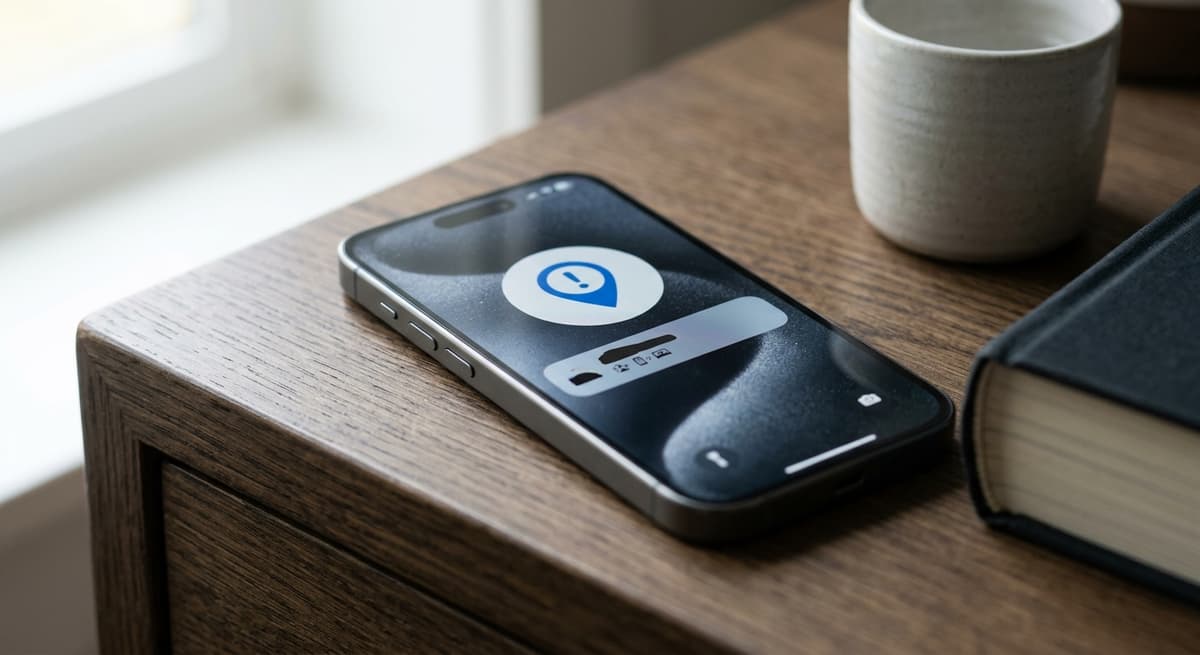
The practical protections are technological and federal. Apple and Google now push unwanted-tracker alerts to nearby iPhones and Android phones, which is how most hidden AirTags are discovered. And when an item tracker is used as part of a campaign of harassment that causes substantial emotional distress, federal prosecutors have charged it under 18 U.S.C. 2261A, the federal stalking statute, which expressly reaches conduct intended to place a person under surveillance to harass or intimidate. In a gap state like Mississippi, that federal hook matters more than usual.
Penalties
Because Mississippi has no tracking offense, the table below shows the crimes prosecutors actually use when tracking is part of a broader pattern.
| Offense | Statute | Classification | Penalty range |
|---|---|---|---|
| Stalking | Miss. Code 97-3-107(1) | Misdemeanor | Up to 1 year in county jail and/or a fine up to $1,000 |
| Stalking in violation of a protective order or restraining order | Miss. Code 97-3-107(1)(c) | Enhanced misdemeanor | Up to 1 year and a fine up to $1,500 |
| Aggravated stalking (deadly weapon or repeat offense) | Miss. Code 97-3-107(2)(b)(i) | Felony | Up to 5 years in prison and a fine up to $3,000 |
| Aggravated stalking (perpetrator is a registered sex offender and victim is under 18) | Miss. Code 97-3-107(2)(b)(ii) | Felony | Up to 6 years in prison and a fine of $4,000 |
| Federal stalking (electronic monitoring causing fear or substantial emotional distress) | 18 U.S.C. 2261A | Federal felony | Up to 5 years, more if the victim is injured |
Placing a tracker with no accompanying course of conduct fits none of these cleanly. That is the gap.
Civil Options and Protective Orders
Mississippi courts recognize the tort of invasion of privacy, including intentional intrusion upon the solitude or seclusion of another. The Mississippi Supreme Court adopted the framework in Candebat v. Flanagan, 487 So. 2d 207 (Miss. 1986), drawing on the Restatement (Second) of Torts. The intrusion must be substantial and highly offensive to a reasonable person.
Secretly logging every place a person drives, for weeks, without consent, is a strong candidate for that claim. A civil suit can recover damages and, just as importantly, force the tracking into the open through discovery.
Victims can also seek a domestic abuse protection order, which can prohibit contact, following, and surveillance. Once an order is in place, continued tracking becomes evidence of violation and raises the stakes of any stalking charge. Our guide to Mississippi restraining order laws walks through the process, and the Mississippi Attorney General's office publishes victim resources on stalking, including documentation logs.
What to Do If You Find a GPS Tracker on Your Car
- Do not destroy it. The device is evidence, and its serial number or registration can identify the buyer.
- Photograph it in place before anyone touches it, including where it was hidden.
- Report it to police. Even without a device statute, a report creates the paper trail that a future stalking charge or protective order will need.
- Start a stalking log. Because Mississippi requires a course of conduct, documenting every incident, with dates, is what turns one tracker into a prosecutable pattern. The Attorney General's stalking materials include a sample log.
- Think safety first. If a current or former partner is the likely source, assume your routine locations are known and contact a domestic violence advocate before confronting anyone.
- Sweep for other devices. Check other vehicles, bags, and gifts. If you suspect hidden cameras too, see our surveillance camera laws hub.
Sources
Primary sources for this article, including the full text of Mississippi's stalking statute as enacted and the U.S. Supreme Court's GPS tracking decision, are listed below.
This article is for informational purposes only and does not constitute legal advice. Laws change and their application depends on specific facts. If you are dealing with a GPS tracking issue in Mississippi, consult a licensed Mississippi attorney. If you are in danger, call 911 or the National Domestic Violence Hotline at 800-799-7233.
More Mississippi Laws
Frequently Asked Questions
Is it illegal to put a GPS tracker on someone's car in Mississippi?
No Mississippi statute specifically criminalizes it. Mississippi is one of the minority of states with no tracking device law. The conduct can still lead to stalking charges if it is part of a pattern that causes fear, to federal charges under 18 U.S.C. 2261A, and to a civil invasion of privacy lawsuit.
Can I put a tracker on my spouse's car in Mississippi?
If the car is jointly titled, you are tracking your own property and no law prohibits it. If the car is solely your spouse's, no Mississippi statute makes the placement a crime, but it can become evidence in a stalking case, hurt you in divorce proceedings, and support an invasion of privacy claim against you.
Can a private investigator legally use a GPS tracker in Mississippi?
There is no statute prohibiting it, and Mississippi does not license private investigators at the state level. A PI still faces civil liability for invasion of privacy and criminal exposure if the surveillance is part of a course of conduct that causes the target reasonable fear.
Is putting an AirTag in someone's bag a crime in Mississippi?
Not by itself under current Mississippi law. If it accompanies following, confrontations, or threats, it can support a stalking charge under Miss. Code 97-3-107, and federal prosecutors have charged AirTag stalking under 18 U.S.C. 2261A, which expressly reaches conduct intended to place a person under surveillance.
Can police put a GPS tracker on my car without a warrant in Mississippi?
Generally no. The U.S. Supreme Court held in United States v. Jones (2012) that attaching a GPS device to a vehicle and monitoring its movements is a Fourth Amendment search, so law enforcement normally needs a warrant supported by probable cause.
Can I sue someone who put a tracker on my car?
Yes. Mississippi recognizes the tort of invasion of privacy, including intrusion upon seclusion, under Candebat v. Flanagan. Prolonged secret tracking of your movements is the kind of substantial, highly offensive intrusion the tort targets. A civil attorney can evaluate damages.
Has Mississippi considered a tracking device law?
We found no tracking device bill enacted between 2021 and 2026. A 2020 bill, HB 1113, would have prohibited placing a GPS device on another person's vehicle, but it died in committee, and later bills to add social media language to the cyberstalking statute also died without addressing GPS devices or item trackers. Until that changes, victims must rely on the stalking statute, federal law, and civil remedies.
Updates
Corrected the stalking penalty in the key takeaways to reflect that Mississippi law allows jail, a fine, or both rather than both together, cited the protective-order enhancement to its specific subsection, and removed an off-topic link from the penalties table.
Uncollapsed the two aggravated-stalking penalty tiers under Miss. Code 97-3-107(2)(b): the standard tier (deadly weapon or repeat offense) carries up to 5 years and a $3,000 fine, but the separate, harsher tier for a registered sex offender who stalks a victim under 18 carries up to 6 years and a $4,000 fine.
Governing law re-checked for recent changes
Independently fact-checked against the cited primary sources
The Law Behind This Article
This article rests on the statutory provisions below, held in our own legal record and retrieved from the official source. Tap a section to read the operative text.
Mississippi Code of 1972 Annotated
§ 97-3-107Stalking; aggravated stalking; penalties; definitions.In forcecited in 3 of our articles
(1)(a) Any person who purposefully engages in a course of conduct directed at a specific person, or who makes a credible threat, and who knows or should know that the conduct would cause a reasonable person to fear for his or her own safety, to fear for the safety of another person, or to fear…
Official text (excerpt) · last checked 2026-08-26 · Read the full text in our law library · Verify at billstatus.ls.state.ms.us
Cited in 11 court opinions in our collectionLatest citing opinion in our collection: 2020
In the courts (editorial summary, independently checked):In Vadell Johnson v. State of Mississippi (2014) the Court of Appeals applied Section 97-3-107 to distinguish simple stalking, a credible threat under subsection (1)(a), from aggravated stalking, which requires using or displaying a deadly weapon, and noted that offense and felon-in-possession each require proof the other does not.
Opinions citing this section in our collection:
- McCalpin v. State (Mississippi Supreme Court 2013, 166 So. 3d 24)✓A man's post-release supervision was revoked for felony stalking after tailgating and staring at a teen driver once; the revocation stood, and four dissenters read pre-2010 Section 97-3-107 to require repeated harassment plus intent to cause fear of death or great bodily injury.
- Vadell Johnson v. State of Mississippi (Court of Appeals of Mississippi 2014, 159 So. 3d 601)✓A man accused of pulling a gun on two women pleaded guilty to simple stalking, worded as threatening with no weapon; the court held the plea was no acquittal and did not bar a felon-in-possession count, noting Section 97-3-107 needs a weapon used or displayed for the felony tier.
- Jay McCalpin v. State of Mississippi (Mississippi Supreme Court 2011)“…7 harassment.15 See Miss. Code Ann. § 97-3-107(1) (Rev. 2006) (amended 2010). The cour…”
Identified automatically from the court opinions citing this section — not a ranking of which case controls.
Also relied on in: Mississippi Employee Monitoring Laws: Workplace Surveillance and Privacy (2026), Mississippi Restraining Order Laws (2026): How to Get a Domestic Abuse Protection Order
United States Code Title 18
§ 2261AStalkingIn forcecited in 53 of our articles
Whoever— travels in interstate or foreign commerce or is present within the special maritime and territorial jurisdiction of the United States, or enters or leaves Indian country, with the intent to kill, injure, harass, intimidate, or place under surveillance with intent to kill, injure, harass, or intimidate another person, and in the course of, or as a result of, such travel or presence engages in conduct that— places that person in reasonable fear of the death of, or serious bodily injury to— that person; an immediate family member (as defined in section 115) of that person; a spouse or intimate partner of that person; or the pet, service animal, emotional support animal, or horse of that person; or causes, attempts to cause, or would be reasonably expected to cause substantial emotional distress to a person described in clause (i), (ii), or (iii) of subparagraph (A); or with the intent to kill, injure, harass, intimidate, or place under surveillance with intent to kill, injure, harass, or intimidate another person, uses the mail, any interactive computer service or electronic communication service or electronic communication system of interstate commerce, or any other…
Official text (excerpt) · last checked 2026-07-28 · Read the full text in our law library · Verify at uscode.house.gov
Cited in 350 court opinions in our collectionLatest citing opinion in our collection: 2026
In the courts (editorial summary, independently checked):Federal appeals courts have construed and upheld Section 2261A. United States v. Walker (2011) read in the course of, or as a result of such travel disjunctively, so pre-travel threats plus resulting fear sufficed. United States v. Amy Gonzalez (2018) held it neither overbroad nor vague and no First Amendment violation as applied.
Opinions citing this section in our collection:
- United States v. Walker (Court of Appeals for the First Circuit 2011, 665 F.3d 212)✓After emailing threats to his estranged wife, the defendant flew from Michigan to Puerto Rico and was arrested on arrival. The court read the disjunctive phrase in 2261A(1) to cover travel that itself places the target in reasonable fear, and upheld the stalking conviction.
- United States v. Amy Gonzalez (Court of Appeals for the Third Circuit 2018, 905 F.3d 165)✓Relatives waged a years-long campaign against a mother that ended in a courthouse shooting. The court held 2261A is neither overbroad nor vague because it reaches harassing conduct, and that the mental states it lists are alternative means, not elements; convictions affirmed.
- United States v. Wills (Court of Appeals for the Fourth Circuit 2003, 346 F.3d 476)✓A burglary suspect pursued the witness who identified him at a preliminary hearing; the witness later died. The court held the evidence met each element of 2261A: travel from D.C. to Virginia, intent to harm or harass, and reasonable fear of death; conviction affirmed.
Identified automatically from the court opinions citing this section — not a ranking of which case controls.
Also relied on in: Alabama GPS Tracking Laws: Is It Legal to Put a Tracker on a Car? (2026), Colorado GPS Tracking Laws: Is It Legal to Put a Tracker on a Car? (2026), Florida GPS Tracking Laws: Is It Legal to Put a Tracker on a Car? (2026)
Search our full record of US law — 2.1 million sections, every state + federal →
Sources and References
- Mississippi HB1309 (2010), full text of Miss. Code 97-3-107 as amended, Mississippi Legislature Bill Status System(billstatus.ls.state.ms.us)
- Mississippi Stalking Laws guide, Office of the Mississippi Attorney General(attorneygenerallynnfitch.com)
- United States v. Jones, 565 U.S. 400 (2012), slip opinion(supremecourt.gov)
- 18 U.S.C. 2261A, federal stalking statute(law.cornell.edu)
- Private Use of Location Tracking Devices: State Statutes, National Conference of State Legislatures(ncsl.org)
- Mississippi Legislature, legislation and bill search portal(legislature.ms.gov)