
Rhode Island
Rhode Island DUI Laws: Penalties & BAC Limit (2026)
Independently fact-checked against primary sources (last audited August 18, 2026). · Reviewed by the RecordingLaw editorial team. · Law checked current as of August 18, 2026. · 5 primary sources cited on this page. How we verify our legal content
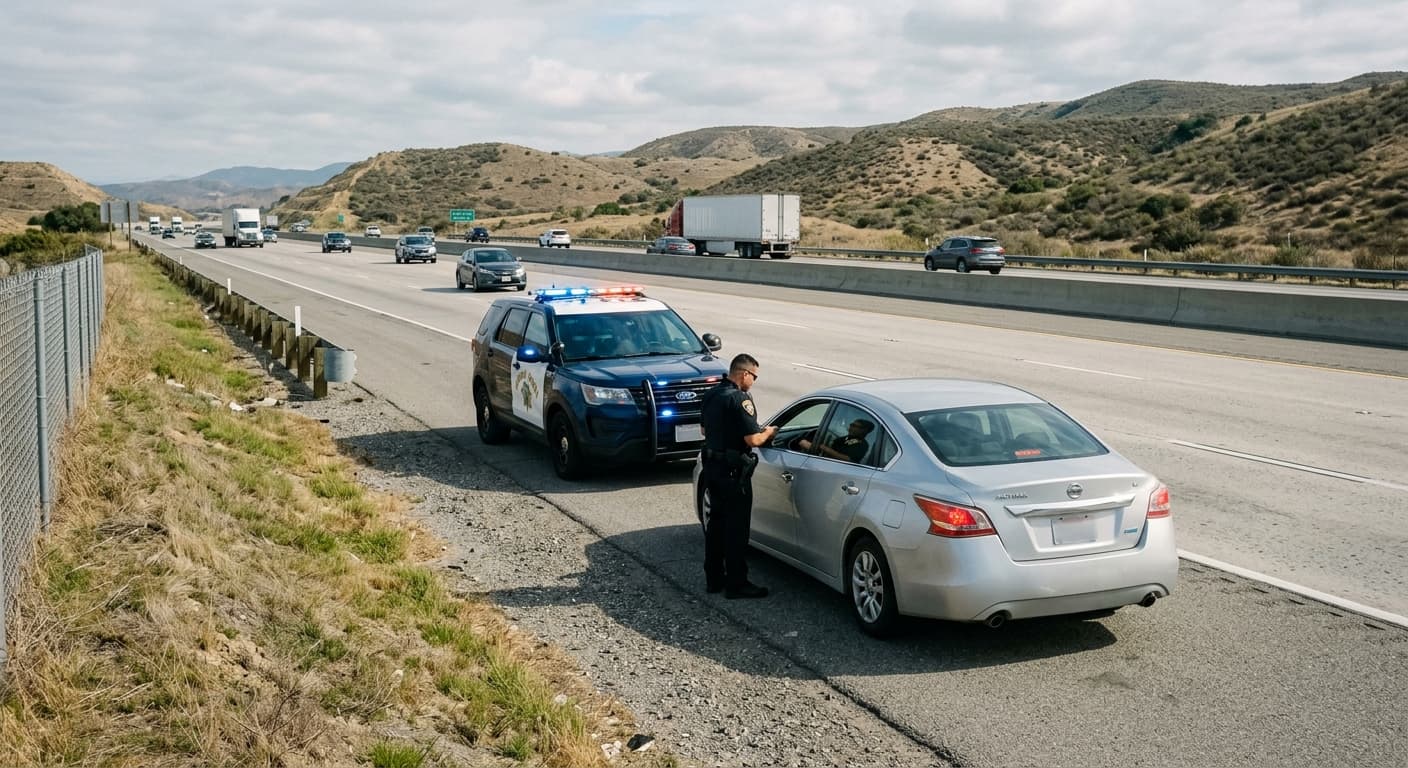
In Rhode Island the offense is called driving under the influence (DUI), and General Laws 31-27-2 makes it unlawful to drive with a blood alcohol concentration (BAC) of 0.08 percent or more. A first DUI is a misdemeanor, and the fine, community service, and license suspension scale with the measured BAC, with a base first-offense suspension that can run from 30 days up to 18 months depending on the reading.
This guide is part of our DUI Laws by State series.
What counts as a DUI in Rhode Island
Rhode Island charges the offense as driving under the influence of liquor or drugs under General Laws 31-27-2. The statute makes it unlawful to drive with a BAC of 0.08 percent or more by weight, and it also allows a conviction based on being under the influence to a degree that renders the driver incapable of safely operating a vehicle. Penalties within the statute step up by BAC tier: 0.08 to less than 0.10 percent, 0.10 to less than 0.15 percent, and 0.15 percent or more. Commercial drivers face a 0.04 percent limit, and drivers under 21 face a 0.02 percent threshold, with a separate underage driving-while-impaired path. The 0.08 figure is the federal benchmark adopted by every state except Utah, which uses 0.05 percent, as the National Highway Traffic Safety Administration explains.
First-offense DUI penalties in Rhode Island (jail, fines, suspension)
A first DUI is a misdemeanor, and the penalties scale by the measured BAC under General Laws 31-27-2. At 0.08 to less than 0.10 percent, the statute sets a fine of $100 to $300, 10 to 60 hours of community service, up to one year of possible imprisonment, and a license suspension of 30 to 180 days. At 0.10 to less than 0.15 percent, the fine ceiling rises to $400 and the suspension runs 3 to 12 months. At 0.15 percent or more, the fine is $500, community service is 20 to 60 hours, and the suspension is 3 to 18 months. Every conviction also carries a $500 highway safety assessment plus additional assessment fees, and the court orders a driving-while-intoxicated course and treatment if needed.

| First-offense item | Rhode Island rule (statute) |
|---|---|
| Offense name | DUI (R.I. Gen. Laws 31-27-2) |
| 0.08 to under 0.10% | $100-$300, 10-60 hrs service, up to 1 yr jail, 30-180 day suspension |
| 0.10 to under 0.15% | up to $400, 10-60 hrs service, 3-12 month suspension |
| 0.15% or more | $500, 20-60 hrs service, 3-18 month suspension |
| Interlock (first offense) | Mandatory at 0.15%+ or drugs; discretionary at lower BAC |
| Highway safety assessment | $500 plus added fees |
| Look-back period | 10 years (since July 1, 2025) |
Watch out: A higher BAC reading does more than raise the fine. It lengthens the suspension, increases the community service, and triggers a mandatory ignition interlock that a lower reading might not.
Ignition interlock requirements in Rhode Island
Rhode Island's ignition interlock rules turn on the BAC and the offense history rather than applying flatly to every first offender. Under General Laws 31-27-2, a sentencing judge must order an ignition interlock device for a first offense if the driver's BAC was 0.15 percent or higher or the impairment involved drugs. For a first offense with a lower BAC, the judge has discretion to order the device but is not required to. The interlock requirement becomes mandatory on later offenses and on refusal convictions, and the device must be installed during the period a court allows the driver to operate. The device requires a breath sample before the engine starts and at random intervals during a trip, and the program logs each reading for the court. Drivers are responsible for installation and monitoring costs.
License suspension and the administrative process in Rhode Island
Rhode Island's license suspensions on a DUI conviction flow from the criminal case in district court and are imposed under General Laws 31-27-2, running 30 days up to 18 months on a first offense depending on the BAC tier. Separately, the refusal of a chemical test triggers its own license suspension, handled through the Rhode Island Traffic Tribunal on a first refusal and independent of the criminal DUI case, although a second or later breath or urine refusal within ten years is itself a criminal misdemeanor. That two-track design means a driver can face a suspension for refusing even if the underlying DUI charge is reduced or dismissed. To reinstate after a DUI suspension, a driver generally must serve the suspension, complete the ordered DUI course and any treatment, install an interlock if ordered, and pay the highway safety assessment and reinstatement fees. The conviction stays on the driving record and counts toward the look-back period.
Repeat offenses and the Rhode Island look-back period
Rhode Island expanded its DUI look-back period from five years to ten years effective July 1, 2025, so a prior conviction six to ten years old now counts and can elevate a new charge to a second or third offense. Under General Laws 31-27-2, second and third offenses split into two BAC tiers, just as first offenses do. A second offense at 0.08 to under 0.15 percent, at an unknown BAC, or with a controlled substance in the blood carries a mandatory $400 fine, 10 days to one year in jail with at least 48 consecutive hours served, a one-to-two-year suspension, and a mandatory interlock. A second offense at 0.15 percent or above, or under the influence of a drug or toluene, carries mandatory imprisonment of six months to one year, a mandatory fine of at least $1,000, and a two-year suspension that starts when the sentence is completed.
A third or subsequent offense within the ten-year period is a felony, and it splits the same way. At 0.08 to under 0.15 percent, at an unknown BAC, or with a controlled substance in the blood, it carries a mandatory $400 fine, one to three years in jail with at least 48 consecutive hours served, and a two-to-three-year suspension. At 0.15 percent or above, or under the influence of a drug or toluene, it carries mandatory imprisonment of not less than three nor more than five years, a mandatory fine of $1,000 to $5,000, and a three-year suspension running from completion of the sentence. Separately, DUI resulting in death is a felony under 31-27-2.2, and DUI resulting in serious bodily injury is a felony under 31-27-2.6, regardless of how many prior offenses the driver has.

Watch out: Because Rhode Island moved to a 10-year look-back in July 2025, a prior DUI that would have washed out under the old 5-year rule may now count against you and turn a new arrest into a felony-level third offense.
Refusing a breath or blood test in Rhode Island
Rhode Island's implied-consent law in General Laws 31-27-2.1 provides that by driving in the state you have consented to a chemical test if reasonably suspected of DUI. A first refusal is a civil violation decided by the Traffic Tribunal, separate from the criminal DUI case. On a first refusal, the statute sets a license suspension of six months to one year, a fine in the $200 to $500 range, 10 to 60 hours of community service, and mandatory assessments including a $500 highway safety assessment and a department of health assessment. Repeat refusals are not civil. A second refusal within ten years is a misdemeanor carrying up to six months in jail, a $600 to $1,000 fine, 60 to 100 hours of community service, a one-to-two-year suspension, and a mandatory interlock, and a third or subsequent refusal within ten years is a misdemeanor carrying up to one year in jail, an $800 to $1,000 fine, at least 100 hours of community service, and a two-to-five-year suspension. The statute carves out blood tests: refusing a blood test is not a crime at any offense number, though the civil penalties still rise on repeat refusals. Because the refusal penalty stacks on top of the DUI case and the suspension can be lengthy, refusing often makes the overall license consequences worse rather than better.
Can you expunge or seal a DUI in Rhode Island
Rhode Island treats DUI convictions more restrictively than ordinary misdemeanors. The multi-misdemeanor expungement path in General Laws 12-1.3-2 expressly excludes convictions under 31-27-2 and the refusal statute 31-27-2.1, so those cannot be cleared as part of a group of misdemeanors. A single first-offense misdemeanor DUI may be expunged as a first-offender's record after a waiting period, generally five years from completion of the sentence, provided the person has no other disqualifying convictions. A felony DUI, a second or later DUI, or a DUI causing injury or death is generally not eligible for expungement. Because the rules are narrow and fact-specific, eligibility depends on the exact conviction and the person's full record.
What to do after a DUI arrest in Rhode Island
A Rhode Island DUI generates a criminal case in district court and, if the driver refused testing, a separate civil case in the Traffic Tribunal. The deadlines differ between the two tracks, so reading the paperwork promptly matters, because the refusal suspension proceeds on its own schedule. The criminal case moves from arraignment through pretrial and resolution, and the BAC tier shapes the exposure. General information cannot tell you how your case will come out, since the outcome depends on the BAC, your record under the new 10-year look-back, and the evidence. Many people consult a licensed Rhode Island DUI attorney to understand the charge, the refusal case, the interlock and suspension consequences, and any expungement path. Keep the citation, the chemical-test or refusal paperwork, and any tribunal notices.
More Rhode Island Laws
Frequently Asked Questions
What is the BAC limit in Rhode Island?
The per se limit is 0.08 percent BAC under General Laws 31-27-2. Commercial drivers are limited to 0.04 percent, and drivers under 21 face a 0.02 percent threshold. Penalties within the statute then scale by BAC tier up to 0.15 percent and above.
How long do you lose your license for a first DUI in Rhode Island?
It depends on the BAC. A first offense at 0.08 to under 0.10 percent carries a 30-to-180-day suspension, at 0.10 to under 0.15 percent a 3-to-12-month suspension, and at 0.15 percent or more a 3-to-18-month suspension under General Laws 31-27-2.
Is a first DUI a felony in Rhode Island?
No. A first DUI is a misdemeanor. Under General Laws 31-27-2, a third DUI within the ten-year look-back is a felony, and DUI resulting in serious bodily injury or death is a felony regardless of offense number.
Do you need an interlock for a first DUI in Rhode Island?
An ignition interlock is mandatory on a first offense if the BAC was 0.15 percent or higher or drugs were involved. For a first offense with a lower BAC, the judge has discretion to order the device. Interlock is mandatory on second and later offenses.
What happens if you refuse a breathalyzer in Rhode Island?
A first refusal is a civil violation under General Laws 31-27-2.1 decided by the Traffic Tribunal, carrying a 6-month-to-1-year license suspension, a $200 to $500 fine, 10 to 60 hours of community service, and mandatory assessments, separate from the criminal DUI case. Repeat refusals are criminal: a second refusal of a breath or urine test within ten years is a misdemeanor punishable by up to six months in jail, and a third or subsequent refusal by up to one year. Refusing a blood test carries no criminal penalty.
How long does a DUI stay on your record in Rhode Island?
A DUI conviction stays on the record unless expunged. Effective July 1, 2025, Rhode Island uses a 10-year look-back for repeat-offender purposes, so a prior DUI within 10 years counts toward enhanced penalties.
Can you get a DUI expunged in Rhode Island?
A single first-offense misdemeanor DUI may be expunged after a waiting period, generally five years after the sentence is completed. The multi-misdemeanor expungement path under 12-1.3-2 excludes DUI and refusal convictions, and felony or repeat DUIs are generally not eligible.
What is the look-back period for DUI in Rhode Island?
Rhode Island uses a 10-year look-back period, expanded from five years effective July 1, 2025. A prior DUI within 10 years counts toward second-offense and felony third-offense status under General Laws 31-27-2.
Facing a warrant, DUI, or criminal charge in Rhode Island? Get a free case review
An active warrant or a criminal charge like DUI puts your freedom, license, and record at risk, and deadlines to act, like challenging a license suspension or resolving a warrant before an arrest, can be just days away. Get a free, confidential review from a Rhode Island criminal defense attorney. Acting quickly protects your options.
Updates
Corrected the repeat-offense penalties: a second or third refusal of a breath or urine test within ten years is a criminal misdemeanor carrying jail, not a purely civil violation, and second and third DUI offenses now show both BAC tiers, including the mandatory six-months-to-one-year and three-to-five-year sentences that apply at 0.15 percent or above.
Independently fact-checked against the cited primary sources; governing law re-checked for recent changes
Governing law re-checked for recent changes
Reviewed and approved by an editor
The Law Behind This Article
This article rests on the statutory provisions below, held in our own legal record and retrieved from the official source. Tap a section to read the operative text.
Rhode Island General Laws, Title 31: Motor and Other Vehicles, Chapter 31-27: Motor Vehicle Offenses
§ 31-27-2Driving under influence of liquor or drugsIn force
(a) Whoever drives or otherwise operates any vehicle in the state while under the influence of any intoxicating liquor, drugs, toluene, or any controlled substance as defined in chapter 28 of title 21, or any combination of these, shall be guilty of a misdemeanor, except as provided in subsection (d)(3), and shall be punished as provided in subsection (d) of this section. (b)(1) Any person charged under subsection (a), whose blood alcohol concentration is eight one-hundredths of one percent (.08%) or more by weight, as shown by a chemical analysis of a blood, breath, or urine sample, shall be guilty of violating subsection (a). This provision shall not preclude a conviction based on other admissible evidence, including the testimony of a drug recognition expert or evaluator, certified pursuant to training approved by the Rhode Island department of transportation office on highway safety.
Official text (excerpt) · last checked 2026-09-05 · Read the full text in our law library · Verify at webserver.rilegislature.gov
Cited in 2 court opinions in our collectionLatest citing opinion in our collection: 2008
Opinions citing this section in our collection:
- State v. DiStefano (Supreme Court of Rhode Island 2000, 764 A.2d 1156)“…w of State v. Timms, 505 A.2d 1132 (R.I.1986), should R.I. Gen. Laws § 31-27-2(c) be interpreted to preclude, in a cas…”
- Stamp v. Metropolitan Life Insurance (Court of Appeals for the First Circuit 2008, 531 F.3d 84)“…e Island criminalizes driving with a BAC of .08% or higher. R.I. Gen. Laws § 31-27-2. Increased penalties apply when the…”
Identified automatically from the court opinions citing this section — not a ranking of which case controls.
§ 31-27-2.1Refusal to submit to chemical testIn force
(a) Any person who operates a motor vehicle within this state shall be deemed to have given his or her consent to chemical tests of his or her breath, blood, saliva and/or urine for the purpose of determining the chemical content of his or her body fluids or breath. No more than two (2) complete tests, one for the presence of intoxicating liquor and one for the presence of toluene or any controlled substance, as defined in § 21-28-1.02, shall be administered at the direction of a law enforcement officer having reasonable grounds to believe the person to have been driving a motor vehicle within this state while under the influence of intoxicating liquor, toluene, or any controlled substance, as defined in chapter 28 of title 21, or any combination of these. The director of the department of health is empowered to make and file, with the secretary of state, regulations that prescribe the techniques and methods of chemical analysis of the person’s body fluids or breath and the qualifications and certification of individuals authorized to administer the testing and analysis.
Official text (excerpt) · last checked 2026-07-30 · Read the full text in our law library · Verify at webserver.rilegislature.gov
Cited in 1 court opinions in our collectionLatest citing opinion in our collection: 2000
Opinions citing this section in our collection:
- State v. DiStefano (Supreme Court of Rhode Island 2000, 764 A.2d 1156)“…rized search warrant?" 2. "Does the statutory language of R.I. Gen. Laws § 31-27-2.1, the Breathalyzer Refusal Statute, prec…”
Identified automatically from the court opinions citing this section — not a ranking of which case controls.
Rhode Island General Laws, Title 12: Criminal Procedure, Chapter 12-1.3: Expungement of Criminal Records
§ 12-1.3-2Motion for expungementIn forcecited in 2 of our articles
(a) Any person who is a first offender may file a motion for the expungement of all records and records of conviction for a felony or misdemeanor by filing a motion in the court in which the conviction took place; provided, that no person who has been convicted of a crime of violence shall have his or her records and records of conviction expunged; and provided, that all outstanding court-imposed or court-related fees, fines, costs, assessments, charges, and/or any other monetary obligations have been paid, unless such amounts are reduced or waived by order of the court. (b) Notwithstanding § 12-1.3-1(3) (“first offender”), any person who has been convicted of more than one misdemeanor, but fewer than six (6) misdemeanors, and has not been convicted of a felony may file a motion for the expungement of any or all of those misdemeanors by filing a motion in the court in which the convictions took place; provided that convictions for offenses under chapter 29 of title 12, § 31-27-2 or § 31-27-2.1 are not eligible for and may not be expunged under this subsection.
Official text (excerpt) · last checked 2026-09-01 · Read the full text in our law library · Verify at webserver.rilegislature.gov
Cited in 3 court opinions in our collectionLatest citing opinion in our collection: 2009
Opinions citing this section in our collection:
- United States v. Bartelho (Court of Appeals for the First Circuit 1995, 71 F.3d 436)“…l right to carry a firearm could have been restored. See R.I. Gen. Laws 12-1.3-2(a), 12-1.3-3(b)(1) (1956). Further…”
- Hill v. Gill (District Court, D. Rhode Island 1989, 703 F. Supp. 1034)“…lacks than to other racial groups. 3 . R.I. Gen. Laws § 12-1.3-2 (Supp.1981) permits expungement of a fe…”
- United States v. Stevens (District Court, D. Maine 2009, 598 F. Supp. 2d 133)“…which the conviction took place to expunge the conviction. R.I. Gen. Laws § 12-1.3-2. Notice must be given to the department…”
Identified automatically from the court opinions citing this section — not a ranking of which case controls.
Also relied on in: Rhode Island Expungement Laws: First Offender, Felony & 2022 Cannabis Rules
Search our full record of US law — 2.1 million sections, every state + federal →
Sources and References
- Rhode Island General Laws 31-27-2, driving under the influence, BAC tiers, first-offense penalties, interlock, and felony third offense(rilegislature.gov).gov
- Rhode Island General Laws 31-27-2.1, refusal to submit to chemical test (implied consent)(rilegislature.gov).gov
- Rhode Island General Laws 12-1.3-2, motion for expungement (DUI exclusions)(rilegislature.gov).gov
- Rhode Island DMV, license suspensions and reinstatements(dmv.ri.gov).gov
- NHTSA, drunk driving and the 0.08% federal BAC standard(nhtsa.gov).gov