
Maine
Maine OUI Laws: Penalties, BAC Limit & License (2026)
Independently fact-checked against primary sources (last audited August 18, 2026). · Reviewed by the RecordingLaw editorial team. · Law checked current as of August 18, 2026. · 7 primary sources cited on this page. How we verify our legal content
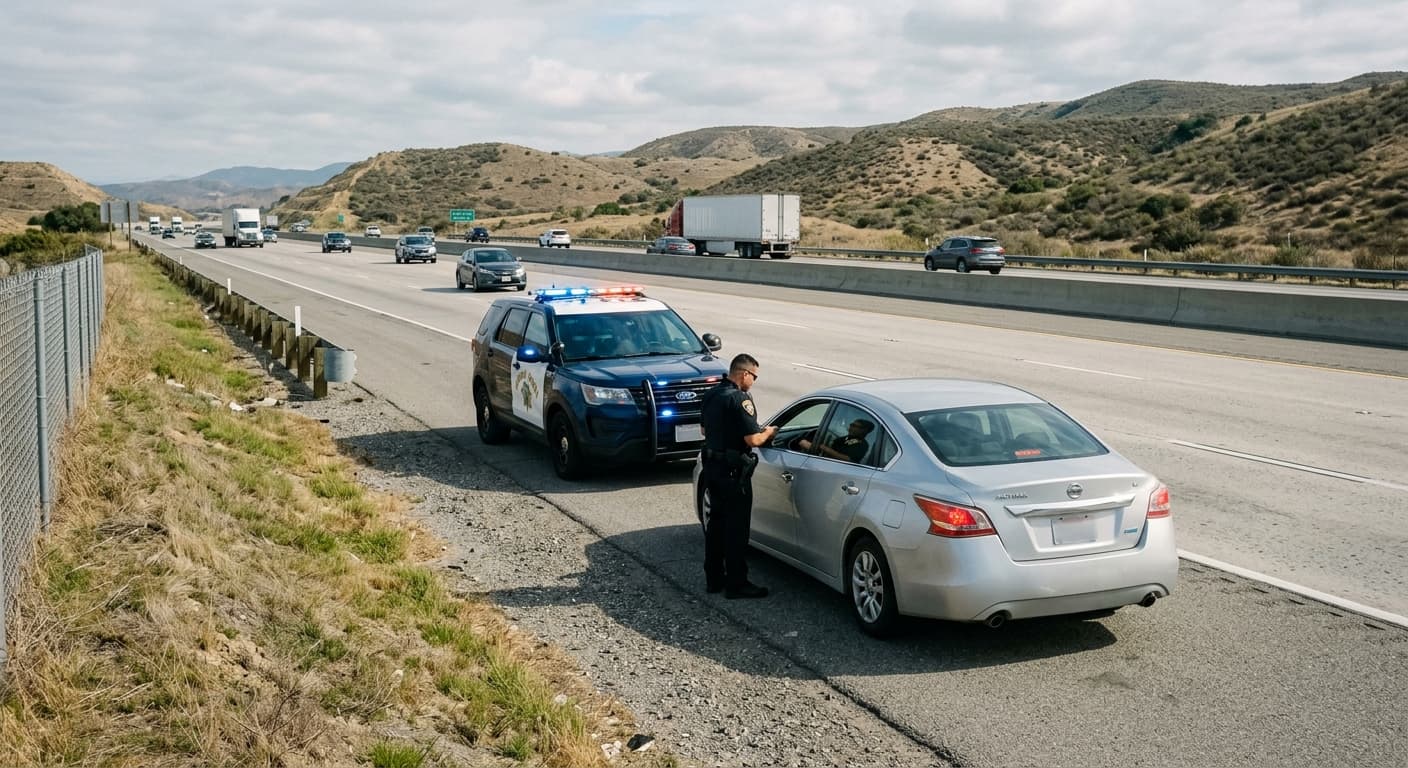
In Maine the offense is called operating under the influence (OUI), and 29-A M.R.S. § 2411 makes it a crime to operate a motor vehicle while under the influence of intoxicants or with an alcohol level of 0.08 grams or more. A first OUI is a Class D crime punishable by a fine of at least $500 and a 150-day license suspension.
This guide is part of our DUI Laws by State series.
What counts as an OUI in Maine
Maine's core impaired-driving statute, 29-A M.R.S. § 2411, defines operating under the influence two ways: operating while under the influence of intoxicants, or operating with an alcohol level of 0.08 grams or more per 100 milliliters of blood or 210 liters of breath. The base offense is a Class D crime, and the per se branch is a strict-liability offense, so a driver at or above 0.08 can be convicted without separate proof of impairment. Drivers under 21 face a true zero-tolerance rule: under Maine law their license carries the condition that they not operate with an alcohol level of more than 0.00, so any measurable amount triggers a suspension. Commercial drivers are held to a 0.04 standard under the commercial-license rules, consistent with the federal CDL benchmark. The 0.08 figure is the federal standard adopted by every state except Utah, which uses 0.05 percent, as the National Highway Traffic Safety Administration describes.
First-offense OUI penalties in Maine (jail, fines, suspension)
A first OUI is a Class D crime. 29-A M.R.S. § 2411(5) provides for a fine of not less than $500, or not less than $600 if the person failed to submit to a test, and a court-ordered license suspension of 150 days. There is no mandatory jail on a clean first offense, but the statute imposes a mandatory minimum of 48 hours when the person tested at 0.15 or more, was exceeding the speed limit by 30 mph or more, eluded or attempted to elude an officer, or was operating with a passenger under 21. A first offender who refused the test faces a mandatory minimum of 96 hours. These minimums cannot be reduced below the stated terms.

| First-offense item | Maine rule (statute) |
|---|---|
| Offense level | Class D crime (29-A M.R.S. 2411) |
| Fine | At least $500, or $600 if refused (2411(5)) |
| License suspension | 150 days (2411(5)) |
| Mandatory jail (aggravated) | 48 hours (BAC 0.15+, 30+ mph over, eluding, passenger under 21) |
| Mandatory jail (refusal) | 96 hours (2411(5)) |
| Refusal suspension | 275 days (29-A M.R.S. 2521) |
| Look-back period | 10 years |
Watch out: The Maine Bureau of Motor Vehicles administrative suspension and the criminal court case run on separate tracks. You can resolve the criminal case and still face a license suspension from the BMV, so both the court matter and the BMV suspension need attention.
Ignition interlock requirements in Maine
Maine treats the ignition interlock device as a voluntary way to shorten a suspension rather than an automatic mandate. Under 29-A M.R.S. § 2508, a person whose license is suspended for a first OUI may apply to reinstate after 30 days of the suspension have been served if an approved interlock device is installed for the remaining suspension period. The statute uses permissive language, so the device is an early-reinstatement option, not a separate requirement, and the same framework applies, with longer installation periods, to repeat offenders. Maine also provides a fee reduction of at least 50 percent for drivers at or below 150 percent of the federal poverty guidelines. The device requires a breath sample before the engine starts and at random points while driving.
License suspension and the administrative (ALS) process in Maine
Maine runs two suspension systems at once. The Maine Bureau of Motor Vehicles imposes an administrative suspension separate from the court case. A first-offense administrative suspension is 150 days, reducible to as little as 30 days with an interlock device, while a refusal is 275 days. The BMV publishes the longer tiers for repeat offenders: three years for a second offense, six years for a third, and eight years for a fourth, each with interlock reductions. All fines and fees must be paid before reinstatement, and second and subsequent offenders must show proof of insurance.
Repeat offenses and the Maine look-back period
Maine uses a 10-year look-back period. The offense tiers in 29-A M.R.S. § 2411 escalate a case based on prior OUI offenses within a 10-year period, and a separate section, 29-A M.R.S. § 2402, sets out how that window is measured: a prior conviction or action falls within the 10-year period if the date of the action, or the date the sentence was imposed, is 10 years or less from the date of the new conduct. The window therefore closes on the date of the new offense, not on the date of a later conviction for it. A first offense and a second offense within 10 years are both Class D crimes, with the second carrying mandatory jail of at least seven days and a three-year suspension. The felony-level threshold sits at the third offense: a person with two prior OUI offenses within 10 years commits a Class C crime, which in Maine is punishable by up to five years and is treated as felony-level. A fourth or subsequent offense within 10 years is also a Class C crime with longer mandatory minimums. OUI causing serious bodily injury is a Class C crime, and OUI causing death is a Class B crime.

Watch out: Refusing the breath or blood test in Maine carries a longer license suspension than failing it, 275 days instead of 150 days, and it adds a 96-hour mandatory minimum jail term on a first offense. The refusal is also admissible against you at trial.
Refusing a breath or blood test in Maine
Maine's implied consent law, in 29-A M.R.S. § 2521, provides that a person who operates a motor vehicle is deemed to have given consent to a chemical test when there is probable cause to believe the person operated under the influence. A driver who refuses faces a longer administrative suspension: 275 days on a first refusal, 18 months on a second, four years on a third, and six years on a fourth. The statute makes evidence of a refusal admissible at trial, and a refusal triggers the 96-hour mandatory minimum jail term carried in the OUI sentencing statute. Because the refusal suspension is substantially longer than the suspension for failing the test, refusing usually makes the license consequences worse rather than better.
Can you expunge or seal an OUI in Maine
Maine does not offer expungement of adult criminal convictions, which makes an OUI especially difficult to remove from the record. The Maine Judicial Branch explains that the state does not have expungement, and the older expungement statute has been repealed. A limited sealing process that took effect in 2024 applies only to certain Class E crimes, along with narrow marijuana and prostitution categories. Because an OUI is a Class D or Class C crime, it does not qualify for that sealing process. As a practical matter, an OUI conviction in Maine stays on the criminal record, which is a meaningful difference from states that allow misdemeanor expungement or sealing after a waiting period. Charges that were dismissed or that ended in acquittal are handled differently from convictions.
What to do after an OUI arrest in Maine
A Maine OUI creates two separate matters: a criminal case in court and an administrative license case at the Bureau of Motor Vehicles. The deadlines move quickly, so many people address the BMV suspension promptly, including any request for a hearing, while the criminal case proceeds on its own schedule from arraignment through resolution. General information cannot tell you how your case will come out, since the outcome depends on the specific facts, the evidence, and your record. Many people consult a licensed Maine OUI attorney to understand the charge, the interlock option, the mandatory minimums tied to aggravating factors and refusal, and the options for both the court case and the license case. Keep the summons, the arrest paperwork, and any test results in a safe place.
More Maine Laws
Frequently Asked Questions
Is it OUI or DUI in Maine?
Maine's legal term is OUI, operating under the influence, under 29-A M.R.S. 2411. DUI and DWI are informal or out-of-state names for the same offense. The offense covers driving while under the influence of intoxicants or with an alcohol level of 0.08 or more.
What is the BAC limit in Maine?
The per se limit is 0.08 alcohol level for drivers 21 and older under 29-A M.R.S. 2411. Commercial drivers are limited to 0.04, and drivers under 21 face a 0.00 zero-tolerance limit, meaning any measurable amount of alcohol triggers a suspension.
How long do you lose your license for a first OUI in Maine?
A first OUI carries a 150-day license suspension. Installing an ignition interlock device can reduce that, allowing reinstatement after 30 days. If you refused the chemical test, the suspension is 275 days instead.
Will I go to jail for a first OUI in Maine?
There is generally no mandatory jail on a clean first offense. A mandatory minimum of 48 hours applies if your BAC was 0.15 or more, you were going 30 mph or more over the limit, you eluded an officer, or you had a passenger under 21, and 96 hours if you refused the test.
When does a Maine OUI become a felony?
An OUI rises to a Class C crime, which is felony-level in Maine, on the third offense within 10 years. An OUI causing serious bodily injury is Class C, and an OUI causing death is a Class B crime.
What happens if you refuse a breathalyzer in Maine?
Under implied consent in 29-A M.R.S. 2521, refusing the test results in a 275-day license suspension on a first offense, longer than the 150-day suspension for failing. The refusal is admissible at trial and adds a 96-hour mandatory minimum jail term.
Can you get an OUI expunged in Maine?
No. Maine does not have expungement for adult convictions, and the limited 2024 sealing process applies only to certain Class E crimes. Because an OUI is a Class D or Class C crime, it stays on the criminal record.
What is the look-back period for OUI in Maine?
Maine uses a 10-year look-back period built into the offense tiers of 29-A M.R.S. 2411. Prior OUI offenses within 10 years escalate a later case, raising it to a Class C crime on the third offense within that window.
Facing a warrant, DUI, or criminal charge in Maine? Get a free case review
An active warrant or a criminal charge like DUI puts your freedom, license, and record at risk, and deadlines to act, like challenging a license suspension or resolving a warrant before an arrest, can be just days away. Get a free, confidential review from a Maine criminal defense attorney. Acting quickly protects your options.
Updates
Corrected the look-back section: Maine sets out how the 10-year window is calculated in a separate statute, 29-A M.R.S. 2402, measured from the date of the prior action or sentence to the date of the new offense.
Independently fact-checked against the cited primary sources; governing law re-checked for recent changes
Removed an unsupported claim that a reinstated Maine OUI license is "conditional for one year" (1st offense) or "conditional for 10 years" (2nd or later). No such conditional-license concept or 10-year figure exists in 29-A M.R.S. sec. 2508 or on the Maine BMV's OUI pages; the statute's actual escalating figure (for violating interlock/reinstatement conditions) tops out at 6 years, not 10.
Governing law re-checked for recent changes
Reviewed and approved by an editor
The Law Behind This Article
This article rests on the statutory provisions below, held in our own legal record and retrieved from the official source. Tap a section to read the operative text.
Maine Revised Statutes, Title 29-A: MOTOR VEHICLES AND TRAFFIC, Chapter 23: MAJOR OFFENSES - SUSPENSION AND REVOCATION
§ 2411Criminal OUIIn force
1. Offense. 1-A. Offense. A person commits OUI if that person: A. Operates a motor vehicle: (1) While under the influence of intoxicants; or (2) While having an alcohol level of 0.08 grams or more of alcohol per 100 milliliters of blood or 210 liters of breath; [PL 2009, c. 447, §37 (AMD).] B. Violates paragraph A and: (1) Has one previous OUI offense within a 10-year period; (2) Has 2 previous OUI offenses within a 10-year period; or (3) Has 3 or more previous OUI offenses within a 10-year period; [PL 2003, c. 452, Pt. Q, §78 (NEW); PL 2003, c. 452, Pt. X, §2 (AFF).] C. Violates paragraph A, failed to submit to a test at the request of a law enforcement officer and: (1) Has no previous OUI offenses within a 10-year period; (2) Has one previous OUI offense within a 10-year period; (3) Has 2 previous OUI offenses within a 10-year period; or (4) Has 3 previous OUI offenses within a 10-year period; or [PL 2003, c. 452, Pt. Q, §78 (NEW); PL 2003, c. 452, Pt. X, §2 (AFF).] D.
Official text (excerpt) · last checked 2026-09-04 · Read the full text in our law library · Verify at legislature.maine.gov
Cited in 226 court opinions in our collectionLatest citing opinion in our collection: 2026
Opinions citing this section in our collection:
- State v. Sawyer (Supreme Judicial Court of Maine 2001, 772 A.2d 1173)“…r. [¶ 4] Sawyer was charged with criminal OUI pursuant to 29-A M.R.S.A. § 2411 (1996), 2 and pleaded not guilty. Sawy…”
- State v. Connor (Supreme Judicial Court of Maine 2009, 977 A.2d 1003)“…ating under *1004 the influence of intoxicants (Class D), 29-A M.R.S. § 2411(1-A)(A), (5)(A)(3)(a)(i) (2007). [1] C…”
- State v. Watson (Supreme Judicial Court of Maine 2006, 900 A.2d 702)“…ound him guilty of operating under the influence (Class D), 29-A M.R.S.A. § 2411(1) (1996). [1] Jonathan Blumberg appea…”
Identified automatically from the court opinions citing this section — not a ranking of which case controls.
§ 2521Implied consent to chemical testsIn force
1. Mandatory submission to test. If there is probable cause to believe a person has operated a motor vehicle while under the influence of intoxicants, that person shall submit to and complete a test to determine an alcohol level and the presence of a drug or drug metabolite by analysis of blood, breath or urine. 2. Type of test. A law enforcement officer shall administer a breath test unless, in that officer's determination, a breath test is unreasonable. If a breath test is determined to be unreasonable, another chemical test must be administered in place of a breath test. For a blood test the operator may choose a physician, if reasonably available. 3. Warnings. Neither a refusal to submit to a test nor a failure to complete a test may be used for any of the purposes specified in paragraph A, B or C unless the person has first been told that the refusal or failure will: A. Result in suspension of that person's driver's license for a period up to 6 years; [PL 1995, c. 368, Pt. AAA, §28 (AMD).] B. Be admissible in evidence at a trial for operating under the influence of intoxicants; and [PL 1995, c. 368, Pt. AAA, §28 (AMD).] C.
Official text (excerpt) · last checked 2026-07-30 · Read the full text in our law library · Verify at legislature.maine.gov
Cited in 49 court opinions in our collectionLatest citing opinion in our collection: 2026
Opinions citing this section in our collection:
- State v. Stade (Supreme Judicial Court of Maine 1996, 683 A.2d 164)“…o and complete a test to determine a blood-alcohol content. 29-A M.R.S.A. § 2521 (1996). “[I]t is clear ... that the Leg…”
- State of Maine v. Lyanne Lemeunier-Fitzgerald (Supreme Judicial Court of Maine 2018, 2018 ME 85)“…Secretary of State’s Bureau of Motor Vehicles. See 29-A M.R.S. § 2521 (2017). Included was the warning,…”
- State v. Cote (Supreme Judicial Court of Maine 1999, 1999 Me. 123)“…n he refused to submit to a chemical test. See 29-A M.R.S.A § 2521(5) & (6) (1996 & Supp.1998).…”
Identified automatically from the court opinions citing this section — not a ranking of which case controls.
§ 2508Ignition interlock deviceIn force
1. Installation of ignition interlock device. Notwithstanding the periods of suspension pursuant to section 2411 or 2451, subsection 3, the Secretary of State may reinstate the license of a person convicted of a violation of section 2411, except for a violation of section 2411, subsection 1‑A, paragraph D, subparagraph (1‑A), or whose license is suspended by the Secretary of State pursuant to section 2453 or 2453‑A if the person satisfies all other conditions for license reinstatement and installs an ignition interlock device approved by the Secretary of State in the motor vehicle the person operates, under the following conditions. A. The license of a person with 2 OUI offenses may be reinstated after 9 months of the suspension period has been served if the person has installed an ignition interlock device approved by the Secretary of State in the motor vehicle the person operates for the length of suspension time remaining. [PL 2021, c. 216, §48 (AMD).] A-1.
Official text (excerpt) · last checked 2026-07-30 · Read the full text in our law library · Verify at legislature.maine.gov
Cited in 1 court opinions in our collectionLatest citing opinion in our collection: 2012
Opinions citing this section in our collection:
- Quinlan v. Secretary of State of Maine (Superior Court of Maine 2012)“…he motor vehicle while under the influence of intoxicants. 29-A M.R.S.A. § 2508(8-A). The petitioner did not dispute a…”
Identified automatically from the court opinions citing this section — not a ranking of which case controls.
§ 2472Juvenile provisional licenseIn force
1. Licensee not yet 21 years of age. A license issued to a person who has not yet attained the age of 21 years is a provisional license for a period of 2 years following the date of issue or until the holder attains 21 years of age, whichever occurs last. That license remains in force as a nonprovisional license to the next normal expiration date. A license issued by another jurisdiction to a person who has not yet attained the age of 21 years is a provisional license for the purpose of operating a motor vehicle within this State. A license of a person who has not yet attained 21 years of age includes the condition that the person not operate a motor vehicle with an alcohol level of more than 0.00 grams per 100 milliliters of blood or 210 liters of breath. When a person who has not yet attained 21 years of age operates a motor vehicle with an alcohol level of more than 0.00 grams per 100 milliliters of blood or 210 liters of breath, the provisions of section 1251, subsection 1, paragraph B apply. 2. Suspension terms for moving violations.
Official text (excerpt) · last checked 2026-07-30 · Read the full text in our law library · Verify at legislature.maine.gov
Cited in 11 court opinions in our collectionLatest citing opinion in our collection: 2023
Opinions citing this section in our collection:
- State v. White (Supreme Judicial Court of Maine 2001, 769 A.2d 827)“…lood” pursuant to the juvenile provisional license statute, 29-A M.R.S.A. § 2472(3) (Supp.2000). In July 1999, defendant…”
- Turner v. Secretary of State (Supreme Judicial Court of Maine 2011, 12 A.3d 1188)“…or drivers under the age of twenty-one, see 29-A M.R.S. § 2472(4) (2008). We addressed a conditional l…”
- Lane v. Secretary of State (Superior Court of Maine 2015)“…old, the license was provisional for a period of two years. 29-A M.R.S. § 2472.f'A license issued to a person who has…”
Identified automatically from the court opinions citing this section — not a ranking of which case controls.
Search our full record of US law — 2.1 million sections, every state + federal →
Sources and References
- 29-A M.R.S. 2411, criminal OUI offense, 0.08 alcohol level, first-offense penalties, mandatory minimums, Class D and Class C tiers, and 10-year look-back(legislature.maine.gov).gov
- 29-A M.R.S. 2521, implied consent to chemical tests and the 275-day refusal suspension(legislature.maine.gov).gov
- 29-A M.R.S. 2508, ignition interlock device and early-reinstatement rules(legislature.maine.gov).gov
- 29-A M.R.S. 2472, juvenile and provisional license, under-21 0.00 zero-tolerance limit(legislature.maine.gov).gov
- Maine Bureau of Motor Vehicles, OUI suspension tiers, interlock reductions, and conditional license(maine.gov).gov
- Maine Judicial Branch, sealing a criminal record and the absence of expungement in Maine(courts.maine.gov).gov
- NHTSA, drunk driving and the 0.08% federal BAC standard(nhtsa.gov).gov
- 29-A M.R.S. 2402, calculating prior convictions, the 10-year look-back measured from the date of the prior action or sentence to the date of the new conduct(legislature.maine.gov)