
Idaho
Are Autopsy Reports Public in Idaho? (2026)
Independently fact-checked against primary sources (last audited June 14, 2026). · Law checked current as of August 7, 2026. · 4 primary sources cited on this page. How we verify our legal content
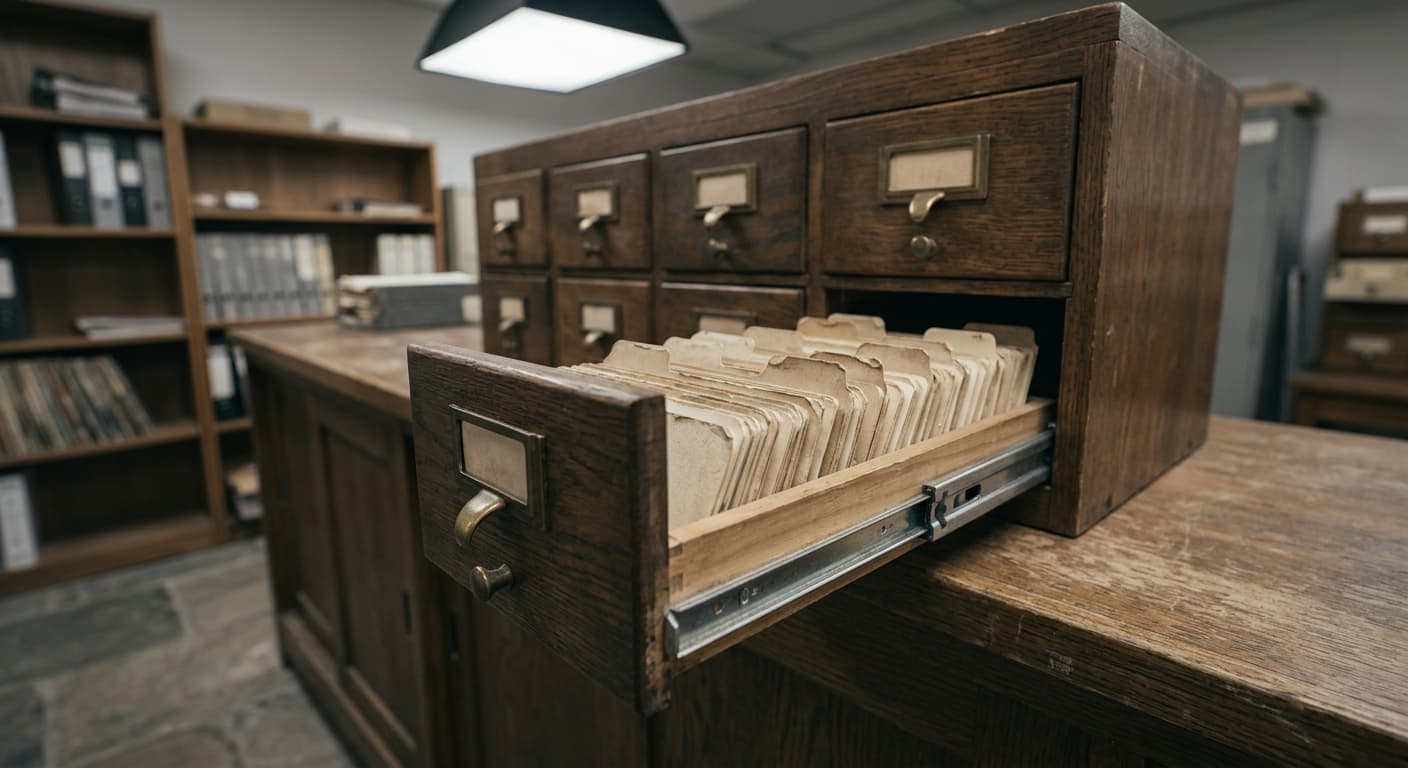
Idaho has no statute that makes a coroner's written autopsy report confidential. The Idaho Public Records Act presumes that public records are open unless a statute expressly provides otherwise, and the only coroner-specific exemption covers photographs and images of a decedent, not the written report. In practice, release policies vary by county, and some offices limit routine copies to the legal next of kin.
Are Autopsy Reports Public in Idaho?
There is no Idaho statute that closes a coroner's written autopsy report. Idaho Code 74-102(1) provides that "every person has a right to examine and take a copy of any public record of this state and there is a presumption that all public records in Idaho are open at all reasonable times for inspection except as otherwise expressly provided by statute."
A county coroner is part of a county, which is a local agency under Idaho Code 74-101(8), so coroner records sit inside that presumption. The exemption list in Idaho Code 74-105 carries one coroner-specific entry, subsection (24), and it reaches only "any photographs or images of a decedent taken as part of a coroner death investigation or law enforcement investigation." A written autopsy report is neither a photograph nor an image.
The investigatory-records exemption in Idaho Code 74-105(1) is a poor fit as well. It applies only under the conditions set out in Idaho Code 74-124, and 74-124(3) defines a law enforcement agency as a closed list: "the office of the attorney general, the office of the state controller, the Idaho state police, the office of any prosecuting attorney, sheriff or municipal police department." County coroners are not on that list, and Idaho Code 19-4301(2) assigns the criminal investigation to law enforcement while leaving the coroner the medicolegal investigation.
Separately, Idaho Code 19-4301D requires the coroner, once the cause and manner of death are established, to "make and file a written report of the material facts concerning the cause and manner of death in the office of the clerk of the district court." That court filing is a second place to look if a coroner office is unresponsive.
None of this guarantees a copy on demand. Individual offices apply their own policies, may redact under other exemptions, and can be slow. But the starting point in Idaho is a presumption of openness rather than a blanket closure, and an office that refuses can be asked which statute it is relying on.
If you want a broader overview of how autopsy access works across the country, see Are Autopsies Public Records?.
Who Performs Autopsies in Idaho?
Idaho runs a county coroner system. There is no statewide medical examiner office. Each of Idaho's 44 counties has its own coroner, who is an elected county official serving a set term.
The coroner takes jurisdiction when a death occurs in the county under circumstances the law flags for investigation. Under Idaho Code 19-4301, the coroner investigates deaths that result from violence (homicide, suicide, or accident), happen under suspicious or unknown circumstances, or occur when the person was not attended by a physician who can certify the cause of death.
The coroner does not personally perform the autopsy. Instead, under Idaho Code 19-4301B, the coroner or the prosecuting attorney may order an autopsy performed by a licensed physician or forensic pathologist when it is deemed necessary to accurately and scientifically determine the cause and manner of death. The coroner may authorize this autopsy without the consent of the next of kin.
Not every death gets an autopsy. Many investigated deaths are resolved with an external examination, scene investigation, and medical history rather than a full autopsy.
Who Can Request an Idaho Autopsy Report?
Because no statute limits the report to a defined class of requesters, who actually receives a copy turns on the county coroner office's own policy and on the general Public Records Act process.
Several Idaho coroner offices publish a narrower policy than the statute requires. The Bingham County Coroner, for example, states that "the legal next-of-kin or durable power of attorney for health care may request a copy of the autopsy report or forensic inspection report from the Coroner's Office." That is one office's policy rather than a statewide rule, and a durable power of attorney for health care generally ends at the principal's death, so do not assume it carries weight in every county.
Idaho statute does define next of kin in one place tied to coroner records. Idaho Code 74-105(24) defines "next of kin" as "the closest living relative in the order of spouse, adult children, parents, siblings, and grandparents." That definition governs the release of decedent photographs and images, and only once the coroner death investigation, the law enforcement investigation, and the criminal case including all appeals and related civil proceedings are no longer active. By its terms it does not govern the written report.
Anyone else, including attorneys, insurers, journalists, and researchers, can file a public records request with the coroner office and, if denied, ask which statutory exemption the office is applying. A court order or subpoena remains an option when a request is refused.
How to Get an Autopsy or Toxicology Report in Idaho
Request the report directly from the county coroner office that handled the death, not from the state vital records office. The first step is identifying the correct county, which is the county where the death occurred.

Most coroner offices ask the requester to submit a written request or a records request form. Some also ask for proof of a relationship to the deceased before releasing a copy routinely. Contact the specific county coroner for the exact form and any identification requirements.
Fees and processing times vary by county. There is no single statewide fee schedule, so confirm the cost and turnaround directly with the coroner office before you submit.
Toxicology results are often part of, or attached to, the autopsy report. Because toxicology testing is sent to outside labs, the full report may not be ready for several weeks or longer after the death.
The Pending-Case Hold
Some Idaho coroner offices hold reports connected to criminal charges. The Bingham County Coroner states that "an autopsy report for cases with criminal charges will not be released for 45 days after sentencing and/or all appeal times have passed."
That 45-day figure is one office's practice. It does not appear in the Idaho Code and it does not bind the other counties, so ask the specific coroner office what its policy is rather than assuming the same wait applies everywhere.
The one waiting period Idaho statute does impose is narrower. Under Idaho Code 74-105(24), photographs and images of a decedent go to next of kin only after the coroner death investigation, the law enforcement investigation, and the criminal case including all appeals and related civil proceedings have ended.
Autopsy Report vs Death Certificate in Idaho
An autopsy report and a death certificate are two different documents in Idaho. They serve different purposes and follow different access rules.
The death certificate is issued through the Idaho Bureau of Vital Records and Health Statistics. It is the official legal record of the death and includes a short cause-of-death line, plus details like the date, place, and manner of death. Families need it for estates, insurance, and benefits.
The autopsy report is the coroner's detailed medical narrative explaining how the pathologist reached the cause and manner of death. It can run many pages and include findings, photograph descriptions, and toxicology data.
In short, the death certificate gives you the official one-line cause of death from the state, while the autopsy report is the coroner's detailed file and is requested from the county rather than from Vital Records. For the broader picture, start at Idaho Death Records.
Idaho Autopsy Report Facts
| Item | Idaho |
|---|---|
| Public record? | Presumed open under Idaho Code 74-102; no statute closes the written report |
| Coroner-specific exemption | Idaho Code 74-105(24), covering decedent photographs and images only |
| Who can request | Any requester under the Public Records Act; some counties limit routine copies to next of kin by office policy |
| Death investigation system | County coroner system (no state medical examiner) |
| Who orders the autopsy | County coroner or prosecuting attorney |
| Where to request | County coroner office where the death occurred |
| Also filed with | Clerk of the district court, under Idaho Code 19-4301D |
| Fee | Varies by county; confirm with the coroner office |
| Pending-case hold | County office policy, not statute. Bingham County holds until 45 days after sentencing and all appeal times pass |
| Governing law | Idaho Public Records Act, Idaho Code 74-102 and 74-105 |

Disclaimer: This page provides general information, not legal advice. Coroner policies, fees, and forms differ from county to county and can change. Always verify current requirements directly with the county coroner office that handled the death.
Sources
This page draws on the Idaho State Legislature statutes (the Idaho Public Records Act at Title 74, Chapter 1, and Idaho Code Title 19, Chapter 43), the CDC's summary of Idaho coroner and medical examiner laws, and an Idaho county coroner office's published policy on autopsy report access.
UP: Idaho Death Records | Hub: Death Records by State
Frequently Asked Questions
Are autopsy reports public record in Idaho?
No Idaho statute makes them confidential. Idaho Code 74-102 presumes public records are open unless a statute expressly provides otherwise, and the only coroner-specific exemption, Idaho Code 74-105(24), reaches photographs and images of a decedent rather than the written report. County coroner offices still apply their own release policies, so what you receive can vary by county.
How do I get an autopsy report in Idaho?
Contact the county coroner office where the death occurred and submit a written request or the office's records request form. Some offices ask for proof that you are the legal next of kin before releasing a copy routinely. Fees and processing times vary by county. Under Idaho Code 19-4301D the coroner also files a written report of the material facts with the clerk of the district court, which is a second place to check.
Who can request an autopsy report in Idaho?
No statute limits requesters to a defined group, so any person may file a public records request with the coroner office. Some offices narrow it by policy. Bingham County, for example, states that the legal next of kin or a durable power of attorney for health care may request a copy. If a request is denied, ask which statutory exemption the office is applying.
How much does an Idaho autopsy report cost?
There is no single statewide fee. Each county coroner office sets its own copy fee, so confirm the cost directly with the coroner office that handled the death before you request the report.
Can I get an autopsy report while the case is open?
It depends on the county. Idaho statute sets no waiting period for the written report. Some offices hold reports tied to criminal charges; Bingham County, for example, does not release one until 45 days after sentencing and all appeal times have passed. The statutory waiting rule in Idaho Code 74-105(24) applies to decedent photographs and images, not to the report.
Is an autopsy report the same as a death certificate?
No. The death certificate is the official legal record from Idaho Vital Records and includes a short cause-of-death line. The autopsy report is the coroner's detailed medical findings and is requested from the county coroner that handled the death.
Updates
Corrected the central access rule: no Idaho statute makes a coroner's written autopsy report confidential, the Public Records Act presumes openness, the one coroner-specific exemption covers decedent photographs only, and the next-of-kin and 45-day rules are one county's office policy rather than state law.
Governing law re-checked for recent changes
Independently fact-checked against the cited primary sources
The Law Behind This Article
This article rests on the statutory provisions below, held in our own legal record and retrieved from the official source. Tap a section to read the operative text.
Idaho Code
§ 74-105Records exempt from disclosure — Law enforcement records, investigatory records of agencies, evacuation and emergency response plans, worker’s compensation. The following records are exempt from disclosure:In forcecited in 2 of our articles
74-105. Records exempt from disclosure — Law enforcement records, investigatory records of agencies, evacuation and emergency response plans, worker’s compensation.
Official text (excerpt) · last checked 2026-08-01 · Read the full text in our law library · Verify at legislature.idaho.gov
Cited in 1 court opinions in our collectionLatest citing opinion in our collection: 2020
Opinions citing this section in our collection:
- Cover v. ID Board of Correction (Idaho Supreme Court 2020)“…s of the Department of Correction. At issue in this case is Idaho Code section 74-105(4)(a)(i), which exempts from disclosure…”
Identified automatically from the court opinions citing this section — not a ranking of which case controls.
Also relied on in: Idaho Police Reports: How to Get a Crash Report or Incident Report
§ 19-4301County coroner to investigate deathsIn forcecited in 2 of our articles
19-4301. County coroner to investigate deaths. (1) When a county coroner is informed that a person has died, the county coroner shall investigate that death if: (a) The death is a suspected homicide, suicide, or occurring under suspicious or unknown circumstances; (b) The death appears to be…
Official text (excerpt) · last checked 2026-08-01 · Read the full text in our law library · Verify at legislature.idaho.gov
Cited in 4 court opinions in our collectionLatest citing opinion in our collection: 2022
Opinions citing this section in our collection:
- Hagy v. State (Idaho Court of Appeals 2002, 137 Idaho 618)“…hed that duty by not performing an autopsy on Karen. Idaho Code Section 19-4301(b) requires that, when a coroner is inf…”
- State v. Akins (Idaho Supreme Court 2018, 423 P.3d 1026)“…a death that is subject to a coroner’s investigation under Idaho Code section 19-4301(1). A county coroner must investigate a…”
- James v. Kootenai County (District Court, D. Idaho 2022)“…violence” or “under suspicious or unknown circumstances.” Idaho Code § 19-4301(1). The law further provides that the c…”
Identified automatically from the court opinions citing this section — not a ranking of which case controls.
Also relied on in: How to Find a Cause of Death in Idaho (2026)
§ 19-4301bPerformance of autopsiesIn force
19-4301B. Performance of autopsies. (1) The coroner may, in the performance of his duties under this chapter, summon a forensic pathologist authorized to practice medicine and surgery in the state of Idaho to inspect the body and give a professional opinion as to the cause of death.
Official text (excerpt) · last checked 2026-08-01 · Read the full text in our law library · Verify at legislature.idaho.gov
Cited in 2 court opinions in our collectionLatest citing opinion in our collection: 2022
Opinions citing this section in our collection:
- Hagy v. State (Idaho Court of Appeals 2002, 137 Idaho 618)“…s case that an investigation was conducted. However, Idaho Code Section 19-4301B provides that a coroner may…”
- James v. Kootenai County (District Court, D. Idaho 2022)“…hat the decision to order an autopsy is discretionary. See Idaho Code § 19-4301B. But a decision does not automatically…”
Identified automatically from the court opinions citing this section — not a ranking of which case controls.
Search our full record of US law — 2.1 million sections, every state + federal →
Sources and References
- Idaho Code 19-4301 (Coroner duty to investigate deaths)(legislature.idaho.gov).gov
- Idaho Code 19-4301B (Autopsy ordered by coroner or prosecuting attorney)(legislature.idaho.gov).gov
- CDC: Idaho Coroner/Medical Examiner Laws(cdc.gov).gov
- Bingham County Coroner FAQs (autopsy report access and pending-case hold)(binghamid.gov).gov
- Idaho Code 74-102 (Public records: right to examine, presumption of openness)(legislature.idaho.gov)
- Idaho Code 74-105 (Records exempt from disclosure; subsection (24) decedent photographs and images)(legislature.idaho.gov)
- Idaho Code 74-124 (Investigatory records; definition of law enforcement agency)(legislature.idaho.gov)
- Idaho Code 19-4301D (Coroner to make reports; filing with the clerk of the district court)(legislature.idaho.gov)