
United Kingdom
Recording Meetings at Work in the UK: The Rules
Independently fact-checked against primary sources (last audited June 19, 2026). · 7 primary sources cited on this page. How we verify our legal content

Recording a meeting you take part in at work is not, by itself, a criminal offence in the UK, but it can still be gross misconduct, and a covert recording is only admissible in an employment tribunal at the tribunal's discretion. Courts and tribunals have generally held that secrecy alone does not make a recording inadmissible (Vaughan v London Borough of Lewisham [2013] UKEAT/0534/12).
For the wider UK position on consent, phone calls and sharing recordings, see the UK recording laws overview.
Can an employee record a workplace meeting?
No UK statute makes it a criminal offence for an employee to record a meeting they are personally attending, whether that is a one-to-one, a grievance hearing or a disciplinary. The recording is of a conversation the employee is party to, so the interception offences that govern third-party eavesdropping do not apply. The real questions are contractual and evidential: is recording a breach of the employee's duties, and can the recording later be used.
The Acas Code of Practice on Disciplinary and Grievance Procedures does not prohibit recording, but Acas guidance is that meetings should be recorded only with the agreement of everyone present, and that any agreed recording must comply with data protection law. Many employers go further and state in the staff handbook that recording a meeting without permission is a disciplinary offence. Where that rule exists and is communicated, an employee who records covertly is acting against an express policy.
Watch out: "Legal to make" and "safe to make" are not the same thing. A recording can be perfectly lawful to create yet still expose the employee to dismissal and to a reduced tribunal award.
Covert recordings as misconduct: Phoenix House v Stockman
Whether a covert recording is misconduct is fact-sensitive. In Phoenix House Ltd v Stockman [2019] (UKEAT/0058/18), the Employment Appeal Tribunal held that making a covert recording at work will often, but not always, amount to misconduct, and that it is not automatically gross misconduct. The EAT said the relevant factors include the purpose of the recording, the employee's blameworthiness, what was actually recorded, and whether the employer had a clear policy against it.
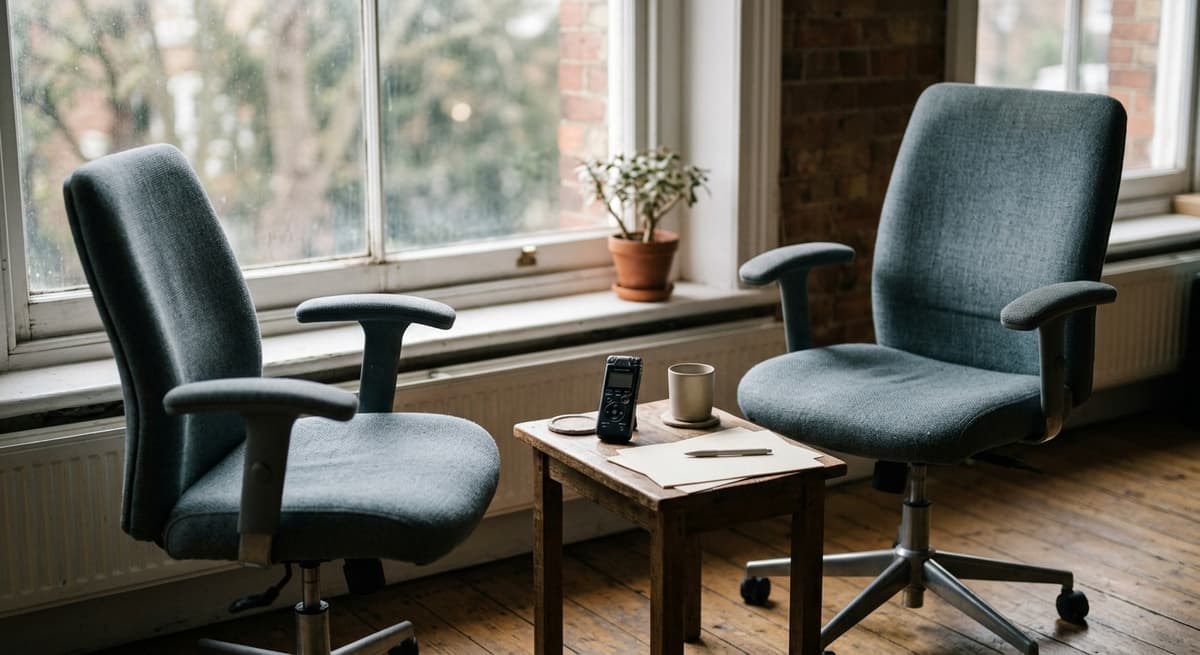
The EAT recognised legitimate reasons an employee might press record, such as keeping an accurate note, guarding against later misrepresentation, or where a vulnerable employee is trying to protect themselves. It contrasted those with recording made to entrap an employer or to gain a forensic advantage. Critically, the tribunal in Stockman accepted that the employer would probably have dismissed the employee had it known of the recording, and reduced her compensation accordingly. Courts and tribunals have generally held that an employer wanting covert recording treated as gross misconduct should say so expressly in its policies.
Admissibility in the employment tribunal
A covert recording made by an employee is not inadmissible simply because it was made in secret. In Vaughan v London Borough of Lewisham [2013] UKEAT/0534/12, the EAT (Underhill P) confirmed that the practice of secret recording may be "distasteful" and a breach of trust and confidence, but that does not make the resulting evidence inadmissible. Tribunals have a wide discretion to admit relevant evidence. The claimant in Vaughan failed only because she sought to dump 39 hours of recordings on the tribunal without transcripts or any focused explanation of relevance; the EAT said she should make a narrower, properly evidenced application.
The leading example of a covert recording being admitted is Punjab National Bank (International) Ltd v Gosain [2014] UKEAT/0003/14. The employee had recorded not only the open sessions of her grievance and disciplinary hearings but also the panel's private discussions during the adjournments, which she recorded by leaving a device running while she left the room. Those private remarks allegedly included an instruction to dismiss her and a decision to skip key grievance issues. His Honour Judge Peter Clark held the recordings admissible because the private remarks fell well outside the panel's legitimate business, distinguishing earlier authority (Amwell View School v Dogherty) that had protected genuine private deliberations.
| Issue | General position | Authority |
|---|---|---|
| Is a covert recording automatically inadmissible | No; secrecy alone is not a bar | Vaughan v Lewisham [2013] |
| Recording of the panel's private deliberations | May be admitted where the remarks fall outside legitimate business | Gosain [2014] |
| Genuine private/legal deliberations | Generally protected | Amwell View School v Dogherty [2007] |
| Is covert recording misconduct | Often, but not always; depends on purpose and policy | Phoenix House v Stockman [2019] |
| Effect on a successful claimant | Award may be reduced for conduct or via Polkey | Phoenix House v Stockman [2019] |
Watch out: Admitting a recording is not the same as winning with it. Tribunals weigh relevance and probative value against the manner in which evidence was obtained, and an employee who records the whole workplace indiscriminately is far less likely to persuade a tribunal than one who has a focused, transcribed extract that goes to a live issue.
Employer monitoring and recording of staff
When the employer is the one recording, the analysis shifts from contract and admissibility to data protection. Recording staff is processing of personal data, so it engages the UK GDPR and the Data Protection Act 2018. The ICO's guidance "Monitoring workers" (published October 2023) sets the expectations: monitoring must have a clear, documented purpose, a lawful basis under Article 6 UK GDPR, and it must be the least intrusive means of achieving that purpose. Employers must also be transparent, normally by telling workers about monitoring through a privacy notice.

The ICO is clear that covert monitoring of workers is very hard to justify and is acceptable only in exceptional circumstances, such as a genuine, specific suspicion of criminal activity or equivalent malpractice where telling workers would prejudice the investigation. Even then it should be targeted, time-limited, and stopped once the investigation ends. The ICO expects a Data Protection Impact Assessment before any monitoring that is likely to be high risk, and treats secret monitoring and audio recording as inherently intrusive. Workers also retain the right to make a subject access request for recordings that contain their personal data.
The data-protection risk of recording colleagues
An employee who records a meeting is also processing the personal data of everyone captured on the recording. The household exemption in Article 2(2)(a) UK GDPR can cover a recording kept purely for one's own use, but it falls away the moment the recording is shared, published, or used to build a case against a colleague. At that point the recorder may have data protection obligations of their own, and the people recorded may have rights against them.

This is why a covert recording can cut both ways. It may help an employee prove what was said in a hearing, but circulating it to colleagues, posting clips online, or recording private conversations between others can expose the recorder to a complaint to the ICO, a misuse of private information claim, or further disciplinary action. Courts and tribunals have generally held that the safer course is to ask to record openly, to keep any recording proportionate and confined to the relevant meeting, and to disclose it properly through the employment tribunal process rather than informally.
Frequently Asked Questions
Is it illegal to secretly record a meeting with my manager in the UK?
No, recording a meeting you personally attend is not a criminal offence in the UK, because you are a party to the conversation. The risk is not criminal; it is that covert recording can breach your contract or staff handbook and may be treated as misconduct, and that what you do with the recording afterwards can engage data protection law.
Can I use a covert recording as evidence in an employment tribunal?
Potentially yes. In Vaughan v London Borough of Lewisham [2013] the EAT confirmed that covert recordings are not inadmissible just because they were made in secret, and tribunals have a wide discretion to admit relevant evidence. You should disclose the recording and a transcript early and focus on the parts that are genuinely relevant rather than submitting hours of material.
What did Punjab National Bank v Gosain decide?
In Gosain [2014] UKEAT/0003/14 the EAT allowed an employee to rely on a covert recording of the panel's private discussions during adjournments of her grievance and disciplinary hearings. The remarks, including an alleged instruction to dismiss her, fell outside the panel's legitimate business, so HHJ Peter Clark held the recording admissible.
Can I be dismissed for covertly recording a disciplinary or grievance hearing?
You can. In Phoenix House Ltd v Stockman [2019] the EAT held that covert recording will often, though not always, amount to misconduct, depending on its purpose and content. Where an employer has a clear policy that secret recording is gross misconduct, dismissal is more likely to be fair.
Will recording secretly reduce my compensation if I win?
It can. In Phoenix House v Stockman the tribunal reduced the award because the employer would probably have dismissed the employee for the covert recording had it known. Tribunals can make conduct or Polkey deductions even where the recording itself is admitted as evidence.
Can my employer secretly record or monitor me at work?
Only rarely. The ICO's Monitoring workers guidance (2023) says covert monitoring is very difficult to justify and is acceptable only in exceptional circumstances, such as a specific suspicion of criminal activity. Routine monitoring must have a documented lawful basis, a Data Protection Impact Assessment, and transparency through a privacy notice.
Do I have to tell my employer I am recording a meeting?
There is no legal duty to announce it, but Acas guidance is that meetings should be recorded only with everyone's agreement, and many handbooks ban recording without permission. Asking to record openly avoids a misconduct argument and is generally the safer course.
Can I share a recording of a workplace meeting with colleagues or online?
This is where the legal risk is highest. A recording kept for your own use may fall under the personal or household exemption, but sharing, publishing, or circulating it can breach the Data Protection Act 2018 and may support a misuse of private information claim, because the recording contains other people's personal data.
Updates
Independently fact-checked against the cited primary sources
Sources and References
- Punjab National Bank (International) Ltd & Ors v Gosain [2014] UKEAT/0003/14(bailii.org).gov
- Vaughan v London Borough of Lewisham [2013] UKEAT/0534/12(bailii.org).gov
- ICO, Monitoring workers (UK GDPR employment guidance, 2023)(ico.org.uk).gov
- Acas Code of Practice on Disciplinary and Grievance Procedures(acas.org.uk).gov
- Data Protection Act 2018 (UK GDPR enabling Act)(legislation.gov.uk).gov
- ICO, A guide to lawful basis (Article 6 UK GDPR)(ico.org.uk).gov
- ICO, Data protection impact assessments (DPIAs)(ico.org.uk).gov