
New Hampshire
New Hampshire GPS Tracking Laws: Is It Legal to Put a Tracker on a Car? (2026)
Independently fact-checked against primary sources (last audited June 17, 2026). · Law checked current as of August 9, 2026. How we verify our legal content

Maybe you found a strange device tucked behind your license plate. Maybe you are tempted to drop an AirTag in a spouse's car to confirm a suspicion. Either way, New Hampshire has more to say about it than almost any state in New England.
New Hampshire is one of the few states with a statute written specifically for this problem: RSA chapter 644-A, Electronic Device Location Information. It flatly bans placing a tracking device on someone else's person or property without consent.
But the statute has an unusual twist that most websites get wrong, and understanding it matters. This guide explains what RSA 644-A actually says, where the stalking law takes over, what employers can do, and what to do if you find a tracker on your car.
Is It Legal to Put a GPS Tracker on a Car in New Hampshire?
The short answer: you can track your own car, and you can track someone else's car only with their consent or under a specific statutory exception. Putting a tracker on a vehicle that belongs to someone else, without permission, violates New Hampshire law.
That rule comes from RSA 644-A:4. The statute says no individual or person shall, without consent, place, locate, or install an electronic device on the person or property of another and obtain location information from that device.
Notice the structure. The violation has two parts: installing the device on another person's body or property, and obtaining location data from it. Slipping a GPS unit under a neighbor's bumper and watching the dot move checks both boxes.
New Hampshire passed this chapter to deal directly with location tracking, so unlike states that stretch old surveillance laws to fit, the Granite State's rule is on point. The complication is what happens after a violation, which is where most summaries of this law fall apart.
RSA 644-A: A Ban With a Criminal/Civil Split
Here is the nuance that aggregator sites routinely misreport. Many claim that any GPS tracking violation in New Hampshire is a class B misdemeanor. That is not what the statute says.

RSA 644-A:6 splits enforcement into two tracks. The criminal penalty, a class B misdemeanor, applies to an individual acting for or on behalf of a government agency who violates the chapter. Think of an officer or government contractor tracking someone without a warrant or other lawful basis.
A purely private violator, like a suspicious spouse, an ex, or a nosy neighbor, does not face that class B misdemeanor under chapter 644-A. Instead, the statute gives the person who was tracked an express civil cause of action. The victim can sue the tracker directly for violating the chapter.
So is private GPS tracking "legal" in New Hampshire? No. It is unlawful, and the victim can take the tracker to court for money damages. It just is not prosecuted as a crime under 644-A itself.
That does not mean a private tracker faces no criminal risk at all. It means the criminal exposure comes from a different statute: New Hampshire's stalking law, covered below. Secret tracking that is part of a pattern of following, monitoring, or threatening someone is very much a crime in this state.
Who Can Legally Track a Vehicle in New Hampshire
RSA 644-A:4 lists the situations where tracking is allowed without consent, and RSA 644-A:3 separately lists when a government entity may obtain location information without a warrant. Together, the exceptions are narrow and specific:
- Consent. If the person being tracked agrees, the chapter does not apply. This is the exception that covers fleet tracking apps, shared family location services, and couples who voluntarily share locations.
- Parents and guardians of minors. A parent, foster parent, or legal guardian may track their minor child. A parent who puts a locator in a teenager's car is acting within the law.
- Guardians of incapacitated adults. A court-appointed guardian may track their ward, which matters for families caring for adults with dementia or serious disabilities.
- Court-ordered monitoring. Electronic monitoring for house arrest, probation, or parole is exempt.
- Government emergency uses. Law enforcement and emergency services can use location data in E-911 responses, emergencies, missing-minor cases, and situations with consent or other legal authorization.
Outside those categories, the default rule of RSA 644-A:4 controls: no consent, no tracking.
One practical note on vehicles you co-own. The statute speaks of the person or property "of another." Tracking a car titled solely in your own name is generally outside the ban, but a jointly owned car driven exclusively by an estranged spouse is murky territory, and a divorce court will not look kindly on covert tracking either way. In a separation, get legal advice before you act.
Can My Employer Track My Car in New Hampshire?
New Hampshire has no statute specifically governing employer GPS tracking. The general framework of RSA 644-A fills the gap, and it turns on two things: who owns the vehicle, and whether you consented.
If you drive a company-owned vehicle, your employer is tracking its own property. The ban in 644-A:4 covers placing a device on the property "of another," so a business installing GPS in its own trucks is on solid ground. Most New Hampshire employers still disclose tracking in a written policy, which is good practice and removes any doubt.
If your employer wants to track your personal car, the calculus flips. Your car is your property, so the employer needs your consent. That usually happens through a signed mileage-app agreement or telematics consent form. An employer that hides a tracker on an employee's personal vehicle without consent invites a civil suit under RSA 644-A:6 and a common-law privacy claim.
Employees who consented to tracking on a company vehicle should assume the data is collected during off-hours too unless the policy says otherwise. If that bothers you, ask whether the device can be disabled outside work time. For a broader look at monitoring on the job, see our New Hampshire recording laws guide.
AirTags, Tiles, and Item Trackers
Apple AirTags and similar Bluetooth trackers have changed who gets tracked and how. They have also given New Hampshire prosecutors a clean path to criminal charges, because of specific language in the stalking statute.
RSA 633:3-a defines stalking as a course of conduct targeted at a person that would cause a reasonable person to fear for their safety, or the safety of a family member. The statute then lists the acts that count as a course of conduct, and one of them is "placing an object on the person's property, either directly or through a third person."
An AirTag is an object. Dropping one into someone's purse, glove box, or wheel well is placing an object on their property. Combined with even one more qualifying act, like following the person or showing up where the tracker says they are, that builds a stalking charge.
Stalking in New Hampshire is a class A misdemeanor. It jumps to a class B felony in one situation only: the person already has a stalking conviction, and the second or subsequent offense occurs within 7 years of the first.
A protective order does something different. It does not raise the grade of the offense, it lowers what the state has to prove. Under RSA 633:3-a, I(c), once a person has been served with a qualifying protective order, a single act that both violates that order and is one of the listed stalking acts is stalking.
So the abusive ex who plants a tracker after being served with a stalking order does not get the benefit of the two-act requirement. One placement of the device can support the charge.
Federal law adds another layer. Under 18 U.S.C. 2261A, using an electronic device to stalk someone across state lines, or in a way that causes substantial emotional distress, is a federal felony. With Massachusetts, Maine, and Vermont all within an easy drive, cross-border tracking cases out of New Hampshire can land in federal court.
Penalties and Civil Liability
| Conduct | Law | Consequence |
|---|---|---|
| Unconsented tracking by someone acting for a government agency | RSA 644-A:6 | Class B misdemeanor (fine-only offense, up to $1,200) |
| Unconsented tracking by a private individual | RSA 644-A:6 | Civil lawsuit by the victim; not a crime under this chapter |
| Tracking as part of a course of stalking conduct (2 or more acts) | RSA 633:3-a | Class A misdemeanor, up to 1 year in jail |
| A single act of tracking after being served with a qualifying protective order | RSA 633:3-a, I(c) | Class A misdemeanor stalking; no second act needed |
| Second or subsequent stalking offense within 7 years of a prior stalking conviction | RSA 633:3-a, VI(a) | Class B felony, up to 7 years in prison |
| Interstate or electronic stalking | 18 U.S.C. 2261A | Federal felony, up to 5 years or more |
On the civil side, a tracking victim in New Hampshire has three distinct tools:
- The express civil action in RSA 644-A:6. The statute itself authorizes the person who was tracked to sue any violator. This is rarer than people assume; many states ban tracking but give victims no direct statutory claim.
- The intrusion privacy tort. New Hampshire recognized the tort of intrusion upon seclusion in Hamberger v. Eastman, a 1964 New Hampshire Supreme Court case, decades before most states. Covert GPS surveillance of a person's daily movements fits the intrusion framework.
- Civil stalking protective orders. A tracking victim can petition for a protective order based on stalking conduct without waiting for a criminal charge. Once the order is served, a single act of tracking that violates it can support a stalking charge on its own, with no need to prove a second act.
For the protective order process, including emergency orders, see our guide to New Hampshire restraining order laws.
Police Tracking and Your Fourth Amendment Rights
Government tracking has constitutional limits on top of RSA 644-A. In United States v. Jones (2012), the U.S. Supreme Court held that attaching a GPS device to a vehicle and monitoring its movements is a search under the Fourth Amendment.
That means New Hampshire police generally need a warrant before placing a tracker on a suspect's car. Evidence from a warrantless tracker is vulnerable to suppression. And remember, an individual acting for a government agency who tracks outside the legal exceptions is the one person who actually faces the class B misdemeanor in RSA 644-A:6.
What to Do If You Find a Tracker on Your Car
If you discover a GPS device or AirTag you did not place, work through these steps:
- Do not destroy it. The device is evidence, and in a criminal case it may carry fingerprints, a serial number, or account data that identifies who planted it.
- Photograph everything. Capture the device where you found it, then the device itself from multiple angles, with timestamps.
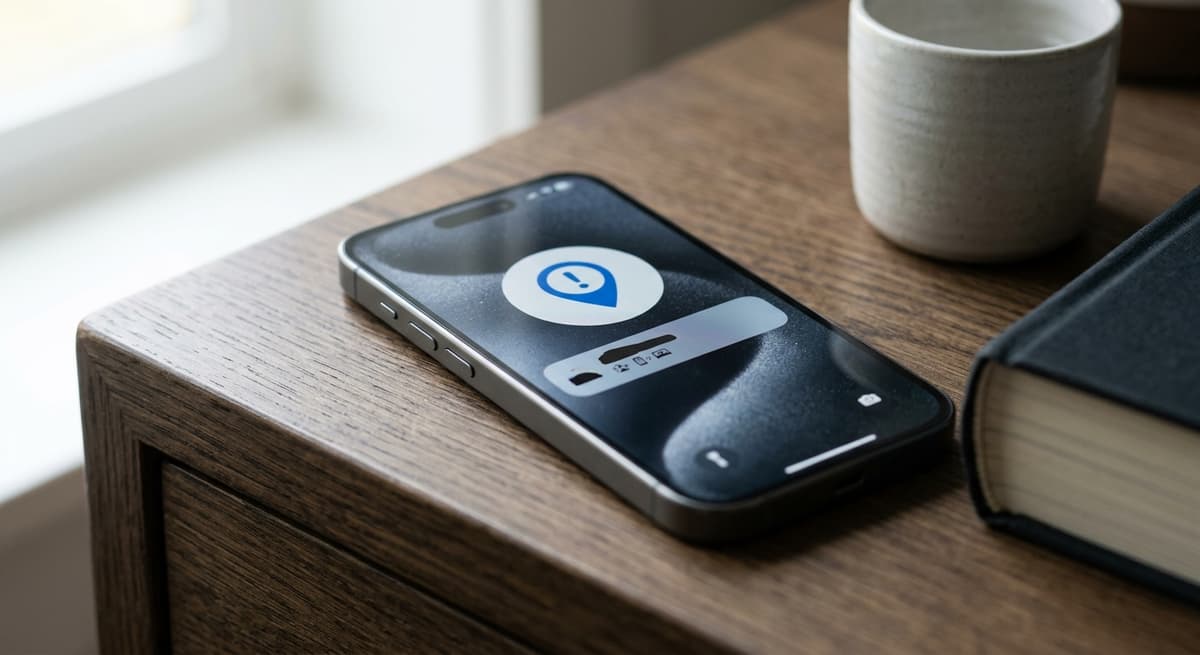
- Check for AirTag alerts. iPhones flag unknown AirTags traveling with you automatically; Android users can run a manual scan in settings. Save screenshots of any alert.
- Call local police or the State Police. Report it as suspected stalking under RSA 633:3-a. Bring your photos and any history with a suspected person.
- Consider a protective order. If you believe an ex or acquaintance planted it, a civil stalking petition can put court-ordered distance between you, and once it is served, a single further act of tracking can support a stalking charge on its own.
- Talk to a lawyer about a civil claim. RSA 644-A:6 gives you a direct right to sue the person who tracked you.
- Sweep the vehicle. Check wheel wells, bumpers, the OBD port under the dash, seat pockets, and the spare tire compartment. Hardwired trackers may require a mechanic.
If the tracker is paired with cameras or other monitoring at your home, our guide to surveillance camera laws covers what neighbors and landlords can and cannot record. And for laws in every other state, see GPS Tracking Laws by State.
Sources
- RSA 644-A:4, Prohibition on Obtaining Location Information (NH General Court)
- RSA 644-A:3, Exceptions (NH General Court)
- RSA 644-A:6, Violation (NH General Court)
- RSA 633:3-a, Stalking (NH General Court)
- United States v. Jones, 565 U.S. 400 (2012) (Cornell Legal Information Institute)
- 18 U.S.C. 2261A, Stalking (Cornell Legal Information Institute)
Disclaimer: This article is for general informational purposes only and is not legal advice. Laws change, and how they apply depends on your specific facts. If you are dealing with a tracking or stalking situation, talk to a licensed New Hampshire attorney, and call 911 if you are in immediate danger.
More New Hampshire Laws
Frequently Asked Questions
Is it illegal to put a GPS tracker on someone's car in New Hampshire?
Yes. RSA 644-A:4 prohibits placing a tracking device on another person's property and obtaining location data without consent. A private violator faces a civil lawsuit under RSA 644-A:6, and the conduct can also be charged criminally as stalking under RSA 633:3-a.
Is GPS tracking a crime in New Hampshire?
It depends on who does it. The class B misdemeanor in RSA 644-A:6 applies to individuals acting for or on behalf of a government agency. Private individuals are not charged under that chapter, but planting a tracker as part of a pattern of monitoring or following someone is criminal stalking under RSA 633:3-a.
Can I put a tracker on my spouse's car in New Hampshire?
Not without consent. If the car is your spouse's property, covert tracking violates RSA 644-A:4 and exposes you to a civil suit, a possible stalking charge, and serious damage to your position in any divorce. Tracking a car titled solely in your own name is generally lawful, but joint ownership is a gray area worth a lawyer's advice.
Can my employer GPS track my vehicle in New Hampshire?
An employer can track its own company vehicles, since the ban covers property of another. To track your personal car, the employer needs your consent, usually through a signed telematics or mileage-app agreement. Hidden tracking of a personal vehicle invites a civil claim under RSA 644-A:6.
Can parents track their child's car in New Hampshire?
Yes. RSA 644-A:4 expressly allows a parent, foster parent, or legal guardian to track a minor child, and a court-appointed guardian to track their ward. Tracking an adult child without consent is not covered by the exception.
Are AirTags illegal in New Hampshire?
Owning and using an AirTag on your own keys or luggage is legal. Planting one on another person or their property without consent violates RSA 644-A:4, and because the stalking statute counts placing an object on someone's property as stalking conduct, it can support a criminal charge under RSA 633:3-a.
Do police need a warrant to put a GPS tracker on a car in New Hampshire?
Generally yes. United States v. Jones held that attaching a GPS device to a vehicle is a Fourth Amendment search, and RSA 644-A permits government tracking only in defined situations such as emergencies, E-911 calls, missing minors, consent, or other legal authorization.
What can I sue for if someone tracked my car in New Hampshire?
RSA 644-A:6 gives you an express civil cause of action against anyone who violated the tracking ban. You may also have an intrusion upon seclusion privacy claim, a tort New Hampshire has recognized since Hamberger v. Eastman in 1964, and you can seek a civil stalking protective order.
Updates
Corrected the New Hampshire stalking penalty grading: stalking is a class A misdemeanor and becomes a class B felony only on a repeat offense within 7 years of a prior stalking conviction, while a protective order instead makes a single act of tracking enough to charge stalking rather than raising the offense to a felony.
Governing law re-checked for recent changes
Corrected the pincite for New Hampshire's parent/guardian and court-ordered-monitoring tracking exceptions: they are in RSA 644-A:4 (the general anti-tracking statute), not RSA 644-A:3 (which is scoped to government-entity warrant exceptions).
Governing law re-checked for recent changes
Independently fact-checked against the cited primary sources
The Law Behind This Article
This article rests on the statutory provisions below, held in our own legal record and retrieved from the official source. Tap a section to read the operative text.
New Hampshire Revised Statutes Annotated, TITLE LXII CRIMINAL CODE, CHAPTER 644-A ELECTRONIC DEVICE LOCATION INFORMATION
§ 644-A:4Conditions of Use of Location Information.In forcecited in 2 of our articles
No individual or person shall, without consent, place, locate, or install an electronic device on the person or property of another and obtain location information from such electronic device. No such consent shall be required by the parent, foster parent, or legal guardian of a minor, or by the legal guardian for the subject of his or her guardianship, or for persons under house arrest or probation or parole supervision who are issued ankle bracelets.
Official text (excerpt) · last checked 2026-08-26 · Read the full text in our law library · Verify at gc.nh.gov
Also relied on in: New Hampshire Employee Monitoring Laws: Workplace Surveillance and Social Media (2026)
§ 644-A:6Penalties.In forcecited in 2 of our articles
I. Any individual acting or purporting to act for or on behalf of a federal, state, or local agency who purposely violates this chapter shall be guilty of a class B misdemeanor. II. An individual or person who is injured as a result of a violation of this chapter may file a civil action against a government entity, individual, or person that fails to comply with the provisions of this chapter.
Official text (excerpt) · last checked 2026-07-29 · Read the full text in our law library · Verify at gc.nh.gov
§ 644-A:3Exceptions to Warrant Requirement.In force
A government entity may obtain the location information without a warrant: I. To respond to a call for emergency services, including a request from an E-911 supervisor to an electronic communication service to determine the location of a cellular telephone when the supervisor informs the services that the information is required pursuant to an emergency involving actual or potential death, serious physical injury or major damage to property and the information is needed without delay. Such a request shall not create a cause of action against the E-911 system or employee or the electronic communication service or its employees; II. With the informed consent of the owner or user of the electronic device concerned, except when the device is known or believed by the owner or user to be in the lawful possession of a third party known to the owner or user; III. With the informed consent of the parent or foster parent of a minor who is the owner or user, or the legal guardian or next of kin of the owner or user, if the owner or user is believed to be deceased or reported missing and unable to be contacted; IV.
Official text (excerpt) · last checked 2026-07-29 · Read the full text in our law library · Verify at gc.nh.gov
United States Code Title 18
§ 2261AStalkingIn forcecited in 53 of our articles
Whoever— travels in interstate or foreign commerce or is present within the special maritime and territorial jurisdiction of the United States, or enters or leaves Indian country, with the intent to kill, injure, harass, intimidate, or place under surveillance with intent to kill, injure, harass, or intimidate another person, and in the course of, or as a result of, such travel or presence engages in conduct that— places that person in reasonable fear of the death of, or serious bodily injury to— that person; an immediate family member (as defined in section 115) of that person; a spouse or intimate partner of that person; or the pet, service animal, emotional support animal, or horse of that person; or causes, attempts to cause, or would be reasonably expected to cause substantial emotional distress to a person described in clause (i), (ii), or (iii) of subparagraph (A); or with the intent to kill, injure, harass, intimidate, or place under surveillance with intent to kill, injure, harass, or intimidate another person, uses the mail, any interactive computer service or electronic communication service or electronic communication system of interstate commerce, or any other…
Official text (excerpt) · last checked 2026-07-28 · Read the full text in our law library · Verify at uscode.house.gov
Cited in 350 court opinions in our collectionLatest citing opinion in our collection: 2026
In the courts (editorial summary, independently checked):Federal appeals courts have construed and upheld Section 2261A. United States v. Walker (2011) read in the course of, or as a result of such travel disjunctively, so pre-travel threats plus resulting fear sufficed. United States v. Amy Gonzalez (2018) held it neither overbroad nor vague and no First Amendment violation as applied.
Opinions citing this section in our collection:
- United States v. Walker (Court of Appeals for the First Circuit 2011, 665 F.3d 212)✓After emailing threats to his estranged wife, the defendant flew from Michigan to Puerto Rico and was arrested on arrival. The court read the disjunctive phrase in 2261A(1) to cover travel that itself places the target in reasonable fear, and upheld the stalking conviction.
- United States v. Amy Gonzalez (Court of Appeals for the Third Circuit 2018, 905 F.3d 165)✓Relatives waged a years-long campaign against a mother that ended in a courthouse shooting. The court held 2261A is neither overbroad nor vague because it reaches harassing conduct, and that the mental states it lists are alternative means, not elements; convictions affirmed.
- United States v. Wills (Court of Appeals for the Fourth Circuit 2003, 346 F.3d 476)✓A burglary suspect pursued the witness who identified him at a preliminary hearing; the witness later died. The court held the evidence met each element of 2261A: travel from D.C. to Virginia, intent to harm or harass, and reasonable fear of death; conviction affirmed.
Identified automatically from the court opinions citing this section — not a ranking of which case controls.
Also relied on in: Alabama GPS Tracking Laws: Is It Legal to Put a Tracker on a Car? (2026), Colorado GPS Tracking Laws: Is It Legal to Put a Tracker on a Car? (2026), Florida GPS Tracking Laws: Is It Legal to Put a Tracker on a Car? (2026)
Search our full record of US law — 2.1 million sections, every state + federal →
Sources and References
- RSA 644-A:4, Prohibition on Obtaining Location Information(gc.nh.gov)
- RSA 644-A:3, Exceptions(gc.nh.gov)
- RSA 644-A:6, Violation(gc.nh.gov)
- RSA 633:3-a, Stalking(gc.nh.gov)
- United States v. Jones, 565 U.S. 400 (2012)(law.cornell.edu)
- 18 U.S.C. 2261A, Stalking(law.cornell.edu)