11th Circuit Voids Notice Before Eviction Deposit Forfeiture
11th Circuit Voids Notice Before Eviction Deposit Forfeiture
A published Eleventh Circuit panel ruled on August 17, 2026, that the Hillsborough County, Florida Clerk of Courts violated a tenant's due process rights before declaring his $3,600 eviction-case rent deposit forfeited, and separately held the seizure was an unconstitutional taking of his property.
Information last verified on August 22, 2026. This is a developing story; we update it as the record changes.
Jurisdiction scope: This ruling is binding federal precedent in the Eleventh Circuit (Florida, Georgia, and Alabama) and interprets a Florida statute. It does not address how other states handle unclaimed eviction-registry funds or announce a rule for facial due process challenges outside this specific notice scheme.
What Happened
The case is Blake Warner v. Hillsborough County Clerk of Courts, No. 24-10748 (11th Cir. Aug. 17, 2026), on appeal from the U.S. District Court for the Middle District of Florida, Docket No. 8:22-cv-01977-MSS-SPF. The panel, Judges Luck, Lagoa, and Abudu, issued a published opinion authored by Judge Lagoa.
Warner's landlord filed an eviction action against him in Hillsborough County Court on April 25, 2018. Because he intended to contest it, Florida law required him to deposit the allegedly accrued rent into the court registry while the case was litigated. Warner deposited two months' rent, $3,398, plus $101 per month, for a total of $3,600, and filed an answer and counterclaim on April 27, 2018.
Warner also opened a state e-file account on April 28, 2018, that listed a working email address, a phone number, and a mailing address where he actually received mail from 2017 through 2022. At oral argument, the Clerk conceded it had the ability to view and send messages to that email address.
Warner moved twice during the litigation. He updated his address with the court the first time, in June 2018, but not the second, in May 2019. Between February and April 2020, the Clerk received 13 pieces of returned mail addressed to Warner's outdated address. The underlying eviction case was dismissed for lack of prosecution on June 12, 2020, leaving the deposited rent in the registry.
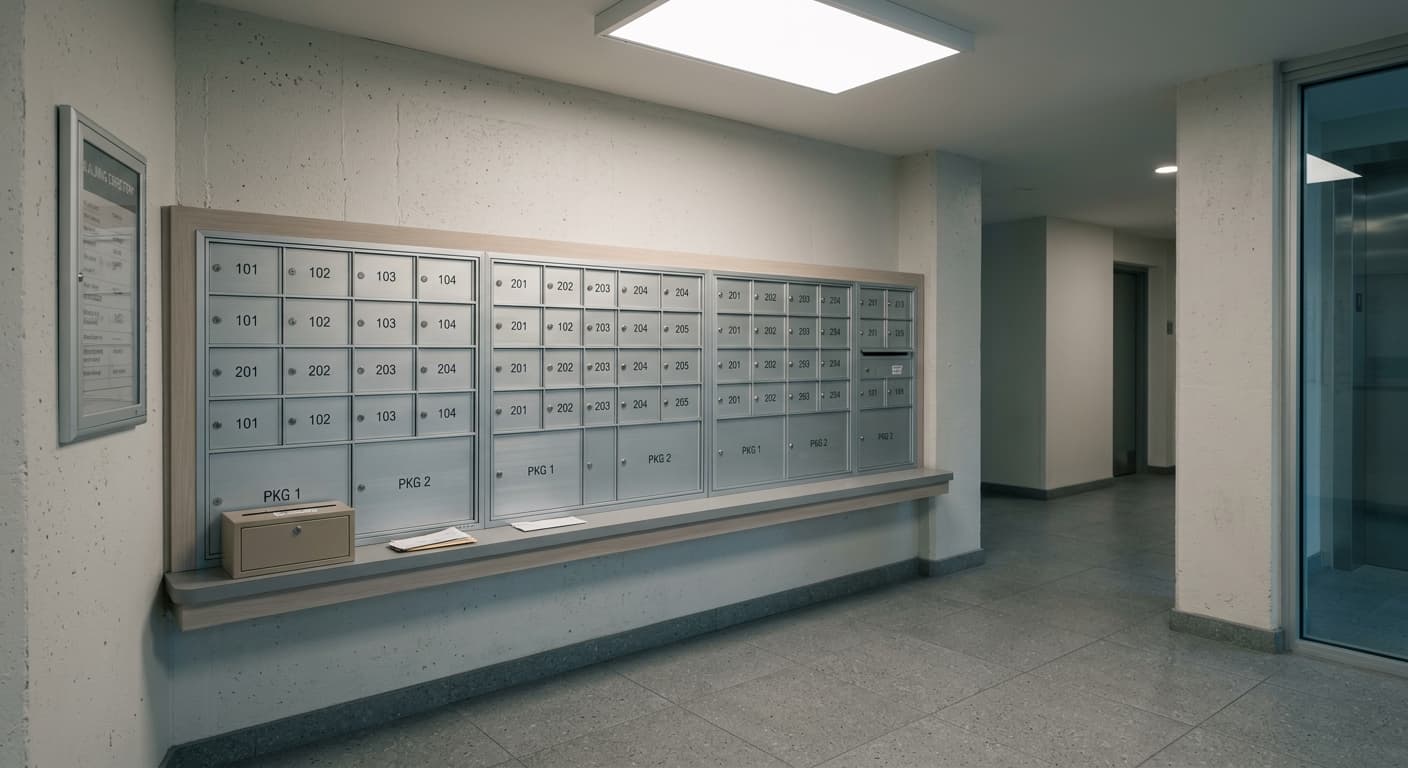
About eight months later, the Clerk began the process that ended in forfeiture. It first mailed a notice to Warner's old, already-bouncing address, apparently under a separate general unclaimed-property statute rather than the forfeiture statute ultimately at issue, and it never emailed him. It then published notice in La Gaceta, a primarily Spanish-language Tampa newspaper that the opinion says serves less than 0.2 percent of the county, and the listing's entry for Warner's funds cited Fla. Stat. 717.113, the general unclaimed-property law, although the notice went on to state that the funds would be forfeited to the county under 116.21. After no response, the Clerk deposited the $3,600 into the county's fine and forfeiture fund on September 1, 2021.
Warner sued the Clerk in August 2022 under 42 U.S.C. 1983, alleging violations of the Fourteenth Amendment's Due Process Clause and the Fifth Amendment's Takings Clause. The district court sided with the Clerk on summary judgment, finding the letter notice inadequate but the newspaper publication constitutionally sufficient, and rejecting the takings claim on the theory that the Supreme Court has upheld statutory escheatment of abandoned property. Warner appealed.
The Eleventh Circuit affirmed in part and reversed in part. As the opinion states on page 2:
"We hold that, although § 116.21's notice procedure is not facially unconstitutional, the Hillsborough County Clerk's application of the statute to Warner was unconstitutional because no notice was reasonably calculated to reach him. The Clerk also effected an unconstitutional taking of Warner's property because Warner had not abandoned the funds."
Warner v. Hillsborough County Clerk of Courts, No. 24-10748, slip op. at 2 (11th Cir. Aug. 17, 2026)
The court rejected Warner's argument that section 116.21 is unconstitutional on its face, holding that publication-only notice can be constitutionally adequate for genuinely unknown or unreachable property owners. But it found the Clerk's actual notice to Warner, both the letter mailed to a bouncing address and the newspaper publication, was not reasonably calculated to reach him given the working email address on file. It then held that, because the notice failed, the Clerk had no valid basis to presume Warner had abandoned the funds, making the seizure an uncompensated taking. The case is remanded to the district court for further proceedings.
Judge Luck dissented in part. He joined the majority on both due process holdings but disagreed that a Takings Clause violation occurred. In his view, section 116.21 is a valid escheat statute, and under Texaco, Inc. v. Short, 454 U.S. 516 (1982), a state may extinguish a property interest through nonuse without paying compensation, regardless of whether notice was adequate; he wrote that "notice is not an element of a takings claim."
What the Law Actually Says
A rent deposit into the court registry is a routine part of contested Florida evictions, and it is often confusing to tenants who have never encountered it. Under Fla. Stat. 83.60(2), when a tenant raises any defense other than "I paid the rent" in a landlord's possession action, the tenant "shall pay into the registry of the court the accrued rent as alleged in the complaint or as determined by the court and the rent that accrues during the pendency of the proceeding, when due." Skipping that deposit is not a minor procedural slip: the statute makes it "an absolute waiver of the tenant's defenses other than payment," clearing the way for the landlord to win an immediate default judgment for possession. Our guide to Florida landlord-tenant law covers this deposit requirement alongside Florida's other eviction and notice rules.
The deposit exists so a landlord is not left uncompensated while a case drags on, but the money legally remains the tenant's (or a disputed asset between tenant and landlord) unless and until a court orders otherwise. The Clerk in fact stipulated in the district court that Warner had a property interest in the funds, and the Eleventh Circuit held it could not disavow that stipulation on appeal, so it treated the $3,600 as Warner's property that could not simply be declared abandoned without a fair process.
Fla. Stat. 116.21 is the separate statute the Clerk used to move that money out of the registry. It authorizes county clerks to sweep unclaimed court-related funds into the county's fine and forfeiture fund, and it requires only one specific notice step: a single newspaper publication during July, warning that funds unclaimed by September 1 will be forfeited. The statute does not, on its face, require a letter, an email, or any other individualized notice. The Eleventh Circuit upheld that publication-only design as facially valid, since for a truly unreachable owner, publication may be the only practical option.
What changed the outcome here was the Due Process Clause's separate "reasonably calculated" standard for notice, which the opinion traces through Supreme Court precedent holding that before the government can take a constitutionally protected property interest, it must provide notice reasonably calculated, under all the circumstances, to apprise interested parties that their property is about to be taken and to give them a chance to object. In plain terms, the government cannot pick a technically legal notice method and stop there if it already knows, or should know, that method will not actually reach the person; if a letter comes back marked undeliverable and a better contact method is sitting in the government's own files, due process requires trying that better method. That principle is why the court found the Clerk's letter and newspaper notice both constitutionally deficient once it had 13 returned-mail notices and a working email on file for Warner.
Analysis: Why This Matters
The Recording Law Editorial Team's analysis follows.
The most important thing this ruling does not do is strike down Florida's unclaimed-court-funds statute. Section 116.21 remains valid, and publication notice remains an acceptable tool for genuinely unreachable owners. What the Eleventh Circuit narrowed is how much a government office can lean on a bare-minimum notice method once it has actual, contradicting information in its own systems, such as a returned envelope or an email address it has already used to communicate with the same person in the same case.
That distinction matters beyond eviction registries. Government agencies increasingly hold multiple channels of contact information for the same person, filed for different purposes, an e-file portal address here, a mailing address there. This opinion is a data point for the broader principle that once an agency has better information available and accessible to it, sending notice to a channel it knows or should know is dead is not "reasonably calculated" to succeed, even if a statute technically permits it.
The split on the takings question is also notable. Two judges held that a due process failure defeats the government's ability to presume abandonment, which in turn defeats the state's claim to the property under the Takings Clause. Judge Luck's dissent argues the two doctrines should stay separate: an escheat statute can validly extinguish a property interest through nonuse alone, he reasoned, independent of whether notice was adequate. That disagreement leaves open, within the Eleventh Circuit itself, exactly how tightly a due process notice defect and a Takings Clause claim are linked when a state statute presumes abandonment after a period of inaction.
How This Affects You
This ruling does not tell any individual reader whether they are owed money or how a similar dispute in their own case would come out; that depends on the specific facts and the record a court would review. In general, though, it is a reminder that a Florida court registry deposit does not disappear automatically once an eviction case ends, and clerks generally are required by Fla. Stat. 116.21 to attempt notice before treating unclaimed registry funds as forfeited.
Tenants who deposit rent into a Florida court registry under Fla. Stat. 83.60 may want to keep their mailing address, and ideally their e-file contact information, current with the clerk of court; this case turned heavily on what notice methods the clerk did and did not use. For readers dealing with a broader Florida landlord-tenant dispute, our landlord-tenant law hub covers deposit, notice, and eviction rules across all 50 states, and our page on Florida's recording and surveillance rules in landlord-tenant disputes explains what tenants and landlords in Florida can and cannot record during a dispute.
This is general legal information, not legal advice. It covers federal Eleventh Circuit precedent and Florida landlord-tenant law and reflects sources verified on August 22, 2026. Laws change and this story is developing; consult a lawyer licensed in your jurisdiction about your specific situation.
Related articles
- Our guide to Florida landlord-tenant law
- The landlord-tenant law hub, covering all 50 states
- Florida's recording and surveillance rules in landlord-tenant disputes
Last updated: 2026-08-22. This is a developing story; details verified as of 2026-08-22.
Frequently Asked Questions
What is a court registry deposit in a Florida eviction case?
Under Fla. Stat. 83.60(2), a Florida tenant who interposes any defense other than payment must deposit the allegedly accrued rent, plus rent accruing during the case, into the court registry. Failing either to pay the rent into the registry or to file a motion to determine the amount of rent within 5 days, excluding Saturdays, Sundays, and legal holidays, after service of process is an absolute waiver of the tenant's defenses other than payment, and the landlord is entitled to an immediate default judgment.
Did the 11th Circuit strike down Florida's law on forfeiting unclaimed court funds?
No. In Warner v. Hillsborough County Clerk of Courts, No. 24-10748 (11th Cir. Aug. 17, 2026), the court held Fla. Stat. 116.21's publication-notice procedure is not unconstitutional on its face. It ruled only that the Hillsborough County Clerk's specific notice attempts to this tenant were constitutionally inadequate.
What does 'reasonably calculated' notice mean under the Due Process Clause?
It means the government must use a notice method genuinely likely to reach the property owner given what it actually knows, not simply the minimum method a statute technically allows. Courts have generally held that once mailed notice is returned undeliverable, the government must take additional reasonable steps if a better contact method is available to it.
Was the 11th Circuit's ruling in Warner v. Hillsborough County Clerk of Courts unanimous?
No. The first two holdings were unanimous, and Judge Luck dissented only from the Takings Clause holding. Judge Luck joined the due process holdings but dissented on the Takings Clause issue, reasoning that a valid escheat statute like Fla. Stat. 116.21 extinguishes an abandoned property interest through nonuse alone, so no taking occurs regardless of notice. He wrote that notice is not an element of a takings claim, citing Maron v. Chief Financial Officer of Florida, 136 F.4th 1322 (11th Cir. 2025), and relied on Texaco, Inc. v. Short, 454 U.S. 516 (1982), for the principle that abandoned property leaves no owner to compensate.
What happens next in Warner v. Hillsborough County Clerk of Courts?
The Eleventh Circuit remanded the case to the U.S. District Court for the Middle District of Florida, Case No. 8:22-cv-01977-MSS-SPF, for further proceedings consistent with its opinion.
Updates
Independently fact-checked against the cited primary sources
Sources and References
- Blake Warner v. Hillsborough County Clerk of Courts, No. 24-10748 (11th Cir. Aug. 17, 2026) (published opinion, Lagoa, J., Luck, J., dissenting in part)(courtlistener.com)
- Fla. Stat. § 83.60, Defenses to action for rent or possession; procedure (Florida Legislature Online Sunshine)(leg.state.fl.us).gov
- Blake Warner v. Hillsborough County Clerk of Courts, No. 24-10748 (11th Cir. Aug. 17, 2026) (published opinion, Lagoa, J.; Luck, J., concurring in part and dissenting in part), official slip opinion(media.ca11.uscourts.gov).gov
- Fla. Stat. 116.21, Unclaimed moneys; limitation (Florida Legislature Online Sunshine)(leg.state.fl.us).gov
- Fla. Stat. 717.113, Property held by courts and public agencies (Florida Legislature Online Sunshine)(leg.state.fl.us).gov
- Mullane v. Central Hanover Bank & Trust Co., 339 U.S. 306 (1950), source of the notice "reasonably calculated" standard (Cornell Legal Information Institute)(law.cornell.edu)