
Oregon
Leyes de Montaje en el Parabrisas de Oregón (Guía 2026)

La ley de Oregón prohíbe montar cualquier dispositivo en el parabrisas o en las ventanas laterales delanteras que afecte la visibilidad. Conforme al ORS 815.220, una unidad GPS, un soporte para teléfono o una dashcam adherida al parabrisas está prohibida si impide o afecta la capacidad de ver hacia dentro o hacia fuera del vehículo, y Oregón no designa ninguna zona del vidrio donde un dispositivo esté automáticamente permitido. Los soportes de tablero y de rejilla de ventilación evitan el problema por completo.
Oregón adopta un enfoque estricto respecto a la visibilidad del parabrisas. Conforme al ORS 815.220, el estado usa un estándar general de obstrucción que prohíbe cualquier material en el parabrisas o en las ventanas laterales delanteras que impida o afecte la capacidad de ver hacia dentro o hacia fuera del vehículo. A diferencia de algunos estados que establecen excepciones de tamaño específicas para dispositivos montados, Oregón no ofrece una zona designada en el parabrisas donde los conductores puedan colocar unidades GPS, teléfonos o dashcams.
Esta guía cubre los estatutos que rigen lo que puede y no puede colocar en su parabrisas en Oregón, las sanciones por infracciones, las exenciones aplicables y cómo interactúa la ley de manos libres del estado con las reglas de montaje en el parabrisas.
Ley de Obstrucción del Parabrisas de Oregón (ORS 815.220)
El ORS 815.220 es el estatuto principal que rige las obstrucciones del parabrisas en Oregón. Una persona comete la infracción de obstrucción de las ventanas del vehículo si conduce o desplaza un vehículo por cualquier carretera, o si es propietario y permite a sabiendas que un vehículo circule por una carretera, con las ventanas obstruidas de una manera que el estatuto prohíbe.
Qué Cuenta como Obstrucción
El estatuto define una obstrucción prohibida como cualquier material que "impida o afecte la capacidad de ver hacia dentro o hacia fuera del vehículo". Esto incluye:
- Letreros y carteles
- Vidrio de sentido único
- Película adhesiva
- Aplicaciones de esmaltado
- Cualquier otro material que bloquee la visibilidad
El lenguaje "cualquier otro material" es amplio. Un soporte de teléfono con ventosa, un dispositivo GPS o una dashcam es material sobre el parabrisas y queda comprendido si el objeto impide o afecta la capacidad de ver hacia dentro o hacia fuera del vehículo.
Nótese el límite del texto estatutario: el inciso (2) alcanza únicamente el material que "está sobre" una de las ventanas cubiertas. Oregón no tiene una disposición separada sobre objetos que cuelgan del espejo retrovisor.
Qué Ventanas Están Cubiertas
El ORS 815.220 se aplica a tres conjuntos de ventanas:
- El parabrisas delantero
- Las ventanillas laterales (las pequeñas ventanas triangulares de los vehículos más antiguos)
- Las ventanas laterales a cada lado hacia adelante o adyacentes al asiento del conductor
Las ventanas traseras y las ventanas laterales traseras detrás del asiento del conductor no están cubiertas por este estatuto.
Sanción por Obstrucción del Parabrisas
La obstrucción de las ventanas del vehículo conforme al ORS 815.220 es una infracción de tránsito de Clase D. Conforme al ORS 153.018, la multa máxima para una infracción de Clase D es de $250. La multa presuntiva (el monto estándar que impone un tribunal) es de aproximadamente $115.
| Infracción | Clasificación | Multa Máxima |
|---|---|---|
| Obstrucción del parabrisas (ORS 815.220) | Infracción de tránsito de Clase D | $250 |
Soportes de GPS y Teléfono en el Parabrisas
Oregón no tiene un estatuto específico que aborde por nombre los soportes de GPS o teléfono. En cambio, estos dispositivos quedan comprendidos en el estándar general de obstrucción del ORS 815.220. Debido a que la ley prohíbe "cualquier material" que afecte la visibilidad a través del parabrisas o las ventanas laterales delanteras, una unidad de GPS o un teléfono montado en el parabrisas está sujeto a la aplicación de la ley.
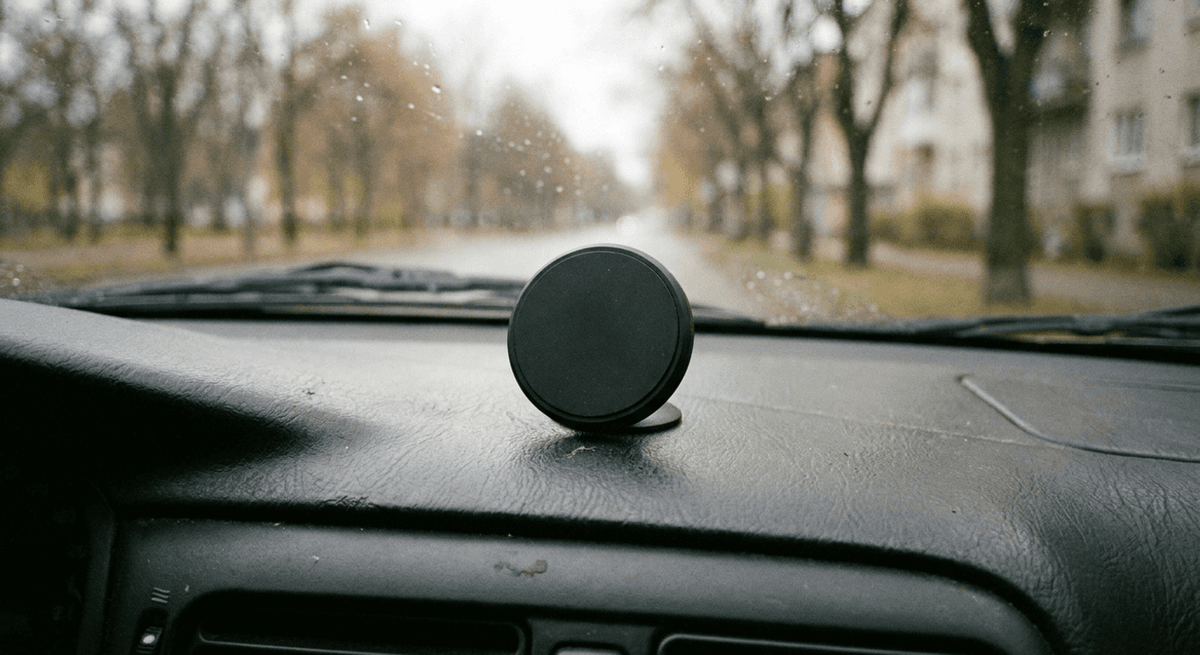
No existe una zona segura en el parabrisas en Oregón. Algunos estados permiten dispositivos dentro de cierto número de pulgadas desde la parte inferior o en una esquina del parabrisas. Oregón no tiene tal disposición. Cualquier dispositivo colocado en el parabrisas que un oficial determine que afecta la visibilidad puede resultar en una infracción.
Alternativas Legales para Montar Dispositivos
Las opciones más seguras y legalmente defendibles para montar un GPS o un teléfono en Oregón incluyen:
- Soportes de tablero que se adhieren a la parte superior del tablero mediante adhesivo o almohadillas de fricción
- Soportes tipo clip de rejilla de ventilación que se sujetan a las salidas de aire del vehículo
- Soportes de ranura de CD que se deslizan dentro de una ranura de reproductor de CD sin uso
- Soportes de portavasos para dispositivos más grandes
- Soportes magnéticos adheridos a la superficie del tablero
Estas alternativas mantienen el dispositivo dentro de la línea de visión del conductor sin colocar ningún material en el parabrisas.
Reglas para Dashcams en Oregón
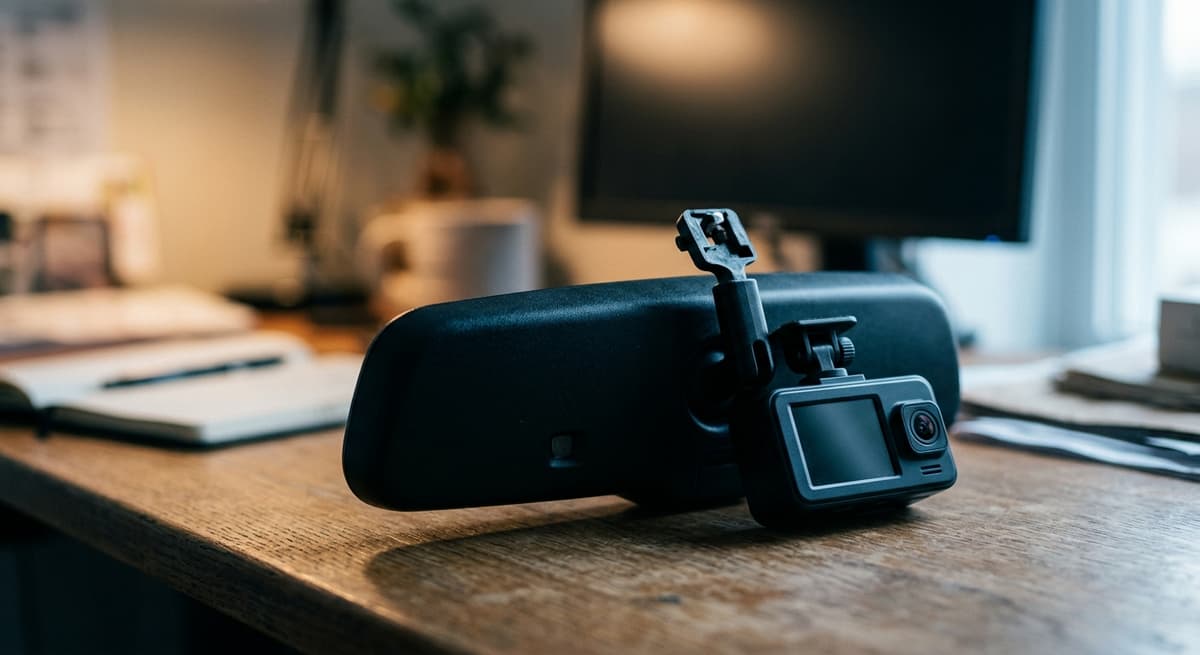
Oregón no tiene un estatuto específico para dashcams. Una dashcam recibe el mismo tratamiento que cualquier otro dispositivo conforme a la ley general de obstrucción. Montar una dashcam directamente en el parabrisas genera riesgo legal conforme al ORS 815.220 porque la carcasa de la cámara constituye un material colocado sobre el parabrisas, lo cual el estatuto prohíbe cuando impide o afecta la capacidad de ver hacia dentro o hacia fuera del vehículo.
La ubicación más segura legalmente para una dashcam en Oregón es el tablero, posicionada para grabar a través del parabrisas sin estar adherida al vidrio. Algunos conductores montan dashcams pequeñas detrás del espejo retrovisor para minimizar la obstrucción. La sola sujeción no es la prueba legal: el dispositivo sigue siendo material colocado sobre el parabrisas, pero el ORS 815.220(2) se infringe solo si impide o afecta la capacidad de ver hacia dentro o hacia fuera del vehículo, un juicio que un oficial hace en el momento y que un tribunal revisa.
Exención para Pantallas de Navegación (ORS 815.240)
El ORS 815.240 aborda el uso de dispositivos de visualización de imágenes en los vehículos. Una persona comete la infracción de uso ilegal de un dispositivo de visualización de imágenes si conduce un vehículo equipado con un dispositivo que muestra una imagen de televisión, una imagen de DVD o un video que sea visible para el conductor.
Qué Está Exento
El ORS 815.240 exenta específicamente a los dispositivos de visualización de imágenes usados con fines de navegación. Esto significa que una pantalla de GPS o una aplicación de navegación que muestre un mapa está permitida mientras se conduce. La exención se aplica a:
- Sistemas de navegación instalados de fábrica en el vehículo
- Unidades de GPS independientes que muestran mapas o direcciones
- Aplicaciones de teléfono que muestran navegación (Google Maps, Waze, Apple Maps, etc.)
Distinción Importante
La exención de navegación del ORS 815.240 permite la visualización de imágenes de navegación. No anula el ORS 815.220, que prohíbe colocar materiales en el parabrisas. Un conductor puede usar legalmente una pantalla de navegación, pero el dispositivo que muestra esa pantalla no puede montarse en el parabrisas. El dispositivo debe montarse en el tablero, en una salida de aire u otra ubicación que no obstruya el parabrisas.
La sanción por el uso ilegal de un dispositivo de visualización de imágenes es una infracción de tránsito de Clase B, que conlleva una multa máxima de $1,000 conforme al ORS 153.018.
Ley de Manos Libres de Oregón (ORS 811.507)
El ORS 811.507 es la ley de manos libres de Oregón, promulgada mediante el Proyecto de Ley de la Cámara 2597 en 2017 y reforzada por el Proyecto de Ley de la Cámara 4116 en 2018. Esta ley afecta directamente la manera en que los conductores interactúan con los dispositivos montados.
Qué Prohíbe la Ley
El ORS 811.507 establece que es ilegal operar un vehículo motorizado mientras se sostiene o usa un dispositivo electrónico móvil. "Dispositivo electrónico móvil" incluye teléfonos celulares, tabletas, computadoras portátiles, dispositivos GPS y localizadores. La ley es de aplicación primaria, lo que significa que un oficial puede detenerlo únicamente por sostener un dispositivo.
Excepción de Manos Libres
Los conductores de 18 años o más pueden usar un accesorio de manos libres. Un "accesorio de manos libres" se define como un accesorio, función integrada o adición a un dispositivo móvil que permite al conductor mantener ambas manos en el volante. Esto incluye:
- Conexiones Bluetooth
- Controles activados por voz
- Dispositivos montados operados por comando de voz
- Sistemas de infoentretenimiento integrados en el vehículo
Los conductores menores de 18 años tienen prohibido usar cualquier dispositivo electrónico móvil mientras conducen, incluidos los dispositivos de manos libres.
Otras Excepciones
El ORS 811.507 incluye excepciones adicionales para:
- Una persona que solicita ayuda médica o de emergencia cuando nadie más en el vehículo puede hacerlo
- Una persona que opera una ambulancia u otro vehículo de emergencia
- Una persona que actúa dentro del alcance de su empleo como oficial de seguridad pública
Estructura de Sanciones
Las sanciones por infringir el ORS 811.507 aumentan significativamente con las infracciones reincidentes dentro de un período de 10 años:
| Infracción | Clasificación | Rango de Multa |
|---|---|---|
| Primera infracción | Infracción de tránsito de Clase B | Hasta $1,000 (presuntiva ~$265) |
| Segunda infracción (dentro de 10 años) | Infracción de tránsito de Clase A | Hasta $2,000 |
| Tercera infracción o posteriores (dentro de 10 años) | Delito menor de Clase B | Mínimo $2,000 (antecedente penal) |
En una primera condena, el tribunal puede suspender la multa si el conductor completa un curso aprobado de prevención de conducción distraída dentro de los 120 días posteriores a la sentencia. El curso debe durar al menos 90 minutos y el participante debe obtener al menos un 80% para aprobar. El curso se puede completar en un aula o en línea.
Una tercera condena o posterior es un delito menor de Clase B, que es una infracción penal en lugar de una infracción de tránsito. El tribunal debe imponer una multa mínima de $2,000 (el máximo del delito menor de Clase B es $2,500 conforme al ORS 161.635); una primera infracción que contribuya a un choque se eleva a una infracción de tránsito de Clase A, y la condena genera un antecedente penal.
Leyes de Polarizado de Ventanas (ORS 815.221 y ORS 815.222)
Las leyes de polarizado de ventanas de Oregón interactúan con las reglas de montaje en el parabrisas porque ambas regulan lo que se puede aplicar a las ventanas del vehículo.
Polarizado Permitido
Conforme al ORS 815.221, se puede aplicar material de polarizado a las ventanas laterales y traseras si cumple con estos estándares:
- Transmisión de luz del 50% o más para el material de polarizado en sí
- Reflectancia de luz del 13% o menos
- Transmisión total de luz a través de la ventana (vidrio más polarizado) del 35% o más
En el caso del parabrisas, el polarizado solo se permite en las seis pulgadas superiores. No se puede aplicar material de polarizado a ninguna otra parte del parabrisas.
Exención Médica
Oregón permite una exención médica para un polarizado más oscuro únicamente en las ventanas laterales y traseras. Conforme al ORS 815.221(5), un médico u optometrista con licencia vigente debe firmar una declaración jurada, una receta o una carta en el membrete del profesional que indique que el propietario registrado u otra persona de su hogar tiene una condición física que requiere el polarizado más oscuro. El documento debe llevarse en el vehículo y mostrarse a un oficial que pregunte sobre el polarizado.
La exención médica no alcanza al parabrisas. El ORS 815.221(3) limita el polarizado del parabrisas a las seis pulgadas superiores y prohíbe aplicar material de polarizado a cualquier otra parte del parabrisas, sin excepción médica.
Infracciones de Polarizado
Conforme al ORS 815.222, el polarizado ilegal de ventanas es una infracción de tránsito de Clase B con una multa máxima de $1,000. La infracción se aplica tanto a la aplicación de un polarizado no conforme como a operar un vehículo con polarizado ilegal.
Exenciones de las Reglas de Obstrucción del Parabrisas
El ORS 815.220 incluye exenciones específicas para:
| Exención | Autoridad |
|---|---|
| Materiales de acristalamiento de seguridad que cumplen los estándares establecidos conforme al ORS 815.040 | ORS 815.220(3) |
| Colocación de un permiso emitido conforme al ORS 803.600, 803.615 o 803.625, el cual el ORS 803.650 dirige al lado izquierdo de la ventana trasera, salvo que el vehículo no tenga ventana trasera o su diseño oculte el permiso | ORS 815.220(4), referenciando el ORS 803.650 |
| Material de polarizado aplicado conforme al ORS 815.221, lo que para el parabrisas significa las seis pulgadas superiores y ninguna otra parte | ORS 815.220(5), referenciando el ORS 815.221(3) |
Esa es la lista completa. Las exenciones no se extienden a unidades GPS, soportes de teléfono, dashcams u otros dispositivos posventa, y la exención médica de polarizado del ORS 815.221(5) no está entre ellas: se aplica a las ventanas laterales y traseras, no al parabrisas.
Cómo se Compara Oregón con los Estados Vecinos
California es la excepción entre los estados vecinos de Oregón, no Oregón. El Código Vehicular de California 26708(b) permite expresamente un GPS portátil en un cuadrado de siete pulgadas en la esquina inferior del parabrisas más alejada del conductor, o en un cuadrado de cinco pulgadas en la esquina inferior más cercana al conductor, y permite una cámara de eventos de video en cualquiera de esos cuadrados o en un cuadrado de cinco pulgadas en la parte superior central del parabrisas. Oregón no tiene un cuadrado designado comparable.
Washington e Idaho están más cerca de Oregón que California. El RCW 46.37.410(2) y el Código de Idaho 49-943 prohíben conducir con un letrero, cartel u otro material no transparente en el parabrisas que obstruya la visión clara del conductor, y ninguno de los dos establece una zona o un tamaño exceptuado. El texto de Oregón está redactado de forma más amplia que ambos: el ORS 815.220(2) alcanza cualquier material que impida o afecte la capacidad de ver hacia dentro o hacia fuera del vehículo, no solo material no transparente.
Consejos Prácticos para Conductores de Oregón
Seguir estas pautas le ayudará a cumplir con las leyes de parabrisas de Oregón:
-
Use un soporte de tablero para su teléfono o GPS. Los soportes adhesivos y de fricción diseñados para tableros están ampliamente disponibles y mantienen su parabrisas despejado.
-
Elija una dashcam de perfil bajo y móntela en el tablero en lugar del parabrisas. Varios modelos vienen con hardware de montaje específico para tablero.
-
Mantenga el parabrisas limpio y despejado de calcomanías, adhesivos y otros materiales que no sean exigidos por la ley. El ORS 815.220 alcanza el material colocado sobre el vidrio en sí; Oregón no tiene un estatuto separado sobre objetos que cuelgan del espejo retrovisor.
-
Use funciones de manos libres al interactuar con cualquier dispositivo montado. Incluso si su teléfono está montado legalmente en el tablero, sostenerlo mientras conduce infringe el ORS 811.507.
-
Los conductores menores de 18 años no deben interactuar con ningún dispositivo electrónico mientras conducen, ni siquiera mediante sistemas de manos libres.
-
Revise su polarizado de ventanas si tiene polarizado posventa. Las seis pulgadas superiores del parabrisas son la única zona permitida, y las ventanas laterales deben permitir al menos un 35% de transmisión total de luz.
Más Leyes de Oregón
- Leyes de Grabación de Oregón
- Ley del Limón de Oregón
- Leyes sobre Mordeduras de Perro de Oregón
- Leyes de Choque y Fuga de Oregón
- Leyes de Asientos de Auto para Niños de Oregón
Preguntas frecuentes
¿Puedo poner el GPS o el teléfono en el parabrisas en Oregón?
No. Conforme al ORS 815.220, Oregón prohíbe colocar cualquier material en el parabrisas que impida o afecte la capacidad de ver hacia dentro o hacia fuera del vehículo. No existe una zona designada ni una excepción de tamaño para los soportes de GPS o teléfono. La alternativa recomendada es un soporte de tablero, un soporte tipo clip de rejilla de ventilación u otra solución de montaje que no sea el parabrisas.
¿Es legal usar una dashcam en Oregón?
Las dashcams son legales de usar en Oregón, pero montar una en el parabrisas genera riesgo legal conforme al ORS 815.220. La ubicación más segura es el tablero, posicionada para grabar a través del parabrisas sin estar adherida al vidrio. Oregón no tiene un estatuto específico para dashcams, por lo que se aplica la ley general de obstrucción.
¿Cuáles son las sanciones por conducción distraída en Oregón?
Una primera infracción conforme al ORS 811.507 es una infracción de tránsito de Clase B con una multa presuntiva de aproximadamente $265 y un máximo de $1,000. Una segunda infracción dentro de 10 años es una infracción de tránsito de Clase A con una multa máxima de $2,000. Una tercera infracción o posterior dentro de 10 años es un delito menor de Clase B con una multa mínima de $2,000 y un antecedente penal.
¿Oregón permite exenciones médicas para un polarizado de parabrisas más oscuro?
Oregón permite exenciones médicas para un polarizado más oscuro en las ventanas laterales y traseras conforme al ORS 815.221. Un médico u optometrista debe proporcionar documentación firmada de una condición física que califique. La documentación debe llevarse en el vehículo. Sin embargo, el parabrisas en sí solo puede tener polarizado en las seis pulgadas superiores, independientemente de la necesidad médica.
¿Pueden los conductores menores de 18 años usar dispositivos de manos libres en Oregón?
No. Conforme al ORS 811.507, los conductores menores de 18 años tienen prohibido usar cualquier dispositivo electrónico móvil mientras conducen, incluidos los dispositivos de manos libres. Esto es más estricto que la regla para los conductores adultos, quienes pueden usar accesorios de manos libres mientras mantienen ambas manos en el volante.
Actualizaciones
Se corrigieron las reglas de obstrucción del parabrisas para ajustarse al texto del ORS 815.220: el estatuto exige que un dispositivo montado realmente impida o afecte la vista y no basta con que esté sujeto, no alcanza objetos que cuelgan del espejo, la exención médica de polarizado del ORS 815.221 se aplica a las ventanas laterales y traseras y no al parabrisas, la exención de permisos del ORS 803.650 cubre los permisos de registro en la ventana trasera y no calcomanías de inspección, y la comparación con los estados vecinos ahora atribuye los cuadrados de cinco y siete pulgadas únicamente a California.
La ley detrás de este artículo
Este artículo se apoya en las disposiciones legales a continuación, conservadas en nuestro propio registro jurídico y obtenidas de la fuente oficial. Toque una sección para leer el texto vigente.
Oregon Revised Statutes, Chapter 815: Vehicle Equipment Generally
§ 815.220Obstruction of vehicle windows; penaltyVigentecitada en 2 de nuestros artículos
(1) A person commits the offense of obstruction of vehicle windows if the person drives or moves on any highway or owns and causes or knowingly permits to be driven or moved on any highway any vehicle with windows obstructed in a manner prohibited under this section. (2) The windows of a vehicle are obstructed in a manner prohibited by this section if any material that prevents or impairs the ability to see into or out of the vehicle is upon any vehicle window described in this subsection. This subsection applies to any sign, poster, one-way glass, adhesive film, glaze application or other material if the material prevents or impairs the ability to see into or out of the vehicle. This subsection only applies to the following windows of the vehicle: (a) The front windshield. (b) The side-wings. (c) The side windows on either side forward of or adjacent to the operator’s seat. (3) Nothing in this section prohibits safety glazing materials of a type that conforms to standards established under ORS 815.040.
Texto oficial (extracto) · verificado el 2026-09-08 · Lea el texto completo en nuestra biblioteca legal · Verifique en oregonlegislature.gov
Citada en 10 resoluciones judiciales de nuestra colecciónResolución más reciente que la cita en nuestra colección: 2013
Resoluciones que citan esta sección en nuestra colección:
- State v. Stookey (Court of Appeals of Oregon 2013, 255 Or. App. 489)“…or impairs the ability to see into or out of the vehicle,” ORS 815.220 (Class D traffic violation). Finally, d…”
- State v. Hovies (Oregon Supreme Court 1994, 320 Or. 414)“…f having “obstructed vehicle windows” in violation of *417 ORS 815.220. Defendant appealed pro se to the Cou…”
- State v. Elmore (Court of Appeals of Oregon 2011, 241 Or. App. 419)“…bable cause to stop him for a traffic violation pursuant to ORS 815.220. As pertinent here, that statute prohib…”
Identificado automáticamente a partir de las opiniones judiciales que citan esta sección; no es un ranking de qué caso prevalece.
§ 815.240Unlawful use of image display device; exemptions; penaltyVigente
(1) As used in this section, “image display device” means equipment capable of displaying to the driver of a motor vehicle: (a) A broadcast television image; or (b) A visual image from a digital video disc or video cassette player. (2) Except as provided in subsection (3) of this section, a person commits the offense of unlawful use of an image display device if the person drives or moves on any highway, or owns and causes or knowingly permits to be driven or moved on any highway, any motor vehicle equipped with any image display device that is displaying a broadcast television image or a visual image from a digital video disc or video cassette player that is visible to the driver while operating the motor vehicle. (3) Subsection (2) of this section does not apply to: (a) Emergency vehicles; or (b) Use of image display devices that are displaying images for navigational purposes. (4) The offense described in this section, unlawful use of an image display device, is a Class B traffic violation. [1983 c.338 §494; 1985 c.69 §4; 2005 c.572 §1] (Clearance)
Texto oficial (extracto) · verificado el 2026-07-29 · Lea el texto completo en nuestra biblioteca legal · Verifique en oregonlegislature.gov
§ 815.221Tinting; authorized and prohibited materials; certificateVigentecitada en 2 de nuestros artículos
(1) Notwithstanding any other provision of law, a person may apply tinting material to the windows of a motor vehicle in compliance with this section. (2) Tinting material may be applied to the side and rear windows of a motor vehicle if: (a) The tinting material has a light transmittance of 50 percent or more; (b) The tinting material has a light reflectance of 13 percent or less; and (c) The total light transmittance through the window with the tinting material applied is 35 percent or more. (3) Tinting material that has a lower light transmittance or produces a lower total light transmittance than permitted in subsection (2)(a) and (c) of this section may be applied to the top six inches of a windshield. Tinting material may not be applied to any other portion of the windshield. (4) Tinting material that has a lower light transmittance or produces a lower total light transmittance than permitted in subsection (2)(a) and (c) of this section may be applied to all windows of a multipurpose passenger vehicle that are behind the driver. This subsection applies only to vehicles that are equipped with rearview mirrors on each side of the vehicle.
Texto oficial (extracto) · verificado el 2026-09-01 · Lea el texto completo en nuestra biblioteca legal · Verifique en oregonlegislature.gov
Citada en 3 resoluciones judiciales de nuestra colecciónResolución más reciente que la cita en nuestra colección: 2019
Resoluciones que citan esta sección en nuestra colección:
- State v. Lawson (Court of Appeals of Oregon 2019, 300 Or. App. 292)“…mounted mirror. Defendant pointed out that another statute, ORS 815.221, specifically refers to side mirrors wi…”
- State v. De La Rosa (Court of Appeals of Oregon 2009, 228 Or. App. 666)“…ith window tinting “not in compliance with or authorized by ORS 815.221,” which specifies the degree of tint pe…”
- State v. BAKER/JAY (Court of Appeals of Oregon 2009, 232 Or. App. 112)“…ng material that is not in compliance with or authorized by ORS 815.221.” Indeed, the certificate that d…”
Identificado automáticamente a partir de las opiniones judiciales que citan esta sección; no es un ranking de qué caso prevalece.
§ 815.222Illegal window tinting; dismissal; penaltyVigentecitada en 2 de nuestros artículos
(1) A person commits the offense of illegal window tinting if the person applies window tinting material that does not comply with ORS 815.221 or applies window tinting material to a window of a motor vehicle that is not authorized by ORS 815.221 to be equipped with window tinting material. (2) A person commits the offense of operating a vehicle with illegal window tinting if the person operates a vehicle registered or required to be registered in Oregon that is equipped with window tinting material that is not in compliance with or authorized by ORS 815.221. (3) Each offense described in this section is a Class B traffic violation. (4) A court may dismiss a citation issued for violation of subsection (2) of this section, or reduce the fine that the court would otherwise have imposed for the offense, if the defendant establishes to the satisfaction of the court that after the citation for the offense was issued the windows of the vehicle were modified to comply with the requirements of ORS 815.221.
Texto oficial (extracto) · verificado el 2026-07-29 · Lea el texto completo en nuestra biblioteca legal · Verifique en oregonlegislature.gov
Citada en 2 resoluciones judiciales de nuestra colecciónResolución más reciente que la cita en nuestra colección: 2009
Resoluciones que citan esta sección en nuestra colección:
- State v. De La Rosa (Court of Appeals of Oregon 2009, 228 Or. App. 666)“…pport it. Ehly, 317 Or at 75 . Furthermore, ORS 815.222 provides that the operation of a vehicl…”
- State v. BAKER/JAY (Court of Appeals of Oregon 2009, 232 Or. App. 112)“…believe that the Caprice was being operated in violation of ORS 815.222(2): “A person commits the offens…”
Identificado automáticamente a partir de las opiniones judiciales que citan esta sección; no es un ranking de qué caso prevalece.
§ 815.040Standards for window and windshield materialVigente
(1) The Department of Transportation shall establish standards for safety glazing material used in vehicle windows and windshields including standards for any glazing material so constructed, treated or combined with other materials as to reduce substantially, in comparison to ordinary sheet or plate glass, the likelihood of injury to persons by broken or cracked glass or by objects from external sources. (2) The standards established under this section shall conform, insofar as practical, to safety standards and specifications for safety glazing material issued by the federal government. (3) Prohibitions and penalties relating to the standards established under this section are provided under ORS 815.090 and 815.210. (4) The standards established under this section may not restrict the installation and use of window tinting material that meets the requirements of ORS 815.221. [1983 c.338 §440; 1989 c.402 §3; 1995 c.263 §5; 2003 c.14 §498; 2003 c.158 §3] 815.045 Rules for use of traction tires, retractable studded tires and chains; signs.
Texto oficial (extracto) · verificado el 2026-07-29 · Lea el texto completo en nuestra biblioteca legal · Verifique en oregonlegislature.gov
Oregon Revised Statutes, Chapter 811: Rules of the Road for Drivers
§ 811.507Operating motor vehicle while using mobile electronic device; exceptions; penaltyVigente
(1) As used in this section: (a)(A) “Driving” means operating a motor vehicle on a highway or premises open to the public, and while temporarily stationary because of traffic, a traffic control device or other momentary delays. (B) “Driving” does not include when the motor vehicle has stopped in a location where it can safely remain stationary and: (i) Is pulled over on the side of, or is pulled off, a roadway; (ii) Is in a designated parking space; or (iii) Is required to park in the roadway to conduct construction or utility maintenance work. (b) “Hands-free accessory” means an attachment or built-in feature for or an addition to a mobile electronic device that gives a person the ability to keep both hands on the steering wheel at all times while using the device or requires only the minimal use of a finger, via a swipe or tap, to activate or deactivate a function of the device. (c) “Livestock” has the meaning given that term in ORS 609.125. (d)(A) “Mobile electronic device” means an electronic device that is not permanently installed in a motor vehicle.
Texto oficial (extracto) · verificado el 2026-07-29 · Lea el texto completo en nuestra biblioteca legal · Verifique en oregonlegislature.gov
Citada en 7 resoluciones judiciales de nuestra colecciónResolución más reciente que la cita en nuestra colección: 2025
Resoluciones que citan esta sección en nuestra colección:
- State v. Atwood (Court of Appeals of Oregon 2024)“…defendant appeals a judgment finding him to have violated ORS 811.507, which, as relevant here, prohibits hol…”
- State v. Rabanales-Ramos (Court of Appeals of Oregon 2015, 273 Or. App. 228)“…g while using a mobile communication device, a violation of ORS 811.507. During the traffic stop, the trooper d…”
- State v. Nguyen Ngoc Pham (Court of Appeals of Oregon 2018, 295 Or. App. 322)“…n objectively reasonable belief that defendant had violated ORS 811.507 (2013) when the officers stopped defend…”
Identificado automáticamente a partir de las opiniones judiciales que citan esta sección; no es un ranking de qué caso prevalece.
Oregon Revised Statutes, Chapter 153: Violations and Fines
§ 153.018Maximum finesVigentecitada en 2 de nuestros artículos
(1) The penalty for committing a violation is a fine. The law creating a violation may impose other penalties in addition to a fine but may not impose a term of imprisonment. (2) Except as otherwise provided by law, the maximum fine for a violation committed by an individual is: (a) $2,000 for a Class A violation. (b) $1,000 for a Class B violation. (c) $500 for a Class C violation. (d) $250 for a Class D violation. (e) $2,000 for a specific fine violation, or the maximum amount otherwise established by law for the specific fine violation. (3) If a special corporate fine is specified in the law creating the violation, the sentence to pay a fine shall be governed by the law creating the violation. Except as otherwise provided by law, if a special corporate fine is not specified in the law creating the violation, the maximum fine for a violation committed by a corporation is: (a) $4,000 for a Class A violation. (b) $2,000 for a Class B violation. (c) $1,000 for a Class C violation. (d) $500 for a Class D violation.
Texto oficial (extracto) · verificado el 2026-07-29 · Lea el texto completo en nuestra biblioteca legal · Verifique en oregonlegislature.gov
Citada en 19 resoluciones judiciales de nuestra colecciónResolución más reciente que la cita en nuestra colección: 2026
Resoluciones que citan esta sección en nuestra colección:
- State v. Page (Court of Appeals of Oregon 2005, 200 Or. App. 55)“…rves.” Selness / Miller, 335 Or at 536. ORS 153.018 (2001) provides the penalty schedule fo…”
- In Re Complaint as to the Conduct of Kimmell (Oregon Supreme Court 2001, 332 Or. 480)“…risonment may not be imposed for conviction of a violation, ORS 153.018(1), whereas imprisonment may be imposed…”
- State v. Dahl (Oregon Supreme Court 2004, 336 Or. 481)“…ch 819, § 17 (identifying different classes of violations); ORS 153.018(2) (identifying maximum fines for viola…”
Identificado automáticamente a partir de las opiniones judiciales que citan esta sección; no es un ranking de qué caso prevalece.
California Vehicle Code
§ 26708Vigentecitada en 7 de nuestros artículos
(a) (1) A person shall not drive any motor vehicle with any object or material placed, displayed, installed, affixed, or applied upon the windshield or side or rear windows. (2) A person shall not drive any motor vehicle with any object or material placed, displayed, installed, affixed, or applied in or upon the vehicle that obstructs or reduces the driver’s clear view through the windshield or side windows. (3) This subdivision applies to a person driving a motor vehicle with the driver’s clear vision through the windshield, or side or rear windows, obstructed by snow or ice. (b) This section does not apply to any of the following: (1) Rearview mirrors. (2) Adjustable nontransparent sunvisors that are mounted forward of the side windows and are not attached to the glass.
Texto oficial (extracto) · verificado el 2026-09-07 · Lea el texto completo en nuestra biblioteca legal · Verifique en leginfo.legislature.ca.gov
Citada en 56 resoluciones judiciales de nuestra colecciónResolución más reciente que la cita en nuestra colección: 2026
En los tribunales (resumen editorial, verificado de forma independiente):Los tribunales de California interpretan la sección 26708(a)(2) como exigencia de una base objetiva de que el objeto sí obstruía la vista del conductor. People v. White (2003) sostuvo que un ambientador colgado no justificaba la parada porque el agente nunca dijo que le tapara la vista; People v. Colbert (2007) halló esa base con testimonio más detallado.
Resoluciones que citan esta sección en nuestra colección:
- People v. White (California Court of Appeal 2003, 132 Cal. Rptr. 2d 371)✓Un oficial detuvo un auto por un ambientador en forma de árbol colgado del espejo; el tribunal sostuvo que la sección 26708(a)(1) no alcanza un objeto que no está fijado sobre el parabrisas y que, sin testimonio de que la visión estuviera obstruida, no había base razonable bajo el inciso (a)(2).
- People v. Colbert (California Court of Appeal 2007, 68 Cal. Rptr. 3d 912)✓Un oficial detuvo un auto por un ambientador de árbol de 4.75 pulgadas colgado del espejo y declaró, por experiencia propia, cómo un objeto de ese tamaño tapa la vista de autos y peatones; el tribunal sostuvo que ese testimonio daba una base objetivamente razonable bajo la sección 26708(a)(2).
- Klarfeld v. State of California (California Court of Appeal 1983, 142 Cal. App. 3d 541)✓Un instalador de polarizado y automovilistas impugnaron por vagas las secciones 26708 y 26708.5; el tribunal sostuvo que no son inconstitucionalmente vagas y declaró que el polarizado aplicado no puede ir en el parabrisas ni en las ventanas delanteras laterales, pero sí detrás del conductor si el auto tiene los espejos requeridos.
Identificado automáticamente a partir de las opiniones judiciales que citan esta sección; no es un ranking de qué caso prevalece.
Idaho Code
§ 49-943Windshields to be unobstructed and equipped with wipersVigentecitada en 3 de nuestros artículos
49-943. Windshields to be unobstructed and equipped with wipers. (1) No person shall drive any motor vehicle with any sign, poster, or other nontransparent material upon the front windshield, side wings, or side or rear windows of the vehicle which obstructs the driver’s clear view of the highway…
Texto oficial (extracto) · verificado el 2026-09-07 · Lea el texto completo en nuestra biblioteca legal · Verifique en legislature.idaho.gov
Citada en 1 resoluciones judiciales de nuestra colecciónResolución más reciente que la cita en nuestra colección: 2013
Resoluciones que citan esta sección en nuestra colección:
- State v. Christopher Lee Brown (Idaho Court of Appeals 2013)“…ute since his clear view of the highway was not obstructed. Idaho Code § 49-943(1) requires that: “No person shall driv…”
Identificado automáticamente a partir de las opiniones judiciales que citan esta sección; no es un ranking de qué caso prevalece.
Oregon Revised Statutes, Chapter 803: Vehicle Title and Registration
§ 803.650Placement of permits in vehicles; rulesVigente
(1) A permit issued under ORS 803.600, 803.615 or 803.625 shall be placed on the left side of the rear window of the vehicle unless: (a) The vehicle has no rear window; or (b) The design of the vehicle or of any equipment lawfully added to the vehicle is such that a permit placed as required by this section could not easily be seen from outside the vehicle. (2) The Department of Transportation shall adopt rules for the placement of permits that cannot be placed on the left side of the rear window of a vehicle.
Texto oficial (extracto) · verificado el 2026-07-29 · Lea el texto completo en nuestra biblioteca legal · Verifique en oregonlegislature.gov
Citada en 3 resoluciones judiciales de nuestra colecciónResolución más reciente que la cita en nuestra colección: 2026
Resoluciones que citan esta sección en nuestra colección:
- State v. Ankeny (Court of Appeals of Oregon 2020, 306 Or. App. 300)“…ay the per- mit on the vehicle in the manner required by ORS 803.650 or as required by the Department of…”
- State v. Nguyen (Court of Appeals of Oregon 2008, 223 Or. App. 286)“…s placement of permits in accordance with the provisions of ORS 803.650[.]” ORS 803.650(1) governs the placemen…”
- State v. Martin (Court of Appeals of Oregon 2026, 347 Or. App. 680)“…display the permit on the vehicle in the manner required by ORS 803.650 or as required by the Department of Tra…”
Identificado automáticamente a partir de las opiniones judiciales que citan esta sección; no es un ranking de qué caso prevalece.
Revised Code of Washington
§ 46.37.410Windshields required, exception—Must be unobstructed and equipped with wipers.Vigentecitada en 3 de nuestros artículos
(1) All motor vehicles operated on the public highways of this state shall be equipped with a front windshield manufactured of safety glazing materials for use in motor vehicles in accordance with RCW 46.37.430, except, however, on such vehicles not so equipped or where windshields are not in use, the operators of such vehicles shall wear glasses, goggles, or face shields pursuant to RCW 46.37.530(1)(b). (2) No person shall drive any motor vehicle with any sign, poster, or other nontransparent material upon the front windshield, side wings, or side or rear windows of such vehicle which obstructs the driver's clear view of the highway or any intersecting highway. (3) The windshield on every motor vehicle shall be equipped with a device for cleaning rain, snow, or other moisture from the windshield, which device shall be so constructed as to be controlled or operated by the driver of the vehicle.
Texto oficial (extracto) · verificado el 2026-09-08 · Lea el texto completo en nuestra biblioteca legal · Verifique en app.leg.wa.gov
Citada en 3 resoluciones judiciales de nuestra colecciónResolución más reciente que la cita en nuestra colección: 2019
Resoluciones que citan esta sección en nuestra colección:
- State v. Wayman-Burks (Court of Appeals of Washington 2002, 114 Wash. App. 109)“…windshield was not an obstruction upon the windshield under RCW 46.37.410, she moved to suppress the evidence bec…”
- State v. Byrd (Court of Appeals of Washington 2002, 110 Wash. App. 259)“…Wash. App. 608, 610-11 , 949 P.2d 845 (1998). [11] RCW 46.37.410(2); Seattle Municipal Code 11.84.140.…”
- State Of Washington v. Carmen Rose Lee (Court of Appeals of Washington 2019, 435 P.3d 847)“…inoperative brake light, in violation of RCW 46.37.070 and RCW 46.37.410. Detectives lawfully checked Peterson's…”
Identificado automáticamente a partir de las opiniones judiciales que citan esta sección; no es un ranking de qué caso prevalece.
Fuentes y referencias
- ORS 815.220 - Obstrucción de las ventanas del vehículo(oregonlegislature.gov).gov
- ORS 815.220 texto completo(oregonlaws.org)
- ORS 815.240 - Uso ilegal de un dispositivo de visualización de imágenes(oregonlaws.org)
- ORS 811.507 - Operar un vehículo motorizado mientras se usa un dispositivo electrónico móvil(oregonlaws.org)
- ORS 153.018 - Multas máximas por infracciones(oregonlaws.org)
- ORS 815.221 - Materiales de polarizado autorizados y prohibidos(oregonlaws.org)
- ORS 815.222 - Sanción por polarizado ilegal de ventanas(oregonlaws.org)
- Oregón HB 2597 - Ley de dispositivos electrónicos móviles (2017)(oregonlegislature.gov).gov
- Información de ODOT de Oregón sobre Conducción Distraída(oregon.gov).gov
- ORS 815.040 - Estándares para material de ventanas y parabrisas(oregonlaws.org)
- Referencia de ODOT de Oregón sobre Mantenimiento del Campo de Visión (ORS)(oregon.gov).gov
- RCW 46.37.410 - Los parabrisas deben estar sin obstrucciones (Washington)(app.leg.wa.gov)
- Código Vehicular de California 26708 - Material que obstruye la vista del conductor, incisos (b)(12) y (b)(13)(leginfo.legislature.ca.gov)
- Código de Idaho 49-943 - Obstrucción a la vista del conductor(legislature.idaho.gov)
- ORS 803.650 - Colocación de permisos en vehículos(oregonlegislature.gov)