
Florida
Leyes de Montaje en el Parabrisas de Florida (Guía 2026)
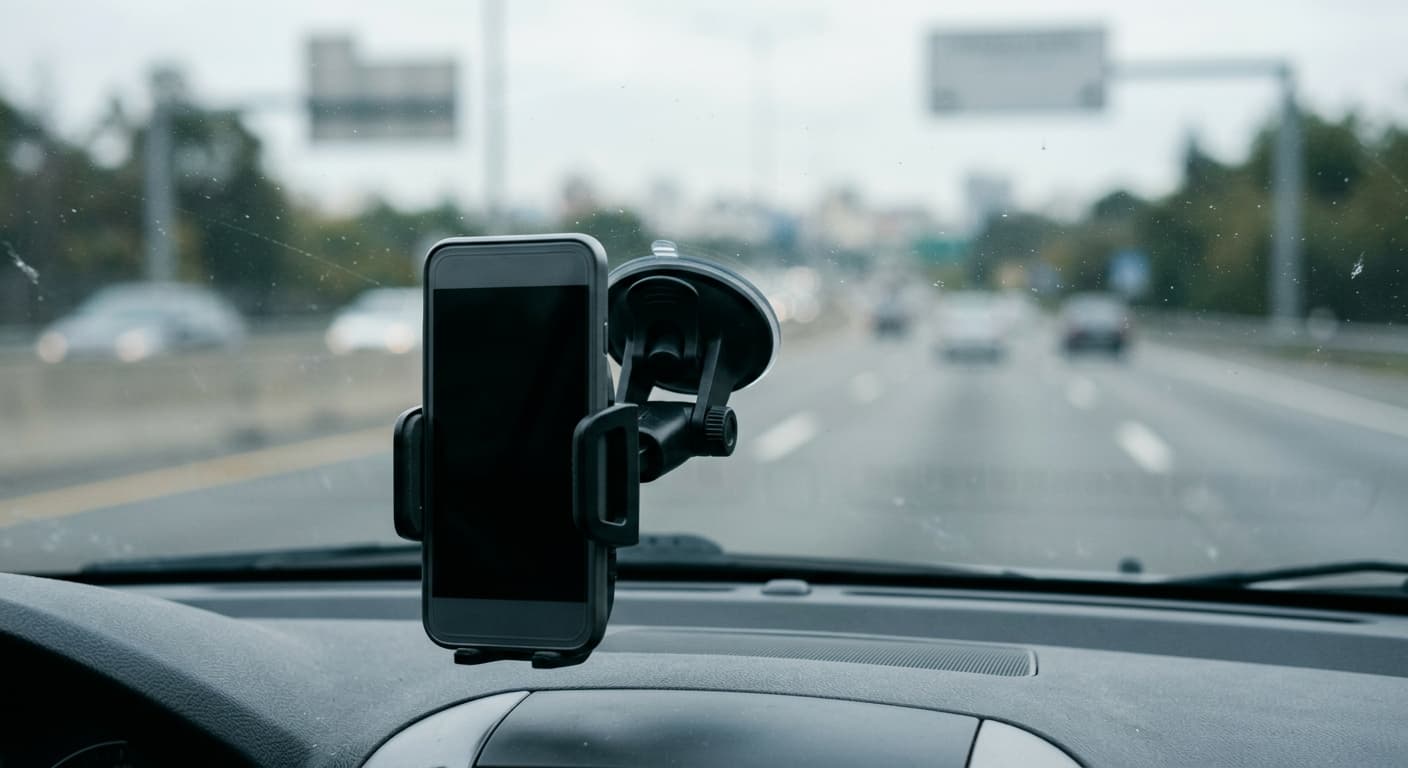
La ley de Florida permite los dispositivos de GPS y los transpondedores de peaje emitidos por el gobierno en el parabrisas según el Estatuto de Florida 316.2952. Las dashcams generalmente están permitidas si se montan sin obstruir la vista del conductor. Los teléfonos celulares no cuentan con una exención explícita, aunque un teléfono que ejecuta un software de navegación podría calificar bajo la disposición de GPS.
Florida es uno de los estados más favorables para los conductores en cuanto a los dispositivos montados en el parabrisas. La ley de parabrisas del estado (Estatuto de Florida 316.2952) permite explícitamente los dispositivos de navegación GPS y los transpondedores de peaje emitidos por el gobierno en el parabrisas, lo que facilita que los conductores usen ayudas de navegación de manera legal.
Sin embargo, la ley no cubre todos los dispositivos. Los teléfonos celulares usados como teléfonos (en lugar de como dispositivos de navegación GPS) no figuran específicamente como una exención, y los artículos decorativos, calcomanías y otros accesorios no esenciales siguen prohibidos.
Ley de Obstrucción del Parabrisas de Florida
El Estatuto de Florida 316.2952 establece los requisitos y las restricciones para los parabrisas de vehículos motorizados en Florida. El estatuto tiene dos componentes principales: un requisito de parabrisas y una lista de lo que se puede y no se puede colocar en él.
Requisito de parabrisas (inciso 1): todo vehículo motorizado que circule por una vía pública en Florida debe tener un parabrisas en posición fija y vertical, equipado con material de vidrio de seguridad que cumpla con los estándares federales de seguridad para vehículos motorizados. Las motocicletas y los implementos agrícolas están exentos de este requisito.
Restricciones de colocación (inciso 2): ninguna persona conducirá un vehículo motorizado por ninguna vía, camino o calle pública con ningún letrero, material de protección solar, producto o cubierta adherido a, o ubicado en o sobre, el parabrisas, excepto por los artículos enumerados en los incisos (a) al (d).
La ley también exige limpiaparabrisas funcionales (inciso 3) que deben mantenerse en buen estado de funcionamiento (inciso 4).
Artículos Permitidos en el Parabrisas en Florida
La ley de Florida permite explícitamente cuatro categorías de artículos en el parabrisas.
(a) Certificados y Documentos Requeridos por Ley
Cualquier certificado u otro documento cuya exhibición sea requerida por ley puede colocarse en el parabrisas. Esto incluye calcomanías de registro de vehículos, certificados de inspección y permisos de estacionamiento exigidos por la ley estatal o local.
(b) Material Transparente de Protección Solar
El material de protección solar se puede aplicar a lo largo de una franja en la parte superior del parabrisas, siempre que el material sea transparente y no invada el área de visión frontal directa del conductor, según se define en el Estándar Federal de Seguridad para Vehículos Motorizados No. 205 (la línea AS-1).
(c) Dispositivos Electrónicos de Pago de Peaje
Un dispositivo emitido por una entidad gubernamental con el propósito de pagos electrónicos de peaje está explícitamente permitido. En Florida, esto aplica principalmente a los transpondedores SunPass, pero también cubre E-ZPass y otros dispositivos de peaje emitidos por el gobierno de otros estados.
(d) Dispositivos de GPS y Navegación
El estatuto permite específicamente 'un dispositivo de sistema de posicionamiento global o dispositivo receptor satelital similar que utilice el sistema de posicionamiento global operado conforme a 10 U.S.C. s. 2281 para obtener navegación, mejorar la seguridad del conductor como componente de un equipo de monitoreo de seguridad capaz de proporcionar retroalimentación al conductor, o para transmitir información de ruta mientras el vehículo motorizado está en operación'.
Esta es una de las exenciones de GPS más amplias de cualquier estado. Cubre las unidades de GPS independientes (como los dispositivos Garmin o TomTom), el equipo de monitoreo de seguridad de flotas y otros sistemas de navegación o enrutamiento basados en satélite.
El lenguaje 'mejorar la seguridad del conductor como componente de un equipo de monitoreo de seguridad capaz de proporcionar retroalimentación al conductor' se añadió mediante la enmienda de 2014 (s. 13, ch. 2014-216) y amplía la exención para incluir los dispositivos de monitoreo de flotas comerciales que usan GPS para rastrear el comportamiento del conductor y proporcionar alertas de seguridad.
Soportes para Teléfono Celular
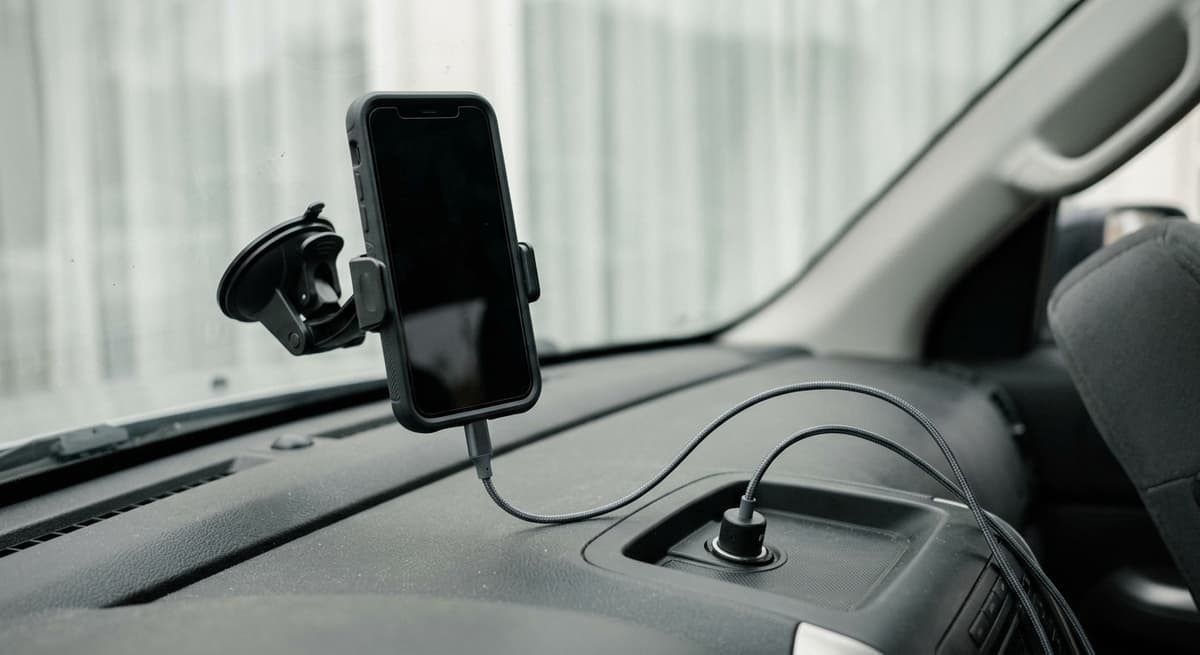
La ley de parabrisas de Florida no enumera explícitamente los teléfonos celulares o inteligentes como un artículo permitido en el parabrisas. La exención de GPS del inciso (2)(d) cubre los dispositivos que usan GPS para la navegación, pero un teléfono usado principalmente para llamadas, mensajes de texto u otras funciones que no sean de navegación podría no encajar exactamente dentro de esta exención.
En la práctica, muchos conductores de Florida montan sus teléfonos en el parabrisas para la navegación por GPS sin recibir citaciones. Cuando un teléfono ejecuta activamente una aplicación de navegación (Google Maps, Apple Maps, Waze), funciona como un dispositivo de GPS, lo cual está posiblemente cubierto por el inciso (2)(d).
Sin embargo, para minimizar el riesgo legal, los conductores de Florida podrían considerar los soportes de tablero o de pinza para rejilla de ventilación como alternativas. Estas ubicaciones de montaje evitan por completo el parabrisas y eliminan cualquier duda sobre el cumplimiento del Artículo 316.2952.
La ley de Florida contra los mensajes de texto mientras se conduce (Estatuto de Florida 316.305) prohíbe operar un vehículo motorizado mientras se escribe, envía o lee manualmente datos en un dispositivo de comunicación inalámbrica. Esta ley se aplica como infracción primaria, lo que significa que los oficiales pueden detenerlo específicamente por enviar mensajes de texto. Usar un soporte manos libres para la navegación no viola esta ley.
Reglas de Dashcam en Florida
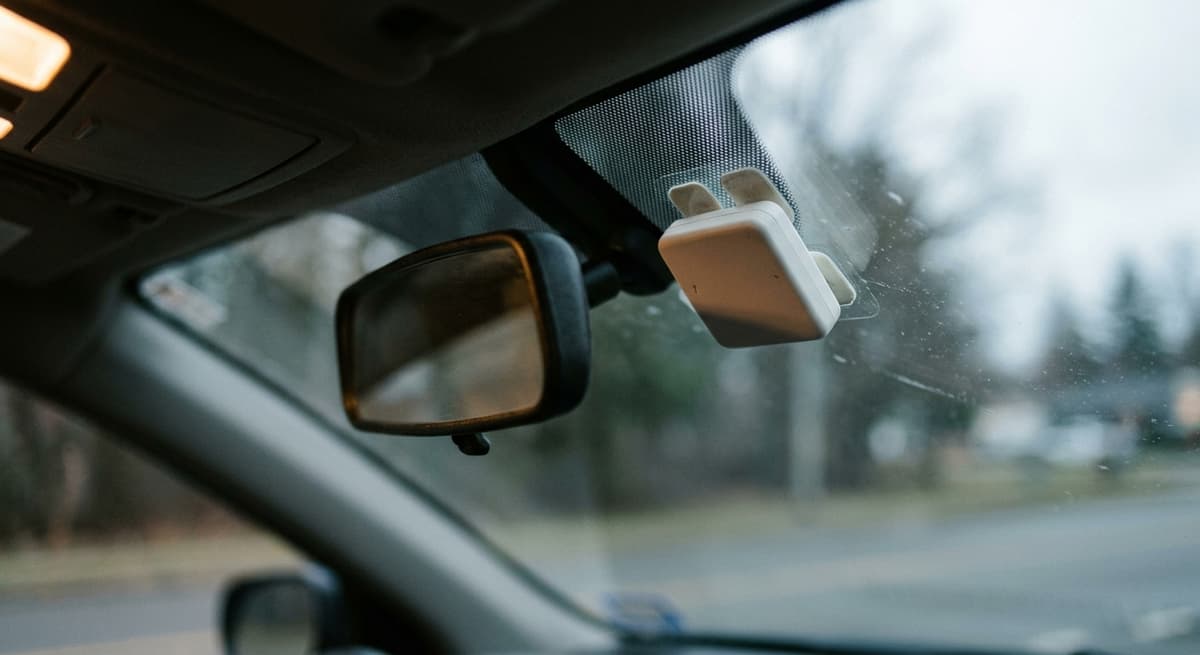
Las dashcams no figuran específicamente entre los cuatro artículos permitidos en el parabrisas según el Artículo 316.2952. Sin embargo, las dashcams se usan ampliamente en Florida y generalmente se consideran legales si se montan de una manera que no obstruya, oscurezca o afecte seriamente la vista del conductor sobre la carretera.
El Estatuto de Florida 316.2004 proporciona orientación adicional, al prohibir operar un vehículo cuando la vista del conductor está obstruida. Una dashcam pequeña montada detrás del espejo retrovisor o en la esquina inferior del lado del pasajero del parabrisas tiene pocas probabilidades de generar una citación.
Para la grabación de audio, Florida es un estado de consentimiento de dos partes (todas las partes) según el Estatuto de Florida 934.03. Si su dashcam graba audio dentro del vehículo, todos los ocupantes deben consentir la grabación. Muchos usuarios de dashcams en Florida desactivan la grabación de audio o colocan un aviso dentro del vehículo informando a los pasajeros que se está grabando audio.
Polarizado del Parabrisas
Florida divide el polarizado de ventanas en tres estatutos distintos. La franja del parabrisas se rige por el Estatuto de Florida 316.2952(2)(b); las ventanillas laterales y los cristales laterales delanteros, frente o adyacentes al asiento del conductor, se rigen por el Estatuto de Florida 316.2953, titulado «Ventanillas laterales; restricciones sobre el material de protección solar»; y las ventanas detrás del conductor se rigen por el Estatuto de Florida 316.2954, titulado «Ventanas detrás del conductor; restricciones sobre el material de protección solar». Las reglas de polarizado para cada posición de ventana son las siguientes:
- Parabrisas: según el inciso 316.2952(2)(b), se permite material de protección solar no reflectante a lo largo de una franja en la parte superior del parabrisas, por encima de la línea AS-1. El material debe ser transparente y no debe invadir el área de visión frontal directa del conductor.
- Ventanillas laterales delanteras: según el Estatuto 316.2953, el material de protección solar debe permitir una transmisión de luz de al menos el 28 por ciento. Este piso es inclusivo, de modo que un cristal con exactamente 28 por ciento cumple con la ley.
- Ventanillas laterales traseras: según el inciso 316.2954(1)(a), al menos el 15 por ciento de transmisión de luz, con una reflectancia solar total de no más del 35 por ciento.
- Ventana trasera: según el inciso 316.2954(1)(a), al menos el 15 por ciento de transmisión de luz. Los vehículos multipropósito de pasajeros pueden llegar hasta el 6 por ciento de transmisión de luz bajo el mismo inciso.
Florida también permite exenciones médicas para el polarizado de ventanas. Según el Estatuto de Florida 316.29545, las personas con lupus, enfermedades autoinmunes u otras condiciones médicas que requieran una exposición limitada a la luz pueden obtener un certificado de exención médica que permite un polarizado más oscuro en todas las ventanas, incluido el parabrisas.
Exenciones para Vehículos Militares y Especializados
Florida ofrece exenciones específicas de parabrisas para ciertos tipos de vehículos.
Equipo de huerta y vehículos eléctricos (inciso 5): el equipo de huerta o agrícola y ciertos vehículos de propulsión eléctrica pueden estar exentos del requisito de parabrisas si están equipados con una alternativa de parabrisas aprobada por el departamento.
Vehículos militares antiguos (inciso 6): los vehículos fabricados originalmente para uso militar pueden estar exentos de los requisitos de parabrisas si el Departamento de Seguridad Vial y Vehículos Motorizados de Florida determina que la exención es necesaria para preservar el diseño militar auténtico del vehículo. Los operadores y pasajeros de dichos vehículos deben usar protección ocular aprobada mientras el vehículo está en movimiento.
Sanciones por Infracciones al Parabrisas
Una infracción del Artículo 316.2952 es una infracción de tránsito no criminal, sancionable como infracción sin movimiento según el Capítulo 318. El costo total de una infracción sin movimiento en Florida incluye lo siguiente.
| Componente | Monto |
|---|---|
| Multa base | $30 |
| Costos judiciales | $18 |
| Tarifa administrativa | $12.50 |
| Evaluación del Artículo V | $10 |
| Total aproximado | $70.50 |
Algunos condados pueden añadir un recargo local de hasta $15, lo que eleva el total máximo a aproximadamente $85.50. Estas son sanciones civiles únicamente. Una citación por obstrucción del parabrisas en Florida no conlleva sanciones penales, no añade puntos a su historial de conducción y no resulta en tiempo en la cárcel.
Resumen de Exenciones
| Artículo | ¿Permitido en el Parabrisas? | Autoridad |
|---|---|---|
| Certificados o documentos requeridos por ley | Sí | 316.2952(2)(a) |
| Material transparente de protección solar por encima de la línea AS-1 | Sí | 316.2952(2)(b) |
| Transpondedor de peaje emitido por el gobierno (SunPass) | Sí | 316.2952(2)(c) |
| Dispositivo de GPS/navegación satelital | Sí | 316.2952(2)(d) |
| Equipo de GPS de monitoreo de seguridad de flotas | Sí | 316.2952(2)(d) |
| Teléfono celular (como teléfono, no como GPS) | Sin exención explícita | 316.2952 |
| Dashcam | Sin exención explícita, pero generalmente permitida | 316.2004 |
| Calcomanías o letreros decorativos | No | 316.2952 |
| Polarizado añadido posteriormente por debajo de la línea AS-1 | No | 316.2952(2)(b) |
| Polarizado con exención médica | Sí, con certificado | 316.29545 |
Consejos Prácticos para los Conductores de Florida
Seguir estas pautas le ayudará a mantenerse en cumplimiento con las leyes de parabrisas de Florida.
-
Monte su dispositivo de GPS en el parabrisas con confianza. Florida permite explícitamente los dispositivos de GPS y navegación satelital. Las unidades de GPS independientes y el equipo de monitoreo de flotas están claramente cubiertos por el inciso (2)(d).
-
Considere un soporte de tablero para su teléfono. Aunque un teléfono que ejecuta una aplicación de GPS podría calificar bajo la exención de navegación, un soporte de tablero o de rejilla de ventilación elimina cualquier ambigüedad sobre el cumplimiento.
-
Mantenga su transpondedor SunPass correctamente montado. Los transpondedores de peaje emitidos por el gobierno están explícitamente permitidos. Si usa un transpondedor portátil, asegúrese de que esté correctamente fijado donde pueda ser leído por los sensores de peaje.
-
Monte las dashcams detrás del espejo retrovisor. Coloque la cámara donde capture la carretera por delante sin bloquear su vista frontal. Desactive la grabación de audio o notifique a todos los pasajeros si la grabación de audio está habilitada.
-
Revise los niveles de polarizado de sus ventanas. Las ventanillas delanteras laterales deben permitir al menos el 28% de transmisión de luz según el Estatuto 316.2953. Si compró un vehículo con polarizado añadido posteriormente que es demasiado oscuro, hágalo corregir para evitar una citación por polarizado.
-
Mantenga los documentos requeridos en el parabrisas. Las calcomanías de registro y los certificados legalmente requeridos deben exhibirse según lo exige la ley de Florida.
Más Leyes de Florida
- Leyes de Grabación de Florida
- Ley del Limón de Florida
- Leyes de Choque y Fuga de Florida
- Leyes de Sillas de Auto de Florida
Preguntas frecuentes
¿Puedo poner el GPS en el parabrisas en Florida?
Sí. El Estatuto de Florida 316.2952(2)(d) permite explícitamente los dispositivos de GPS y navegación satelital en el parabrisas. Esto cubre las unidades de GPS independientes, el equipo de monitoreo de flotas y otros dispositivos que usan GPS para navegación, monitoreo de seguridad o enrutamiento.
¿Puedo montar mi teléfono en el parabrisas en Florida?
Los teléfonos celulares no figuran específicamente como un artículo permitido en el parabrisas. Sin embargo, cuando un teléfono ejecuta una aplicación de navegación y funciona como un dispositivo de GPS, podría estar cubierto por la exención de GPS del inciso (2)(d). Para evitar cualquier ambigüedad, considere usar un soporte de tablero o de pinza para rejilla de ventilación.
¿Son legales las dashcams en el parabrisas en Florida?
Las dashcams no figuran específicamente en las cuatro categorías de artículos permitidos en el parabrisas, pero se usan ampliamente y generalmente se consideran legales si se montan de una manera que no obstruya la vista del conductor. Móntela detrás del espejo retrovisor para la colocación más segura. Si su dashcam graba audio, todos los ocupantes del vehículo deben consentir según la ley de consentimiento de dos partes de Florida.
¿Cuál es la multa por una infracción de parabrisas en Florida?
Una infracción de parabrisas es una infracción no criminal sin movimiento. La multa total es de aproximadamente $70.50, que incluye la multa base de $30 más $18 en costos judiciales, $12.50 en tarifas administrativas y una evaluación del Artículo V de $10. Algunos condados añaden un recargo de hasta $15.
¿Es legal el polarizado del parabrisas en Florida?
Se permite polarizado no reflectante solo a lo largo de la franja superior del parabrisas por encima de la línea AS-1. El polarizado debe ser transparente y no puede invadir el área de visión frontal directa del conductor. Hay certificados de exención médica disponibles para personas con lupus, enfermedades autoinmunes o condiciones que requieren una exposición limitada a la luz.
Actualizaciones
Se corrigió la sección de polarizado para citar el estatuto correcto según la posición de cada ventana, se restablecieron los límites del 28 y 15 por ciento como los pisos legales inclusivos que son, se añadió la excepción del 6 por ciento para vehículos multipropósito, y se fechó el lenguaje de monitoreo de seguridad del GPS en la enmienda de 2014 en lugar de una enmienda de 2017 inexistente.
La ley detrás de este artículo
Este artículo se apoya en las disposiciones legales a continuación, conservadas en nuestro propio registro jurídico y obtenidas de la fuente oficial. Toque una sección para leer el texto vigente.
Florida Statutes
§ 316.2952Windshields; requirements; restrictions.Vigentecitada en 2 de nuestros artículos
(1) A windshield in a fixed and upright position, which windshield is equipped with safety glazing as required by federal safety-glazing material standards, is required on every motor vehicle which is operated on the public highways, roads, and streets, except on a motorcycle or implement of husbandry. (2) A person shall not operate any motor vehicle on any public highway, road, or street with any sign, sunscreening material, product, or covering attached to, or located in or upon, the windshield, except the following:(a) A certificate or other paper required to be displayed by law. (b) Sunscreening material along a strip at the top of the windshield, so long as such material is transparent and does not encroach upon the driver’s direct forward viewing area as more particularly described and defined in Federal Motor Vehicle Safety Standards No. 205 as the AS/1 portion of the windshield. (c) A device, issued by a governmental entity as defined in s. 334.03, or its designee, for the purpose of electronic toll payments. (d) A global positioning system device or similar satellite receiver device that uses the global positioning system operated pursuant to 10 U.S.C. s.
Texto oficial (extracto) · verificado el 2026-09-07 · Lea el texto completo en nuestra biblioteca legal · Verifique en leg.state.fl.us
Citada en 7 resoluciones judiciales de nuestra colecciónResolución más reciente que la cita en nuestra colección: 2020
Resoluciones que citan esta sección en nuestra colección:
- Hilton v. State (Supreme Court of Florida 2007, 961 So. 2d 284)“…nstruction to section 316.610, Florida Statutes (2001), and section 316.2952, Florida Statutes (2001). Prior to the United States Su…”
- State v. Burke (District Court of Appeal of Florida 2005, 902 So. 2d 955)“…crack in the windshield was a proper basis for the stop. Section 316.2952, Florida Statutes (2003), provides that a windshield is r…”
- Ivory v. State (District Court of Appeal of Florida 2005, 898 So. 2d 184)“…ion and endangered neither him nor members of the public. Section 316.2952, Florida Statutes, provides that a vehicle must have a wi…”
Identificado automáticamente a partir de las opiniones judiciales que citan esta sección; no es un ranking de qué caso prevalece.
§ 316.2004Obstruction to driver’s view or driving mechanism.Vigentecitada en 2 de nuestros artículos
(1) No person shall drive a vehicle when it is so loaded, or when there are in the front seat such a number of persons, as to obstruct the view of the driver to the front or sides of the vehicle or as to interfere with the driver’s control over the driving mechanism of the vehicle. (2)(a) No passenger in a vehicle shall ride in such position as to interfere with the driver’s view ahead or to the sides or with the driver’s control over the driving mechanism of the vehicle. (b) No person shall drive any motor vehicle with any sign, poster, or other nontransparent material upon the front windshield, side wings, or side or rear windows of such vehicle which materially obstructs, obscures, or impairs the driver’s clear view of the highway or any intersecting highway. (3) A violation of this section is a noncriminal traffic infraction, punishable as a nonmoving violation as provided in chapter 318.
Texto oficial (extracto) · verificado el 2026-07-28 · Lea el texto completo en nuestra biblioteca legal · Verifique en leg.state.fl.us
§ 316.2953Side windows; restrictions on sunscreening material.Vigentecitada en 2 de nuestros artículos
A person shall not operate any motor vehicle on any public highway, road, or street on which vehicle the side wings and side windows on either side forward of or adjacent to the operator’s seat are composed of, covered by, or treated with any sunscreening material or other product or covering which has the effect of making the window nontransparent or which would alter the window’s color, increase its reflectivity, or reduce its light transmittance, except as expressly permitted by this section. A sunscreening material is authorized for such windows if, when applied to and tested on the glass of such windows on the specific motor vehicle, the material has a total solar reflectance of visible light of not more than 25 percent as measured on the nonfilm side and a light transmittance of at least 28 percent in the visible light range. A violation of this section is a noncriminal traffic infraction, punishable as a nonmoving violation as provided in chapter 318.
Texto oficial (extracto) · verificado el 2026-09-01 · Lea el texto completo en nuestra biblioteca legal · Verifique en leg.state.fl.us
Citada en 13 resoluciones judiciales de nuestra colecciónResolución más reciente que la cita en nuestra colección: 2025
En los tribunales (resumen editorial, verificado de forma independiente):Los tribunales de Florida han aplicado la sección 316.2953 principalmente como base para detenciones de tránsito. State v. Gary Coley (2015) sostuvo que hubo causa probable cuando el polarizado lateral impedía ver al conductor a plena luz del día. United States v. Frantz Pierre (2016) sostuvo que el polarizado ilegal daba causa probable sin importar el motivo del agente.
Resoluciones que citan esta sección en nuestra colección:
- State v. Gary Coley (District Court of Appeal of Florida 2015, 157 So. 3d 542)“…see through it, therefore, it’s illegal. 1 Pursuant to section 316.2953, Florida Statutes (2013), the restriction as to sunscreen…”
- United States v. Frantz Pierre (Court of Appeals for the Eleventh Circuit 2016, 825 F.3d 1183)✓Un detective no podía ver dentro de un Cadillac con ventanas muy polarizadas y pidió que una unidad marcada lo detuviera; el tribunal sostuvo que la causa probable de una violación de polarizado en Florida justificaba la parada, por lo que no se suprimieron las tarjetas halladas en el registro consentido.
- United States v. Larry Dwayne Leonard (Court of Appeals for the Eleventh Circuit 2009, 356 F. App'x 231)“…318. 11 Fla. Stat. § 316.2953. Here, Leonard did not raise a…”
Identificado automáticamente a partir de las opiniones judiciales que citan esta sección; no es un ranking de qué caso prevalece.
§ 316.2954Windows behind the driver; restrictions on sunscreening material.Vigentecitada en 2 de nuestros artículos
(1) A person shall not operate any motor vehicle on any public highway, road, or street on which vehicle any windows behind the driver are composed of, covered by, or treated with any sunscreening material, or other product or material which has the effect of making the window nontransparent or which would alter the window’s color, increase its reflectivity, or reduce its light transmittance, except as specified below:(a) Sunscreening material consisting of film which, when applied to and tested on the rear window glass of the specific motor vehicle, has a total solar reflectance of visible light of not more than 35 percent as measured on the nonfilm side and a light transmittance of at least 15 percent in the visible light range; however, sunscreening material which, when applied to and tested on the rear window glass of the specific motor vehicle, has a total solar reflectance of visible light of not more than 35 percent as measured on the nonfilm side and a light transmittance of at least 6 percent in the visible light range may be used on multipurpose passenger vehicles.
Texto oficial (extracto) · verificado el 2026-07-28 · Lea el texto completo en nuestra biblioteca legal · Verifique en leg.state.fl.us
§ 316.29545Window sunscreening exclusions; medical exemption; certain law enforcement vehicles, process server vehicles, and private investigative service vehicles exempt.Vigentecitada en 2 de nuestros artículos
(1) The department shall issue medical exemption certificates to persons who are afflicted with Lupus, any autoimmune disease, or other medical conditions which require a limited exposure to light, which certificates shall entitle the person to whom the certificate is issued to have sunscreening material on the windshield, side windows, and windows behind the driver which is in violation of the requirements of ss. 316.2951-316.2957. The department shall consult with the Medical Advisory Board established in s. 322.125 for guidance with respect to the autoimmune diseases and other medical conditions which shall be included on the form of the medical certificate authorized by this section. At a minimum, the medical exemption certificate shall include a vehicle description with the make, model, year, vehicle identification number, medical exemption decal number issued for the vehicle, and the name of the person or persons who are the registered owners of the vehicle. A medical exemption certificate shall be nontransferable and shall become null and void upon the sale or transfer of the vehicle identified on the certificate.
Texto oficial (extracto) · verificado el 2026-07-28 · Lea el texto completo en nuestra biblioteca legal · Verifique en leg.state.fl.us
§ 318.18Amount of penalties.Vigentecitada en 2 de nuestros artículos
The penalties required for a noncriminal disposition pursuant to s. 318.14 or a criminal offense listed in s. 318.17 are as follows:(1) Fifteen dollars for:(a) All infractions of pedestrian regulations. (b) All infractions of s. 316.2065, unless otherwise specified. (c) Other violations of chapter 316 by persons 14 years of age or under who are operating bicycles, regardless of the noncriminal traffic infraction’s classification. (2) Thirty dollars for all nonmoving traffic violations and:(a) For all violations of s. 322.19. (b) For all violations of ss. 320.0605, 320.07(1), 322.065, and 322.15(1). Any person who is cited for a violation of s. 320.07(1) shall be charged a delinquent fee pursuant to s. 320.07(4).1. If a person who is cited for a violation of s. 320.0605 or s. 320.07 can show proof of having a valid registration at the time of arrest, the clerk of the court may dismiss the case and may assess a dismissal fee of up to $10, from which the clerk shall remit $2.50 to the Department of Revenue for deposit into the General Revenue Fund.
Texto oficial (extracto) · verificado el 2026-07-28 · Lea el texto completo en nuestra biblioteca legal · Verifique en leg.state.fl.us
Citada en 13 resoluciones judiciales de nuestra colecciónResolución más reciente que la cita en nuestra colección: 2025
Resoluciones que citan esta sección en nuestra colección:
- In re Florida Rules of Practice & Procedure for Traffic Courts (Supreme Court of Florida 1982, 410 So. 2d 1337)“…admission's and payment of civil penalties as provided in section 318.18, Florida Statutes, in traffic infraction cases where the…”
- State v. Johnson (Supreme Court of Florida 1977, 345 So. 2d 1069)“…ted therein may either pay the civil penalty established by Section 318.18, Florida Statutes, or request a full hearing to contest t…”
- Levitz v. State (Supreme Court of Florida 1976, 339 So. 2d 655)“…ted therein may either pay the civil penalty established by Section 318.18, Florida Statutes, or request a full hearing to contest t…”
Identificado automáticamente a partir de las opiniones judiciales que citan esta sección; no es un ranking de qué caso prevalece.
§ 316.305Wireless communications devices; prohibition.Vigente
(1) This section may be cited as the “Florida Ban on Texting While Driving Law.” (2) It is the intent of the Legislature to:(a) Improve roadway safety for all vehicle operators, vehicle passengers, bicyclists, pedestrians, and other road users. (b) Prevent crashes related to the act of text messaging while driving a motor vehicle. (c) Reduce injuries, deaths, property damage, health care costs, health insurance rates, and automobile insurance rates related to motor vehicle crashes. (d) Authorize law enforcement officers to stop motor vehicles and issue citations to persons who are texting while driving. (3)(a) A person may not operate a motor vehicle while manually typing or entering multiple letters, numbers, symbols, or other characters into a wireless communications device or while sending or reading data on such a device for the purpose of nonvoice interpersonal communication, including, but not limited to, communication methods known as texting, e-mailing, and instant messaging.
Texto oficial (extracto) · verificado el 2026-07-28 · Lea el texto completo en nuestra biblioteca legal · Verifique en leg.state.fl.us
§ 934.03Interception and disclosure of wire, oral, or electronic communications prohibited.Vigentecitada en 53 de nuestros artículos
(1) Except as otherwise specifically provided in this chapter, any person who:(a) Intentionally intercepts, endeavors to intercept, or procures any other person to intercept or endeavor to intercept any wire, oral, or electronic communication; (b) Intentionally uses, endeavors to use, or procures any other person to use or endeavor to use any electronic, mechanical, or other device to intercept any oral communication when:1. Such device is affixed to, or otherwise transmits a signal through, a wire, cable, or other like connection used in wire communication; or 2.
Texto oficial (extracto) · verificado el 2026-09-23 · Lea el texto completo en nuestra biblioteca legal · Verifique en leg.state.fl.us
Citada en 74 resoluciones judiciales de nuestra colecciónResolución más reciente que la cita en nuestra colección: 2026
En los tribunales (resumen editorial, verificado de forma independiente):State v. Walls (1978) sostuvo que grabar una comunicación oral dentro del hogar sin el consentimiento de todas las partes violó la sección 934.03 y exigía su supresión, y State v. Inciarrano (1985) sostuvo que la ley solo protege comunicaciones emitidas con una expectativa razonable de privacidad.
Resoluciones que citan esta sección en nuestra colección:
- State v. Walls (Supreme Court of Florida 1978, 356 So. 2d 294)✓Una víctima de extorsión grabó en secreto las amenazas que le hicieron en su propia casa; el tribunal sostuvo que era una comunicación oral protegida, que grabarla sin el consentimiento de todas las partes violaba la Sección 934.03 y que la Sección 934.06 impedía usar la cinta como prueba.
- SHARRON TASHA FORD v. CITY OF BOYNTON BEACH (District Court of Appeal of Florida 2021)“…ng oral communications in violation of the wiretap statute, section 934.03, Florida Statutes (2009), and for obstructing without vio…”
- State v. Calhoun (Circuit Court for the Judicial Circuits of Florida 1984, 7 Fla. Supp. 2d 3)“…hall not be violated” . . . (emphasis mine) Furthermore, section 934.03, Florida Statutes, makes it unlawful for *6 any person (…”
Identificado automáticamente a partir de las opiniones judiciales que citan esta sección; no es un ranking de qué caso prevalece.
También citada en: Leyes de grabación de llamadas telefónicas en Luisiana: lo que debe saber, Leyes de grabación de llamadas telefónicas de Nuevo Mexico: guía de consentimiento de una sola parte (2026)
Fuentes y referencias
- Estatuto de Florida 316.2952 - Parabrisas; requisitos; restricciones(leg.state.fl.us).gov
- Estatuto de Florida 316.2953 - Protección solar y polarizado del parabrisas(leg.state.fl.us).gov
- Estatuto de Florida 316.29545 - Exención médica para el polarizado de ventanas(leg.state.fl.us).gov
- Estatuto de Florida 316.2004 - Obstrucción de la vista(leg.state.fl.us).gov
- Estatuto de Florida 316.305 - Dispositivos de comunicación inalámbrica; prohibición(leg.state.fl.us).gov
- Estatuto de Florida 318.18 - Monto de las sanciones(leg.state.fl.us).gov
- Estatuto de Florida 934.03 - Interceptación y divulgación de comunicaciones(leg.state.fl.us).gov
- Senado de Florida - Estatutos 2024, 316.2952(flsenate.gov).gov
- Estatuto de Florida 316.2954 - Ventanas detrás del conductor; restricciones sobre el material de protección solar(leg.state.fl.us)