
Virginia
Virginia Nursing Home Camera Laws: Electronic Monitoring Rights
Independently fact-checked against primary sources (last audited August 14, 2026). · 4 primary sources cited on this page. How we verify our legal content

Virginia gives a nursing facility resident the right to electronic monitoring today under Code section 32.1-138.5:1, and has enacted, but not yet activated, a parallel right for assisted living residents under section 63.2-1808.2.
Information last verified on 2026-08-14.
This page covers both of Virginia's electronic-monitoring statutes: the nursing-facility law in force today, and the assisted-living law awaiting Department of Social Services regulations. For Virginia's general recording-consent law, see Virginia Recording Laws. See the Nursing Home Camera Laws by State hub for how every state approaches this issue, and the existing 50-state statute comparison table for a side-by-side look at every enacted law.
Does Virginia Law Allow Cameras in Nursing Facility Rooms Today?
Yes. Virginia Code section 32.1-138.5:1, enacted by Acts 2025, chapter 432, gives a nursing facility resident, or their legal representative, the right to electronic monitoring, defined as "the use of a surveillance device with a fixed position video camera or audio recording device, or a combination thereof, that is installed in a resident's room and broadcasts or records activities or sounds occurring within the confines of the room." One-way audio communication systems are excluded from that definition.
Written, signed consent from the resident or legal representative is required before installation. In a shared room, only video monitoring is permitted, audio is barred once there is a roommate, even though the general definition includes audio devices for a single-occupancy room, and every roommate, or their legal representative if the roommate lacks capacity, must give written consent.
Virginia's Second Statute: Assisted Living, Not Yet In Force
This is the key fact for a Virginia reader with a family member in assisted living. Senate Bill 409 (2026) created a parallel statute, Code section 63.2-1808.2, mirroring the nursing-facility law's consent, roommate, cost and signage structure for assisted living facilities. But its effective date is contingent on Acts 2026, chapter 496, clause 2: the law takes effect only when Department of Social Services regulations implementing it become effective. A DSS memo dated April 21, 2026 stated the agency intended to submit the regulatory action to the State Board of Social Services on August 17, 2026, with regulations possibly effective "as early as fall 2026." As of this page's last verification, section 63.2-1808.2 was not yet in force. A reader relying on this page should confirm with DSS or the assisted living facility directly whether the regulation has since taken effect.
Signage, Staff Notification and Cost
The nursing facility must conspicuously post and maintain a notice at the entrance to the resident's room stating that an electronic monitoring device is in operation, and must separately notify assigned staff when monitoring is active. The resident generally pays for equipment and installation. If the facility offers a managed, in-house monitoring service, it may charge a one-time fee up to $150, a security deposit up to $250, and a monthly fee up to $10, with the facility covering electricity and providing reasonable physical accommodation such as mounting space and power access. A resident may condition consent to require the device be disabled during certain periods, and may prohibit the facility from claiming ownership of the recordings.

Data Access and Facility Obligations
A facility may assume ownership of recordings, unless the resident's consent conditions prohibit it, but cannot disclose them without consent except as legally required, and bears no liability for a data breach of a resident-installed device. Staff who discover a safety incident through the recordings must report it to the facility administrator, and the facility must designate a monitoring point of contact and may not let staff refuse to enter a monitored room solely because of the camera.
Tampering: Facility Policy, Not a Criminal Statute
Virginia takes a materially different approach from several peer states here. Section 32.1-138.5:1 requires the facility to adopt a policy prohibiting staff from willfully tampering with monitoring devices, and treats adjusting or disabling a device during patient care, to protect dignity, or at the resident's own direction, as not tampering. But the statute itself contains no criminal penalty language, relying on facility-policy enforcement rather than a state misdemeanor the way North Dakota, Ohio, Rhode Island and South Dakota's laws do. Virginia's statute also does not contain an affirmative evidence-admissibility clause.
Harmed by a product or exposure? Speak with an attorney about your options
If you or a loved one may have been harmed, you can speak with an attorney about your legal options at no cost. Whether you have a claim depends on the specific facts. This is attorney advertising, not a guarantee that you qualify or of any particular outcome.
Retaliation Ban
Virginia Code section 32.1-138.5:1 states plainly that a nursing facility "shall allow electronic monitoring of a resident... if the electronic monitoring is conducted in accordance with this section," and "shall not refuse to admit an individual and shall not discharge or transfer a resident due to a request to conduct authorized electronic monitoring."
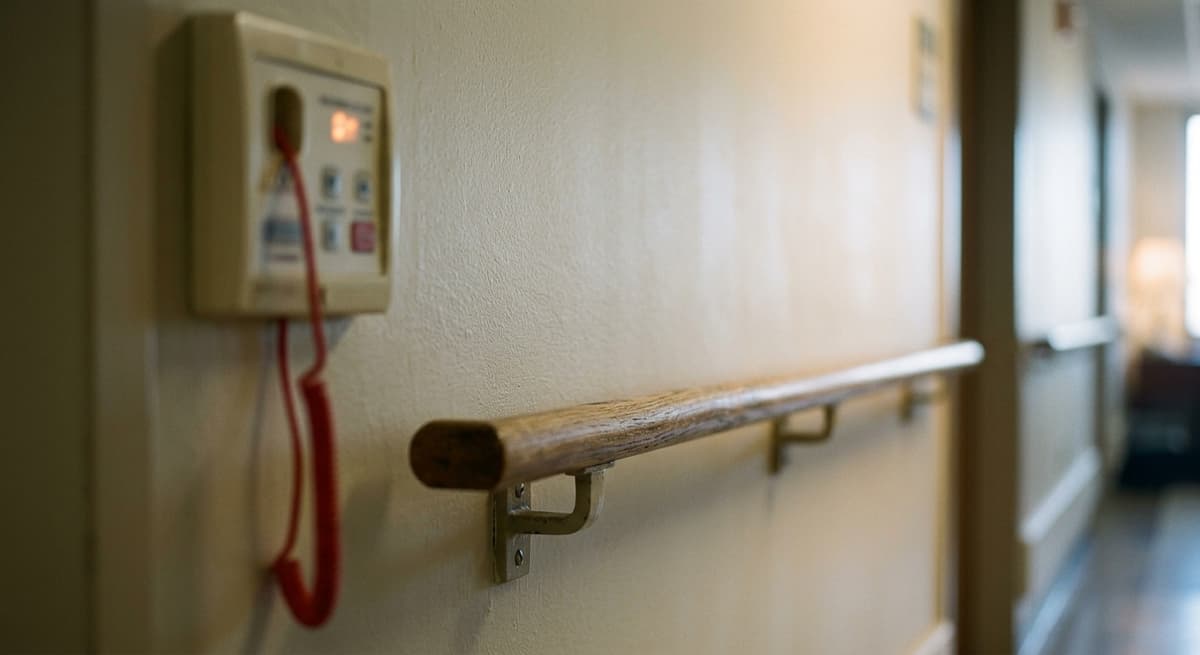
Using Camera Footage as Evidence of Abuse or Neglect
Camera footage that appears to document abuse or neglect can support a report to Virginia's Long-Term Care Ombudsman or Adult Protective Services, and can support a civil claim against a facility. Footage alone rarely resolves a claim; it is typically reviewed together with the resident's medical and care records, staffing history and the facility's compliance record.
Audio Recording and Virginia's General Consent Law
Virginia's nursing-facility statute limits shared-room monitoring to video only, specifically because of the added exposure an unconsented audio recording of a roommate's conversation creates. Virginia is generally understood as a one-party consent state for recording conversations more broadly; that general framework governs any conversation captured outside this statute's own scope. See Virginia Recording Laws for that framework.
Getting Help
Virginia's Long-Term Care Ombudsman program and the Department of Social Services licensing division are practical first stops for a resident or family navigating a nursing-facility monitoring request, tracking the status of the assisted-living regulation, or reporting a suspected abuse or neglect situation.

Related Resources
- Nursing Home Camera Laws by State is the hub page for this cluster, covering every state's regime at a glance.
- The 50-State Nursing Home Camera Law Comparison covers the full 18-state comparison and how Virginia's two-track approach compares.
- Virginia Recording Laws covers the state's general consent framework outside section 32.1-138.5:1.
- Virginia Power of Attorney Laws covers how a legal representative gets authority to request monitoring on a resident's behalf.
- Nursing Home Abuse & Neglect covers how an abuse or neglect claim works once evidence, including camera footage, is in hand.
- Surveillance Camera Laws by State covers the general legal framework for security cameras outside a nursing facility setting.
Last updated: 2026-08-14.
Frequently Asked Questions
Can I put a camera in a Virginia nursing facility resident's room?
Yes. Virginia Code section 32.1-138.5:1 lets a nursing facility resident, or their legal representative, install electronic monitoring with written signed consent given before installation. In a shared room, all roommates or their legal representatives must also consent, and only video monitoring is permitted once there is a roommate.
Does Virginia's camera law cover assisted living facilities?
A parallel statute, Virginia Code section 63.2-1808.2, was enacted by 2026 Senate Bill 409 to extend the same right to assisted living, but it is not yet in force. It takes effect only once the Department of Social Services adopts implementing regulations, which the agency intended to submit for board approval in August 2026 with an effective date as early as fall 2026. Until that regulation takes effect, an assisted living resident in Virginia has no statutory monitoring right under this law.
Is tampering with a Virginia nursing facility monitoring device a crime?
Not under a dedicated criminal statute. Section 32.1-138.5:1 requires the facility to adopt a policy prohibiting staff from willfully tampering with a monitoring device, but the statute itself contains no criminal penalty language, a real difference from several peer states that make tampering a misdemeanor.
Who pays for a monitoring device in a Virginia nursing facility?
The resident generally pays for equipment and installation costs. If the facility offers a managed, in-house monitoring service, it may charge a one-time fee up to $150, a security deposit up to $250, and a monthly fee up to $10. The facility covers electricity.
Can a Virginia nursing facility retaliate against a resident for requesting a camera?
No. Section 32.1-138.5:1 states that a nursing facility shall allow electronic monitoring conducted in accordance with the statute, and shall not refuse to admit an individual or discharge or transfer a resident due to a request to conduct authorized electronic monitoring.
Is signage required for a monitored room in Virginia?
Yes. The nursing facility must conspicuously post and maintain a notice at the entrance to the resident's room stating that an electronic monitoring device is in operation, and must also notify assigned staff when monitoring is active.
Updates
Independently fact-checked against the cited primary sources
The Law Behind This Article
This article rests on the statutory provisions below, held in our own legal record and retrieved from the official source. Tap a section to read the operative text.
Code of Virginia, Title 32.1: Health
§ 32.1-138.5:1(Effective pursuant to Acts 2025, c. 432, cl. 2) Electronic monitoring in resident roomsIn forcecited in 3 of our articles
A. As used in this section: "Electronic monitoring" means the use of a surveillance device with a fixed position video camera or audio recording device, or a combination thereof, that is installed in a resident's room and broadcasts or records activities or sounds occurring within the confines of the room. Electronic monitoring shall not include use of a device that enables audio communication into the resident's room from another source. "Family member" means the resident's spouse, parent, stepparent, child, stepchild, brother, sister, half-brother, half-sister, grandparent, or grandchild. "Legal representative" means a person legally responsible for representing or standing in the place of the resident for the conduct of his affairs. This may include a guardian, conservator, attorney-in-fact under durable power of attorney, trustee, or other person expressly named by a court of competent jurisdiction or the resident as his agency in a legal document that specifies the scope of the representative's authority to act. A legal representative may only represent or stand in the place of a resident for the function for which he has legal authority to act. B.
Official text (excerpt) · last checked 2026-08-31 · Read the full text in our law library · Verify at law.lis.virginia.gov
Also relied on in: Nursing Home Camera Laws by State, Nursing Home Camera Laws by State (2026): Granny Cam Rights
Code of Virginia, Title 63.2: Welfare (Social Services)
§ 63.2-1808.2(For contingent effective date, see Acts 2026, c. 496, cl. 2) Electronic monitoring in resident roomsIn force
A. As used in this section: "Electronic monitoring" means the use of a surveillance device with a fixed position video camera or audio recording device, or a combination thereof, which is installed in a resident's room and broadcasts or records activities or sounds occurring within the confines of the room. "Electronic monitoring" does not include use of a device that enables audio communication into the resident's room from another source. "Family member" means the resident's spouse, parent, stepparent, child, stepchild, sibling, half-sibling, grandparent, or grandchild. "Legal representative" means a person legally responsible for representing or standing in the place of the resident for the conduct of his affairs. This may include a guardian, conservator, attorney-in-fact under durable power of attorney, trustee, or other person expressly named by a court of competent jurisdiction or the resident as his agency in a legal document that specifies the scope of the representative's authority to act. A legal representative may only represent or stand in the place of a resident for the function for which he has legal authority to act. B.
Official text (excerpt) · last checked 2026-07-29 · Read the full text in our law library · Verify at law.lis.virginia.gov
Search our full record of US law — 2.1 million sections, every state + federal →
Sources and References
- Va. Code section 32.1-138.5:1, Electronic monitoring in resident rooms (nursing facilities, in force)(law.lis.virginia.gov).gov
- Va. Code section 63.2-1808.2, Electronic monitoring in resident rooms (assisted living, not yet in force)(law.lis.virginia.gov).gov
- Virginia Department of Social Services, 2026 Legislative Implementation memo to assisted living facilities (SB 409 effective-date status)(dss.virginia.gov).gov
- Va. Code section 32.1-138.5:1, signage, staff notification and managed-service fee caps(law.lis.virginia.gov).gov