
Wisconsin
Wisconsin GPS Tracking Laws: Is It Legal to Put a Tracker on a Car? (2026)
Independently fact-checked against primary sources (last audited June 17, 2026). · Law checked current as of August 9, 2026. How we verify our legal content

Wondering whether you can legally put a GPS tracker on a car in Wisconsin? The short answer: only if the car is yours, or you fit one of a handful of narrow exceptions written into the statute. Wisconsin not only criminalizes planting the tracker. It also criminalizes looking at the data the tracker produces.
This guide is part of our GPS Tracking Laws by State series. Below is what Wisconsin law actually says, who is allowed to track a vehicle, what happens with AirTags, and what to do if you find a device on your own car.
Is It Legal to Put a GPS Tracker on a Car in Wisconsin?
No, not unless you own or lease the vehicle or qualify for a statutory exception. Wis. Stat. 940.315 makes it a Class A misdemeanor to place a GPS device, or any device equipped with GPS technology, on a vehicle owned or leased by another person without that person's consent.
The law was created by 2015 Wisconsin Act 45 and has not been amended since. It is one of the more carefully drafted vehicle tracking statutes in the country because it spells out exactly who gets an exception and, just as importantly, who does not.
Tracking your own car is legal. That includes a car you lease. What the statute forbids is putting a tracker on a vehicle that belongs to someone else: a spouse's separately titled car, a partner's car, an ex's car, a coworker's car. Consent from the owner or lessee makes the placement lawful. Suspicion, jealousy, or a custody dispute does not.
Wisconsin's Two-Crime Rule: Placing AND Reading the Data (940.315)
Most state tracking laws stop at the act of placement. Wisconsin goes a step further and creates two separate offenses.
First, under section 940.315(1)(a), it is a crime to place a GPS device (or a device equipped with GPS technology) on a vehicle owned or leased by another person without consent.
Second, under section 940.315(1)(b), it is a separate crime to intentionally obtain information about another person's movement or location that was generated by a device placed in violation of the statute. In plain terms, merely reading the data is its own Class A misdemeanor.
That second prong matters more than people realize. You do not have to be the person who planted the device. If a friend or family member installs a tracker on someone's car and you log into the app to check where that person went, you have committed your own offense. Each violation carries up to 9 months in jail and a $10,000 fine.
Who CAN Legally Track a Vehicle in Wisconsin
Section 940.315 lists specific exceptions. The statute does not apply to:

- Vehicle owners and lessees. You can always track a vehicle you own or lease.
- Employers and business owners. A business may use GPS on vehicles it owns, leases, or assigns to employees. This is among the clearest employer safe harbors in any state tracking law.
- Parents and guardians. A parent or guardian may track a vehicle used by their minor child or ward.
- Lienholders. A lienholder may use GPS in connection with repossessing a vehicle, which is why many buy-here-pay-here dealers and subprime lenders install trackers on financed cars.
- Law enforcement officers acting in their official capacity. Even so, the Fourth Amendment applies: in United States v. Jones (2012), the U.S. Supreme Court held that attaching a GPS device to a suspect's vehicle and monitoring it is a search, which generally requires a warrant.
- Vehicle manufacturers. Factory telematics systems such as OnStar-style services are exempt.
- Insurance devices. Usage-based insurance trackers used for rating, underwriting, or claims are allowed when installed with the owner's permission.
Notice who is missing from that list: private investigators. Wisconsin has no PI exception. A licensed investigator who plants a tracker on a vehicle the client does not own or lease commits the same Class A misdemeanor as anyone else. If a PI offers to "put a tracker on your spouse's car," that PI is offering to commit a crime in Wisconsin.
Can My Employer Track My Car in Wisconsin?
It depends entirely on whose car it is.
If you drive a vehicle your employer owns, leases, or assigns to you, the answer is yes. The statute expressly permits a business owner to use GPS on vehicles "owned, leased, or assigned" by the business, and the "assigned" language squarely covers fleet and take-home company vehicles. Wisconsin employers do not need your consent to track company vehicles, even during off-duty hours, although many adopt written policies anyway.
Your personal car is a different story. The employer exception does not reach vehicles an employee personally owns or leases. An employer who slips a tracker onto your personal vehicle without your consent commits the misdemeanor like anyone else. Tracking through a phone app you agreed to install raises separate consent questions, but the vehicle tracking statute is about devices placed on vehicles.
For workplace cameras and monitoring more broadly, see our guide to surveillance camera laws.
AirTags and Item Trackers: The Stalking Route (940.32)
Section 940.315 talks about vehicles. So what about an AirTag dropped into a purse, a jacket pocket, or a gym bag?
Wisconsin's stalking statute fills the gap. Wis. Stat. 940.32 defines a stalking "course of conduct" to include, among other acts, "monitoring or recording the activities of the victim" through electronic means, "regardless of where the act occurs." That language covers tracking a person with an AirTag, a Tile, a hidden GPS unit in a bag, or spyware, whether or not a vehicle is ever involved.
Stalking requires a course of conduct (two or more acts) that would cause a reasonable person serious emotional distress or fear of bodily harm. Base-level stalking is a Class I felony. With aggravating factors, such as a prior conviction involving the same victim, a victim under 18, or use of a dangerous weapon, the charge climbs to a Class H or Class F felony.
Federal law adds another layer. The federal stalking statute, 18 U.S.C. 2261A, criminalizes using any electronic communication system or electronic monitoring to stalk someone across state lines or in other federal jurisdiction situations, with penalties starting at up to 5 years in federal prison.
Penalties for Illegal GPS Tracking in Wisconsin
| Conduct | Statute | Offense Level | Maximum Penalty |
|---|---|---|---|
| Placing a GPS device on another person's vehicle without consent | Wis. Stat. 940.315(1)(a) | Class A misdemeanor | 9 months jail and $10,000 fine |
| Intentionally obtaining location data from an unlawfully placed device | Wis. Stat. 940.315(1)(b) | Class A misdemeanor | 9 months jail and $10,000 fine |
| Stalking by electronic monitoring (course of conduct) | Wis. Stat. 940.32(2) | Class I felony | 3 years, 6 months and $10,000 fine |
| Stalking with aggravating factors | Wis. Stat. 940.32(2m), (3) | Class H or F felony | Up to 6 years and $10,000 (Class H); up to 12 years, 6 months and $25,000 (Class F) |
| Interstate stalking or cyberstalking | 18 U.S.C. 2261A | Federal felony | 5 years or more in federal prison |
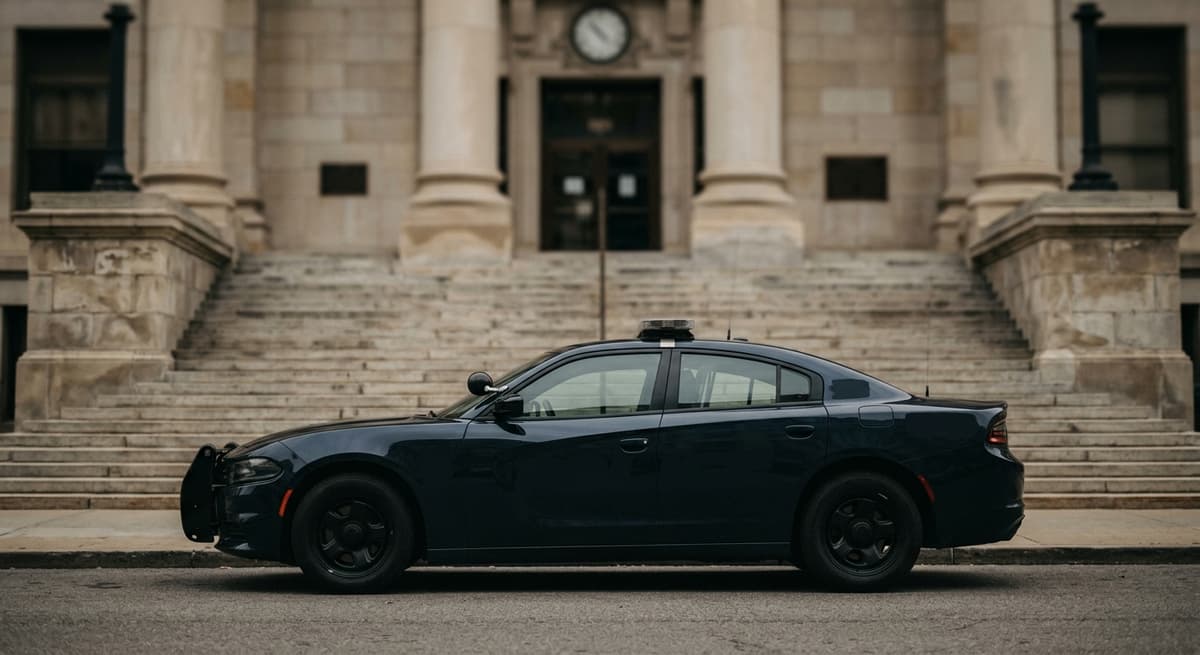
Each act can be charged separately. Someone who plants a tracker and then checks the data has arguably committed at least two distinct misdemeanors, and a sustained pattern of tracking can support a felony stalking charge on top.
Civil Options: Suing Over a Tracker
Wisconsin gives tracking victims civil tools alongside the criminal statutes.
Privacy lawsuit. Wis. Stat. 995.50 creates a right of privacy, including a claim for intrusion upon privacy "in a place that a reasonable person would consider private." Whether GPS tracking of a car driven on public roads fits that definition is arguable and has not been tested in Wisconsin's appellate courts. A tracker that logged visits to your home, a doctor's office, or a place of worship gives a plaintiff the strongest argument. A successful claim can bring an injunction, compensatory damages, and attorney fees.
Harassment injunction. Wis. Stat. 813.125 lets a victim seek a harassment restraining order, and courts routinely treat covert tracking as part of a harassment or domestic abuse pattern. Our guide to Wisconsin restraining order laws walks through the process.
What to Do If You Find a Tracker on Your Car
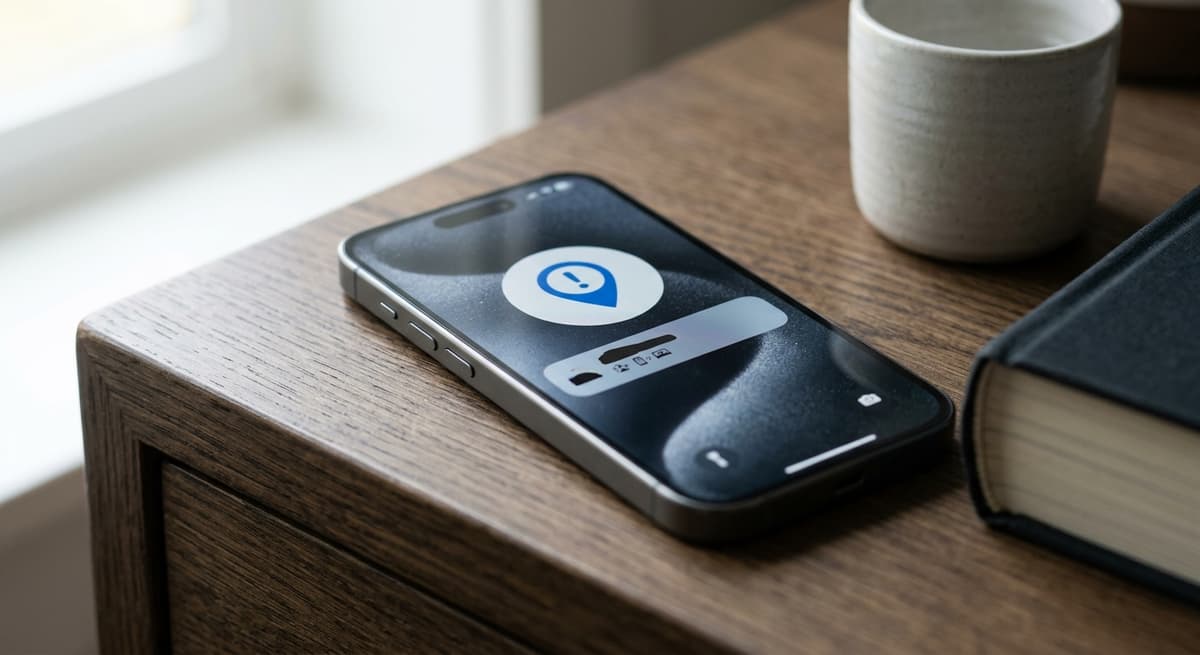
- Do not destroy it. The device is evidence, and it may carry fingerprints, a serial number, or account data that identifies who placed it.
- Photograph it in place before anyone touches it: where it was mounted, how it was attached, the date and time.
- Call local police. Placing the device is a crime under 940.315, and a pattern of tracking may support a stalking charge under 940.32. Ask for a report number.
- Think about safety before removing it if you suspect a current or former partner. Removing a tracker tells the person who planted it that you found it. Domestic violence advocates often recommend making a safety plan first.
- Consider a harassment injunction under 813.125 once you know, or strongly suspect, who is responsible.
- Get the car swept. A mechanic can check wheel wells, bumpers, the OBD-II port, and the battery compartment for additional devices.
If the tracking is part of a broader pattern of recording or monitoring, our Wisconsin recording laws guide covers the state's rules on audio and video recording.
Sources
- Wis. Stat. 940.315 - Global positioning devices
- 2015 Wisconsin Act 45
- Wis. Stat. 940.32 - Stalking
- Wis. Stat. 995.50 - Right of privacy
- Wis. Stat. 813.125 - Harassment restraining orders and injunctions
- 18 U.S.C. 2261A - Stalking
Disclaimer: This article is for general informational purposes only and is not legal advice. Laws change, and how they apply depends on the facts of your situation. If you are dealing with unwanted tracking, stalking, or a related legal dispute, consult a licensed Wisconsin attorney. If you are in immediate danger, call 911.
More Wisconsin Laws
Frequently Asked Questions
Can I put a GPS tracker on my spouse's car in Wisconsin?
Not if the car is owned or leased solely by your spouse. Wis. Stat. 940.315 protects vehicles owned or leased by another person, and there is no exception for spouses. If the vehicle is titled in both names, the statute's application is less clear, but planting a tracker during a divorce or custody dispute invites both criminal exposure and serious problems in family court.
Is it illegal to just look at GPS data someone else collected?
Yes. Wisconsin makes it a separate Class A misdemeanor to intentionally obtain information about another person's movement or location generated by an unlawfully placed device. You can be charged even if you never touched the tracker.
Can a private investigator legally place a GPS tracker in Wisconsin?
No. Wisconsin's statute contains no private investigator exception. A PI may only track a vehicle with the consent of its owner or lessee, which usually means the client must own the car being tracked.
Can my parents put a tracker on my car?
If you are a minor, yes. The statute exempts a parent or guardian tracking a vehicle used by their minor child or ward. Once you are 18 and own or lease your own vehicle, the exception no longer applies.
Are AirTags illegal in Wisconsin?
Owning and using an AirTag on your own keys, luggage, or car is legal. Using one to secretly monitor another person can be charged as stalking under Wis. Stat. 940.32, which covers electronic monitoring of a victim regardless of where it occurs. Base stalking is a Class I felony.
Can police track my car with GPS without a warrant?
Generally no. In United States v. Jones (2012), the U.S. Supreme Court held that attaching a GPS device to a vehicle and monitoring its movements is a Fourth Amendment search, so police normally need a warrant. Wisconsin's statute separately exempts officers acting in their official capacity from the state misdemeanor.
Can a car dealer or lender track my financed car?
Yes, within limits. Lienholders may use GPS in connection with repossession, and insurers may install usage-based devices with the owner's permission for rating, underwriting, or claims purposes. Factory telematics from the manufacturer are also exempt.
Has Wisconsin updated its GPS tracking law recently?
No. Section 940.315 was created by 2015 Wisconsin Act 45 and has not been amended since. The stalking statute, harassment injunction process, and federal cyberstalking law fill the gaps for non-vehicle tracking.
Updates
Governing law re-checked for recent changes
Governing law re-checked for recent changes
Independently fact-checked against the cited primary sources
The Law Behind This Article
This article rests on the statutory provisions below, held in our own legal record and retrieved from the official source. Tap a section to read the operative text.
Wisconsin Statutes, Chapter 940: Crimes Against Life And Bodily Security
§ 940.315Global positioning devices.In forcecited in 3 of our articles
(1) Whoever does any of the following is guilty of a Class A misdemeanor: (a) Places a global positioning device or a device equipped with global positioning technology on a vehicle owned or leased by another person without that person’s consent. (b) Intentionally obtains information regarding another person’s movement or location generated by a global positioning device or a device equipped with global positioning technology that has been placed without that person’s consent.
Official text (excerpt) · last checked 2026-08-26 · Read the full text in our law library · Verify at docs.legis.wisconsin.gov
Also relied on in: Wisconsin Employee Monitoring Laws: Workplace Surveillance and Social Media (2026), GPS Tracking Laws by State: Is It Legal to Put a Tracker on a Car? (2026)
§ 940.32Stalking.In forcecited in 2 of our articles
(1) In this section: (a) “Course of conduct” means a series of 2 or more acts carried out over time, however short or long, that show a continuity of purpose, including any of the following: 1. Maintaining a visual or physical proximity to the victim. 2. Approaching or confronting the victim. 3. Appearing at the victim’s workplace or contacting the victim’s employer or coworkers. 4. Appearing at the victim’s home or contacting the victim’s neighbors. 5. Entering property owned, leased, or occupied by the victim. 6. Contacting the victim by telephone, text message, electronic message, electronic mail, or other means of electronic communication or causing the victim’s telephone or electronic device or any other person’s telephone or electronic device to ring or generate notifications repeatedly or continuously, regardless of whether a conversation ensues. 6m. Photographing, videotaping, audiotaping, or, through any other electronic means, monitoring or recording the activities of the victim. This subdivision applies regardless of where the act occurs. 7.
Official text (excerpt) · last checked 2026-07-29 · Read the full text in our law library · Verify at docs.legis.wisconsin.gov
Cited in 28 court opinions in our collectionLatest citing opinion in our collection: 2026
Opinions citing this section in our collection:
- State v. Sveum (Wisconsin Supreme Court 2010, 328 Wis. 2d 369)“…with aggravated stalking as a party to a crime contrary to Wis. Stat. § 940.32 (3)(b) (2001-02) [5] and Wis. Stat. §…”
- State v. Warbelton (Wisconsin Supreme Court 2009, 315 Wis. 2d 253)“…ffirming his conviction for stalking. 1 Under Wis. Stat. § 940.32 (2m)(a) (2001-02), 2 whoev…”
- State v. Brent T. Novy (Wisconsin Supreme Court 2013)“…vy was charged with one count of stalking, in violation of Wis. Stat. § 940.32 (2)(a), (b), and (c). The complaint (ca…”
Identified automatically from the court opinions citing this section — not a ranking of which case controls.
Also relied on in: Wisconsin Restraining Order Laws (2026): How to Get a Domestic Abuse Injunction
Wisconsin Statutes, Chapter 995: Miscellaneous Statutes
§ 995.50Right of privacy.In forcecited in 6 of our articles
(1) The right of privacy is recognized in this state. One whose privacy is unreasonably invaded is entitled to the following relief: (a) Equitable relief to prevent and restrain such invasion, excluding prior restraint against constitutionally protected communication privately and through the public media; (b) Compensatory damages based either on plaintiff’s loss or defendant’s unjust enrichment; and (c) A reasonable amount for attorney fees. (2) (am) In this section, “invasion of privacy” means any of the following: 1. Intrusion upon the privacy of another of a nature highly offensive to a reasonable person, except as provided under par. (bm), in a place that a reasonable person would consider private, or in a manner that is actionable for trespass. 2. The use, for advertising purposes or for purposes of trade, of the name, portrait or picture of any living person, without having first obtained the written consent of the person or, if the person is a minor, of his or her parent or guardian. 3.
Official text (excerpt) · last checked 2026-07-29 · Read the full text in our law library · Verify at docs.legis.wisconsin.gov
Cited in 43 court opinions in our collectionLatest citing opinion in our collection: 2026
Opinions citing this section in our collection:
- H&R Block Eastern Enterprises, Inc. v. Swenson (Court of Appeals of Wisconsin 2007, 307 Wis. 2d 390)“…alleging a violation *395 of privacy under Wis. Stat. § 995.50 . 2 H&R Block asserts that…”
- Gillund v. Meridian Mutual Insurance (Court of Appeals of Wisconsin 2009, 323 Wis. 2d 1)“…lso 2005 Wis. Act 155, § 51 (renumbering § 895.50 to Wis. Stat. § 995.50 ). Wisconsin Stat. § 995.50(2)(a)-(d),…”
- Dumas v. Koebel (Court of Appeals of Wisconsin 2013, 352 Wis. 2d 13)“…very; (2) Dumas' invasion of privacy claim is precluded by Wis. Stat. § 995.50 (2)(c) (2011-12) 1 because the informa…”
Identified automatically from the court opinions citing this section — not a ranking of which case controls.
Also relied on in: Wisconsin Data Privacy Laws: Breach Notification & Consumer Rights (2026), Wisconsin Deepfake Laws: AI Images, Voice Cloning & Penalties (2026), Wisconsin Surveillance Camera Laws (2026 Guide)
Wisconsin Statutes, Chapter 813: Injunctions, Ne Exeat And Receivers
§ 813.125Harassment restraining orders and injunctions.In forcecited in 2 of our articles
(1) Definitions. (am) In this section: 2. “Adult at risk” has the meaning given in s. 55.01 (1e). 3. “Elder person” means any individual who is 60 years of age or older. 4. “Harassment” means any of the following: a. Striking, shoving, kicking or otherwise subjecting another person to physical contact; engaging in an act that would constitute abuse under s. 48.02 (1), sexual assault under s. 940.225, or stalking under s. 940.32; or attempting or threatening to do the same. b. Engaging in a course of conduct or repeatedly committing acts which harass or intimidate another person and which serve no legitimate purpose. (bm) In subs. (3) and (4), “household pet” means a domestic animal that is not a farm animal, as defined in s. 951.01 (3), that is kept, owned, or cared for by the petitioner or by a family member or a household member of the petitioner. (2) Commencement of action. (a) An action under this section may be commenced by filing a petition described under sub. (5) (a). No action under this section may be commenced by service of summons.
Official text (excerpt) · last checked 2026-07-29 · Read the full text in our law library · Verify at docs.legis.wisconsin.gov
Cited in 22 court opinions in our collectionLatest citing opinion in our collection: 2025
Opinions citing this section in our collection:
- Welytok v. Ziolkowski (Court of Appeals of Wisconsin 2008, 312 Wis. 2d 435)“…andard of Review ¶ 23. To grant an injunction under Wis. Stat. § 813.125 , the circuit court must find "reasonab…”
- State v. Schwebke (Wisconsin Supreme Court 2002, 253 Wis. 2d 1)“…equently adopted other specific harassment statutes. See Wis. Stat. §§ 813.125 and 947.013. Overall, Schwebke argues…”
- State v. Sveum (Court of Appeals of Wisconsin 2002, 254 Wis. 2d 868)“…7.013 (lr); violating a harassment injunction issued under Wis. Stat. § 813.125 (4); and criminal damage to property, c…”
Identified automatically from the court opinions citing this section — not a ranking of which case controls.
United States Code Title 18
§ 2261AStalkingIn forcecited in 53 of our articles
Whoever— travels in interstate or foreign commerce or is present within the special maritime and territorial jurisdiction of the United States, or enters or leaves Indian country, with the intent to kill, injure, harass, intimidate, or place under surveillance with intent to kill, injure, harass, or intimidate another person, and in the course of, or as a result of, such travel or presence engages in conduct that— places that person in reasonable fear of the death of, or serious bodily injury to— that person; an immediate family member (as defined in section 115) of that person; a spouse or intimate partner of that person; or the pet, service animal, emotional support animal, or horse of that person; or causes, attempts to cause, or would be reasonably expected to cause substantial emotional distress to a person described in clause (i), (ii), or (iii) of subparagraph (A); or with the intent to kill, injure, harass, intimidate, or place under surveillance with intent to kill, injure, harass, or intimidate another person, uses the mail, any interactive computer service or electronic communication service or electronic communication system of interstate commerce, or any other…
Official text (excerpt) · last checked 2026-07-28 · Read the full text in our law library · Verify at uscode.house.gov
Cited in 350 court opinions in our collectionLatest citing opinion in our collection: 2026
In the courts (editorial summary, independently checked):Federal appeals courts have construed and upheld Section 2261A. United States v. Walker (2011) read in the course of, or as a result of such travel disjunctively, so pre-travel threats plus resulting fear sufficed. United States v. Amy Gonzalez (2018) held it neither overbroad nor vague and no First Amendment violation as applied.
Opinions citing this section in our collection:
- United States v. Walker (Court of Appeals for the First Circuit 2011, 665 F.3d 212)✓After emailing threats to his estranged wife, the defendant flew from Michigan to Puerto Rico and was arrested on arrival. The court read the disjunctive phrase in 2261A(1) to cover travel that itself places the target in reasonable fear, and upheld the stalking conviction.
- United States v. Amy Gonzalez (Court of Appeals for the Third Circuit 2018, 905 F.3d 165)✓Relatives waged a years-long campaign against a mother that ended in a courthouse shooting. The court held 2261A is neither overbroad nor vague because it reaches harassing conduct, and that the mental states it lists are alternative means, not elements; convictions affirmed.
- United States v. Wills (Court of Appeals for the Fourth Circuit 2003, 346 F.3d 476)✓A burglary suspect pursued the witness who identified him at a preliminary hearing; the witness later died. The court held the evidence met each element of 2261A: travel from D.C. to Virginia, intent to harm or harass, and reasonable fear of death; conviction affirmed.
Identified automatically from the court opinions citing this section — not a ranking of which case controls.
Also relied on in: Alabama GPS Tracking Laws: Is It Legal to Put a Tracker on a Car? (2026), Colorado GPS Tracking Laws: Is It Legal to Put a Tracker on a Car? (2026), Florida GPS Tracking Laws: Is It Legal to Put a Tracker on a Car? (2026)
Search our full record of US law — 2.1 million sections, every state + federal →
Sources and References
- Wis. Stat. 940.315 - Global positioning devices(docs.legis.wisconsin.gov)
- 2015 Wisconsin Act 45(docs.legis.wisconsin.gov)
- Wis. Stat. 940.32 - Stalking(docs.legis.wisconsin.gov)
- Wis. Stat. 995.50 - Right of privacy(docs.legis.wisconsin.gov)
- Wis. Stat. 813.125 - Harassment restraining orders(docs.legis.wisconsin.gov)
- 18 U.S.C. 2261A - Stalking(law.cornell.edu)