
Belgium
Belgium Criminal Record Extract: Models 595, 596.1 and 596.2 Explained
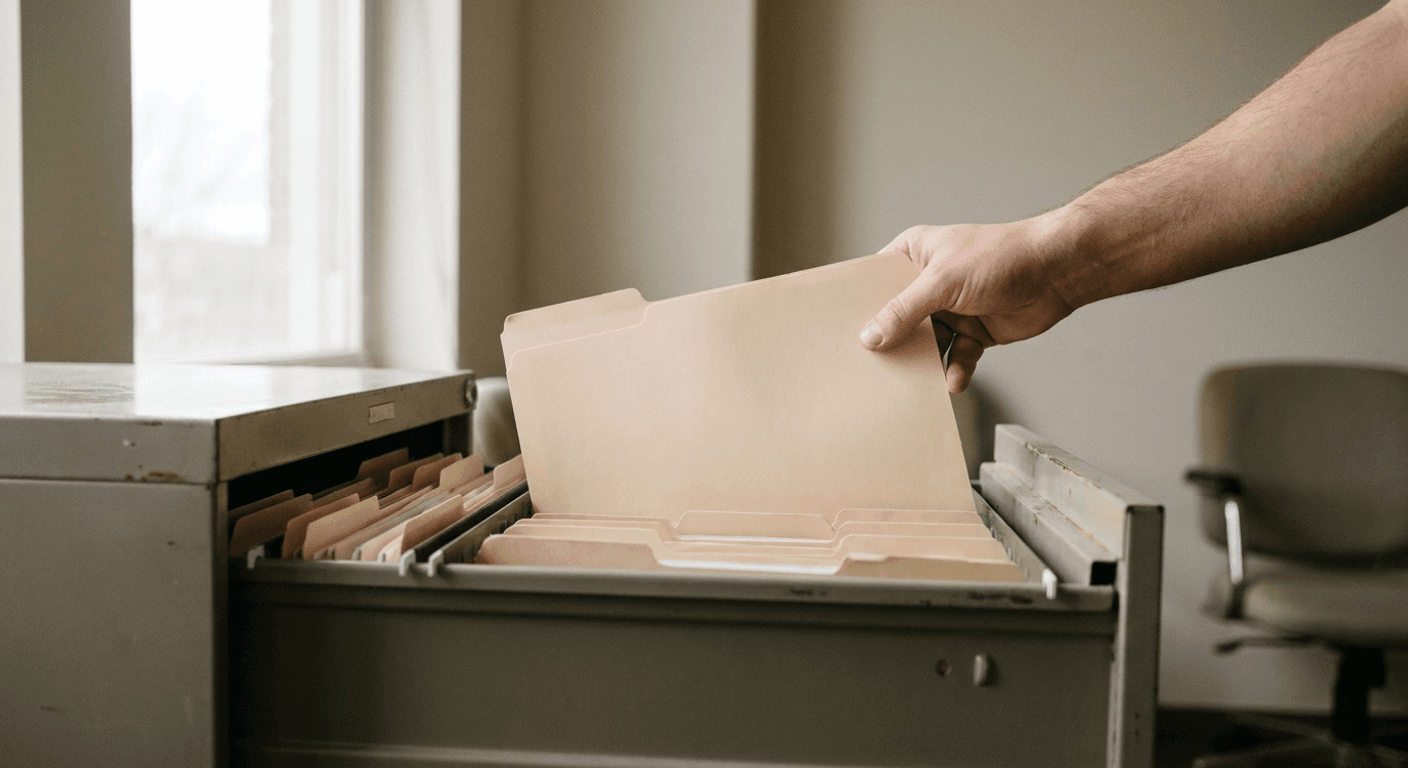
A Belgian criminal record extract is not one document. Ask for a uittreksel uit het strafregister, or an extrait de casier judiciaire in French, and the answer depends entirely on why you need it: a job, a volunteering role with children, a firearms licence, or simply your own peace of mind. Belgium issues three different models, numbered 595, 596.1 and 596.2, and each shows a different, progressively wider slice of a person's record.
Getting the model wrong, or assuming the most detailed one is simply the standard extract, is the mistake this page exists to prevent. It also covers where you actually apply, what the extract costs and why the amount is not fixed nationally, and how a conviction eventually stops appearing on it at all, through erasure and rehabilitation.
Information last verified on 21 July 2026. This page provides general legal information and does not constitute legal advice in an individual case.
The three models, and what each one shows
Every Belgian criminal record extract is drawn from the same register, the federal Centraal Strafregister, the Casier judiciaire central, but the three models filter what comes out of it differently. Articles 594 to 596bis of the Code d'instruction criminelle set out what belongs on each one.
Model 595: the general extract
This is the extract most people are asked for, and it already leaves out the categories that article 594 reserves to administrations rather than to the public. Even within what it does show, entries do not stay forever: a sentence of six months or less, a simple declaration of guilt, and a fine of 500 euro or less all stop appearing after three years, unless the conviction also carries a disqualification or prohibition whose effects run longer than that.
Model 596.1: regulated activities
This model is required where access to, or the exercise of, a specific activity is conditioned by law or regulation. On top of everything model 595 shows, it adds decisions imposing a disqualification or prohibition running longer than three years that would bar the person from that particular activity. The FOD Justitie / SPF Justice names transport of persons or goods, fiscal professions, security agents, weapons, and hunting or fishing permits as typical examples of activities that call for this model.
Model 596.2: education, youth work and supervision of minors
This is the model required for education, psycho-medico-social guidance, youth assistance, child protection, animation, or any role supervising minors, and it shows considerably more than the other two. On top of models 595 and 596.1, it adds decisions taken under article 594 points 4 to 6, convictions under article 590 alinea 1, points 1 and 17, and decisions under article 590 alinea 1, points 2, 4, 5 and 16, but only specifically where the offence was committed against a minor and that element is either constitutive of the offence or aggravates the penalty. It must also show any judicial prohibition on contact with minors imposed under article 35 §1 alinea 2 of the law of 20 July 1990.
Because it draws on the widest set of categories, model 596.2 is often described as the "full" record, but it exists for a specific purpose, working with or around minors, rather than as a general upgrade on model 595.
Where you apply
Where the application goes depends on your own situation, not on which model you need.

Anyone domiciled or resident in Belgium applies at their commune. Someone with no Belgian domicile or residence, and every legal person, applies instead to the federal Centraal Strafregister, the Casier judiciaire central, run by the FOD Justitie / SPF Justice.
Ordering online through a commune's secure electronic counter, with delivery to your eBox, has been available since April 2022. A digital extract obtained this way cannot be emailed to you, and it stays on the eBox platform for six months.
One caution belongs here rather than a promise. A police-consultation step has historically slowed model 596.2 requests in particular, and some reports describe a 2025 simplification of that step. That change could not be confirmed against an authority source at the time of writing, so this page does not state a current turnaround time, and does not claim the step has been removed. If timing matters to you, check directly with your own commune.
What it costs
Article 20 of the Arrêté royal of 21 November 2016 sets the rule: communes may issue extracts "au prix coûtant", at cost price. There is no national fee schedule, and no price that differs by model. That is exactly why the amount you pay varies from one commune to the next: each commune is pricing its own actual cost of issuing the document, not applying a figure set centrally. Check your own commune's published fee rather than assuming a figure quoted for a different one applies to you.
Erasure and rehabilitation
A conviction does not sit on the register forever. The Code d'instruction criminelle, at articles 619 to 629, sets out two separate routes by which it stops appearing: automatic erasure, and rehabilitation applied for.

Automatic erasure. Article 619 erases a conviction to a police penalty three years after the decision becomes final, unless the conviction also carries a disqualification or prohibition whose effects run longer than three years. Article 620 then makes clear what erasure means in practice: it produces the same effects as rehabilitation.
Rehabilitation. Article 621 opens rehabilitation to anyone convicted to a penalty that article 619 does not erase, provided they have not already benefited from rehabilitation in the last ten years. Before it can be granted, articles 622 and 623 require that any custodial sentence has been served and any fine paid, and that restitution, damages and costs have been settled, though a court can waive that last requirement where it would cause hardship.
The probationary period. Article 626 sets it out precisely, and the range is genuinely three to ten years, with two breakpoints. Under §1, the minimum is three years for a police penalty or a correctional penalty of up to five years' imprisonment, rising to six years where there is legal recidivism. Under §2, the minimum is five years for a criminal penalty or a correctional penalty over five years, rising to ten years on legal recidivism. So the shortest possible wait is three years and the longest is ten, with the two thresholds sitting at three rising to six, and five rising to ten.
Where and when to apply. Article 628 sends the application to the procureur des Konings, the procureur du Roi, of the district where the person resides, or to the Brussels procureur where they live abroad. It cannot be filed more than one year before the probationary period actually expires.
What article 629 §3 actually says about sexual offences
This is worth stating precisely, because a stricter rule than the real one circulates widely. Article 629 §3 does not put sexual offences against minors permanently beyond rehabilitation. It expressly makes rehabilitation available for the sexual-offence articles, including where a minor was involved, subject to one added procedural requirement: the prosecutor's file must contain the opinion of a service specialised in the guidance or treatment of sex offenders. That is an extra hurdle built into the same procedure described above, not a permanent bar layered on top of it.
The rule that this category can never be erased is a real rule, but it belongs to French law, where a form known as bulletin n°2 and the FIJAISV register impose exactly that kind of permanent restriction. It gets repeated for Belgium fairly often, presumably because the two countries share a language and much of their legal vocabulary, but it is not the Belgian position. If you are working out whether rehabilitation is available to you or to someone you are advising, start from article 629 §3 as written, not from what French law does with the same category of offence.
This regime changes on 1 September 2026
Everything above describes the law as it stands today, and it has a short shelf life. The new Strafwetboek / Code pénal takes effect on 1 September 2026, and the consolidated Code of Criminal Procedure already carries a parallel future version of the articles this page quotes, including 594, 595, 596, 619, 621, 623, 625, 626, 627 and 629.

The change is substantive, not a renumbering. Article 619 today turns on whether the conviction was to a police penalty. Its replacement works from an enumerated list tied to the new eight-level penalty structure, covering fines up to a stated ceiling, work penalties, probation penalties and confiscation, so the question of which convictions fall away automatically after three years is answered differently.
If you are reading this after 1 September 2026, check the current text on ejustice.just.fgov.be before relying on the erasure and rehabilitation rules set out above.
This page provides general legal information about Belgian criminal record extracts and does not constitute legal advice for an individual case. Which model you need, how erasure or rehabilitation applies to a specific conviction, and current fees and procedures at your commune can all vary. Confirm the current position with your commune, the FOD Justitie / SPF Justice, or an advocaat / avocat, before relying on anything here.
Frequently Asked Questions
What is the difference between model 595, 596.1 and 596.2?
Model 595 is the general extract, and it already leaves out categories reserved to administrations. Model 596.1 adds disqualifications or prohibitions longer than three years tied to a specific regulated activity, such as transport, security work, weapons or hunting and fishing permits. Model 596.2, required for education, youth work, child protection or any role supervising minors, adds further categories, including decisions taken specifically because a minor was affected.
Where do I apply for a criminal record extract in Belgium?
If you are domiciled or resident in Belgium, you apply at your commune. If you have no Belgian domicile or residence, or you are applying on behalf of a legal person, you apply instead to the federal Centraal Strafregister, the Casier judiciaire central, run by the FOD Justitie / SPF Justice.
Can I get my extract delivered digitally?
Yes. Since April 2022 you can order through your commune's secure electronic counter and have the extract delivered to your eBox. A digital extract obtained this way cannot be emailed to you, and it stays on the eBox platform for six months.
How much does a Belgian criminal record extract cost?
There is no national fee. Article 20 of the Arrêté royal of 21 November 2016 requires communes to issue extracts at cost price, and each commune sets its own amount based on its own actual cost, which is why the fee genuinely varies from one commune to another.
How long does a conviction stay on my Belgian criminal record?
It depends on the penalty. Convictions to a police penalty are erased automatically three years after the decision becomes final, under article 619. For everything else, rehabilitation is available under articles 621 to 629 once a probationary period has run, and that period ranges from three years up to ten years depending on the offence and any recidivism.
Is a sexual offence against a minor ever erasable from a Belgian criminal record?
Rehabilitation is available under article 629 §3, including for the sexual-offence articles and where a minor was involved, with one added procedural condition: the prosecutor's file must contain the opinion of a service specialised in the guidance or treatment of sex offenders. That is an extra requirement, not a permanent bar. A rule that this category can never be erased does exist, but it belongs to French law, not Belgian law.
How long does it take to get a criminal record extract in Belgium?
There is no official processing time published for any of the three models, and this page does not quote one. Model 596.2 in particular has historically involved an extra police-consultation step, and turnaround can vary by commune. Ask your own commune for its current timeline rather than relying on a figure quoted elsewhere.
Who has to apply through the federal register instead of their commune?
Anyone with no Belgian domicile or residence, and every legal person, applies to the federal Centraal Strafregister, the Casier judiciaire central, at the FOD Justitie / SPF Justice, rather than at a commune.
Sources and References
- Code d'instruction criminelle du 17 novembre 1808, texte consolidé (articles 594 à 596bis, les trois modèles d'extrait)(ejustice.just.fgov.be).gov
- Code d'instruction criminelle, texte consolidé (articles 619 à 629, effacement et réhabilitation)(ejustice.just.fgov.be).gov
- Arrêté royal du 21 novembre 2016 fixant les modalités de délivrance des extraits de casier judiciaire aux particuliers (article 20, délivrance au prix coûtant)(ejustice.just.fgov.be).gov
- Loi du 20 juillet 1990 relative à la détention préventive, texte consolidé (article 35 §1, alinéa 2)(ejustice.just.fgov.be).gov
- SPF Justice / FOD Justitie, Criminal Record Extract: how to apply and which model you need(justice.belgium.be).gov
- FOD Justitie, Uittreksel uit het strafregister aanvragen (Nederlandstalige versie)(justitie.belgium.be).gov
- SPF Justice, formulaire type de demande d'extrait de casier judiciaire(justice.belgium.be).gov