
Nevada
Nevada Window Tint Laws (2026): Legal VLT Limits
Independently fact-checked against primary sources (last audited August 18, 2026). · Reviewed by the RecordingLaw editorial team. · Law checked current as of August 18, 2026. · 2 primary sources cited on this page. How we verify our legal content
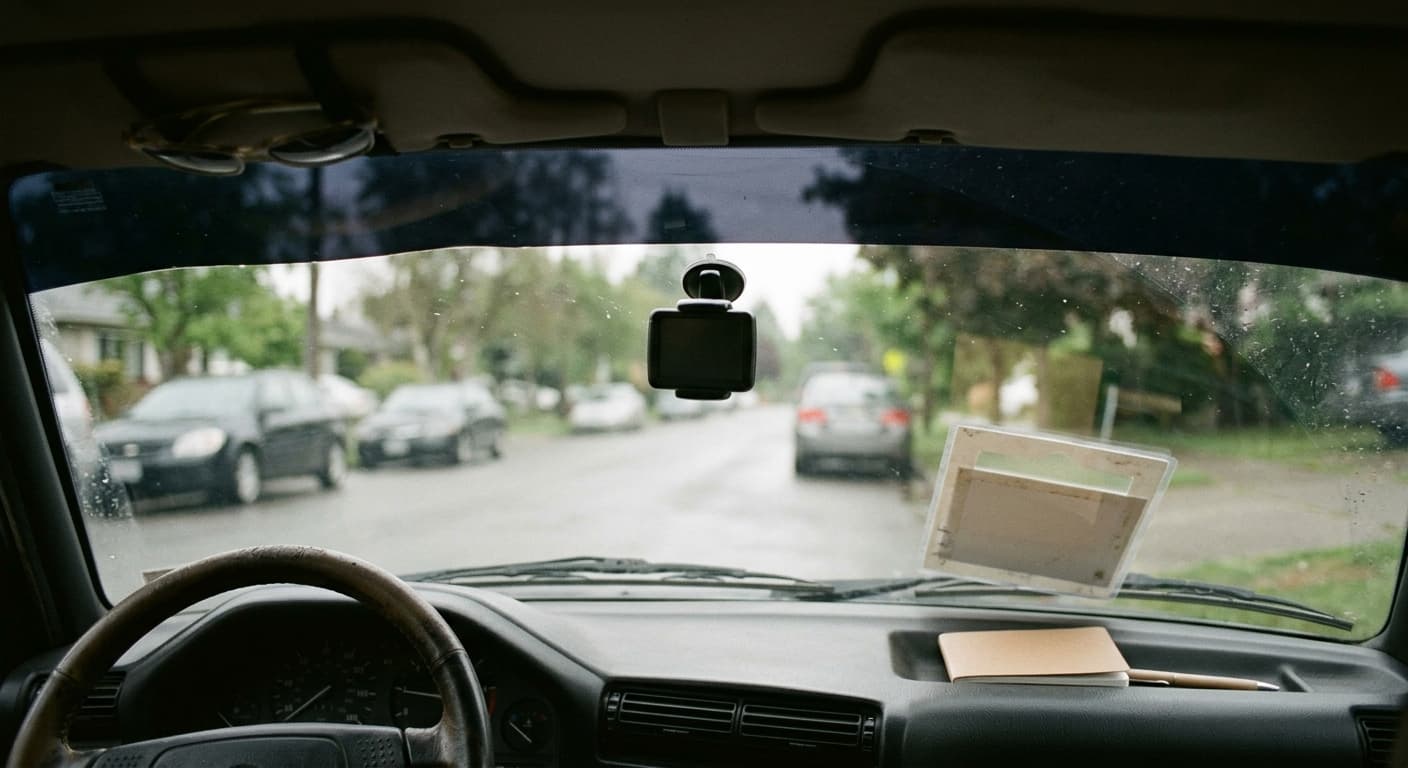
Nevada requires front side windows to allow at least 35% of visible light through, and the state builds in a 7% measurement tolerance so a meter reading of 28% or higher passes inspection. Rear side and back windows can be any darkness as long as the vehicle has dual outside mirrors giving a 200-foot rear view.
What is the legal tint limit in Nevada?
Nevada's front side window rule is 35% VLT, meaning the combined glass-and-film must transmit at least 35% of visible light. A higher VLT percentage is lighter; a lower VLT percentage is darker. What makes Nevada distinct is a codified 7% measurement tolerance on front side windows: a meter reading at or above 28% is treated as compliant during a roadside inspection. This tolerance exists to account for meter calibration differences and the slight variation in how light hits the glass at different angles.
For the windows behind the driver, Nevada places no VLT floor. Any level of darkness is legal on back side windows and the rear window, provided the vehicle has dual outside mirrors that give the driver a clear view at least 200 feet to the rear.
| Window | Minimum VLT | Notes |
|---|---|---|
| Front side windows | 35% (28% with 7% tolerance) | All vehicle types |
| Back side windows | No restriction | Dual outside mirrors required |
| Rear window | No restriction | Dual outside mirrors required |
| Windshield | Topmost strip only; lower edge at least 29 inches above the seat | Red and amber prohibited |
The 7% tolerance is an enforcement tool, not an invitation to install 28% film and call it legal. The law is still written at 35%, and there is no guarantee every officer's meter matches the tolerance exactly. Choosing a film certified at 35% VLT or higher avoids any ambiguity.
Windshield tint rules in Nevada
Nevada permits a tint strip on the topmost portion of the windshield only. NRS 484D.440(3)(c) does not define this boundary by reference to the windshield's AS-1 line marking; instead it sets a single measurable test: the lower edge of the strip must be at least 29 inches above the undepressed driver's seat, measured from a point 5 inches in front of the seatback with the seat in its rearmost, lowest position on a level surface.

Red and amber tints are prohibited on the windshield. These colors can interfere with traffic signal recognition and emergency-vehicle identification. A neutral-gray or clear UV-blocking strip ending at least 29 inches above the seat is the safest approach under NRS 484D.440. Nevada's nonreflective requirement is written into the front-side-window rule; the statute does not separately restrict reflectivity on the windshield strip. Even so, a highly mirrored strip that reflects sunlight or headlights back toward other drivers is a poor practical choice and may draw an officer's attention.
Vehicles model year 1993 or older are exempt from Nevada's tint-darkness restrictions if the tint was installed before July 1, 1993 (NRS 484D.440(4)). This grandfather clause has limited relevance for vehicles still on the road today.
Medical exemptions
Nevada allows exemptions from its tint standards, but the authorizing provision is NRS 484D.440(6), not subsection (5), which is actually a separate carve-out for vehicles sold with factory-tinted glass. Subsection (6) lets the Director adopt regulations creating exemptions and exceptions, and that process is set out in the Nevada Administrative Code (NAC 484D.280 through 484D.290), not directly in NRS 484D.440 itself. Applications for a tint exemption, including for a documented medical need, are filed with the Nevada Highway Patrol (Department of Public Safety) under those regulations, not with the DMV. Any permit issued must be carried in the vehicle at all times so it can be presented to an officer during a traffic stop.
The exemption allows darker tint than the standard 35% on front side windows, with the approved darkness specified in the permit itself. Not all medical conditions will qualify, and there is a published floor: the Department of Public Safety application form states that no window tint exemption less than 20% VLT will be approved. The medical section of that application must be completed by a currently licensed Nevada physician, and a permit is issued either for four years, where the condition is temporary, or indefinitely, where it is permanent and stable. Drivers should consult the Nevada Highway Patrol or a Nevada attorney about the specific conditions and the permit application process before purchasing non-standard film.
How tint is measured and certified
Officers and inspection stations measure window tint with a VLT meter. The device is placed on the glass and emits visible light, reporting the percentage that passes through. For Nevada's front side windows, a reading at or above 28% is treated as passing under the 7% tolerance provision in NRS 484D.440. No compliance sticker or decal is required by Nevada law. What Nevada does require is of the shop rather than the vehicle: under NRS 597.710, a business that applies tint for compensation must display a sign not less than 22 inches by 28 inches in the customer areas of its place of business setting out the law.
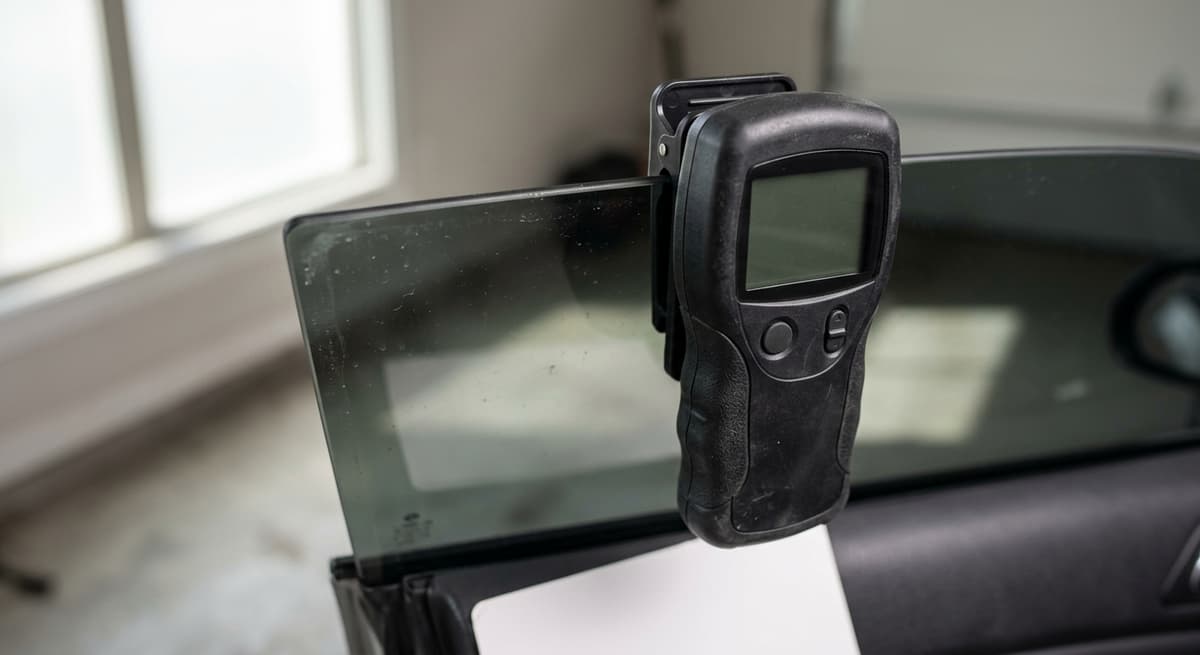
Installers should measure the combined VLT of the glass and the film together, not just the film alone. Factory glass often carries a slight tint that reduces VLT before any aftermarket film is added. A 35% VLT-rated film applied over factory glass that transmits 80% of light will produce a combined result higher than 35%, which is fine. Applying the same film over factory glass that already transmits 40% could push the result below 35%.
Penalties for illegal tint in Nevada
NRS 484D.440 prescribes no penalty of its own. Under NRS 484A.900(1), it is a civil infraction, punishable under NRS 484A.703 to 484A.705, to do any act forbidden in NRS chapters 484A through 484E where those chapters declare no other penalty for that particular offense. Illegal tint therefore falls to Nevada's civil infraction track: it is not a criminal offense.
NRS 484A.7043(1) sets the penalty at a civil penalty of not more than $500 per violation, unless a greater civil penalty is authorized by a specific statute, and no Nevada statute sets a greater amount for tint. On top of the civil penalty, NRS 484A.7043(2) requires the court to order the administrative assessments set out in NRS 176.059, 176.0611, 176.0613 and 176.0623. Those assessments, rather than court costs, are what gets added to the penalty: NRS 484A.7043(5) provides that a court shall not award attorney's fees or costs to any party in a hearing conducted under NRS 484A.7041, whatever the outcome.
A tint violation also does not carry demerit points. NRS 484D.440(7) states that, for the purposes of NRS 483.473, a violation of subsection 2 is not a moving traffic violation.
No Nevada statute makes removing the film within a set number of days an automatic dismissal. What the statute gives is court discretion: under NRS 484A.7043(4)(b), a court may waive or reduce the civil penalty if it determines that any circumstances warrant a waiver or reduction, and under NRS 484A.7043(3)(a) it may reduce the penalty where it is excessive in relation to the defendant's financial resources. Removing illegal film promptly is worth doing on its own terms, and it is the kind of circumstance a court can weigh, but treat any reduction or dismissal as discretionary rather than as a right.
Law enforcement in Las Vegas, Reno, and other Nevada cities does enforce tint rules during traffic stops and at roadway checkpoints, so having tint that clearly exceeds the 35% front threshold is a real risk.
If you want to tint your windows in Nevada
Nevada's rules are relatively tint-friendly compared to many states. You have full freedom on the windows behind the driver, so privacy and heat rejection on back side and rear windows are unlimited. The only meaningful constraint is the 35% VLT minimum on front side windows, and the 7% tolerance gives you a small practical buffer.

Start by choosing a licensed Nevada installer who routinely works within state law and uses a calibrated VLT meter. Ask them to measure your existing factory glass before applying film. For front side windows, select a film rated at 35% VLT or higher to stay comfortably above the legal limit. For rear windows, choose whatever darkness suits your needs. Films that carry an IWFA or AIMCAL certification listing are generally easier to validate during a stop.
If you have a medical need for darker front windows, apply to the Nevada Highway Patrol (Department of Public Safety) for a tint exemption permit under NAC 484D.280 through 484D.290 before purchasing non-standard film. Keep the permit in the glove compartment once issued. Avoid red and amber tints on the windshield, and make sure any windshield strip stays at least 29 inches above the seat.
This article is general legal information, not legal advice. Window tint limits vary by state and change, and enforcement depends on local practice and your specific vehicle. For a definitive answer, check your state DMV or consult a local attorney.
For a full national overview see Window Tint Laws by State. Nevada also regulates what objects may be mounted near the windshield; see Nevada Windshield Mounting Restrictions for related rules.
More Nevada Laws
Frequently Asked Questions
What is the legal tint in Nevada?
Nevada requires front side windows to allow at least 35% VLT (visible light transmission). A 7% measurement tolerance means a meter reading of 28% or higher passes during a roadside inspection. Rear side windows and the rear window can be any darkness as long as the vehicle has dual outside mirrors.
How dark can my front windows be in Nevada?
The legal minimum for front side windows is 35% VLT. With Nevada's 7% enforcement tolerance, a meter reading of 28% or higher will pass. However, the law is written at 35%, so choosing a 35% VLT film keeps you clearly within the legal limit.
Is 20% tint legal in Nevada?
A 20% VLT film is legal on the back side windows and rear window of any vehicle, provided dual outside mirrors are installed. It is NOT legal on the front side windows, where the minimum is 35% (28% with the 7% tolerance).
Can I get a medical exemption for window tint in Nevada?
Yes, but the authorizing provision is NRS 484D.440(6), not subsection (5) (which is a factory-tint carve-out). Subsection (6) lets the Director create exemptions by regulation, a process set out in NAC 484D.280 through 484D.290. An applicant files a written application, with the medical section completed by a currently licensed Nevada physician, with the Nevada Highway Patrol (Department of Public Safety) rather than the DMV. An approved permit must be kept in the vehicle and allows darker tint than the standard 35% on front side windows, but the Department of Public Safety form states that no exemption below 20% VLT will be approved.
What is the penalty for illegal tint in Nevada?
Illegal tint in Nevada is a civil infraction, not a criminal offense. NRS 484D.440 sets no penalty of its own, so under NRS 484A.900(1) the violation is punishable under NRS 484A.703 to 484A.705. NRS 484A.7043(1) caps the civil penalty at $500 per violation, and NRS 484A.7043(2) adds the administrative assessments required by NRS 176.059, 176.0611, 176.0613 and 176.0623. Under NRS 484D.440(7) a tint violation is not a moving traffic violation for the purposes of NRS 483.473, so it carries no demerit points. A court may waive or reduce the civil penalty under NRS 484A.7043(4)(b), but no statute makes removing the film an automatic dismissal.
Is windshield tint legal in Nevada?
A tint strip is permitted on the topmost portion of the windshield only. The lower edge of the strip must be at least 29 inches above the driver's seat. Red and amber tints are prohibited. Nevada's statute sets this boundary by the 29-inch rule rather than by the windshield's AS-1 line marking.
What is the 7% tint tolerance in Nevada?
Nevada law includes a 7% measurement tolerance for front side windows. This means that during a roadside meter test, a reading of 28% VLT or higher is treated as compliant, even though the written law requires 35%. The tolerance accounts for meter calibration differences and testing angle variation.
Updates
Corrected the penalty section: illegal window tint in Nevada is a civil infraction under NRS 484A.900 carrying a civil penalty of up to $500 plus statutory administrative assessments, not a $100 to $300 fine plus court costs, and removed an unsupported 30-day fix-it dismissal claim and an unsupported DMV compliance sticker claim while adding the NAC 484D.280 to .290 exemption citation and the Department of Public Safety 20% VLT exemption floor.
Corrected the windshield tint section: Nevada's statute sets the boundary for the legal tint strip by a 29-inch-above-the-seat measurement, not an "AS-1 line" as the page previously stated; narrowed the nonreflective requirement to front side windows only (it does not apply to the rear windows or windshield strip); and added a note on the pre-1993 vehicle grandfather clause.
Independently fact-checked against the cited primary sources; governing law re-checked for recent changes
Corrected the medical-exemption citation from NRS 484D.440(5) -- which is actually an unrelated factory-tint carve-out -- to the statute's real exemption clause, subsection (6), which delegates the process to NAC 484D regulations administered by the Nevada Highway Patrol (Department of Public Safety), not the DMV as the article had stated.
Governing law re-checked for recent changes
Reviewed and approved by an editor
The Law Behind This Article
This article rests on the statutory provisions below, held in our own legal record and retrieved from the official source. Tap a section to read the operative text.
Nevada Revised Statutes, Chapter 484D: EQUIPMENT, INSPECTIONS AND SIZE, WEIGHT AND LOAD OF VEHICLES
§ 484D.440Restrictions on tinting of windshield or side or rear window.In forcecited in 3 of our articles
1. As used in this section, unless the context otherwise requires, “light transmission” means the ratio of the amount of light which is allowed to pass through a product or material to the amount of light which falls on it. 2. Except as otherwise provided in subsections 3, 4 and 5 a person shall not: (a) Place, install, affix or apply upon the windshield or any side or rear window of a motor vehicle which is required to be registered in this State; or (b) Operate on any highway a motor vehicle required to be registered in this State on which there has been placed, installed, affixed or applied upon the windshield or any side or rear window of the motor vehicle, Ê any transparent material which alters the color or reduces the light transmission of the windshield or side or rear window. 3. The prohibition set forth in subsection 2 does not apply to: (a) A window that is to the immediate right or left of the driver if the window is: (1) Nonreflective; and (2) Has a total light transmission through the combination, if any, of transparent material and safety glazing of not less than 35 percent with a tolerance of 7 percent.
Official text (excerpt) · last checked 2026-09-01 · Read the full text in our law library · Verify at leg.state.nv.us
Also relied on in: Nevada Dashcam Laws: Legal Rules for Dashboard Cameras (2026), Nevada Windshield Mounting Laws (2026 Guide)
§ 484D.280Warning signals and devices for certain buses, trucks and truck-tractors.In force
1. Every bus, truck or truck-tractor using compressed air for the operation of its own brakes or the brakes on any towed vehicle shall be provided with a warning signal, other than a pressure gauge, readily audible or visible to the driver, which will operate at any time the air reservoir pressure of the vehicle is below 50 percent of the air compressor governor cutout pressure. In addition, each such vehicle shall be equipped with a pressure gauge visible to the driver, which indicates in pounds per square inch the pressure available for braking. 2. Every truck-tractor and truck used for towing a vehicle equipped with vacuum-operated brakes and every truck with three or more axles using vacuum in the operation of its brakes, except those in driveaway or towaway operations, shall be equipped with a warning signal, other than a gauge indicating vacuum, readily audible or visible to the driver, which will operate at any time the vacuum in the vehicle’s supply reservoir or reserve capacity is less than 8 inches of mercury.
Official text (excerpt) · last checked 2026-07-29 · Read the full text in our law library · Verify at leg.state.nv.us
Nevada Revised Statutes, Chapter 176: JUDGMENT AND EXECUTION
§ 176.059Administrative assessment for misdemeanor: Collection; distribution; limitations on use.In force
1. Except as otherwise provided in subsection 2, when a defendant pleads guilty or guilty but mentally ill or is found guilty or guilty but mentally ill of a misdemeanor, including the violation of any municipal ordinance, the justice or judge shall include in the sentence the sum prescribed by the following schedule as an administrative assessment and render a judgment against the defendant for the assessment: Fine Assessment If the justice or judge sentences the defendant to perform community service in lieu of a fine, the justice or judge shall include in the sentence the amount of the administrative assessment that corresponds with the fine for which the defendant would have been responsible as prescribed by the schedule in this subsection. 2. The provisions of subsection 1 do not apply to: (a) An ordinance regulating metered parking; or (b) An ordinance which is specifically designated as imposing a civil penalty or liability pursuant to NRS 244.3575 or 268.019.
Official text (excerpt) · last checked 2026-07-29 · Read the full text in our law library · Verify at leg.state.nv.us
Cited in 3 court opinions in our collectionLatest citing opinion in our collection: 2018
Opinions citing this section in our collection:
- McKay v. City of Las Vegas (Nevada Supreme Court 1990, 106 Nev. 203)“…power to declare state statutes unconstitutional; (2) that NRS 176.059 is a tax statute; and (3) that part of…”
- Board of County Commissioners Clark County v. White (Nevada Supreme Court 1986, 102 Nev. 587)“…fen, J.: This appeal focuses on the meaning and impact of NRS 176.059. The statute in question provides for t…”
- Onyeagolu (Malaika) v. Dist. Ct. (State) (Nevada Supreme Court 2018)“…held, petitioner fails to demonstrate that NRS 176.059 unconstitutionally denies misdemeanor d…”
Identified automatically from the court opinions citing this section — not a ranking of which case controls.
Nevada Revised Statutes, Chapter 483: DRIVERS’ LICENSES; DRIVING SCHOOLS AND DRIVING INSTRUCTORS
§ 483.473Establishment of uniform system of demerit points; schedule of demerits; assessment of points.In force
1. As used in this section, “traffic violation” means conviction of a moving traffic violation in any municipal court, justice court or district court in this State or a finding by any municipal court or justice court in this State that a person has committed a civil infraction pursuant to NRS 484A.703 to 484A.705, inclusive. The term includes a finding by a juvenile court that a child has violated a traffic law or ordinance other than one governing standing or parking. The term does not include: (a) A conviction or a finding by a juvenile court of a violation of the speed limit posted by a public authority under the circumstances described in subsection 1 of NRS 484B.617; or (b) A citation issued for a violation detected by a school bus infraction detection system pursuant to NRS 484A.605. 2. Subject to NRS 484B.370, the Department shall establish a uniform system of demerit points for various traffic violations occurring within this State affecting the driving privilege of any person who holds a driver’s license issued by the Department and persons deemed to have future driving privileges pursuant to NRS 483.447.
Official text (excerpt) · last checked 2026-07-29 · Read the full text in our law library · Verify at leg.state.nv.us
Cited in 1 court opinions in our collectionLatest citing opinion in our collection: 2011
Opinions citing this section in our collection:
- Bayerische Motoren Werke Aktiengesellschaft v. Roth (Nevada Supreme Court 2011, 127 Nev. 122)“…ction 2: (a) Is not a moving traffic violation under NRS 483.473. [2] (b) May not be co…”
Identified automatically from the court opinions citing this section — not a ranking of which case controls.
Nevada Revised Statutes, Chapter 484A: TRAFFIC LAWS GENERALLY
§ 484A.703Traffic enforcement agency to provide form for civil infraction citations; duty of chief administrative officer regarding books and electronic devices.In forcecited in 3 of our articles
1. Except for a citation issued for a violation detected by a school bus infraction detection system pursuant to NRS 484A.605, every traffic enforcement agency in this State shall provide in appropriate form civil infraction citations containing notice of the civil infraction which must meet the requirements of NRS 484A.703 to 484A.705, inclusive, and be: (a) Issued in books; or (b) Available through an electronic device used to prepare such citations. 2. The chief administrative officer of each traffic enforcement agency is responsible for the issuance of such books and electronic devices and shall maintain a record of each book, each electronic device and each civil infraction citation issued to individual members of the traffic enforcement agency. The chief administrative officer shall require and retain a receipt for every book and electronic device that is issued.
Official text (excerpt) · last checked 2026-07-29 · Read the full text in our law library · Verify at leg.state.nv.us
Also relied on in: Nevada E-Scooter Laws: Sidewalk, Helmet & Age Rules (2026)
§ 484A.7041Hearing: Request; bond or deposit required; representation by counsel; determination; appeal.In force
1. If, pursuant to subsection 3 of NRS 484A.704, a person receiving a civil infraction citation requests a hearing to contest the determination that the person has committed the civil infraction set forth in the citation, the hearing must be conducted in accordance with this section. 2. Except as otherwise provided in this subsection, before a hearing to contest the determination that a person has committed a civil infraction, the court shall require the person to post a bond or deposit cash with the court. The court shall fix the amount of the bond or cash deposit at not more than the amount of the full payment of the monetary penalty, the administrative assessment and any fees specified in the civil infraction citation. Any bond posted or cash deposited with the court pursuant to this subsection must be forfeited upon the court’s finding that the person committed the civil infraction. Any person whom the court determines is unable to pay the costs of defending the action or is a client of a program for legal aid in accordance with NRS 12.015 must not be required to post a bond or deposit cash with the court in accordance with this subsection.
Official text (excerpt) · last checked 2026-07-29 · Read the full text in our law library · Verify at leg.state.nv.us
§ 484A.7043Penalties.In forcecited in 5 of our articles
1. Except as otherwise provided in this section, a person who is found to have committed a civil infraction shall be punished by a civil penalty of not more than $500 per violation unless a greater civil penalty is authorized by specific statute. Except as otherwise provided in NRS 484A.792, any civil penalty collected pursuant to NRS 484A.703 to 484A.705, inclusive, by a: (a) Municipal court must be paid to the treasurer of the city in which the court is located. (b) Justice court must be paid to the treasurer of the county in which the court is located. 2. If a person is found to have committed a civil infraction, in addition to any civil penalty imposed on the person, the court shall order the person to pay the administrative assessments set forth in NRS 176.059, 176.0611, 176.0613 and 176.0623 in the amount that the person would be required to pay if the civil penalty were a fine imposed on a defendant who pleads guilty or guilty but mentally ill or is found guilty or guilty but mentally ill of a misdemeanor.
Official text (excerpt) · last checked 2026-07-29 · Read the full text in our law library · Verify at leg.state.nv.us
Also relied on in: Nevada Traffic Camera Ticket Laws: Cameras Banned, With a Narrow 2025 School-Bus Exception, Is Lane Splitting Legal in Nevada? (2026 Motorcycle Law)
§ 484A.900Penalty for violation of traffic law when no penalty provided in statute; authority of court to order repeat offender to pay for and attend school for driver training.In forcecited in 2 of our articles
1. It is unlawful and, unless otherwise declared in chapters 484A to 484E, inclusive, of NRS with respect to a particular offense, it is a civil infraction punishable pursuant to NRS 484A.703 to 484A.705, inclusive, for any person to do any act forbidden or fail to perform any act required in chapters 484A to 484E, inclusive, of NRS. 2. The court may order any person who, within a 1-year period, is twice convicted of violating, or found to have committed a civil infraction punishable pursuant to NRS 484A.703 to 484A.705, inclusive, for a violation of, a provision of chapters 484A to 484E, inclusive, of NRS to pay tuition for and attend a school for driver training which is approved by the Department for retraining such drivers. The person so ordered may choose from those so approved the school which the person will attend. A person who willfully fails to comply with such an order is guilty of a misdemeanor.
Official text (excerpt) · last checked 2026-07-29 · Read the full text in our law library · Verify at leg.state.nv.us
Nevada Revised Statutes, Chapter 597: MISCELLANEOUS TRADE REGULATIONS AND PROHIBITED ACTS
§ 597.710Unlawful to place certain transparent material upon windshield or side or rear window of motor vehicle for compensation; exception.In force
It is unlawful for a person, for compensation, to place, install, affix or apply upon the windshield or side or rear window of a motor vehicle any transparent material which alters the color or reduces the light transmission of the windshield or side or rear window unless he or she displays conspicuously in those areas of his or her place of business frequented by persons seeking such services a sign, not less than 22 inches by 28 inches in size, setting forth in boldface letters the following:
Official text (excerpt) · last checked 2026-07-29 · Read the full text in our law library · Verify at leg.state.nv.us
Search our full record of US law — 2.1 million sections, every state + federal →
Sources and References
- NRS 484D.440 (vehicle windows and sunscreening)(leg.state.nv.us).gov
- Nevada DMV, Window Tint Information(dmv.nv.gov).gov
- NRS 484A.900 (traffic violations with no penalty provided are civil infractions)(leg.state.nv.us)
- NRS 484A.7043 (civil infraction penalties: up to $500 plus administrative assessments; no costs awarded)(leg.state.nv.us)
- NRS 597.710 (tint installer must post a 22 by 28 inch sign)(leg.state.nv.us)
- Nevada Department of Public Safety, Application for Window Tint Exemption (NAC 484D.280 to .290; no exemption below 20% VLT)(dps.nv.gov)