
Vermont
Vermont Slip and Fall Laws: Proving Premises Liability

To win a slip and fall claim in Vermont, you must show the property owner failed to use reasonable care, that the hazard caused your injuries, and that the owner knew or should have known the dangerous condition existed. Vermont applies modified comparative negligence, so partial fault reduces but generally does not bar your recovery unless your share exceeds the defendant's.
Proving a slip and fall claim in Vermont
Vermont property owners owe every lawful visitor a single duty: to use reasonable care in all the circumstances. The Vermont Supreme Court established this unified standard in Demag v. Better Power Equipment, Inc., 2014 VT 78, 197 Vt. 176, 102 A.3d 1101, abolishing the old common-law tiers that gave greater protection to invitees than to licensees. Under this rule, the question in every case is whether the owner's conduct was reasonable given the foreseeable risks.
To win, you must prove four things: (1) the owner owed you a duty of care, (2) the owner failed to meet that duty, (3) the breach caused your fall and injuries, and (4) you suffered actual damages. The owner-notice requirement is central to element two. A property owner is liable if they created the hazardous condition themselves, had actual notice (they knew the hazard was there), or had constructive notice (the hazard existed long enough that a reasonable inspection would have found it). Demag is itself a strong example of constructive notice: a storm drain obscured by fresh snow created a foreseeable trap the Vermont Supreme Court sent to a jury rather than resolving on summary judgment.
The open-and-obvious doctrine in Vermont
Vermont does not apply a rigid "open and obvious" rule that bars recovery simply because a hazard was visible. After Demag, the Vermont Supreme Court treats the obvious nature of a danger as a factor weighed within the standard reasonableness and foreseeability analysis rather than as a complete defense that extinguishes the owner's duty.
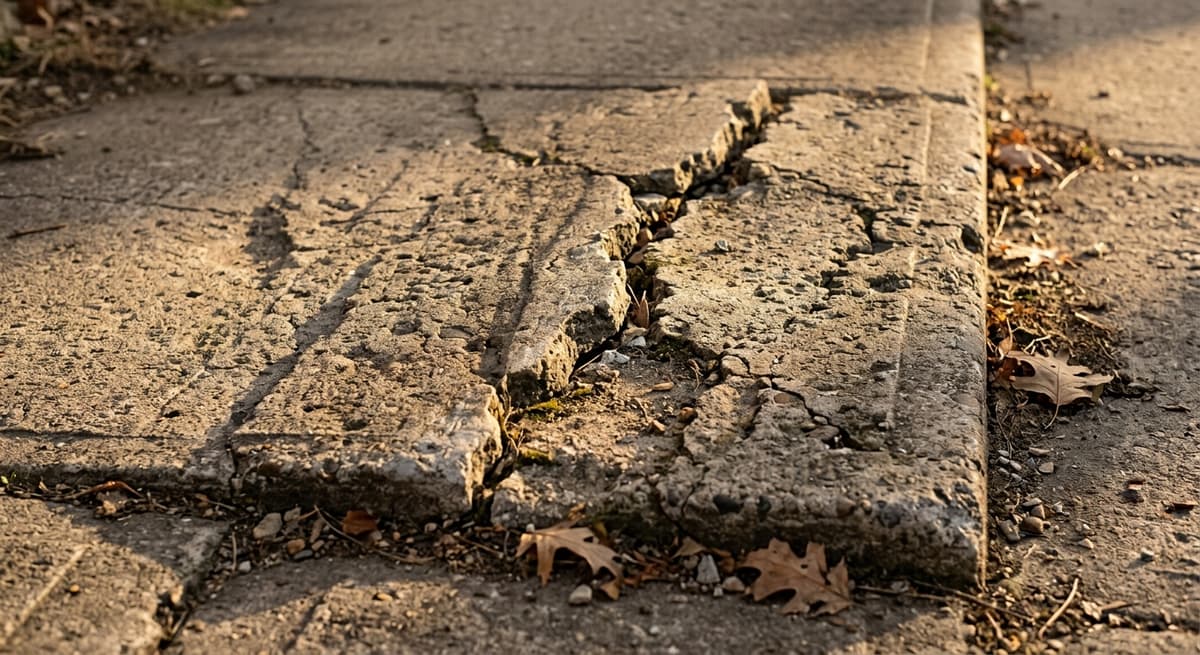
This approach tracks Restatement (Second) of Torts § 343A, which allows a property owner to remain liable for a known or obvious danger when the owner "should anticipate the harm despite such knowledge or obviousness." In Vermont, the jury evaluates whether the owner's failure to address an obvious hazard was reasonable, and any failure on the plaintiff's part to notice or avoid the obvious hazard is addressed through Vermont's comparative fault scheme (12 V.S.A. § 1036) rather than through a blanket no-duty rule.
In practice this means that even if you walked into a hazard you could have seen, your case is not automatically over. Your fault percentage will reduce your recovery, but you can still recover if the owner's fault was equal to or greater than yours.
Ice, snow, and natural accumulation in Vermont
Vermont has not adopted the natural-accumulation no-duty rule that some states use to shield property owners from liability when precipitation simply falls from the sky. Vermont courts have long held that a property owner must use reasonable diligence to keep premises in a reasonably safe condition, and that obligation extends to dangers created by ice and snow.
The leading authorities are Demag (unitary reasonable-care standard covering all premises conditions), McCormack v. State, 150 Vt. 443 (1988) (duty of reasonable diligence to maintain reasonably safe conditions), and Forcier v. Grand Union Stores, Inc., 128 Vt. 389 (1970) (owner must take reasonable care to discover dangerous conditions and make them safe or warn of them). Under these cases a Vermont owner cannot simply say the ice or snow was natural and walk away from liability.
Vermont has not formally adopted a storm-in-progress doctrine, though Vermont courts have suggested that performing ordinary plowing procedures during an active storm may satisfy the duty. Whether an owner's snow-and-ice response was reasonable is ordinarily a jury question. If the plaintiff slipped on ice she could clearly see, her awareness of the risk weighs in the comparative-fault calculation rather than defeating the owner's duty entirely.
How fault is shared: Vermont's negligence rule
Vermont follows modified comparative negligence under 12 V.S.A. § 1036. The statute bars recovery only when the plaintiff's negligence was "greater than" the causal total negligence of the defendant or defendants. Vermont is therefore a modified-comparative state with a 50% bar.
What this means in practice: if you were 30% at fault and the owner was 70% at fault, you recover 70% of your damages. If you were exactly 50% at fault and the owner was 50% at fault, you still recover; the statute bars you only when your share exceeds the defendant's. If you were 51% at fault, you receive nothing.
Because Vermont weighs the open-and-obvious nature of a hazard and the plaintiff's awareness of ice or snow within the comparative-fault analysis, those facts affect the damages you collect rather than eliminating your claim outright. The jury allocates percentages, and your attorney's job is to argue the owner's negligence was the dominant cause.
Deadlines: statute of limitations and government claims
The general personal injury statute of limitations in Vermont is 3 years (12 V.S.A. § 512). The clock starts running on the date of discovery: the date you knew or reasonably should have known you were injured and that the injury may have been caused by another's negligence. Missing the 3-year window bars your claim regardless of how strong it is on the merits.
Warning: 20-day notice deadline for town bridge and culvert claims. If your fall was caused by a defective town bridge or culvert, Vermont law imposes an extremely short pre-suit notice requirement. Under 19 V.S.A. §§ 985, 987-988, you must give written notice to one or more selectboard members of the town within just 20 days of the incident. The notice must be signed by the injured party and must state the time and place of the injury, the nature of the defect, and that you intend to seek compensation. Missing this 20-day window can permanently bar the claim. Municipal liability for bridge and culvert claims is also capped at $75,000 per incident (or the applicable insurance limits, if higher).
Claims against the STATE of Vermont follow different rules. The Vermont Tort Claims Act (12 V.S.A. ch. 189, § 5601) imposes no separate pre-suit notice requirement: the general 3-year personal injury limitations period applies. State liability is capped at $500,000 per person and $2,000,000 in the aggregate per occurrence.
For general premises liability falls on municipal sidewalks or public parks (not bridge/culvert claims), municipal immunity typically shields the town, making a direct state-law tort path through the VTCA the more viable route for government-property falls.
See Vermont's statute of limitations for personal injury claims for the full limitations landscape.
What a Vermont slip and fall claim is worth
Vermont does not cap compensatory damages in personal injury cases as a general matter. Economic damages include medical bills, lost wages, future medical care, and out-of-pocket costs, are recoverable in full. Non-economic damages for pain, suffering, emotional distress, loss of enjoyment of life, and permanent impairment are also compensable without a statutory cap in standard premises liability actions.

Any damages award is reduced by your percentage of comparative fault. A jury finding you 20% responsible on a $100,000 case reduces your recovery to $80,000. If your share exceeds the defendant's, you collect nothing.
The bridge/culvert exception caps the town's liability at $75,000 per incident regardless of actual damages. State claims under the VTCA are capped at $500,000 per person. Neither cap applies to claims against private landowners.
Settlement values vary widely based on the severity of injuries, the strength of the notice evidence, comparative fault arguments, and available insurance. Use the Vermont slip and fall settlement calculator to build a preliminary estimate based on your specific facts, and review the slip and fall hub for how Vermont's rules compare to neighboring states.
This article is general legal information, not legal advice. Premises liability law varies by state and changes, and case values depend on the specific facts. For advice about a specific fall, consult a licensed attorney in Vermont.
More Vermont Laws
Frequently Asked Questions
How do I prove a slip and fall in Vermont?
You must show the property owner had a duty of reasonable care, failed to meet it (because they created the hazard or had actual or constructive notice of it), that the breach caused your fall, and that you suffered damages. Vermont uses a single reasonable-care standard for all lawful visitors under Demag v. Better Power Equipment (2014 VT 78), so you do not need to prove you were a formal invitee.
Is Vermont an open-and-obvious state?
No. Vermont does not treat an open-and-obvious hazard as an automatic bar to recovery. After Demag, Vermont courts weigh the obviousness of a hazard in the overall reasonableness and foreseeability inquiry. If the owner should have anticipated that people would encounter the hazard despite its visibility, the claim survives. Your awareness of the hazard may increase your comparative fault percentage, but it does not eliminate the owner's duty.
Can I sue for falling on ice in Vermont?
Yes. Vermont has not adopted the natural-accumulation rule that shields owners from liability for ice and snow that simply fell from the sky. Under Forcier v. Grand Union Stores and McCormack v. State, Vermont owners must use reasonable diligence to address icy conditions. Whether the owner's response was reasonable is a jury question. Your own awareness of the ice may be factored into comparative fault.
How long do I have to file a slip and fall lawsuit in Vermont?
Three years from the date you discovered (or reasonably should have discovered) the injury, under 12 V.S.A. § 512. But if you fell because of a defective town bridge or culvert, you must give written notice to the selectboard within 20 days of the fall, which is far sooner than the lawsuit deadline. Missing that 20-day notice window can permanently bar the claim.
Can I recover if I was partly at fault for my fall?
Yes, as long as your fault was not GREATER THAN the defendant's. Vermont's modified comparative negligence rule (12 V.S.A. § 1036) allows recovery even at exactly 50% fault. Your damages are reduced by your fault percentage. You are barred only if your share exceeds the defendant's (51% or more).
What is the government notice deadline for slip and fall claims in Vermont?
It depends on the type of government property. Falls on defective town bridges or culverts require written notice to a selectboard member within 20 days of the incident (19 V.S.A. §§ 985, 987-988), which is one of the shortest municipal notice deadlines in the country, and missing it bars the claim. Claims against the STATE have no special pre-suit notice deadline and follow the 3-year personal injury statute of limitations.
How much is a Vermont slip and fall claim worth?
There is no general cap on compensatory damages in Vermont premises liability cases. Economic damages (medical bills, lost wages) and non-economic damages (pain and suffering) are both recoverable and reduced by your comparative fault percentage. Municipal claims for bridge/culvert falls are capped at $75,000; state claims under the Vermont Tort Claims Act are capped at $500,000 per person. Use the Vermont slip and fall settlement calculator to estimate your case value.
Injured in Vermont? Get a free case review from a personal-injury attorney
If someone else's negligence caused your injury, you may be owed compensation for medical bills, lost wages, and pain and suffering. Get a free, no-obligation review from a Vermont personal-injury attorney. Most work on contingency, so there is no upfront cost.
Sources and References
- 19 V.S.A. § 985 — Municipal bridge liability; 20-day written notice requirement(legislature.vermont.gov).gov
- 19 V.S.A. §§ 987-988 — Notice requirements and $75,000 municipal cap(legislature.vermont.gov).gov
- 12 V.S.A. § 1036 — Modified comparative negligence(legislature.vermont.gov).gov
- 12 V.S.A. § 512 — Three-year personal injury statute of limitations(legislature.vermont.gov).gov
- 12 V.S.A. § 5601 — Vermont Tort Claims Act(legislature.vermont.gov).gov
- Demag v. Better Power Equipment, Inc., 2014 VT 78, 197 Vt. 176, 102 A.3d 1101(vermontjudiciary.org).gov
- McCormack v. State, 150 Vt. 443 (1988)(legislature.vermont.gov).gov
- Forcier v. Grand Union Stores, Inc., 128 Vt. 389 (1970)(legislature.vermont.gov).gov