
Missouri
Missouri Slip and Fall Laws: Proving Premises Liability in the Show-Me State

To win a slip and fall claim in Missouri, you must prove the property owner was negligent, that they had actual or constructive notice of the hazard, and that their failure to remedy it caused your injury. Missouri follows pure comparative fault, so partial fault reduces but never bars recovery.
Proving a slip and fall claim in Missouri
Every Missouri slip and fall case is a premises liability claim grounded in negligence. To recover, you must establish four elements: the property owner owed you a duty of care, the premises contained a dangerous condition, the owner had actual or constructive notice of that condition and failed to remedy it, and the failure caused your injury and damages.
Missouri law recognizes different duties based on visitor status. Invitees (customers and business visitors) are owed the highest duty: the owner must use reasonable care to maintain the premises in a reasonably safe condition and must warn of hidden dangers known or discoverable through reasonable inspection. Licensees receive a lesser duty, and trespassers receive the least protection. Most commercial slip and fall claims involve invitees.
Notice is the pivotal issue in most cases. Actual notice means the owner knew of the hazard directly, for instance because an employee created it or a manager received a prior complaint. Constructive notice means the hazard existed long enough that a reasonably attentive owner should have discovered it through ordinary inspection and maintenance. Evidence such as the duration of the condition, the absence of inspection logs, or prior similar incidents can establish constructive notice.
For wet-floor and spill cases, Missouri courts focus on whether the owner had knowledge of an ongoing or recurring condition and whether they took reasonable precautions such as mopping, posting warnings, or fixing the source of the problem. A single isolated spill may be harder to attribute to the owner without evidence of prior notice.
The open-and-obvious doctrine in Missouri
Missouri does NOT treat an open-and-obvious hazard as an automatic complete bar to a premises liability claim. The Missouri Supreme Court addressed this directly in Harris v. Niehaus, 857 S.W.2d 222 (Mo. banc 1993), following Restatement (Second) of Torts § 343A. The court held that a possessor of land can still be liable for a known or obvious danger where the possessor should have anticipated that the harm would occur despite its obviousness.
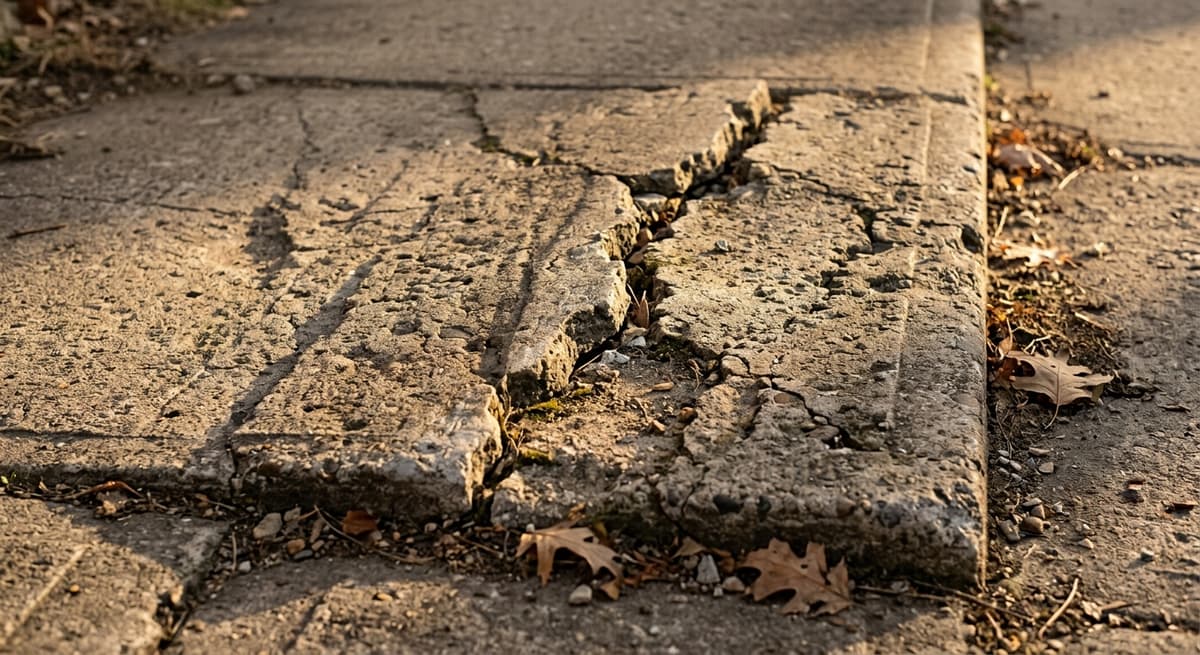
Under Missouri's approach, the obviousness of a condition serves two functions. First, it bears on whether the owner should have anticipated the harm, which is part of the duty analysis. Second, it goes to the plaintiff's own comparative fault, because a visitor who encounters an obvious hazard and fails to avoid it may share responsibility for the resulting injury. However, because Missouri applies pure comparative fault, that shared responsibility reduces recovery rather than wiping it out.
The older absolute open-and-obvious defense was effectively displaced after Missouri adopted pure comparative fault in Gustafson v. Benda, 661 S.W.2d 11 (Mo. banc 1983). A Missouri defendant cannot simply point to the visibility of a hazard and expect the claim to be dismissed. The jury weighs both the owner's negligence in allowing the dangerous condition to exist and the plaintiff's care in navigating it, then allocates fault accordingly.
Ice, snow, and natural accumulation in Missouri
Important: Missouri follows the "Massachusetts Rule," which means a landowner generally owes NO duty to remove ice or snow that has accumulated naturally and reflects conditions general to the community. A fall on naturally accumulated snow or ice will typically not support a premises liability claim against the property owner.
It is worth noting that Missouri continues to apply this rule even though Massachusetts itself abandoned the natural/unnatural accumulation distinction in 2010. Missouri courts have maintained the no-duty rule under Willis v. Springfield General Osteopathic Hospital, 804 S.W.2d 416 (Mo. App. S.D. 1991), and Maschoff v. Koedding, 439 S.W.2d 234 (Mo. App. 1969). The doctrine remains good law in Missouri.
Liability for ice and snow falls does arise in three recognized exceptions. First, the owner created an unnatural accumulation, for example by piling snow so that meltwater refreezes on a walkway and creates a hidden ice sheet. Second, the owner negligently removed snow or ice and in doing so created a new hazard, such as leaving behind black ice after partial clearing. Third, the owner voluntarily assumed a duty to clear the property, either by agreement or by a consistent course of conduct that caused others to rely on the clearing. If one of these exceptions applies, the claim proceeds under ordinary negligence principles.
If you fell on ice or snow in Missouri, the first question your attorney will ask is whether the accumulation was natural or whether the owner's actions altered or worsened the condition. That distinction is the threshold issue under Missouri's Massachusetts Rule.
How fault is shared: Missouri's negligence rule
Missouri follows pure comparative fault, adopted by the Missouri Supreme Court in Gustafson v. Benda, 661 S.W.2d 11 (Mo. banc 1983), which replaced the old contributory negligence bar that previously could defeat any claim. Under pure comparative fault, a plaintiff's recovery is reduced by their own percentage of fault but is never entirely barred, regardless of how high their fault percentage is.

A plaintiff who is 10% at fault recovers 90% of damages. A plaintiff who is 50% at fault recovers 50%. Even a plaintiff found 99% at fault can still recover 1% of their total damages. Missouri is not among the four states and DC that use pure contributory negligence, where even 1% of plaintiff fault eliminates recovery entirely.
For products liability, the pure comparative fault approach is codified at RSMo 537.765, which expressly abolishes contributory fault as a complete bar and reduces compensatory damages proportionately. Missouri's dog-bite statute, RSMo 273.036, similarly reduces rather than bars damages based on the injured party's fault percentage.
In a slip and fall case, evidence of the plaintiff's inattentiveness, choice of footwear, disregard of visible warning signs, or distraction by a phone all go to fault allocation. These factors can reduce the award substantially, but they cannot eliminate it under Missouri's pure comparative system.
Deadlines: statute of limitations and government claims
The deadline to file a personal injury lawsuit in Missouri is 5 years from the date of the accident, under Mo. Rev. Stat. § 516.120(4), which covers "any other injury to the person or rights of another, not arising on contract." This 5-year period is longer than in most states and applies to standard negligence claims including premises liability, auto accidents, and dog bites. Note that wrongful death carries a shorter 3-year period under RSMo 537.100.
For more detail on how Missouri's limitations periods work across different case types, see the Missouri statute of limitations page.
Falls on government property require a separate and much faster step before you can file suit. Mo. Rev. Stat. § 82.210 applies to cities of 100,000 or more and requires written notice to the mayor within 90 days of the occurrence, before any suit may be maintained against the city. The notice must state the place, time, character, and circumstances of the injury and that the claimant intends to seek damages. This 90-day municipal notice deadline can extinguish a claim against the city long before the 5-year filing deadline arrives.
The Missouri Tort Claims Act (RSMo 537.600.1(2)) waives sovereign immunity for dangerous conditions of public property but does not include a separate pre-suit notice deadline. For injuries on state property, the 5-year period generally applies. For city streets, sidewalks, thoroughfares, boulevards, or bridges within a covered municipality, the 90-day § 82.210 notice requirement is the critical early deadline to watch.
What a Missouri slip and fall claim is worth
A Missouri slip and fall settlement or verdict can include economic damages and non-economic damages. Economic damages cover medical bills, future treatment costs, lost wages, and diminished earning capacity. Non-economic damages cover pain and suffering, loss of enjoyment of life, emotional distress, and permanent impairment.

Missouri does not impose a general cap on non-economic damages in personal injury cases. The legislature has attempted caps in certain medical malpractice contexts, but standard premises liability claims are not subject to a statutory non-economic ceiling. Recovery is limited by the facts of the case, the extent of the injuries, and the plaintiff's own fault percentage.
Your recovery is reduced by your own fault under Missouri's pure comparative fault rule. If your total damages are $200,000 and you were 25% at fault, you recover $150,000. There is no threshold percentage at which fault eliminates recovery entirely in Missouri.
Cases involving fractures, traumatic brain injuries, spinal damage, surgeries, or permanent impairment tend to carry higher settlement values. Cases where the owner lacked notice of the hazard, where injuries were minor, or where the plaintiff's comparative fault is high produce lower outcomes. The natural-accumulation rule is also a practical barrier in winter-weather falls: if the ice or snow was purely natural and no exception applies, the claim may not survive at all.
Use the Missouri slip and fall settlement calculator to model your damages before speaking with an attorney. Return to the Slip and Fall Laws hub for comparisons across all 50 states.
This article is general legal information, not legal advice. Premises liability law varies by state and changes, and case values depend on the specific facts. For advice about a specific fall, consult a licensed attorney in Missouri.
More Missouri Laws
Frequently Asked Questions
How do I prove a slip and fall in Missouri?
You must establish four elements: the owner owed you a duty of care, the premises had a dangerous condition, the owner had actual or constructive notice of that condition and failed to fix it, and that failure caused your injury. Constructive notice means the hazard existed long enough that a reasonably attentive owner should have found it through ordinary inspection. Duration of the condition, lack of maintenance records, and prior complaints are common ways to show notice.
Is Missouri an open-and-obvious state?
Not in the sense that an obvious hazard automatically defeats your claim. Under Harris v. Niehaus, 857 S.W.2d 222 (Mo. banc 1993), and Restatement (Second) § 343A, a landowner can still be liable for an obvious danger when the harm should have been anticipated despite its obviousness. The hazard's visibility goes to your comparative fault percentage, reducing your recovery, but it does not bar the claim entirely under Missouri's pure comparative fault system.
Can I sue for falling on ice in Missouri?
Generally no, if the ice accumulated naturally. Missouri follows the Massachusetts Rule, which means landowners owe no duty to remove naturally accumulated ice or snow. You can still recover if: (1) the owner created an unnatural accumulation such as meltwater refreezing from a snow pile; (2) the owner negligently removed snow and in doing so created a new hazard such as black ice; or (3) the owner voluntarily assumed a duty to clear the property through an agreement or consistent practice. If none of these exceptions applies, a natural-accumulation fall is typically not actionable in Missouri.
How long do I have to file a slip and fall lawsuit in Missouri?
Five years from the date of the accident under Mo. Rev. Stat. § 516.120(4). However, if your fall occurred on a city street, sidewalk, thoroughfare, or bridge in a Missouri municipality of 100,000 or more, you must also deliver written notice to the mayor within 90 days of the incident under Mo. Rev. Stat. § 82.210 before any suit can proceed. Missing the 90-day municipal notice deadline can destroy your claim against the city even though the 5-year filing window remains open.
Can I recover if I was partly at fault for my fall?
Yes, at any fault level. Missouri uses pure comparative fault from Gustafson v. Benda, 661 S.W.2d 11 (Mo. banc 1983). Your damages are reduced by your own percentage of fault, but there is no cutoff that eliminates recovery. Even if a jury finds you 80% at fault, you still recover 20% of your total damages. Missouri is not one of the pure-contributory states where even 1% of plaintiff fault bars all recovery.
How much is a Missouri slip and fall claim worth?
Value depends on your injuries, medical expenses, lost income, and your share of fault. Missouri does not cap non-economic damages in standard personal injury cases, so pain and suffering awards are limited only by the facts. Your recovery is reduced proportionately by your comparative fault percentage. Use the Missouri slip and fall settlement calculator to model an estimate, then consult a licensed Missouri attorney for a case-specific evaluation.
What happens if I fell on a city sidewalk or public property in Missouri?
For falls on city streets, sidewalks, thoroughfares, or bridges in a Missouri municipality of 100,000 or more, you must deliver written notice to the mayor within 90 days of the occurrence under Mo. Rev. Stat. § 82.210, stating the place, time, character, and circumstances of the injury. This notice is required before suit may be maintained against the city. The Missouri Tort Claims Act (RSMo 537.600) waives sovereign immunity for dangerous conditions of public property, but the 90-day city-notice rule imposes a hard early deadline separate from the 5-year limitations period.
Injured in Missouri? Get a free case review from a personal-injury attorney
If someone else's negligence caused your injury, you may be owed compensation for medical bills, lost wages, and pain and suffering. Get a free, no-obligation review from a Missouri personal-injury attorney. Most work on contingency, so there is no upfront cost.
Sources and References
- Mo. Rev. Stat. § 82.210 (Written notice to mayor within 90 days for city injury claims)(revisor.mo.gov).gov
- Mo. Rev. Stat. § 516.120 (5-year personal injury statute of limitations)(revisor.mo.gov).gov
- Mo. Rev. Stat. § 537.600 (Missouri Tort Claims Act, dangerous conditions of public property)(revisor.mo.gov).gov
- Gustafson v. Benda, 661 S.W.2d 11 (Mo. banc 1983) (pure comparative fault)(revisor.mo.gov).gov
- Harris v. Niehaus, 857 S.W.2d 222 (Mo. banc 1993) (open-and-obvious / Restatement (Second) § 343A)(revisor.mo.gov).gov
- Willis v. Springfield Gen. Osteopathic Hosp., 804 S.W.2d 416 (Mo. App. S.D. 1991) (natural-accumulation / Massachusetts Rule)(revisor.mo.gov).gov
- Maschoff v. Koedding, 439 S.W.2d 234 (Mo. App. 1969) (natural-accumulation / Massachusetts Rule)(revisor.mo.gov).gov