
Alaska
Alaska Nursing Home Camera Laws: No Statute, What Applies
Independently fact-checked against primary sources (last audited August 14, 2026). · 4 primary sources cited on this page. How we verify our legal content
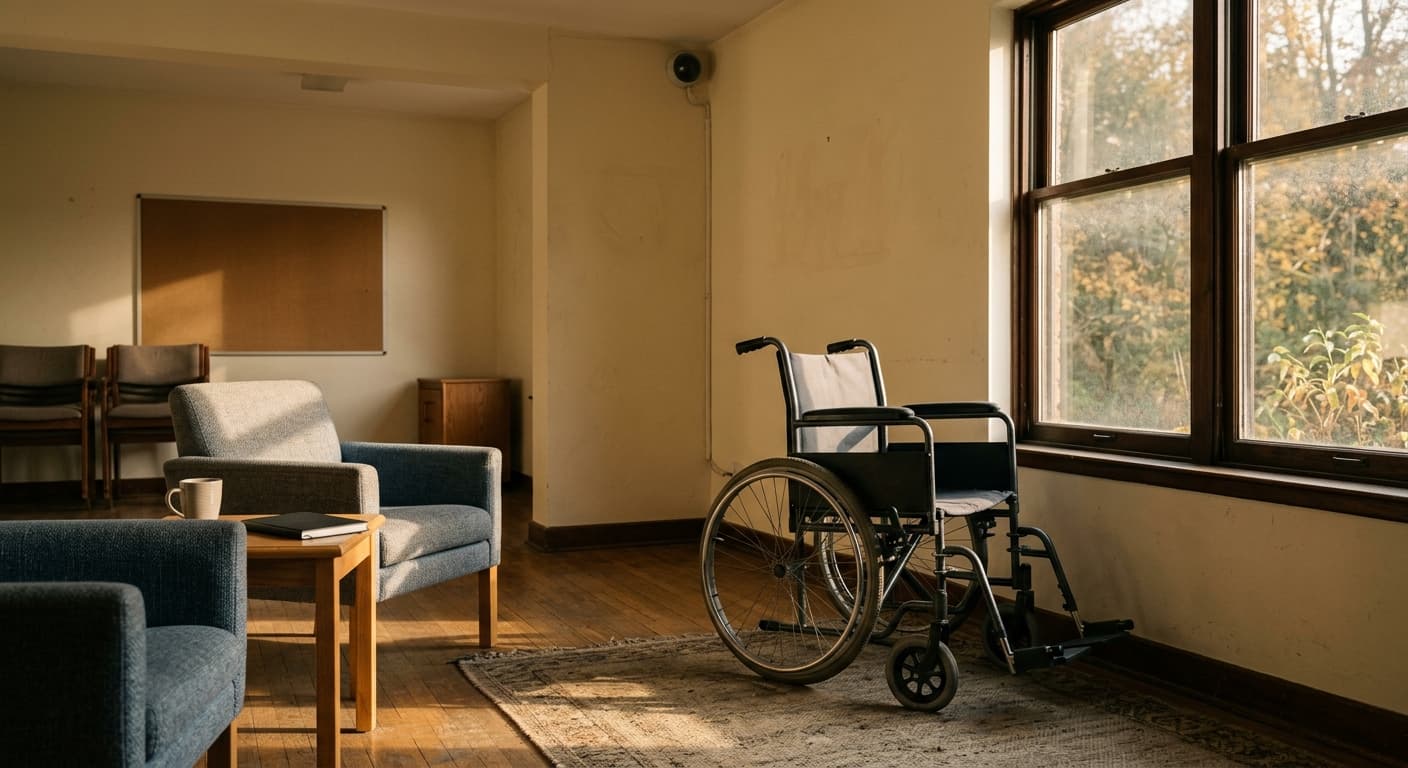
Alaska has no statute or regulation addressing cameras or electronic monitoring in nursing home or assisted living resident rooms. This page covers what current Alaska law does and does not say, the federal resident-rights rule that still binds certified nursing facilities, the state's recording-consent rule, and practical guidance for Alaska families.
This page is part of our Nursing Home Camera Laws hub, which compares all 50 states, and our national Nursing Home Camera Laws guide covering the states that do have an enacted statute.
Alaska Has No Nursing Home Camera Law
Alaska has not enacted a statute addressing electronic monitoring or cameras in nursing home or assisted living resident rooms. The state's residents' rights framework for long-term care sits in two places, and neither one mentions monitoring devices. AS 47.33, the Assisted Living Homes chapter, carries a detailed residents' rights list covering privacy in the room and in communications. For nursing facilities, the equivalent list is a regulation rather than a statute: 7 AAC 12.890, Rights of patients, clients, and residents, which guarantees private association and communication, confidential telephone access, unopened mail, freedom from unnecessary restraint, and confidentiality of medical records. Both were reviewed in full, and neither mentions cameras, video recording, audio recording, electronic monitoring, or surveillance anywhere in the text.
One chapter sounds relevant and is not. AS 47.45 is titled Older Alaskans and Long-Term Care Facility Residents, but only its title concerns long-term care residents. The chapter creates benefit programs, not resident rights: its sections cover the Alaska longevity bonus, the senior benefits payment program, and the long-term care allowance. There are no residents' rights provisions in it and nothing about cameras.
The state's administrative rules for these facilities, 7 AAC 12 (covering nursing facilities) and 7 AAC 75 (assisted living homes), were likewise reviewed in full and contain no monitoring-device provision.
The Federal Rule That Still Applies
Alaska's silence does not leave facility policy entirely unconstrained. Every nursing facility certified for Medicare or Medicaid, which is nearly every nursing home in the state, is bound by the federal resident-rights rule at 42 CFR 483.10. Two of its provisions bear directly on cameras. Section 483.10(e)(2) gives a resident the right to retain and use personal possessions, including furnishings and clothing, as space permits, unless doing so would infringe upon the rights or health and safety of other residents. Section 483.10(h) gives the resident a right to personal privacy, which the rule defines to include accommodations, medical treatment, written and telephone communications, personal care, and visits.
Neither provision creates an express right to install a camera, and they cut in both directions: the same personal-privacy right belongs to a roommate who never agreed to be recorded, and the possessions right is expressly limited where it would infringe on other residents. But they are a federal floor that a certified facility's camera policy has to work within, which is different from saying the question is left wholly to the admission agreement. Assisted living homes that are not Medicare or Medicaid certified fall outside 42 CFR 483.10 and are governed by AS 47.33 and 7 AAC 75 alone.
Subject to that federal floor, whether a resident can have a camera in an Alaska long-term care facility is decided in the first instance by the individual facility's admission agreement and policy, because no Alaska law grants or bars the right.
Audio vs. Video: Alaska's General Recording Law Still Applies
Even without a facility-specific statute, Alaska's general eavesdropping law governs any camera or audio device placed in a resident's room. Alaska is a one-party consent state under AS 42.20.310: it is unlawful to use an eavesdropping device to hear or record an oral conversation without the consent of at least one party to it, meaning a resident who is a party to their own conversation can generally record it.
That framework covers a resident, or someone recording with the resident's consent, capturing their own conversations. It is less clear where a camera with audio also picks up conversations the resident is not part of, such as staff talking among themselves or a roommate speaking with a visitor. Neither of those parties has consented, which can raise separate exposure under Alaska's eavesdropping statute.
A video-only device sidesteps that particular problem, since Alaska's eavesdropping law, like the federal Wiretap Act, reaches oral conversations and not silent video. It does not make the camera risk-free. Under AS 11.61.123, indecent viewing or production of a picture, a person commits a crime by knowingly producing a picture of the private exposure of another person's genitals, anus, or female breast, and the statute defines "picture" to expressly include electronic and digital formats. A camera covering a resident's bed captures exactly that during bathing, toileting, incontinence care, and dressing, and it captures a roommate and staff along with the resident. The statute does provide an affirmative defense, but it is narrow: under AS 11.61.123(d) the recording must be conducted as a security surveillance system, notice of the viewing or production must be posted, and any viewing or use of the pictures produced must be only in the interest of crime prevention or prosecution. A camera installed quietly by a family, with nothing posted, does not meet those conditions. Producing such a picture of an adult is a class C felony.
For the general mechanics of Alaska's one-party consent rule, see our Alaska recording law guide and its security camera page.
What This Means in Practice
Because Alaska has no statute either granting or barring a resident's right to a camera, the facility's admission agreement controls the question in the first instance, within the federal floor described above. Before installing any device:
- Ask the administrator directly and get any permission in writing. Some Alaska facilities allow family-installed cameras under their own policy; others prohibit them.
- Address a shared room separately, since Alaska has no statutory roommate-consent framework; a facility that permits cameras will typically set its own rule, which may mean seeking the roommate's agreement or requesting a private room.
- Treat a video-only device as narrowing the problem, not removing it. Dropping audio keeps you clear of AS 42.20.310, but a camera that can capture a resident or a roommate undressed still raises AS 11.61.123 exposure unless notice of the recording is posted and the footage is used only for crime prevention or prosecution.
- Post notice and keep the footage for its stated purpose. Posted notice and crime-prevention use are two of the three conditions of the AS 11.61.123(d) defense, and posting also makes staff and a roommate aware that they are being recorded.
- An undisclosed camera carries real practical risk. A facility that discovers it may treat it as a violation of the admission agreement; any audio it captures from a conversation no party consented to could expose the person who installed it under AS 42.20.310; and images of private exposure recorded without posted notice could expose that person under AS 11.61.123.
If You Suspect Abuse or Neglect
Camera footage, whether from a facility system or a family device installed with permission, is sometimes the evidence that first reveals abuse or neglect. If footage or another source raises a genuine concern about how a resident is being treated, that concern may support a legal claim separate from whether the camera itself was properly authorized.

Harmed by a product or exposure? Speak with an attorney about your options
If you or a loved one may have been harmed, you can speak with an attorney about your legal options at no cost. Whether you have a claim depends on the specific facts. This is attorney advertising, not a guarantee that you qualify or of any particular outcome.
Reporting a Concern: The Alaska Long-Term Care Ombudsman
Alaska residents, families, and staff can raise complaints about facility policy, retaliation, or suspected abuse or neglect with the Alaska Office of Long Term Care Ombudsman. Under the federal Older Americans Act, the program covers assisted living residents as well as nursing home residents, regardless of whether Alaska has a camera statute.
Information last verified on 2026-08-31, drawn from AS 47.33, AS 42.20.310, AS 11.61.123, 7 AAC 12 including 7 AAC 12.890, 7 AAC 75, and 42 CFR 483.10. This article has not yet been reviewed by a licensed lawyer and is not legal advice.
Related Resources
- Nursing Home Camera Laws by State
- Nursing Home Camera Laws: 50-State Comparison
- Alaska Recording Laws
- Nursing Home Abuse & Neglect Claims
- Alaska Power of Attorney Laws
Last updated: 2026-08-31.
Frequently Asked Questions
Is it legal to put a camera in a nursing home room in Alaska?
Alaska has no statute either granting or barring this right, so the facility's admission agreement controls in the first instance. A Medicare or Medicaid certified nursing facility must still honor the federal resident-rights rule at 42 CFR 483.10, and any device is still subject to Alaska's recording and privacy statutes.
Does Alaska have a nursing home camera law?
No. Alaska has not enacted a statute on electronic monitoring or cameras in nursing homes or assisted living. Bill status changes every session, so check the Alaska State Legislature's bill search for current activity before relying on the absence of a proposal.
Can a nursing home refuse to allow a camera in Alaska?
Generally yes, subject to a federal floor. Because no Alaska statute grants residents a right to install a camera, a facility sets camera policy through its own admission agreement. A Medicare or Medicaid certified nursing facility must still honor 42 CFR 483.10, which protects a resident's personal privacy and the right to retain and use personal possessions, so its policy cannot be applied in a way that ignores those federal rights.
Is a video-only camera legal in an Alaska nursing home?
Video without audio avoids Alaska's eavesdropping statute, AS 42.20.310, but it is not automatically safe. AS 11.61.123 makes it a crime to knowingly produce a picture of another person's private exposure, and the only defense available to a surveillance device requires that notice of the recording be posted and that the footage be used only for crime prevention or prosecution.
Is Alaska a one-party or two-party consent state for recording?
Alaska is a one-party consent state under AS 42.20.310. A person who is a party to a conversation, or has the consent of at least one party, may lawfully record it.
Does Alaska's assisted living law address cameras?
No. AS 47.33, Alaska's Assisted Living Homes chapter, sets out a detailed residents' rights list, including privacy protections, but does not mention cameras, video recording, or electronic monitoring anywhere in its text.
Who do I contact if I suspect abuse at an Alaska nursing home?
The Alaska Office of Long Term Care Ombudsman investigates complaints about nursing home and assisted living residents' care and rights at no cost. Suspected abuse can also be reported to Alaska Adult Protective Services or local law enforcement.
Updates
Corrected a mischaracterisation of AS 47.45, which is a senior-benefits chapter rather than a residents-rights chapter, added the federal resident-rights rule at 42 CFR 483.10 and the criminal exposure a video-only camera can create under AS 11.61.123, and removed an unsourced claim about recent Alaska legislative sessions.
Independently fact-checked against the cited primary sources
The Law Behind This Article
This article rests on the statutory provisions below, held in our own legal record and retrieved from the official source. Tap a section to read the operative text.
Alaska Statutes, Title 42. Public Utilities and Carriers and Energy Programs, Chapter 20. Telegraph and Telephone Systems and Cable Lines; Eavesdropping
§ 42.20.310EavesdroppingIn forcecited in 21 of our articles
(a) A person may not (1) use an eavesdropping device to hear or record all or any part of an oral conversation without the consent of a party to the conversation; (2) use or divulge any information which the person knows or reasonably should know was obtained through the illegal use of an eavesdropping device for personal benefit or another's benefit; (3) publish the existence, contents, substance, purport, effect, or meaning of any conversation the person has heard through the illegal use of an eavesdropping device; (4) divulge, or publish the existence, contents, substance, purport, effect, or meaning of any conversation the person has become acquainted with after the person knows or reasonably should know that the conversation and the information contained in the conversation was obtained through the illegal use of an eavesdropping device. (b) In this section eavesdropping device means any device capable of being used to hear or record oral conversation whether the conversation is conducted in person, by telephone, or by any other means; provided that this definition does not include devices used for the restoration of the deaf or hard-of-hearing to normal or partial hearing.
Official text (excerpt) · last checked 2026-09-23 · Read the full text in our law library · Verify at akleg.gov
Also relied on in: Alaska Recording Laws (2026): One-Party Consent Rules, Alaska Audio Recording Laws: One-Party Consent Rules and Penalties (2026), Alaska Security Camera Laws: Home, Business, and Surveillance Rules (2026)
Alaska Statutes, Title 11. Criminal Law, Chapter 61. Offenses Against Public Order
§ 11.61.123Indecent viewing or production of a pictureIn forcecited in 19 of our articles
(a) A person commits the crime of indecent viewing or production of a picture if the person knowingly (1) views, or views a picture of, the private exposure of the genitals, anus, or female breast of another person; or (2) produces a picture of the private exposure of the genitals, anus, or female breast of another person. (b) Each viewing of a person, and each production of a picture of a person, whose genitals, anus, or female breast are viewed or are shown in a picture constitutes a separate violation of this section. (c) This section does not apply to the viewing or production of a picture conducted by a law enforcement agency for a law enforcement purpose. (d) In a prosecution under this section, it is an affirmative defense that the viewing or production of a picture was conducted as a security surveillance system, notice of the viewing or production was posted, and any viewing or use of pictures produced is done only in the interest of crime prevention or prosecution.
Official text (excerpt) · last checked 2026-08-31 · Read the full text in our law library · Verify at akleg.gov
Cited in 3 court opinions in our collectionLatest citing opinion in our collection: 2015
Opinions citing this section in our collection:
- Knutsen v. State (Court of Appeals of Alaska 2004, 101 P.3d 1065)“…eumstance that makes the defendant's conduct criminal under AS 11.61.123(a), we interpret AS 11.61.123(a) to mea…”
- Faye H. v. James B. (Alaska Supreme Court 2015, 348 P.3d 876)“…(1), .220(a)(1)(c), .436(a)(2). 4 See AS 11.61.123(a)(2). 5 See AS 1…”
- United States v. Moreland (Court of Appeals for the Fifth Circuit 2011, 665 F.3d 137)“…nority of states criminalize viewing child pornography. See Alaska Stat. § 11.61.123 (2009); Ark. Code Ann. § 5-27-602 (2010…”
Identified automatically from the court opinions citing this section — not a ranking of which case controls.
Also relied on in: Alaska Landlord-Tenant Recording Laws: Cameras, Privacy Rights, and Disputes (2026), Alaska Workplace Recording Laws: Employee and Employer Rights (2026), Alaska Video Recording Laws: Surveillance, Filming, and Consent Rules (2026)
Code of Federal Regulations Title 42
§ 483.10Resident rights.In forcecited in 19 of our articles
(a) Residents rights. The resident has a right to a dignified existence, self-determination, and communication with and access to persons and services inside and outside the facility, including those specified in this section. (1) A facility must treat each resident with respect and dignity and care for each resident in a manner and in an environment that promotes maintenance or enhancement of his or her quality of life, recognizing each resident's individuality. The facility must protect and promote the rights of the resident. (2) The facility must provide equal access to quality care regardless of diagnosis, severity of condition, or payment source. A facility must establish and maintain identical policies and practices regarding transfer, discharge, and the provision of services under the State plan for all residents regardless of payment source. (b) Exercise of rights. The resident has the right to exercise his or her rights as a resident of the facility and as a citizen or resident of the United States.
Official text (excerpt) · last checked 2026-07-28 · Read the full text in our law library · Verify at ecfr.gov
Cited in 85 court opinions in our collectionLatest citing opinion in our collection: 2026
In the courts (editorial summary, independently checked):Courts reviewing CMS penalties have applied the notice duty then codified at section 483.10(b)(11). Claiborne-Hughes Health Center v. Sebelius (2010) upheld noncompliance where a facility did not promptly consult the physician or notify family after a resident's decline; Senior Rehabilitation (2010) sustained a similar finding.
Opinions citing this section in our collection:
- Roudachevski v. All-American Care Centers, Inc. (Court of Appeals for the Eighth Circuit 2011, 648 F.3d 701)✓A doctor cut off from his nursing home patients sought an injunction, arguing residents' right under Section 483.10(d)(1) to choose a physician made the public interest favor him; the Eighth Circuit affirmed the denial, finding that interest not presently ascertainable.
- CLAIBORNE-HUGHES HEALTH CENTER v. Sebelius (Court of Appeals for the Sixth Circuit 2010, 609 F.3d 839)✓A resident's food intake fell sharply for three weeks and he lost 18.5 pounds before the nursing home called his doctor or family; the Sixth Circuit upheld findings that it violated Section 483.10(b)(11)'s immediate-notification duty and that the lapse was immediate jeopardy.
- Gray Panthers Advocacy Committee v. Louis W. Sullivan, M.D., Secretary, Department of Health and Human Services (Court of Appeals for the D.C. Circuit 1991, 936 F.2d 1284)“…how to apply for and use Medicare and Medicaid benefits.” 42 C.F.R. § 483.10 (b)(9) (1990). On the topic of property…”
Identified automatically from the court opinions citing this section — not a ranking of which case controls.
Also relied on in: Alabama Nursing Home Camera Laws: No Statute, What Applies, Colorado Nursing Home Camera Laws: No Statute, What Applies, Massachusetts Nursing Home Camera Laws: All-Party Consent Risks
Search our full record of US law — 2.1 million sections, every state + federal →
Sources and References
- AS 47.33, Assisted Living Homes (Alaska Statutes)(akleg.gov).gov
- AS 42.20.310, Eavesdropping (Alaska Statutes)(akleg.gov).gov
- 7 AAC 75, Assisted Living Homes (Alaska Administrative Code)(akleg.gov).gov
- Alaska Office of Long Term Care Ombudsman(akoltco.org).gov
- 42 CFR § 483.10, Nursing home resident rights (federal)(law.cornell.edu)
- AS 11.61.123, Indecent viewing or production of a picture (Alaska Statutes)(akleg.gov)
- 7 AAC 12.890, Rights of patients, clients, and residents (Alaska Administrative Code)(law.cornell.edu)