
Kentucky
KCDPA Consumer Rights: Kentucky Privacy Rights Guide
Independently fact-checked against primary sources (last audited August 14, 2026). · Reviewed by the RecordingLaw editorial team. · Law checked current as of August 14, 2026. · 8 primary sources cited on this page. How we verify our legal content
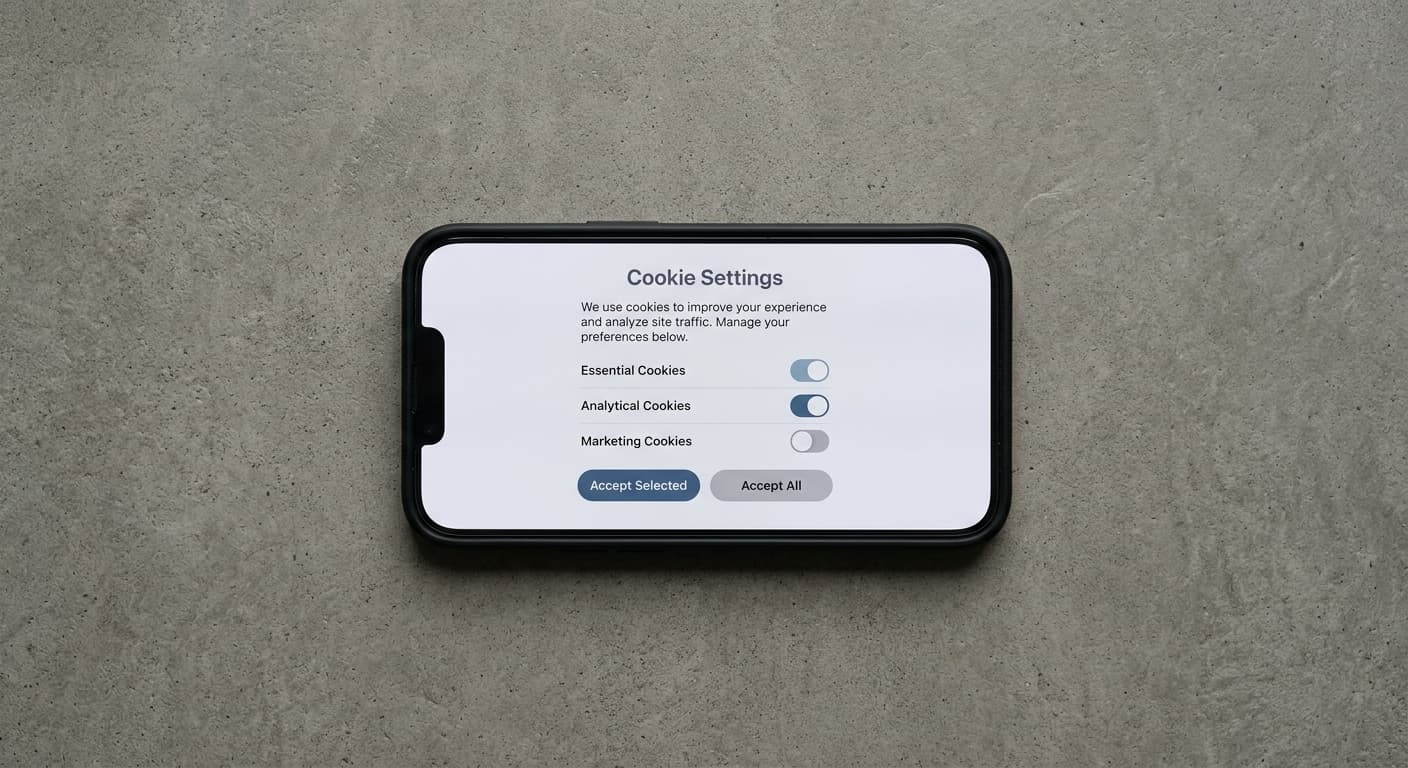
Under the Kentucky Consumer Data Protection Act (KCDPA), KRS 367.3615, Kentucky residents have the right to confirm and access their personal data, correct inaccuracies, delete their data, obtain a portable copy, and opt out of targeted advertising, the sale of personal data, and profiling that produces legal or similarly significant effects. A covered controller must respond to a verified request without undue delay, and in all cases within 45 days.
As of 2026, these rights are enforced solely by the Kentucky Attorney General under KRS 367.3627; there is no private right of action. If a controller denies a request, KRS 367.3615(4) gives the consumer an internal appeal and a path to complain to the Attorney General's Office of Data Privacy.
Jurisdiction scope: This covers Kentucky's Kentucky Consumer Data Protection Act (KRS 367.3611 to 367.3629). It is general legal information, not legal advice.
The five core rights under the KCDPA
KRS 367.3615(2) sets out the rights a covered controller must honor when it receives an authenticated consumer request. The structure tracks Virginia's law closely, so the rights mirror the now-standard state privacy package.
The first right is to confirm and access. A consumer can ask a controller to confirm whether it is processing the consumer's personal data and to access that data, unless doing so would require the controller to reveal a trade secret.
The second right is correction. A consumer can ask the controller to correct inaccuracies in personal data, taking into account the nature of the data and the purposes of processing. The third right is deletion: a consumer can ask the controller to delete personal data provided by or obtained about the consumer.
The fourth right is portability. A consumer can obtain a copy of personal data they previously provided, in a portable and, where technically feasible, readily usable format that lets them transmit the data to another controller without hindrance. The fifth right is the opt-out, covered separately below.
The opt-out right: three processing activities
The opt-out right under KRS 367.3615(2)(e) is the most actively used right in practice. It lets a consumer opt out of three distinct processing activities, and a controller must stop each one on request.
The first is targeted advertising. Under KRS 367.3611, that means showing ads selected based on personal data obtained from the consumer's activities across nonaffiliated websites or applications over time. First-party and contextual advertising are excluded.
The second is the sale of personal data, which KRS 367.3611 defines as exchanging personal data for monetary consideration to a third party. Kentucky's definition is the narrower "monetary consideration" version, not the broader "monetary or other valuable consideration" standard some states use. Alongside these opt-out rights, the KCDPA also requires controllers to obtain your opt-in consent before processing sensitive data at all, under KRS 367.3617(1)(e).
The third is profiling in furtherance of decisions that produce legal or similarly significant effects, such as decisions about lending, housing, insurance, education, employment, health care, or access to basic necessities. A controller that sells data or runs targeted advertising must clearly disclose that activity and the way to opt out under KRS 367.3617(4).
The 45-day response deadline
KRS 367.3615(3)(a) sets the response clock. A controller must act on a consumer request without undue delay and in all cases within 45 days of receiving it.
The controller may extend the response period once, by an additional 45 days, when reasonably necessary given the complexity and number of requests. To use the extension, the controller must tell the consumer within the first 45 days, along with the reason for the delay.
If a controller declines to act on a request, KRS 367.3615(3)(b) requires it to tell the consumer within the same 45 days, with the justification and instructions on how to appeal. Information must be provided free of charge up to twice annually per consumer under KRS 367.3615(3)(c); only excessive, repetitive, technically infeasible, or manifestly unfounded requests can trigger a reasonable fee or refusal, and the controller bears the burden of proving the request fits that category.
Authentication and the no-new-account rule
A controller only has to honor a request it can authenticate. KRS 367.3615(3)(d) provides that if a controller cannot authenticate a request using commercially reasonable efforts, it need not comply and may ask the consumer for additional information reasonably necessary to verify identity.
That said, the KCDPA limits how far a controller can push. Under KRS 367.3617(5), a controller cannot require a consumer to create a new account in order to exercise rights, although it may require the consumer to use an existing account.
The act also protects consumers who do not have an account or whose data cannot be tied to them. KRS 367.3623 clarifies that a controller is not required to re-identify de-identified or pseudonymous data, or to retain data in identifiable form, just to honor a request. The rights attach to data the controller actually holds in identifiable form.

The appeal process
The KCDPA builds in a two-step remedy. If a controller refuses to act, the consumer can appeal that refusal, and only after that can the matter reach the Attorney General.
Under KRS 367.3615(4), a controller must establish a conspicuous appeal process similar to the way consumers submit requests. Within 60 days of receiving an appeal, the controller must tell the consumer in writing of any action taken or not taken, with a written explanation of the reasons.
If the appeal is denied, the controller must give the consumer an online mechanism, if available, or another method to contact the Attorney General and submit a complaint. The Kentucky Attorney General's Office of Data Privacy operates that complaint intake, so a denied appeal is the gateway to state enforcement.
No private lawsuits: how rights are actually enforced
The KCDPA gives consumers rights but not a courtroom. KRS 367.3627(4) states that nothing in the act provides the basis for, or gives rise to, a private right of action. A consumer cannot sue a controller directly for a violation.
Enforcement runs exclusively through the Attorney General under KRS 367.3627(1). The Attorney General investigates, issues notices, and brings actions in the name of the Commonwealth, with civil penalties up to $7,500 per violation.
Before suing, the Attorney General must give a 30-day cure notice under KRS 367.3627(2). That cure period is permanent, with no sunset date. The practical takeaway for consumers is that the appeal-then-complaint path is the real avenue: file the request, appeal a denial, and escalate to the Office of Data Privacy if the controller will not comply. The KCDPA compliance checklist guide covers the business side of responding to these requests.
| Right | KCDPA section | Response window |
|---|---|---|
| Confirm and access | KRS 367.3615(2)(a) | 45 days (one 45-day extension, available for every right in this table) |
| Correct inaccuracies | KRS 367.3615(2)(b) | 45 days |
| Delete personal data | KRS 367.3615(2)(c) | 45 days |
| Data portability | KRS 367.3615(2)(d) | 45 days |
| Opt out of ads, sale, profiling | KRS 367.3615(2)(e) | 45 days |
| Appeal a denial | KRS 367.3615(4) | 60 days |
Related guides
- Kentucky data privacy laws parent hub
- What is the KCDPA?
- KCDPA compliance checklist
- State data privacy law comparison
- What is the CCPA?
More Kentucky Laws
- Kentucky Deepfake Laws
- Kentucky Employee Monitoring Laws
- Kentucky GPS Tracking Laws
- Kentucky Recording Laws
Frequently Asked Questions
What rights do Kentucky consumers have under the KCDPA?
Under KRS 367.3615, Kentucky consumers can confirm whether a controller is processing their personal data and access it, correct inaccuracies, delete their data, obtain a portable copy, and opt out of targeted advertising, the sale of personal data, and profiling that produces legal or similarly significant effects. Controllers must respond within 45 days and provide an appeal process.
How long does a business have to respond to a KCDPA request?
Under KRS 367.3615(3)(a), a controller must respond without undue delay and within 45 days of receiving the request. It may extend once by another 45 days when reasonably necessary, but only if it informs the consumer of the extension and the reason within the first 45 days.
Can I opt out of the sale of my data in Kentucky?
Yes. KRS 367.3615(2)(e) gives consumers the right to opt out of the sale of personal data, along with targeted advertising and certain profiling. Under KRS 367.3611, a sale means exchanging personal data for monetary consideration to a third party. Controllers that sell data must clearly disclose how to opt out under KRS 367.3617(4).
Does Kentucky require honoring a universal opt-out signal?
No. The KCDPA does not require controllers to recognize a universal opt-out mechanism such as the Global Privacy Control. Under KRS 367.3617, controllers must provide and disclose their own opt-out methods, but there is no statutory duty to honor a global browser signal as of 2026.
How do I appeal if a company denies my KCDPA request?
Under KRS 367.3615(4), every covered controller must offer a conspicuous appeal process similar to how requests are submitted. The controller has 60 days to respond in writing with its reasons. If it denies the appeal, it must give you a way to contact the Kentucky Attorney General's Office of Data Privacy and file a complaint.
Can I sue a company under the KCDPA?
No. KRS 367.3627(4) states that the KCDPA does not create a private right of action, so consumers cannot sue controllers directly. Enforcement runs exclusively through the Kentucky Attorney General under KRS 367.3627, which can seek civil penalties up to $7,500 per violation after a 30-day cure period.
Is there a fee to exercise my KCDPA rights?
Generally no. Under KRS 367.3615(3)(c), a controller must respond free of charge up to twice a year per consumer. It may charge a reasonable fee or decline only when a request is excessive, repetitive, technically infeasible, or manifestly unfounded, and the controller bears the burden of proving the request fits that category.
Can a controller make me create an account to exercise my rights?
No. Under KRS 367.3617(5), a controller cannot require a consumer to create a new account to exercise KCDPA rights, although it may require the consumer to use an existing account. A controller may, however, ask for additional information reasonably necessary to authenticate the request under KRS 367.3615(3)(d).
Updates
Corrected two links so the Kentucky Attorney General's Office of Data Privacy complaint venue now points to the state agency's official KCDPA page.
Independently fact-checked against the cited primary sources; governing law re-checked for recent changes
Governing law re-checked for recent changes
Reviewed and approved by an editor
The Law Behind This Article
This article rests on the statutory provisions below, held in our own legal record and retrieved from the official source. Tap a section to read the operative text.
Kentucky Revised Statutes, Chapter 367: CONSUMER PROTECTION
§ 367.3615Consumer rights request -- Controller compliance -- Requirements -- Appeal processIn forcecited in 8 of our articles
(1) A consumer may invoke the consumer rights authorized pursuant to this section at any time by submitting a request to a controller, via the means specified by the controller pursuant to KRS 367.3617, specifying the consumer rights the consumer wishes to invoke. A child's parent or legal guardian may invoke such consumer rights on behalf of the child regarding processing personal data belonging to the child. (2) A controller shall comply with an authenticated consumer request to exercise the right to: (a) Confirm whether or not a controller is processing the consumer's personal data and to access the personal data, unless the confirmation and access would require the controller to reveal a trade secret; (b) Correct inaccuracies in the consumer's personal data, taking into account the nature of the personal data and the purposes of processing the data; (c) Delete personal data provided by or obtained about the consumer; (d) Obtain a copy of the consumer's personal data that the consumer previously provided to the controller in a portable and, to the extent technically practicable, readily usable format that allows the consumer to transmit the data to another controller…
Official text (excerpt) · last checked 2026-08-28 · Read the full text in our law library · Verify at apps.legislature.ky.gov
Also relied on in: How to Request Your Personal Data: US Privacy Rights by State, Kentucky Data Privacy Laws: Consumer Rights Guide (2026), Kentucky Biometric Privacy Laws: Collection, Consent & Penalties (2026)
§ 367.3617Limitations on the collection and use of personal data by a controller --In forcecited in 5 of our articles
Waiver of consumer rights contrary to public policy -- Privacy notice -- Notice for sale of personal data to third party -- Process for consumers to exercise consumer rights requirement. (Effective until July 1, 2027) (1) A controller shall: (a) Limit the collection of personal data to what is adequate, relevant, and reasonably necessary in relation to the purposes for which the data is processed as disclosed to the consumer; (b) Except as otherwise provided in this section, not process personal data for purposes that are neither reasonably necessary to nor compatible with the disclosed purposes for which the personal data is processed as disclosed to the consumer, unless the controller obtains the consumer's consent; (c) Establish, implement, and maintain reasonable administrative, technical, and physical data security practices to protect the confidentiality, integrity, and accessibility of personal data. The data security practices shall be appropriate to the volume and nature of the personal data at issue; (d) Not process personal data in violation of state and federal laws that prohibit unlawful discrimination against consumers.
Official text (excerpt) · last checked 2026-08-28 · Read the full text in our law library · Verify at apps.legislature.ky.gov
Also relied on in: KCDPA Compliance Checklist: Kentucky Privacy Law, What Is the KCDPA? Kentucky Consumer Data Privacy
§ 367.3627Enforcement authority of Attorney General -- Written notice of violation -- Civil action -- Damages -- Recovery of expensesIn forcecited in 3 of our articles
(1) The Attorney General shall have exclusive authority to enforce violations of KRS 367.3611 to 367.3629. The Attorney General may enforce KRS 367.3611 to 367.3629 by bringing an action in the name of the Commonwealth of Kentucky or on behalf of persons residing in this Commonwealth. The Attorney General shall have all powers and duties granted to the Attorney General under KRS Chapter 15 to investigate and prosecute any violation of KRS 367.3611 to 367.3629. The Attorney General may demand any information, documentary material, or physical evidence from any controller or processor believed to be engaged in, or about to engage in, any violation of KRS 367.3611 to 367.3629. (2) Prior to initiating any action for violation of KRS 367.3611 to 367.3629, the Attorney General shall provide a controller or processor thirty (30) days' written notice identifying the specific provisions of KRS 367.3611 to 367.3629, the Attorney General alleges have been or are being violated.
Official text (excerpt) · last checked 2026-07-29 · Read the full text in our law library · Verify at apps.legislature.ky.gov
§ 367.3623De-identifiable data requirements -- Construction -- Limitation of consumer rights on pseudonymous data -- Controller oversight of de- identifiable or pseudonymous dataIn force
(1) The controller in possession of de-identified data shall: (a) Take reasonable measures to ensure the data cannot be associated with a natural person; (b) Publicly commit to maintaining and using de-identified data without attempting to re-identify the data; and (c) Contractually obligate any recipients of the de-identified data to comply with all provisions of KRS 367.3611 to 367.3629. (2) Nothing in KRS 367.3611 to 367.3629 shall be construed to require a controller or processor to: (a) Re-identify de-identified data or pseudonymous data; or (b) Maintain data in identifiable form, or collect, obtain, retain, or access any data or technology, in order to be capable of associating an authenticated consumer request with personal data.
Official text (excerpt) · last checked 2026-07-29 · Read the full text in our law library · Verify at apps.legislature.ky.gov
§ 367.3611Definitions for KRS 367.3611 to 367.3629. (Effective until July 1, 2027)In forcecited in 6 of our articles
As used in KRS 367.3611 to 367.3629: (1) "Affiliate" means a legal entity that controls, is controlled by, or is under common control with another legal entity or shares common branding with another legal entity. For the purposes of this definition, "control" or "controlled" means: (a) Ownership of, or the power to vote, more than fifty percent (50%) of the outstanding shares of any class of voting security of a company; (b) Control in any manner over the election of a majority of the directors or of individuals exercising similar functions; or (c) The power to exercise controlling influence over the management of a company; (2) "Authenticate" means verifying through reasonable means that the consumer entitled to exercise his or her consumer rights in KRS 367.3615 is the same consumer exercising such consumer rights with respect to the personal data at issue; (3) "Biometric data" means data generated by automatic measurements of an individual's biological characteristics, such as a fingerprint, voiceprint, eye retinas, irises, or other unique biological patterns or characteristics that are used to identify a specific individual.
Official text (excerpt) · last checked 2026-07-29 · Read the full text in our law library · Verify at apps.legislature.ky.gov
Also relied on in: Kentucky Data Breach Notification Laws: Reporting Rules & Timelines (2026)
Sources and References
- Kentucky HB 15 (2024): Kentucky Consumer Data Protection Act (Enrolled Bill Text)(apps.legislature.ky.gov).gov
- KRS 367.3615: Consumer Rights Request, Controller Compliance, and Appeal Process(apps.legislature.ky.gov).gov
- KRS 367.3617: Controller Limitations, Privacy Notice, and Opt-Out Methods(apps.legislature.ky.gov).gov
- KRS 367.3611: Definitions (Sale of Personal Data, Targeted Advertising, Profiling)(apps.legislature.ky.gov).gov
- KRS 367.3623: De-identified and Pseudonymous Data Limits on Consumer Rights(apps.legislature.ky.gov).gov
- KRS 367.3627: Attorney General Enforcement and No Private Right of Action(apps.legislature.ky.gov).gov
- Kentucky Attorney General: Rights of Kentuckians under the Kentucky Consumer Data Protection Act(ag.ky.gov).gov
- Kentucky General Assembly: HB 15 Bill Page (2024 Regular Session)(apps.legislature.ky.gov).gov