Boulder Sued Over Flock License-Plate Camera Surveillance (2026)
Independently fact-checked against primary sources (last audited June 5, 2026). How we verify our legal content
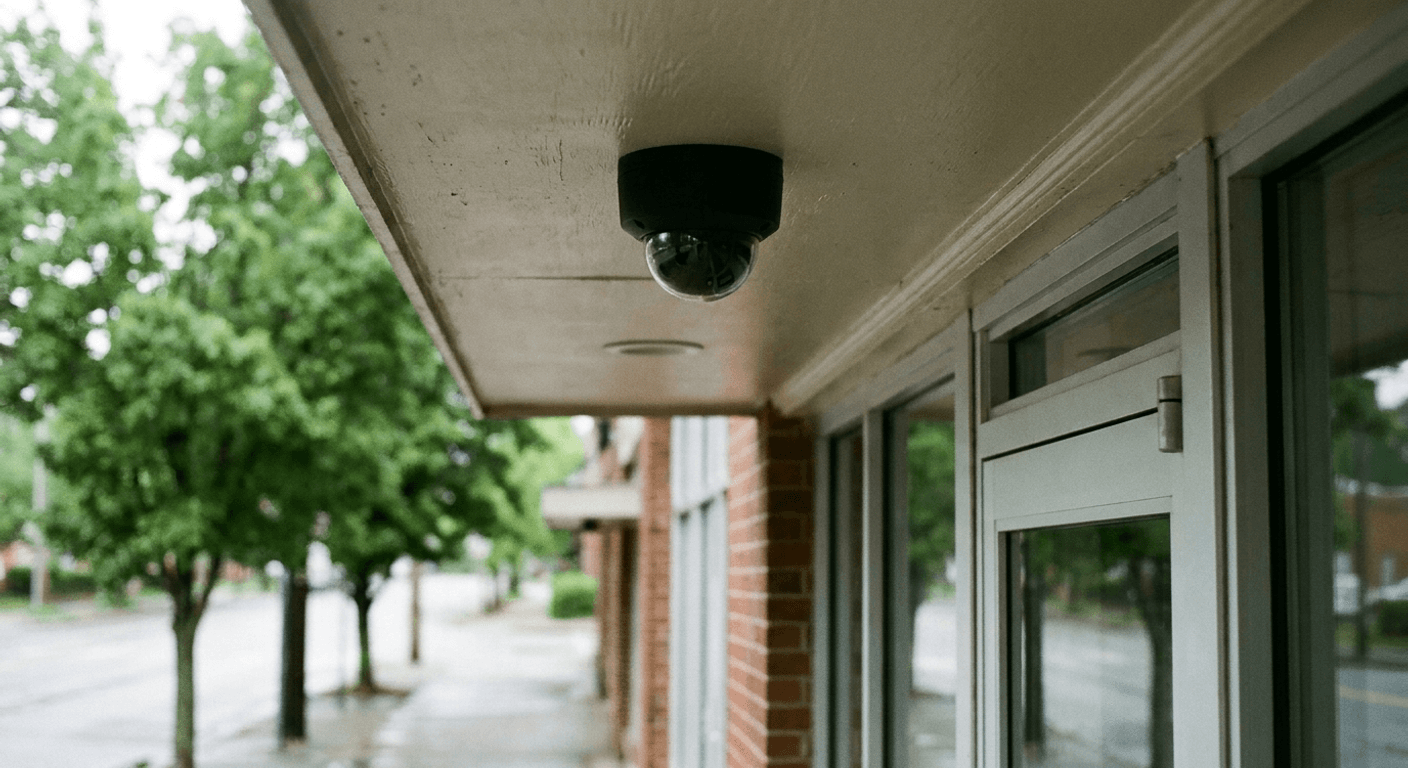
Two Boulder residents have sued the city's police chief in a proposed class action, alleging that Boulder's network of 31 Flock Safety license-plate-reader cameras tracks the movements of everyone who drives on public roads without a warrant, in violation of the Colorado Constitution. The complaint was filed in Boulder County District Court in late May 2026.
Information last verified on June 5, 2026. This is a developing story; we update it as the record changes. The claims described below are unproven allegations.
Jurisdiction scope: This article addresses a pending lawsuit in Colorado and the Colorado and federal search-and-seizure law it invokes. It does not state the law of other states, and it does not resolve whether Boulder's cameras are lawful. For the rules on recording in Colorado generally, see Colorado recording laws.
What Happened
In late May 2026, Boulder residents William Freeman and Gwen Steel filed a proposed class action in District Court, Boulder County, Colorado, naming Police Chief Stephen Redfearn and a city records-and-information supervisor as defendants. The case was assigned to Judge Michael Kotlarczyk. Freeman is the founder of an online project that maps automated license-plate-reader locations, and he brought the suit after the city refused his request for the camera records tied to his own vehicle.
According to the complaint, Boulder operates 31 Flock Safety cameras that photograph every passing vehicle and record the license plate along with the time, date, and GPS coordinates of the sighting. The complaint alleges the system stores those records for roughly 30 days and that they can be searched by hundreds of other law-enforcement agencies, including agencies outside Colorado, all without a warrant. The plaintiffs seek to represent a class of everyone who drives, rides in, or travels on public roads in Boulder.
The suit asks the court for two main things: a declaration that the camera network is an unconstitutional search under the Colorado Constitution, and an order compelling the city to release the automated license-plate-reader records it withheld. These remain allegations; the city has not yet filed a response.

What the Law Actually Says
The constitutional claim rests on article II, section 7 of the Colorado Constitution, the state analog to the Fourth Amendment, which protects against unreasonable searches. Colorado courts have at times read that provision to offer protection beyond the federal floor. The central precedent the plaintiffs invoke is People v. Tafoya, 2021 CO 62, 494 P.3d 613 (Colo. 2021). There, police mounted a camera on a utility pole and continuously recorded a suspect's home for roughly three months without a warrant. The Colorado Supreme Court held that this was an unconstitutional search.
"When government conduct involves continuous, long-term surveillance, it implicates a reasonable expectation of privacy." People v. Tafoya, 2021 CO 62
Tafoya drew on the U.S. Supreme Court decision in Carpenter v. United States, 585 U.S. 296 (2018), which held that obtaining seven days of historical cell-site location data is a Fourth Amendment search requiring a warrant, because the records give the government a detailed picture of a person's movements over time. The plaintiffs argue that a citywide camera grid, logging where vehicles go day after day, raises the same long-term tracking concern that drove Tafoya and Carpenter. The records claim is separate: it rests on the Colorado Criminal Justice Records Act, C.R.S. 24-72-301 and following, which governs public access to criminal-justice records and is the basis for Freeman's allegation that the city wrongly denied his request. For related context on government recording and public spaces, see Colorado laws on recording police and recording in public in Colorado.
Analysis: Why This Matters
The following is analysis from the Recording Law Editorial Team.
Automated license-plate readers have spread quickly through American cities, and the litigation is now catching up. The Boulder suit fits a broader pattern of challenges arguing that an always-on camera network is different in kind from a single officer watching a single street. The legal theory is the one the Colorado Supreme Court accepted in Tafoya: that continuous, long-term surveillance can cross a constitutional line even when each individual observation, a car on a public road, would be unremarkable on its own. Whether that reasoning extends from a single home to a citywide vehicle-tracking grid is exactly the open question the case presents.
It is worth being precise about posture. This is a complaint, not a ruling. The factual claims about how many cameras Boulder runs, how long it keeps the data, and who can search it are the plaintiffs' allegations, and the city will have its chance to dispute them. We are not predicting how the court will rule or whether the system will be upheld or struck down. What makes the filing notable is that it tests state constitutional privacy doctrine against a surveillance technology that did not exist when most of that doctrine was written.
How This Affects You
If you drive in a city that uses automated license-plate readers, this case is a window into a legal question that is still unsettled: when does routine, automated logging of vehicle movements become a search that needs a warrant? Courts have generally treated a license plate on a public road as something exposed to public view, but decisions like Tafoya and Carpenter show that the duration and scale of surveillance can change the analysis. The law here is developing and varies by state.
On the records side, many states, including Colorado, have public-records laws that let people request certain government records, sometimes including data a camera system collected about them. The rules on what is disclosable, and what agencies may withhold, are technical and state-specific. This is general information about how these laws work, not advice about your situation or about making a records request.
For the broader legal landscape, including the federal case law courts are applying and how ALPR statutes vary by state, see Automated License Plate Reader (ALPR) Laws Explained.
This is general legal information, not legal advice. It covers a pending Colorado lawsuit and Colorado and federal search-and-seizure law, verified on June 5, 2026. The allegations described have not been proven in court. Laws change and this story is developing; consult a lawyer licensed in your jurisdiction about your specific situation.
Related articles
- Colorado recording laws: consent rules and penalties
- Colorado laws on recording police
- Recording in public in Colorado
- US recording laws by state
Last updated: 2026-06-05. This is a developing story; details verified as of June 5, 2026.
Related news
Frequently Asked Questions
What is the Boulder Flock camera lawsuit about?
Two residents allege that Boulder's 31 Flock license-plate-reader cameras track drivers' movements without a warrant, in violation of the Colorado Constitution, and that the city wrongly denied a request for one plaintiff's own camera records. The claims are unproven allegations.
Who filed the lawsuit and against whom?
Boulder residents William Freeman and Gwen Steel filed it in Boulder County District Court against Police Chief Stephen Redfearn and a city records supervisor. The case was assigned to Judge Michael Kotlarczyk.
Are license-plate-reader cameras legal?
It depends on the jurisdiction and how the system is used. Courts have generally treated a plate on a public road as exposed to view, but decisions like People v. Tafoya and Carpenter v. United States suggest long-term, continuous tracking can raise constitutional questions. The Boulder case has not been decided.
What is People v. Tafoya?
A 2021 Colorado Supreme Court decision holding that three months of warrantless pole-camera surveillance of a home was an unconstitutional search, because continuous, long-term surveillance can implicate a reasonable expectation of privacy.
Can I get the license-plate records a city collected about me?
Some public-records laws allow requests for certain government records. In Colorado the plaintiffs rely on the Colorado Criminal Justice Records Act. What must be disclosed and what can be withheld is technical and state-specific, and is itself disputed in this case.
Has any court ruled that Boulder's cameras are unconstitutional?
No. As of June 5, 2026 the case is a newly filed complaint. The city has not yet responded, and no court has ruled on the merits.
Updates
Independently fact-checked against the cited primary sources
The Law Behind This Article
This article rests on the statutory provisions below, held in our own legal record and retrieved from the official source. Tap a section to read the operative text.
Colorado Revised Statutes, Title 24: Government - State
§ 24-72-301Legislative declarationIn forcecited in 2 of our articles
(1) The general assembly hereby finds and declares that the maintenance, access and dissemination, completeness, accuracy, and sealing of criminal justice records are matters of statewide concern and that, in defining and regulating those areas, only statewide standards in a state statute are workable. (2) It is further declared to be the public policy of this state that criminal justice agencies shall maintain records of official actions, as defined in this part 3, and that such records shall be open to inspection by any person and to challenge by any person in interest, as provided in this part 3, and that all other records of criminal justice agencies in this state may be open for inspection as provided in this part 3 or as otherwise specifically provided by law.
Official text (excerpt) · last checked 2026-07-29 · Read the full text in our law library · Verify at olls.info
Cited in 4 court opinions in our collectionLatest citing opinion in our collection: 2009
Opinions citing this section in our collection:
- Denver Policemen's Protective Ass'n v. Lichtenstein (Court of Appeals for the Tenth Circuit 1981, 660 F.2d 432)“…(1973), as amended, and the Colorado Criminal Justice Act, C.R.S. 24-72-301 et seq., (1973), as amended. The ap…”
- Lanphere & Urbaniak v. Colorado (Court of Appeals for the Tenth Circuit 1994, 21 F.3d 1508)“…law has been supplanted by the statutory scheme outlined in Colo.Rev.Stat. §§ 24-72-301 through 24-72-308, which includes the l…”
- Brown v. Whitman (District Court, D. Colorado 2009, 651 F. Supp. 2d 1216)“…stead, the Colorado Criminal Justice Records Act (“CCJRA”), Colo.Rev.Stat. §§ 24-72-301 to — 309, governs the disclosure of “cr…”
Identified automatically from the court opinions citing this section — not a ranking of which case controls.
Also relied on in: Colorado Open Records Act (CORA): Deadlines, Fees, and Denials
Search our full record of US law — 2.1 million sections, every state + federal →
Sources and References
- Freeman and Steel v. Redfearn, complaint filed in District Court, Boulder County, Colorado (2026), the operative class-action complaint(courthousenews.com)
- People v. Tafoya, 2021 CO 62, 494 P.3d 613 (Colo. 2021), warrantless long-term pole-camera surveillance held unconstitutional(courtlistener.com)
- Carpenter v. United States, 585 U.S. 296 (2018), historical cell-site location data is a Fourth Amendment search(law.cornell.edu)
- Colorado Sun, Two Boulder residents sue over city's use of Flock cameras (May 28, 2026), corroborating coverage(coloradosun.com)