
Vermont
Vermont Window Tint Laws (2026): Legal VLT Limits
Independently fact-checked against primary sources (last audited August 18, 2026). · Reviewed by the RecordingLaw editorial team. · Law checked current as of August 18, 2026. · 3 primary sources cited on this page. How we verify our legal content
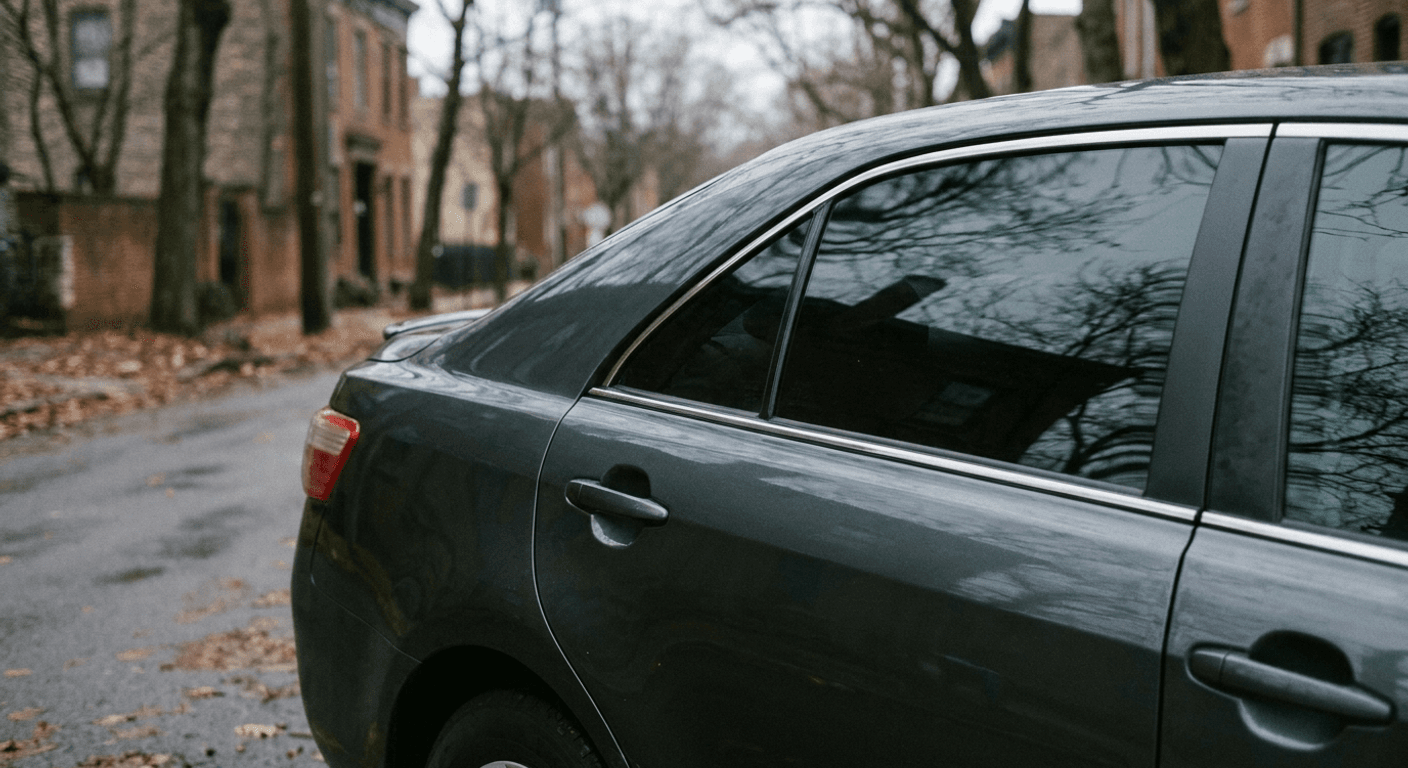
Vermont flatly prohibits aftermarket tint on front side windows, meaning no darkening film is legal on those windows regardless of darkness level. The rear side windows and rear window may use any level of tint, provided the vehicle has dual outside mirrors.
What is the legal tint limit in Vermont?
Vermont's window tint law is found at 23 V.S.A. 1125. The most important fact for Vermont drivers: aftermarket tint on the front side windows is completely prohibited. This is not a VLT percentage minimum but a flat ban. No darkening film, regardless of how light, may be applied to the front side windows of any standard vehicle.
Before going further, a brief note on how tint is measured: VLT stands for Visible Light Transmission, the percentage of light that passes through the glass. A higher VLT percentage is lighter; a lower VLT percentage is darker. Vermont simply does not allow any VLT reduction film on the front side windows at all.
For windows behind the driver, Vermont is permissive. Both back side windows and the rear window may use any level of tint darkness, with no VLT minimum. If the rear window is tinted, the vehicle must have dual outside mirrors to maintain a clear view of traffic behind.
| Window | Rule |
|---|---|
| Front side windows | No aftermarket tint permitted (flat prohibition) |
| Back side windows | Any darkness; dual outside mirrors required |
| Rear window | Any darkness; dual outside mirrors required if obstructed |
| Windshield | No material except two small statutory corner spaces (lower right and upper left) |
Windshield tint rules in Vermont
Vermont law prohibits any material painted, adhered, or hung on the windshield, subject only to a short list of exceptions in 23 V.S.A. 1125(b). Those exceptions are two small fixed-size spaces: one not over four inches high and 12 inches long in the lower right-hand corner, and one not over two inches high and two and one-half inches long in the upper left-hand corner (plus narrow carve-outs for required stickers, emergency equipment, dealer signage, and rearview mirrors or toll transponders). Vermont's statute does not reference a manufacturer's AS-1 line, and there is no exception for a strip across the top of the windshield.
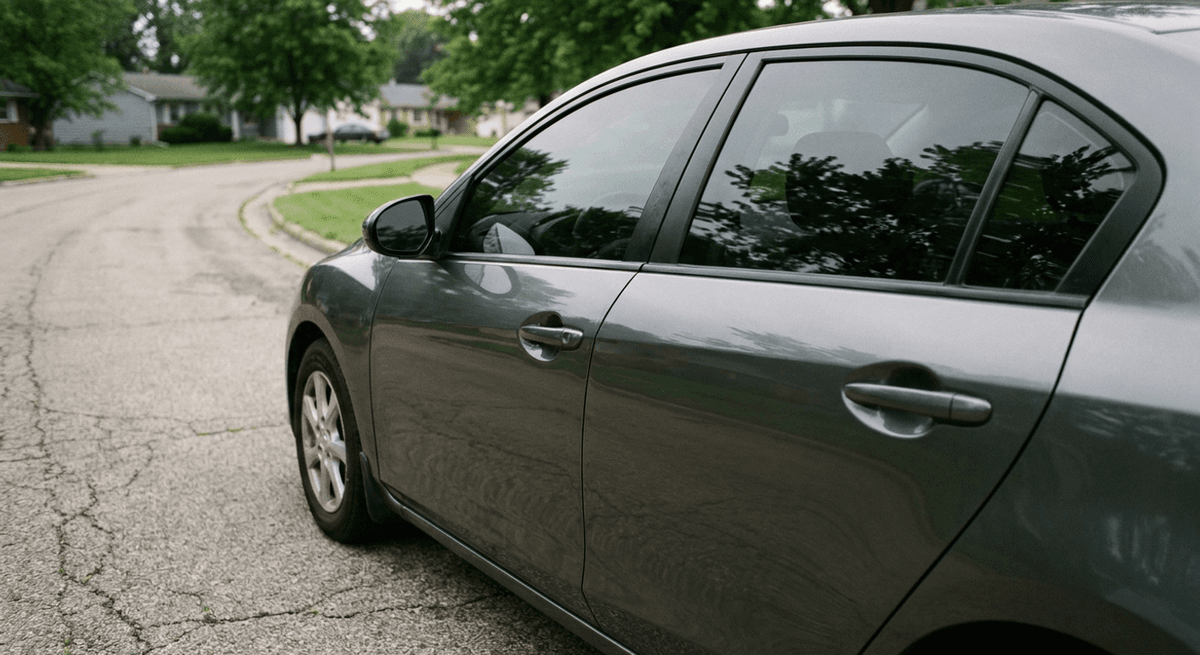
23 V.S.A. 1125 does not address film reflectivity, mirror finish, or tint color; it regulates only where material may be placed on the glass. Outside of the two small corner spaces described above (and the narrow additional exceptions for required stickers, emergency equipment, dealer signage, and rearview mirrors or toll transponders), no material may be painted, adhered, or hung on the windshield.
Medical exemptions
Vermont does allow a medical exemption for drivers who need darker tint on vent windows and front side windows for a diagnosed health condition. The exemption is granted by the DMV Commissioner on the basis of a written certification from a physician or optometrist. Conditions such as photosensitivity disorders, lupus, or certain skin and eye conditions that require protection from UV and visible light may qualify.
The exemption must be renewed every four years. While the exemption is active, you should carry the documentation in your vehicle at all times. If you are stopped, presenting the DMV-issued exemption authorization explains why your front side windows have tint that would otherwise be prohibited.
If you believe you may qualify, speak with your physician or optometrist before applying any tint to the front windows. Installing the tint first and then pursuing an exemption creates legal exposure in the interim.
How tint is measured and certified
Because Vermont prohibits aftermarket tint on front side windows, enforcement on those windows is visual rather than meter-based. An officer does not need to measure a VLT percentage; if there is any darkening film on the front side windows of a standard vehicle, it is a violation.
For rear windows, where any darkness is allowed, there is no VLT measurement requirement. Vermont does not specify a required compliance sticker or installer certification label in 23 V.S.A. 1125, so the absence of a sticker does not create a separate violation, but keeping documentation of what was installed is good practice.
If you are purchasing a used vehicle with existing tint, check the front windows carefully before assuming the prior owner complied with Vermont law. Tint on front side windows that was legal in another state may be illegal the moment the vehicle is registered and driven in Vermont.
Penalties for illegal tint in Vermont
Vermont statutes do not specify a precise fine amount within 23 V.S.A. 1125 itself. Violations of Vermont motor vehicle equipment laws are generally civil traffic infractions subject to a fine, and an officer may require you to remove the prohibited tint to bring the vehicle into compliance.

Because the front-window prohibition is absolute rather than based on a measurement threshold, there is no "close call" to contest. If tint is present on the front side windows, it is a violation. The practical remedy is to have the film removed promptly.
If you received a citation and believe you had a valid medical exemption, you will need to produce the DMV Commissioner's written authorization. The exemption is not self-certifying; only the Commissioner's formal grant covers the front side windows.
Act 165 (2024) update: the planned July 2026 change was repealed
Vermont Act 165, enacted in 2024, would have amended the state's window tint statutes with provisions originally set to take effect around July 1, 2026. Those provisions (Sections 14 through 16 of Act 165) were deleted before they ever took effect: Section 38 of the Vermont Legislature's 2025 Act 66 (S.123, signed by the Governor June 12, 2025, effective July 1, 2025) struck them outright. Act 66 makes no other change to 23 V.S.A. 1125.
There is therefore no live or pending change to Vermont's tint rules. The current law remains the flat prohibition on aftermarket tint on the windshield and front side windows described above, with the medical exemption administered by the DMV. If a future bill revisits the rule, check the Vermont Legislature's website for the current text of 23 V.S.A. 1125.
If you want to tint your windows in Vermont
The practical takeaway is straightforward: do not install any darkening film on the front side windows of a standard vehicle unless you have obtained a medical exemption from the DMV Commissioner. Doing so is a violation of Vermont law regardless of how light the tint is.
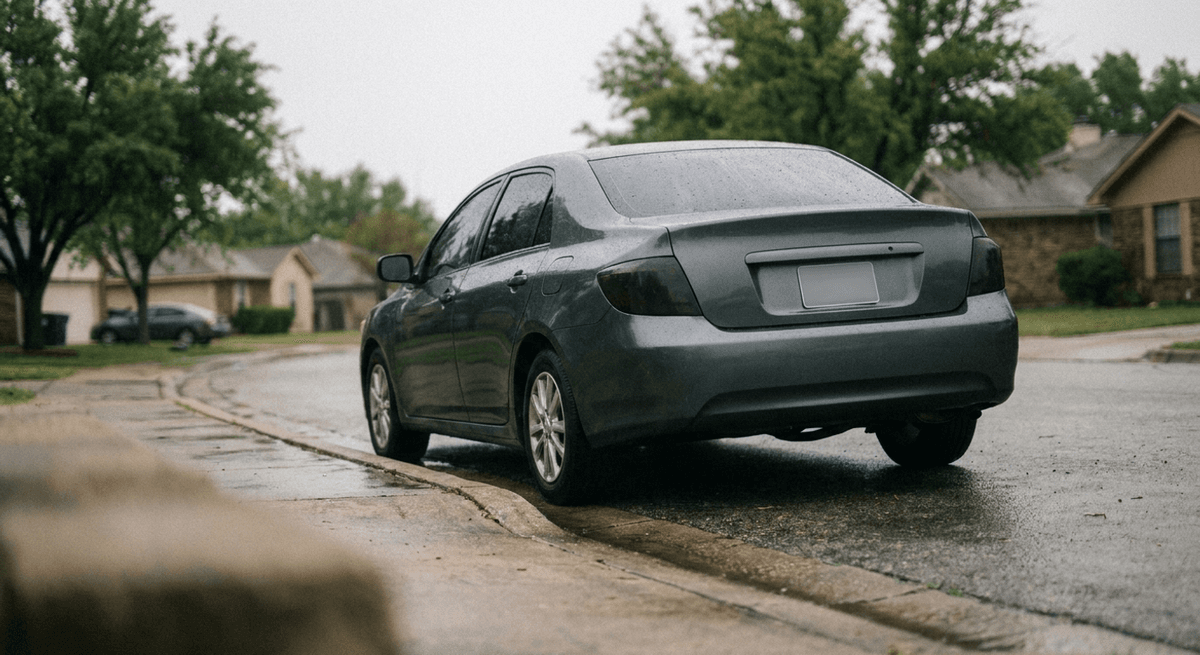
For rear side windows and the rear window, you may choose any darkness level you prefer. Many drivers opt for a moderate level such as 35% to 50% VLT, which reduces heat and glare while keeping the interior visible. Any darkness is legally permissible on those rear windows, and the only requirement is that you maintain dual outside mirrors if the rear window is tinted.
If you have a medical condition that requires sun protection, contact your physician or optometrist to discuss certification, then apply for the DMV Commissioner exemption before having any film applied to the front side windows. Keep the exemption documentation in your glove box and renew it every four years.
Act 165 of 2024's planned tint changes were deleted by 2025 Act 66 before they took effect, so they do not apply and no new VLT rules are pending. Ask your installer to verify the current law and provide documentation of the VLT installed on each window.
This article is general legal information, not legal advice. Window tint limits vary by state and change, and enforcement depends on local practice and your specific vehicle. For a definitive answer, check your state DMV or consult a local attorney.
Vermont drivers should also review Vermont Windshield Mounting Restrictions for related vehicle equipment rules.
More Vermont Laws
Frequently Asked Questions
What is the legal tint in Vermont?
Vermont prohibits aftermarket tint on the front side windows entirely, regardless of how light or dark the film is. Rear side windows and the rear window may have any level of tint, provided the vehicle has dual outside mirrors.
How dark can my front windows be in Vermont?
No darkening film is legal on the front side windows in Vermont. The prohibition is a flat ban, not a VLT percentage minimum. The only exception is a medical exemption granted by the DMV Commissioner on a physician or optometrist certification.
Is any tint legal on Vermont front windows?
No aftermarket tint is permitted on the front side windows under 23 V.S.A. 1125. A medical exemption from the DMV Commissioner is the only avenue for legally tinting those windows. Vermont Act 165 (2024)'s planned changes to this rule were deleted by 2025 Act 66 before taking effect, so no change is pending (see the Act 165 update below).
Can I get a medical exemption for window tint in Vermont?
Yes. The DMV Commissioner may grant an exemption for vent windows and front side windows on the basis of a physician or optometrist certification. The exemption must be renewed every four years and the documentation must be carried in the vehicle.
What is the penalty for illegal tint in Vermont?
Vermont statutes do not specify an exact fine in 23 V.S.A. 1125. Violations of vehicle equipment laws are generally civil infractions subject to a fine, and officers may require removal of the tint. The front-window prohibition is absolute, so any film on those windows is a violation.
Is windshield tint legal in Vermont?
Vermont's windshield rule under 23 V.S.A. 1125 does not use an AS-1 line. The statute prohibits any material painted, adhered, or hung on the windshield except for two small corner spaces: one not over four inches high and 12 inches long in the lower right-hand corner, and one not over two inches high and two and one-half inches long in the upper left-hand corner. The statute does not address tint reflectivity or color.
Does Vermont Act 165 of 2024 change the tint rules?
No. Act 165's window tint provisions (Sections 14-16) were deleted by 2025 Act 66, Section 38 before ever taking effect, so they never changed Vermont law, and Act 66 made no other change to 23 V.S.A. 1125. The flat prohibition on aftermarket tint on the windshield and front side windows remains the current rule.
Updates
Corrected a false claim that Vermont Act 165 (2024) had a tint change pending for July 2026; those sections were deleted by 2025 Act 66, Section 38 before ever taking effect, and no change to 23 V.S.A. 1125 is pending.
Independently fact-checked against the cited primary sources; governing law re-checked for recent changes
Corrected the windshield section: 23 V.S.A. 1125 has no AS-1 line concept (its only windshield exceptions are two small fixed corner spaces) and does not regulate reflectivity, so the unsupported metallic/mirrored-tint ban was removed.
Governing law re-checked for recent changes
Reviewed and approved by an editor
The Law Behind This Article
This article rests on the statutory provisions below, held in our own legal record and retrieved from the official source. Tap a section to read the operative text.
Vermont Statutes Annotated, Title 23: Motor Vehicles, Chapter 13: Operation of Vehicles, Subchapter: MISCELLANEOUS RULES
§ 1125Obstructing windshields, windowsIn forcecited in 3 of our articles
(a) Except as otherwise provided in this section, a person shall not operate a motor vehicle on which material or items have been painted or adhered on or over, or hung in back of, any transparent part of a motor vehicle windshield, vent windows, or side windows located immediately to the left and right of the operator. The prohibition of this section on hanging items shall apply only when a hanging item materially obstructs the driver’s view. (b) Notwithstanding subsection (a) of this section, a person may operate a motor vehicle with material or items painted or adhered on or over, or hung in back of, the windshield, vent windows, or side windows: (1) in a space not over four inches high and 12 inches long in the lower right-hand corner of the windshield; (2) in such space as the Commissioner of Motor Vehicles may specify for location of any sticker required by governmental regulation; (3) in a space not over two inches high and two and one-half inches long in the upper left-hand corner of the windshield; (4) if the operator is a person employed by the federal, State, or local government or a volunteer emergency responder operating an authorized emergency vehicle, who…
Official text (excerpt) · last checked 2026-09-08 · Read the full text in our law library · Verify at legislature.vermont.gov
Cited in 2 court opinions in our collectionLatest citing opinion in our collection: 2016
Opinions citing this section in our collection:
- State v. Hurley (Supreme Court of Vermont 2015, 198 Vt. 552)“…n, J. ¶ 1. This case calls upon us to decide whether 23 V.S.A. § 1125 prohibits the hanging of any item on th…”
- State v. Shamel L. Alexander (Supreme Court of Vermont 2016, 201 Vt. 329)“…of the front windshield and stopped the cab for violating 23 V.S.A. § 1125, which prohibits driving with an obstr…”
Identified automatically from the court opinions citing this section — not a ranking of which case controls.
Also relied on in: Vermont Windshield Mounting Laws (2026 Guide), Vermont Dashcam Laws
Search our full record of US law — 2.1 million sections, every state + federal →
Sources and References
- Vermont Legislature, 23 V.S.A. 1125 (Window Tinting)(legislature.vermont.gov).gov
- Vermont Department of Motor Vehicles(dmv.vermont.gov).gov
- Vermont Legislature, Bill Status S.123 (2025) / 2025 Act 66(legislature.vermont.gov).gov