
Michigan
Michigan Window Tint Laws (2026): Legal VLT Limits
Independently fact-checked against primary sources (last audited August 18, 2026). · Reviewed by the RecordingLaw editorial team. · Law checked current as of August 18, 2026. · 1 primary source cited on this page. How we verify our legal content
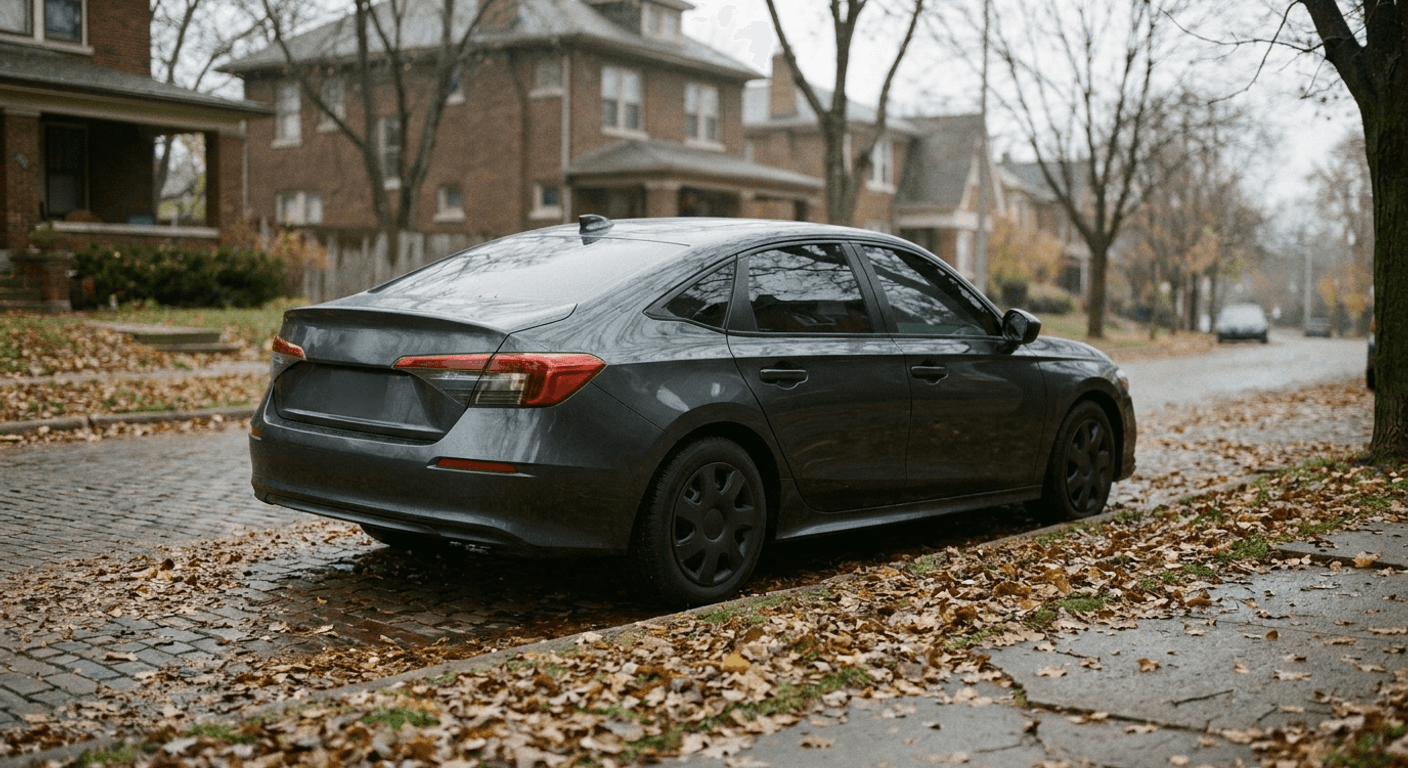
Michigan effectively prohibits aftermarket tint on the front side windows; the only film allowed there is a tinted strip along the top edge, which may not extend more than 4 inches down or lower than the shade band, whichever is closer to the top of the windshield. The windows behind the driver (back side and rear) may be any darkness, provided rear and rear-side windows stay below 35% total solar reflectance.
What is the legal tint limit in Michigan?
Michigan's tint law (MCL 257.709) draws a sharp line between the front of the vehicle and everything behind the driver. No aftermarket tint film may be applied to the front side windows at all, with one narrow exception: a tinted strip is permitted along the top edge of each front side window. The statute caps that strip at the lesser of two measures, providing that the material must not extend more than 4 inches from the top of the windshield, or lower than the shade band, whichever is closer to the top of the windshield. On a vehicle whose factory shade band ends less than 4 inches down, the shade band is the operative limit and a full 4-inch strip is not permitted. That strip rule mirrors the windshield rule and is designed for glare reduction at the very top of the glass, not for privacy or UV shielding across the full window.
To understand what this means in practice: a higher VLT percentage means more light passes through and the tint appears lighter; a lower VLT percentage means less light passes through and the tint is darker. Because no VLT-rated film may cover the main section of the front side windows, Michigan effectively requires those windows to remain at the factory glass VLT (typically 70% or higher on new vehicles).
The back side windows and the rear window face no VLT floor at all. Any darkness of film is permitted behind the driver's seating position. This makes Michigan more permissive on the rear than most states, while being among the strictest in the country on the front.
One qualification applies behind the driver. MCL 257.709(2) bars driving a motor vehicle if driver visibility through the rear window is obstructed unless the vehicle carries 2 rearview mirrors, 1 on each side. Subsection (3)(b) lifts the section entirely for nonreflective, smoked or tinted glass, nonreflective film, a perforated window screen, or other decorative window application on the rear or rear side windows, so ordinary nonreflective tint is not caught by that mirror condition. A reflective film that still measures under the 35% cap falls outside (3)(b), however, and (3)(a) attaches the same two-outside-mirror condition to draperies, louvers and other special window treatments.
| Window | Rule |
|---|---|
| Front side windows | No aftermarket tint; top-edge tinted strip only, limited to 4 inches down or the shade band, whichever is closer to the top of the windshield |
| Back side windows | Any darkness (no VLT minimum); total solar reflectance must stay below 35% |
| Rear window | Any darkness; total solar reflectance must stay below 35% |
| Windshield | Top-edge tinted strip only, limited to 4 inches down or the shade band, whichever is closer to the top |
MCL 257.709(1)(b) does not ban silver or gold film outright; it caps total solar reflectance at 35% on the rear window and rear side windows and names silver or gold reflective film as a typical example of material that fails that test.
Windshield tint rules in Michigan
Michigan permits a tinted film along the top edge of the windshield. MCL 257.709(1)(a) limits that film to the lesser of two measures: it must not extend more than 4 inches from the top of the windshield, or lower than the shade band, whichever is closer to the top of the windshield. Below whichever line applies, no tint may be applied to the windshield. The top-strip rule is consistent with the front side window rule: Michigan allows a glare-reduction strip at the very top of the glass, nothing below.

Read the reflectivity point carefully, because the statute does not frame it the way tint shops often do. MCL 257.709(1)(a) bans a sign, poster, nontransparent material, window application, reflective film, or nonreflective film on the windshield and front side windows, and then carves out a single exception for a tinted film in the top-edge zone. That exception is written in terms of a tinted film and does not itself state a reflectivity standard for the strip, so the statute does not affirmatively require the permitted strip to be nonreflective. What the text does establish is that reflective film and nonreflective film are both otherwise prohibited on this glass, and that a metallic or mirror-finish product is not the tinted film the exception describes. That front-glass rule is separate from the 35% total-solar-reflectance test in (1)(b), which governs the rear window and rear side windows (and names silver or gold film as a typical example of material that fails it).
No specific tint colors are banned by Michigan statute beyond the reflectivity limits already described. However, any film that pushes total solar reflectance above 35% on the rear or rear-side windows violates the law regardless of its color, and (1)(a) separately bars reflective film and nonreflective film alike from the windshield and front side windows outside the narrow top-edge exception.
Medical exemptions
Michigan law (MCL 257.709) provides a medical exemption for drivers and passengers with conditions that require reduced sun exposure, such as photosensitivity disorders, lupus, or post-surgical UV restrictions. To qualify, a physician or optometrist must sign a written letter documenting the medical necessity.
Unlike many states, Michigan does not require the vehicle owner to file the letter with a state agency or obtain an official government sticker. The signed letter simply must be kept in the vehicle and presented to an officer upon request. There is no renewal period specified in the statute, but it is prudent to obtain an updated letter if the condition or prescription changes.
The medical exemption can allow darker tint on the front side windows than the standard rule permits, making this pathway important for drivers with legitimate photosensitivity needs. It is not an open licence for arbitrarily dark front glass, though. MCL 257.709(3)(e) closes with an express proviso that the special window treatment or application shall not interfere with or obstruct the driver's clear vision of the highway or an intersecting highway. If you plan to tint your front windows under a medical exemption, have the letter ready before the film is installed.
How tint is measured and certified
Michigan uses total solar reflectance as the key measurement for rear and rear-side windows, capped at 35%. For the front side windows, no VLT measurement is needed because aftermarket tint is simply prohibited as a rule rather than capped at a number.
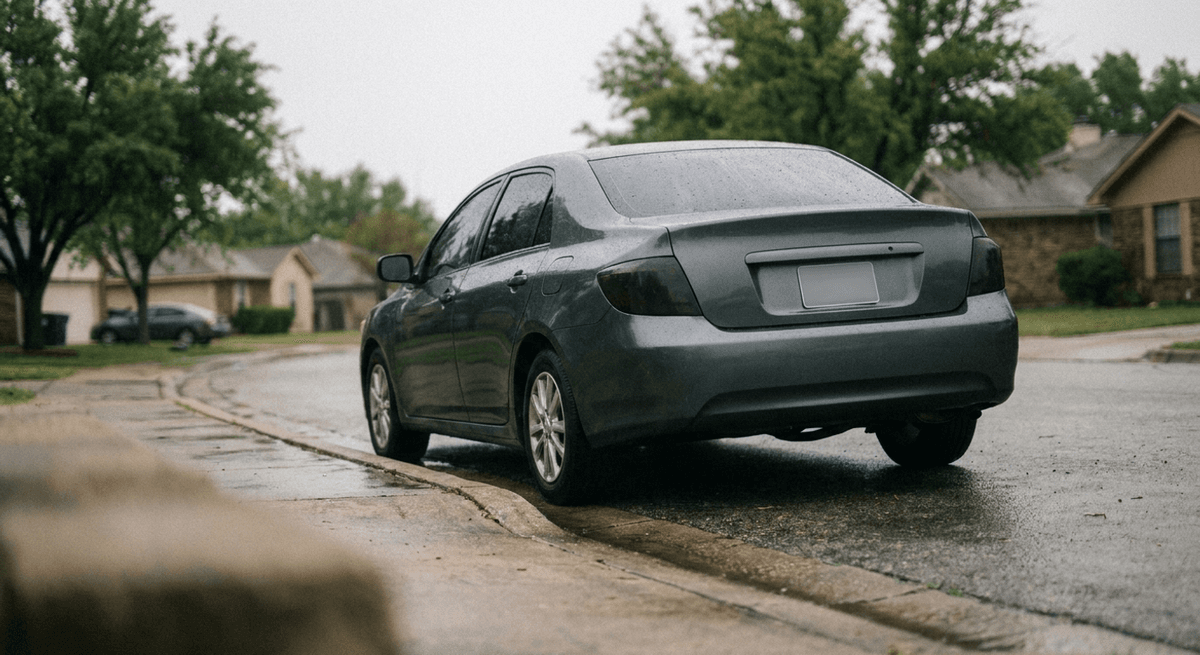
The statute does not specify a published measurement tolerance for the rear windows. In practice, enforcement officers assess the front side windows visually (the prohibition is categorical) and may use a meter to evaluate rear window reflectance if they suspect a violation.
Michigan does not require a compliance sticker from the installer for standard tint jobs. The only documentation requirement is the physician or optometrist letter for vehicles operating under a medical exemption, which must be carried inside the vehicle.
Penalties for illegal tint in Michigan
A violation of Michigan's window tint statute is a civil infraction, and MCL 257.709 is an equipment violation under MCL 257.683, not a moving violation. In People v Pitts, 222 Mich App 260, 270-271 (1997), the Michigan Court of Appeals held that assessing driver's-license points for nonreflective window tint under MCL 257.709 was improper, because equipment violations carry no points under MCL 257.320a. The fine for a tint civil infraction runs up to $100 under MCL 257.907(2)(a), and MCL 257.907(12) adds a mandatory $40 justice-system assessment on top of any fine and costs.
Despite Pitts, some Michigan citations have in practice been written under a vision-obstruction code that does carry points; the Court of Appeals in Pitts found that classification erroneous, so a 2-point assessment for a straightforward MCL 257.709 tint violation is contestable. Officers issue citations during traffic stops when a front side window is found to have aftermarket tint film covering the main glass area or when rear window reflectance appears to exceed 35%.
Removing the offending film and demonstrating compliance is the standard remedy, and it carries a statutory benefit that is easy to miss. MCL 257.907(9) provides that where a person has received a civil infraction citation for defective safety equipment on a vehicle under section 683, the court shall waive a civil fine, costs, and assessments on receipt of certification by a law enforcement agency that repair of the defective equipment was made before the appearance date on the citation. That waiver is mandatory rather than discretionary, and because MCL 257.683(6) makes a violation of sections 683 to 711 (which include 257.709) an equipment civil infraction, it reaches tint citations. The practical step is to have the film removed and to get a law enforcement agency to certify the correction before your court date.
If you want to tint your windows in Michigan
The rules below reflect Michigan law as it stands in 2026.
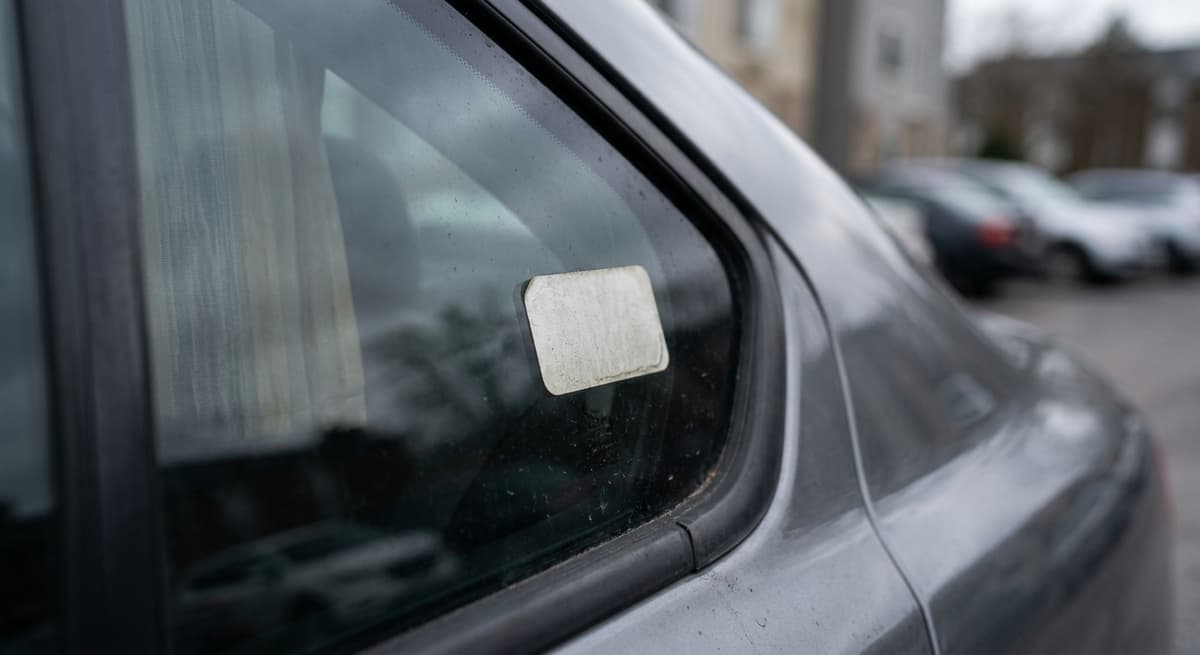
On the front side windows, do not apply any aftermarket tint film to the main glass area. A tinted strip along the top edge is the only permissible addition, and it may not reach more than 4 inches down or lower than the shade band, whichever is closer to the top of the windshield. If a shop offers you a "light" front tint and claims it is legal, ask them to cite the Michigan statute. The law does not allow any VLT-rated film on the front side windows regardless of darkness level.
On the back side windows and rear window, you may choose any VLT level. Many owners choose 35% or 20% for privacy and UV protection on the rear glass. Whatever darkness you choose, confirm with your installer that the film's total solar reflectance stays below 35%, and avoid silver or gold reflective finishes on any window.
If you have a qualifying medical condition, obtain a signed letter from your physician or optometrist before installing darker front-side tint. Keep the original letter in the glove compartment at all times and carry a copy when driving to make it immediately accessible during a traffic stop.
Choose an installer who is familiar with Michigan's front-side prohibition. Some general tint shops in states with more permissive laws may not be aware that Michigan bans front side aftermarket film entirely, so verify their knowledge of MCL 257.709 before booking.
This article is general legal information, not legal advice. Window tint limits vary by state and change, and enforcement depends on local practice and your specific vehicle. For a definitive answer, check your state DMV or consult a local attorney.
For a full overview of how window tint laws work across all 50 states, see the Window Tint Laws hub. Michigan drivers may also want to review Michigan windshield mounting restrictions for related rules on objects mounted on or near the windshield.
More Michigan Laws
Frequently Asked Questions
What is the legal tint in Michigan?
Michigan prohibits aftermarket tint on the front side windows except for a tinted strip along the top edge, which may not extend more than 4 inches down or lower than the shade band, whichever is closer to the top of the windshield. The back side windows and rear window may be any darkness, provided rear and rear-side reflectance stays below 35%.
How dark can my front windows be in Michigan?
Effectively not dark at all. Michigan does not permit any VLT-rated aftermarket film on the front side windows. The only addition allowed is a tinted strip along the top edge of each front side window, limited to 4 inches down or the shade band, whichever is closer to the top of the windshield.
Is 35% tint legal on the front windows in Michigan?
No. Michigan bans all aftermarket front side window tint regardless of VLT percentage. Even a very light 50% or 70% film is not permitted on the main section of the front side windows. Only the top-edge tinted strip is allowed, and it may not reach more than 4 inches down or lower than the shade band, whichever is closer to the top of the windshield.
Can I get a medical exemption for window tint in Michigan?
Yes. Under MCL 257.709(3)(e), a signed letter from a physician or optometrist documenting your medical need is sufficient. You do not need to file anything with the state; keep the letter in the vehicle and present it if stopped. The same subsection adds a limit on the exemption: the special window treatment or application shall not interfere with or obstruct the driver's clear vision of the highway or an intersecting highway.
What is the penalty for illegal tint in Michigan?
A tint violation is a civil infraction, an equipment violation under MCL 257.683 rather than a moving violation, carrying a fine of up to $100 plus a $40 justice-system assessment. MCL 257.907(9) requires the court to waive the fine, costs and assessments if a law enforcement agency certifies that the equipment was repaired before the appearance date on the citation. Per People v Pitts, 222 Mich App 260 (1997), no driver's-license points should be assessed for a standard MCL 257.709 tint violation, though some citations have mistakenly been written as a vision-obstruction moving violation carrying 2 points, a practice the Court of Appeals found improper.
Is windshield tint legal in Michigan?
Only a tinted film along the top edge of the windshield is permitted, and MCL 257.709(1)(a) caps it at the lesser of two measures: no more than 4 inches from the top of the windshield, or no lower than the shade band, whichever is closer to the top. No tint may be applied below that line. The subsection bans reflective film and nonreflective film alike on this glass outside that narrow exception, so a metallic or mirror-finish product is not the tinted film the exception describes; the statute's silver/gold example belongs to the separate 35% reflectance test for the rear windows.
Do SUVs have different tint rules in Michigan?
The Michigan statute does not create a separate standard for SUVs, vans, or trucks. The front side window prohibition applies to all passenger vehicles. The back side and rear windows may be any darkness for all vehicle types.
Updates
Corrected the windshield and front side window strip rule to state the statutory shade band limit alongside the 4-inch measure, fixed a takeaway that reversed what MCL 257.709(1)(a) says about nonreflective film, added the medical exemption's clear-vision proviso and the rear window mirror rule, and reported the mandatory fine waiver available when a tint citation is corrected before the court date.
Corrected the Michigan window tint page: a tint citation under MCL 257.709 is a no-points equipment violation per People v Pitts, 222 Mich App 260 (1997), not a 2-point moving violation as the page previously stated. Also corrected the reflectivity section: the 35% total-solar-reflectance test (which names silver/gold film as a typical failing example) applies to rear and rear-side windows only, separate from the windshield strip's own absolute nonreflective-film rule.
Independently fact-checked against the cited primary sources; governing law re-checked for recent changes
Governing law re-checked for recent changes
Reviewed and approved by an editor
The Law Behind This Article
This article rests on the statutory provisions below, held in our own legal record and retrieved from the official source. Tap a section to read the operative text.
Michigan Compiled Laws
§ 257.709Windshields and windows; prohibitions; rearview mirrors; exceptions; windshield wipers; exemption; hot air windshield defroster or electrically heated windshield or other device; windshield device; definitionsIn forcecited in 6 of our articles
(1) A person shall not operate a motor vehicle with any of the following: (a) A sign, poster, nontransparent material, window application, reflective film, or nonreflective film upon or in the front windshield, the side windows immediately adjacent to the driver or front passenger, or the sidewings adjacent to and forward of the driver or front passenger, except that a tinted film may be used along the top edge of the windshield and the side windows or sidewings immediately adjacent to the driver or front passenger if the material does not extend more than 4 inches from the top of the windshield, or lower than the shade band, whichever is closer to the top of the windshield. (b) A rear window or side window to the rear of the driver composed of, covered by, or treated with a material that creates a total solar reflectance of 35% or more in the visible light range, including a silver or gold reflective film. (c) An object that obstructs the vision of the driver of the vehicle, except as authorized by law.
Official text (excerpt) · last checked 2026-09-07 · Read the full text in our law library · Verify at legislature.mi.gov
Cited in 19 court opinions in our collectionLatest citing opinion in our collection: 2026
In the courts (editorial summary, independently checked):People v. Pitts (1997) upheld MCL 257.709 against an equal protection challenge, finding the ban on applied tint film rationally related to driver and officer safety, and held a tint violation is an equipment violation carrying no points. People v. Dillon (2012) rejected a vagueness attack, construing the dangling-object subsection.
Opinions citing this section in our collection:
- People v. Davis (Michigan Court of Appeals 2002, 250 Mich. App. 357)✓An officer saw air fresheners dangling from the mirror of the car Davis drove; the court found the record amply supported that this may have violated MCL 257.709 (1)(c) and that, with speeding and lane weaving, the traffic stop was permissible.
- People v. Dillon (Michigan Court of Appeals 2012, 296 Mich. App. 506)✓An air freshener hung two or three inches below Dillon's mirror; the court held MCL 257.709 was not void for vagueness because dangling ornament, suspended object and obstructs are commonly understood terms, and that the officer had reasonable suspicion to stop.
- People v. Pitts (Michigan Court of Appeals 1997, 222 Mich. App. 260)✓Pitts was cited for aftermarket tint film on his front side windows; the court held a MCL 257.709 tint violation is an equipment civil infraction carrying no license points rather than a moving obstructed-vision violation, and rejected his equal protection challenge.
Identified automatically from the court opinions citing this section — not a ranking of which case controls.
Also relied on in: Michigan Dashcam Laws: Windshield Rules, Audio Recording, and Legal Use (2026), Michigan Windshield Mounting Laws (2026 Guide)
§ 257.683Driving or moving vehicle in unsafe condition; condition and adjustment of parts and equipment; stopping and inspecting vehicle; citation; training requirements as motor carrier enforcement officer; additional parts and accessories; exceptions; violation as civil infractionIn forcecited in 4 of our articles
(1) A person shall not drive or move or the owner shall not cause or knowingly permit to be driven or moved on a highway a vehicle or combination of vehicles that is in such an unsafe condition as to endanger a person, or that does not contain those parts or is not at all times equipped with lamps and other equipment in proper condition and adjustment as required in sections 683 to 711, or that is equipped in a manner in violation of sections 683 to 711. A person shall not do an act forbidden or fail to perform an act required under sections 683 to 711. (2) A police officer on reasonable grounds shown may stop a motor vehicle and inspect the motor vehicle, and if a defect in equipment is found, the officer may issue the driver a citation for a violation of a provision of sections 683 to 711. (3) In order to be classified as a motor carrier enforcement officer, a police officer must have training equal to the minimum training requirements, including any annual training updates, established by the department of state police for an officer of the motor carrier division of the department of state police.
Official text (excerpt) · last checked 2026-07-30 · Read the full text in our law library · Verify at legislature.mi.gov
Cited in 26 court opinions in our collectionLatest citing opinion in our collection: 2026
Opinions citing this section in our collection:
- Bruce T Wood v. City of Detroit (Michigan Court of Appeals 2018)“…e tire came off, not before it came off. 3 In addition, MCL 257.683 provides in relevant part: (1)…”
- People v. Pitts (Michigan Court of Appeals 1997, 222 Mich. App. 260)“…nguage contained in the Michigan Vehicle Code, specifically MCL 257.683; MSA 9.2383 and MCL 257.709; MSA 9.2409…”
- Kohn v. Ford Motor Co. (Michigan Court of Appeals 1986, 151 Mich. App. 300)“…NW2d 295 (1976). [9] MRE 702. [10] MRE 703. [11] MCL 257.683(1); MSA 9.2383(1), MCL 257.705(c); MSA…”
Identified automatically from the court opinions citing this section — not a ranking of which case controls.
§ 257.320aRecording date of conviction, civil infraction determination, or probate court disposition and number of points; interview; violation committed in another stateIn forcecited in 5 of our articles
(1) Within 5 days after receipt of a properly prepared abstract from a court of this state or another state, the secretary of state shall record the date of conviction, civil infraction determination, or probate court disposition, and the number of points for each, based on the following formula, except as otherwise provided in this section and section 629c: (a) Manslaughter, negligent homicide, or a felony resulting from the operation of a 6 motor vehicle, ORV, or snowmobile points (b) A violation of section 601b(2) or (3), 601c(1) or (2), or 653a(3) or (4) or, beginning 6 October 31, 2010, a violation of section 601d points (c) A violation of section 625(1), (4), (5), (7), or (8), section 81134 or 82127(1) of the natural resources and environmental protection act, 1994 PA 451, MCL 324.81134 and 6 324.82127, or a law or ordinance substantially corresponding to section 625(1), (4), points (5), (7), or (8), or section 81134 or 82127(1) of the natural resources and environmental protection act, 1994 PA 451, MCL 324.81134 and 324.82127 (d) Failing to stop and disclose identity at the scene of an accident when required by 6 law points (e) Operating a motor vehicle in…
Official text (excerpt) · last checked 2026-07-30 · Read the full text in our law library · Verify at legislature.mi.gov
Cited in 8 court opinions in our collectionLatest citing opinion in our collection: 2009
Opinions citing this section in our collection:
- People v. Pitts (Michigan Court of Appeals 1997, 222 Mich. App. 260)“…essed for any moving violation not specifically enumerated. MCL 257.320a; MSA 9.2020(1). From March 1981…”
- Dawson v. Secretary of State (Michigan Court of Appeals 2007, 274 Mich. App. 723)“…ed in a two-year period under the point system set forth in MCL 257.320a and MCL 257.629c. [4] The offenses i…”
- People v. Droog (Michigan Court of Appeals 2009, 282 Mich. App. 68)“…ng the imposition of points against the records of drivers, MCL 257.320a, and possible sanctions against driver’…”
Identified automatically from the court opinions citing this section — not a ranking of which case controls.
Also relied on in: Michigan Traffic Camera Ticket Laws: Work Zone Speed Cameras Explained
§ 257.907Civil infraction; payment of civil fine and costs; certification of repair of defective equipment; collection of civil fines or costs; waiver of fine, cost, and assessment; civil infraction arising out of ownership or operation of commercial quadricycle; "moving violation" definedIn forcecited in 6 of our articles
(1) A violation of this act, or a local ordinance that substantially corresponds to a provision of this act, that is designated a civil infraction must not be considered a lesser included offense of a criminal offense. (2) Permission may be granted for payment of a civil fine and costs to be made within a specified period of time or in specified installments but, unless permission is included in the order or judgment, the civil fine and costs must be payable immediately. Except as otherwise provided, a person found responsible or responsible "with explanation" for a civil infraction must pay costs as provided in subsection (4) and 1 or more of the following civil fines, as applicable: (a) Except as otherwise provided, for a civil infraction under this act or a local ordinance that substantially corresponds to a provision of this act, the person must be ordered to pay a civil fine of not more than $100.00. (b) If the civil infraction was a moving violation that resulted in an at-fault collision with another vehicle, an individual, or any other object, the civil fine ordered under this section is increased by $25.00 but the total civil fine must not be more than $100.00.
Official text (excerpt) · last checked 2026-07-30 · Read the full text in our law library · Verify at legislature.mi.gov
Cited in 7 court opinions in our collectionLatest citing opinion in our collection: 2020
Opinions citing this section in our collection:
- Board of Library Commissioners v. Judges of the 70th District Court (Michigan Court of Appeals 1982, 118 Mich. App. 379)“…ts represented approximately 89% and fines 11%. Pursuant to MCL 257.907(3); MSA 9.2607(3), amounts collected th…”
- In re Justin (Michigan Supreme Court 2012, 490 Mich. 394)“…nd 3(A)(5) of the Code of Judicial Conduct; MCL 257.32¿(3); MCL 257.907(9); and MCL 257.732. Additionally, the…”
- in Re Hon James M Justin (Michigan Supreme Court 2012)“…sly not limited to, violations of MCL 257.732; MCL 257.328; MCL 257.907; MCL 769.1(f); MCL 769.6; MCL 771.1(2);…”
Identified automatically from the court opinions citing this section — not a ranking of which case controls.
Also relied on in: Michigan Car Seat Laws (2026): Ages, Booster & Penalty
Search our full record of US law — 2.1 million sections, every state + federal →
Sources and References
- MCL 257.709 (Michigan vehicle equipment, window tint)(legislature.mi.gov).gov
- MCL 257.907 (civil infraction fines; subsection (9) mandatory waiver on certified equipment repair; subsection (12) $40 justice system assessment)(legislature.mi.gov)
- MCL 257.683 (vehicle equipment violations; subsection (6) makes a violation of sections 683 to 711 a civil infraction)(legislature.mi.gov)