
Rhode Island
Rhode Island Squatters Rights and Adverse Possession Laws (2026)
Independently fact-checked against primary sources (last audited August 18, 2026). · Reviewed by the RecordingLaw editorial team. · Law checked current as of August 18, 2026. How we verify our legal content
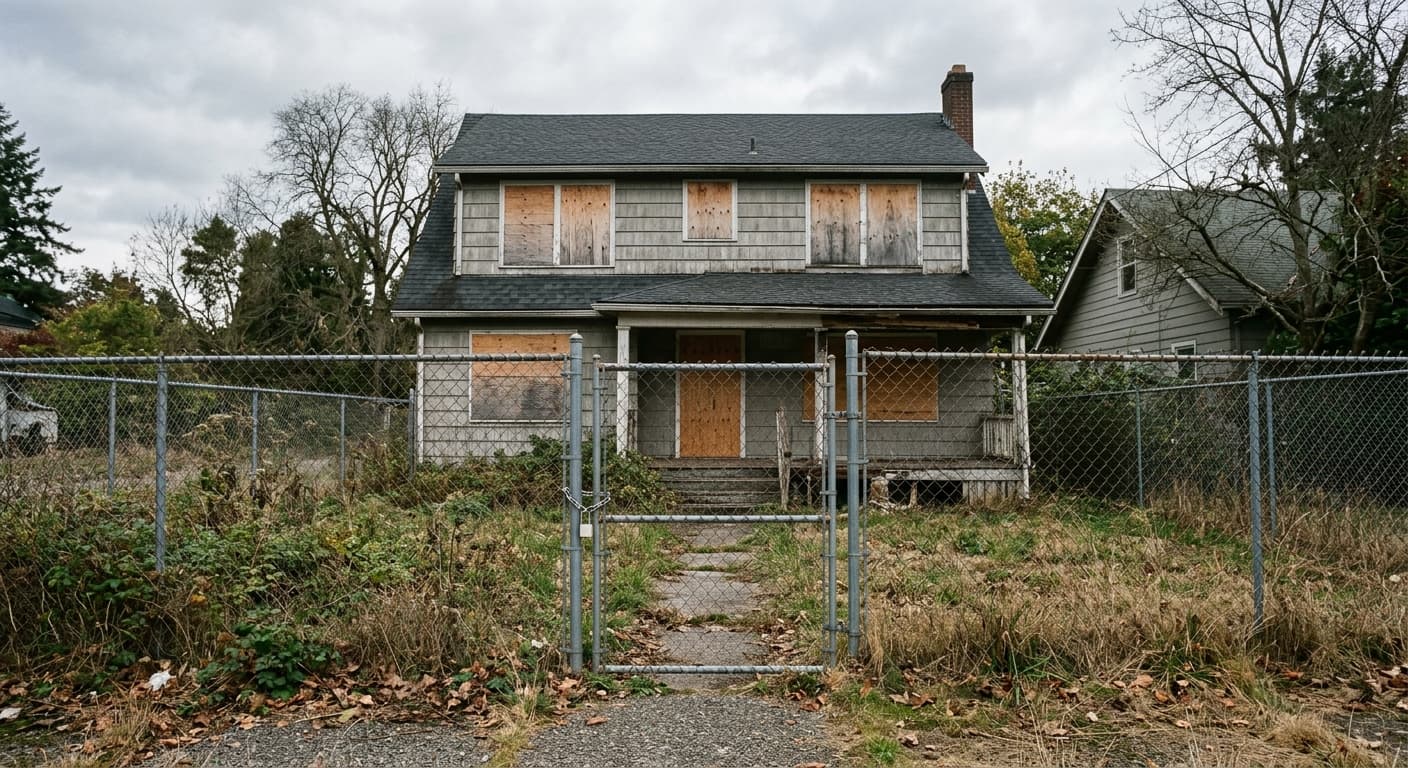
Rhode Island requires a squatter to maintain 10 years of uninterrupted, quiet, peaceful, and actual possession under a claim of fee simple before any adverse possession title can ripen, per R.I. Gen. Laws § 34-7-1. Property owners remove unlawful occupants through the Rhode Island court eviction process or a common-law ejectment action.
Information last verified on May 27, 2026. This article provides general legal information, not legal advice.
Jurisdiction scope: This page covers Rhode Island state law only. For a full comparison across all 50 states, see the national squatters rights guide.
Adverse Possession in Rhode Island: Period and Elements
The Statutory Basis
Rhode Island's adverse possession rule traces to R.I. Gen. Laws § 34-7-1, which provides that a person who holds "uninterrupted, quiet, peaceful and actual seisin and possession" of real property for 10 years while claiming it "as his, her or their proper, sole and rightful estate in fee simple" acquires a title that is "good and rightful" and bars any ejectment action by the prior owner.
The statute is notably concise compared with many other states. Rhode Island courts have interpreted § 34-7-1 to require that possession satisfy the traditional common-law elements: actual, open, notorious, exclusive, hostile, and continuous for the full 10-year period.

Elements Required Under Rhode Island Law
Actual possession. The claimant must physically occupy or use the land in a manner consistent with its character and location. Constructing fences, cultivating crops, maintaining landscaping, or making improvements all support actual possession in Rhode Island.
Open and notorious possession. The occupation must be visible and obvious to any reasonable person, including the true owner. Concealed or secretive use does not satisfy this element. Rhode Island courts look to whether the owner had actual or constructive notice of the adverse use.
Exclusive possession. The claimant must hold the land as an owner would, excluding others. Sharing the property with the true owner or the general public defeats exclusivity.
Hostile possession. The occupation must be without the owner's permission. A tenancy or license negates hostility. Rhode Island follows the objective test: courts ask whether the claimant used the land as an owner would, not whether the claimant subjectively intended to claim title against the true owner.
Continuous and uninterrupted possession. The claimant must maintain possession for the full 10-year period without abandonment or interruption. Brief absences consistent with the property's seasonal use do not break continuity, but voluntary abandonment restarts the clock.
Claim of fee simple. Unlike some states that require only a "claim of right," § 34-7-1 specifically requires the claimant to assert ownership of the fee simple estate. This means a person who openly acknowledges that another holds title cannot satisfy this element.
No Color-of-Title Shortcut and No Tax Requirement
Rhode Island does not provide a reduced statutory period for claimants who hold color of title (a defective deed or other written instrument). The 10-year period applies to all adverse possession claims regardless of whether the claimant has documentary support. Similarly, Rhode Island statutes impose no requirement that the claimant pay property taxes during the possession period. While tax payment may serve as evidence of a claim of ownership, it is not a standalone element under § 34-7-1.

Disability Exception
Section 34-7-2 protects owners who cannot practically defend their property. If the true owner is a minor, of unsound mind, imprisoned, or outside the United States when the adverse possession period begins to run, that owner retains the right to bring an ejectment action within 10 years after the disability is removed. This exception can significantly extend the window available to certain owners and should be evaluated whenever a squatter raises an adverse possession defense.
Interrupting the Clock: Owner's Notice Under § 34-7-6
A Rhode Island property owner can affirmatively interrupt the adverse possession period by filing a written notice with the local land records declaring intent to contest the claimant's possession. Section 34-7-6 authorizes this mechanism. Once notice is properly recorded and served, the clock stops. Owners who suspect a boundary encroachment or unlawful occupation should consider filing such a notice promptly rather than waiting for the 10-year period to expire.
How to Remove a Squatter in Rhode Island
Step 1: Assess Whether Any Tenancy Relationship Exists
Before filing, the owner should determine whether the occupant ever had permission to be on the property. A person who entered with oral or written permission - even permission that has since expired - is treated as a tenant or licensee rather than a pure trespasser. That distinction controls which removal procedure applies.

Step 2: Eviction Under the Rhode Island Residential Landlord and Tenant Act
When the occupant had any form of tenancy, or where the owner chooses to proceed under a more structured statutory framework, the Rhode Island Residential Landlord and Tenant Act (R.I. Gen. Laws § 34-18-1 et seq.) governs removal.
Notice for nonpayment (§ 34-18-35). The rent must be due and in arrears for 15 days before the owner may send the demand notice. Once that threshold is met, the owner sends a written demand in the form set out in § 34-18-56(a), specifying the amount that is 15 days in arrears and warning that the rental agreement terminates unless the breach is cured. The occupant then has 5 days from the mailing date to pay. If payment is not made, the owner may file a complaint in District Court no earlier than the sixth day after mailing. A demand sent before the rent is 15 days in arrears is premature.
Notice for lease violations (§ 34-18-36). For breaches other than nonpayment, the owner sends written notice identifying the specific violation and giving 20 days to cure. If the occupant does not cure, the owner may file for eviction after the termination date stated in the notice, which must be at least 21 days after mailing.
Court hearing and writ of possession. After filing, the District Court schedules a hearing. If the owner prevails, the court issues a judgment for possession. The owner then obtains a writ of execution, which authorizes a sheriff or constable to physically remove the occupant.
Self-help is illegal in Rhode Island. Section 34-18-34 prohibits landlords from removing an occupant by changing locks, cutting utilities, or removing personal property outside of the court process. The tenant may recover possession or terminate the rental agreement, and may recover an amount not more than three months' periodic rent or threefold the actual damages sustained, whichever is greater, plus reasonable attorney's fees. If the tenant terminates the agreement, the landlord must also return all security recoverable under § 34-18-19 and all prepaid rent.
Step 3: Ejectment Action for Pure Trespassers
When the occupant never had permission and no tenancy relationship ever existed, the owner brings a civil action asserting superior title and seeking an order directing the occupant to vacate. Which court hears it depends on what the case actually puts in dispute.
Under § 8-8-3(a)(2), the District Court has exclusive original jurisdiction over landlord and tenant actions brought under chapter 18 of title 34 and over "all other actions for possession of premises and estates," with no monetary limit. Section 8-2-14(a) gives the Superior Court original jurisdiction over actions at law "where title to real estate or some right or interest therein is in issue," but expressly excludes actions for possession of tenements let or held at will or by sufferance.
In practice, a straightforward possession claim against an occupant with no colorable claim belongs in District Court. Superior Court is the correct forum when the occupant asserts adverse possession or another genuine title claim that the case must resolve. A successful judgment is enforced by a sheriff or constable.
Step 4: Criminal Trespass
Under R.I. Gen. Laws § 11-44-26, remaining on property after being told to leave is a misdemeanor in Rhode Island. But a statutory carve-out removes the most common squatter fact pattern from this section entirely, and owners need to understand it before calling police.
Section 11-44-26(b) provides that the section does not apply to "tenants or occupants of residential premises who, having rightfully entered the premises at the commencement of the tenancy or occupancy, remain after that tenancy or occupancy has been or is alleged to have been terminated." For those occupants, the statute states that the owner or landlord "may recover possession only through appropriate civil proceedings."
That means anyone who first entered lawfully, including a holdover tenant, a former roommate, or an invited guest, cannot be handled as a criminal trespasser no matter how the occupancy ended. Officers responding to that situation will normally treat it as a civil matter and decline to remove the occupant.
Criminal trespass is available only against an occupant who never entered rightfully at all. Even then, criminal proceedings are separate from and do not substitute for the civil process needed to obtain a formal possession judgment.
No 2024-2025 Expedited Administrative Removal Law
Several states enacted legislation in 2024 and 2025 creating fast-track administrative or police-assisted removal procedures for squatters outside of ordinary court proceedings. Research of the Rhode Island General Assembly's 2024 and 2025 sessions found no enacted statute creating such an expedited process in Rhode Island. Property owners in Rhode Island must use the existing District Court eviction process or Superior Court ejectment action. Owners seeking faster resolution should file promptly and request an expedited hearing from the court.
Legal disclaimer: This article provides general legal information about Rhode Island squatters rights and adverse possession laws. It is not legal advice and does not create an attorney-client relationship. Property law varies by specific circumstances, and outcomes depend on the facts of each individual case. Consult a licensed Rhode Island real estate attorney for guidance on your specific situation.
For a full comparison of squatters rights laws across all 50 states, see the national squatters rights guide.
Page maintained by RecordingLaw.com. Last reviewed May 27, 2026. This page covers Rhode Island state law only.
More Rhode Island Laws
Frequently Asked Questions
How long does a squatter have to stay in Rhode Island before claiming ownership?
A squatter must maintain 10 years of uninterrupted, quiet, peaceful, and actual possession while claiming fee simple ownership under R.I. Gen. Laws § 34-7-1. There is no shorter period for any type of claim in Rhode Island.
Does a squatter have to pay property taxes to claim adverse possession in Rhode Island?
No. Rhode Island law does not require a squatter to pay property taxes as an element of adverse possession. Tax payment may serve as supporting evidence of a claim, but it is not required under § 34-7-1.
Can a Rhode Island property owner stop the adverse possession clock before 10 years run?
Yes. Under § 34-7-6, an owner can file a written notice with the land records declaring intent to contest the claimant's possession. Filing and serving this notice interrupts the adverse possession period. Bringing an ejectment action also interrupts the clock.
What is the fastest legal way to remove a squatter in Rhode Island?
Rhode Island has no expedited administrative removal law as of 2026. The fastest route for an occupant who ever had a tenancy is an eviction complaint in District Court under the Landlord and Tenant Act (§ 34-18-1 et seq.). For a pure trespasser with no tenancy history, § 8-8-3(a)(2) gives the District Court exclusive original jurisdiction over all other actions for possession of premises and estates; Superior Court is the right forum only where title to the real estate is genuinely in issue, such as when the occupant asserts adverse possession. Criminal trespass under § 11-44-26 is narrower than owners expect, because § 11-44-26(b) exempts occupants who entered rightfully and stayed after the occupancy ended.
Can a landlord change the locks or shut off utilities to remove a squatter in Rhode Island?
No. Rhode Island law (§ 34-18-34) prohibits self-help removal, including changing locks, removing doors or windows, or cutting utilities. A landlord who uses self-help may be liable for up to three months' periodic rent or three times the tenant's actual damages, whichever is greater, plus reasonable attorney's fees, and the tenant may also recover possession or terminate the agreement. The owner must obtain a court order and have a sheriff or constable carry out the removal.
Can Rhode Island police remove a squatter for criminal trespass?
Only if the occupant never entered the property rightfully. R.I. Gen. Laws § 11-44-26(b) exempts tenants and occupants of residential premises who rightfully entered at the start of the tenancy or occupancy and remain after it has been or is alleged to have been terminated, and provides that the owner may recover possession only through appropriate civil proceedings. A holdover tenant, a former roommate, or a guest who was let in is therefore a civil eviction matter, not a police matter.
Does the 10-year period apply if the true owner is a minor or has a disability?
No. Under § 34-7-2, owners who are minors, of unsound mind, imprisoned, or outside the United States when the adverse possession clock starts have 10 years after the disability is removed to bring an ejectment action, regardless of how long the squatter has been in possession.
Can a squatter claim adverse possession of property that is protected open space or a cemetery in Rhode Island?
Only for land held by a nonprofit. Section 34-7-9 prohibits adverse possession of land held or preserved by a nonprofit corporation or nonprofit association for conservation, open space, or cemetery purposes. Its text does not extend to government-owned parks, privately owned cemeteries, or other land used for those purposes that is not held by a nonprofit.
Updates
Corrected the removal sections: criminal trespass under R.I. Gen. Laws § 11-44-26 does not reach an occupant who entered rightfully (§ 11-44-26(b)), a nonpayment demand may not be sent until rent is 15 days in arrears, self-help exposes an owner to up to three months' rent or treble damages plus attorney's fees, and possession actions against a pure trespasser belong in District Court unless title is genuinely in issue.
Independently fact-checked against the cited primary sources; governing law re-checked for recent changes
Corrected the scope of R.I. Gen. Laws § 34-7-9's adverse-possession immunity for conservation/open-space/cemetery land: it protects only land held or preserved by a nonprofit corporation or nonprofit association, not any land 'designated for' those purposes.
Governing law re-checked for recent changes
Reviewed and approved by an editor
The Law Behind This Article
This article rests on the statutory provisions below, held in our own legal record and retrieved from the official source. Tap a section to read the operative text.
Rhode Island General Laws, Title 34: Property, Chapter 34-7: By Possession and Prescription
§ 34-7-1Conclusive title by peaceful possession under claim of titleIn force
Where any person or persons, or others from whom he, she, or they derive their title, either by themselves, tenants or lessees, shall have been for the space of ten (10) years in the uninterrupted, quiet, peaceful and actual seisin and possession of any lands, tenements or hereditaments for and during that time, claiming the same as his, her or their proper, sole and rightful estate in fee simple, the actual seisin and possession shall be allowed to give and make a good and rightful title to the person or persons, their heirs and assigns forever; and any plaintiff suing for the recovery of any such lands may rely upon the possession as conclusive title thereto, and this chapter being pleaded in bar to any action that shall be brought for the lands, tenements or hereditaments, and the actual seisin and possession being duly proved, shall be allowed to be good, valid and effectual in law for barring the action.
Official text (excerpt) · last checked 2026-09-08 · Read the full text in our law library · Verify at webserver.rilegislature.gov
Cited in 6 court opinions in our collectionLatest citing opinion in our collection: 2022
Opinions citing this section in our collection:
- Riverside Burial Society of Pawtucket v. Chitwood, 99-2713 (2003) (Superior Court of Rhode Island 2003)“…in excess of the statutory requirement of ten years. See R.I. Gen. Laws § 34-7-1 (1956). Plaintiff insists that its adv…”
- Hazard v. East Hills, Inc. (Superior Court of Rhode Island 2011)“…a two-count Counterclaim for: (1) adverse possession under R.I. Gen. Laws § 34-7-1 ; and (2) bad faith. As part of its adv…”
- Pascoag Reservoir & Dam, LLC v. Rhode Island (District Court, D. Rhode Island 2002, 217 F. Supp. 2d 206)“…ns must be maintained over a period of time set by statute. R.I. Gen. Laws § 34-7-1. In Rhode Island, to complete a transfe…”
Identified automatically from the court opinions citing this section — not a ranking of which case controls.
§ 34-7-2Absentees and persons under disability — Reversioners and remaindermenIn force
Nothing in this chapter shall be so construed, deemed or taken, as to extend to prejudice the rights and claims of persons under age, persons of unsound mind, or persons imprisoned or beyond the limits of the United States, if they bring their suits within the space of ten (10) years next after the impediment is removed; nor to bar any person or persons having any estate in reversion or remainder, expectant or depending, in any lands, tenements or hereditaments, after the end or determination of the estate for years, life or lives, the person or persons pursuing his or their title by due course of law within ten (10) years after his, her, or their right of action shall accrue.
Official text (excerpt) · last checked 2026-07-30 · Read the full text in our law library · Verify at webserver.rilegislature.gov
§ 34-7-6Notice of intent to dispute interrupting adverse possessionIn force
Whenever the legal owner of any lands anticipates that any other person or persons may obtain the title to those lands, or any way, easement or privilege therein, by possession under the provisions of this chapter, he or she may give notice in writing to the person claiming or using the lands, way, easement, or privilege, of his or her intention to dispute any right arising from that claim or use; and the notice, served and recorded as hereinafter provided, shall be deemed an interruption of the use and prevent the acquiring of any right thereto by the continuance of the use for any length of time thereafter.
Official text (excerpt) · last checked 2026-07-30 · Read the full text in our law library · Verify at webserver.rilegislature.gov
§ 34-7-9Land preserved for open space, conservation or cemetery purposesIn force
Any land held or preserved by a nonprofit corporation or nonprofit association for purposes of conservation, open space, or a cemetery is not subject to adverse possession or prescription.
Official text (excerpt) · last checked 2026-07-30 · Read the full text in our law library · Verify at webserver.rilegislature.gov
Rhode Island General Laws, Title 34: Property, Chapter 34-18: Residential Landlord and Tenant Act
§ 34-18-35Eviction for nonpayment of rentIn forcecited in 2 of our articles
(a) If any part of the stipulated rent is due and in arrears for fifteen (15) days, the landlord shall send a written notice, in a form substantially similar to that provided in § 34-18-56(a), specifying the amount of the rent which is fifteen (15) days in arrears, making demand for the rent, and notifying the tenant that unless he or she cures the breach within five (5) days of the date of mailing of the notice, the rental agreement shall terminate, and the landlord shall commence an eviction action in the appropriate district court or housing court. (b) If the tenant fails to cure his or her breach by paying the stipulated rent in arrears within five (5) days of the date of mailing of the notice, the landlord may commence an eviction action against the tenant, which shall be filed no earlier than the sixth (6th) day after mailing of the written demand notice. The action shall be commenced by filing a “Complaint for Eviction for Nonpayment of Rent” in the appropriate court in the form provided in § 34-18-56(d). (c) The summons for eviction for nonpayment of rent shall specify the date for hearing and be in the form provided in § 34-18-56(g).
Official text (excerpt) · last checked 2026-07-30 · Read the full text in our law library · Verify at webserver.rilegislature.gov
Also relied on in: Rhode Island Landlord-Tenant Laws (2026): Deposits, Notice, and Tenant Rights
§ 34-18-36Eviction for noncompliance with rental agreementIn force
(a) Except as provided in this chapter, if there is a material noncompliance by the tenant with the rental agreement or a noncompliance with § 34-18-24 materially affecting health and safety, the landlord shall deliver a written demand notice to the tenant, in a form substantially similar to that provided in § 34-18-56(b), specifying: (1) The acts and/or omissions constituting the breach of the rental agreement or of § 34-18-24; (2) The acts, repairs, or payment of damages, which are necessary to remedy the breach; and (3) That unless the breach is remedied within twenty (20) days of mailing of the notice the rental agreement shall terminate upon a specified date, which shall not be less than twenty-one (21) days after the mailing of the notice. (b) Unless it is a violation of § 34-18-24(8), (9), or (10), if the tenant adequately remedies the breach before the date specified in the notice, the rental agreement shall not terminate. If the breach is not remedied, the landlord may commence an eviction action, which shall be filed no earlier than the first day following the termination date specified in the written demand notice.
Official text (excerpt) · last checked 2026-07-30 · Read the full text in our law library · Verify at webserver.rilegislature.gov
Cited in 2 court opinions in our collectionLatest citing opinion in our collection: 2011
Opinions citing this section in our collection:
- URI Student Senate v. Town of Narragansett (Court of Appeals for the First Circuit 2011, 631 F.3d 1)“…parate provisions for what it calls "seasonal" tenants. See R.I. Gen. Laws § 34-18-36(f). The case at hand does not turn on a…”
Identified automatically from the court opinions citing this section — not a ranking of which case controls.
§ 34-18-1Short titleIn forcecited in 4 of our articles
This chapter shall be known and may be cited as the “Residential Landlord and Tenant Act”.
Official text (excerpt) · last checked 2026-07-30 · Read the full text in our law library · Verify at webserver.rilegislature.gov
Cited in 2 court opinions in our collectionLatest citing opinion in our collection: 2011
Opinions citing this section in our collection:
- URI Student Senate v. Town of Narragansett (Court of Appeals for the First Circuit 2011, 631 F.3d 1)“…hode Island Residential Landlord and Tenant Act (L&T Act), R.I. Gen. Laws §§ 34-18-1 to 34-18-57. As its ti…”
Identified automatically from the court opinions citing this section — not a ranking of which case controls.
Also relied on in: Rhode Island Landlord-Tenant Recording Laws: Renter and Landlord Rights (2026), Rhode Island Ring Doorbell Laws: What You Need to Know in 2026
§ 34-18-34Tenant’s remedies for landlord’s unlawful ouster, exclusion, or diminution of serviceIn force
If a landlord unlawfully removes or excludes the tenant from the premises or willfully diminishes services to the tenant by interrupting or causing the interruption of heat, running water, hot water, electric, gas, or other essential service, the tenant may recover possession or terminate the rental agreement and, in either case, recover an amount not more than three (3) months periodic rent or threefold the actual damages sustained by him or her, whichever is greater, and reasonable attorney’s fees. If the rental agreement is terminated the landlord shall return all security recoverable under § 34-18-19 and all prepaid rent.
Official text (excerpt) · last checked 2026-07-30 · Read the full text in our law library · Verify at webserver.rilegislature.gov
Rhode Island General Laws, Title 11: Criminal Offenses, Chapter 11-44: Trespass and Vandalism
§ 11-44-26Willful trespass — Remaining on land after warning — Exemption for tenants holding overIn forcecited in 2 of our articles
(a) Every person who willfully trespasses or, having no legitimate purpose for his or her presence, remains upon the land of another or upon the premises or curtilage of the domicile of any person legally entitled to the possession of that domicile, after having been forbidden to do so by the owner of the land or the owner’s duly authorized agent or a person legally entitled to the possession of the premises, shall be punished by a fine not exceeding one thousand dollars ($1,000), or imprisonment for a term not exceeding one year, or both. (b) This section shall not apply to tenants or occupants of residential premises who, having rightfully entered the premises at the commencement of the tenancy or occupancy, remain after that tenancy or occupancy has been or is alleged to have been terminated. The owner or landlord of the premises may recover possession only through appropriate civil proceedings. (c) Where the provisions of The Domestic Violence Prevention Act, chapter 29 of title 12, are applicable, the penalties for violation of this section shall also include the penalties as provided in § 12-29-5.
Official text (excerpt) · last checked 2026-07-30 · Read the full text in our law library · Verify at webserver.rilegislature.gov
Cited in 2 court opinions in our collectionLatest citing opinion in our collection: 2025
Opinions citing this section in our collection:
- Peltier v. Roy (District Court, D. Rhode Island 1978, 453 F. Supp. 1373)“…as committed or is committing it. It is further provided, R.I.Gen.Laws § 11-44-26, that: Every person who wilfully tres…”
- Ware v. Cranston Public Schools (District Court, D. Rhode Island 2025)“…ate law claims without prejudice. Pursuant to R.I. Gen. Laws § 11-44-26 (governing willful trespass) and R.I. G…”
Identified automatically from the court opinions citing this section — not a ranking of which case controls.
Also relied on in: Rhode Island Drone Laws: Privacy, Trespass, and Voyeurism Rules
Rhode Island General Laws, Title 8: Courts and Civil Procedure
§ 8-2-14Jurisdiction of actions at lawIn force
(a) The superior court shall have original jurisdiction of all actions at law where title to real estate or some right or interest therein is in issue, except actions for possession of tenements let or held at will or by sufferance; and shall have exclusive original jurisdiction of all other actions at law in which the amount in controversy shall exceed the sum of ten thousand dollars ($10,000); and shall also have concurrent original jurisdiction with the district court in all other actions at law in which the amount in controversy exceeds the sum of five thousand dollars ($5,000) and does not exceed ten thousand dollars ($10,000); provided, that the plaintiff shall not recover costs unless he or she shall recover in such action not less than five thousand dollars ($5,000), or unless the action is one in which the title to real estate or some right or interest therein is in question, or unless in the discretion of the court, on motion, costs are awarded.
Official text (excerpt) · last checked 2026-07-30 · Read the full text in our law library · Verify at webserver.rilegislature.gov
Cited in 2 court opinions in our collectionLatest citing opinion in our collection: 2025
Opinions citing this section in our collection:
- Smithfield Estates v. Heirs of Hathaway (Superior Court of Rhode Island 2011)“…wn of Smithfield, Rhode Island. Jurisdiction is pursuant to R.I. Gen. Laws 1956 § 8-2-14 .…”
- 289 Kilvert, LLC v. SBC Tower Holdings LLC (Court of Appeals for the First Circuit 2025, 133 F.4th 1)“…p federal courts of jurisdiction. See, e.g., R.I. Gen. Laws § 8-2-14(a) (granting exclusive jurisdiction to…”
Identified automatically from the court opinions citing this section — not a ranking of which case controls.
§ 8-8-3JurisdictionIn force
(a) The district court shall have exclusive original jurisdiction of: (1) All civil actions at law, but not causes in equity or those following the course of equity except as provided in § 8-8-3.1 and chapter 8.1 of this title, wherein the amount in controversy does not exceed five thousand dollars ($5,000); (2) All actions between landlords and tenants pursuant to chapter 18 of title 34 and all other actions for possession of premises and estates notwithstanding the provisions of subsection (c) of this section; (3) All actions of replevin where the goods and chattels to be replevied are of the value of five thousand dollars ($5,000) or less; (4) All violations of minimum housing standards whether established by chapter 24.3 of title 45 or by any municipal ordinance, rule, or regulation passed pursuant to the authority granted either by chapter 24.2 of title 45 or by special act of the general assembly governing minimum housing standards; except that in the event the city of Providence or town of North Providence shall by ordinance create a court for the purpose of exercising jurisdiction over violations of minimum housing standards, Providence Municipal Zoning Code and the…
Official text (excerpt) · last checked 2026-07-30 · Read the full text in our law library · Verify at webserver.rilegislature.gov
Cited in 1 court opinions in our collectionLatest citing opinion in our collection: 2025
Opinions citing this section in our collection:
- 289 Kilvert, LLC v. SBC Tower Holdings LLC (Court of Appeals for the First Circuit 2025, 133 F.4th 1)“…ircuit Judge. May a Rhode Island statute, R.I. Gen. Laws § 8-8-3(a)(2) (2025), allocating jurisdiction o…”
Identified automatically from the court opinions citing this section — not a ranking of which case controls.
Search our full record of US law — 2.1 million sections, every state + federal →
Sources and References
- R.I. Gen. Laws § 34-7-1 -- Adverse Possession (10-year period)(webserver.rilegislature.gov)
- R.I. Gen. Laws § 34-7-2 -- Disability Exceptions to Adverse Possession(webserver.rilegislature.gov)
- R.I. Gen. Laws § 34-7-6 -- Owner Notice to Interrupt Adverse Possession(webserver.rilegislature.gov)
- R.I. Gen. Laws § 34-7-9 -- Adverse Possession Prohibited for Open Space and Cemetery Land(webserver.rilegislature.gov)
- R.I. Gen. Laws § 34-18-1 et seq. -- Rhode Island Residential Landlord and Tenant Act(webserver.rilegislature.gov)
- R.I. Gen. Laws § 34-18-35 -- Eviction for Nonpayment of Rent(webserver.rilegislature.gov)
- R.I. Gen. Laws § 34-18-36 -- Eviction for Lease Violations(webserver.rilegislature.gov)
- R.I. Gen. Laws § 11-44-26 -- Trespass After Warning; residential-occupant exemption in subsection (b)(webserver.rilegislature.gov)
- R.I. Gen. Laws § 34-18-34 -- Prohibited Self-Help; tenant remedies for unlawful ouster(webserver.rilegislature.gov)
- R.I. Gen. Laws § 8-8-3 -- District Court exclusive original jurisdiction over actions for possession of premises and estates(webserver.rilegislature.gov)
- R.I. Gen. Laws § 8-2-14 -- Superior Court original jurisdiction where title to real estate is in issue(webserver.rilegislature.gov)