
South Carolina
South Carolina Slip and Fall Laws: Proving Premises Liability
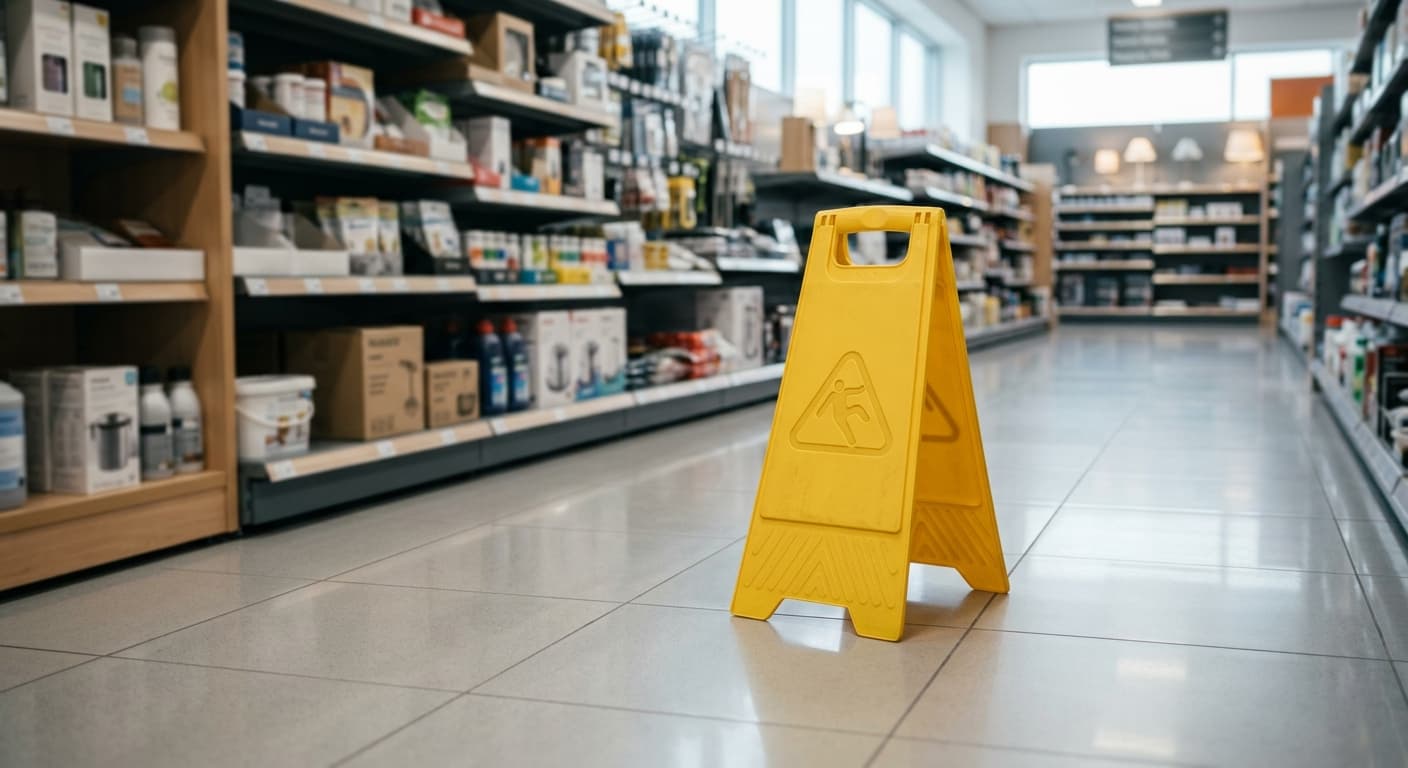
To win a slip and fall claim in South Carolina, you must prove the property owner was negligent, had actual or constructive notice of the hazardous condition, and that the hazard caused your injury. South Carolina follows modified-comparative negligence with a 51% bar, adopted in Nelson v. Concrete Supply Co., 303 S.C. 243 (1991).
Proving a slip and fall claim in South Carolina
South Carolina premises liability law requires you to establish several elements to hold a property owner liable. First, the owner or occupier must have owed you a legal duty of care. The duty owed depends on your legal status as a visitor: invitees (customers, business guests) receive the highest protection, licensees receive a lesser duty, and trespassers receive only the most basic protections. For invitees, the owner must exercise ordinary care to keep the premises reasonably safe.
Second, a dangerous condition must have existed on the property. Third, and critically, the owner must have had actual or constructive notice of the hazard before your fall. Actual notice means the owner knew directly about the condition. Constructive notice means the hazard existed long enough that a reasonably careful owner would have discovered and corrected it through ordinary diligence. The length of time the condition persisted and the frequency of inspections are central factors in establishing constructive notice.
Fourth, that dangerous condition must have caused your injuries. You must show a direct causal link between the owner's failure and the harm you suffered. Under Wintersteen v. Food Lion, Inc., 344 S.C. 32, 542 S.E.2d 728 (2001), an invitee must show the owner had notice of the specific hazard and failed to exercise reasonable care to remedy or warn of it.
The open-and-obvious doctrine in South Carolina
South Carolina treats the open-and-obvious doctrine as a complete bar to liability, not merely a factor that reduces damages. This is one of the most important and defendant-favorable features of South Carolina premises law, and it can end your claim entirely before a jury ever hears it.

The South Carolina Supreme Court adopted Restatement (Second) of Torts Section 343A in Callander v. Charleston Doughnut Corp., 305 S.C. 123, 406 S.E.2d 361 (1991). Under that rule, a possessor of land is not liable for physical harm caused to invitees by any condition on the land whose danger is known or obvious to them, unless the possessor should anticipate the harm despite such obviousness. Because open-and-obvious goes to the threshold question of duty, not just fault, a court can dismiss the case as a matter of law if the hazard was plainly visible and no duty exception applies.
There is one important exception that can preserve a claim. In Hancock v. Mid-South Management Co., 381 S.C. 326, 673 S.E.2d 801 (2009), the South Carolina Supreme Court reaffirmed that an owner can still be held liable despite an obvious condition if the owner should have anticipated that the invitee would encounter or fail to avoid the hazard because of distraction or because the invitee was forced by circumstances to confront it. In Hancock, this exception allowed the plaintiff's claim to reach the jury. If you were distracted, had no reasonable alternative path, or were compelled by the layout of the property to pass through an obviously dangerous area, your attorney may be able to invoke this exception.
South Carolina has NOT adopted the modern comparative-fault approach that some other states use, under which open-and-obvious status simply reduces recovery rather than eliminating the duty entirely. In SC, if no duty exists, the claim fails as a matter of law.
Ice, snow, and natural accumulation in South Carolina
South Carolina does not apply a special "natural accumulation" no-duty rule for ice and snow falls. Unlike states such as Illinois and Ohio, where that doctrine can categorically shield owners from liability for naturally occurring accumulations, South Carolina applies ordinary premises liability principles to weather-related hazards.
Under the standard framework established in Wintersteen v. Food Lion, Inc., 344 S.C. 32, 542 S.E.2d 728 (2001), a possessor owes invitees a duty to exercise reasonable care to keep the premises in a reasonably safe condition and to warn of or remedy latent dangers that the owner knows or should know about. That duty extends to weather-related conditions that the owner is aware of or that have existed long enough to impute constructive notice.
As a practical matter, South Carolina's climate produces little snow and ice, so there is a limited body of case law specifically addressing winter precipitation. Courts apply the ordinary negligence framework: the key questions are whether the owner had notice of the icy or wet condition and whether a reasonably prudent owner would have taken steps to address it. One important overlay: even if an owner is negligent in failing to address a weather-related hazard, the open-and-obvious doctrine can still bar a claim if the icy surface was plainly visible, unless the Hancock anticipation-of-harm exception applies.
How fault is shared: South Carolina's negligence rule
South Carolina follows modified-comparative negligence with a 51% bar. This rule was adopted by the South Carolina Supreme Court in Nelson v. Concrete Supply Co., 303 S.C. 243, 399 S.E.2d 783 (1991), which abolished the prior pure-contributory-negligence rule that had barred any recovery if the plaintiff was even slightly at fault.

Under the current rule, a plaintiff may recover only if their share of fault is 50% or less. If the jury finds the plaintiff 51% or more at fault, the plaintiff recovers nothing. When fault is at or below 50%, damages are reduced proportionately. For example, if you suffered $80,000 in damages and a jury finds you 30% at fault and the property owner 70% at fault, you recover $56,000 after the 30% reduction.
When there are multiple defendants, their fault is combined and compared against the plaintiff's percentage. South Carolina is not a pure-contributory state; being partly at fault does not automatically bar all recovery, as it would in states like Virginia or Maryland.
It is worth noting how the comparative negligence rule interacts with the open-and-obvious doctrine in South Carolina. Comparative negligence governs the plaintiff's own carelessness once a duty is established. Open-and-obvious, by contrast, goes to whether any duty exists at all. If a court finds no duty, comparative negligence does not apply; the case is over before fault percentages are assigned.
Deadlines: statute of limitations and government claims
The standard personal-injury statute of limitations in South Carolina is 3 years, set by S.C. Code Ann. Section 15-3-530(5). The clock generally starts on the date of the injury. Under Section 15-3-535, the discovery rule can delay the start of the limitations period: the clock runs from when the plaintiff knew or by reasonable diligence should have known of the cause of action. In most slip and fall cases, the fall date and the discovery date coincide, so the 3-year period begins on the day of the fall.
Wrongful death and survival claims are also subject to a 3-year limitations period in South Carolina.
If you were injured on property owned or operated by a state or local government entity, the South Carolina Tort Claims Act (S.C. Code Ann. ch. 78, tit. 15) governs your claim. The direct litigation deadline under Section 15-78-110 is 2 years from discovery, not 3 years. That 2-year period can be extended to 3 years, but only if you file an optional verified claim within 1 year of the date the loss was or should have been discovered (Section 15-78-80(d)).
Critically, filing a verified claim is NOT a mandatory prerequisite to suing a government entity in South Carolina. Under Section 15-78-90(b), a claimant may sue "whether or not the claim is filed." The verified claim mechanism is purely optional and exists only to extend the limitations period from 2 to 3 years. If you want the longer period, the verified claim must be received within 365 days of the loss. If you do not file a verified claim, the standard litigation deadline is 2 years from discovery.
For more on South Carolina's general personal-injury deadlines, see the South Carolina statute of limitations page.
What a South Carolina slip and fall claim is worth
A South Carolina slip and fall settlement or verdict can include economic damages (medical bills, emergency care, surgery costs, lost wages, future medical treatment, and rehabilitation expenses) and non-economic damages (pain and suffering, emotional distress, permanent impairment, disfigurement, and loss of enjoyment of life). South Carolina does not impose a general statutory cap on non-economic damages in ordinary personal-injury cases, so the ceiling on recovery is set by the facts and the jury's assessment.

Your recovery is reduced proportionately by your share of fault under the modified-51 rule. A 20% finding of fault against you on a $100,000 claim reduces your net recovery to $80,000. If the jury assigns you 51% or more of the fault, you receive nothing.
Several factors heavily influence claim value in South Carolina. The severity and permanence of your injuries (fractures, traumatic brain injuries, and surgeries carry higher values than soft-tissue strains). The clarity of the owner's actual or constructive notice of the hazard. Whether the open-and-obvious doctrine is likely to be raised as a defense, since in South Carolina that defense can defeat the claim entirely rather than merely reduce damages. And whether the fall occurred on government property, which triggers the shorter 2-year litigation deadline and requires careful attention to the verified-claim filing window.
Use the South Carolina slip and fall settlement calculator for a rough estimate based on your specific facts.
This article is general legal information, not legal advice. Premises liability law varies by state and changes, and case values depend on the specific facts. For advice about a specific fall, consult a licensed attorney in South Carolina.
See also: Slip and Fall Laws by State | South Carolina Slip and Fall Settlement Calculator
More South Carolina Laws
Frequently Asked Questions
How do I prove a slip and fall in South Carolina?
You must show that the property owner owed you a duty of care based on your visitor status (invitee, licensee, or trespasser), that a dangerous condition existed, that the owner had actual or constructive notice of the hazard before your fall, and that the hazard caused your injury. For invitees, the standard is whether the owner exercised reasonable care to keep the premises safe, as established in Wintersteen v. Food Lion, Inc., 344 S.C. 32 (2001).
Is South Carolina an open-and-obvious state?
Yes, and it is one of the strictest. South Carolina treats open-and-obvious as a COMPLETE BAR to the landowner's duty under Restatement (Second) of Torts Section 343A, adopted in Callander v. Charleston Doughnut Corp., 305 S.C. 123 (1991). If a hazard was known or obvious, the court can find no duty exists and dismiss the case as a matter of law. One exception: under Hancock v. Mid-South Management Co., 381 S.C. 326 (2009), an owner can still be liable if they should have anticipated the harm despite the obviousness (for example, because an invitee was distracted or had no choice but to encounter the danger).
Can I sue for falling on ice or snow in South Carolina?
Potentially yes. South Carolina has no special 'natural accumulation' rule shielding owners from liability for weather-related falls. Ordinary reasonable-care premises principles apply: if the owner had notice of the icy condition and failed to address it, they may be liable. However, an openly visible sheet of ice could trigger the open-and-obvious doctrine, which can bar the claim entirely unless the Hancock anticipation-of-harm exception applies.
How long do I have to file a slip and fall lawsuit in South Carolina?
For falls on private property, 3 years from the date of injury (or discovery) under S.C. Code Ann. Section 15-3-530(5). For falls on government property, the litigation deadline is 2 years from discovery under Section 15-78-110, extended to 3 years only if you file an optional verified claim within 1 year of the loss. Filing the verified claim is NOT required to sue the government; it only extends the deadline.
Can I recover if I was partly at fault for my fall in South Carolina?
Yes, as long as your fault does not exceed 50%. South Carolina follows modified-comparative negligence with a 51% bar adopted in Nelson v. Concrete Supply Co., 303 S.C. 243 (1991). If you are 50% or less at fault, your damages are reduced proportionately. At 51% or more, you recover nothing. Note that if the open-and-obvious doctrine bars the owner's duty entirely, comparative fault percentages are never reached.
How much is a South Carolina slip and fall claim worth?
Value depends on injury severity, medical costs, lost wages, pain and suffering, and how fault is apportioned. South Carolina has no general statutory cap on non-economic damages in personal-injury cases. Your net recovery is reduced by your comparative-fault percentage. The open-and-obvious doctrine is a significant variable because in South Carolina it can eliminate liability entirely, not just reduce damages. Use the South Carolina slip and fall settlement calculator for a fact-specific estimate.
What is the notice requirement if I was hurt on South Carolina government property?
There is no mandatory short notice deadline. Under the SC Tort Claims Act (Section 15-78-90(b)), you may sue the government entity whether or not you file a verified claim. Filing a verified claim is optional and exists only to extend the statute of limitations from 2 to 3 years. If you want that extension, the verified claim must be received within 1 year of the date the loss was or should have been discovered (Section 15-78-80(d)). If you skip the verified claim, the lawsuit itself must be filed within 2 years of discovery.
Injured in South Carolina? Get a free case review from a personal-injury attorney
If someone else's negligence caused your injury, you may be owed compensation for medical bills, lost wages, and pain and suffering. Get a free, no-obligation review from a South Carolina personal-injury attorney. Most work on contingency, so there is no upfront cost.
Sources and References
- S.C. Code Ann. Title 15, Chapter 78 (Tort Claims Act, Sections 15-78-80, 15-78-90, 15-78-110)(scstatehouse.gov).gov
- Callander v. Charleston Doughnut Corp., 305 S.C. 123, 406 S.E.2d 361 (1991)(scstatehouse.gov).gov
- Hancock v. Mid-South Management Co., 381 S.C. 326, 673 S.E.2d 801 (2009)(scstatehouse.gov).gov
- Nelson v. Concrete Supply Co., 303 S.C. 243, 399 S.E.2d 783 (1991)(scstatehouse.gov).gov
- Wintersteen v. Food Lion, Inc., 344 S.C. 32, 542 S.E.2d 728 (2001)(scstatehouse.gov).gov