
New York
New York Slip and Fall Laws: Proving Premises Liability
Independently fact-checked against primary sources (last audited August 17, 2026). · Reviewed by the RecordingLaw editorial team. · Law checked current as of August 17, 2026. · 5 primary sources cited on this page. How we verify our legal content

To win a slip and fall claim in New York, you must prove that a property owner was negligent (failed to maintain reasonably safe premises), had actual or constructive notice of the hazard, and that the hazard caused your injury. New York applies pure comparative negligence under CPLR section 1411, so partial fault reduces but never bars your recovery.
Proving a slip and fall claim in New York
New York landowners owe the people on their property a single duty: reasonable care under the circumstances. The Court of Appeals adopted that standard in Basso v. Miller, 40 N.Y.2d 233, 241 (1976), abandoning the old trespasser, licensee, and invitee categories and holding that "foreseeability shall be a measure of liability." No statute creates this duty; Basso does. Status is no longer determinative, though Basso noted that "considerations of who plaintiff is and what his purpose is upon the land are factors which, if known, may be included in arriving at what would be reasonable care under the circumstances."
To prevail on a slip and fall claim, you must establish that a hazardous condition existed, that the owner had notice of it, that the owner failed to remedy it within a reasonable time, and that this failure caused your injury. Each element matters, but notice is typically the hardest to prove.
New York courts recognize two forms of owner notice. Actual notice means the owner or its employees knew about the specific hazard before your fall, through a complaint, an inspection report, or direct observation. Constructive notice is established when the condition was visible and apparent and had existed for a sufficient length of time before the accident that, in the exercise of reasonable care, the owner should have discovered and corrected it.
The leading New York Court of Appeals decision on constructive notice is Gordon v. American Museum of Natural History, 67 N.Y.2d 836 (1986). In Gordon, the court held that a plaintiff cannot raise a constructive-notice claim simply by pointing to the presence of a foreign substance on a floor; the plaintiff must show the condition existed for a sufficient period of time to allow the owner to discover and remedy it. Evidence used to establish constructive notice includes surveillance footage showing how long the hazard was present, maintenance and inspection logs, the appearance of the hazard (dried, worn, or discolored substances suggest a longer presence), and witness testimony.
New York also recognizes the separate "trivial defect" doctrine from Trincere v. County of Suffolk, 90 N.Y.2d 976 (1997). A surface irregularity that is genuinely trivial given its width, depth, elevation, and surrounding circumstances can defeat a premises liability claim on the merits, even if it caused a fall. There is no fixed height threshold; courts weigh all of the circumstances. A gap or crack that would constitute a hazard in a busy pedestrian area may be trivial in a low-traffic location.
The open-and-obvious doctrine in New York
New York treats an open and obvious hazard as a limit on the duty to warn about it, not as a doctrine that erases the landowner's separate duty to keep the premises reasonably safe. That split is what makes the state comparatively favorable to injured plaintiffs, and it is also why the same doctrine can win a case for a defendant on one theory and fail on another.
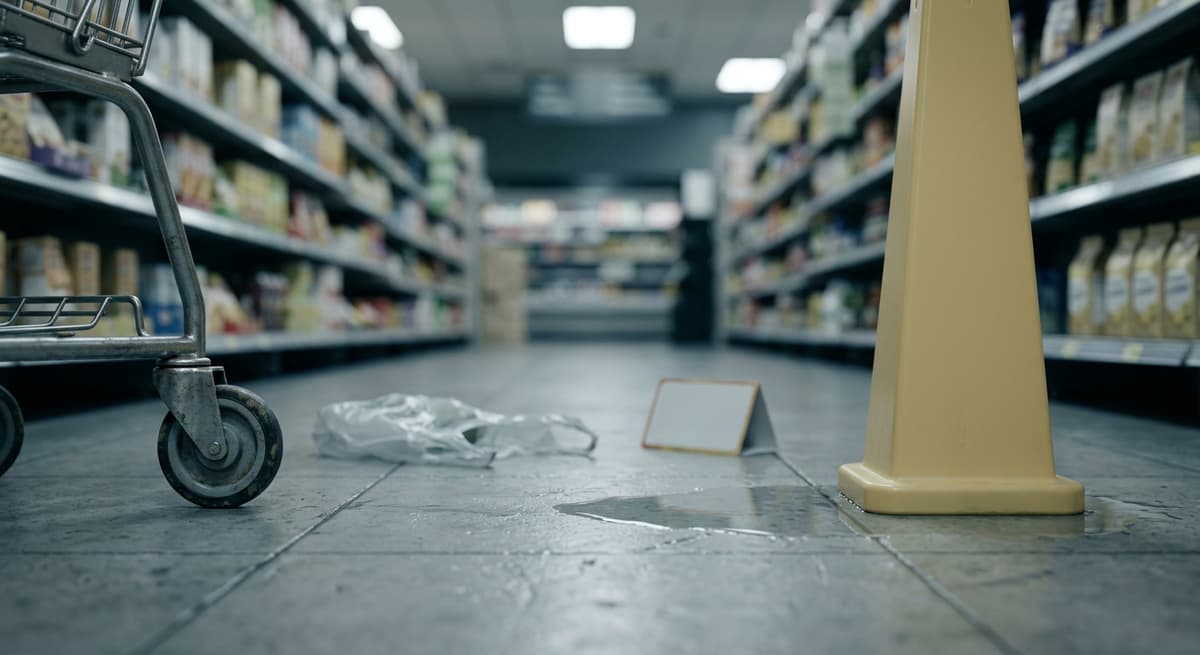
Tagle v. Jakob, 97 N.Y.2d 165 (2001), is the Court of Appeals decision on the warning half of that rule, and it is authority defendants rely on rather than a plaintiff's case. A 16-year-old guest climbed a pine tree in a rented backyard and touched an uninsulated electric wire strung through its branches. Starting from Basso, the court held that the landlord owed no duty to remedy a condition inside the utility company's easement, and on the failure-to-warn theory it wrote that "we have long held that a landowner has no duty to warn of an open and obvious danger." Because the wires were plainly visible in a photograph the plaintiff conceded was accurate, the court decided obviousness as a matter of law, held "that Jakob had no duty to warn the tenant of that hazard," and affirmed the dismissal of the complaint against her. Tagle also states the flip side: "a latent hazard may give rise to a duty to protect entrants from that danger."
What Tagle does not do is dispose of a case whose complaint is that the property itself was unsafe rather than that nobody warned about it. Appellate Division decisions draw that line. In Westbrook v. WR Activities-Cabrera Markets, 5 A.D.3d 69 (1st Dep't 2004), the First Department treated the obviousness of a hazard as bearing on comparative fault and foreseeability rather than on the existence of a duty. The practical consequence is that a defense argument of "the hazard was obvious" does not automatically end a failure-to-maintain case at the summary-judgment stage; it becomes a question for the jury on comparative fault. On a pure failure-to-warn theory, as Tagle shows, it can end the case.
Practitioners should keep in mind the related but distinct trivial-defect doctrine from Trincere: a hazard that is truly trivial (not merely obvious) can still defeat a claim, because the court may find it was not dangerous at all.
Ice, snow, and natural accumulation in New York
New York does not follow the "natural accumulation" no-duty rule applied in states such as Illinois and Ohio. Under those rules, a property owner owes no duty of care for falls on naturally accumulated ice and snow. New York affirmatively rejects that categorical immunity. New York landowners owe an ordinary reasonable-care duty to remove or remedy naturally accumulated snow and ice within a reasonable time after the storm ends.
The key limiting doctrine in New York is the judicially created "storm-in-progress" rule, confirmed by the Court of Appeals in Solazzo v. New York City Transit Authority, 6 N.Y.3d 734 (2005). Under this rule, a landowner is not liable for icy or snowy conditions that develop while a storm is actively ongoing, or for a reasonable time after the storm ends to allow for safe cleanup. The rationale is that requiring a property owner to clear snow and ice during a continuing storm would be both impractical and pointless, since the hazard would redevelop immediately.
Once the storm ends and the reasonable cleanup period passes, the ordinary duty to maintain safe premises resumes. Liability can also attach outside the storm-in-progress window when the hazard arises from pre-existing ice (old accumulated ice from a prior storm), refrozen snowmelt, or negligent snow-removal practices (for example, shoveling that pushes snow onto a walkway where it refreezes). In those situations, the storm-in-progress defense does not apply, and the owner faces the same constructive-notice analysis as for any other hazard.
For anyone who fell on a city sidewalk, note that New York City Administrative Code section 7-210 shifted responsibility for maintaining adjoining sidewalks from the city to the abutting property owner. The city retains responsibility for corner-to-corner crosswalks and certain other sidewalk areas. Determining who is responsible for the specific patch of sidewalk where you fell is a critical threshold question in any NYC slip and fall case.
How fault is shared: New York's negligence rule
New York follows pure comparative negligence, adopted by the legislature in CPLR section 1411. The rule provides that a plaintiff's culpable conduct, including contributory negligence and assumption of risk, does not bar recovery; it only reduces damages in proportion to the plaintiff's share of fault. A plaintiff who is 99% at fault can still recover 1% of proven damages from the defendant.
This is one of the most plaintiff-friendly systems in the country. In states using modified comparative negligence with a 50% or 51% bar, a plaintiff bearing the larger share of fault is completely barred from any recovery. New York has no such cutoff. A defendant's attorney may argue that the plaintiff was careless (wearing slippery shoes, looking at a phone, ignoring a posted warning, or rushing), and a jury may agree to assign a significant share of fault to the plaintiff. But even a high fault assignment only reduces the award; it does not eliminate it.
One important carve-out: CPLR section 1411(b) provides that in motor-vehicle no-fault "serious injury" actions under Insurance Law Article 51, a plaintiff who is more at fault than the defendant is barred. This exception does not apply to general premises liability. For a slip and fall case, New York is unambiguously pure comparative.
Deadlines: statute of limitations and government claims
The statute of limitations for a personal-injury lawsuit in New York is three years from the date of the injury, set by CPLR section 214(5). Missing this deadline generally ends any right to sue, regardless of how clear the liability or how serious the injury. A narrow set of exceptions can toll the clock, including minority (the victim is under 18), continuous treatment (relevant to medical claims), and the discovery rule for latent injuries, but none of these applies automatically to a standard slip and fall case.
The far more dangerous deadline in New York is the notice-of-claim requirement for injuries on government property. Under General Municipal Law section 50-e(1)(a), anyone who intends to sue a public corporation (a city, county, town, village, school district, public authority, or transit authority) for personal injury must serve a written Notice of Claim within 90 DAYS after the claim arises. This is a condition precedent to filing a lawsuit. Serving the notice is a separate act from filing the lawsuit itself, and it must happen within 90 days of the fall.
This 90-day deadline is enforced strictly. GML section 50-i then imposes a further shortened limitations period of 1 year and 90 days for the actual lawsuit against a municipality, which is shorter than the standard 3-year period. If you fell on a NYC sidewalk, in a subway station, in a city park, on a public school campus, or in any other government-owned or government-maintained location, the 90-day notice clock began running the moment you fell. Courts may grant leave to serve a late notice in some circumstances, but late-notice applications are not guaranteed to succeed and require a showing of reasonable excuse and no substantial prejudice to the municipality.
Prior written notice: the municipal bar that is not a deadline
There is a third municipal hurdle that defeats more sidewalk and roadway cases than either deadline, and it is not a clock at all. Across much of New York, a municipality cannot be sued over a defective street, sidewalk, bridge, culvert, or crosswalk, or over snow and ice, unless written notice of that specific condition was already on file with the municipality before the fall.
Village Law section 6-628 states that "no civil action shall be maintained against the village" for injuries caused by a street, sidewalk, or crosswalk that is "defective, out of repair, unsafe, dangerous or obstructed," or caused solely by snow or ice, "unless written notice of the defective, unsafe, dangerous or obstructed condition or of the existence of the snow or ice, relating to the particular place, was actually given to the village clerk" and the village then failed or neglected to fix it within a reasonable time. Town Law section 65-a imposes the same requirement for towns and town superintendents of highways, with the written notice going to the town clerk or the town superintendent of highways. Cities operate under equivalent provisions in their own charters and local laws, and General Municipal Law section 50-g requires any city covered by such a provision to keep "an indexed record, in a separate book, of all written notices" of defect it receives, indexed by location, treated as a public record, and preserved for five years.
Prior written notice is a separate requirement from the Notice of Claim, and serving a timely 90-day notice does nothing to satisfy it. If nobody had complained in writing about the specific crack, hole, or ice patch before you fell, a claim against that municipality can fail no matter how perfectly you met every deadline. The indexed record that GML section 50-g requires is therefore one of the first things to request, because it establishes whether the required notice exists. Whether anything about your particular fall takes it outside the prior written notice rule is a question for a New York attorney, and it is worth asking in the first weeks rather than after the 90-day clock has run.
One qualifier for New York City falls: as noted above, Administrative Code section 7-210 makes most abutting property owners, not the city, responsible for maintaining the sidewalk in front of their property, so a large share of NYC sidewalk claims are against a private owner and are not municipal claims at all.
Claims against the State of New York itself are governed by the Court of Claims Act section 10, which generally requires a claim or notice of intention within 90 days of the accrual of the claim. For more on New York's personal-injury deadlines generally, see New York statute of limitations.
What a New York slip and fall claim is worth
A successful New York slip and fall plaintiff can recover economic damages and non-economic damages. Economic damages cover all out-of-pocket financial losses: past and future medical expenses, lost wages and lost earning capacity, rehabilitation costs, in-home care, and any other verifiable monetary harm caused by the fall. Non-economic damages compensate for pain and suffering, emotional distress, loss of enjoyment of life, and permanent injury.
New York does not impose a statutory cap on non-economic damages in ordinary premises liability cases, and it has no general statutory cap on non-economic damages in medical malpractice cases either -- a 2025 Senate bill (S1608) that would cap non-economic damages in negligence actions has not been enacted. A standard slip and fall against a private property owner carries no ceiling on pain-and-suffering damages, though some municipal claims face practical limits tied to available government insurance and budgets. This means that serious injuries with clear liability and documented notice can produce substantial verdicts.
Pure comparative negligence shapes every negotiation. Insurers apply a fault percentage to the plaintiff from the outset. If an adjuster concludes the plaintiff contributed 30% to the fall, the initial offer will reflect a 30% reduction from the assessed damages. Building a strong notice record (inspection logs, surveillance footage, incident reports, photos of the hazard's condition) is the most effective way to minimize the fault assigned to you and maximize the value of the claim.
Damage ranges vary widely based on the severity of the injury, the strength of the notice evidence, the jurisdiction (New York City verdicts tend to be higher than upstate), and the defendant's insurance limits. Hip fractures, spinal injuries, and traumatic brain injuries at well-maintained commercial properties with surveillance footage and documented prior complaints generate the largest settlements and verdicts. Soft-tissue injuries with limited medical treatment and no documented prior notice to the owner settle for considerably less. For an estimate based on your specific injury and fault scenario, use the New York slip and fall settlement calculator.
This article is general legal information, not legal advice. Premises liability law varies by state and changes, and case values depend on the specific facts. For advice about a specific fall, consult a licensed attorney in New York.
Related:
- New York Slip and Fall Settlement Calculator
- Slip and Fall Laws by State (Hub)
- New York Statute of Limitations
More New York Laws
Frequently Asked Questions
How do I prove a slip and fall in New York?
You must prove four elements: (1) the owner owed you a duty of reasonable care under the circumstances (Basso v. Miller, 40 N.Y.2d 233 (1976)); (2) a hazardous condition existed; (3) the owner had actual or constructive notice of the hazard and a reasonable opportunity to remedy it before you fell (Gordon v. American Museum of Natural History, 67 N.Y.2d 836 (1986)); and (4) the hazard caused your injury. Notice is typically the hardest element. Preserve surveillance footage, maintenance logs, photos of the hazard, and witness contact information as soon as possible after the fall.
Is New York an open-and-obvious state?
Not in the sense that obviousness automatically defeats a claim, but the answer has two halves. On a failure-to-warn theory, obviousness can end the case: in Tagle v. Jakob, 97 N.Y.2d 165 (2001), the Court of Appeals held that a landowner has no duty to warn of an open and obvious danger, decided obviousness as a matter of law on the photographs, and affirmed dismissal of the complaint against the landowner. On a failure-to-maintain theory, Appellate Division decisions treat obviousness as a comparative-fault factor that reduces recovery rather than as a bar, because the duty of reasonable care that Basso v. Miller, 40 N.Y.2d 233 (1976), imposes is separate from the duty to warn. That split makes New York more favorable to plaintiffs than states where an obvious hazard ends the case outright.
Can I sue for falling on ice in New York?
Yes, in most circumstances. New York does not follow the natural-accumulation no-duty rule. Landowners owe ordinary reasonable care to remove or remedy naturally accumulated ice and snow within a reasonable time after a storm ends. The main exception is the storm-in-progress rule (Solazzo v. NYC Transit Auth., 6 N.Y.3d 734 (2005)): a landowner is not liable for icy conditions that arise while a storm is actively ongoing or for a reasonable cleanup period afterward. Old ice, refrozen melt, or negligent snow-removal can all still support a claim. If the fall was on a municipal sidewalk or street, also check the prior written notice rule, which can bar the claim even when the ice itself was plainly negligent.
How long do I have to file a slip and fall lawsuit in New York?
Generally 3 years from the date of the fall (CPLR section 214(5)). However, if you fell on government property (a city street, park, public school, subway, or other municipally owned location), you must serve a written Notice of Claim within 90 DAYS of the injury under GML section 50-e before you can sue, and the lawsuit itself must be filed within 1 year and 90 days under GML section 50-i. Missing the 90-day deadline can permanently bar your lawsuit against the municipality, regardless of the 3-year general SOL.
Can I recover if I was partly at fault for my fall in New York?
Yes. New York uses pure comparative negligence under CPLR section 1411. Your damages are reduced by your percentage of fault, but your recovery is never completely barred, no matter how large your share. Even if a jury finds you 75% at fault, you still recover 25% of proven damages. There is no percentage cutoff in New York's general premises liability law.
How much is a New York slip and fall claim worth?
It depends on the severity of your injury, your medical expenses and lost income, the strength of your notice evidence, and your comparative-fault percentage. New York has no cap on pain-and-suffering damages in standard premises liability cases. New York City cases often produce higher verdicts than upstate. Serious injuries at commercial properties with documented prior notice of the hazard tend to generate the largest recoveries. Use the New York slip and fall settlement calculator to model your specific situation.
What is the 90-day Notice of Claim requirement in New York?
Under General Municipal Law section 50-e, anyone who wants to sue a public corporation (city, county, town, village, school district, public authority, transit authority) for personal injury must serve a written Notice of Claim within 90 days of the injury. This is a condition precedent to filing a lawsuit. It is separate from, and shorter than, the general 3-year statute of limitations. GML section 50-i also shortens the lawsuit deadline itself to 1 year and 90 days for claims against municipalities.
What is the prior written notice rule for New York sidewalk and street falls?
Across much of New York, a municipality cannot be sued over a defective street, sidewalk, bridge, culvert, or crosswalk, or over snow and ice, unless written notice of that specific condition had already been given to the municipality before the fall. Village Law section 6-628 bars the action against a village unless written notice of the condition, relating to the particular place, was actually given to the village clerk and the village then failed to fix it within a reasonable time. Town Law section 65-a does the same for towns, with notice to the town clerk or town superintendent of highways, and cities have equivalent provisions in their charters and local laws. This is a separate requirement from the 90-day Notice of Claim: serving a timely Notice of Claim does not satisfy it. General Municipal Law section 50-g requires covered cities to keep an indexed public record of every written notice of defect received, preserved for five years, so requesting that record early is the practical first step.
Injured in New York? Get a free case review from a personal-injury attorney
If someone else's negligence caused your injury, you may be owed compensation for medical bills, lost wages, and pain and suffering. Get a free, no-obligation review from a New York personal-injury attorney. Most work on contingency, so there is no upfront cost.
Updates
Corrected our account of Tagle v. Jakob, which actually holds that a New York landowner has no duty to warn of an open and obvious danger and affirmed dismissal against the landowner, removed a quotation that does not appear in that opinion, named Basso v. Miller as the decision that creates a landowner's duty of reasonable care, and added the prior written notice rule that bars many municipal sidewalk and street claims.
Removed a false claim that New York recently capped medical-malpractice non-economic damages (no such cap exists; a bill to do so remains pending, not law) and repointed three case citations that had been misdirected to unrelated statute URLs.
Independently fact-checked against the cited primary sources; governing law re-checked for recent changes
Governing law re-checked for recent changes
Reviewed and approved by an editor
The Law Behind This Article
This article rests on the statutory provisions below, held in our own legal record and retrieved from the official source. Tap a section to read the operative text.
New York Civil Practice Law and Rules
§ 1411Damages recoverable when contributory negligence or assumption of risk is establishedIn forcecited in 5 of our articles
Damages recoverable when contributory negligence or assumption of risk is established. (a) Except as provided in subsection (b) of this section, in any action to recover damages for personal injury, injury to property, or wrongful death, the culpable conduct attributable to the claimant or to the decedent, including contributory negligence or assumption of risk, shall not bar recovery. The amount of damages otherwise recoverable shall be diminished in the proportion which the culpable conduct attributable to the claimant or decedent bears to the culpable conduct which caused the damages. (b) In any action to recover damages for personal injury subject to article fifty-one of the insurance law, the culpable conduct attributable to the claimant shall bar recovery if the culpable conduct attributable to the claimant is greater than the culpable conduct of the person against whom recovery is sought or is greater than the combined culpable conduct of the persons against whom recovery is sought.
Official text (excerpt) · last checked 2026-07-29 · Read the full text in our law library · Verify at legislation.nysenate.gov
Also relied on in: New York Dog Bite Laws: Liability and Victim Rights, New York Car Accident Laws: No-Fault, Serious Injury, and Your Claim, Motorcycle Accident Laws in New York (2026): Deadlines
§ 214Actions to be commenced within three years: for non-payment of money collected on execution; for penalty created by statute; to recover c...In forcecited in 8 of our articles
Actions to be commenced within three years: for non-payment of money collected on execution; for penalty created by statute; to recover chattel; for injury to property; for personal injury; for malpractice other than medical, dental or podiatric malpractice; to annul a marriage on the ground of fraud. The following actions must be commenced within three years: 1. an action against a sheriff, constable or other officer for the non-payment of money collected upon an execution; 2. an action to recover upon a liability, penalty or forfeiture created or imposed by statute except as provided in sections 213 and 215; 3. an action to recover a chattel or damages for the taking or detaining of a chattel; 4. an action to recover damages for an injury to property except as provided in section 214-c; 5. an action to recover damages for a personal injury except as provided in sections 214-b, 214-c, 214-i and 215; 6. an action to recover damages for malpractice, other than medical, dental or podiatric malpractice, regardless of whether the underlying theory is based in contract or tort; and 7.
Official text (excerpt) · last checked 2026-07-29 · Read the full text in our law library · Verify at legislation.nysenate.gov
Also relied on in: New York Statute of Limitations: Filing Deadlines by Case Type, New York Trade Secret Laws: Common Law & DTSA, Truck Accident Laws in New York (2026): Deadlines & Liability
Search our full record of US law — 2.1 million sections, every state + federal →
Sources and References
- N.Y. Gen. Mun. Law section 50-e (90-day notice of claim)(nysenate.gov).gov
- N.Y. Gen. Mun. Law section 50-i (1-year-and-90-day municipal SOL)(nysenate.gov).gov
- CPLR section 214(5) (3-year personal-injury SOL)(nysenate.gov).gov
- CPLR section 1411 (pure comparative negligence)(nysenate.gov).gov
- Gordon v. American Museum of Natural History, 67 N.Y.2d 836 (1986)(nycourts.gov).gov
- Tagle v. Jakob, 97 N.Y.2d 165 (2001)(law.justia.com)
- Solazzo v. New York City Transit Authority, 6 N.Y.3d 734 (2005)(law.justia.com)
- Basso v. Miller, 40 N.Y.2d 233, 241 (1976) (single standard of reasonable care under the circumstances)(courtlistener.com)
- N.Y. Village Law section 6-628 (prior written notice of street, sidewalk, snow and ice defects)(nysenate.gov)
- N.Y. Town Law section 65-a (prior written notice to town clerk or town superintendent of highways)(nysenate.gov)
- N.Y. Gen. Mun. Law section 50-g (city indexed record of notices of defect)(nysenate.gov)