
Colorado
Colorado Slip and Fall Laws: Proving Premises Liability Under the PLA

To win a slip and fall claim in Colorado, you must prove that the property owner failed to exercise reasonable care under the Premises Liability Act (C.R.S. § 13-21-115) and that this failure caused your injury. Colorado uses a modified comparative negligence rule with a 50% bar.
Proving a slip and fall claim in Colorado
Colorado slip and fall law is governed entirely by the Premises Liability Act (PLA), codified at C.R.S. § 13-21-115. The PLA replaced the common-law negligence framework and is the exclusive remedy for injuries that occur on another person's property. This means traditional negligence doctrines do not independently apply; the statutory framework controls.
Your right to recover depends first on your visitor status at the time of the fall. An invitee is someone invited onto the property for a business purpose or as a member of the public for a purpose for which the land is open. For invitees, the owner must use reasonable care to protect against dangers the owner actually knew about or should have known about in the exercise of reasonable care. A licensee receives somewhat narrower protection, generally limited to known dangers. A trespasser is owed only a duty not to be willfully or deliberately harmed.
Notice is central to most invitee claims. You must show the owner had actual notice of the hazard (a spill was reported, an employee created it) or constructive notice (the hazard existed long enough that a reasonable inspection would have discovered it). Courts often look to store inspection logs, surveillance footage, and employee testimony to establish what the owner knew and when.
The open-and-obvious doctrine in Colorado
Colorado does not allow property owners to escape liability simply because a hazard was obvious. In Vigil v. Franklin, 103 P.3d 322 (Colo. 2004), the Colorado Supreme Court held that the common-law open-and-obvious doctrine cannot be asserted as a defense under the PLA. The statute's specific enumeration of landowner duties to invitees, licensees, and trespassers makes no reference to whether a condition was open and obvious, and grafting that doctrine onto the PLA would contradict the legislature's chosen framework.
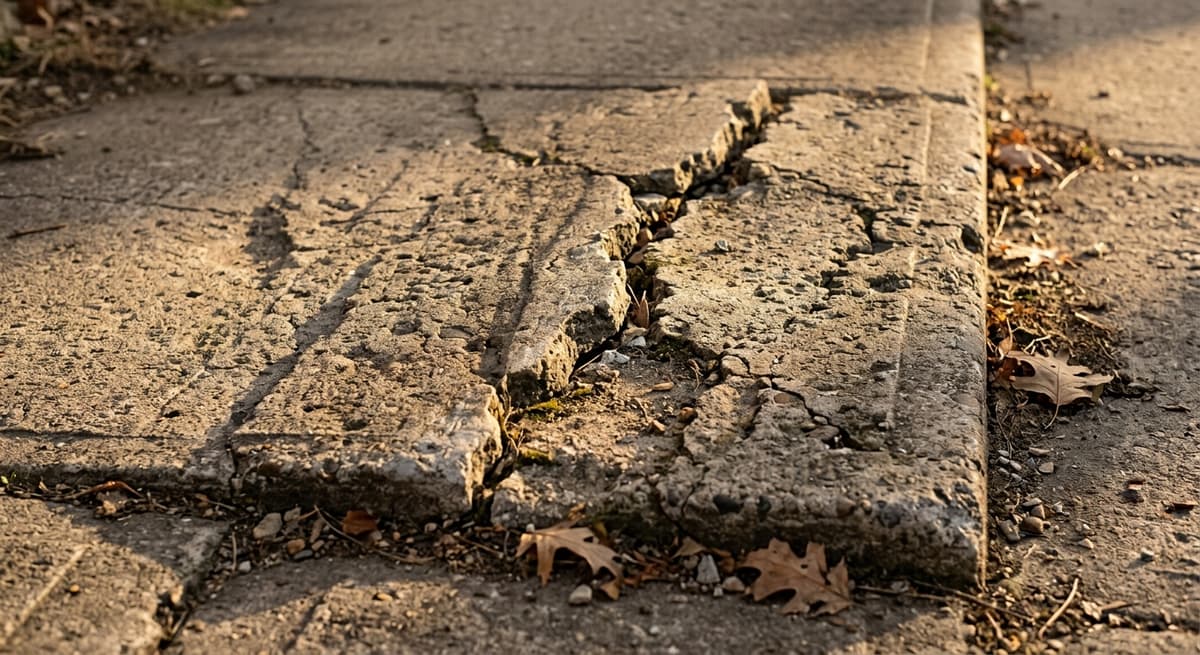
This is a significant departure from how most states handle obvious hazards. In Colorado, if the owner knew or should have known about a dangerous condition and failed to address it, the fact that the hazard was visible to you does not automatically defeat your claim. The comparative treatment means: the obviousness of a hazard bears only on the reasonableness of your own conduct. A jury can consider whether a reasonable person would have noticed and avoided the hazard when apportioning fault percentages, but it is not a threshold bar. Recovery is reduced if you bear some fault, but it is not eliminated unless your fault reaches or exceeds 50%.
Ice, snow, and natural accumulation in Colorado
Colorado does not follow the "natural accumulation" rule that shields owners in some other states. Many jurisdictions hold that a property owner has no duty to remove ice or snow that accumulated naturally, reasoning that requiring removal would be impractical. Colorado rejected this approach.
Under the Premises Liability Act, a landowner owes invitees an ordinary reasonable-care duty to protect against dangers of which they knew or should have known, and this extends to ice and snow hazards. There is no blanket immunity for naturally fallen snow or ice that forms overnight. If a parking lot has had a recurring ice patch for days, if a landlord's exterior staircase regularly freezes and tenants have complained, or if a business's entryway collects water that freezes by morning, the owner cannot simply argue "it accumulated naturally" and walk away. Liability turns on whether the owner exercised reasonable care given what they knew or should have known, not on a natural-versus-unnatural distinction. The PLA superseded prior common-law landowner-duty doctrines on this point (Vigil v. Franklin, 103 P.3d 322 (Colo. 2004)).
How fault is shared: Colorado's negligence rule
Colorado follows modified comparative negligence with a 50% bar under C.R.S. § 13-21-111. Under this framework, your contributory negligence does not bar recovery unless your fault is "equal to or greater than" the negligence of the defendant(s). A plaintiff at exactly 50% fault recovers nothing; a plaintiff at 49% fault recovers 51% of their damages.

In practical terms: if a jury finds your total damages to be $100,000 but assigns you 30% of the fault, you recover $70,000. If the jury assigns you 50% or more, you recover zero. The law specifically provides that when there are multiple defendants, the comparison is made to the "aggregate negligence of those against whom recovery is sought," so defendants cannot escape liability by pointing fingers at each other to dilute individual percentages below 50%.
This rule underlines why the open-and-obvious issue matters: an owner's attorney will argue that if you saw or should have seen the hazard and proceeded anyway, your fault percentage should be high. The more of that blame a jury assigns to you, the more your recovery shrinks or disappears entirely once it reaches 50%.
Deadlines: statute of limitations and government claims
Two deadlines govern Colorado slip and fall cases, and missing either one can permanently end your claim.
Personal-injury statute of limitations: Under C.R.S. § 13-80-102, you have 2 years from the date of injury to file a lawsuit in Colorado. There is a Colorado-specific exception worth noting: tort claims arising from a motor-vehicle accident have a 3-year deadline under C.R.S. § 13-80-101, but that does not apply to ordinary premises-liability slip and fall cases. For more on Colorado's civil filing deadlines, see the Colorado statute of limitations page.
Government notice of claim: If your fall occurred on state or municipal property, a second, much shorter deadline applies. The Colorado Governmental Immunity Act (C.R.S. § 24-10-109) requires a written notice of claim within 182 days after the date you discovered the injury. This is not merely procedural; Colorado courts treat CGIA compliance as a jurisdictional prerequisite to suing a government entity, and an untimely notice permanently bars the suit without exception. State-entity notices go to the Attorney General; local-entity notices go to the governing body or attorney of that entity. If you slipped in a city park, on a public sidewalk maintained by a municipality, or in a government building, you must act quickly.
What a Colorado slip and fall claim is worth
The value of a slip and fall settlement or verdict in Colorado depends on three main categories of damages.

Economic damages cover your actual financial losses: medical bills (emergency care, surgery, rehabilitation, future treatment), lost wages and lost earning capacity, and out-of-pocket expenses like medical equipment or home modifications. Economic damages are uncapped in Colorado.
Non-economic damages cover pain and suffering, emotional distress, loss of enjoyment of life, and similar intangible harms. Colorado caps non-economic damages under C.R.S. § 13-21-102.5 at approximately $1.5 million for actions filed on or after January 1, 2025 (inflation-adjusted; confirm the current figure at filing). This cap applies even in catastrophic cases, making it an important planning factor for serious injuries.
Comparative fault reduction: Whatever total damages a jury awards, they are reduced by your percentage of fault. If you are 30% at fault, you receive 70% of the verdict. Reach 50% fault and you receive nothing.
Use the Colorado Slip and Fall Settlement Calculator to get a rough sense of how these factors interact in your specific situation.
This article is general legal information, not legal advice. Premises liability law varies by state and changes, and case values depend on the specific facts. For advice about a specific fall, consult a licensed attorney in Colorado.
Related:
- Slip and Fall Laws by State (full 50-state hub)
- Colorado Slip and Fall Settlement Calculator
More Colorado Laws
Frequently Asked Questions
How do I prove a slip and fall in Colorado?
Under Colorado's Premises Liability Act (C.R.S. § 13-21-115), you must establish your visitor status (usually invitee), that a dangerous condition existed, that the owner had actual or constructive notice of the hazard, that the owner failed to exercise reasonable care, and that the failure caused your injury. Notice evidence includes surveillance video, inspection logs, prior complaints, and the duration the hazard was present.
Is Colorado an open-and-obvious state?
No. Colorado abolished the common-law open-and-obvious defense for premises-liability claims. The Colorado Supreme Court held in Vigil v. Franklin (2004) that the defense cannot be asserted under the Premises Liability Act. The visibility of a hazard only factors into comparative fault, reducing your recovery if you were partly responsible, but it does not bar your claim outright.
Can I sue for falling on ice in Colorado?
Yes. Colorado does not follow the natural-accumulation rule. Property owners owe invitees an ordinary reasonable-care duty under the PLA, which includes ice and snow hazards they knew or should have known about. There is no blanket immunity for naturally fallen ice or snow; liability depends on whether the owner exercised reasonable care.
How long do I have to file a slip and fall lawsuit in Colorado?
Two years from the date of injury under C.R.S. § 13-80-102. If the fall occurred on government property (a public sidewalk, city building, state facility), you must also file a written notice of claim with the government entity within 182 days of discovering the injury under the Colorado Governmental Immunity Act (C.R.S. § 24-10-109). Missing the 182-day deadline is fatal to a government-entity claim.
Can I recover damages if I was partly at fault for my fall?
Yes, as long as your fault is below 50%. Colorado uses modified comparative negligence with a 50% bar (C.R.S. § 13-21-111). If you are 49% or less at fault, you recover damages reduced by your fault percentage. If you are exactly 50% at fault or more, you recover nothing.
How much is a Colorado slip and fall claim worth?
It depends on your economic losses (medical bills, lost wages), non-economic losses (pain and suffering), and your percentage of fault. Economic damages are uncapped. Non-economic damages are capped at roughly $1.5 million under C.R.S. § 13-21-102.5 (for cases filed on or after January 1, 2025). Your total award is then reduced by your share of fault.
What is the Colorado Premises Liability Act?
C.R.S. § 13-21-115 is the exclusive statute governing slip and fall and other on-premises injury claims in Colorado. It replaced common-law landowner-duty rules and sets the owner's duty based on your visitor status: invitee (reasonable care for known or knowable dangers), licensee (known dangers), and trespasser (no willful harm). Because the PLA is exclusive, common-law doctrines like open-and-obvious and natural accumulation no longer apply independently.
Injured in Colorado? Get a free case review from a personal-injury attorney
If someone else's negligence caused your injury, you may be owed compensation for medical bills, lost wages, and pain and suffering. Get a free, no-obligation review from a Colorado personal-injury attorney. Most work on contingency, so there is no upfront cost.
Sources and References
- C.R.S. § 13-21-115 — Colorado Premises Liability Act(leg.colorado.gov).gov
- C.R.S. § 13-21-111 — Contributory Negligence / Comparative Fault(leg.colorado.gov).gov
- C.R.S. § 13-80-102 — 2-Year Personal-Injury Statute of Limitations(leg.colorado.gov).gov
- C.R.S. § 24-10-109 — Colorado Governmental Immunity Act, Notice of Claim(leg.colorado.gov).gov
- C.R.S. § 13-21-102.5 — Non-Economic Damages Cap(leg.colorado.gov).gov
- Vigil v. Franklin, 103 P.3d 322 (Colo. 2004)(leg.colorado.gov)