
Alabama
Alabama Slip and Fall Laws: Proving Premises Liability in a Pure-Contributory State
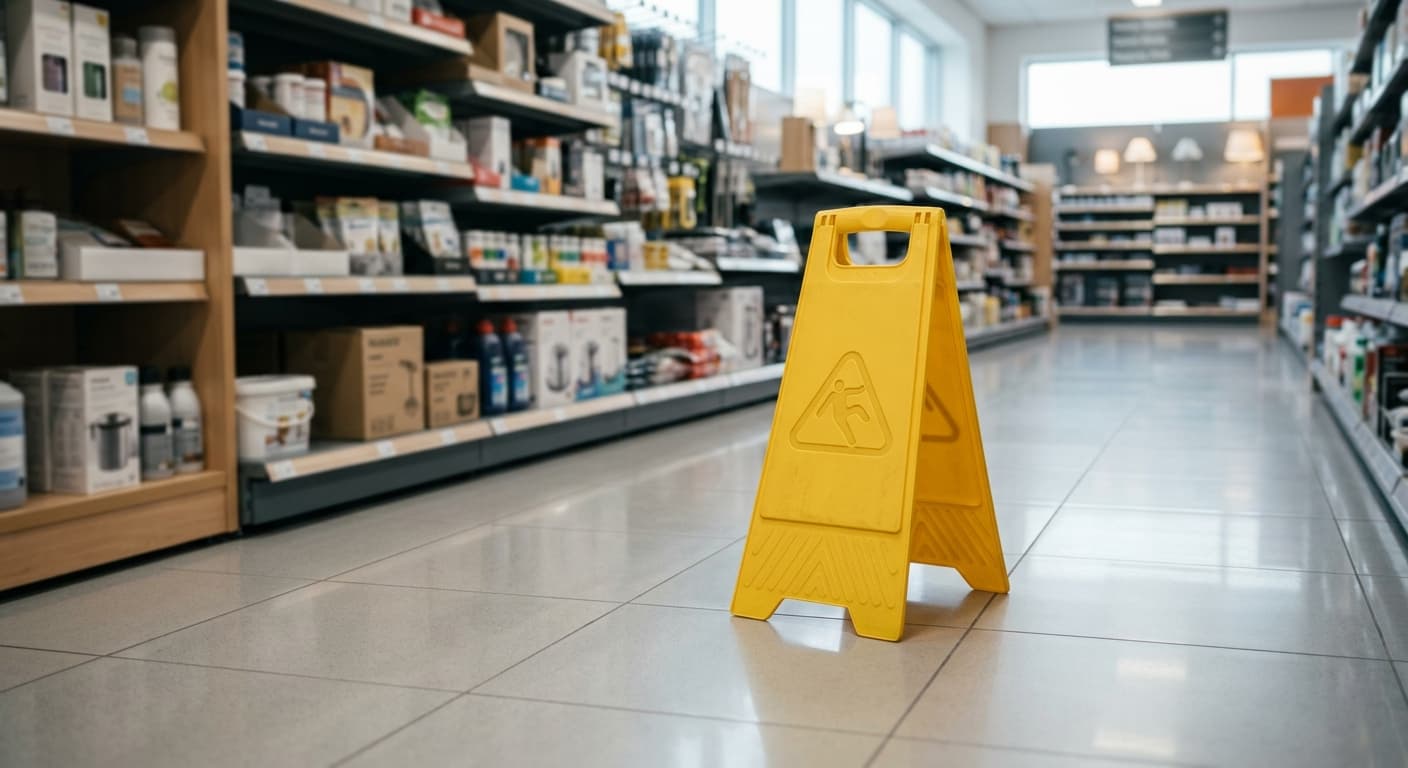
To win a slip and fall claim in Alabama, an injured visitor must prove the property owner knew or should have known about the hazard, failed to fix or warn of it, and that failure caused the injury. Alabama applies pure contributory negligence, meaning any fault on the visitor's part can eliminate recovery entirely.
Proving a slip and fall claim in Alabama
Alabama law grants invitees (customers, guests, members of the public invited onto property for business or social purposes) the highest duty of care. The property owner must keep the premises reasonably safe and must warn of known dangers. To succeed, the injured person must establish four elements: (1) the owner owed a duty of care; (2) a dangerous condition existed on the property; (3) the owner had actual or constructive notice of that condition; and (4) the condition proximately caused the injury.
Constructive notice is established by showing the hazard existed long enough that a reasonable owner exercising due diligence would have discovered it. In Dolgencorp, Inc. v. Hall, 890 So. 2d 98 (Ala. 2003), the Alabama Supreme Court applied this notice standard in a retail slip-and-fall context, confirming that the plaintiff must produce evidence of how long the hazard was present, not just that it existed. Without notice evidence, summary judgment for the defense is common.
The open-and-obvious doctrine in Alabama
Warning: In Alabama, an open-and-obvious hazard is an absolute bar to recovery. Unlike many states where obvious hazards merely reduce a plaintiff's recovery under comparative fault, Alabama treats the open-and-obvious condition as negating the owner's duty entirely. If the hazard was open and obvious, the landowner owed no legal duty to fix it or warn about it, and the claim fails without any weighing of fault.

The Alabama Supreme Court stated this unambiguously: "Openness and obviousness of a hazard, if established, negate the invitor's duty to eliminate the hazard or to warn the invitee of the hazard; and this negation of duty, in and of itself, defeats the [invitee's] injury claim without the operation of any affirmative defense such as contributory negligence or assumption of risk." Sessions v. Nonnenmann, 842 So. 2d 649 (Ala. 2002); Ex parte Mountain Top Indoor Flea Market, Inc., 699 So. 2d 158 (Ala. 1997). The test is objective: whether a reasonable invitee would have appreciated the danger.
There is one narrow exception: where the owner should have anticipated that harm would occur despite the hazard being obvious. This "should-anticipate" exception was reaffirmed for a landlord's common areas in Ex parte Housing Authority of the City of Talladega (Ala. 2024). Alabama has not followed the modern trend (seen in Michigan's Kandil-Elsayed v. F & E Oil, 2023) of converting open-and-obvious into a comparative-fault factor; the absolute duty bar remains firmly in place.
Ice, snow, and natural accumulation in Alabama
Alabama has not adopted the "natural accumulation" rule used in many northern states (such as Illinois and Ohio), which exempts property owners from liability for falls on naturally accumulated ice or snow. Because sustained winter weather is rare in Alabama, courts have not developed a categorical no-duty rule for ice and snow.
Instead, falls on ice or snow are analyzed under the same ordinary reasonable-care framework that governs all invitee premises liability cases. The owner owes a duty to maintain the property in a reasonably safe condition, including addressing icy or snowy surfaces that create hazards. However, naturally accumulated ice or snow that is open and obvious will typically be evaluated through Alabama's open-and-obvious bar (applying Ex parte Mountain Top Indoor Flea Market and Sessions v. Nonnenmann), which can still defeat the claim if the icy condition was clearly visible and apparent. The net result: no categorical immunity for winter weather, but the open-and-obvious doctrine frequently operates to bar recovery anyway.
How fault is shared: Alabama's negligence rule
Warning: Alabama is one of only four states (plus the District of Columbia) that still applies pure contributory negligence. Under this doctrine, if the injured person is found to bear any percentage of fault for the fall, however small, their recovery is completely barred. Even 1% contributory fault eliminates the entire claim.

The Alabama Supreme Court expressly declined to abandon this rule in Williams v. Delta International Machinery Corp., 619 So. 2d 1330 (Ala. 1993), noting the doctrine had governed Alabama tort law for approximately 162 years. To establish the contributory-negligence defense, the defendant must prove three things: that the plaintiff had knowledge of the dangerous condition, appreciated the risk it posed, and failed to exercise reasonable care in light of that knowledge.
This means slip-and-fall cases in Alabama are far more difficult to win than in the 46 states that use some form of comparative fault. Defense attorneys routinely argue the plaintiff was not watching where they were going, was wearing inappropriate footwear, or had prior familiarity with the hazard. Even a modest finding of plaintiff fault ends the case.
Deadlines: statute of limitations and government claims
The standard personal-injury statute of limitations in Alabama is 2 years from the date of injury, under Ala. Code section 6-2-38(l). Missing this deadline generally results in dismissal with no recovery. Tolling may apply in limited circumstances, such as when the plaintiff is a minor or when fraudulent concealment delayed discovery.
Falls on municipal (city or town) property carry a much shorter deadline. Ala. Code section 11-47-23 requires a sworn notice of claim to be presented to the municipality within 6 months of the injury. The notice must describe how, when, and where the injury occurred and must be filed with the city clerk (Ala. Code section 11-47-192); substantial compliance with the form requirements is sufficient. Failing to file this notice within 6 months bars the municipal claim entirely, regardless of how strong the underlying facts are.
Falls on county property are subject to a 12-month presentation period under Ala. Code section 11-12-8. Suits against the State of Alabama itself are a separate matter: Article I, section 14 of the Alabama Constitution grants the state broad sovereign immunity, making most damages suits against state agencies effectively barred. Identifying who owns and maintains the property where the fall occurred is therefore a critical first step in any Alabama premises-liability case.
For context on Alabama's broader personal-injury limitations period, see Alabama's statute-of-limitations page.
What an Alabama slip and fall claim is worth
Compensable damages in an Alabama slip and fall typically include economic losses (medical bills, future medical costs, lost wages, lost earning capacity, rehabilitation expenses) and non-economic losses (pain and suffering, emotional distress, loss of enjoyment of life). Alabama does not cap compensatory damages in most personal-injury cases, so high economic losses in serious cases can produce substantial verdicts.
However, Alabama's legal framework cuts deeply against plaintiffs. The pure-contributory-negligence rule means any finding of plaintiff fault eliminates the entire award. The open-and-obvious bar means cases involving visible hazards often never reach the damages stage. Government-property cases face additional procedural hurdles and, in the case of state agencies, sovereign immunity. As a result, Alabama slip-and-fall settlements tend to be negotiated in the shadow of these doctrines, and defendants have strong leverage when any contributory fault can be argued.
For a starting estimate of what your specific circumstances might be worth, use the Alabama slip and fall settlement calculator.
This article is general legal information, not legal advice. Premises liability law varies by state and changes, and case values depend on the specific facts. For advice about a specific fall, consult a licensed attorney in Alabama.
Return to the Slip and Fall Laws hub for all 50 states, or use the Alabama slip and fall settlement calculator for a damages estimate.
More Alabama Laws
Frequently Asked Questions
How do I prove a slip and fall in Alabama?
You must show the property owner owed you a duty of care (typically as an invitee), a hazardous condition existed, the owner had actual or constructive notice of the hazard (knew about it or it existed long enough they should have found it), and that hazard caused your injury. Alabama also requires you to overcome the open-and-obvious doctrine: if the hazard was clearly visible, the owner's duty may be negated entirely.
Is Alabama an open-and-obvious state?
Yes, and it is one of the strictest. In Alabama, an open-and-obvious hazard negates the landowner's duty entirely and bars the claim outright. This is not a comparative-fault factor that merely reduces your recovery; it defeats the claim altogether. There is a narrow exception where the owner should have anticipated harm despite the obvious condition, but Alabama courts apply it sparingly.
Can I sue for falling on ice in Alabama?
Potentially yes. Alabama does not apply the natural-accumulation rule used in many northern states, so there is no automatic immunity for icy or snowy conditions. Falls on ice are analyzed under ordinary reasonable-care principles. However, if the icy patch was open and obvious, Alabama's open-and-obvious bar could still defeat the claim.
How long do I have to file a slip and fall lawsuit in Alabama?
Two years from the date of injury under Ala. Code section 6-2-38(l). If the fall occurred on city or town property, you must also file a sworn notice of claim with the municipality within 6 months (Ala. Code section 11-47-23), well before the 2-year suit deadline. For county property, the notice period is 12 months.
Can I recover if I was partly at fault for my fall in Alabama?
No. Alabama applies pure contributory negligence: if you are found even 1% at fault for the fall, you are completely barred from any recovery. This is one of the strictest rules in the country. Defense attorneys will look for evidence you were distracted, unfamiliar with the property, wearing improper footwear, or otherwise contributed to the fall.
How much is an Alabama slip and fall claim worth?
Recoverable damages include medical expenses, lost wages, future costs, and pain and suffering. Alabama does not cap compensatory damages in most cases. However, the value of any claim is severely affected by Alabama's pure-contributory-negligence rule (any plaintiff fault bars recovery) and the open-and-obvious doctrine. Cases with strong contributory-fault arguments settle for far less or not at all. Use the Alabama slip and fall settlement calculator for a fact-specific estimate.
What happens if I fell on city property in Alabama?
You must present a sworn notice of claim to the city clerk within 6 months of the injury under Ala. Code section 11-47-23. The notice must describe how, when, and where the injury occurred. Missing this deadline bars the municipal claim entirely. If you fell on county property, the notice period is 12 months. Suits against state agencies are largely barred by Alabama's constitutional sovereign immunity.
Injured in Alabama? Get a free case review from a personal-injury attorney
If someone else's negligence caused your injury, you may be owed compensation for medical bills, lost wages, and pain and suffering. Get a free, no-obligation review from a Alabama personal-injury attorney. Most work on contingency, so there is no upfront cost.
Sources and References
- Ala. Code section 6-2-38(l) — two-year personal-injury statute of limitations(alison.legislature.state.al.us).gov
- Ala. Code section 11-47-23 — municipal tort-claim notice, 6 months(alison.legislature.state.al.us).gov
- Ala. Code section 11-47-192 — contents of municipal notice(alison.legislature.state.al.us).gov
- Ala. Code section 11-12-8 — county claims, 12 months(alison.legislature.state.al.us).gov
- Sessions v. Nonnenmann, 842 So. 2d 649 (Ala. 2002) — open-and-obvious as duty bar(alison.legislature.state.al.us)
- Ex parte Mountain Top Indoor Flea Market, Inc., 699 So. 2d 158 (Ala. 1997) — open-and-obvious duty analysis(alison.legislature.state.al.us)
- Dolgencorp, Inc. v. Hall, 890 So. 2d 98 (Ala. 2003) — constructive-notice standard(alison.legislature.state.al.us)
- Ex parte Housing Authority of the City of Talladega (Ala. 2024) — narrow should-anticipate exception(alison.legislature.state.al.us)
- Williams v. Delta International Machinery Corp., 619 So. 2d 1330 (Ala. 1993) — pure contributory negligence affirmed(alison.legislature.state.al.us)