
Idaho
Idaho Police Body Camera Laws: Access & Retention (2026)
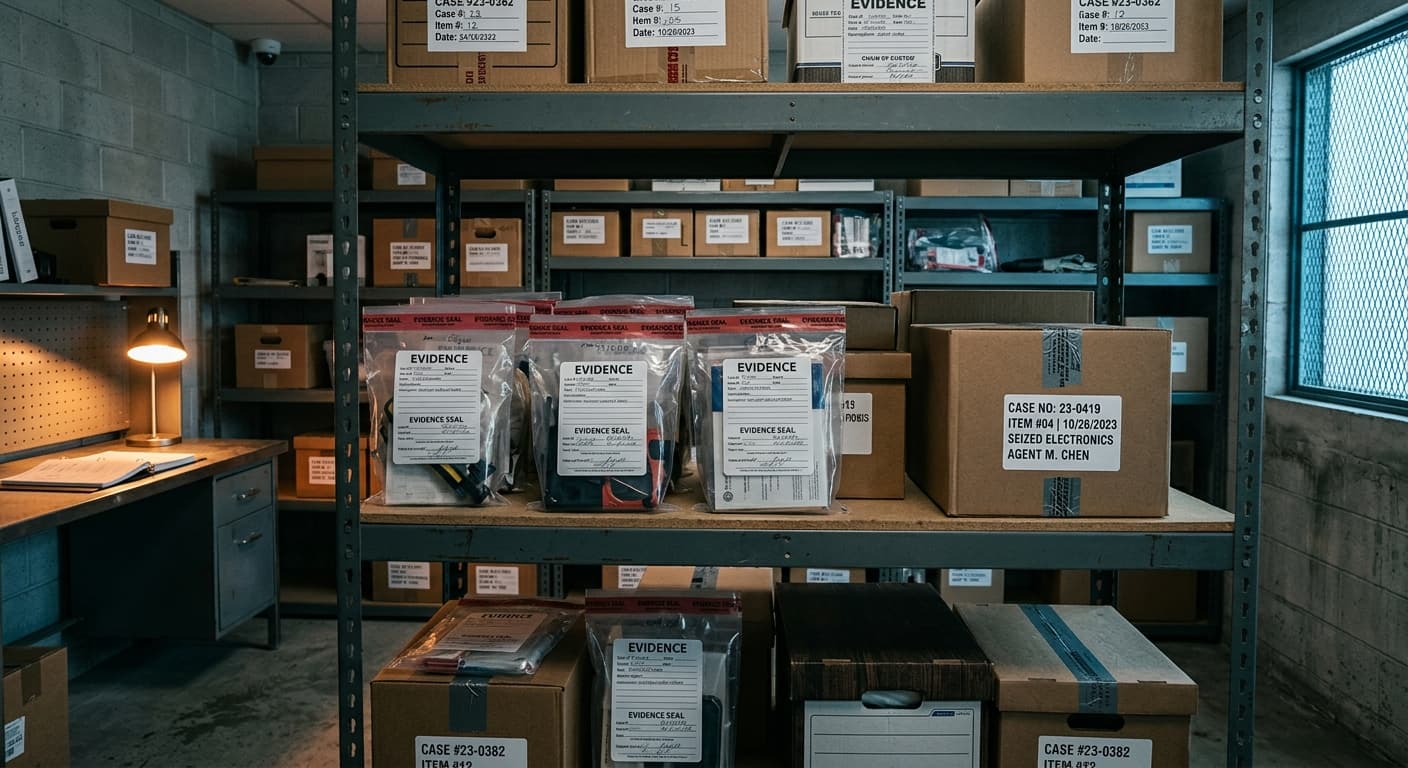
Idaho has no statute requiring police to wear body cameras or specifically governing public access to that footage. Bodycam recordings are handled through Idaho's general Public Records Act, . sets retention only for county law enforcement agencies; city police departments set their own retention by policy.
Information last verified on 2026-07-08. This article has not yet been reviewed by a licensed lawyer.
Scope note: This article covers Idaho police body cameras: mandate status, retention, and public access to footage. It does not address whether a civilian may record an on-duty Idaho police officer; that question is covered separately in Is It Illegal to Record Someone?
For how other states handle mandate status, retention, and access, see the police body camera laws by state hub.
Does Idaho require police to wear body cameras?
No. Idaho has not enacted a statute requiring city, county, or state law enforcement agencies to equip officers with body-worn cameras. Unlike Illinois, which phased in a statewide mandate under 50 ILCS 706, Idaho leaves the decision to deploy cameras, and the policy governing when officers must activate them, to each agency. The Idaho State Police, for example, operates under its own internal directive, Procedure EHP-06-24, revised November 2025, which sets activation and handling rules for troopers but has no force outside that agency. City police departments in Boise, Meridian, Idaho Falls, and elsewhere set their own bodycam policies the same way, so coverage and activation rules can differ from one Idaho department to the next. A resident asking whether a specific department uses body cameras, and when officers must turn them on, generally has to check that department's own published policy rather than a single statewide rule.
How long must Idaho agencies keep bodycam footage?
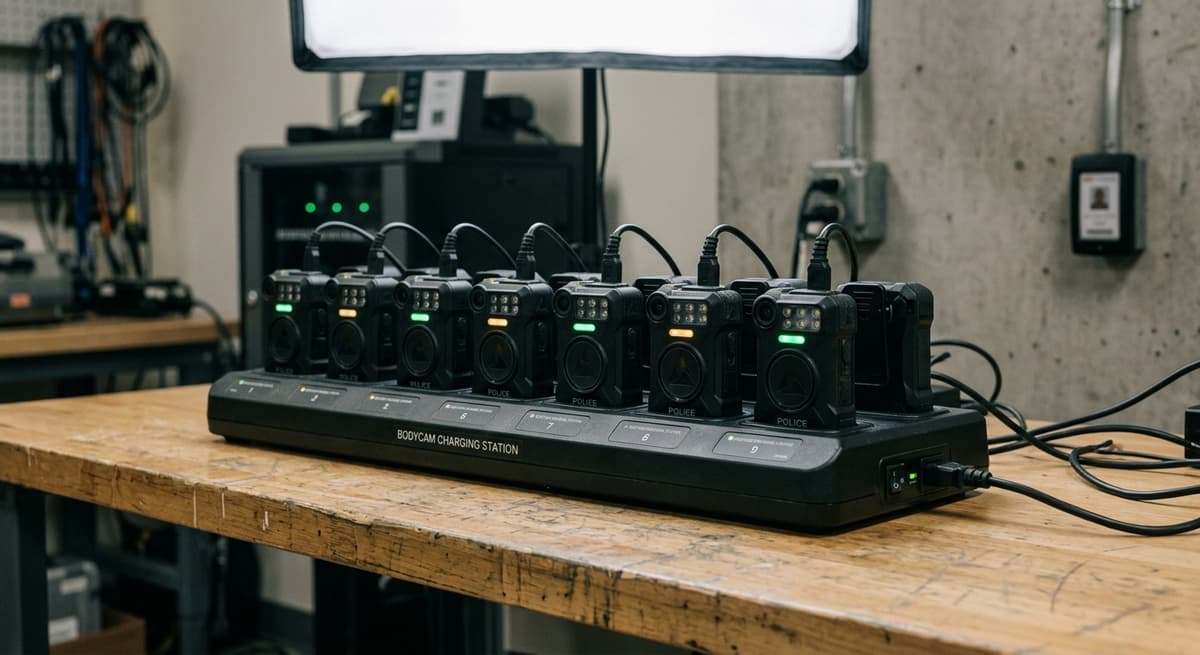
is a Title 31 county records statute, and its retention tiers apply to county law enforcement agencies, such as a county sheriff's office, county prosecuting attorney's office, or county probation office, not to city police departments, which set their own retention by policy. A law enforcement media recording held by a county agency with evidentiary value, meaning it relates to a use of force, an arrest, a criminal event, or a complaint or public records request filed by the recording's subject or their representative, must be kept for at least 200 days from the date it was made. A recording without evidentiary value made on equipment that is not fixed to a building, such as a body camera or dashboard camera, must be kept at least 60 days. A recording without evidentiary value from equipment fixed to a building's interior or exterior wall, such as a lobby or sallyport camera, only has to be kept 14 days. Unlike county records generally, which require a board resolution before destruction, Idaho Code 31-871 lets law enforcement media recordings be destroyed without one once the applicable period passes.
| Recording type | Minimum retention | Statute |
|---|---|---|
| Evidentiary value (use of force, arrest, or a complaint/records request from the recording's subject) | 200 days | Idaho Code 31-871 |
| No evidentiary value, non-fixed equipment (body or dash camera) | 60 days | Idaho Code 31-871 |
| No evidentiary value, fixed equipment (wall-mounted camera) | 14 days | Idaho Code 31-871 |
Can the public get a copy of Idaho bodycam footage?
Yes, in most cases. The Idaho Public Records Act, , gives every person the right to examine and copy any public record of the state and creates a presumption that records are open unless a statute expressly says otherwise. Bodycam footage counts as a public record, so a request generally starts from a presumption of disclosure rather than a presumption of secrecy. The main statute agencies cite to withhold footage is , the investigatory records exemption, discussed in more detail below. If a custodian denies a records request, the requester can petition the district court for the county where the record is held; the court reviews the denial, may examine the record privately, and can order disclosure or award litigation costs to the prevailing party. There is no separate bodycam-specific access statute, so every step of this process, from the initial request to a court challenge, runs through the general Public Records Act rather than a dedicated bodycam law.
What can Idaho agencies withhold or redact from bodycam footage?
is narrower than a blanket law-enforcement exemption. It lets an agency withhold an investigatory record, which includes a bodycam recording compiled while investigating a specific act, only to the extent disclosure would interfere with enforcement proceedings, deprive someone of a fair trial, constitute an unwarranted invasion of personal privacy, reveal the identity of a confidential source or a child-abuse reporting party, disclose investigative techniques, or endanger the life or physical safety of law enforcement personnel. Basic facts about an incident, including the time, date, location, nature of the offense, and an arrestee's identity and charges, generally still have to be disclosed even when a related recording is withheld. Once an investigation becomes inactive, meaning the agency is no longer pursuing it, footage that was withheld while the case was open often becomes subject to disclosure unless one of the other listed harms still applies.
What happens if an Idaho officer does not activate the camera?
Idaho has no statewide statute that penalizes an officer for failing to turn on a body camera or for tampering with footage, unlike Indiana, which makes deliberately disabling a recording device to conceal a crime a Class A misdemeanor under Indiana Code 35-44.1-2-2.5 (see Indiana police body camera laws). In Idaho, activation failures are handled as internal policy violations, subject to whatever discipline the individual agency's use-of-force and bodycam policy provides, rather than as a standalone crime. A missing recording can still matter later. Courts can weigh a gap in bodycam footage as part of the broader factual record in a civil rights or excessive force claim, even without a specific Idaho statute addressing non-activation directly.
Disclaimer
This article provides general legal information about Idaho's public records treatment of police body camera footage, including Idaho Code 31-871 and Idaho Code 74-102 and 74-124, as verified on 2026-07-08. It does not constitute legal advice and does not create an attorney-client relationship. Readers seeking a specific recording, or evaluating a denied public-records request, should consult a lawyer licensed in Idaho.
Related articles
- Police body camera laws by state: the complete hub
- Illinois police body camera laws: mandate, retention, and the Sonya Massey case
- Indiana police body camera laws: retention and public access
- Is it illegal to record someone?
- Idaho recording laws: one-party consent rules
Last updated: 2026-07-08. Statutes cited reflect their in-force version as of 2026-07-08.
More Idaho Laws
Frequently Asked Questions
Is it illegal for police to record me in Idaho?
No. On-duty police recording does not require the consent of the person being recorded under Idaho's wiretap law, which is a separate question from whether a civilian may record police. See our guide to whether it is illegal to record someone for that reverse question.
Do all Idaho police departments have body cameras?
No. Idaho has no statewide bodycam mandate, so coverage varies department by department. Some agencies, like Idaho State Police, have adopted their own body-worn camera procedures; others may not use them at all.
How long does Idaho keep police body camera footage?
For county law enforcement agencies, Idaho Code 31-871 sets three tiers: at least 200 days for recordings with evidentiary value, 60 days for non-evidentiary recordings from non-fixed equipment like a body camera, and 14 days for non-evidentiary recordings from a fixed camera. City police departments are not covered by this statute and set their own retention by policy.
How do I request police bodycam footage in Idaho?
Submit a public records request to the agency that holds the recording under the Idaho Public Records Act, Idaho Code 74-102. The first two hours of staff time and the first 100 pages of copying are free for resident requesters; the agency must respond within statutory timeframes or explain why an exemption applies.
Can Idaho police deny my bodycam footage request?
Yes, but only within the limits of Idaho Code 74-124. An agency can withhold an investigatory recording only to the extent disclosure would reveal a confidential source, disclose investigative techniques, endanger officer safety, or cause another listed harm, not as a blanket denial.
Does filing a public records request stop Idaho police from deleting bodycam footage?
Only if you are the person depicted in the recording, or their representative. Idaho Code 31-871 gives a recording evidentiary value, extending its minimum retention to 200 days, when a valid public records request about it is filed by the recording's subject or their representative, not by an unrelated requester.
What can I do if an Idaho agency denies my bodycam footage request?
You can petition the district court for the county where the record is held. The court reviews the denial, can examine the recording privately, and can order disclosure or award costs to the prevailing party under the Idaho Public Records Act.
Updates
Independently fact-checked against the cited primary sources; governing law re-checked for recent changes
Rescoped Idaho Code 31-871's bodycam retention tiers to county law enforcement agencies (city police departments set their own retention by policy) and corrected the 200-day evidentiary-value records-request trigger to apply only to a request from the recording's own subject or their representative.
Governing law re-checked for recent changes
Reviewed and approved by an editor
The Law Behind This Article
This article rests on 3 statutory provisions held in our own legal record, each retrieved from the official source. Tap a section to read the operative text.
Idaho Code
§ 31-871Classification and retention of recordsIn forcecited in 4 of our articles
31-871. Classification and retention of records. (1) County records shall be classified as follows: (a) "Law enforcement media recording" means a digital record created by a law enforcement agency in the performance of its duties that consists of a recording of visual or audible components or both.
Official text (excerpt) · as of 2026-08-01 · Read the full section at legislature.idaho.gov
Also relied on in: Idaho Laws on Recording Police: Your Rights and Limitations (2026), Idaho Public Records Laws: Title 74 and the Resident vs Non-Resident Clock, Idaho Recording Laws (2026): One-Party Consent Rules
§ 74-102Public records — Right to examineIn forcecited in 3 of our articles
74-102. Public records — Right to examine. (1) Every person has a right to examine and take a copy of any public record of this state and there is a presumption that all public records in Idaho are open at all reasonable times for inspection except as otherwise expressly provided by statute.
Official text (excerpt) · as of 2026-08-01 · Read the full section at legislature.idaho.gov
Cited in 2 court opinionsMost recently applied by a court: 2025
Leading cases: Sentry Dynamics, Inc. v. Ada County (Idaho Supreme Court 2025) · State v. Clapp (Idaho Court of Appeals 2020, 168 Idaho 67)
Identified automatically from the court opinions citing this section — not a ranking of which case controls.
§ 74-124Exemptions from disclosure — ConfidentialityIn force
74-124. Exemptions from disclosure — Confidentiality. (1) Notwithstanding any statute or rule of court to the contrary, nothing in this chapter nor chapter 10, title 59, Idaho Code, shall be construed to require disclosure of investigatory records compiled for law enforcement purposes by a law…
Official text (excerpt) · as of 2026-08-01 · Read the full section at legislature.idaho.gov
Cited in 2 court opinionsMost recently applied by a court: 2026
Leading cases: Hymas v. Meridian Police Department (Idaho Court of Appeals 2015, 159 Idaho 594) · Gaylord v. King (Idaho Court of Appeals 2026)
Identified automatically from the court opinions citing this section — not a ranking of which case controls.
Search our full record of US law — 2.1 million sections, every state + federal →
Sources and References
- Idaho Code 31-871 (Classification and Retention of Records)(legislature.idaho.gov).gov
- Idaho Code 74-102 (Public Records, Right to Examine)(legislature.idaho.gov).gov
- Idaho Code 74-124 (Exemptions From Disclosure, Investigatory Records)(legislature.idaho.gov).gov
- Idaho State Police Procedure EHP-06-24: Body-Worn Cameras(isp.idaho.gov).gov
- NCSL Body-Worn Camera Laws Database(ncsl.org)