
Illinois
Illinois Police Body Camera Laws: Mandate & Retention (2026)
Independently fact-checked against primary sources (last audited August 20, 2026). · Reviewed by the RecordingLaw editorial team. · Law checked current as of August 20, 2026. · 3 primary sources cited on this page. How we verify our legal content
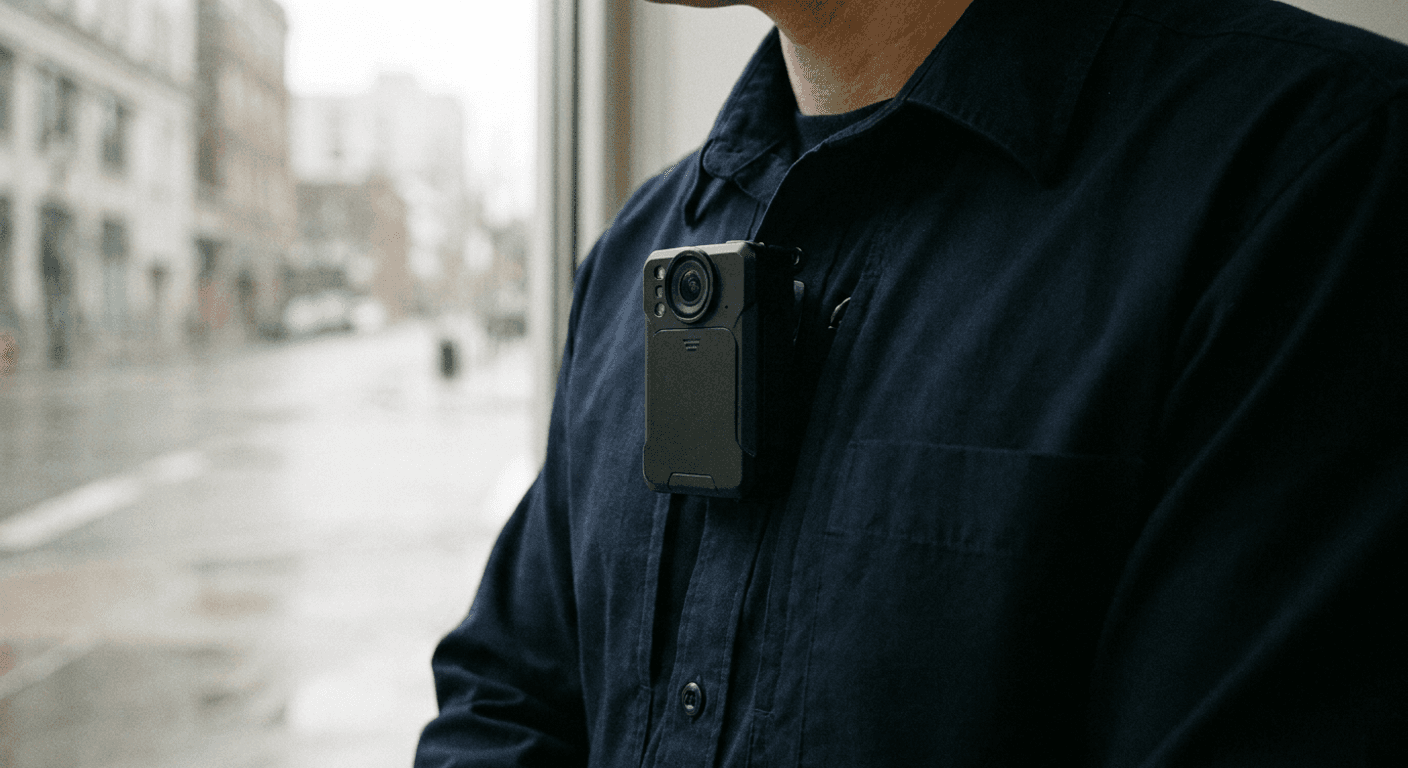
Illinois requires nearly every police agency in the state to equip officers with body cameras under the Law Enforcement Officer-Worn Body Camera Act, 50 ILCS 706, with the last agencies brought under the mandate by January 1, 2025. Footage is exempt from the Freedom of Information Act by default, and is released only in the situations the Act itself authorizes.
Information last verified on 2026-07-08. This article has not yet been reviewed by a licensed lawyer.
Scope note: This article covers Illinois police body cameras: the mandate, activation, retention, and public access to footage. It does not address whether a civilian may record an on-duty Illinois police officer; that question is covered separately in Is It Illegal to Record Someone?
For how other states handle mandate status, retention, and access, see the police body camera laws by state hub.
Does Illinois require police to wear body cameras?
Yes. The Law Enforcement Officer-Worn Body Camera Act, 50 ILCS 706/10-1 et seq., phased in a statewide mandate covering almost every Illinois law enforcement agency, state and local. Agencies serving 500,000 or more residents had to comply by January 1, 2022; agencies serving 100,000 to 500,000 by January 1, 2023, or July 1, 2023 if they had ordered cameras by October 1, 2022; agencies serving 50,000 to 100,000 by January 1, 2024; and every remaining agency, including departments serving fewer than 50,000 people and state agencies with law enforcement officers, by January 1, 2025.
The mandate is not literally universal. 50 ILCS 706/10-15(d) carves three categories out of the applicability section entirely: court security officers, State's Attorney investigators, and Attorney General investigators. Those officers are outside the schedule below no matter what population their jurisdiction serves.
With roughly 846 law enforcement agencies statewide, Illinois has one of the broadest statutory bodycam mandates in the country, though reporting on compliance has noted that the Act itself does not spell out a direct financial or operational penalty against a noncompliant agency.
| Agency size (population served) | Compliance deadline |
|---|---|
| 500,000 or more | January 1, 2022 |
| 100,000 to 500,000 | January 1, 2023 (or July 1, 2023 if cameras were ordered by October 1, 2022) |
| 50,000 to 100,000 | January 1, 2024 |
| Under 50,000, plus State agencies with law enforcement officers and all remaining agencies | January 1, 2025 |
The schedule above does not reach court security officers, State's Attorney investigators, or Attorney General investigators, who are excluded from the applicability section by 50 ILCS 706/10-15(d).

When must an Illinois officer turn the camera on?
Under 50 ILCS 706/10-20, an officer must activate the body camera any time the officer is in uniform and responding to a call for service or engaged in a law enforcement-related encounter or activity while on duty, which is broader than a rule limited to arrests, traffic stops, or force. If exigent circumstances prevent the camera from being turned on, it must be turned on as soon as practicable.
The statute then splits its exceptions into two kinds, and the difference matters. Some are permissive. Under 50 ILCS 706/10-20(a)(3)(B) and (a)(3)(C), a camera may be turned off inside a patrol car equipped with a functioning in-car camera, though the officer must turn it on when stepping out of the vehicle for a law enforcement-related encounter, and inside a correctional facility or courthouse with its own functioning camera system. Under 50 ILCS 706/10-20(a)(4.5), a camera may be turned off during community caretaking functions, but it must be turned on if the officer has reason to believe the person has committed or is committing a crime.
Others are mandatory. 50 ILCS 706/10-20(a)(4) states that cameras must be turned off when the victim of a crime requests it, when a witness of a crime or a community member who wishes to report a crime requests it, when the officer is interacting with a confidential informant used by the agency, or when a Department of Revenue officer enters a Department of Revenue facility or conducts an interview where return information will be discussed or visible. For a victim or witness request, the request itself has to be made on the recording unless that is impractical or impossible.
One override runs through those mandatory shut-offs. An officer may continue recording or resume recording a victim or witness if exigent circumstances exist, or if the officer has reasonable articulable suspicion that the victim, witness, or confidential informant has committed or is in the process of committing a crime. In that situation the officer must state the reason for continuing to record on the recording itself, again unless that is impractical or impossible.
The Act also defines when an encounter becomes flagged for extended retention: a formal or informal complaint, a firearm discharge or use of force, a death or serious injury, a detention or arrest beyond a minor traffic offense, an internal misconduct investigation, or a determination by a supervisor, prosecutor, defendant, or court that the recording has evidentiary value.
How long must Illinois agencies keep bodycam footage?
Illinois sets a 90-day statutory floor for ordinary footage; no recording, other than one documenting a purely non-law-enforcement activity, may be altered, erased, or destroyed before that 90-day period runs. Footage from a flagged encounter cannot be destroyed until at least 2 years after the flag date, and if the recording is used in a criminal, civil, or administrative proceeding, it must be kept until the court issues a final disposition and order. If an agency does delete footage before the 90-day floor expires, in the narrow case of a non-law-enforcement recording, it must keep a written record for one year documenting who deleted it and why. That paper-trail requirement gives requesters and courts a way to check whether an early deletion was proper.
Can the public get a copy of Illinois bodycam footage?
Sometimes, but the starting point is the opposite of the way ordinary Illinois public records work. Section 10-20(b) of the Body Camera Act provides that recordings made with the use of an officer-worn body camera "are not subject to disclosure under the Freedom of Information Act, except that" the Act's own release categories apply. The Illinois FOIA carries the same rule as a statutory exemption at 5 ILCS 140/7.5(cc), covering "Recordings made under the Law Enforcement Officer-Worn Body Camera Act, except to the extent authorized under that Act." So a requester does not begin from FOIA's usual presumption of openness. The request has to fit one of the categories the Body Camera Act opens.
There are three of them.
- Flagged encounters. Under 50 ILCS 706/10-20(b)(2), a recording flagged because of the filing of a complaint, a discharge of a firearm, a use of force, an arrest or detention, or a resulting death or bodily harm must be disclosed in accordance with FOIA.
- Flagged encounters involving a victim or witness with a privacy expectation. Under 50 ILCS 706/10-20(b)(1), if the subject of that flagged encounter is a victim or witness who had a reasonable expectation of privacy at the time of the recording, the agency must first obtain the written permission of that subject or the subject's legal representative. A subject who was arrested as a result of the encounter is deemed to have no reasonable expectation of privacy, and for this purpose "witness" does not include a victim or a person who was arrested in the encounter.
- The people in the video. Under 50 ILCS 706/10-20(b)(3), on request the agency must disclose the recording to the subject of the encounter, the subject's attorney, or the officer or the officer's legal representative.
Even when a recording falls into one of those categories, the release is narrowed twice. Only the recordings or portions of recordings responsive to the request are available for inspection or reproduction. And any recording disclosed under FOIA must be redacted to remove identification of any person who appears on it and is not the officer, a subject of the encounter, or directly involved in the encounter.
The general FOIA exemptions in 5 ILCS 140/7 can still apply on top of that, including Section 7(1)(d)(vii) for records whose release would obstruct an ongoing criminal investigation by the agency receiving the request. A public body must respond to a FOIA request within 5 business days, extendable by 5 more business days if collecting, reviewing, and redacting the footage requires additional time. Illinois State Police and other law enforcement agencies maintain dedicated FOIA intake channels for video requests.
The Sonya Massey case: Illinois's bodycam law in practice
The clearest real-world example of Illinois's bodycam framework in operation is the Sonya Massey shooting. On July 6, 2024, Sangamon County Sheriff's Deputy Sean Grayson responded to Massey's home near Springfield after she called 911 to report a possible prowler. Bodycam footage from Grayson and a second responding deputy shows Grayson threatening to shoot Massey over a pot of water on her stove, then firing three times as she ducked behind the pot. Illinois State Police released roughly 36 minutes of combined footage from both deputies' cameras on July 22, 2024, 16 days after the shooting, consistent with the flagged-encounter framework under 50 ILCS 706 that governs footage tied to a death or use of deadly force. That footage became the central evidence at trial. Grayson had been indicted on first-degree murder and other charges; a Sangamon County jury convicted him of the lesser offense of second-degree murder on October 29, 2025, after a seven-day trial, and a judge sentenced him to 20 years in prison on January 29, 2026. Separately, the Sangamon County Board approved a $10 million settlement of Massey's family's wrongful-death claim against the county in February 2025. The case illustrates both halves of Illinois's framework at once: a mandatory-activation requirement that ensured the encounter was recorded at all, and a flagged-encounter release, run through Illinois State Police rather than the county, that got the footage into public view within weeks rather than months.
Disclaimer
This article provides general legal information about Illinois's Law Enforcement Officer-Worn Body Camera Act, 50 ILCS 706, and the Illinois Freedom of Information Act, 5 ILCS 140, as verified on 2026-07-08. It does not constitute legal advice and does not create an attorney-client relationship. Readers seeking a specific recording, or evaluating a denied public-records request, should consult a lawyer licensed in Illinois.
Related articles
- Police body camera laws by state: the complete hub
- Idaho police body camera laws: retention and public records access
- Indiana police body camera laws: retention and public access
- Is it illegal to record someone?
Last updated: 2026-07-08. Statutes cited reflect their in-force version as of 2026-07-08.
More Illinois Laws
Frequently Asked Questions
Does Illinois require police departments to use body cameras?
Yes. The Law Enforcement Officer-Worn Body Camera Act, 50 ILCS 706, phased in a statewide mandate by agency population, with every remaining Illinois law enforcement agency required to comply by January 1, 2025. One narrow exclusion applies: 50 ILCS 706/10-15(d) provides that the applicability section does not reach court security officers, State's Attorney investigators, or Attorney General investigators.
How long does Illinois keep police bodycam footage?
At least 90 days for ordinary footage. Footage from a flagged encounter, such as a use of force, arrest, complaint, or death or serious injury, must be kept at least 2 years from the flag date under 50 ILCS 706.
Can I get a copy of Illinois police bodycam footage?
Only in the situations the Body Camera Act allows. Under 50 ILCS 706/10-20(b), bodycam recordings are not subject to disclosure under the Freedom of Information Act, except that a recording flagged because of a complaint, firearm discharge, use of force, arrest or detention, or resulting death or bodily harm must be released, and the subject of the encounter, the subject's attorney, or the officer may request a copy. If a flagged recording captures a victim or witness who had a reasonable expectation of privacy, the agency needs that person's written permission first. A person arrested as a result of the encounter is deemed to have no such expectation.
When must an Illinois officer turn the body camera off?
50 ILCS 706/10-20(a)(4) makes shut-off mandatory when a crime victim asks, when a witness or a community member who wishes to report a crime asks, when the officer is interacting with a confidential informant, or when a Department of Revenue officer is in a Department of Revenue facility or an interview involving return information. The officer may keep recording anyway if exigent circumstances exist or there is reasonable articulable suspicion that the person has committed or is committing a crime, and must say why on the recording.
What happened to the bodycam footage in the Sonya Massey case?
Illinois State Police released roughly 36 minutes of combined footage from two deputies' body cameras on July 22, 2024, 16 days after the July 6, 2024 shooting. That footage was the central evidence at Deputy Sean Grayson's trial, which ended in a second-degree murder conviction on October 29, 2025.
What is a flagged encounter under Illinois's Body Camera Act?
An encounter is flagged when a formal or informal complaint is filed, an officer discharges a firearm or uses force, a death or serious injury occurs, the encounter leads to a detention or arrest beyond a minor traffic offense, the officer faces an internal investigation, or a supervisor, prosecutor, defendant, or court determines the recording has evidentiary value. Flagging drives both the 2-year retention floor and the main route to public release.
Can an Illinois police officer be punished for not turning on the body camera?
The Act itself does not spell out a specific statutory penalty for an individual non-activation, and reporting has noted limited enforcement against noncompliant agencies. A failure to activate is typically addressed through the employing agency's own discipline policy and can affect how a later investigation or court proceeding evaluates the evidence.
How do I request Illinois police bodycam footage?
Submit a written Freedom of Information Act request to the specific agency that holds the recording, such as the local police department, sheriff's office, or Illinois State Police, and identify the encounter along with the basis for release under 50 ILCS 706/10-20(b), for example that it was a flagged use-of-force encounter or that you were the subject of it. Because 5 ILCS 140/7.5(cc) exempts bodycam recordings from FOIA except as the Body Camera Act authorizes, a request that does not fit one of the Act's release categories can be denied on that basis alone.
Updates
Corrected the public-access section: Illinois body camera recordings are exempt from the Freedom of Information Act by default under 50 ILCS 706/10-20(b) and 5 ILCS 140/7.5(cc) and are released only through the categories that Act lists, and separately clarified which camera shut-offs are mandatory rather than optional and named the statutory exclusion for court security officers and State's Attorney and Attorney General investigators.
Independently fact-checked against the cited primary sources; governing law re-checked for recent changes
Reviewed and approved by an editor
The Law Behind This Article
This article rests on the statutory provisions below, held in our own legal record and retrieved from the official source. Tap a section to read the operative text.
Illinois Compiled Statutes Chapter 50, Act 706 (Law Enforcement Officer-Worn Body Camera Act)
§ 10-20RequirementsIn forcecited in 4 of our articles
(a) The Board shall develop basic guidelines for the use of officer-worn body cameras by law enforcement agencies. The guidelines developed by the Board shall be the basis for the written policy which must be adopted by each law enforcement agency which employs the use of officer-worn body cameras. The written policy adopted by the law enforcement agency must include, at a minimum, all of the following: (1) Cameras must be equipped with pre-event recording, capable of recording at least the 30 seconds prior to camera activation, unless the officer-worn body camera was purchased and acquired by the law enforcement agency prior to July 1, 2015. (2) Cameras must be capable of recording for a period of 10 hours or more, unless the officer-worn body camera was purchased and acquired by the law enforcement agency prior to July 1, 2015. (3) Cameras must be turned on at all times when the officer is in uniform and is responding to calls for service or engaged in any law enforcement-related encounter or activity that occurs while the officer is on duty. (A) If exigent circumstances exist which prevent the camera from being turned on, the camera must be turned on as soon as practicable.
Official text (excerpt) · last checked 2026-08-31 · Read the full text in our law library · Verify at ilga.gov
Cited in 8 court opinions in our collectionLatest citing opinion in our collection: 2025
In the courts (editorial summary, independently checked):NBC Subsidiary v. Chicago Police Department (2025) found, on a ground it called unnecessary, that witnesses and a victim on a public street had a reasonable expectation of privacy under 10-20(b)(1), so release needed written permission. People v. Dunn (2023) applied 10-20(a)(3)'s activation duty but denied relief for lack of prejudice.
Opinions citing this section in our collection:
- NBC Subsidiary v. Chicago Police Department (Appellate Court of Illinois 2025, 2025 IL App (1st) 240629)✓A TV station sought body camera video of a fatal hit-and-run under FOIA; the court affirmed on another FOIA exemption, then held as an added ground that the witnesses and the victim filmed in an ambulance had a reasonable expectation of privacy under section 10-20(b)(1).
- NBC Subsidiary (WMAQ-TV) LLC v. Chicago Police Department (Appellate Court of Illinois 2025, 2025 IL App (1st) 240629-U)“…Enforcement Officer-Worn Body Camera Act (Body Camera Act) (50 ILCS 706/10-20(b) (West 2022)), and (3) addition…”
- Lambert v. City of Chicago (Appellate Court of Illinois 2023, 2023 IL App (1st) 220265-U)“…r the Illinois Body-Worn Camera Act (the Body Camera Act) (50 ILCS 706/10-20(b) (West 2020)); and (2) that its disc…”
Identified automatically from the court opinions citing this section — not a ranking of which case controls.
Also relied on in: Illinois Police Reports: Crash Reports, Incident Reports, and Bodycam Footage, How to Request Body Cam Footage: State Laws and the Request Process, Illinois Public Records Laws: The Illinois FOIA (5 ILCS 140) Explained
§ 10-15ApplicabilityIn force
(a) All law enforcement agencies must employ the use of officer-worn body cameras in accordance with the provisions of this Act, whether or not the agency receives or has received monies from the Law Enforcement Camera Grant Fund. (b) Except as provided in subsection (b-5), all law enforcement agencies must implement the use of body cameras for all law enforcement officers, according to the following schedule: (1) for municipalities and counties with populations of 500,000 or more, body cameras shall be implemented by January 1, 2022; (2) for municipalities and counties with populations of 100,000 or more but under 500,000, body cameras shall be implemented by January 1, 2023; (3) for municipalities and counties with populations of 50,000 or more but under 100,000, body cameras shall be implemented by January 1, 2024; (4) for municipalities and counties under 50,000, body cameras shall be implemented by January 1, 2025; and (5) for all State agencies with law enforcement officers and other remaining law enforcement agencies, body cameras shall be implemented by January 1, 2025.
Official text (excerpt) · last checked 2026-07-29 · Read the full text in our law library · Verify at ilga.gov
Cited in 1 court opinions in our collectionLatest citing opinion in our collection: 2023
Opinions citing this section in our collection:
- People v. Tompkins (Illinois Supreme Court 2023, 466 Ill. Dec. 47)“…b. Act 102- 1104, § 30 (eff. Dec. 6, 2022) (amending 50 ILCS 706/10-15).…”
Identified automatically from the court opinions citing this section — not a ranking of which case controls.
§ 10-1Short titleIn force
This Article may be cited as the Law Enforcement Officer-Worn Body Camera Act. References in this Article to "this Act" mean this Article.
Official text (excerpt) · last checked 2026-07-29 · Read the full text in our law library · Verify at ilga.gov
Cited in 10 court opinions in our collectionLatest citing opinion in our collection: 2025
Opinions citing this section in our collection:
- People v. Collins (Appellate Court of Illinois 2020, 2020 IL App (1st) 181746)“…Law Enforcement Officer Body-Worn Camera Act (Act) (50 ILCS 706/10-1 et seq. (West 2016)), but we hyp…”
- People v. Dunn (Appellate Court of Illinois 2023, 2023 IL App (1st) 220675-U)“…violated the Law Enforcement Officer-Worn Body Camera Act (50 ILCS 706/10-1 et seq. (West 2020)). Defendant argued…”
- People v. Washington (Appellate Court of Illinois 2022, 2022 IL App (1st) 200638-U)“…of the Law Enforcement Officer-Worn Body Camera Act (Act) (50 ILCS 706/10-1 et seq. (West 2018)) provides that body…”
Identified automatically from the court opinions citing this section — not a ranking of which case controls.
Illinois Compiled Statutes Chapter 5, Act 140 (Freedom of Information Act)
§ 7ExemptionsIn forcecited in 3 of our articles
(1) When a request is made to inspect or copy a public record that contains information that is exempt from disclosure under this Section, but also contains information that is not exempt from disclosure, the public body may elect to redact the information that is exempt. The public body shall make the remaining information available for inspection and copying. Subject to this requirement, the following shall be exempt from inspection and copying: (a) Records created or compiled by a State public defender agency or commission subject to the State Public Defender Act that contain: individual client identity; individual case file information; individual investigation records and other records that are otherwise subject to attorney-client privilege; records that would not be discoverable in litigation; records under Section 2.15; training materials; records related to attorney consultation and representation strategy; or any of the above concerning clients of county public defenders or other defender agencies and firms. This exclusion does not apply to deidentified, aggregated, administrative records, such as general case processing and workload information.
Official text (excerpt) · last checked 2026-07-29 · Read the full text in our law library · Verify at ilga.gov
Cited in 203 court opinions in our collectionLatest citing opinion in our collection: 2026
Opinions citing this section in our collection:
- Southern Illinoisan v. Illinois Department of Public Health (Illinois Supreme Court 2006, 218 Ill. 2d 390)“…sed this denial on sections 7(l)(a) and (l)(b) of the FOIA (5 ILCS 140/7(l)(a), (l)(b) (West 1998)), which prote…”
- Lieber v. Board of Trustees of Southern Illinois University (Illinois Supreme Court 1997)“…law was clearly meant to invoke section 7(l)(a) of the Act (5 ILCS 140/7(l)(a) (West 1994)), which exempts from…”
- Illinois Education Ass'n v. Illinois State Board of Education (Illinois Supreme Court 2003)“…mpt from disclosure pursuant to section 7(l)(n) of the Act (5 ILCS 140/7(l)(n) (West 2000)). The IEA appealed, a…”
Identified automatically from the court opinions citing this section — not a ranking of which case controls.
§ 7.5Statutory exemptionsIn forcecited in 2 of our articles
To the extent provided for by the statutes referenced below, the following shall be exempt from inspection and copying: (a) All information determined to be confidential under Section 4002 of the Technology Advancement and Development Act. (b) Library circulation and order records identifying library users with specific materials under the Library Records Confidentiality Act. (c) Applications, related documents, and medical records received by the Experimental Organ Transplantation Procedures Board and any and all documents or other records prepared by the Experimental Organ Transplantation Procedures Board or its staff relating to applications it has received. (d) Information and records held by the Department of Public Health and its authorized representatives relating to known or suspected cases of sexually transmitted infection or any information the disclosure of which is restricted under the Illinois Sexually Transmitted Infection Control Act. (e) Information the disclosure of which is exempted under Section 30 of the Radon Industry Licensing Act.
Official text (excerpt) · last checked 2026-07-29 · Read the full text in our law library · Verify at ilga.gov
Cited in 12 court opinions in our collectionLatest citing opinion in our collection: 2024
Opinions citing this section in our collection:
- Hart v. Illinois State Police (Illinois Supreme Court 2023, 234 N.E.3d 708)“…n exempt from disclosure under section 7.5(v) of FOIA (5 ILCS 140/7.5(v) (West 2018)). The circuit court…”
- Rock River Times v. Rockford Public School District 205 (Appellate Court of Illinois 2012, 365 Ill. Dec. 117)“…cord Review Act (820 ILCS 40/0.01 et seq. (West 2010)). See 5 ILCS 140/7.5(q) (West 2010). Also on September…”
- Accuracy Firearms, LLC v. Pritzker (Appellate Court of Illinois 2023, 225 N.E.3d 728)“…at included and/or removed text in the following statutes: 5 ILCS 140/7.5; 20 ILCS 2605/2605-35, 2605-51.1; 30 IL…”
Identified automatically from the court opinions citing this section — not a ranking of which case controls.
Also relied on in: Illinois License Plate Reader Laws (2026)
Search our full record of US law — 2.1 million sections, every state + federal →
Sources and References
- 50 ILCS 706/10-1 et seq. (Law Enforcement Officer-Worn Body Camera Act)(ilga.gov).gov
- 5 ILCS 140 (Illinois Freedom of Information Act)(ilga.gov).gov
- Illinois Attorney General Public Access Bureau: FOIA for Law Enforcement Agencies, Video Recordings(illinoisattorneygeneral.gov).gov
- CNN: Illinois police release bodycam video of fatal shooting of Sonya Massey(cnn.com)
- CNN: Sean Grayson sentenced to 20 years for fatal shooting of Sonya Massey(cnn.com)
- Capitol News Illinois: $10 million settlement in Sonya Massey wrongful death case(capitolnewsillinois.com)
- NBC News: Sean Grayson found guilty of murder in the death of Sonya Massey(nbcnews.com)
- 50 ILCS 706/10-20 (Law Enforcement Officer-Worn Body Camera Act, Requirements; subsection (b) governs FOIA disclosure of recordings)(ilga.gov)
- 50 ILCS 706/10-15 (Applicability; subsection (d) excludes court security officers, State's Attorney investigators, and Attorney General investigators)(ilga.gov)
- 5 ILCS 140/7.5(cc) (statutory FOIA exemption for recordings made under the Law Enforcement Officer-Worn Body Camera Act)(ilga.gov)