
New Jersey
New Jersey Car Accident Laws: No-Fault Choice, PIP, and Your Claim
Independently fact-checked against primary sources (last audited August 18, 2026). · Reviewed by the RecordingLaw editorial team. · Law checked current as of August 18, 2026. · 7 primary sources cited on this page. How we verify our legal content
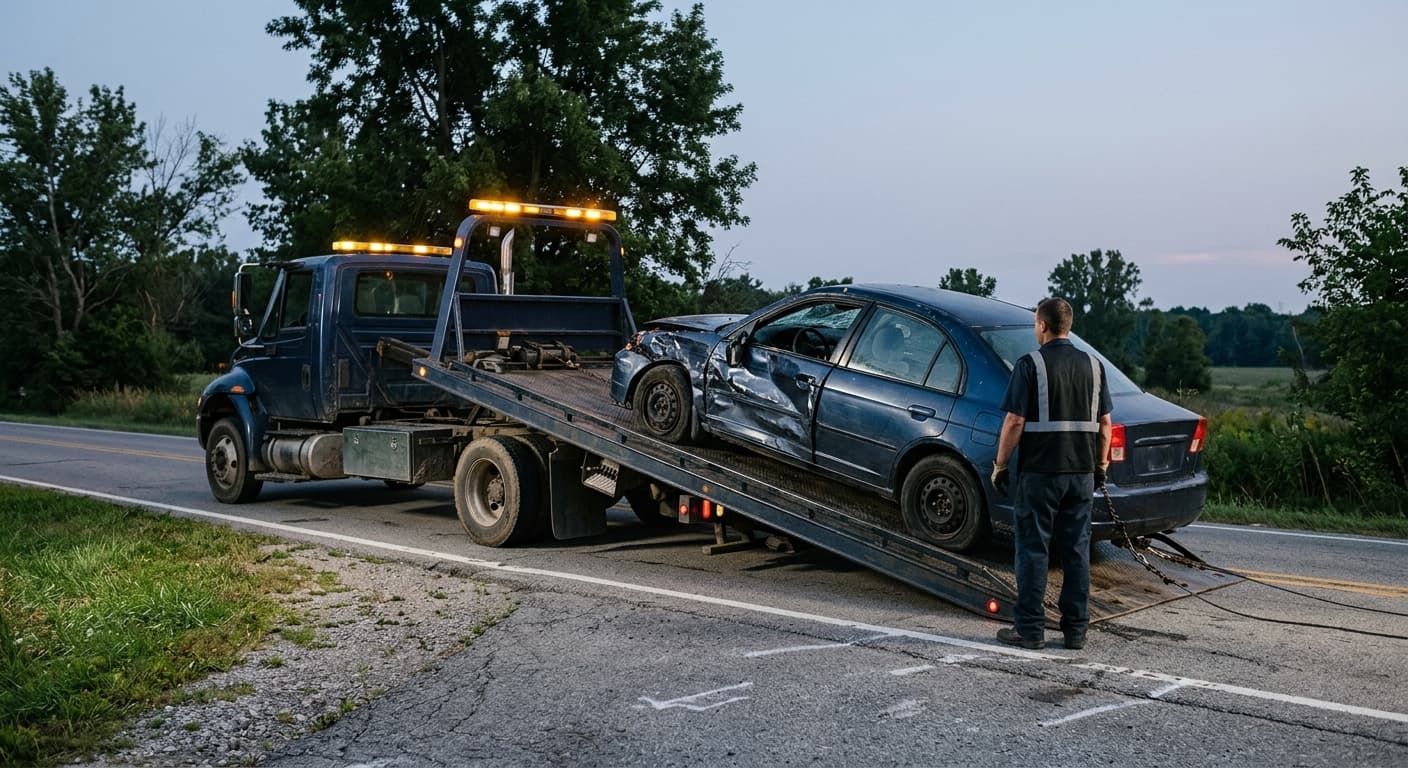
New Jersey is a "choice" no-fault state where drivers elect between two tort options at policy purchase: the "limitation on lawsuit" (verbal threshold) option, which restricts pain-and-suffering suits to six serious-injury categories, and the "no limitation on lawsuit" (full-tort) option, which preserves the right to sue for any injury. In either case, your own PIP pays medical bills first regardless of fault. Fault is shared under modified comparative negligence with a 51% bar (N.J.S.A. 2A:15-5.1), and you generally have 2 years to file a personal-injury lawsuit.
Is New Jersey a no-fault or at-fault state?
New Jersey is one of only three "choice" no-fault states in the country, along with Pennsylvania and Kentucky. Under the Automobile Insurance Cost Reduction Act (AICRA), codified at N.J.S.A. 39:6A-1 et seq., every driver must carry Personal Injury Protection (PIP), which pays for the insured's own medical expenses first regardless of who caused the crash. That baseline no-fault coverage applies to everyone. What makes New Jersey unique is the election every driver makes at the time of policy purchase: the "limitation on lawsuit" (verbal-threshold/basic-tort) option under N.J.S.A. 39:6A-8(a), or the "no limitation on lawsuit" (full-tort) option under N.J.S.A. 39:6A-8(b).
The choice you (or a family member) made when buying the policy directly controls whether you can sue the at-fault driver for pain and suffering after a crash. If you chose the limited-tort option, you saved money on premiums but gave up the right to sue for non-economic damages unless your injury meets one of the six verbal-threshold categories. If you chose the full-tort option, you paid more but preserved unrestricted access to the courts. Checking your declarations page to identify which option you carry is often the first critical step after a New Jersey crash.
How fault is shared: New Jersey's negligence rule
New Jersey follows modified comparative negligence with a 51% bar, codified at N.J.S.A. 2A:15-5.1. Under this standard, you may recover damages from an at-fault party even if you were partly responsible for the crash, as long as your share of fault is 50% or less. Your total damages are then reduced proportionally by your percentage of fault.

If you are found to be 51% or more at fault, you are completely barred from recovering anything from the other driver. For example, if you suffered $80,000 in damages and were found 30% at fault, your recoverable amount would be reduced to $56,000. If you were found 55% at fault, you would receive nothing. This rule interacts directly with the tort-option you elected: if you carry the verbal-threshold option and your injury does not meet the threshold, the question of fault never reaches a jury, because you cannot bring the pain-and-suffering claim at all. The comparative-fault reduction applies to the damages that are recoverable once any threshold is met or the full-tort option applies.
Minimum car insurance in New Jersey
New Jersey's minimum insurance requirements for the Standard Policy changed in phases. Under N.J.S.A. 39:6A-3, as updated by DOBI Bulletin 25-06, the current Standard Policy minimums effective January 1, 2026 are: $35,000 bodily-injury liability per person, $70,000 per accident, and $25,000 property-damage liability. This 35/70/25 structure represents a substantial increase from the prior $15,000/$30,000/$5,000 limits. The property-damage minimum rose from $5,000 to $25,000 for policies issued or renewed on or after January 1, 2023.
New Jersey also offers a lower-cost Basic Policy under N.J.S.A. 39:6A-3.1, which does not include mandatory bodily-injury liability coverage at all (BI is an optional add-on at $10,000 per accident). Its PIP is thinner too: N.J.S.A. 39:6A-3.1(a) caps Basic Policy medical expense benefits at $15,000 per person per accident, subject to the same $250,000 carve-out for permanent or significant brain, spinal cord or disfigurement injuries and for trauma-center treatment. The Basic Policy is not subject to the 35/70/25 minimums. If the driver who hit you carries only a Basic Policy with no BI add-on, there may be no liability coverage available to pay your medical bills above PIP or your pain-and-suffering damages, which is why your own coverage matters.
PIP is mandatory on both the Standard and Basic Policy, but the two carry very different medical-expense limits. Under the Standard Policy, PIP medical expense benefits are payable in an amount not to exceed $250,000 per person per accident (N.J.S.A. 39:6A-4(a)). A driver may elect a lower limit of $150,000, $75,000, $50,000 or $15,000 (N.J.S.A. 39:6A-4.3(e)), but that election has to be made affirmatively in writing: if none of those options is chosen, the statute provides that the policy shall provide $250,000 in medical expense benefits. The Standard Policy default is therefore $250,000, not $15,000, and only a driver who signed a reduced-limit election form carries less.
If you did elect a reduced PIP limit, one carve-out still applies: benefits are paid in an amount not to exceed $250,000 for all medically necessary treatment of permanent or significant brain injury, spinal cord injury or disfigurement, and for medically necessary treatment of other permanent or significant injuries rendered at a trauma center or acute care hospital immediately following the crash. Your declarations page, not the statutory default, tells you which limit you actually carry.
Uninsured/underinsured motorist coverage is required on the Standard Policy under N.J.S.A. 17:28-1.1: bodily-injury UM/UIM limits match the policy's liability limits (default $35,000/$70,000), and property-damage UM/UIM coverage is a mandatory $25,000 aggregate for all insurers on any one accident, subject to a $500 exclusion per insured. The insured may select lower UM/UIM bodily-injury limits but cannot drop below the statutory floor on a Standard Policy. The Basic Policy does not include UM/UIM, so if you are hit by an uninsured driver and you carry only a Basic Policy, there is no UM/UIM backstop.
How long you have to file: the statute of limitations
New Jersey imposes a 2-year statute of limitations for personal-injury actions arising from car accidents, under N.J.S.A. 2A:14-2. The clock generally begins running on the date of the accident. Missing this deadline ordinarily means the court will dismiss your case regardless of how strong the underlying claim is.

Property-damage claims arising from the same crash run on a longer clock. The two-year period in N.J.S.A. 2A:14-2 governs an injury to the person, while N.J.S.A. 2A:14-1 gives six years for any tortious injury to real or personal property, so a claim for damage to your vehicle is generally subject to that six-year period rather than the two-year injury deadline. New Jersey courts apply the discovery rule in limited circumstances, which can toll the statute when the injured party could not reasonably have known of the injury or its cause, but that exception is narrow and contested in routine auto cases.
If your crash involved a government vehicle, a municipality-owned road defect, or another government actor, New Jersey's Tort Claims Act requires filing a notice of claim with the appropriate public entity not later than the 90th day after the cause of action accrues (N.J.S.A. 59:8-8). That 90-day notice deadline runs separately from and is far shorter than the 2-year litigation window, so any claim involving a government defendant demands immediate attention.
Missing the 90 days is not cured by a second, longer deadline. A separate provision, N.J.S.A. 59:8-9, lets a claimant ask a judge of the Superior Court for permission to file a late notice within one year after accrual, but only on a motion supported by affidavits based on personal knowledge showing extraordinary circumstances, only where the public entity or public employee has not been substantially prejudiced, and only in the judge's discretion. It is relief you have to win, not a window you can count on, and in no event may suit under the Act be filed more than two years after the claim accrues.
For more on New Jersey's limitation rules across injury types, see our New Jersey statute of limitations page.
What a New Jersey car accident claim is worth
The value of a New Jersey car accident claim depends heavily on which tort option you elected. For verbal-threshold (limited-tort) policyholders, non-economic damages (pain, suffering, mental anguish, loss of enjoyment of life) are available only if the injury meets one of the six threshold categories under N.J.S.A. 39:6A-8(a): death, dismemberment, significant disfigurement or significant scarring, displaced fracture, loss of a fetus, or a permanent injury that has not healed to function normally and will not heal to normal function with further treatment. For full-tort policyholders, non-economic damages are available for any injury without needing to clear the threshold.
Economic damages, which include medical expenses above PIP, future medical costs, lost wages, future lost earning capacity, and out-of-pocket expenses, are recoverable in either case once you file a lawsuit. After damages are established, New Jersey's modified comparative-negligence rule (N.J.S.A. 2A:15-5.1) reduces your recovery by your share of fault. Insurance limits cap what you can realistically collect from the at-fault driver's insurer, which is why your own UM/UIM coverage on the Standard Policy matters when the other driver is uninsured or carries only a Basic Policy without BI.
Use our New Jersey car accident settlement calculator to model how your tort option, PIP coverage, the verbal threshold, comparative fault, and insurance limits interact in your specific situation.
What to do after a car accident in New Jersey
Taking the right steps after a New Jersey crash protects your health, your legal rights under your chosen tort option, and your ability to recover.

Stop, secure the scene, and call 911. New Jersey law requires you to stop and remain at the scene of any crash involving injury, death, or property damage. Crashes involving injury or death, or damage above a certain threshold, must be reported to police. An official report creates a contemporaneous record that establishes basic facts and identifies all parties.
Seek medical care promptly. PIP pays your medical bills regardless of fault, but you need documented medical treatment to support any threshold-injury claim under the verbal-threshold option. Even if you feel fine, see a physician as soon as possible. Delayed treatment can be used to argue that injuries were not as serious as claimed.
Document everything at the scene. Photograph vehicle damage, road conditions, visible injuries, and skid marks. Collect insurance information, driver's license numbers, and plate numbers from all involved drivers. Get contact information from witnesses. Note whether dashcam footage, business surveillance cameras, or traffic cameras may have captured the crash.
Check your declarations page for your tort option. Whether you elected the verbal threshold or the full-tort option determines the entire scope of your potential non-economic claim. Knowing this before speaking with any insurer is essential.
Notify your own insurer and file a PIP claim. Your medical bills go through your own PIP coverage first. Cooperate with your insurer's reasonable requests, but keep in mind that statements made to insurers become part of the record.
Do not give a recorded statement to the other driver's insurer before consulting an attorney. New Jersey's choice no-fault system, the verbal-threshold eligibility analysis, and the modified comparative-negligence rules are all fact-specific. If your injury may meet the threshold or fault is disputed, ask a New Jersey car accident lawyer for a free claim review of any settlement offer before you accept it (attorney advertising).
This article is general legal information, not legal advice. Car accident law varies by state and changes, and settlement values depend on the specific facts. For advice about a specific crash, consult a licensed attorney in New Jersey.
Related pages:
- New Jersey Car Accident Settlement Calculator
- New Jersey Hit-and-Run Laws
- Car Accident Laws by State: Hub
- New Jersey Statute of Limitations
More New Jersey Laws
- New Jersey Dashcam Laws
- New Jersey Hit and Run Laws
- New Jersey Slip and Fall Laws
- New Jersey Statute of Limitations
- New Jersey Workers Compensation Laws
Frequently Asked Questions
Is New Jersey a no-fault state?
Yes, with an important nuance. New Jersey is a 'choice' no-fault state under N.J.S.A. 39:6A-1 et seq. (AICRA). Your own PIP covers medical bills regardless of fault. However, New Jersey requires every driver to choose at policy purchase between two tort options: the 'limitation on lawsuit' (verbal threshold) option, which restricts pain-and-suffering suits to six serious-injury categories, or the 'no limitation on lawsuit' (full-tort) option, which allows suing for any injury. The tort option you carry controls your right to pursue non-economic damages.
Is New Jersey an at-fault state?
Not purely. New Jersey is a choice no-fault state, meaning your own PIP pays first regardless of who caused the crash. However, New Jersey is not a strict no-fault state either: drivers who elected the full-tort option can sue the at-fault driver for pain and suffering for any injury, just as in an at-fault state. Drivers who elected the verbal-threshold option can sue for pain and suffering only if they meet the statutory injury categories. In all cases, the at-fault driver's liability insurer remains on the hook for economic damages beyond your own PIP once a lawsuit is pursued.
What is the statute of limitations for a car accident in New Jersey?
Two years from the date of the accident, under N.J.S.A. 2A:14-2. Missing this deadline generally bars your personal-injury claim entirely. Damage to your vehicle is different: N.J.S.A. 2A:14-1 gives six years for a tortious injury to personal property. If your crash involved a government vehicle or government property, the New Jersey Tort Claims Act requires a notice of claim within 90 days of accrual (N.J.S.A. 59:8-8), far shorter than the 2-year litigation deadline. A late notice is possible only by motion to a judge of the Superior Court within one year of accrual, granted in the judge's discretion on affidavits showing extraordinary circumstances and no substantial prejudice to the public entity (N.J.S.A. 59:8-9).
Can I still recover if I was partly at fault in New Jersey?
Yes, as long as your share of fault is 50% or less. New Jersey uses modified comparative negligence with a 51% bar under N.J.S.A. 2A:15-5.1. Your damages are reduced by your percentage of fault. If you are found 51% or more at fault, you are barred from recovering anything from the other driver. The negligence rule applies on top of the tort-option analysis: you must first clear any applicable threshold, then comparative fault reduces the damages you can recover.
What are the minimum car insurance requirements in New Jersey?
For the Standard Policy: $35,000 bodily injury per person / $70,000 per accident / $25,000 property damage (N.J.S.A. 39:6A-3, effective January 1, 2026 per DOBI Bulletin 25-06), plus mandatory PIP, which provides $250,000 in medical expense benefits per person per accident (N.J.S.A. 39:6A-4(a)) unless you affirmatively elected a reduced limit of $150,000, $75,000, $50,000 or $15,000 in writing (N.J.S.A. 39:6A-4.3(e)), and mandatory UM/UIM coverage at limits matching your liability limits (N.J.S.A. 17:28-1.1). New Jersey also offers a lower-cost Basic Policy that does not require bodily-injury liability or UM/UIM, but the Standard Policy is the default for most drivers.
What is the verbal threshold in New Jersey?
The verbal threshold (N.J.S.A. 39:6A-8(a)) is the injury-severity requirement for drivers who chose the 'limitation on lawsuit' option. To sue the at-fault driver for pain and suffering, your injury must fall into one of six categories: (1) death; (2) dismemberment; (3) significant disfigurement or significant scarring; (4) displaced fracture; (5) loss of a fetus; or (6) a permanent injury within a reasonable degree of medical probability (a body part or organ that has not healed to function normally and will not heal to normal function with further treatment). Drivers who chose the 'no limitation' full-tort option face no threshold.
How much is my New Jersey car accident claim worth?
The value depends on your elected tort option, the severity of your injuries (and whether they meet the verbal threshold if you chose limited-tort), how fault is allocated under modified comparative negligence, and what insurance coverage is available. Economic damages (medical bills above PIP, lost wages, future care) are recoverable in either case. Non-economic damages (pain and suffering) require either the full-tort option or meeting the verbal-threshold categories. Use our New Jersey car accident settlement calculator to model your specific situation.
Updates
Corrected the Personal Injury Protection section (a New Jersey Standard Policy provides $250,000 in medical expense benefits per person per accident unless the driver affirmatively elected a lower limit in writing; the $15,000 figure belongs to the Basic Policy), corrected the deadline for vehicle-damage claims to the six-year period in N.J.S.A. 2A:14-1, and clarified that a late Tort Claims Act notice is discretionary relief a Superior Court judge must grant under N.J.S.A. 59:8-9 rather than an automatic one-year alternative to the 90-day deadline.
Repaired six source citations: five dead pub.njleg.state.nj.us statute PDFs replaced with live section pages, and the 35/70/25 minimum-limits citation now points to DOBI Bulletin 25-06 itself.
Independently fact-checked against the cited primary sources; governing law re-checked for recent changes
Corrected the default UM/UIM property-damage coverage limit from $5,000 to the statute's actual $25,000 aggregate (with a $500 per-insured exclusion) under N.J.S.A. 17:28-1.1(a).
Governing law re-checked for recent changes
Reviewed and approved by an editor
The Law Behind This Article
This article rests on the statutory provisions below, held in our own legal record and retrieved from the official source. Tap a section to read the operative text.
New Jersey Statutes (Unannotated)
§ 39:6A-8Tort exemption, limitation on the right to noneconomic loss.In forcecited in 2 of our articles
8. Tort exemption; limitation on the right to noneconomic loss. One of the following two tort options shall be elected, in accordance with section 14.1 of P.L.1983, c.362 (C.39:6A-8.1), by any named insured required to maintain personal injury protection coverage pursuant to section 4 of P.L.1972, c.70 (C.39:6A-4): a. Limitation on lawsuit option. Every owner, registrant, operator or occupant of an automobile to which section 4 of P.L.1972, c.70 (C.39:6A-4), personal injury protection coverage, section 4 of P.L.1998, c.21 (C.39:6A-3.1), medical expense benefits coverage, or section 45 of P.L.2003, c.89 (C.39:6A-3.3) regardless of fault, applies, and every person or organization legally responsible for his acts or omissions, is hereby exempted from tort liability for noneconomic loss to a person who is subject to this subsection and who is either a person who is required to maintain personal injury protection coverage pursuant to section 4 of P.L.1972, c.70 (C.39:6A-4), medical expense benefits pursuant to section 4 of P.L.1998, c.21 (C.39:6A-3.1) or benefits pursuant to section 45 of P.L.2003, c.89 (C.39:6A-3.3), or is a person who has a right to receive benefits under…
Official text (excerpt) · last checked 2026-09-14 · Read the full text in our law library · Verify at lis.njleg.state.nj.us
Cited in 231 court opinions in our collectionLatest citing opinion in our collection: 2026
Opinions citing this section in our collection:
- DiProspero v. Penn (Supreme Court of New Jersey 2005, 183 N.J. 477)“…edical probability, other than scarring or disfigurement." N.J.S.A. 39:6A-8(a). The 1988 verbal threshold, the pr…”
- Oswin v. Shaw (Supreme Court of New Jersey 1992, 129 N.J. 290)“…or determining compliance with the verbal threshold, N.J.S.A. 39:6A-8a, set forth in New Jersey’s no-fault au…”
- Zabilowicz v. Kelsey (Supreme Court of New Jersey 2009, 200 N.J. 507)“…480-81 & n. 1, 874 A.2d 1039 (2005); see also N.J.S.A. 39:6A-8(a). *510 Those covere…”
Identified automatically from the court opinions citing this section — not a ranking of which case controls.
Also relied on in: Truck Accident Laws in New Jersey (2026): Deadlines & Liability
§ 39:6A-4Personal injury protection coverage, regardless of fault.In force
4. Personal injury protection coverage, regardless of fault. Except as provided by section 45 of P.L.2003, c.89 (C.39:6A-3.3) and section 4 of P.L.1998, c.21 (C.39:6A-3.1), every standard automobile liability insurance policy issued or renewed on or after the effective date of P.L.1998, c.21 (C.39:6A-1.1 et al.) shall contain personal injury protection benefits for the payment of benefits without regard to negligence, liability or fault of any kind, to the named insured and members of his family residing in his household who sustain bodily injury as a result of an accident while occupying, entering into, alighting from or using an automobile, or as a pedestrian, caused by an automobile or by an object propelled by or from an automobile, and to other persons sustaining bodily injury while occupying, entering into, alighting from or using the automobile of the named insured, with permission of the named insured.
Official text (excerpt) · last checked 2026-08-01 · Read the full text in our law library · Verify at lis.njleg.state.nj.us
Cited in 365 court opinions in our collectionLatest citing opinion in our collection: 2026
Opinions citing this section in our collection:
- DiProspero v. Penn (Supreme Court of New Jersey 2005, 183 N.J. 477)“…erformed in accordance with accepted protocols pursuant to N.J.S.A. 39:6A-4(a) and N.J.S.A. 39:6A-4.7, and "may n…”
- Zabilowicz v. Kelsey (Supreme Court of New Jersey 2009, 200 N.J. 507)“…suffer bodily injury in an automobile accident. See N.J.S.A. 39:6A-4, -3.1(a), -3.3(b)(1); see also…”
- Karen K. Johnson v. Roselle Ez Quick, Llc(075044) (Supreme Court of New Jersey 2016, 226 N.J. 370)“…nal injury protection benefits in accordance with [N.J.S.A. 39:6A-4 or 39:6A-10], as a result of a…”
Identified automatically from the court opinions citing this section — not a ranking of which case controls.
§ 39:6A-3Compulsory automobile insurance coverage; limits.In force
3. Compulsory automobile insurance coverage; limits. Except as provided by section 4 of P.L.1998, c.21 (C.39:6A-3.1), every owner or registered owner of an automobile registered or principally garaged in this State shall maintain automobile liability insurance coverage, under provisions approved by the Commissioner of Banking and Insurance, insuring against loss resulting from liability imposed by law for bodily injury, death and property damage sustained by any person arising out of the ownership, maintenance, operation or use of an automobile wherein such coverage shall be at least in: a. an amount or limit of $15,000.00 for plans issued or renewed prior to January 1, 2023, $25,000 for plans issued or renewed on or after January 1, 2023 but prior to January 1, 2026, and $35,000 for plans issued or renewed on or after January 1, 2026, exclusive of interest and costs, on account of injury to, or death of, one person, in any one accident; and b. an amount or limit, subject to such limit for any one person so injured or killed, of $30,000.00 for plans issued or renewed prior to January 1, 2023, $50,000 for plans issued or renewed on or after January 1, 2023 but prior to…
Official text (excerpt) · last checked 2026-08-01 · Read the full text in our law library · Verify at lis.njleg.state.nj.us
Cited in 116 court opinions in our collectionLatest citing opinion in our collection: 2025
Opinions citing this section in our collection:
- Aetna Ins. Co. v. Gilchrist Brothers, Inc. (Supreme Court of New Jersey 1981, 85 N.J. 550)“…surance and the standard policy must include PIP coverage. N.J.S.A. 39:6A-3 and -4. Because of such knowledge, defe…”
- Sheeran v. Nationwide Mutual Insurance Company, Inc. (Supreme Court of New Jersey 1979, 80 N.J. 548)“…g its license. The Commissioner of Insurance, relying upon N.J.S.A. 39:6A-3 and N.J.A.C. 11:3-8.1, contends that…”
- Carmichael v. Bryan (New Jersey Superior Court Appellate Division 1998, 310 N.J. Super. 34)“…e by the compulsory automobile insurance coverage statute, N.J.S.A 39:6A-3; and (2) in determining that her injuri…”
Identified automatically from the court opinions citing this section — not a ranking of which case controls.
§ 2A:15-5.1Contributory negligence; elimination as bar to recovery; comparative negligence to determine damagesIn forcecited in 6 of our articles
Contributory negligence shall not bar recovery in an action by any person or his legal representative to recover damages for negligence resulting in death or injury to person or property, if such negligence was not greater than the negligence of the person against whom recovery is sought or was not greater than the combined negligence of the persons against whom recovery is sought. Any damages sustained shall be diminished by the percentage sustained of negligence attributable to the person recovering.
Official text (excerpt) · last checked 2026-09-14 · Read the full text in our law library · Verify at lis.njleg.state.nj.us
Cited in 235 court opinions in our collectionLatest citing opinion in our collection: 2026
Opinions citing this section in our collection:
- Suter v. San Angelo Foundry & MacHine Company (Supreme Court of New Jersey 1979, 81 N.J. 150)“…onsideration the impact of the Comparative Negligence Act, N.J.S.A. 2A:15-5.1 to 5.3, in strict liability actions.…”
- Kelly v. Gwinnell (Supreme Court of New Jersey 1984, 96 N.J. 538)“…fendants that were more negligent than was the plaintiff); N.J.S.A. 2A:15-5.1 as amended by L. 1982, c. 191 § 1 e…”
- Renz v. Penn Central Corp. (Supreme Court of New Jersey 1981, 87 N.J. 437)“…defense on the theory that the Comparative Negligence Act, N.J.S.A. 2A:15-5.1, -5.2, either superseded or modified th…”
Identified automatically from the court opinions citing this section — not a ranking of which case controls.
Also relied on in: Motorcycle Accident Laws in New Jersey (2026): Deadlines, New Jersey Slip and Fall Laws: Proving Premises Liability, Medical Malpractice Laws in New Jersey (2026): Deadlines & Caps
§ 2A:14-2Actions for injury caused by wrongful act, appointment of guardian ad litem.In forcecited in 6 of our articles
2A:14-2. a. Except as otherwise provided by law, every action at law for an injury to the person caused by the wrongful act, neglect or default of any person within this State shall be commenced within two years next after the cause of any such action shall have accrued; except that an action by or on behalf of a minor that has accrued for medical malpractice for injuries sustained at birth shall be commenced prior to the minor's 13th birthday. b. In the event that an action by or on behalf of a minor that has accrued for medical malpractice for injuries sustained at birth is not commenced by the minor's parent or guardian prior to the minor's 12th birthday, the minor or a person 18 years of age or older designated by the minor to act on the minor's behalf may commence such an action. For this purpose, the minor or designated person may petition the court for the appointment of a guardian ad litem to act on the minor's behalf.
Official text (excerpt) · last checked 2026-08-01 · Read the full text in our law library · Verify at lis.njleg.state.nj.us
Cited in 496 court opinions in our collectionLatest citing opinion in our collection: 2026
Opinions citing this section in our collection:
- Ayers v. Township of Jackson (Supreme Court of New Jersey 1987, 106 N.J. 557)“…riate to clarify the effect of the statute of limitations, N.J.S.A. 2A:14-2, and the single controversy doctrine on…”
- O'CONNOR v. Abraham Altus (Supreme Court of New Jersey 1975, 67 N.J. 106)“…t statute with the personal injury statute of limitations, N.J.S.A. 2A:14-2, and with the tolling statute, N.J.S.A…”
- Tevis v. Tevis (Supreme Court of New Jersey 1979, 79 N.J. 422)“…Consequently, that cause of action is not time-barred. N. J. S. A. 2A:14-2 — the statute of limitations applicable…”
Identified automatically from the court opinions citing this section — not a ranking of which case controls.
Also relied on in: New Jersey Statute of Limitations: Filing Deadlines by Case Type
§ 17:28-1.1Required coverage; exceptions.In force
2. a. Except for a basic automobile insurance policy, no motor vehicle liability policy or renewal of such policy of insurance, including a standard liability policy for an automobile as defined in section 2 of P.L.1972, c.70 (C.39:6A-2), insuring against loss resulting from liability imposed by law for bodily injury or death, sustained by any person arising out of the ownership, maintenance or use of a motor vehicle, shall be issued in this State with respect to any motor vehicle registered or principally garaged in this State unless it includes coverage in limits for bodily injury or death as follows: (1) an amount or limit of $15,000 for plans issued or renewed prior to January 1, 2023, $25,000 for plans issued or renewed on or after January 1, 2023 but prior to January 1, 2026, and $35,000 for plans issued or renewed on or after January 1, 2026, exclusive of interest and costs, on account of injury to, or death of, one person, in any one accident, and (2) an amount or limit, subject to such limit for any one person so injured or killed, of $30,000 for plans issued or renewed prior to January 1, 2023, $50,000 for plans issued or renewed on or after January 1, 2023 but prior…
Official text (excerpt) · last checked 2026-08-01 · Read the full text in our law library · Verify at lis.njleg.state.nj.us
Cited in 267 court opinions in our collectionLatest citing opinion in our collection: 2026
Opinions citing this section in our collection:
- Augustine W. Badiali v. New Jersey Manufacturers Insurance Group (071931) (Supreme Court of New Jersey 2015, 220 N.J. 544)“…d statutorily obligated to share this award equally. See N.J.S.A. 17:28-1.1(c). Harleysville paid its half, $14,57…”
- Longworth v. Van Houten (New Jersey Superior Court Appellate Division 1988, 223 N.J. Super. 174)“…5 [1] and L. 1983, c. 362, § 1, [2] which amended N.J.S.A. 17:28-1.1. Prior to these amendments, that statut…”
- Motor Club of America Insurance v. Phillips (Supreme Court of New Jersey 1974, 66 N.J. 277)“…limits in every automobile liability policy issued, N. J. S. A. 17:28-1.1, the lower courts in the present case,…”
Identified automatically from the court opinions citing this section — not a ranking of which case controls.
§ 59:8-8Time for presentation of claims.In forcecited in 2 of our articles
59:8-8. Time for presentation of claims. A claim relating to a cause of action for death or for injury or damage to person or to property shall be presented as provided in this chapter not later than the 90th day after accrual of the cause of action. After the expiration of six months from the date notice of claim is received, the claimant may file suit in an appropriate court of law. The claimant shall be forever barred from recovering against a public entity or public employee if: a. The claimant failed to file the claim with the public entity within 90 days of accrual of the claim except as otherwise provided in N.J.S.59:8-9; or b. Two years have elapsed since the accrual of the claim; or c. The claimant or the claimant's authorized representative entered into a settlement agreement with respect to the claim. Nothing in this section shall prohibit a minor or a person who is mentally incapacitated from commencing an action under this act within the time limitations contained herein, after reaching majority or returning to mental capacity.
Official text (excerpt) · last checked 2026-08-01 · Read the full text in our law library · Verify at lis.njleg.state.nj.us
Cited in 355 court opinions in our collectionLatest citing opinion in our collection: 2026
Opinions citing this section in our collection:
- Fuchilla v. Layman (Supreme Court of New Jersey 1988, 109 N.J. 319)“…of the notice provisions of the Tort Claims Act (the Act), N.J.S.A. 59:8-8, 9, to discrimination claims brought pu…”
- Beauchamp v. Amedio (Supreme Court of New Jersey 2000, 164 N.J. 111)“…h or for injury or damage to person or to property.” N.J.S.A 59:8-8. Such a claim shall be presented…”
- D.D. v. University of Medicine & Dentistry (Supreme Court of New Jersey 2013, 213 N.J. 130)“…claim within the ninety days permitted by the statute, see N.J.S.A. 59:8-8, but noted that her motion for leave to…”
Identified automatically from the court opinions citing this section — not a ranking of which case controls.
§ 59:8-9Notice of late claimIn forcecited in 2 of our articles
59:8-9. Notice of late claim. A claimant who fails to file notice of his claim within 90 days as provided in section 59:8-8 of this act, may, in the discretion of a judge of the Superior Court, be permitted to file such notice at any time within one year after the accrual of his claim provided that the public entity or the public employee has not been substantially prejudiced thereby. Application to the court for permission to file a late notice of claim shall be made upon motion supported by affidavits based upon personal knowledge of the affiant showing sufficient reasons constituting extraordinary circumstances for his failure to file notice of claim within the period of time prescribed by section 59:8-8 of this act or to file a motion seeking leave to file a late notice of claim within a reasonable time thereafter; provided that in no event may any suit against a public entity or a public employee arising under this act be filed later than two years from the time of the accrual of the claim.
Official text (excerpt) · last checked 2026-08-01 · Read the full text in our law library · Verify at lis.njleg.state.nj.us
Cited in 220 court opinions in our collectionLatest citing opinion in our collection: 2026
Opinions citing this section in our collection:
- Beauchamp v. Amedio (Supreme Court of New Jersey 2000, 164 N.J. 111)“…tion seeking an order permitting a late filing under N.J.S.A. 59:8-9. After some procedural missteps, the tr…”
- D.D. v. University of Medicine & Dentistry (Supreme Court of New Jersey 2013, 213 N.J. 130)“…allowed by the statute for filing of the notice of claim. N.J.S.A. 59:8-9. Second, we address whether a claim tha…”
- Lowe v. Zarghami (Supreme Court of New Jersey 1999, 158 N.J. 606)“…for leave to file a late notice of claim pursuant to N.J.S.A. 59:8-9 of the TCA. That section permits a cour…”
Identified automatically from the court opinions citing this section — not a ranking of which case controls.
Search our full record of US law — 2.1 million sections, every state + federal →
Sources and References
- N.J.S.A. 39:6A-1 et seq. (AICRA / no-fault statute)(nj.gov).gov
- N.J.S.A. 39:6A-3 (Standard Policy minimum liability limits, 35/70/25 eff. 1/1/2026, DOBI Bulletin 25-06)(nj.gov).gov
- N.J.S.A. 39:6A-8 (lawsuit threshold / tort option elections)(law.justia.com).gov
- N.J.S.A. 39:6A-4 (PIP mandatory coverage)(law.justia.com).gov
- N.J.S.A. 17:28-1.1 (UM/UIM requirements)(law.justia.com).gov
- N.J.S.A. 2A:14-2 (2-year personal-injury statute of limitations)(law.justia.com).gov
- N.J.S.A. 2A:15-5.1 (modified comparative negligence, 51% bar)(law.justia.com).gov
- N.J.S.A. 39:6A-4.3 (PIP coverage options; $150,000/$75,000/$50,000/$15,000 elections, and $250,000 medical expense benefits if no option is affirmatively chosen in writing)(law.justia.com)
- N.J.S.A. 39:6A-3.1 (Basic Policy; PIP medical expense benefits not to exceed $15,000 per person per accident, with the $250,000 carve-out)(law.justia.com)
- N.J.S.A. 2A:14-1 (six-year limitations period for any tortious injury to real or personal property)(law.justia.com)
- N.J.S.A. 59:8-9 (notice of late claim; discretion of a Superior Court judge, motion supported by affidavits showing extraordinary circumstances, no substantial prejudice)(law.justia.com)
Paid attorney referral. RecordingLaw may receive compensation when you use an attorney-help link. RecordingLaw is not a law firm. Submitting a request does not guarantee that an attorney will accept your case and does not create an attorney-client relationship.