
New Jersey
New Jersey Slip and Fall Laws: Proving Premises Liability
Independently fact-checked against primary sources (last audited August 17, 2026). · Reviewed by the RecordingLaw editorial team. · Law checked current as of August 17, 2026. · 1 primary source cited on this page. How we verify our legal content
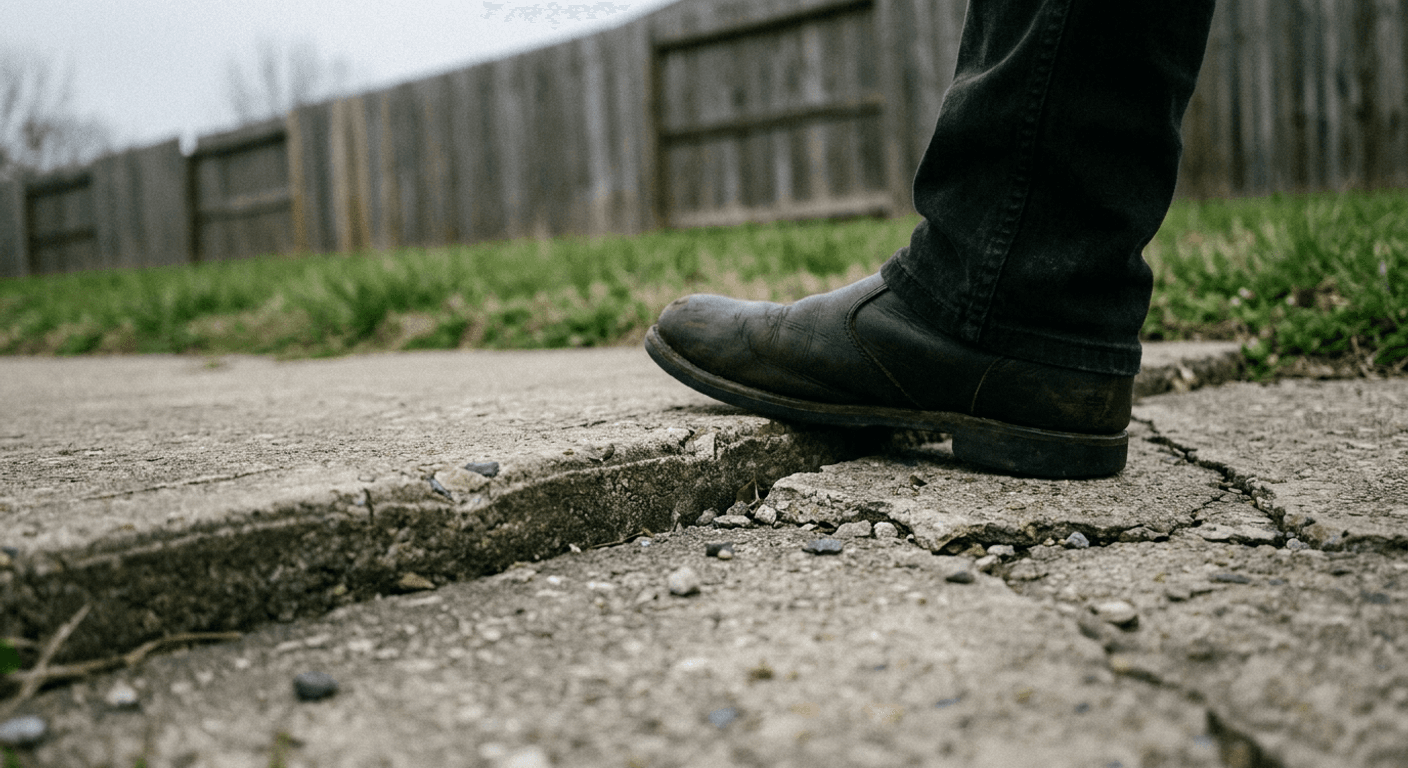
To win a slip and fall claim in New Jersey, you must prove that the property owner was negligent, had actual or constructive notice of the hazardous condition, and that the hazard caused your injury. New Jersey follows a modified-comparative negligence rule (51% bar) under N.J.S.A. 2A:15-5.1.
Proving a slip and fall claim in New Jersey
New Jersey premises liability law requires you to establish four elements. First, the property owner or occupier owed you a legal duty of care. New Jersey still uses the common-law categories of invitee, licensee, and trespasser, and where you fit one of them the category itself establishes the duty owed. New Jersey departed from rigid application of that framework in Hopkins v. Fox and Lazo Realtors, 132 N.J. 426 (1993): where the relationship between the parties does not fit neatly into one of the three categories, the court instead weighs foreseeability, fairness, and public policy to decide whether a duty exists and how far it extends. Model Civil Jury Charge 5.20F, revised in November 2022, sets out both paths.
Second, a dangerous condition existed on the property. Third, the owner must have had actual or constructive notice of the hazard before the fall. Actual notice means the owner knew about the condition directly. Constructive notice means the hazard existed long enough that a reasonably careful owner exercising ordinary diligence would have discovered and corrected it. The length of time the condition existed and the frequency of inspections are central to this inquiry.
Fourth, the hazardous condition must have caused your injuries and resulting damages. Even if an owner is negligent in maintaining a property, you must show a causal link between that negligence and the specific harm you suffered.
The open-and-obvious doctrine in New Jersey
New Jersey does not use the open-and-obvious doctrine as an automatic bar to the landowner's duty. This is one of the most plaintiff-friendly aspects of New Jersey premises liability law. In McGrath v. American Cyanamid Co., 41 N.J. 272 (1963), the New Jersey Supreme Court held that where a hazard was created by a breach of the owner's duty of care, that negligence is not dissipated merely because the injured person knew of the danger. The plaintiff's knowledge goes to comparative negligence instead of defeating the owner's duty.

New Jersey Model Civil Jury Charge 5.20F, which governs the duty owed regarding the condition of premises, confirms this approach. The charge instructs juries that "even where a hazardous condition is obvious, you must first determine whether, in the circumstances, the defendant was negligent in permitting the condition to exist," and that the jury "should still consider the plaintiff's comparative negligence." It adds that to find the plaintiff comparatively negligent, the defendant must prove the plaintiff should have had knowledge of the particular danger and knowingly and voluntarily encountered that risk. New Jersey follows Restatement (Second) of Torts Section 343A in this respect.
Practically speaking, if you saw a wet floor or uneven pavement before you fell, that knowledge does not end your claim. A jury will weigh your awareness as one factor in determining your share of comparative fault under N.J.S.A. 2A:15-5.1. If the jury assigns you 30% of the fault for proceeding despite a known risk, your damages are reduced by 30%. Recovery is only fully barred if your total fault reaches 51% or more.
Ice, snow, and natural accumulation in New Jersey
New Jersey does not apply a single uniform rule for snow and ice liability. The duty depends on the type of property and the circumstances of the fall.
For commercial property owners, New Jersey imposes a duty of reasonable care to remove naturally accumulated snow and ice from abutting public sidewalks. The New Jersey Supreme Court established this specific duty in Mirza v. Filmore Corp., 92 N.J. 390 (1983), extending to snow and ice the general sidewalk-maintenance duty the Court first recognized in Stewart v. 104 Wallace St., Inc., 87 N.J. 146 (1981). A commercial owner who neglects to clear an abutting sidewalk after a storm can be held liable to pedestrians who fall on that accumulated ice or snow.
However, that commercial duty has a timing limitation. In Pareja v. Princeton International Properties, Inc., 246 N.J. 546 (2021), the New Jersey Supreme Court adopted the "ongoing storm rule" for commercial owners. Under this rule, a commercial property owner has no duty to clear snow or ice, or to pre-treat surfaces, while precipitation is actively falling. The owner must take reasonable steps to clear the hazard within a reasonable time after the storm ends. Two exceptions override this suspension: first, when the owner's own conduct increases the risk to pedestrians and invitees; second, when a pre-existing hazard that predated the current storm, such as uncleared snow from an earlier storm that has since ended, contributed to the fall.
For residential abutting owners, New Jersey's rule is different. Residential owners generally owe no common-law duty to remove naturally accumulated snow and ice from abutting public sidewalks. The natural-accumulation no-duty rule protects residential property owners who did not create or aggravate the hazard themselves. If a residential owner affirmatively worsens a natural accumulation, such as by shoveling snow onto a public walkway and creating a dangerous condition, liability can attach.
How fault is shared: New Jersey's negligence rule
New Jersey follows modified-comparative negligence with a 51% bar, codified at N.J.S.A. 2A:15-5.1. Under this rule, a plaintiff may recover only if their own negligence "was not greater than" the negligence of the defendant or defendants combined. A plaintiff who is 50% or less at fault recovers, but their damages are reduced in proportion to their share of fault. A plaintiff who is 51% or more at fault recovers nothing.

When multiple defendants are involved, N.J.S.A. 2A:15-5.2 requires the jury to apportion fault among all parties. The plaintiff's fault is compared against the combined fault of all defendants together, not against each defendant individually. This aggregated comparison can be significant in cases with multiple responsible parties, such as when both a property owner and a tenant share responsibility for a dangerous condition.
As a practical example: if you suffered $100,000 in damages and a jury finds you 25% at fault and the property owner 75% at fault, you recover $75,000 after the 25% reduction. If the jury finds you 51% at fault, you recover nothing, regardless of how serious your injuries were.
Deadlines: statute of limitations and government claims
The standard personal-injury statute of limitations in New Jersey is 2 years, set by N.J.S.A. 2A:14-2. The clock generally starts on the date of the injury. The discovery rule can delay the start of the limitations period in cases where the injury was not immediately apparent, but in most slip and fall cases the date of the fall is also the date of accrual.
Tolling provisions can extend the deadline in certain situations. For plaintiffs who are minors at the time of injury, the limitations period does not begin running until they turn 18. For plaintiffs who are mentally incapacitated, tolling also applies during the period of incapacity.
If you were injured on property owned or operated by a state or local government entity, the New Jersey Tort Claims Act imposes strict pre-lawsuit requirements that are separate from, and in addition to, the general statute of limitations. Under N.J.S.A. 59:8-8, you must serve a written notice of tort claim on the public entity not later than 90 days after the date the cause of action accrues. This is not a soft deadline. Failure to serve the notice within 90 days permanently bars your right to recover against the public entity or its employees. After serving the notice, you must wait 6 months before filing suit. If you fell on public property, get a free consultation from a New Jersey personal injury lawyer on serving the notice of tort claim within those 90 days (attorney advertising).
There is a limited safety valve: N.J.S.A. 59:8-9 allows a court to permit a late notice filed within 1 year of accrual if the public entity is not substantially prejudiced by the delay. Courts exercise this discretion narrowly and do not grant extensions routinely.
Serving the notice on time only preserves the claim; it does not prove it. Under N.J.S.A. 59:4-2, a public entity is liable for a fall on its property only if you establish that the property was in a dangerous condition at the time of the injury, that the injury was proximately caused by that condition, and that the condition created a reasonably foreseeable risk of the kind of injury incurred. You must also show either that a negligent or wrongful act or omission of a public employee acting within the scope of employment created the condition, or that the entity had actual or constructive notice of it under N.J.S.A. 59:4-3 a sufficient time before the injury to have taken protective measures. On top of all of that, the statute bars liability unless the action the entity took, or its failure to act, was "palpably unreasonable." That is a materially higher bar than the ordinary negligence standard that applies to a private store or landlord.
For more on New Jersey's general personal-injury deadlines, see the New Jersey statute of limitations page.
What a New Jersey slip and fall claim is worth
A New Jersey slip and fall settlement or verdict can include economic damages (medical bills, hospital costs, lost wages, future medical expenses, and rehabilitation costs) and non-economic damages (pain and suffering, emotional distress, permanent disability, and loss of enjoyment of life). New Jersey does not impose a general statutory cap on non-economic damages in personal-injury cases against private defendants, so recovery in those cases is limited primarily by the facts and the jury's assessment of harm.
Claims against government defendants are the major exception, and it is a severe one. N.J.S.A. 59:9-2(d) bars any award of pain-and-suffering damages against a public entity or public employee unless there is permanent loss of a bodily function, permanent disfigurement, or dismemberment and the medical treatment expenses exceed $3,600. Subsection (b) bars judgments against a public entity or employee based on strict liability, implied warranty, or products liability, and subsection (c) bars punitive or exemplary damages against a public entity. A fall on government property can therefore clear the 90-day notice deadline, satisfy N.J.S.A. 59:4-2, and still produce no recovery at all for pain and suffering.

Your recovery is directly reduced by your share of comparative fault under N.J.S.A. 2A:15-5.1. A 20% finding of fault against you reduces a $150,000 recovery to $120,000. If you are found 51% or more at fault, you receive nothing.
Several factors shape claim value: the severity and permanence of your injuries, whether you required surgery or ongoing treatment, the clarity of the owner's actual or constructive notice of the hazard, the strength of any ongoing-storm or open-and-obvious defense, and whether any government notice requirements were met in time. The commercial-versus-residential sidewalk distinction can also affect whether a viable claim exists at all when the fall occurred on a public sidewalk.
Use the New Jersey slip and fall settlement calculator for a rough estimate based on your specific facts.
This article is general legal information, not legal advice. Premises liability law varies by state and changes, and case values depend on the specific facts. For advice about a specific fall, consult a licensed attorney in New Jersey.
See also: Slip and Fall Laws by State | New Jersey Slip and Fall Settlement Calculator
- New Jersey AI Meeting Recording Laws
- New Jersey Alimony Laws
- New Jersey At-Will Employment Laws
- New Jersey Car Accident Laws
- New Jersey Child Custody Laws
- New Jersey Child Support Laws
- New Jersey Common Law Marriage Laws
- New Jersey Dashcam Laws
- New Jersey Data Privacy Laws
- New Jersey Deepfake Laws
- New Jersey Divorce Laws
- New Jersey Dog Bite Laws
- New Jersey Drone Laws
- New Jersey Emancipation Laws
- New Jersey Employee Monitoring Laws
- New Jersey Expungement Laws
More New Jersey Laws
Frequently Asked Questions
How do I prove a slip and fall in New Jersey?
You must show that the property owner owed you a duty of care, a dangerous condition existed on the property, the owner had actual or constructive notice of the hazard (meaning they knew about it or should have discovered it through reasonable inspection), and the hazard caused your injury. In ordinary premises cases New Jersey sets the duty by your status as an invitee, licensee, or trespasser; where the relationship does not fit those categories, courts apply the foreseeability-and-fairness duty analysis from Hopkins v. Fox and Lazo Realtors, 132 N.J. 426 (1993).
Is New Jersey an open-and-obvious state?
No. New Jersey does not use open-and-obvious as an automatic bar to the owner's duty. Under N.J. Model Civil Jury Charge 5.20F, your awareness of a hazard is treated as a factor in comparative negligence. It can reduce your recovery, but it does not eliminate the owner's duty or automatically defeat your claim.
Can I sue for falling on ice or snow in New Jersey?
It depends on who owns the property. Commercial owners owe a duty of reasonable care to clear naturally accumulated snow and ice from abutting sidewalks (Mirza v. Filmore Corp., 92 N.J. 390 (1983)), but they have no duty to act during an active storm under the ongoing-storm rule (Pareja v. Princeton Int'l Props., 246 N.J. 546 (2021)). Residential owners generally owe no duty for purely natural accumulations on public sidewalks unless they created or worsened the hazard.
How long do I have to file a slip and fall lawsuit in New Jersey?
You have 2 years from the date of injury under N.J.S.A. 2A:14-2. If the fall occurred on government property, you must also serve a Tort Claims Act notice on the public entity within 90 days of accrual under N.J.S.A. 59:8-8; missing this deadline bars your entire claim against the government, and you cannot file suit until 6 months after the notice is served.
Can I recover if I was partly at fault for my fall in New Jersey?
Yes, as long as your fault does not exceed 50%. New Jersey follows modified-comparative negligence with a 51% bar under N.J.S.A. 2A:15-5.1. If you are 50% or less at fault, you recover damages reduced by your percentage of fault. If you are found 51% or more at fault, you recover nothing.
Are commercial property owners liable for sidewalk ice in New Jersey?
Yes, with a timing caveat. Commercial owners owe a duty of reasonable care to clear naturally accumulated ice and snow from abutting public sidewalks under Mirza v. Filmore Corp., 92 N.J. 390 (1983). However, under the ongoing-storm rule adopted in Pareja (2021), they have no duty to act while precipitation is actively falling. They must clear the hazard within a reasonable time after the storm ends. Residential owners generally are not liable for natural accumulations on public sidewalks.
How much is a New Jersey slip and fall claim worth?
Value depends on injury severity, medical costs, lost income, pain and suffering, and how fault is apportioned. New Jersey has no general cap on non-economic damages in cases against private defendants, but N.J.S.A. 59:9-2(d) bars pain-and-suffering damages against a public entity unless there is permanent loss of a bodily function, permanent disfigurement, or dismemberment and medical treatment expenses exceed $3,600. Your recovery is reduced by your comparative-fault percentage under N.J.S.A. 2A:15-5.1. Use the New Jersey slip and fall settlement calculator for a fact-specific estimate.
Updates
Corrected the source of the commercial sidewalk snow-and-ice duty to Mirza v. Filmore Corp. (Stewart v. 104 Wallace St. expressly left that question open) and removed an example of the Pareja ongoing-storm exceptions that the opinion does not contain.
Corrected our description of Hopkins v. Fox and Lazo Realtors (New Jersey still sets the duty by invitee, licensee, or trespasser status in ordinary cases) and added the Tort Claims Act limits that apply to falls on government property, including the palpably unreasonable standard and the bar on pain-and-suffering damages below the statutory threshold.
Repointed six citations that had been misdirected to a jury-charge PDF, giving each statute and case its own correct source.
Independently fact-checked against the cited primary sources; governing law re-checked for recent changes
Governing law re-checked for recent changes
Reviewed and approved by an editor
The Law Behind This Article
This article rests on the statutory provisions below, held in our own legal record and retrieved from the official source. Tap a section to read the operative text.
New Jersey Statutes (Unannotated)
§ 2A:15-5.1Contributory negligence; elimination as bar to recovery; comparative negligence to determine damagesIn forcecited in 6 of our articles
Contributory negligence shall not bar recovery in an action by any person or his legal representative to recover damages for negligence resulting in death or injury to person or property, if such negligence was not greater than the negligence of the person against whom recovery is sought or was not greater than the combined negligence of the persons against whom recovery is sought. Any damages sustained shall be diminished by the percentage sustained of negligence attributable to the person recovering.
Official text (excerpt) · last checked 2026-09-14 · Read the full text in our law library · Verify at lis.njleg.state.nj.us
Cited in 235 court opinions in our collectionLatest citing opinion in our collection: 2026
Opinions citing this section in our collection:
- Suter v. San Angelo Foundry & MacHine Company (Supreme Court of New Jersey 1979, 81 N.J. 150)“…onsideration the impact of the Comparative Negligence Act, N.J.S.A. 2A:15-5.1 to 5.3, in strict liability actions.…”
- Kelly v. Gwinnell (Supreme Court of New Jersey 1984, 96 N.J. 538)“…fendants that were more negligent than was the plaintiff); N.J.S.A. 2A:15-5.1 as amended by L. 1982, c. 191 § 1 e…”
- Renz v. Penn Central Corp. (Supreme Court of New Jersey 1981, 87 N.J. 437)“…defense on the theory that the Comparative Negligence Act, N.J.S.A. 2A:15-5.1, -5.2, either superseded or modified th…”
Identified automatically from the court opinions citing this section — not a ranking of which case controls.
Also relied on in: Truck Accident Laws in New Jersey (2026): Deadlines & Liability, Motorcycle Accident Laws in New Jersey (2026): Deadlines, New Jersey Car Accident Laws: No-Fault Choice, PIP, and Your Claim
§ 2A:15-5.2Findings of fact; percentage of fault; terms definedIn force
2. a. In all negligence actions and strict liability actions in which the question of liability is in dispute, including actions in which any person seeks to recover damages from a social host as defined in section 1 of P.L.1987, c.404 (C.2A:15-5.5) for negligence resulting in injury to the person or to real or personal property, the trier of fact shall make the following as findings of fact: (1) The amount of damages which would be recoverable by the injured party regardless of any consideration of negligence or fault, that is, the full value of the injured party's damages. (2) The extent, in the form of a percentage, of each party's negligence or fault. The percentage of negligence or fault of each party shall be based on 100% and the total of all percentages of negligence or fault of all the parties to a suit shall be 100%. b. In an action in which a person seeks to recover damages from a social host for negligence resulting in injury to the person or to real or personal property, the negligence of any person in becoming intoxicated shall be considered by the trier of fact, and the trier of fact shall allocate a percentage of negligence to that person. c.
Official text (excerpt) · last checked 2026-08-01 · Read the full text in our law library · Verify at lis.njleg.state.nj.us
Cited in 112 court opinions in our collectionLatest citing opinion in our collection: 2025
Opinions citing this section in our collection:
- Town of Kearny v. Brandt (Supreme Court of New Jersey 2013, 214 N.J. 76)“…14-1.1(a), and 2) whether the Comparative Negligence Act, N.J.S.A. 2A:15-5.2, and the Joint Tortfeasors Contribution…”
- Frugis v. Bracigliano (Supreme Court of New Jersey 2003, 177 N.J. 250)“…ntical provision of the Comparative Negligence Act, former N.J.S.A. 2A:15-5.2b, to require the apportionment of fault…”
- Roman v. Mitchell (Supreme Court of New Jersey 1980, 82 N.J. 336)“…ed of negligence attributable to the person recovering. N.J.S.A. 2A:15-5.2 In all negligence actions in which th…”
Identified automatically from the court opinions citing this section — not a ranking of which case controls.
§ 59:8-8Time for presentation of claims.In forcecited in 2 of our articles
59:8-8. Time for presentation of claims. A claim relating to a cause of action for death or for injury or damage to person or to property shall be presented as provided in this chapter not later than the 90th day after accrual of the cause of action. After the expiration of six months from the date notice of claim is received, the claimant may file suit in an appropriate court of law. The claimant shall be forever barred from recovering against a public entity or public employee if: a. The claimant failed to file the claim with the public entity within 90 days of accrual of the claim except as otherwise provided in N.J.S.59:8-9; or b. Two years have elapsed since the accrual of the claim; or c. The claimant or the claimant's authorized representative entered into a settlement agreement with respect to the claim. Nothing in this section shall prohibit a minor or a person who is mentally incapacitated from commencing an action under this act within the time limitations contained herein, after reaching majority or returning to mental capacity.
Official text (excerpt) · last checked 2026-08-01 · Read the full text in our law library · Verify at lis.njleg.state.nj.us
Cited in 355 court opinions in our collectionLatest citing opinion in our collection: 2026
Opinions citing this section in our collection:
- Fuchilla v. Layman (Supreme Court of New Jersey 1988, 109 N.J. 319)“…of the notice provisions of the Tort Claims Act (the Act), N.J.S.A. 59:8-8, 9, to discrimination claims brought pu…”
- Beauchamp v. Amedio (Supreme Court of New Jersey 2000, 164 N.J. 111)“…h or for injury or damage to person or to property.” N.J.S.A 59:8-8. Such a claim shall be presented…”
- D.D. v. University of Medicine & Dentistry (Supreme Court of New Jersey 2013, 213 N.J. 130)“…claim within the ninety days permitted by the statute, see N.J.S.A. 59:8-8, but noted that her motion for leave to…”
Identified automatically from the court opinions citing this section — not a ranking of which case controls.
§ 59:8-9Notice of late claimIn forcecited in 2 of our articles
59:8-9. Notice of late claim. A claimant who fails to file notice of his claim within 90 days as provided in section 59:8-8 of this act, may, in the discretion of a judge of the Superior Court, be permitted to file such notice at any time within one year after the accrual of his claim provided that the public entity or the public employee has not been substantially prejudiced thereby. Application to the court for permission to file a late notice of claim shall be made upon motion supported by affidavits based upon personal knowledge of the affiant showing sufficient reasons constituting extraordinary circumstances for his failure to file notice of claim within the period of time prescribed by section 59:8-8 of this act or to file a motion seeking leave to file a late notice of claim within a reasonable time thereafter; provided that in no event may any suit against a public entity or a public employee arising under this act be filed later than two years from the time of the accrual of the claim.
Official text (excerpt) · last checked 2026-08-01 · Read the full text in our law library · Verify at lis.njleg.state.nj.us
Cited in 220 court opinions in our collectionLatest citing opinion in our collection: 2026
Opinions citing this section in our collection:
- Beauchamp v. Amedio (Supreme Court of New Jersey 2000, 164 N.J. 111)“…tion seeking an order permitting a late filing under N.J.S.A. 59:8-9. After some procedural missteps, the tr…”
- D.D. v. University of Medicine & Dentistry (Supreme Court of New Jersey 2013, 213 N.J. 130)“…allowed by the statute for filing of the notice of claim. N.J.S.A. 59:8-9. Second, we address whether a claim tha…”
- Lowe v. Zarghami (Supreme Court of New Jersey 1999, 158 N.J. 606)“…for leave to file a late notice of claim pursuant to N.J.S.A. 59:8-9 of the TCA. That section permits a cour…”
Identified automatically from the court opinions citing this section — not a ranking of which case controls.
§ 2A:14-2Actions for injury caused by wrongful act, appointment of guardian ad litem.In forcecited in 6 of our articles
2A:14-2. a. Except as otherwise provided by law, every action at law for an injury to the person caused by the wrongful act, neglect or default of any person within this State shall be commenced within two years next after the cause of any such action shall have accrued; except that an action by or on behalf of a minor that has accrued for medical malpractice for injuries sustained at birth shall be commenced prior to the minor's 13th birthday. b. In the event that an action by or on behalf of a minor that has accrued for medical malpractice for injuries sustained at birth is not commenced by the minor's parent or guardian prior to the minor's 12th birthday, the minor or a person 18 years of age or older designated by the minor to act on the minor's behalf may commence such an action. For this purpose, the minor or designated person may petition the court for the appointment of a guardian ad litem to act on the minor's behalf.
Official text (excerpt) · last checked 2026-08-01 · Read the full text in our law library · Verify at lis.njleg.state.nj.us
Cited in 496 court opinions in our collectionLatest citing opinion in our collection: 2026
Opinions citing this section in our collection:
- Ayers v. Township of Jackson (Supreme Court of New Jersey 1987, 106 N.J. 557)“…riate to clarify the effect of the statute of limitations, N.J.S.A. 2A:14-2, and the single controversy doctrine on…”
- O'CONNOR v. Abraham Altus (Supreme Court of New Jersey 1975, 67 N.J. 106)“…t statute with the personal injury statute of limitations, N.J.S.A. 2A:14-2, and with the tolling statute, N.J.S.A…”
- Tevis v. Tevis (Supreme Court of New Jersey 1979, 79 N.J. 422)“…Consequently, that cause of action is not time-barred. N. J. S. A. 2A:14-2 — the statute of limitations applicable…”
Identified automatically from the court opinions citing this section — not a ranking of which case controls.
Also relied on in: Medical Malpractice Laws in New Jersey (2026): Deadlines & Caps, New Jersey Statute of Limitations: Filing Deadlines by Case Type
§ 59:4-2Liability generallyIn force
A public entity is liable for injury caused by a condition of its property if the plaintiff establishes that the property was in dangerous condition at the time of the injury, that the injury was proximately caused by the dangerous condition, that the dangerous condition created a reasonably foreseeable risk of the kind of injury which was incurred, and that either: a. a negligent or wrongful act or omission of an employee of the public entity within the scope of his employment created the dangerous condition; or b. a public entity had actual or constructive notice of the dangerous condition under section 59:4-3 a sufficient time prior to the injury to have taken measures to protect against the dangerous condition. Nothing in this section shall be construed to impose liability upon a public entity for a dangerous condition of its public property if the action the entity took to protect against the condition or the failure to take such action was not palpably unreasonable.
Official text (excerpt) · last checked 2026-08-01 · Read the full text in our law library · Verify at lis.njleg.state.nj.us
Cited in 269 court opinions in our collectionLatest citing opinion in our collection: 2026
Opinions citing this section in our collection:
- Polzo v. County of Essex (Supreme Court of New Jersey 2008, 196 N.J. 569)“…angerous condition on public property. Specifically, N.J.S.A. 59:4-2(b) provides in part that a public entit…”
- Ayers v. Township of Jackson (Supreme Court of New Jersey 1987, 106 N.J. 557)“…palpably unreasonable,”—a prerequisite to recovery under N.J.S.A. 59:4-2—and that it was the proximate cause of…”
- Fuchilla v. Layman (Supreme Court of New Jersey 1988, 109 N.J. 319)“…982). Its decision in that case was strongly influenced by N.J.S.A. 59:4-2, the section concerning liability for t…”
Identified automatically from the court opinions citing this section — not a ranking of which case controls.
§ 59:4-3Actual notice; constructive noticeIn force
a. A public entity shall be deemed to have actual notice of a dangerous condition within the meaning of subsection b. of section 59:4-2 if it had actual knowledge of the existence of the condition and knew or should have known of its dangerous character. b. A public entity shall be deemed to have constructive notice of a dangerous condition within the meaning of subsection b. of section 59:4-2 only if the plaintiff establishes that the condition had existed for such a period of time and was of such an obvious nature that the public entity, in the exercise of due care, should have discovered the condition and its dangerous character.
Official text (excerpt) · last checked 2026-08-01 · Read the full text in our law library · Verify at lis.njleg.state.nj.us
Cited in 75 court opinions in our collectionLatest citing opinion in our collection: 2026
Opinions citing this section in our collection:
- Polzo v. County of Essex (Supreme Court of New Jersey 2008, 196 N.J. 569)“…easures to protect against the dangerous condition.” N.J.S.A. 59:4-3(b) constructively imputes notice of the…”
- Carroll v. New Jersey Transit (New Jersey Superior Court Appellate Division 2004, 366 N.J. Super. 380)“…otice provisions of subsection b. of N.J.S.A. 59:4-2 and N.J.S.A. 59:4-3 are not applicable "where public employ…”
- Lodato v. EVESHAM TP. (New Jersey Superior Court Appellate Division 2006, 388 N.J. Super. 501)“…able provisions of the Tort Claims Act (TCA), specifically N.J.S.A. 59:4-3, the judge determined that there was no…”
Identified automatically from the court opinions citing this section — not a ranking of which case controls.
§ 59:9-2Judgments, interest, limitations.In force
59:9-2. a. No interest shall accrue prior to the entry of judgment against a public entity or public employee. b. No judgment shall be granted against a public entity or public employee on the basis of strict liability, implied warranty, or products liability. c. No punitive or exemplary damages shall be awarded against a public entity. d. (1) Except as provided in this subsection, no damages shall be awarded against a public entity or public employee for pain and suffering resulting from any injury. (2) The limitation on the recovery of damages for pain and suffering pursuant to paragraph (1) of this subsection shall not apply: (a) in cases of permanent loss of a bodily function, permanent disfigurement, or dismemberment where the medical treatment expenses are in excess of $3,600.00; or (b) to an action at law filed pursuant to section 7 of P.L.2019, c.120 (C.59:2-1.3).
Official text (excerpt) · last checked 2026-08-01 · Read the full text in our law library · Verify at lis.njleg.state.nj.us
Cited in 224 court opinions in our collectionLatest citing opinion in our collection: 2026
Opinions citing this section in our collection:
- Ayers v. Township of Jackson (Supreme Court of New Jersey 1987, 106 N.J. 557)“…tuted “pain and suffering” for which recovery is barred by N.J.S.A. 59:9-2(d). Id. at 116. The Appellate Divisio…”
- Busik v. Levine (Supreme Court of New Jersey 1973, 63 N.J. 351)“…he subject as beyond their purview is clearly evidenced by N.J.S.A. 59:9-2, subd. a. See note 1, supra. Th…”
- Abbamont v. Piscataway Township Board of Education (Supreme Court of New Jersey 1994, 138 N.J. 405)“…emplary damages shall be awarded against a public entity." N.J.S.A. 59:9-2c. TCA thus exemplifies the Legislatur…”
Identified automatically from the court opinions citing this section — not a ranking of which case controls.
Search our full record of US law — 2.1 million sections, every state + federal →
Sources and References
- N.J. Model Civil Jury Charge 5.20F (Duty Owed, Condition of Premises)(njcourts.gov).gov
- N.J.S.A. 2A:15-5.1 and 2A:15-5.2 (modified-comparative negligence, 51% bar)(law.justia.com)
- N.J.S.A. 2A:14-2 (2-year personal-injury statute of limitations)(law.justia.com)
- N.J.S.A. 59:8-8 (Tort Claims Act: 90-day notice of claim requirement)(law.justia.com)
- Hopkins v. Fox and Lazo Realtors, 132 N.J. 426 (1993) (foreseeability-and-fairness duty test)(law.justia.com)
- Stewart v. 104 Wallace St., Inc., 87 N.J. 146 (1981) (commercial owner duty to clear abutting sidewalk)(law.justia.com)
- Pareja v. Princeton International Properties, Inc., 246 N.J. 546 (2021) (ongoing-storm rule)(law.justia.com)
- N.J.S.A. 59:4-2 (public entity liability for dangerous condition of property; palpably unreasonable standard)(lis.njleg.state.nj.us)
- N.J.S.A. 59:4-3 (actual and constructive notice of a dangerous condition)(lis.njleg.state.nj.us)
- N.J.S.A. 59:9-2 (limitations on judgments against public entities: no strict liability, no punitive damages, pain-and-suffering threshold)(lis.njleg.state.nj.us)
Paid attorney referral. RecordingLaw may receive compensation when you use an attorney-help link. RecordingLaw is not a law firm. Submitting a request does not guarantee that an attorney will accept your case and does not create an attorney-client relationship.