
New Jersey
New Jersey Drone Laws (2026): Privacy, Prisons & the Drone Panic
Independently fact-checked against primary sources (last audited August 17, 2026). · Reviewed by the RecordingLaw editorial team. · Law checked current as of August 17, 2026. · 4 primary sources cited on this page. How we verify our legal content
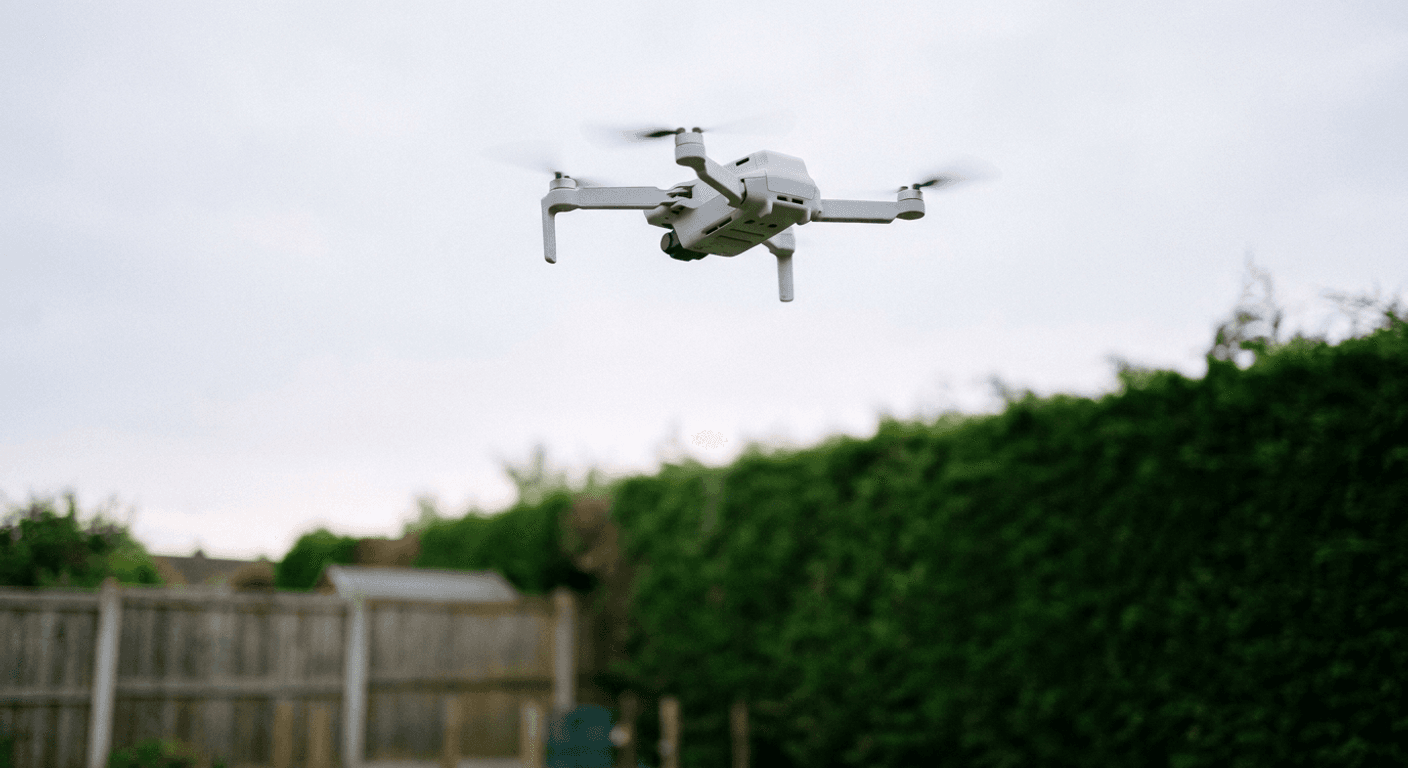
New Jersey does not control drone airspace, the FAA does that nationally, but it has one of the more detailed state drone-conduct statutes on the East Coast: a 2018 law that criminalizes drone surveillance of correctional facilities, drone-based voyeurism, and interfering with first responders, layered on top of the state's own experience with the 2024-2025 East Coast "mystery drone" panic.
This guide is part of our Drone Laws by State series, which also covers how state law intersects with surveillance camera laws more broadly.
Jurisdiction scope: This article addresses New Jersey state law on drone-related crimes, privacy, wildlife, the 2024-2025 mystery-drone episode, and the federal baseline that applies in every state. It does not address a civilian's right to record police, which is covered separately in our guide to recording laws.
Does the FAA or New Jersey control where a drone can fly?
The Federal Aviation Administration is the exclusive regulator of the airspace itself. Under 14 CFR Part 107, a commercial or non-recreational drone operator must hold a Remote Pilot Certificate, register the aircraft, fly at or below 400 feet, and stay within visual line of sight; recreational flyers register and follow a similar, separate framework under 49 U.S.C. Section 44809. New Jersey cannot add its own altitude ceiling, flight-path rule, or pilot-licensing requirement on top of that federal scheme, and its own drone statute expressly preempts local governments from trying to do so either. What New Jersey can and does regulate is conduct: what a person does with a drone once it is airborne over New Jersey soil, whether that is spying on a neighbor, surveilling a prison, or chasing wildlife.
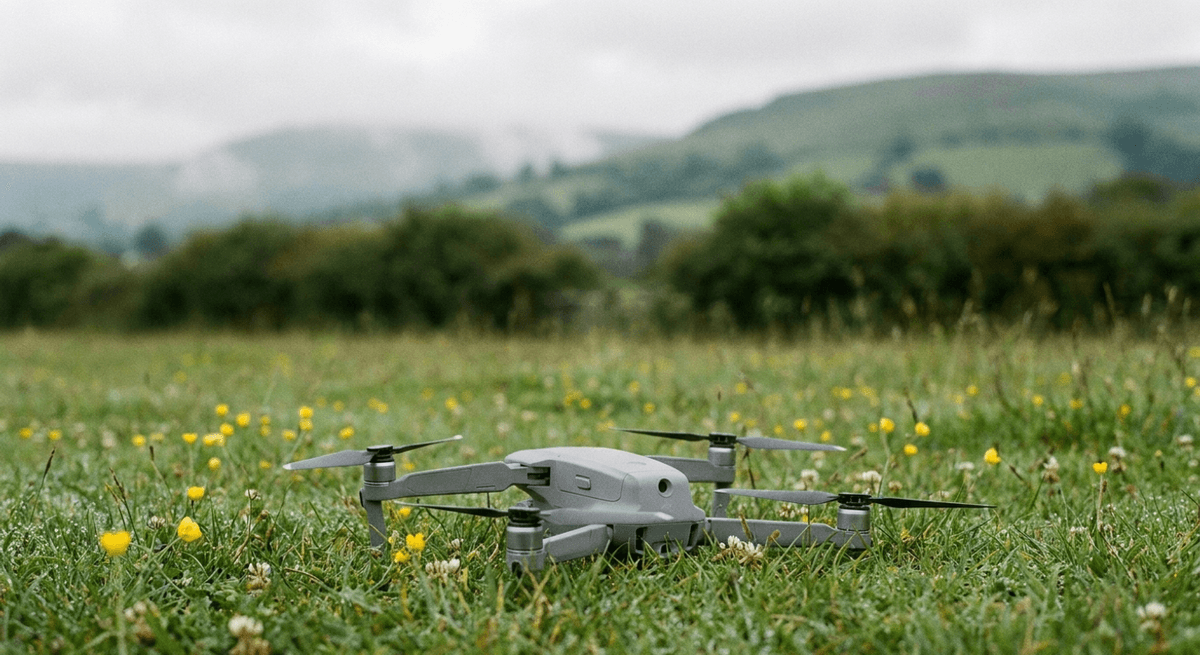
New Jersey's core drone statute: N.J.S.A. 2C:40-27 to 2C:40-30
Governor Chris Christie signed New Jersey's primary drone law on January 16, 2018, and it took effect May 1, 2018, codified at N.J.S.A. 2C:40-27 through 2C:40-30, according to New Jersey's Office of Homeland Security and Preparedness. Section 2C:40-28 does the work. It is a disorderly persons offense, up to six months in jail and a $1,000 fine, to knowingly or intentionally operate a drone in a way that endangers the life or property of another, with courts directed to consider federal safe-operation standards in making that call. Operating a drone while intoxicated, at a blood alcohol concentration of 0.08 percent or higher, is a separate disorderly persons offense.
The statute is noticeably tougher on correctional facilities. Knowingly or intentionally creating a condition that endangers the safety or security of a prison, jail, or similar facility by flying a drone on or near its premises without permission is a fourth-degree crime, punishable by up to 18 months and a $10,000 fine. Using a drone to conduct surveillance of, or gather information about, a correctional facility without permission is a third-degree crime, carrying three to five years and up to a $15,000 fine, a significant jump reflecting New Jersey's concern about drones scouting prisons for contraband drops or escape planning. Interfering with a first responder who is actively engaged in an emergency response, whether by air, water, or ground, is a fourth-degree crime. Section 2C:40-29 preempts county and municipal drone ordinances that conflict with the state scheme, and Section 2C:40-30 confirms the law does not restrict a public agency or first responder operating within federal rules.
Drone voyeurism: New Jersey's invasion-of-privacy statute
The same 2018 legislative session amended New Jersey's existing invasion-of-privacy law, N.J.S.A. 2C:14-9, through Senate Bill 3318, to name unmanned aircraft systems directly rather than leave drone-based spying to be litigated under a statute written for hidden cameras. Under the amended statute, it is a fourth-degree crime, up to 18 months and a $10,000 fine, to observe another person, including by operating a drone to do so, without consent, in circumstances where a reasonable person would not expect to be observed and where intimate parts may be exposed. Actually photographing, filming, or recording that image with a drone is a third-degree crime, three to five years and up to $15,000, and disclosing the resulting image is also a third-degree crime, three to five years and up to $30,000. The statute reaches a narrow but serious category of drone misuse, undergarment-clad or intimate-area surveillance, rather than general backyard photography; a drone that simply records a neighbor's cookout is not what this provision targets.
Hunting and wildlife: drones are banned outright on WMAs
New Jersey treats drones as a distinct hunting-integrity problem. Operating a drone to take or assist in taking wildlife is a disorderly persons offense under 2C:40-28(b), separate from the endangerment and correctional-facility provisions in the same section. The state's Division of Fish and Wildlife goes further on its own managed land: "the use of an unmanned aerial vehicle (UAV) or drone is prohibited on WMAs," according to the New Jersey Division of Fish and Wildlife's Wildlife Management Area regulations, a flat ban that applies regardless of whether the drone operator is hunting, scouting, or just flying for fun.
Does police need a warrant to fly a drone over my property in New Jersey?
New Jersey has no standalone statute requiring a warrant before every police drone flight, unlike Illinois, Minnesota, or Nevada. A New Jersey resident's claim that police unlawfully surveilled them by drone instead rests on ordinary Fourth Amendment analysis, together with New Jersey's own state constitutional protections under Article I, Paragraph 7 of the New Jersey Constitution, which New Jersey courts have at times read more protectively than the federal floor. The U.S. Supreme Court has held that aerial observation of a yard from public airspace by a manned aircraft, without a warrant, generally does not violate the Fourth Amendment. See California v. Ciraolo, 476 U.S. 207 (1986) (fixed-wing flyover at 1,000 feet); Florida v. Riley, 488 U.S. 445 (1989) (helicopter at 400 feet). Neither case involved a drone, and no New Jersey appellate decision has squarely extended that reasoning to a small drone hovering much closer to a home.
The 2024-2025 mystery-drone panic: what New Jersey actually did
Beginning in mid-November 2024 and peaking through mid-December, thousands of New Jersey residents, concentrated in Morris County and other northern counties, reported large, unexplained drones flying at night, often near reservoirs and other infrastructure. The FBI and New Jersey State Police put out a joint call for tips on December 3, 2024, and ultimately fielded thousands of reports. The FAA issued temporary flight restrictions over roughly two dozen New Jersey sites out of caution. A joint federal statement on December 16, 2024, concluded that the sightings had largely routine explanations, including misidentified manned aircraft, stars, and lawful hobbyist and commercial drones seen in the dark, and posed no confirmed national-security threat, according to NPR's coverage of the episode. By mid-January 2025, both the sightings and public search interest had dropped sharply.
Despite the intensity of the alarm, no new New Jersey criminal or regulatory drone statute came out of it. The Legislature's response was a resolution, not a law: Assembly Resolution 176, introduced February 13, 2025, urges Congress to pass the federal SHIELD U Act and Drone Act of 2023, which would expand federal and local counter-drone authority; a resolution states the Legislature's position but creates no enforceable rule. Separately, in December 2025 the Legislature advanced funding, not regulation, appropriating $3.5 million toward an Air Traffic Controller loan program and what is billed as the nation's first state-funded Center for the Study of Unidentified Aerial Phenomena at Kean University. New Jersey's operative drone-conduct law remains the 2018 statute described above; the panic changed public attention, not the underlying statute book.
The federal shoot-down rule: destroying a drone is a felony
A persistent misconception is that a landowner may legally shoot down a drone hovering over their own property. Federal law says otherwise. The FAA classifies drones as aircraft within the National Airspace System, which means 18 U.S.C. Section 32, the federal Aircraft Sabotage Act, applies to them: willfully damaging, destroying, or disabling a drone is a federal felony carrying up to 20 years in prison, regardless of whose property the drone is over, because the federal government, not the landowner, controls the airspace. The widely publicized 2015 "Kentucky Drone Slayer" case, in which a Hillview, Kentucky, man shot down a neighbor's drone and had state criminal-mischief charges dismissed by a local judge, is often cited as evidence that shooting down a drone is low-risk. It is not. The drone owner's related federal civil suit, Boggs v. Merideth, was dismissed in 2017 for lack of federal jurisdiction without any court ever ruling on whether the shoot-down itself was lawful, and no state, including New Jersey, has passed a law authorizing a landowner to disable a drone over their own property.
More New Jersey Laws
- New Jersey Data Privacy Laws
- New Jersey GPS Tracking Laws
- New Jersey Police Bodycam Laws
- New Jersey Recording Laws
- New Jersey Smart Glasses Recording Laws
Frequently Asked Questions
Is it illegal to fly a drone over someone's backyard in New Jersey?
Merely flying over private property is not automatically illegal in New Jersey. A violation requires more, such as endangering life or property under N.J.S.A. 2C:40-28, or observing or recording a person's intimate parts under the drone provisions of N.J.S.A. 2C:14-9.
What happened with the New Jersey mystery drones in 2024?
Beginning in November 2024, thousands of New Jersey residents reported unexplained drones at night. A joint federal statement in December 2024 concluded the sightings had largely routine explanations and posed no confirmed threat. No new New Jersey drone-regulation statute resulted; the Legislature passed a resolution urging federal action and later funded a research center.
Can I fly a drone near a New Jersey prison?
No. Flying a drone on or near a correctional facility without permission is a fourth-degree crime under N.J.S.A. 2C:40-28, and using a drone to surveil or gather information about a correctional facility without permission is a third-degree crime carrying three to five years in prison.
Does New Jersey require a warrant for police drone surveillance?
No. New Jersey has no statute setting a specific warrant requirement for law enforcement drone use, unlike Illinois or Nevada. Ordinary Fourth Amendment protections apply, along with New Jersey's own state constitutional privacy protections.
Can I use a drone to scout deer or other game in New Jersey?
No. Operating a drone to take or assist in taking wildlife is a disorderly persons offense under N.J.S.A. 2C:40-28, and the Division of Fish and Wildlife separately bans all drone use on Wildlife Management Areas regardless of purpose.
Is it legal to shoot down a drone flying over my property in New Jersey?
No. Destroying, damaging, or disabling any drone is a federal felony under 18 U.S.C. Section 32, the Aircraft Sabotage Act, because the FAA controls the airspace regardless of who owns the land beneath it. No New Jersey law authorizes a landowner to disable a drone.
Does New Jersey have a critical-infrastructure drone law like Texas or Florida?
No. New Jersey has not enacted a drone-specific critical-infrastructure statute. Protection for power plants, bridges, and similar sites in New Jersey depends on the FAA's own no-fly authorization process and general federal aviation rules, not a dedicated state law.
Updates
Independently fact-checked against the cited primary sources; governing law re-checked for recent changes
Reviewed and approved by an editor
The Law Behind This Article
This article rests on the statutory provisions below, held in our own legal record and retrieved from the official source. Tap a section to read the operative text.
New Jersey Statutes (Unannotated)
§ 2C:40-28Violations, degree of offense, crime.In force
2. a. A person commits a disorderly persons offense if he knowingly or intentionally operates as defined in section 1 of P.L.2017, c.315 (C.2C:40-27) an unmanned aircraft system as defined in section 1 of P.L.2017, c.315 (C.2C:40-27) in a manner that endangers the life or property of another. In making this determination, the court shall consider the standards for safe operation of small unmanned aircraft systems prescribed by federal law or regulation. b.(1) A person commits a crime of the fourth degree if he knowingly or intentionally creates or maintains a condition which endangers the safety or security of a correctional facility by operating an unmanned aircraft system on the premises of or in close proximity to that facility without license or privilege to do so. (2) A person commits a crime of the third degree if he knowingly operates an unmanned aircraft system to conduct surveillance of, or gather information about, a correctional facility without license or privilege to do so. For purposes of this subsection, "correctional facility" means a jail, prison, lockup, penitentiary, reformatory, training school, or other similar facility within the State of New Jersey.
Official text (excerpt) · last checked 2026-08-31 · Read the full text in our law library · Verify at lis.njleg.state.nj.us
§ 2C:40-27Definitions relative to operation of unmanned aircraft systems.In force
1. a. As used in this act: "Operate" means to fly, control, direct, or program the flight of an unmanned aircraft system. "Unmanned aircraft" means an aircraft that is operated without the possibility of direct human intervention from within or on the aircraft. "Unmanned aircraft system" means an unmanned aircraft and associated elements, including communication links and the components that control the unmanned aircraft, that are required for the pilot in command to operate safely and efficiently. b. Except as otherwise prohibited by P.L.2017, c.315 (C.2C:40-27 et al.), a person who is authorized by federal law to operate an unmanned aircraft system may operate an unmanned aircraft system in this State for any purpose, provided that the person operates the unmanned aircraft system in a manner consistent with applicable federal law and regulations. Nothing in this section shall be construed to affect federal preemption of State law regarding aviation. For purposes of this subsection, "person" means an individual, partnership, corporation, association, governmental entity, or other legal or commercial entity.
Official text (excerpt) · last checked 2026-08-01 · Read the full text in our law library · Verify at lis.njleg.state.nj.us
Cited in 1 court opinions in our collectionLatest citing opinion in our collection: 2021
Opinions citing this section in our collection:
- J.K. v. New Jersey State Parole Board (084035) (Statewide) (Supreme Court of New Jersey 2021)“…section concerning the operation as defined in [N.J.S.A. 2C:40-27] of an unmanned aircraft sy…”
Identified automatically from the court opinions citing this section — not a ranking of which case controls.
§ 2C:40-29Provisions preempt existing laws.In force
5. The provisions of P.L.2017, c.315 (C.2C:40-27 et al.) shall preempt any law, ordinance, resolution, or regulation adopted by the governing body of a county or municipality concerning the private use of an unmanned aircraft system that is inconsistent with the provisions of this act.
Official text (excerpt) · last checked 2026-08-01 · Read the full text in our law library · Verify at lis.njleg.state.nj.us
§ 2C:40-30Authorized use permitted.In force
6. Nothing in P.L.2017, c.315 (C.2C:40-27 et al.) shall prohibit the authorized use, in compliance with applicable federal rules and regulations, of an unmanned aircraft system by a public employee or a public entity, or by a first responder in the performance of official duties. For purposes of this section "first responder" means a law enforcement officer, paid or volunteer firefighter, paid or volunteer member of a duly incorporated first aid, emergency, ambulance, or rescue squad association, or any other individual who, in the course of his employment, is dispatched to the scene of a motor vehicle accident or other emergency situation for the purpose of providing medical care or other assistance.
Official text (excerpt) · last checked 2026-08-01 · Read the full text in our law library · Verify at lis.njleg.state.nj.us
§ 2C:14-9Invasion of privacy, degree of crime; defenses, privileges.In forcecited in 11 of our articles
1. a. An actor commits a crime of the fourth degree if, knowing that he is not licensed or privileged to do so, and under circumstances in which a reasonable person would know that another may expose intimate parts or may engage in sexual penetration or sexual contact, he observes another person without that person's consent and under circumstances in which a reasonable person would not expect to be observed. b. (1) An actor commits a crime of the third degree if, knowing that he is not licensed or privileged to do so, he photographs, films, videotapes, records, or otherwise reproduces in any manner, the image of another person whose intimate parts are exposed or who is engaged in an act of sexual penetration or sexual contact, without that person's consent and under circumstances in which a reasonable person would not expect to be observed.
Official text (excerpt) · last checked 2026-08-31 · Read the full text in our law library · Verify at lis.njleg.state.nj.us
Cited in 31 court opinions in our collectionLatest citing opinion in our collection: 2026
Opinions citing this section in our collection:
- STATE OF NEW JERSEY VS. JOSHUA NICHOLSON (13-12-0773, SOMERSET COUNTY AND STATEWIDE) (New Jersey Superior Court Appellate Division 2017, 451 N.J. Super. 534)“…He pled guilty to third-degree invasion of privacy under N.J.S.A. 2C:14-9(b) (2004), now renumbered N.J.S.A. 2C:…”
- State of New Jersey v. Dharun Ravi (New Jersey Superior Court Appellate Division 2016, 447 N.J. Super. 261)“…tember 19, 2010, with regard to T.C. and M.B., contrary to N.J.S.A. 2C:14-9(a); Count 2, third degre…”
- C.R. v. M. T. (Supreme Court of New Jersey 2024)“…ould believe to be derived from criminal activity. . . .”); N.J.S.A. 2C:14-9(a) (“An actor commits a crime of the fo…”
Identified automatically from the court opinions citing this section — not a ranking of which case controls.
Also relied on in: New Jersey Voyeurism and Hidden Camera Laws: Statutes and Penalties, New Jersey Security Camera Laws: Home, Business, and HOA Rules, New Jersey Video Recording Laws: What Is Legal and What Is Not
United States Code Title 18
§ 32Destruction of aircraft or aircraft facilitiesIn forcecited in 51 of our articles
Whoever willfully— sets fire to, damages, destroys, disables, or wrecks any aircraft in the special aircraft jurisdiction of the United States or any civil aircraft used, operated, or employed in interstate, overseas, or foreign air commerce; places or causes to be placed a destructive device or substance in, upon, or in proximity to, or otherwise makes or causes to be made unworkable or unusable or hazardous to work or use, any such aircraft, or any part or other materials used or intended to be used in connection with the operation of such aircraft, if such placing or causing to be placed or such making or causing to be made is likely to endanger the safety of any such aircraft; sets fire to, damages, destroys, or disables any air navigation facility, or interferes by force or violence with the operation of such facility, if such fire, damaging, destroying, disabling, or interfering is likely to endanger the safety of any such aircraft in flight; with the intent to damage, destroy, or disable any such aircraft, sets fire to, damages, destroys, or disables or places a destructive device or substance in, upon, or in proximity to, any appliance or structure, ramp, landing area,…
Official text (excerpt) · last checked 2026-07-28 · Read the full text in our law library · Verify at uscode.house.gov
Cited in 168 court opinions in our collectionLatest citing opinion in our collection: 2026
In the courts (editorial summary, independently checked):United States v. Yousef (2003) applied 18 U.S.C. 32 to an overseas airline bombing plot, holding Section 32(a) reaches conduct abroad because US-flag aircraft in flight are within the special aircraft jurisdiction, and that a defendant brought here involuntarily is still found in the United States under Section 32(b).
Opinions citing this section in our collection:
- Perez v. United States (Supreme Court of the United States 1971, 402 U.S. 146)“…commerce, as, for example, the destruction of an aircraft ( 18 U. S. C. § 32 ), or persons or things in commerce, as…”
- Stanford v. Kentucky (Supreme Court of the United States 1989, 492 U.S. 361)“…r by persons subject to Uniform Code of Military Justice); 18 U. S. C. §§ 32 , 33, and 34 (1982 ed. and Supp. V) (de…”
- United States v. Yousef (Court of Appeals for the Second Circuit 2003, 327 F.3d 56)✓Yousef bombed a Philippine airliner and plotted to bomb twelve US flag airliners on Asian routes; the court held Section 32(a) reaches attacks on US flag aircraft worldwide, and that Yousef, brought here involuntarily, was found in the United States under Section 32(b).
Identified automatically from the court opinions citing this section — not a ranking of which case controls.
Also relied on in: Indiana Drone Laws (2026): Police Warrants, Voyeurism, Hunting, Iowa Drone Laws: Homestead, Farmstead & Warrant Rules, Kansas Drone Laws: Stalking Act & Privacy Rules Explained
Search our full record of US law — 2.1 million sections, every state + federal →
Sources and References
- N.J.S.A. 2C:40-27 to 2C:40-30, Unmanned Aircraft Systems offenses, enacted as P.L. 2017, c.315(pub.njleg.gov).gov
- New Jersey Senate Bill 3318, amending N.J.S.A. 2C:14-9 (invasion of privacy) to add unmanned aircraft system provisions(pub.njleg.gov).gov
- New Jersey Office of Homeland Security and Preparedness, "Drones and Unmanned Aircraft Systems"(njohsp.gov).gov
- New Jersey Division of Fish and Wildlife, Wildlife Management Area Regulations (drone/UAV prohibition)(dep.nj.gov).gov
- New Jersey Assembly Resolution No. 176 (2024-2025 session), urging Congress to enact the SHIELD U Act and Drone Act of 2023(legiscan.com)
- 18 U.S.C. Section 32, Aircraft Sabotage Act, federal prohibition on destroying or damaging an aircraft including drones(law.cornell.edu)
- NPR, "As drone sightings spread across East Coast, federal officials still don't know much" (Dec. 15, 2024)(npr.org)