Ankle Monitor Cost: Do You Have to Pay? (2026)
Independently fact-checked against primary sources (last audited August 3, 2026). · 4 primary sources cited on this page. How we verify our legal content
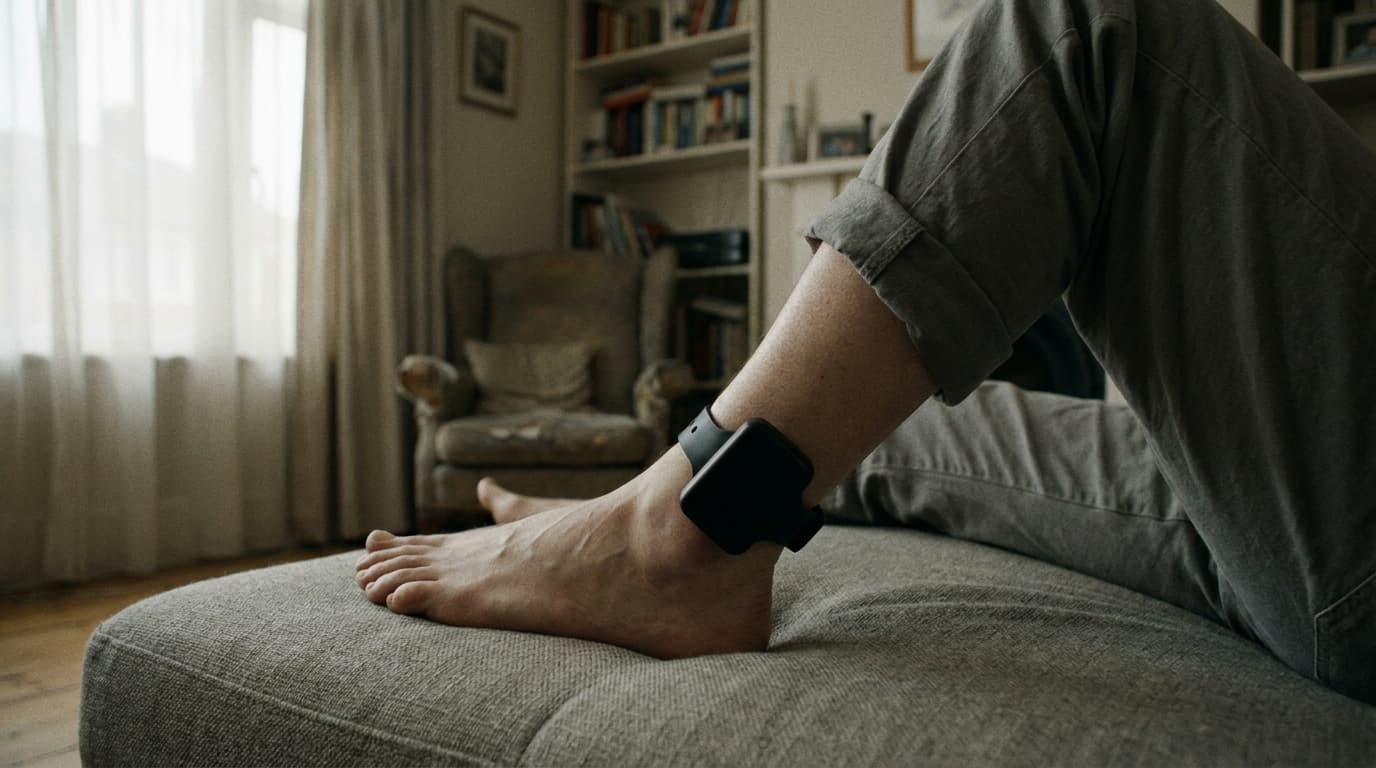
In most cases, yes: you are expected to pay for your own ankle monitor. Courts in the majority of states order the person being monitored to pay a daily supervision fee directly to a private vendor, typically between $5 and $35 per day. However, constitutional protections, indigency waivers, and a growing wave of state reforms can reduce or eliminate that obligation.
How the Offender-Funded Model Works
Electronic monitoring in the United States expanded dramatically over the past two decades. A December 2015 survey by The Pew Charitable Trusts found that more than 125,000 people were supervised with electronic tracking devices in 2015, up from about 53,000 in 2005, a nearly 140 percent increase over ten years. The survey counted the active devices in use on a single day, October 31, of each year. Electronic monitoring has continued to expand since, with ankle monitoring increasingly used as an alternative to pretrial detention and as a condition of probation or parole.
The dominant payment structure is what researchers call the "offender-funded" or "user-funded" model. Rather than the government absorbing the cost of supervision, courts order the monitored person to pay a private vendor directly.
The Fines and Fees Justice Center has written that every U.S. state besides Hawaii offsets at least a portion of electronic monitoring costs onto people under supervision. Read that as a statement about practice rather than about statutes, and note that it predates the full effect of California's fee prohibition described below.
That is a different measurement from the same organization's 50-state statutory survey, which found that seven jurisdictions have no explicit statutory authority to charge electronic monitoring fees at any stage: the District of Columbia, Hawaii, New Hampshire, New Mexico, New York, Oregon, and Vermont. Lacking statutory authority is not the same as not collecting. Fees are still charged in several of those jurisdictions.
In practice, this means you receive a bill from a for-profit company such as BI Incorporated (owned by the GEO Group), Allied Universal Electronic Monitoring, Track Group, or Sentinel Offender Services. Some jurisdictions contract directly with these companies; others allow vendors to contract directly with the supervised person, which the Fines and Fees Justice Center flagged as particularly problematic because it eliminates any court oversight of the charges.
The Brennan Center for Justice documented accounts of people selling possessions and donating plasma just to keep up with monitoring bills. A report from Alabama described a woman in Jackson County who paid $10 a day for ankle monitoring, with those payments taking up $520 of her monthly Social Security benefits, on top of $50 a month for drug testing and $40 a month for her state probation officer. In Richland County, South Carolina, one man on electronic monitoring paid over $2,500 in nine months to Offender Management Services at a rate of $9.25 per day before surrendering himself to custody because he could no longer afford it. That South Carolina rate reflects a contract reported in the mid-2010s, not a current figure.
What Does an Ankle Monitor Actually Cost?
Costs vary by device type, jurisdiction, and vendor contract. The figures below reflect documented ranges from government fee schedules, academic surveys, and reporting by advocacy organizations.
Daily Supervision Fees
The most commonly cited daily fee range is roughly $5 to $35 per day, though documented rates run wider: the Prison Policy Initiative reports programs charging anywhere from $1.50 to $47 per day. Passive GPS systems, which download location data periodically, tend toward the lower end of that range. Active continuous GPS monitoring, which transmits location in real time over a cellular connection, sits higher. Alcohol monitoring devices such as SCRAM bracelets can cost more still.
The Brennan Center cited a range of $150 to $900 per month, which translates to roughly $5 to $30 per day. The Fines and Fees Justice Center puts the range at $5 to $35 per day. Your actual rate is set by the vendor contract in your county, so ask the supervising agency for it in writing.
Setup and Installation Fees
Most programs charge a one-time enrollment fee at the start of monitoring, and the documented amounts vary widely by county.
Clark County District Court in Washington requires a $35 setup fee plus two weeks of daily monitoring fees at initial setup, paid to a private vendor, and lists a separate $380 GPS installation cost. The Richland County, South Carolina rate schedule reported in the mid-2010s used $179.50 as its setup charge.
Ask for the written fee schedule before the device goes on. The setup charge is usually due immediately, which is the point at which people most often fall behind.
Additional Charges
Depending on the vendor contract, you may also face charges for equipment damage, device replacement, or strap replacements. Some vendors bill separately for the cellular data used to transmit GPS coordinates. Where private vendors contract directly with the supervised person rather than with a court or agency, these add-on charges can be difficult to dispute.
Pretrial vs. Probation vs. Parole
The supervision context matters both for who bears the cost and what legal protections apply.
Pretrial monitoring applies to people who have been charged but not convicted. The constitutional stakes are higher here because the person has not been found guilty of anything. The Fines and Fees Justice Center found that 20 states and the District of Columbia had no explicit statutory authorization for pretrial EM fees, which does not mean fees are not collected but does mean courts in those states have less clear authority to impose them. California's fee prohibition applies at the pretrial stage. Illinois eliminated pretrial EM fees through its Pretrial Fairness Act, which took full effect in September 2023. Bearden itself does not reach this stage: it was a probation-revocation case in which the defendant had pleaded guilty and been sentenced, and it did not address pretrial release conditions. The concern it rests on, imprisonment that turns on poverty rather than on a failure to make bona fide efforts to pay, is similar to what an accused person faces who cannot afford a pretrial monitoring fee, but no holding in Bearden extends to that situation.
Probation monitoring is the context where offender-funded fees are most common and most legally established. Courts that impose monitoring as a condition of probation typically order the probationer to pay the monitoring company directly. The 43-state statutory authorization documented by the Fines and Fees Justice Center primarily covers this context. Failure to pay can be treated as a probation violation, which is where Bearden becomes directly relevant.
Parole monitoring involves supervision after a sentence is served. Some states absorb monitoring costs for parolees through their corrections budget, particularly where monitoring is a mandatory condition of release. Others pass costs to the parolee. The specific rules vary considerably by state and, within states, by county or supervising agency.
The Constitutional Floor: Bearden v. Georgia
The Supreme Court's 1983 decision in Bearden v. Georgia, 461 U.S. 660, is the controlling authority on what courts may do when a person on supervision cannot pay a financial obligation.
In Bearden, the Court held that a state cannot automatically revoke probation and imprison someone solely because they failed to pay a fine or restitution if that failure resulted from circumstances beyond their control rather than willful refusal. The Court grounded the rule in the Due Process and Equal Protection Clauses of the Fourteenth Amendment, finding that automatic conversion of an unpaid financial obligation into imprisonment for those who are poor violates fundamental fairness.
The Court established a three-step inquiry. First, did the person willfully refuse to pay, or fail to make bona fide efforts to acquire the resources to pay? Second, if the person genuinely could not pay despite good-faith efforts, are there non-carceral alternatives (extended payment timelines, reduced amounts, or community service) that would adequately serve the purposes of the supervision? Third, only if non-carceral alternatives are inadequate may the court impose imprisonment.
Bearden was decided in the context of fines and restitution, but courts have applied its reasoning to monitoring fees as well. A Yale Law Journal comment noted the growing body of litigation seeking to extend Bearden challenges directly to electronic monitoring fee revocations. The practical problem, acknowledged by defense attorneys, is that the Bearden inquiry requirement is frequently not followed in practice. Busy courts sometimes revoke supervision on non-payment without conducting the ability-to-pay analysis the Constitution requires.
What Happens If You Cannot Pay?
The consequences of falling behind on monitoring fees depend heavily on the jurisdiction and the judge.
In the worst cases, a person may be found in violation of supervision conditions and returned to custody. The Fines and Fees Justice Center documented that failure to pay monitoring fees "can lead to extended periods of supervision, additional fees, or even jail." This creates a structural trap: people are placed on electronic monitoring in part because they cannot afford cash bail, and then they are charged daily fees they also cannot afford, with the risk of incarceration for non-payment.
In jurisdictions with ability-to-pay protections, the person or their attorney can request a fee waiver or hardship reduction hearing. In some states, the supervised person can ask the court to substitute community service or an alternative condition. Some private vendors offer sliding-scale rates, though the availability and terms vary and are rarely publicized.
Where a state or county has an indigency fund, a court finding of indigency can route part of the payment responsibility to the public fund rather than the individual, subject to a minimum contribution from the person supervised.
Watch out: Check which devices an indigency fund actually covers before you count on it. Tennessee's fund is the most-cited example, but Tenn. Code Ann. section 40-11-152(h) has excluded GPS monitoring devices from it since July 1, 2024, and it says a defendant ordered to wear a GPS device is ineligible for that assistance regardless of whether the defendant is indigent.
The safest practical step for anyone who cannot afford monitoring fees is to raise the issue with an attorney immediately rather than simply not paying. Voluntary non-payment without communicating financial hardship to the court is more likely to be treated as willful non-compliance.
The Private Vendor Industry
The ankle monitor market is dominated by a small number of companies. BI Incorporated is among the largest. The GEO Group, one of the country's largest private prison operators, acquired BI in an all-cash transaction valued at $415 million that closed on February 11, 2011, and BI has operated as a GEO Group subsidiary since.
Allied Universal Electronic Monitoring is the other major operator. Allied Universal completed its acquisition of Attenti on August 1, 2022 and combined it with G4S Monitoring Technologies, and on July 6, 2026 it announced the acquisition of Sentinel Offender Services. Track Group and SCRAM Systems also hold significant agency contracts.
These companies are mentioned here as neutral industry context. This is not an endorsement of any vendor, and recordinglaw.com has no affiliation with any monitoring company.
Critics note that the private-vendor structure creates a financial incentive to extend supervision rather than end it, since each additional day of monitoring generates revenue. The Brennan Center described this as "how electronic monitoring incentivizes prolonged punishment." When a vendor contracts directly with the monitored person rather than with a government agency, there is also minimal external review of the rates charged or the accuracy of billing.
Recent Reforms Capping or Eliminating Fees
Fee reform is an active area of state legislative activity. The following reforms are documented as of early 2026:
California enacted successive reforms between 2020 and 2022 that expressly prohibit electronic monitoring fees at any stage of the criminal process. California is the only state that prohibits electronic monitoring fees at every stage; Rhode Island prohibits them only for people who have not yet been convicted. The Policy Advocacy Clinic at Berkeley Law estimated that AB 1869 alone relieved Californians of more than $16 billion in outstanding criminal fee debt.
Illinois eliminated user fees for electronic monitoring through the Pretrial Fairness Act, part of the SAFE-T Act package. The pretrial provisions took effect on September 18, 2023, making Illinois the first state to fully eliminate money bonds and removing the statutory authority to charge pretrial EM fees.
Oregon removed the statutory authorization for probation and parole fees, including language that had previously permitted electronic monitoring fees. Implementation varies at the county level, and some counties were still collecting fees as of the 2022 Fines and Fees Justice Center survey, so individuals in Oregon should verify current practice with local court staff or a defense attorney.
Oklahoma enacted HB 1460 in 2025, eliminating a fee of up to $300 per month for electronic monitoring administered by the state Department of Corrections GPS monitoring program. The reform came after an interim legislative study found that the fee was effectively uncollectable (only about $200,000 of $700,000 assessed was actually collected) and that it created serious reentry barriers.
Rhode Island prohibits EM fees for pretrial defendants but continues to allow post-sentencing fees.
Cook County, Illinois has undergone significant structural changes. The Sheriff's Office stopped accepting new enrollments in its pretrial electronic monitoring program on April 1, 2025, and the Circuit Court of Cook County's Adult Probation Department now runs court-ordered monitoring under the unified post-Pretrial Fairness Act framework.
Tennessee operates an electronic monitoring indigency fund under Tenn. Code Ann. section 55-10-419, but its coverage is narrower than it first appears. For a court-ordered alternative device, meaning a transdermal monitoring device or another worn or carried alcohol or drug monitoring device, the county is liable for up to $170 per device per month, and total provider payment is capped at $200 per device per month. For orders issued on or after October 1, 2023, the court must order an indigent person to pay a minimum of $30 per month toward the cost.
The limit that matters most on this page: effective July 1, 2024, GPS monitoring devices are excluded from that fund. Tenn. Code Ann. section 40-11-152(h) provides that a defendant ordered to wear a global positioning monitoring system device "shall pay all costs associated with operating that system" and "is not eligible for assistance from the electronic monitoring indigency fund, as established pursuant to 55-10-419, regardless of whether the defendant is indigent." Ignition interlock devices are also ineligible for reimbursement. If you are wearing a GPS ankle monitor in Tennessee, this fund does not help you.
State-by-State Overview
Fees for electronic monitoring are most often set at the county or court level through vendor contracts, not by state statute. The table below reflects general statewide practice and any documented reforms as of 2026. Where no verified statewide fee structure exists, the cell notes "Varies by county/court." Do not treat any entry as a guaranteed rate; confirm current fees with your attorney or the supervising agency.
Northeast states
The table below covers 9 states in the Northeast.
| State | Who Typically Pays | Notes |
|---|---|---|
| Connecticut | Supervised person | Varies by county/court |
| Maine | Supervised person | Varies by county/court |
| Massachusetts | Supervised person | Varies by county/court |
| New Hampshire | Supervised person | No explicit statutory authorization; fees may still be collected |
| New Jersey | Supervised person | Authorizes fees only at the pretrial stage |
| New York | Supervised person | No explicit statutory authorization; fees may still be collected |
| Pennsylvania | Supervised person | Varies by county/court |
| Rhode Island | Pretrial: no fee; Post-sentencing: supervised person | Expressly prohibits pretrial EM fees; post-sentencing fees authorized |
| Vermont | Supervised person | No explicit statutory authorization; fees may still be collected |
Midwest states
The table below covers 12 states in the Midwest.
| State | Who Typically Pays | Notes |
|---|---|---|
| Illinois | Government / no fee (pretrial) | Pretrial EM fees eliminated via Pretrial Fairness Act (Sept. 2023); post-sentencing fees may still apply in some counties |
| Indiana | Supervised person | Varies by county/court |
| Iowa | Supervised person | Varies by county/court |
| Kansas | Supervised person | Varies by county/court |
| Michigan | Supervised person | Varies by county/court |
| Minnesota | Supervised person | Varies by county/court |
| Missouri | Supervised person | State requires ability-to-pay consideration at both stages |
| Nebraska | Supervised person | Varies by county/court |
| North Dakota | Supervised person | Varies by county/court |
| Ohio | Supervised person | Varies by county/court |
| South Dakota | Supervised person | Varies by county/court |
| Wisconsin | Supervised person | Varies by county/court |
Southern states
The table below covers 16 states in the South, plus the District of Columbia.
| State | Who Typically Pays | Notes |
|---|---|---|
| Alabama | Supervised person | Documented at $10/day in some counties; drug testing billed separately |
| Arkansas | Supervised person | Varies by county/court |
| Delaware | Supervised person | Varies by county/court |
| Florida | Supervised person | Varies by county/court |
| Georgia | Supervised person | Varies by county/court |
| Kentucky | Supervised person | State requires ability-to-pay consideration at both stages |
| Louisiana | Supervised person | Varies by county/court |
| Maryland | Supervised person | Varies by county/court |
| Mississippi | Supervised person | Varies by county/court |
| North Carolina | Supervised person | Varies by county/court |
| Oklahoma | Post-DOC fees eliminated | HB 1460 (2025) eliminated DOC GPS monitoring fee up to $300/month; county/court fees may still apply |
| South Carolina | Supervised person | Richland County rate reported in the mid-2010s: $9.25/day plus $179.50 setup |
| Tennessee | Supervised person; indigency fund for non-GPS devices only | Indigency fund covers alcohol and drug monitoring devices (county liable up to $170/month; minimum $30/month from the supervised person). GPS devices excluded since July 1, 2024 |
| Texas | Supervised person | Varies by county/court |
| Virginia | Supervised person | Varies by county/court |
| West Virginia | Supervised person | Varies by county/court |
| District of Columbia | Supervised person | No explicit statutory authorization; fees may still be collected |
Western states
The table below covers 13 states in the West.
| State | Who Typically Pays | Notes |
|---|---|---|
| Alaska | Supervised person | Varies by county/court |
| Arizona | Supervised person | Varies by county/court |
| California | Government / no fee | Fees expressly prohibited statewide as of 2022 |
| Colorado | Supervised person | Varies by county/court |
| Hawaii | Government / no fee | No explicit statutory authorization; the one state the Fines and Fees Justice Center reports does not offset monitoring costs onto the supervised person |
| Idaho | Supervised person | Varies by county/court |
| Montana | Supervised person | Varies by county/court |
| Nevada | Supervised person | State requires ability-to-pay consideration at both stages |
| New Mexico | Supervised person | No explicit statutory authorization; fees may still be collected |
| Oregon | Supervised person (varies) | No explicit statutory authorization; state removed authorization for probation/parole EM fees, but county-level practice varies |
| Utah | Supervised person | Varies by county/court |
| Washington | Supervised person | Clark County District Court: $35 setup fee plus two weeks of daily fees at installation, paid to a private vendor; $380 GPS installation cost |
| Wyoming | Supervised person | Varies by county/court |
Not Convicted? You May Still Owe Fees
One of the most contested aspects of the offender-funded model is that pretrial monitoring fees accrue before any finding of guilt. A person accused of a crime, released on a monitoring condition, and later acquitted or whose charges are dismissed may nonetheless have paid hundreds or thousands of dollars in daily monitoring fees.
California's fee prohibition and Illinois's Pretrial Fairness Act both address this directly by eliminating pretrial fees altogether. In states without those protections, there is generally no statutory right to a refund of monitoring fees paid during a case that ends in acquittal or dismissal. This is an area where advocacy organizations have pushed for reform, and it remains contested in several states.
For the different device types and how they work, see Types of Ankle Monitors.
Disclaimer: This page provides general legal information only and is not legal advice. Ankle monitor fee rules change frequently at the state and county level. If you are subject to a monitoring condition and cannot afford the fees, contact a licensed attorney in your jurisdiction immediately.
Frequently Asked Questions
How much does an ankle monitor cost per day?
Daily ankle monitor fees in the United States range from roughly $5 to $35 per day depending on the device type, jurisdiction, and vendor contract. Active continuous GPS monitors tend to cost more than passive systems. A separate one-time setup or installation charge is common, and documented county examples run from $35 to $179.50, with GPS installation billed as high as $380. A handful of states have eliminated fees entirely, including California and Illinois for pretrial cases.
Do you have to pay for an ankle monitor?
In most states, yes. The dominant model in the United States requires the monitored person to pay a private vendor directly. The Fines and Fees Justice Center has written that every U.S. state besides Hawaii offsets at least a portion of monitoring costs onto the supervised person, a statement about practice that predates California's full fee prohibition. California and Rhode Island (for pretrial defendants) expressly prohibit these fees, Illinois has eliminated pretrial EM fees, and Oklahoma eliminated its state DOC GPS monitoring fee in 2025. Many jurisdictions offer indigency waivers if you can demonstrate financial hardship.
Who pays for ankle monitors?
In the majority of U.S. jurisdictions, the person wearing the monitor pays a private company directly. This is called the offender-funded or user-funded model. A smaller number of jurisdictions use agency-funded models where the government builds monitoring costs into its corrections or pretrial budget. Seven jurisdictions have no explicit statutory authority to charge electronic monitoring fees at any stage: the District of Columbia, Hawaii, New Hampshire, New Mexico, New York, Oregon, and Vermont. That is not the same as a ban, and fees are still collected in several of them. Hawaii is the one state the Fines and Fees Justice Center reports does not offset monitoring costs onto the supervised person at all.
Can you go to jail for not paying ankle monitor fees?
Potentially yes, but not automatically and not without a hearing. Under Bearden v. Georgia, 461 U.S. 660 (1983), a court cannot revoke supervision and jail someone solely because they cannot pay without first inquiring into whether the failure was willful, and whether non-carceral alternatives exist. If you genuinely cannot afford the fees and made good-faith efforts to pay, the Constitution requires the court to consider alternatives before imposing imprisonment. In practice, this protection is not always applied correctly, which is why raising inability to pay with an attorney promptly is critical.
Do you have to pay for an ankle monitor if you are found not guilty?
In most states, there is no statutory right to a refund of pretrial monitoring fees if your case ends in acquittal or dismissal. California and Illinois have addressed this by eliminating pretrial EM fees entirely, so no fee accrues. In states that still charge pretrial fees, an acquitted defendant typically has no automatic right to recover the money paid. Some courts have granted equitable relief in individual cases, but this is not a widely available statutory remedy outside of the states that have reformed their fee structures.
Are there ankle monitor fee waivers?
Yes, in many jurisdictions. If you cannot afford monitoring fees, you or your attorney can ask the court for an indigency determination, which may reduce or eliminate the fee obligation. Some private vendors also offer sliding-scale rates for low-income participants, though terms vary. Check what any indigency fund actually covers before relying on it: under Tennessee's fund the county is liable for up to $170 per device per month for alcohol and drug monitoring devices (no more than $85 of it from AEMIF grant funds), with total provider payment capped at $200 per device per month and a minimum $30 per month from the supervised person, but Tenn. Code Ann. section 40-11-152(h) has excluded GPS monitoring devices from that fund since July 1, 2024 regardless of indigency. In California, Illinois (pretrial), and Rhode Island (pretrial), fees are prohibited outright, so no waiver is needed.
Does the fee depend on whether you are pretrial, on probation, or on parole?
Often yes. Pretrial monitoring fees have come under the most reform pressure because they apply before any conviction. Probation fees are the most common and most legally established context for offender-funded monitoring. Parole monitoring is sometimes absorbed by state corrections budgets, though this varies significantly. The Fines and Fees Justice Center survey found that 29 states authorize fees at both pretrial and post-sentencing stages, 13 authorize fees only post-sentencing, and one state (New Jersey) authorizes fees only at the pretrial stage.
What happens if I cannot afford the ankle monitor setup fee?
If you cannot pay the initial installation or setup fee, raise this immediately with your attorney and ask the court for an indigency hearing before the monitor is applied. In some jurisdictions, the court or a state indigency fund can cover the setup fee. Waiting until you have accrued daily fees and fallen behind is generally harder to resolve than addressing financial hardship at the outset of monitoring.
Updates
Clarified that Bearden v. Georgia was a probation-revocation case and that its holding does not extend to pretrial monitoring fees.
Corrected the count of jurisdictions that lack statutory authority to charge electronic monitoring fees (seven, not Hawaii alone) and rewrote the Tennessee indigency fund section, which has excluded GPS monitoring devices since July 1, 2024 regardless of indigency. Also fixed the private vendor ownership history, replaced a dead link and two citations that did not support the figures attached to them, and removed county fee amounts we could not source. A follow-up review caught more: an Alabama example had inverted its source (the $520 figure is what the woman's monitoring payments consumed, not her total monthly benefit, and the claim that this was more than half her income was not in the source at all), and it has been rewritten to match the report. Added citations for the national monitoring count and the California fee-debt figure, corrected the Tennessee indigency fund amounts so every section of the page agrees, clarified that California is the only state banning these fees at every stage while Rhode Island's ban covers only people not yet convicted, and widened the daily-cost range to reflect the higher and lower rates our sources actually document.
Independently fact-checked against the cited primary sources
Sources and References
- Electronic Monitoring Fees: A 50-State Survey of the Costs Assessed to People on E-Supervision(finesandfeesjusticecenter.org)
- Ankle Monitors Are Replacing Cash Bail, But At A Cost(finesandfeesjusticecenter.org)
- How Electronic Monitoring Incentivizes Prolonged Punishment(brennancenter.org)
- Bearden v. Georgia, 461 U.S. 660 (1983)(law.cornell.edu)
- Life On An Ankle Monitor In Alabama: $10 A Day and Inevitable Imperfections(finesandfeesjusticecenter.org)
- Chain Gang 2.0: If You Can't Afford This GPS Ankle Bracelet, You Get Thrown In Jail (Richland County, SC rates)(prisonlegalnews.org)
- 2025 Legislative Roundup: End Justice Fees(finesandfeesjusticecenter.org)
- Historic Fees Reform Unanimously Passes House (Oklahoma HB 1460)(okhouse.gov).gov
- Alternative Electronic Monitoring Indigency Fund (AEMIF), Tennessee Office of Criminal Justice Programs Grants Manual: $170 per device per month county liability, $30 per month minimum offender contribution, GPS devices excluded effective July 1, 2024 under Tenn. Code Ann. 40-11-152(h)(tn.gov).gov
- Pretrial Provisions of SAFE-T Act Took Effect(civicfed.org)
- Not an alternative: The myths, harms, and expansion of pretrial electronic monitoring(prisonpolicy.org)
- Seeking Equity in Electronic Monitoring: Mounting a Bearden Challenge(yalelawjournal.org)
- Fees, Fines and Ability to Pay(brennancenter.org)
- Adult Probation Electronic Monitoring Program, Circuit Court of Cook County (Sheriff's Office stopped accepting new pretrial EM enrollments on April 1, 2025)(cookcountycourtil.gov).gov
- Electronic Home Monitoring Services, Clark County District Court, Washington ($35 setup fee plus two weeks of daily fees; $380 GPS installation cost)(clark.wa.gov).gov
- GEO Group Acquires Electronic Monitoring Firm BI Incorporated for $415 Million (closed February 11, 2011)(prisonlegalnews.org)
- Allied Universal Completes Acquisition of Attenti to Create the Global Leader in Electronic Monitoring (August 1, 2022)(aus.com)
- Allied Universal Acquires Sentinel Offender Services (July 6, 2026)(ausnewsroom.aus.com)
- Use of Electronic Offender-Tracking Devices Expands Sharply, The Pew Charitable Trusts (Sept. 2016): a December 2015 survey found more than 125,000 people supervised with electronic tracking devices in 2015, up from about 53,000 in 2005, counted as active devices in use on a single day, October 31, of each year(pew.org)
- Governor Signs Historic Bill Repealing Unjust Criminal Fees in California, UC Berkeley School of Law Policy Advocacy Clinic press release (Sept. 21, 2020): the clinic estimates AB 1869 will relieve Californians of over $16 billion in outstanding criminal fee debt(law.berkeley.edu)