
Wisconsin
Wisconsin Window Tint Laws (2026): Legal VLT Limits
Independently fact-checked against primary sources (last audited August 18, 2026). · Reviewed by the RecordingLaw editorial team. · Law checked current as of August 18, 2026. · 3 primary sources cited on this page. How we verify our legal content

Wisconsin law requires front side windows to allow at least 50% of visible light through (or 35% with a valid medical exemption), while back side and rear windows must allow at least 35%. Understanding these numbers is straightforward once you know the rule: higher VLT percentages mean lighter tint, and lower VLT percentages mean darker tint.
What is the legal tint limit in Wisconsin?
Wisconsin sets its window tint limits under Wis. Admin. Code Trans 305.32. The law works on a simple VLT scale: the higher the percentage, the more light passes through (lighter tint), and the lower the percentage, the less light passes through (darker tint). Front side windows (the windows next to the driver and front passenger) must have a minimum of 50% VLT. That means at least half of visible light must be able to pass through the glass and film combined.
Back side windows (behind the driver) and the rear window are held to a less restrictive limit of 35% VLT. If the rear window transmits less than 60% of light, Wisconsin also requires dual outside mirrors so the driver retains adequate rearward visibility. There is a measurement tolerance of plus or minus 3%, so a reading of 47% on a front side window could still pass a check, but installers and owners should target compliance well within the margin.
| Window | Minimum VLT | Notes |
|---|---|---|
| Front side windows | 50% | 35% with medical exemption |
| Back side windows | 35% | |
| Rear window | 35% | Dual mirrors required if rear is below 60% |
| Windshield | No film below AS-1 line | Tint permitted above the AS-1 line only; no separate reflectivity limit stated |
Wisconsin does not draw a sedan vs. SUV or multipurpose-vehicle distinction in these limits. All vehicle types face the same front-side 50% minimum and the same 35% minimum on windows behind the driver.
Windshield tint rules in Wisconsin
Wisconsin takes a strict approach to windshield film. Under Trans 305.34(6)(c), tint or other nontransparent material is permitted only above the manufacturer's AS-1 line, which is the delineation molded into the glass near the top of the windshield, and outside the critical driving vision area. Any film must stay entirely outside that critical area below the line. Unlike the side and rear window rules, Trans 305.34(6)(c) does not itself impose a separate reflectivity limit on the windshield strip.
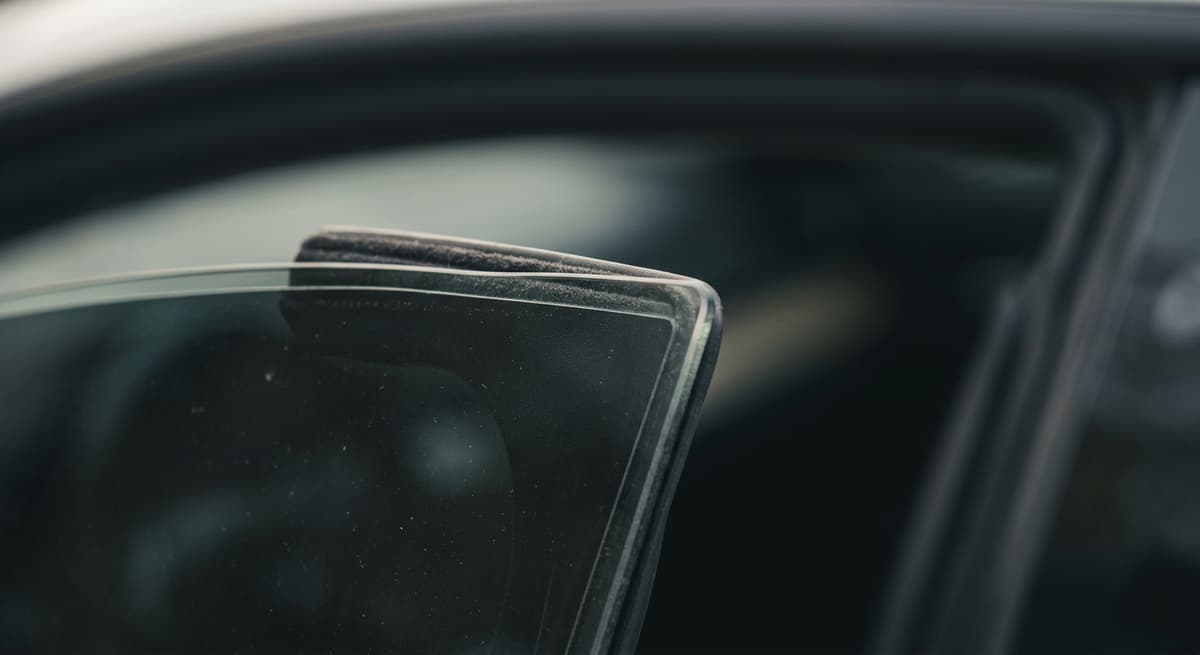
Reflective films are prohibited on the front side, rear side, and rear windows under Trans 305.32; the windshield-specific rule, Trans 305.34(6)(c), does not separately restrict reflectivity, only where the film may be placed. Wisconsin does not specify banned colors in its administrative code, but the reflectivity ban on the other windows effectively rules out mirrored and highly metallic films that would create glare for other drivers there. Installers should use film tested to standard light-transmission specifications and should avoid anything marketed as one-way mirror or chrome film.
The windshield rule exists because even light tinting on the forward glass can affect nighttime visibility and driver reaction times. Wisconsin regulators treat the windshield as a safety-critical surface where any reduction in light transmission below the AS-1 line creates unacceptable risk.
Medical exemptions
Wisconsin does allow a medical exemption for window tint, but it is narrower than a general ask-any-doctor rule. Under Trans 305.32(4)(b)3, the recommendation must come from a physician or Christian Science practitioner who is treating the vehicle's owner, or an immediate family member of the owner, not just any occupant of the vehicle. Qualifying conditions include things such as certain skin disorders, lupus, photosensitivity from medications, or eye conditions.
The exemption allows front side windows to go down to 35% VLT instead of the standard 50%. To use the exemption legally, you must carry the physician's or practitioner's written statement in the vehicle at all times, and the tint must be removed if the vehicle is sold, if the qualifying person no longer lives in the owner's household, or once a temporary condition has expired. A traffic stop or equipment inspection can prompt a check, and if you cannot produce the documentation on demand you may still receive a citation.
There is no state-issued medical exemption certificate or formal permit. The written statement from the medical professional is the document, and under Trans 305.32(4)(b)3 it must identify the patient, describe the condition and whether it is temporary or permanent, and specify the vehicle it applies to, including make, model, year, and VIN. Keep it in the glove compartment with your registration so you can produce it quickly at any stop, and update it, or remove the tint, if the vehicle changes hands or the qualifying person's household situation changes.
How tint is measured and certified
Wisconsin law enforcement uses VLT meters to measure window tint during roadside stops or vehicle equipment inspections. These meters shine a light source through the glass and measure how much reaches the sensor on the other side. The reading is compared to the legal limit for that window position.

Wisconsin's administrative code recognizes a measurement tolerance of plus or minus 3%. This means a reading of 47% on a front side window is technically within range of the 50% standard, though repeated readings or different meters could produce different results near the edge. The safest approach is to install film that clearly meets the legal standard without relying on tolerance margins.
Wisconsin does not appear to mandate a specific compliance sticker or installer label in its administrative code, but reputable installers typically provide a certificate showing the VLT rating of the film applied. Keeping that certificate in the vehicle alongside your registration and any medical documentation is good practice. If you are ever challenged about your tint, the installer certificate establishes what film is on the glass.
Penalties for illegal tint in Wisconsin
Wisconsin's tint limits live in the administrative code, at Trans 305.32, and that chapter carries its own penalty route. Trans 305.04 provides that "unless a different penalty is provided by statute, any violation of this chapter shall be punishable as prescribed in s. 110.075 (7), Stats." Wis. Stat. s. 110.075(7) sets the exposure at a forfeiture of not less than $10 nor more than $200. These are not criminal offenses, but they carry a fine and require correction of the violation.
An officer who observes what appears to be tint that is too dark can stop the vehicle to conduct a check. If the tint does not pass, the driver may receive a citation and be required to remove or replace the film to bring the vehicle into compliance. Continuing to drive with non-compliant tint after a citation can result in additional fines.
Chapter 347 of the statutes is the enabling authority behind the Trans 305 equipment rules, but its own penalty section, s. 347.50(1), reaches only violations of ss. 347.35 to 347.49. A tint violation breaches an administrative rule rather than one of those statute sections, which is why the forfeiture runs through s. 110.075(7) instead. Because tint violations are equipment offenses rather than moving violations, they typically do not affect driving records the same way, but the forfeiture and the correction order are still a real consequence worth avoiding.
If you want to tint your windows in Wisconsin
Start by confirming the film VLT rating before installation. For most Wisconsin drivers, this means choosing front-side film rated at 50% VLT or lighter (numerically higher). Back-side and rear film at 35% VLT or lighter is the standard. If you have a qualifying medical condition, get the written statement from your physician before you schedule the installation, so everything is in order from day one.
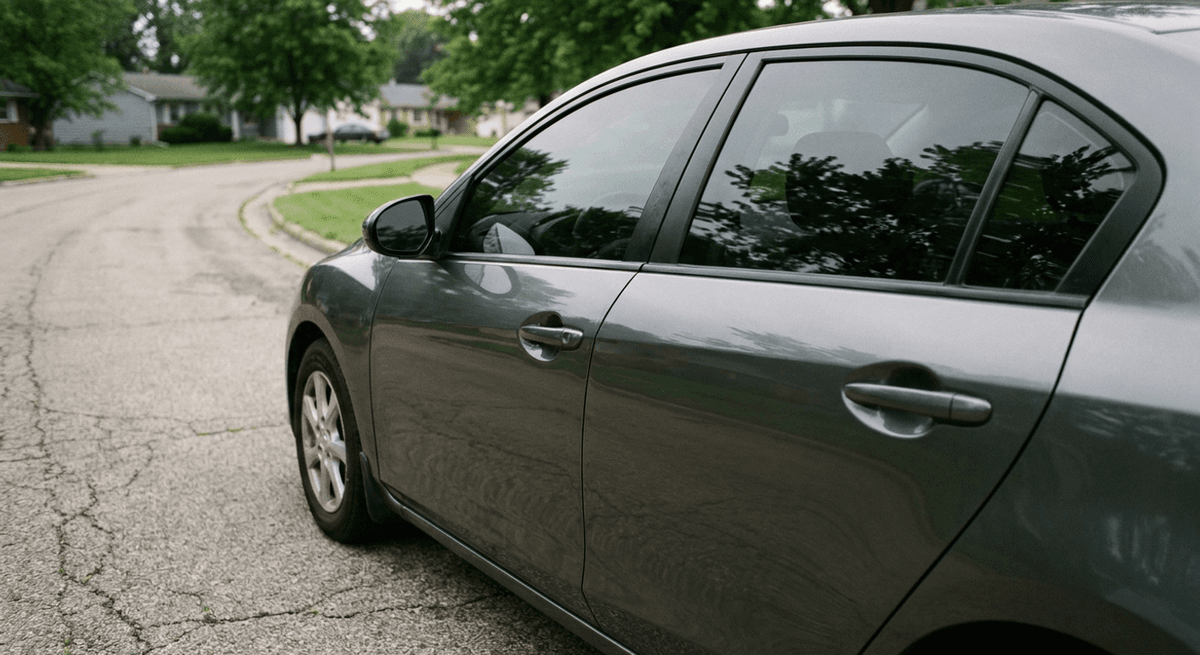
Choose an installer who is familiar with Wisconsin's requirements and who will provide a written certificate showing the VLT of the film applied to each window. Ask to see the film's specification sheet so you know the baseline transmission before combining with your vehicle's factory glass, which may itself absorb some light. Many vehicles leave the factory with glass that already transmits below 80% VLT, so the combined reading of factory glass plus aftermarket film is what must meet the legal standard.
After installation, verify the tint is within spec using the installer's meter. Keep the installer certificate, any medical documentation, and your vehicle registration together in the glove compartment. That packet gives you everything you need to address a question at a traffic stop.
Avoid reflective or metallic film on the front side, rear side, and rear windows in Wisconsin, since Trans 305.32 prohibits reflective films on those windows. If you are buying a used vehicle, inspect the existing tint before assuming it is compliant, as prior owners may have installed non-compliant film.
This article is general legal information, not legal advice. Window tint limits vary by state and change, and enforcement depends on local practice and your specific vehicle. For a definitive answer, check your state DMV or consult a local attorney.
For state-by-state comparisons, see the Window Tint Laws hub. For related rules about what you can attach to or mount on your windshield, see Wisconsin Windshield Mounting Restrictions.
More Wisconsin Laws
Frequently Asked Questions
What is the legal tint in Wisconsin?
Wisconsin requires front side windows to allow at least 50% visible light transmission (VLT). Back side windows and the rear window must allow at least 35% VLT. Medical exemption holders may use 35% on front side windows with a written physician statement in the vehicle.
How dark can my front windows be in Wisconsin?
Without a medical exemption, your front side windows must transmit at least 50% of visible light. That means the darkest legal front-side tint for most drivers is 50% VLT. With a qualifying medical exemption, you can go down to 35% VLT on front side windows.
Is 35% tint legal in Wisconsin?
Yes, 35% VLT is legal in Wisconsin for back side windows and the rear window. It is also legal on front side windows if you carry a written medical exemption statement from a physician or Christian Science practitioner treating the vehicle's owner or an immediate family member, specific to that vehicle including its VIN. Without the exemption, front side windows must be 50% or lighter.
Can I get a medical exemption for window tint in Wisconsin?
Yes, but only if the physician or Christian Science practitioner is treating the vehicle's owner or an immediate family member of the owner. The written statement must identify the patient and condition, note whether it is temporary or permanent, and specify the vehicle, including make, model, year, and VIN, it covers. You must carry the statement in the vehicle at all times, and the tint must come off if the vehicle is sold, the qualifying person leaves the owner's household, or a temporary condition expires. Wisconsin does not issue a formal state permit; the signed medical document is the authorization.
What is the penalty for illegal tint in Wisconsin?
Illegal window tint breaks Wis. Admin. Code Trans 305.32. Trans 305.04 makes any violation of that chapter punishable under Wis. Stat. s. 110.075(7), which sets a forfeiture of not less than $10 nor more than $200. You can also be ordered to remove or replace the non-compliant film, and continued non-compliance after a citation can bring further citations.
Is windshield tint legal in Wisconsin?
Only above the manufacturer's AS-1 line, and outside the critical driving vision area, is tint permitted on a Wisconsin windshield, under Trans 305.34(6)(c). No film is allowed below that line. Reflective films are explicitly prohibited on front side, rear side, and rear windows under Trans 305.32; the windshield-specific rule does not separately state a reflectivity restriction.
Do SUVs have different tint rules in Wisconsin?
Wisconsin does not distinguish between sedans and multipurpose vehicles (SUVs, vans, pickups) in its tint limits. All vehicle types must meet the 50% VLT standard on front side windows and the 35% VLT standard on back side and rear windows.
Updates
Corrected the penalty citation for illegal window tint from Chapter 347 to Wis. Stat. s. 110.075(7) by way of Trans 305.04, and added the actual forfeiture range of $10 to $200.
Corrected the medical-exemption section: the physician or Christian Science practitioner must be treating the vehicle's owner or an immediate family member, the written statement must specify the vehicle (including its VIN), and the tint must be removed on sale, household change, or expiry. Also corrected the windshield tint citation to Trans 305.34(6)(c) and narrowed the reflective-film ban to the side and rear windows it actually covers.
Independently fact-checked against the cited primary sources; governing law re-checked for recent changes
Reviewed and approved by an editor
The Law Behind This Article
This article rests on the statutory provisions below, held in our own legal record and retrieved from the official source. Tap a section to read the operative text.
Wisconsin Statutes, Chapter 347: Equipment Of Vehicles
§ 347.50Penalties.In forcecited in 2 of our articles
(1) Any person violating ss. 347.35 to 347.49, except s. 347.385 (5), s. 347.413 (1) or s. 347.415 (1m), (2) and (3) to (5) or s. 347.417 (1) or s. 347.475 or s. 347.48 (2m) or (4) or s. 347.489, may be required to forfeit not less than $10 nor more than $200. Effective date note Effective date text (1m) Any person violating s. 347.385 (5) may be fined not more than $10,000 or imprisoned for not more than one year in the county jail, or both, for each violation. (1s) Any person violating s. 347.413 (1) or 347.417 (1) may be fined not less than $150 nor more than $600, or may be imprisoned for not more than 6 months, or both for the first offense. For a 2nd or subsequent conviction within 5 years, the person may be fined not less than $300 nor more than $1,000, or imprisoned for not more than 6 months, or both. Effective date note Effective date text (1t) In addition to the penalty under sub. (1s), if a person who is subject to an order under s. 343.301 violates s. 347.413, the court shall extend the order restricting the person’s operating privilege under s. 343.301 (1g) or (2m) for 6 months for each violation. Effective date note (2) Any person violating s.
Official text (excerpt) · last checked 2026-07-29 · Read the full text in our law library · Verify at docs.legis.wisconsin.gov
Cited in 1 court opinions in our collectionLatest citing opinion in our collection: 1998
Opinions citing this section in our collection:
- Gaertner v. Holcka (Wisconsin Supreme Court 1998, 219 Wis. 2d 436)“…t responsibility. Instead, a $10 penalty was authorized by Wis. Stat. § 347.50 (2m)(a), and a § 347.48(2m)(g) 15% redu…”
Identified automatically from the court opinions citing this section — not a ranking of which case controls.
Also relied on in: Wisconsin Car Seat Laws (2026): Ages, Booster & Penalty
Wisconsin Statutes, Chapter 110: Motor Vehicles
§ 110.075Motor vehicle inspection.In forcecited in 2 of our articles
(1) No person shall drive or move, or cause or knowingly permit to be driven or moved, on any highway any vehicle or combination of vehicles which is not in conformity with the requirements of this section. (2) When directed by any traffic officer or motor vehicle inspector, the operator of any motor vehicle shall stop and submit such motor vehicle to an inspection and such tests as are necessary to determine whether it meets the requirements of this section, or that its equipment is not in proper adjustment or repair, or in violation of the equipment provisions of ss. 110.05, 110.06, 110.063 and 110.064, ch. 347, or rules issued pursuant thereto. Such inspection shall be made with respect to the brakes, lights, turn signals, steering, horns and warning devices, glass, mirrors, exhaust system, windshield wipers, tires, and other items of equipment designated by the secretary. (3) Upon determining that a motor vehicle is in conformity with sub. (2), traffic officers or motor vehicle inspectors shall issue to the operator an official inspection sticker which shall be in such form as the secretary prescribes.
Official text (excerpt) · last checked 2026-07-29 · Read the full text in our law library · Verify at docs.legis.wisconsin.gov
Cited in 1 court opinions in our collectionLatest citing opinion in our collection: 2009
Opinions citing this section in our collection:
- State v. Bailey (Court of Appeals of Wisconsin 2009, 321 Wis. 2d 350)“…s no authority to enforce it. Next Bailey argues, based on Wis. Stat. § 110.075 , that only a state patrol or Departmen…”
Identified automatically from the court opinions citing this section — not a ranking of which case controls.
Also relied on in: Wisconsin Windshield Mounting Laws
Search our full record of US law — 2.1 million sections, every state + federal →
Sources and References
- Wisconsin Administrative Code Trans 305.32 (Window Tinting)(docs.legis.wisconsin.gov).gov
- Wisconsin Statute Chapter 347 (Vehicle Equipment)(docs.legis.wisconsin.gov).gov
- Wisconsin Administrative Code Trans 305.34 (Windshields and Windows)(docs.legis.wisconsin.gov).gov
- Wis. Admin. Code Trans 305.04 (Penalty)(docs.legis.wisconsin.gov)
- Wis. Stat. s. 110.075(7) (forfeiture of not less than $10 nor more than $200)(docs.legis.wisconsin.gov)