Washington
Washington Window Tint Laws (2026): Legal VLT Limits
Independently fact-checked against primary sources (last audited August 18, 2026). · Reviewed by the RecordingLaw editorial team. · Law checked current as of August 18, 2026. · 1 primary source cited on this page. How we verify our legal content
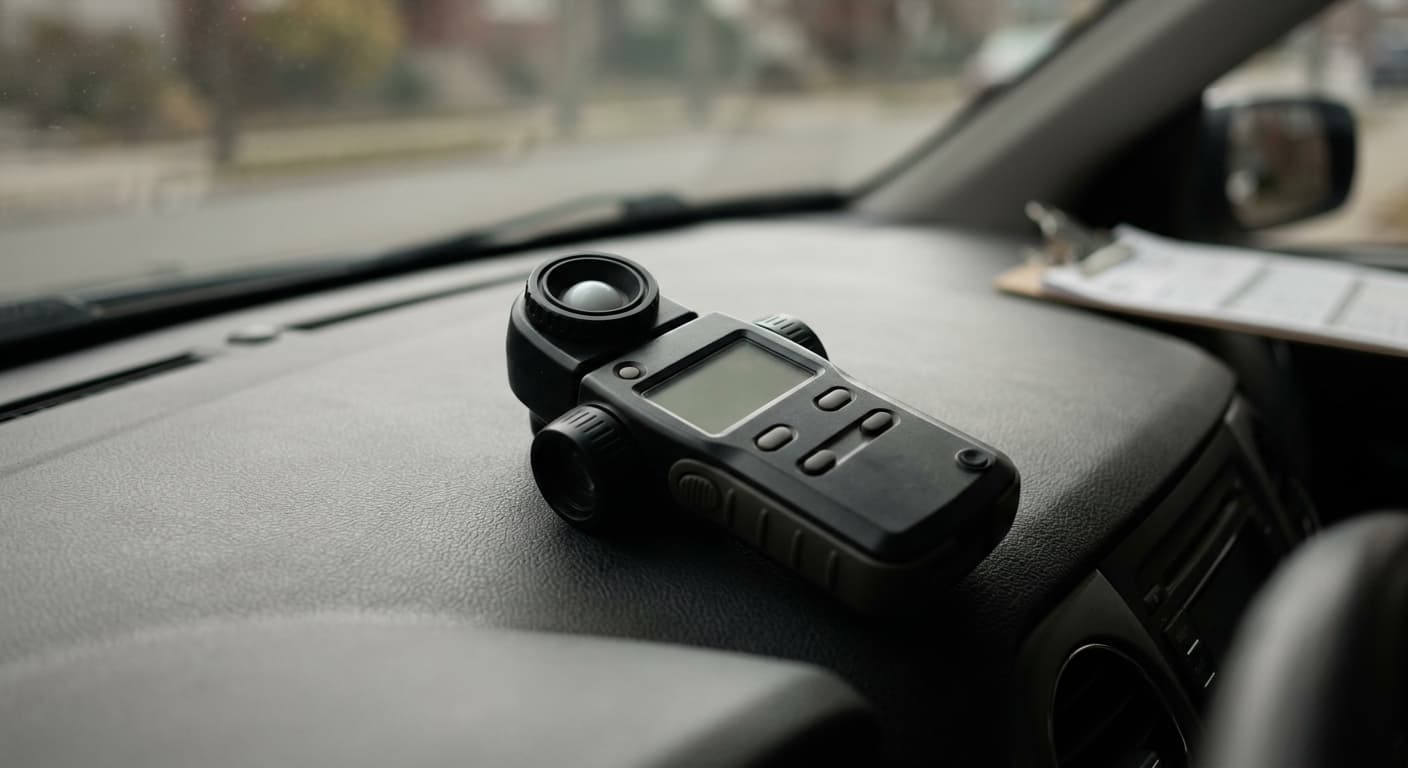
Washington requires all windows except the windshield to allow at least 24% visible light transmission (VLT). That single 24% minimum applies to front side windows, back side windows, and the rear window alike, making Washington one of the more permissive tint states in the country. Certain special vehicles may go darker behind the driver.
What is the legal tint limit in Washington?
Washington State sets a single VLT floor for almost every window on the vehicle: 24%. That means the tint film, combined with the factory glass, must allow at least 24 out of every 100 units of visible light to pass through. Because a higher VLT percentage means lighter tint and a lower percentage means darker tint, 24% is noticeably dark to the eye but still legal.
The 24% minimum covers the front side windows, the back side windows, and the rear window. There is no sedan-versus-SUV split for the front windows. The distinction arises only behind the driver's seat: hearses, limousines, ambulances, collector vehicles, and multipurpose vehicles (SUVs, vans, and trucks) may legally run any darkness on their back side and rear windows, provided dual outside mirrors give an unobstructed rearward view.
| Window | Sedans | Special/Multipurpose Vehicles |
|---|---|---|
| Front side | 24% VLT minimum | 24% VLT minimum |
| Back side | 24% VLT minimum | Any darkness (dual mirrors required) |
| Rear window | 24% VLT minimum | Any darkness (dual mirrors required) |
If you are shopping for tint and trying to figure out how dark 24% looks, think of a medium charcoal shade. Films sold as "25% tint" will meet the standard; anything marketed as "20%" or darker on the front or back side windows of a standard sedan would be illegal.
Washington's 24% limit has been in place for several years with no recent legislative changes. The law covers all passenger vehicles registered and driven in Washington, regardless of where the vehicle was originally purchased or where the tint was installed.
Windshield tint rules in Washington
Washington does not allow tint film on the windshield below the AS-1 line. Under RCW 46.37.430(5)(e), any driver may apply a transparent strip along the top edge of the windshield, as long as it does not extend into the AS-1 area or reach more than 6 inches down from the top of the glass; this general top-strip allowance requires no physician documentation. Separately, a completely transparent UV-blocking film applied across the entire windshield is allowed because it does not count as a "tinting device" under RCW 46.37.430.
Medical exemptions create a broader additional path under RCW 46.37.430(5)(d): a person with a qualifying photosensitivity condition may receive written physician verification that allows a greater degree of light reduction on all windows, including the top six inches of the windshield, for sun protection. Outside of the general top-strip allowance and that medical carve-out, no colored or darkening film is permitted on the windshield below the AS-1 line.
Reflectivity is capped at 35% on any window other than the windshield. Mirror-finish films that reflect more than 35% of light are prohibited regardless of which window they are applied to. Films in red, gold, yellow, or black are also banned outright; these colors either reduce visibility for other drivers or distort the perceived color of traffic signals.
Medical exemptions
Washington allows a medical exemption from the standard 24% VLT minimum. A person with a qualifying medical condition (typically involving sensitivity to sunlight or UV radiation) may obtain written verification from a licensed physician. That documentation permits darker tint on any window, including the front side windows and, under certain circumstances, the windshield.
The documentation must be carried in the vehicle at all times. If you are pulled over, you will need to produce the physician's written verification to avoid an infraction. The exemption does not override the color bans; even under a medical exemption, red, gold, yellow, and black films remain prohibited.
There is no state-issued permit or registration number to obtain. The process is between you and your physician. A letter on the physician's letterhead describing the condition and the specific windows covered is the standard form of documentation.
How tint is measured and certified
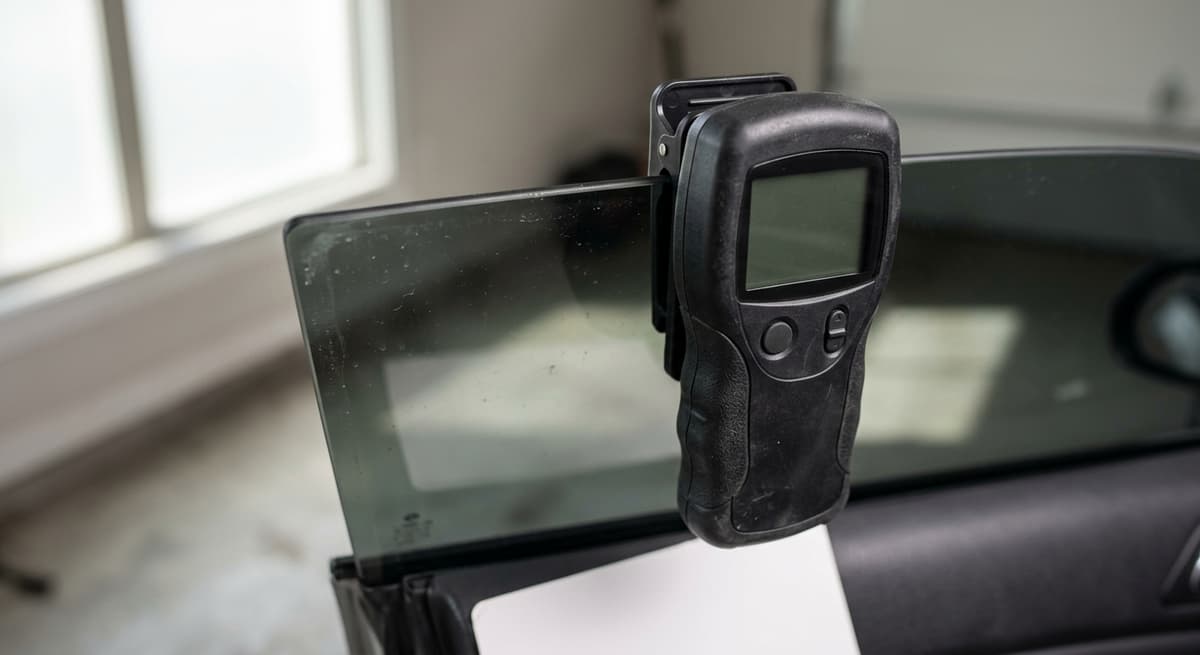
Washington State Patrol and local law enforcement use calibrated VLT meters (photometers) to measure the combined light transmission of the glass and any film applied to it. The meter reads the actual light passing through the installed tint; the film's label specification is not the deciding measurement.
Washington requires a business tinting windows for profit to affix a single sticker to the driver's door post, in the area adjacent to the manufacturer's identification tag. The sticker must list the business name and state tax identification number of the installer and certifies that the glazing application meets the chapter's standards for light transmission, reflectance, and placement. This label serves as the first evidence that a professionally installed film is legal; it also protects you if the tint was done by a licensed shop and you were not aware of any compliance issue.
No official measurement tolerance is specified in the statute. Because meters can vary slightly between devices, choosing a VLT that sits comfortably above 24% (for example, a 28% film) gives a useful margin of safety against borderline readings. Installers who work frequently with law enforcement understand this margin and will typically recommend it.
Penalties for illegal tint in Washington
Operating a vehicle with window tint that does not meet the 24% VLT minimum is a traffic infraction in Washington. The fine amount is set under Washington's standard infraction schedule, and for the driver it is not a criminal charge. You will typically receive a notice requiring correction of the equipment violation, and you may face a fine.

Installers and tint shops face criminal exposure under a separate statute. RCW 46.37.435(1) makes it a misdemeanor to knowingly install film sunscreening material in violation of RCW 46.37.430, and it defines installation to cover both the original application of the film and the fitting of vehicle windows that already have film applied. RCW 46.37.435(2) goes further: providing or receiving compensation with knowledge that the payment is for such an installation is a gross misdemeanor, which reaches the shop that takes the money and the customer who knowingly pays for illegal work. RCW 46.37.430(8) points to RCW 46.37.435 by name, so the two sections are read together. A person or business tinting windows for profit must also supply the driver's-door-post compliance sticker described above under RCW 46.37.430(5)(c).
Law enforcement may stop a vehicle when the tint appears visually darker than 24%. The stop is not classified as a pretextual stop under Washington law when the officer has a genuine belief the tint is non-compliant. Getting a citation corrected generally requires a reinspection showing the film was removed or replaced with a legal alternative.
If you want to tint your windows in Washington
Start by choosing a film that is rated at 24% VLT or higher on the specification sheet. Because meters measure the combined glass-and-film system, and factory glass already absorbs a small amount of light, many installers recommend selecting a film rated at 28% to 30% to be sure the final reading stays above 24%.
Choose an installer familiar with Washington's rules. A reputable shop will confirm the specific VLT and affix the required compliance sticker to the driver's door post, and issue a receipt showing the product used. Keep that paperwork in your vehicle along with the sticker in place, since those two items are your first line of defense at a traffic stop.
Do not choose films in red, gold, yellow, or black regardless of VLT rating; those colors are banned. Mirror-finish or highly reflective films are also off the table. If you have a qualifying medical condition, get the physician's written verification before the tint is installed so the installer knows which windows the exemption covers.
If you are buying a vehicle with existing tint, verify the VLT with a meter before purchase or get a written warranty from the seller. Tint installed in another state may not meet Washington's 24% standard, and you become responsible for compliance once you register the vehicle in Washington.
This article is general legal information, not legal advice. Window tint limits vary by state and change, and enforcement depends on local practice and your specific vehicle. For a definitive answer, check your state DMV or consult a local attorney.
Related pages
Washington drivers may also want to review Washington Windshield Mounting Restrictions, which covers rules on objects placed on or near the windshield.
More Washington Laws
Frequently Asked Questions
What is the legal tint in Washington State?
Washington requires all windows except the windshield to allow at least 24% VLT (visible light transmission). The 24% minimum applies to front side windows, back side windows, and the rear window. Hearses, limos, ambulances, collector vehicles, and multipurpose vehicles may use any darkness on windows behind the driver with dual mirrors.
How dark can my front windows be in Washington?
The darkest legal tint for front side windows in Washington is 24% VLT. A film rated at exactly 24% is the legal floor; anything darker would violate RCW 46.37.430. In practice, installers often recommend 28% to 30% to keep the measured combined reading comfortably above the minimum.
Is 20% tint legal in Washington?
No. A 20% VLT film is darker than Washington's 24% minimum and is illegal on the front side windows and the rear windows of standard passenger vehicles. It would only be legal on the back side or rear windows of qualifying special vehicles (hearses, limos, ambulances, collector vehicles, multipurpose vehicles) or under a valid medical exemption.
Can I get a medical exemption for window tint in Washington?
Yes. Washington allows a medical exemption for individuals with a documented medical condition requiring reduced light exposure. A licensed physician provides written verification, which you carry in the vehicle at all times. The exemption can cover any window, including front side windows, and allows darker than 24% VLT.
What is the penalty for illegal tint in Washington?
For the driver, non-compliant window tint is a traffic infraction under RCW 46.37.430(7), which typically results in a fine and a requirement to fix the equipment violation. Installers face criminal penalties under a separate statute: RCW 46.37.435(1) makes knowingly installing film in violation of RCW 46.37.430 a misdemeanor, and RCW 46.37.435(2) makes providing or receiving compensation for that installation a gross misdemeanor.
Is windshield tint legal in Washington?
No tinting film is allowed on the windshield in Washington below the AS-1 line. Under RCW 46.37.430(5)(e), any driver may apply a transparent strip along the top of the windshield, staying above the AS-1 line and within 6 inches of the top, with no physician verification required. A qualifying medical exemption supported by physician verification allows a greater degree of light reduction on that same top strip plus darker tint on the vehicle's other windows. A fully transparent UV-blocking film covering the entire windshield is also permitted because it does not darken visibility.
Do SUVs have different tint rules in Washington?
SUVs, vans, and trucks (classified as multipurpose vehicles) must still meet the 24% VLT minimum on their front side windows. However, behind the driver's seat, multipurpose vehicles may use any darkness on the back side windows and rear window as long as dual outside mirrors provide an unobstructed rearward view.
Updates
Corrected the penalties section: Washington law does impose criminal penalties for illegal tint installation, a misdemeanor under RCW 46.37.435(1) and a gross misdemeanor under RCW 46.37.435(2), and clarified that the 35% reflectance cap applies to windows other than the windshield.
Corrected the windshield section: Washington law lets any driver, not only those with a medical exemption, apply a transparent strip along the top 6 inches of the windshield under RCW 46.37.430(5)(e); the medical exemption under (5)(d) is a separate, broader allowance.
Independently fact-checked against the cited primary sources; governing law re-checked for recent changes
Corrected two windshield/sticker and penalty claims: RCW 46.37.430(5)(c) requires a single compliance sticker on the driver's door post (not one per window), and the statute's only penalty is a traffic infraction for operators, not a misdemeanor for installers.
Governing law re-checked for recent changes
Reviewed and approved by an editor
The Law Behind This Article
This article rests on the statutory provisions below, held in our own legal record and retrieved from the official source. Tap a section to read the operative text.
Revised Code of Washington
§ 46.37.430Safety glazing—Sunscreening or coloring.In forcecited in 3 of our articles
(1)(a) No person may sell any motor vehicle as specified in this title, nor may any motor vehicle as specified in this title be registered unless such vehicle is equipped with safety glazing material of a type that meets or exceeds federal standards under 49 C.F.R. Sec. 571.205. (b) The foregoing provisions apply to all passenger-type motor vehicles, including passenger buses and school buses, but in respect to trucks, including truck tractors, the requirements as to safety glazing material apply to all glazing material used in doors, windows, and windshields in the drivers' compartments of such vehicles except as provided by subsection (4) of this section.
Official text (excerpt) · last checked 2026-09-01 · Read the full text in our law library · Verify at app.leg.wa.gov
Cited in 1 court opinions in our collectionLatest citing opinion in our collection: 2019
Opinions citing this section in our collection:
- United States v. Jose Miranda-Jimenez (Court of Appeals for the Ninth Circuit 2019)“…le’s windows were likely improperly tinted in violation of Wash. Rev. Code § 46.37.430(5)(a). The officer’s mistake as to the…”
Identified automatically from the court opinions citing this section — not a ranking of which case controls.
Also relied on in: Window Tint Laws by State (2026): Legal VLT Limits, Washington Windshield Mounting Laws (2026 Guide)
§ 46.37.435Unlawful installation of safety glazing or film sunscreening material, penalty—Unlawful purchase or sale of safety glazing or film sunscreening material installation services, penalty.In force
(1) A person is guilty of unlawful installation of safety glazing or film sunscreening material if he or she knowingly installs safety glazing or film sunscreening material in violation of RCW 46.37.430. Installation includes both the original application of safety glazing or film sunscreening material and the installation of vehicle windows which have already had safety glazing or film sunscreening material applied. Unlawful installation of safety glazing or film sunscreening material is a misdemeanor. (2) A person is guilty of unlawful purchase or sale of safety glazing or film sunscreening material installation services if he or she provides or receives compensation with the knowledge that such compensation is for the purpose of installing safety glazing or film sunscreening material in violation of RCW 46.37.430. Installation includes both the original application of safety glazing or film sunscreening material and the installation of vehicle windows which have already had safety glazing or film sunscreening material applied. Unlawful purchase or sale of safety glazing or film sunscreening material installation services is a gross misdemeanor.
Official text (excerpt) · last checked 2026-07-29 · Read the full text in our law library · Verify at app.leg.wa.gov
Search our full record of US law — 2.1 million sections, every state + federal →