
South Dakota
South Dakota Window Tint Laws (2026): Legal VLT Limits
Independently fact-checked against primary sources (last audited August 18, 2026). · Reviewed by the RecordingLaw editorial team. · Law checked current as of August 18, 2026. · 1 primary source cited on this page. How we verify our legal content

South Dakota requires front side windows to allow at least 35% visible light transmission (VLT), while back side windows and the rear window must allow at least 20% VLT. Both statutes carry a nine percent enforcement tolerance, which runs in one direction only: it is an allowance below the legal floor, not a margin above it.
What is the legal tint limit in South Dakota?
South Dakota sets its legal tint limits under SDCL 32-15-2.4 (front side windows) and SDCL 32-15-2.5 (rear windows). Front side windows must let in at least 35% of visible light. Back side windows and the rear window must each let in at least 20% of visible light. A higher VLT percentage means lighter tint; a lower VLT percentage means darker tint. So a window rated at 35% lets in more light than one rated at 20%.
South Dakota does not create a separate rule for sedans versus multipurpose vehicles (SUVs, vans, trucks) on the windows behind the driver. The 20% VLT floor applies to all vehicle types on the back side and rear glass.
| Window | Minimum VLT | Applies To |
|---|---|---|
| Front side windows | 35% | All vehicles |
| Back side windows | 20% | All vehicles |
| Rear window | 20% | All vehicles |
| Windshield | Film no lower than the AS-1 line or the sun visor's lowest point, and no device that obstructs the driver's clear view | All vehicles |
One notable feature of South Dakota law is its enforcement tolerance. Both SDCL 32-15-2.4 and SDCL 32-15-2.5 prohibit tint below their stated limits "with an enforcement tolerance of nine percent." That tolerance runs one way. It gives enforcement room below the statutory floor, so as a practical matter a front side window draws a citation when it reads below about 26%, and a rear window when it reads below about 11%. A reading above the floor is lighter than the law requires and is never a violation, so there is no upper edge to the tolerance. The legal standards remain 35% and 20%; the nine percent is an enforcement allowance, not permission to install darker film.
Windshield tint rules in South Dakota
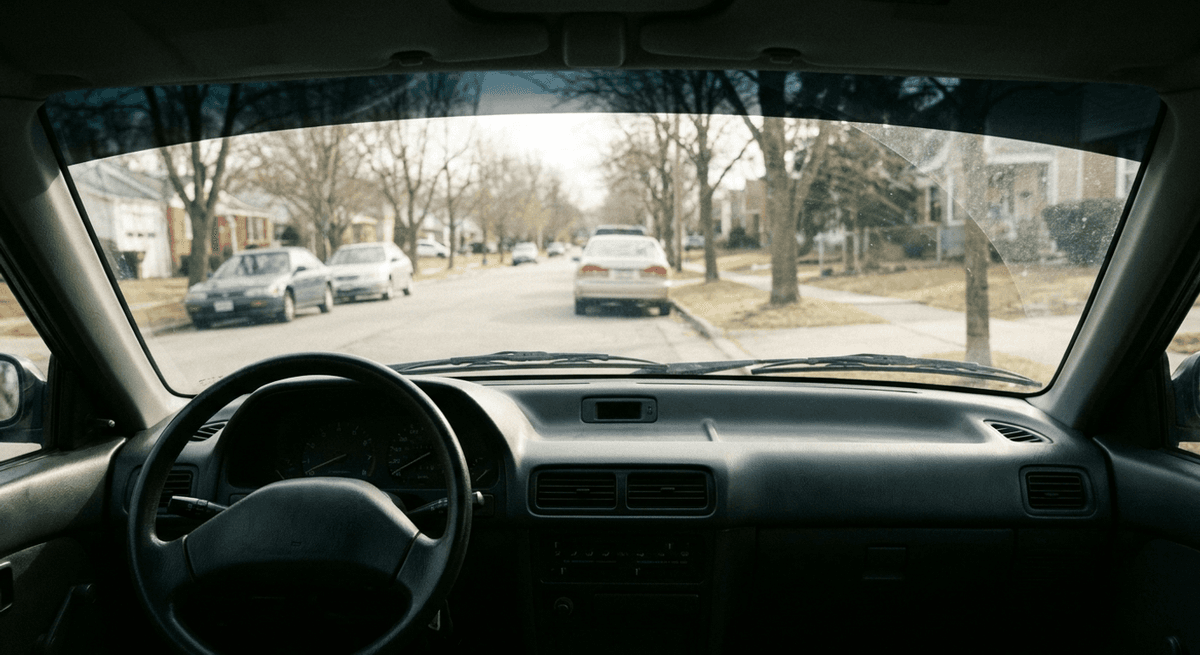
SDCL 32-15-2.9 governs the windshield. No sunscreening device may be placed on or affixed to a windshield so as to obstruct or reduce the driver's clear view through the windshield, and no film may extend downward beyond the AS-1 line or more than the lowest point of the sun visor. In practice that is the sun visor or eyebrow strip along the top of the glass that most states permit. No film may run below that boundary onto the main driving field of the windshield.
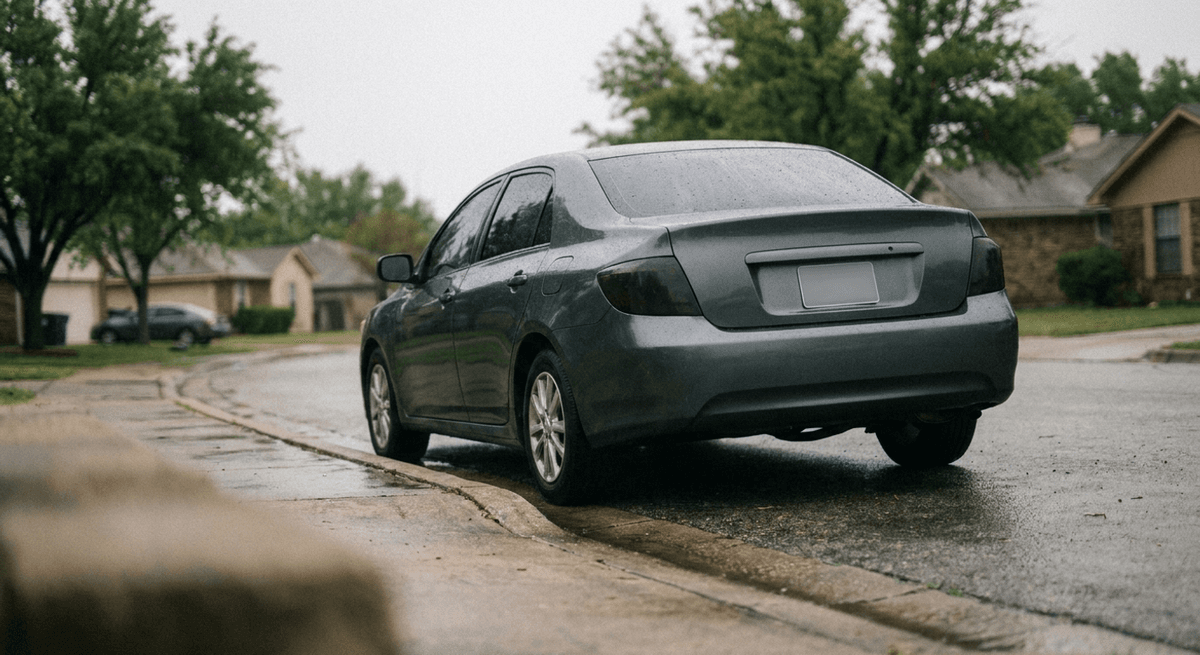
South Dakota's window tint statutes (SDCL 32-15-2.4 through 32-15-2.10) do not set a separate reflectivity percentage the way some states do. They are not silent on mirrored glass, though. Both 32-15-2.4 and 32-15-2.5 name one-way glass alongside film and other applications as regulated equipment, and 32-15-2.9 bars any windshield sunscreening device placed so as to obstruct or reduce the driver's clear view. A mirrored or metallic-look film is therefore not automatically permitted, and one that interferes with the driver's view through the windshield is prohibited.
Drivers who want a UV-blocking film on the windshield for sun protection should make sure it stays above the AS-1 line and does not extend below the sun visor's lowest point. Films marketed as clear or barely visible that block UV light while maintaining at least the required VLT in the side and rear windows are generally acceptable.
Medical exemptions in South Dakota
South Dakota's window tint statutes do not set out a medical exemption. Sections 32-15-2.4 through 32-15-2.10 cover the VLT limits, definitions, manufacturer certification, the windshield rule, and meter testing, and none of them creates a physician-certification process or an in-vehicle documentation procedure that would allow darker tint.
If you have a documented medical condition (such as lupus, photosensitivity, or a condition that makes exposure to sunlight medically dangerous), consult your physician and contact the South Dakota Department of Public Safety or a licensed South Dakota attorney before installing tint that exceeds the standard legal limits. Some law enforcement agencies will exercise discretion with supporting medical documentation, but without a statutory exemption on the books, that protection is not guaranteed.
How tint is measured and certified in South Dakota
Law enforcement in South Dakota uses a photoelectric VLT meter to test window tint during a traffic stop. The meter sends a beam of light through the glass and measures the percentage that passes through. Under SDCL 32-15-2.10, that testing equipment must be used according to the meter manufacturer's procedure, and the officer must note the meter's serial number and the date the meter was certified on any citation written under the tint sections. The nine percent enforcement tolerance then applies below the limit, so a front side window is cited on a reading under roughly 26%.
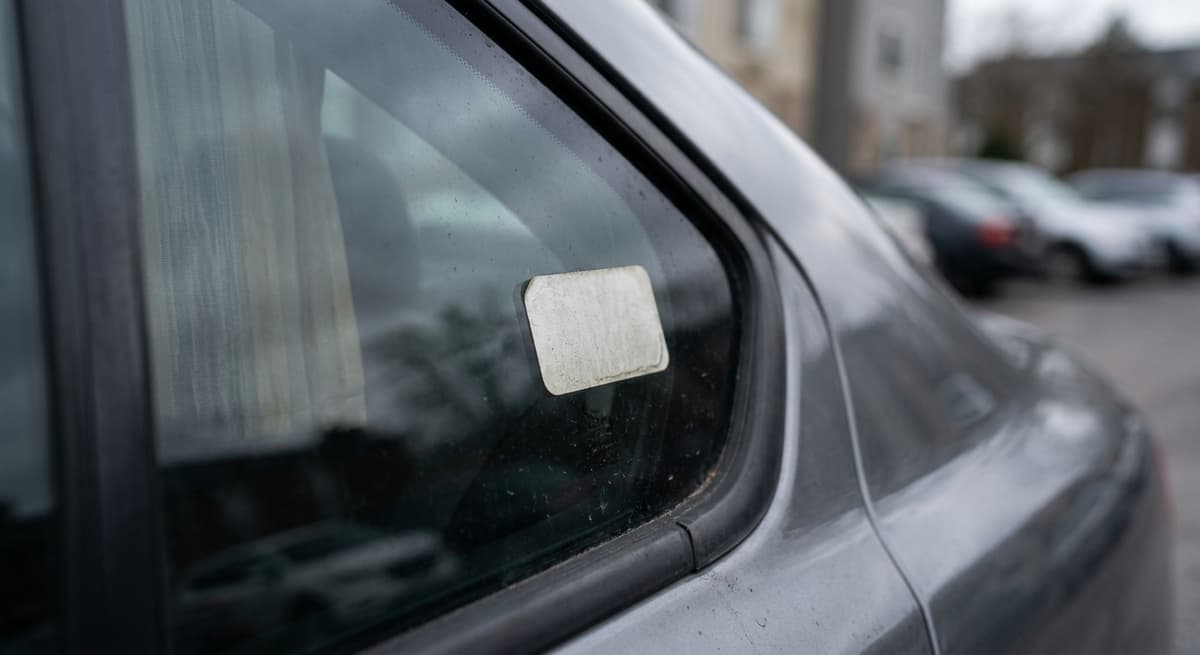
South Dakota law does not require a physical compliance sticker on each tinted window. Instead, SDCL 32-15-2.7 requires each film manufacturer to certify to the South Dakota Department of Public Safety that its film meets the state's light-transmission standards. Ask your installer which manufacturer's certified film they are using, and keep any documentation from your installer that records the VLT rating of the film, as that paper trail can be helpful if you receive a citation and want to contest it.
A meter reading is the practical first line of verification during a stop, since there is no sticker for an officer to check. The enforcement tolerance does not mean you can install film below the legal limit and rely on the tolerance to protect you.
Penalties for illegal tint in South Dakota
Violating South Dakota's window tint law is classified as a Class 2 misdemeanor under SDCL 32-15-2.4 (front side windows) and 32-15-2.5 (rear windows). A Class 2 misdemeanor in South Dakota carries a potential sentence of up to 30 days in county jail and a fine of up to $500. In practice, tint violations are typically resolved with a fine and a requirement to remove or replace the film, not with jail time. However, the misdemeanor classification means the violation creates a criminal record rather than just a traffic infraction.
If you receive a citation for illegal tint, you generally have two options: pay the fine (which constitutes a guilty plea in most South Dakota jurisdictions) or contest the citation at a hearing. If you contest it, documentation of the film's VLT rating from your installer and a current meter reading can support your case, and SDCL 32-15-2.10 requires the citation itself to identify the meter used and the date it was certified.
Repeat violations are still separate misdemeanor charges, so persistent non-compliance can accumulate.
If you want to tint your windows in South Dakota
South Dakota's rules are straightforward once you know the numbers. Here is what to do before having tint installed:
Choose a VLT rating at or above the legal limit with some buffer. For front side windows, 35% is the legal minimum. Consider installing at 40% to leave a margin above the floor for meter and installation variation. For back side and rear windows, the 20% minimum allows fairly dark tint. A 20% or 25% film is very dark but legal if properly installed.
Use a reputable, licensed installer who is familiar with South Dakota law. A good installer will know the correct VLT limits and use film from a manufacturer that has certified compliance with the state's light-transmission standards under SDCL 32-15-2.7.
Keep a copy of your installer's receipt or certificate showing the VLT percentage of the film. Store it in the glove box along with your registration and insurance. If you are stopped, presenting this documentation immediately demonstrates good faith compliance.
If you are considering tint for medical reasons and the standard limits are not dark enough to address your condition, contact a South Dakota attorney or the Department of Public Safety before proceeding with a non-compliant installation.
This article is general legal information, not legal advice. Window tint limits vary by state and change, and enforcement depends on local practice and your specific vehicle. For a definitive answer, check your state DMV or consult a local attorney.
South Dakota also regulates what you can mount on your windshield and what can obstruct your view from inside the vehicle. See South Dakota Windshield Mounting Restrictions for those rules.
More South Dakota Laws
Frequently Asked Questions
What is the legal tint in South Dakota?
South Dakota requires front side windows to allow at least 35% VLT. Back side windows and the rear window must allow at least 20% VLT, both under SDCL 32-15-2.4 and 32-15-2.5.
How dark can my front windows be in South Dakota?
The darkest legal front side window tint in South Dakota is 35% VLT. Tint that allows less than 35% of visible light through is illegal. Remember that lower VLT percentages are darker, so 20% is darker than 35%.
Is 20% tint legal in South Dakota?
Yes, 20% tint is legal on back side windows and the rear window in South Dakota. It is NOT legal on front side windows, where the minimum is 35%.
Is 35% tint legal in South Dakota?
Yes. 35% VLT is exactly the legal minimum for front side windows in South Dakota. Installing slightly lighter film, around 40%, leaves a margin above the floor for meter and installation variation.
Can I get a medical exemption for window tint in South Dakota?
South Dakota's window tint statutes do not set out a medical exemption procedure. If you have a medical need for darker tint, consult a South Dakota attorney or contact the Department of Public Safety before installing non-compliant film.
What is the penalty for illegal tint in South Dakota?
Illegal tint in South Dakota is a Class 2 misdemeanor, which can carry a fine of up to $500 and up to 30 days in county jail. In practice, most cases result in a fine and a requirement to remove the tint.
Is windshield tint legal in South Dakota?
SDCL 32-15-2.9 bars any sunscreening device placed on the windshield so as to obstruct or reduce the driver's clear view, and no film may extend downward beyond the AS-1 line or more than the lowest point of the sun visor. Film below that boundary on the main windshield is illegal.
What is the nine percent tint tolerance in South Dakota?
SDCL 32-15-2.4 and 32-15-2.5 prohibit tint below their limits with an enforcement tolerance of nine percent. It is an allowance below the floor rather than a plus-or-minus meter variance, so enforcement turns on readings below roughly 26% in front and 11% in the rear. The legal minimums are still 35% and 20%.
Updates
Corrected the nine percent figure in South Dakota's tint statutes: it is a one-directional enforcement tolerance below the 35% and 20% limits, not a plus-or-minus meter tolerance, and restated the windshield rule in the terms SDCL 32-15-2.9 actually uses.
Corrected the cited statute (SDCL 32-15-2.4/2.5, not the nonexistent 32-15-3.2), fixed the windshield tint boundary to match the actual sun-visor rule, removed an unsupported reflective/mirrored tint ban, and corrected the film-certification requirement from a physical installer sticker to a manufacturer-to-DPS filing.
Independently fact-checked against the cited primary sources; governing law re-checked for recent changes
Reviewed and approved by an editor
The Law Behind This Article
This article rests on the statutory provisions below, held in our own legal record and retrieved from the official source. Tap a section to read the operative text.
South Dakota Codified Laws, Chapter 32-15: VEHICLE AND ACCESSORY SPECIFICATIONS
§ 32-15-2.4One-way glass, adhesive film, or other glaze in windshield or front side windows prohibited--Violation as misdemeanor.In forcecited in 2 of our articles
No motor vehicle required to be registered in this state and which is operated on the highways of this state may be equipped with one-way glass or any adhesive film or other glaze or application on or in the front windshield, side wing vents, or side windows on either side forward of or adjacent to the operator's seat, which reduces the light transmittance of such windows to the combined level below thirty-five percent, with an enforcement tolerance of nine percent. A violation of this section is a Class 2 misdemeanor.
Official text (excerpt) · last checked 2026-09-01 · Read the full text in our law library · Verify at sdlegislature.gov
Also relied on in: South Dakota Windshield Mounting Laws (2026 Guide)
§ 32-15-2.5One-way glass, adhesive film, or other glaze in rear window prohibited--Violation as misdemeanor.In forcecited in 2 of our articles
No motor vehicle required to be registered in this state and which is operated on the highways of this state may be equipped with one-way glass, adhesive film, or other glaze in the rear windows behind the operators seat that reduces light transmission below twenty percent, with an enforcement tolerance of nine percent. A violation of this section is a Class 2 misdemeanor.
Official text (excerpt) · last checked 2026-07-30 · Read the full text in our law library · Verify at sdlegislature.gov
§ 32-15-2.9Sunscreening devices on windshield prohibited--Extension of film limited.In forcecited in 2 of our articles
No sunscreening devices may be placed on or affixed to a windshield so as to obstruct or reduce the driver's clear view through the windshield. No film may be extended downward beyond the AS-1 line or more than the lowest point of the sun visor of the motor vehicle. A violation of this section is a Class 2 misdemeanor.
Official text (excerpt) · last checked 2026-07-30 · Read the full text in our law library · Verify at sdlegislature.gov
§ 32-15-2.7Manufacturer certification of compliance with light transmission specifications.In forcecited in 2 of our articles
Each manufacturer of film, glaze, or other application for a motor vehicle windshield or window shall certify to the Department of Public Safety that the film, glaze, or application the manufacturer makes or installs complies with the light transmission specifications of §§ 32-15-2.4 and 32-15-2.5.
Official text (excerpt) · last checked 2026-07-30 · Read the full text in our law library · Verify at sdlegislature.gov
§ 32-15-2.10Compliance with meter manufacturer's testing procedure--Serial number and certification date noted on citation for violation.In force
Any testing equipment used to enforce § 32-15-2.4 or 32-15-2.5 shall be used in compliance with the meter manufacturer's testing procedures. The law enforcement officer shall note on any citation for a violation of § 32-15-2.4 or § 32-15-2.5 the serial number of the meter used and the date the meter was certified.
Official text (excerpt) · last checked 2026-07-30 · Read the full text in our law library · Verify at sdlegislature.gov
Search our full record of US law — 2.1 million sections, every state + federal →
Sources and References
- South Dakota Codified Laws 32-15-2.4 and 32-15-2.5 (Window Tint)(sdlegislature.gov).gov
- SDCL 32-15-2.4 (front windshield and side windows; 35% with an enforcement tolerance of nine percent)(sdlegislature.gov)
- SDCL 32-15-2.5 (rear windows; 20% with an enforcement tolerance of nine percent)(sdlegislature.gov)
- SDCL 32-15-2.9 (sunscreening devices on windshield prohibited; extension of film limited)(sdlegislature.gov)
- SDCL 32-15-2.7 (manufacturer certification of compliance with light transmission specifications)(sdlegislature.gov)
- SDCL 32-15-2.10 (meter testing procedure; serial number and certification date noted on citation)(sdlegislature.gov)