
South Carolina
South Carolina Window Tint Laws (2026): Legal VLT Limits
Independently fact-checked against primary sources (last audited August 18, 2026). · Reviewed by the RecordingLaw editorial team. · Law checked current as of August 18, 2026. · 1 primary source cited on this page. How we verify our legal content

South Carolina requires front side windows to allow at least 27% of visible light through on all vehicle types. Passenger cars and pickup trucks must also meet the 27% minimum on back side and rear windows, while SUVs, vans, and other multipurpose passenger vehicles can use any non-reflective darkness on the windows behind the driver. Red, yellow, and amber tint are banned statewide.
What is the legal tint limit in South Carolina?
South Carolina sets a 27% VLT minimum on the front side windows for every vehicle class. Whether you drive a sedan, an SUV, a pickup, or a van, the front side glass must transmit at least 27% of visible light.
The distinction between sedans and multipurpose vehicles comes into play on the back glass. For passenger cars (sedans) and pickup trucks, the 27% rule applies all the way around: front side, back side, and rear window all must let through at least 27% of light. For multipurpose passenger vehicles such as SUVs and vans, the windows behind the driver can be any darkness, as long as the film is non-reflective; pickup trucks do not get this exemption.
A brief explanation of how VLT works: visible light transmission is the percentage of visible light a window lets through. A higher VLT percentage means a lighter, more transparent look. A lower percentage means a darker appearance. South Carolina's 27% is moderately dark and is among the more permissive front-window limits in the southeastern United States.
| Window | Passenger Car (Sedan) / Pickup Truck | Multipurpose Vehicle (SUV/Van) |
|---|---|---|
| Front side | 27% min VLT | 27% min VLT |
| Back side | 27% min VLT | Any darkness (non-reflective) |
| Rear window | 27% min VLT | Any darkness (non-reflective) |
| Windshield | Above AS-1 line only (none if the AS-1 line is not visible) | Above AS-1 line only (none if the AS-1 line is not visible) |
Windshield tint rules in South Carolina
South Carolina permits non-reflective tint on the windshield only above the AS-1 line. The AS-1 line is marked directly on most windshields and typically falls about 5 to 6 inches from the top of the glass. Tint may not extend below that line onto the main viewing area of the windshield. Subsection (B) adds a second rule that changes the answer on some vehicles: if the AS-1 line is not visible, no sunscreening device may be applied to the windshield at all.

All tint in South Carolina must be non-reflective, including whatever strip you add to the windshield. Mirrored or metallic film is prohibited on any window. South Carolina also bans specific colors outright: red, yellow, and amber tinted film may not be used on any vehicle window.
These color restrictions apply across all windows, not just the windshield. A film that gives glass a reddish or yellow-amber cast would violate the law regardless of its VLT percentage.
Medical exemptions
South Carolina's medical exemption runs with the vehicle's registration, not with whoever happens to be riding in it. It covers a motor vehicle registered in this state in the name of a person, or that person's legal guardian, who holds an affidavit signed by a physician or an optometrist licensed to practice in South Carolina stating that the person has a physical condition making the otherwise non-compliant sunscreening material necessary. A frequent passenger who is not the registered owner, or that owner's ward, does not bring the vehicle within the exemption.
The affidavit itself is the required document. It must be kept in the vehicle at all times during operation, produced on request of a law enforcement officer, and updated every two years.
If you have a condition such as lupus, severe photosensitivity, or a serious ocular disease that requires protection from sunlight, begin the exemption process before installing darker film. Operating a vehicle with non-compliant tint and no qualifying affidavit exposes you to fines and potentially a misdemeanor charge.
How tint is measured and certified
Tint darkness is measured using a VLT meter, a portable device that reads how much visible light passes through the glass. Law enforcement officers can use one during a traffic stop, and installers typically use them to verify compliance before finishing a job.
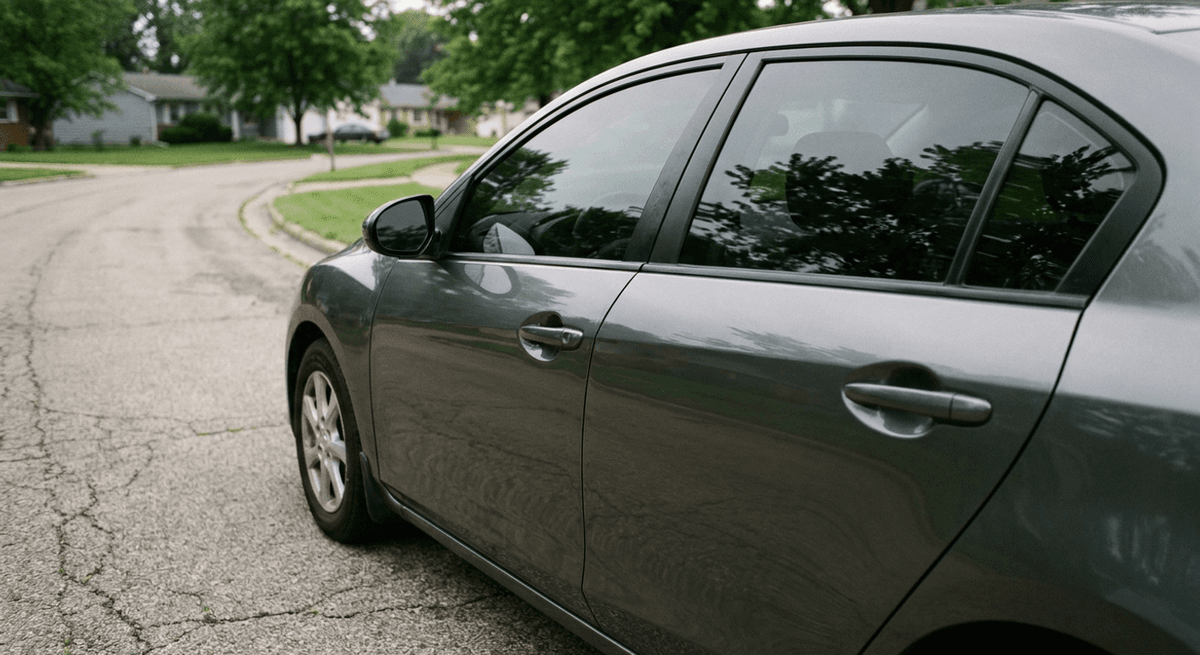
South Carolina's statute does not specify a measurement tolerance. There is no written buffer above or below the 27% minimum, so a reading that comes in under 27% on the front side glass is a potential violation.
South Carolina requires a certificate of compliance for tinted windows. This certificate must be affixed to each tinted window in the form that the Department of Public Safety prescribes. This is a physical sticker or label on the glass, not just paperwork in your glove box. Make sure your installer provides and applies the required compliance documentation.
Vehicles with out-of-state registration and tint that meets their home state's rules may face scrutiny in South Carolina if the film does not meet the 27% front-side minimum. South Carolina enforces its own standards for vehicles operating on its roads.
Penalties for illegal tint in South Carolina
A violation of South Carolina's window tint law is a misdemeanor offense under S.C. Code 56-5-5015. Under subsection (K), a person who owns or operates a motor vehicle in violation of the section is guilty of a misdemeanor triable in magistrate's court and, upon conviction, must be fined not more than $200 or imprisoned not more than 30 days. The statute is written in the alternative, so a court imposes the fine or the jail term, not both. This is a more serious classification than the civil infraction approach used in many other states.
The misdemeanor classification means the offense can appear on your criminal record. A separate and in some ways harsher penalty covers the certificate-of-compliance duties in subsections (E) and (G): a consumer who violates them must be fined not less than $200 or imprisoned not more than 30 days for each offense, and a professional window tinter must be fined not less than $1,000 or imprisoned not more than 30 days, or both, for each offense. South Carolina's enforcement is real, particularly during vehicle stops for other reasons.
The practical resolution is typically to remove the illegal film and bring the vehicle into compliance. But because this is a misdemeanor, it is better to avoid the violation entirely by choosing a legal VLT from the start.
If you want to tint your windows in South Carolina
South Carolina's 27% front-window minimum is workable for drivers who want some privacy and heat reduction. Here is how to navigate the process correctly:

First, identify your vehicle type. If you drive an SUV or van, you have full flexibility on the back side and rear windows. Pickup trucks do not get this exemption and must meet the 27% minimum on all windows, same as a sedan. Your front side windows must still meet 27% on any vehicle.
Second, choose a film rated at 27% VLT or higher for the front side windows. Many popular films in the 30-35% range are legal. Confirm the exact VLT rating with your installer before purchase.
Third, ensure your installer affixes the required compliance certificate to each tinted window. This is a legal requirement in South Carolina, not just a best practice. Keep the certificate in place throughout the life of the tint.
Fourth, avoid any film with a red, yellow, or amber color cast. Even if the VLT passes the 27% test, a prohibited color makes the film illegal. Stick to standard neutral shades such as gray, charcoal, or bronze.
Fifth, if you have a qualifying medical condition and the vehicle is registered in your name or your legal guardian's, have a physician or optometrist licensed in South Carolina sign the required affidavit before having darker film installed. Carry the affidavit in the vehicle at all times and renew it every two years.
This article is general legal information, not legal advice. Window tint limits vary by state and change, and enforcement depends on local practice and your specific vehicle. For a definitive answer, check your state DMV or consult a local attorney.
For rules on what you can mount on your windshield, see South Carolina Windshield Mounting Restrictions.
More South Carolina Laws
Frequently Asked Questions
What is the legal tint in South Carolina?
South Carolina requires front side windows to allow at least 27% of visible light through on all vehicle types. Passenger cars and pickup trucks must also meet the 27% minimum on back side and rear windows. SUVs, vans, and other multipurpose passenger vehicles can use any darkness (non-reflective) on windows behind the driver, an exemption pickup trucks do not get. Red, yellow, and amber tint colors are banned.
How dark can my front windows be in South Carolina?
Front side windows must transmit at least 27% visible light. This applies to sedans, SUVs, trucks, and vans alike. Many films in the 30-35% range are legal on front windows. Going darker than 27% on the front glass is a violation.
Is 20% tint legal in South Carolina?
No. 20% tint on the front side windows is not legal in South Carolina. The minimum VLT for front glass is 27%. On the back side and rear windows of an SUV or van, any darkness including 20% is permitted as long as the film is non-reflective, but pickup trucks do not get this exemption and must also meet the 27% minimum on those windows.
Can I get a medical exemption for window tint in South Carolina?
Yes, if the vehicle is registered in the name of the person with the medical condition or that person's legal guardian. A physician or optometrist licensed in South Carolina must sign an affidavit documenting the medical need. The affidavit itself, not a separate DPS-prescribed certificate, must be carried in the vehicle and produced on request, and it must be updated every two years.
What is the penalty for illegal tint in South Carolina?
Illegal window tint is a misdemeanor under S.C. Code 56-5-5015. Under subsection (K), an owner or operator convicted of the offense must be fined not more than $200 or imprisoned not more than 30 days. The statute reads in the alternative, so it is the fine or the jail term, not both. This is more serious than a civil infraction and can appear on your record.
Is windshield tint legal in South Carolina?
Windshield tint is permitted only above the AS-1 line, which is roughly the top 5 to 6 inches of the windshield. The film must be non-reflective. Tint below the AS-1 line is not permitted, and mirrored or metallic film is prohibited. If the AS-1 line is not visible on the windshield, no sunscreening device may be applied to the windshield at all.
Do SUVs have different tint rules in South Carolina?
Yes, for SUVs and vans, but not for pickup trucks. SUVs and vans can use any level of non-reflective darkness on the windows behind the driver, while pickup trucks must meet the same 27% VLT minimum on those windows as a sedan. Front side windows still require 27% VLT minimum on all vehicle types, including SUVs and pickups. Mirrored tint and red, yellow, or amber colors are prohibited on all vehicles.
Updates
Corrected the tint penalty to match the statute (a fine or up to 30 days, not both), tied the medical exemption to the vehicle's registered owner and its physician or optometrist affidavit rather than an invented exemption certificate, added the rule that no windshield tint is allowed when the AS-1 line is not visible, and replaced an unsupported per-window charging claim with the actual certificate-of-compliance penalties.
Independently fact-checked against the cited primary sources; governing law re-checked for recent changes
Corrected two errors: pickup trucks were wrongly grouped with SUVs/vans as exempt from the 27% VLT floor on rear windows (S.C. Code 56-5-5015(I) applies the floor to pickups, exempting only other trucks, buses, and multipurpose passenger vehicles like SUVs/vans), and the medical exemption requirement was corrected from an invented DPS certificate form to the statute's actual physician-or-optometrist affidavit, renewed every two years.
Corrected FAQ Q1 (What is the legal tint in South Carolina?), which still grouped pickup trucks with SUVs and vans as exempt from the 27% VLT floor on rear windows after the wave-3 fix corrected the rest of the page; S.C. Code 56-5-5015(I) applies the 27% floor to pickup trucks and reserves the any-darkness exemption for SUVs, vans, and other multipurpose passenger vehicles.
Governing law re-checked for recent changes
Reviewed and approved by an editor
The Law Behind This Article
This article rests on the statutory provisions below, held in our own legal record and retrieved from the official source. Tap a section to read the operative text.
South Carolina Code of Laws, Title 56: MOTOR VEHICLES
§ 56-5-5015Sunscreen devicesIn forcecited in 2 of our articles
(A) No person may operate a motor vehicle that is required to be registered in this State on any public highway, road, or street that has a sunscreen device on the windshield, the front side wings, and side windows adjacent to the right and left of the driver and windows to the rear of the driver that do not meet the requirements of this section. If no after-factory installed sunscreen device has been added to the window surface, the provisions of this section regarding light transmittance do not apply. (B) A sunscreening device must be nonreflective and may not be red, yellow, or amber in color. A sunscreening device may be used only along the top of the windshield and may not extend downward beyond the AS1 line. If the AS1 line is not visible, no sunscreening device may be applied to the windshield. (C) A single sunscreening device may be installed on the side wings or side windows, or both, located at the immediate right and left of the driver and the side windows behind the driver.
Official text (excerpt) · last checked 2026-09-01 · Read the full text in our law library · Verify at scstatehouse.gov
Cited in 2 court opinions in our collectionLatest citing opinion in our collection: 2019
Opinions citing this section in our collection:
- United States v. Johnson (Court of Appeals for the Fourth Circuit 2001)“…d full paragraph, line 10 -- a section symbol is added to “S.C. Code Ann. § 56-5-5015.” On page 4, first paragraph, lin…”
- United States v. Joshua Davis (Court of Appeals for the Fourth Circuit 2019)“…ns noticed that Davis’s windows were tinted in violation of S.C. Code Ann. § 56-5-5015(E) and initiated a traffic stop. He dir…”
Identified automatically from the court opinions citing this section — not a ranking of which case controls.
Also relied on in: South Carolina Windshield Mounting Laws (2026 Guide)
Search our full record of US law — 2.1 million sections, every state + federal →
Sources and References
- S.C. Code Ann. Section 56-5-5015 (Window Tinting)(scstatehouse.gov).gov