
Pennsylvania
Pennsylvania Window Tint Laws (2026): Legal VLT Limits
Independently fact-checked against primary sources (last audited August 18, 2026). · Reviewed by the RecordingLaw editorial team. · Law checked current as of August 8, 2026. · 10 primary sources cited on this page. How we verify our legal content
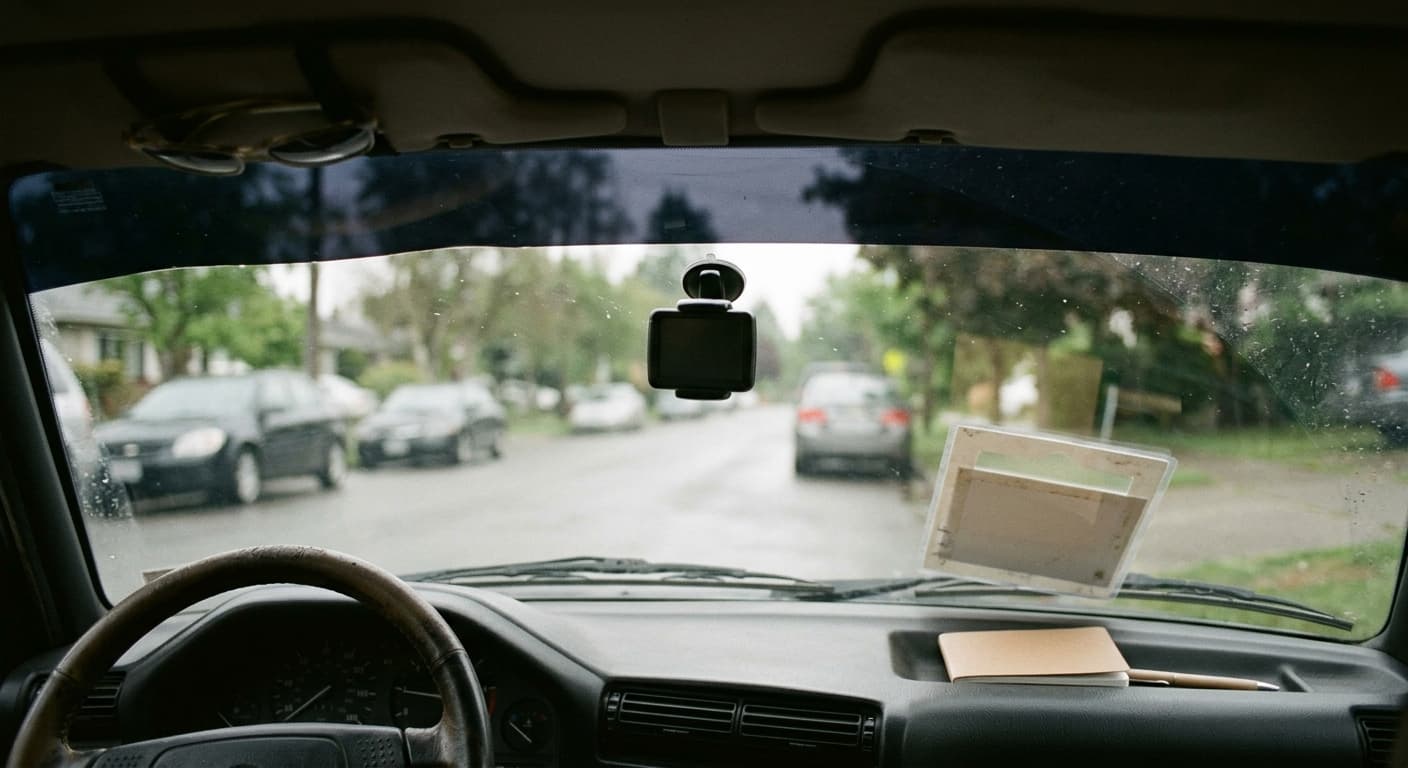
Pennsylvania requires front and back side windows on passenger cars to allow at least 70% Visible Light Transmission, effectively matching factory-clear glass and leaving almost no room for aftermarket tinting. Trucks and multipurpose vehicles (SUVs and vans) face no VLT restriction on the windows behind the driver.
What is the legal tint limit in Pennsylvania?
Pennsylvania is among the most restrictive states in the country for window tint. For passenger cars, every side window and the rear window must allow at least 70% VLT. A higher VLT% is lighter; a lower VLT% is darker. Since most factory-installed automotive glass already sits right around the 70% mark, the practical effect is that any additional aftermarket darkening film is off the table for passenger car side and rear windows.
For trucks and multipurpose vehicles (SUVs, vans, and full-size pickups), the 70% rule applies to the front side windows just as it does for sedans. But the windows behind the driver and the rear window face no VLT requirement for trucks and multipurpose vehicles, provided they have the required dual outside mirrors. This is the key exception that gives SUV and truck owners flexibility.
| Window Position | Passenger Car | Truck / Multipurpose Vehicle |
|---|---|---|
| Front side windows | 70% VLT minimum | 70% VLT minimum |
| Back side windows | 70% VLT minimum | No requirement |
| Rear window | 70% VLT minimum (1998 and newer); VESC-20 labeled material (pre-1998) | No requirement |
| Windshield | Transparent material, top 3 inches only, outside the AS-1 area | Transparent material, top 3 inches only, outside the AS-1 area |
Two details behind that table are easy to miss. First, the pre-1998 passenger car rear window is governed by a labeling rule rather than a percentage: Table X assigns those vehicles a VESC-20 requirement, meaning the material must carry a label, permanently installed between the film and the glazing, containing the manufacturer name or a registration number and the statement "Complies with VESC-20." Second, under 67 Pa. Code 175.264, using a sun screening device requires right and left outside rearview mirrors with a minimum reflective surface of 19.5 square inches each, unless the material is applied only above the AS-1 portion of the windshield.
Pennsylvania's rules are written entirely in terms of light transmittance. Neither 75 Pa.C.S. 4524 nor 67 Pa. Code Chapter 175, including Table X and the PennDOT window tint fact sheet, sets a reflectance limit or separately bans mirrored or metallic film, so a film is judged against the VLT figures above rather than against a reflectivity cap.
Windshield tint rules in Pennsylvania
Pennsylvania permits material along the top edge of the windshield only under the conditions in 67 Pa. Code 175.263(a): the products or materials must be transparent, they must not encroach upon the AS-1 portion of the windshield as provided by FMVSS No. 205, and they must be no more than 3 inches from the top of the windshield. Below that narrow band, the windshield must allow at least 70% VLT.

Because the regulation permits only transparent material at the top edge, a darkening strip is not what the rule describes, even a light one. Spray-on tints and any opaque or colored materials on the windshield below the 3-inch line are not permitted either.
The AS-1 constraint is separate from the 3-inch measurement, and both have to be satisfied. AS-1 refers to the marked portion of the windshield under FMVSS No. 205, and material may not encroach on it. There is also a knock-on requirement worth knowing before you install anything: under 67 Pa. Code 175.264, a vehicle using a sun screening device must have right and left outside rearview mirrors of at least 19.5 square inches of reflective surface each, unless the material is applied only above the AS-1 portion of the windshield.
Medical exemptions
Pennsylvania allows medical exemptions under 75 Pa.C.S. 4524 and 67 Pa. Code 175.265. To obtain one, a licensed physician or optometrist must provide a medical certification of need due to a disability, and PennDOT determines in consultation with its Medical Advisory Board that the use is justified. Conditions commonly raised include lupus and other photosensitivity disorders and post-surgical eye conditions.
One limit catches most applicants by surprise: a Pennsylvania medical exemption does not authorize dark tint. Under 67 Pa. Code 175.265(b)(2), an application for a certificate of exemption "will be granted only for colorless sun screening device or other material," and 175.265(d) describes the certificate as authorizing "a colorless sun screening device or other material which filters ultraviolet light." PennDOT's fact sheet says the same thing: medical exemptions are available for colorless window tint products that filter incoming ultraviolet light. If you are expecting a medical exemption to let you run darker film, it will not.
You apply to PennDOT for the certificate of exemption. Unlike states where you simply keep a doctor's note in the car, Pennsylvania requires an actual state-issued exemption certificate. That certificate must be carried in the vehicle at all times and presented to a law enforcement officer upon request. Without the PennDOT certificate in the vehicle, the material is not protected even if you have a doctor's note.
The exemption is issued for one specific vehicle, not for the person. The application must describe the vehicle by make, year, model and vehicle identification number, and under both 67 Pa. Code 175.265(e) and 75 Pa.C.S. 4524(e)(5) the certificate is void upon the sale or transfer of that vehicle. Before a sale, it is the owner's responsibility to remove any non-complying material, destroy the certificate, and give the buyer a notarized statement identifying the vehicle and the process used to remove the material. Changing vehicles means a fresh application, not a paperwork update.
How tint is measured and certified
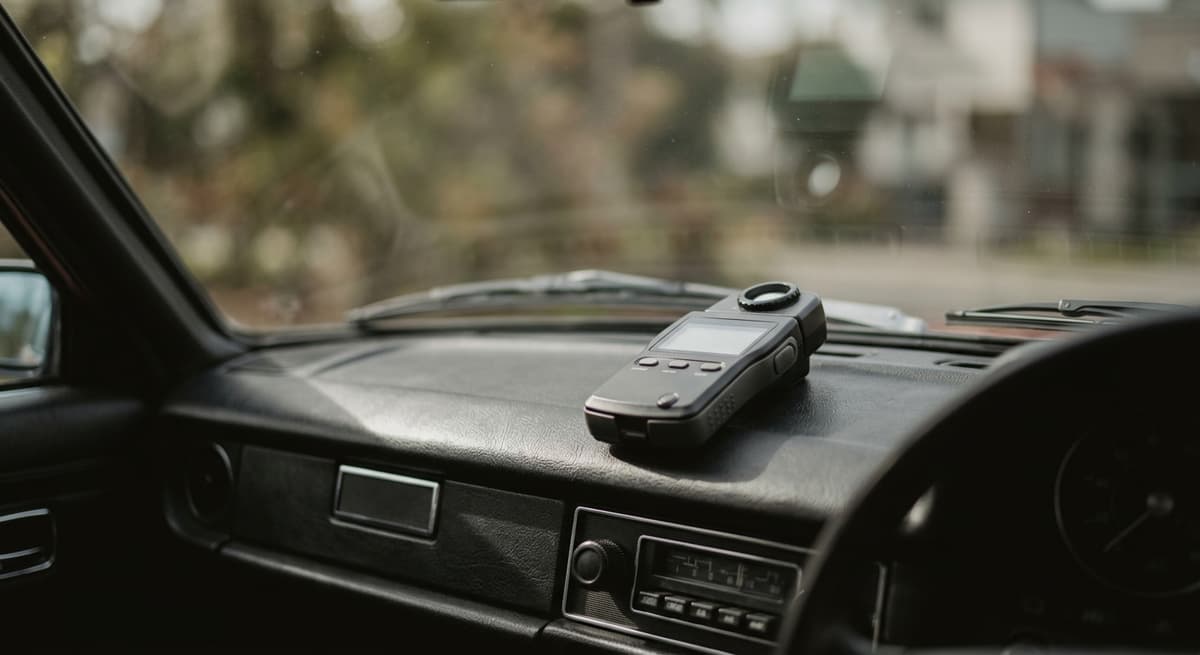
VLT is measured with a light-transmission meter that shines a beam through the glass and reads the percentage that passes through. Table X carries a tolerance in its own preamble: "All light transmittance levels listed below assume a 3% accuracy (plus or minus 3%)." A reading a point or two under 70% therefore sits inside the accuracy the regulation itself assumes.
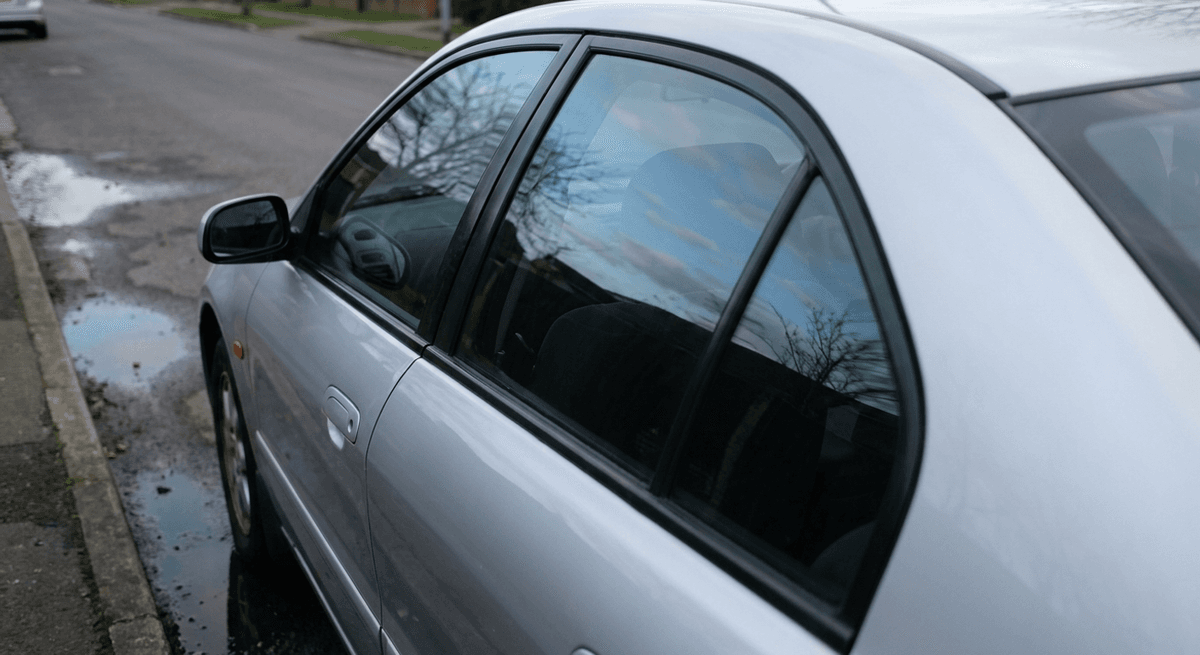
Pennsylvania does not require a compliance sticker on vehicles that do not have special-use or medical exemptions. For vehicles with an exemption, the PennDOT exemption certificate itself serves as the documentation. Standard vehicles with factory-stock glass do not need any paperwork, since factory glass typically meets the 70% standard.
If you are buying a used vehicle, especially a used sedan or wagon, verify the condition of any existing tint. Some prior owners install aftermarket film on passenger cars, not realizing Pennsylvania's restriction is effectively a no-tint rule for those windows. You will be responsible for any non-compliant film on a vehicle you purchase and register in Pennsylvania.
Penalties for illegal tint in Pennsylvania
Section 4524 sets no penalty of its own, so a tint violation falls to the Vehicle Code default. Under 75 Pa.C.S. 6502(a), a person convicted of a summary offense under the Vehicle Code for which no penalty is otherwise provided "shall be sentenced to pay a fine of $25." Figures near $110 that circulate online are the total a defendant pays once court costs and statutory surcharges are added on top, not the statutory fine. The violation carries no jail time, and officers typically issue a citation that can be resolved by paying or contesting it in traffic court.
One appellate decision belongs in any honest description of enforcement here. A roadside tint citation is written under 75 Pa.C.S. 4524(e)(1), which requires only that a person be able to see or view the inside of the vehicle. In Commonwealth v. Brubaker, 5 A.3d 261, 265-66 (Pa. Super. 2010), carried in the Pennsylvania Code's own Notes of Decisions to 67 Pa. Code 175.67, the Superior Court held that the 70% standard in 175.67(d)(4) cannot be incorporated into 4524(e)(1), because 4524(e)(1) requires only that a person be able to see through the windows and does not reference the regulation. A meter reading below 70% is therefore not, on its own, the element the statute a citation is written under makes an officer prove.
Pennsylvania does not have a universal fix-it-ticket program for tint violations. Removing the non-compliant film after a citation will not automatically dismiss the charge, though addressing the problem before a court appearance may be considered in your favor. If you believe your tint is compliant and the officer's reading is incorrect, you can request a meter calibration check and present your own measurement evidence.
Installers who put non-compliant film on Pennsylvania passenger cars expose both themselves and their customers to liability. Because the 70% standard effectively prohibits any visible darkening film on passenger car side and rear windows, reputable installers in Pennsylvania typically decline to apply aftermarket tint to those windows.
If you want to tint your windows in Pennsylvania
If you drive a passenger car (sedan, coupe, wagon, or hatchback), the honest answer is that there is almost nothing you can legally add to your front side windows, back side windows, or rear window. The 70% minimum matches factory glass, so any film that visibly darkens the glass will likely fall below the threshold. Your options for passenger cars are limited to UV-blocking clear films that do not reduce visible light transmission.
If you drive a truck, SUV, or van, you have real options. Your front side windows must still meet the 70% standard, so no dark tint there. But your rear side windows and rear window carry no requirement. You can apply any darkness of film behind the driver, including very dark privacy tints, as long as you have the required right and left outside mirrors. This is the standard setup many Pennsylvania SUV and truck owners use.
If you have a qualifying medical condition, understand what the PennDOT certificate of exemption actually authorizes before you buy film: colorless, ultraviolet-filtering material, not darker tint. Apply before anything is installed, keep in mind that the certificate covers one specific vehicle and goes void if you sell it, and carry the certificate in the vehicle once it is issued.
This article is general legal information, not legal advice. Window tint limits vary by state and change, and enforcement depends on local practice and your specific vehicle. For a definitive answer, check your state DMV or consult a local attorney.
More Pennsylvania Laws
Frequently Asked Questions
What is the legal tint in Pennsylvania?
Pennsylvania requires passenger car side windows and the rear window to allow at least 70% VLT, which is essentially the same as clear factory glass. Pre-1998 passenger cars are the one variation: their rear window is governed by a VESC-20 labeling requirement instead of a percentage. Trucks and multipurpose vehicles (SUVs, vans) may use any darkness on the windows behind the driver but must still meet 70% on the front side windows.
How dark can my front windows be in Pennsylvania?
Front side windows must allow at least 70% VLT on all vehicle types. Since most factory glass is already around 70%, there is effectively no room to add a darkening film to passenger car front side windows without violating the law.
Is 20% tint legal in Pennsylvania?
No. A 20% VLT reading is far below Pennsylvania's 70% minimum for passenger cars. For trucks and multipurpose vehicles, 20% tint is only permitted on the windows behind the driver, not on the front side windows.
Can I get a medical exemption for window tint in Pennsylvania?
Yes, but only for colorless material. Under 67 Pa. Code 175.265, PennDOT issues a certificate of exemption on a physician or optometrist certification, and that certificate authorizes only a colorless sun screening device or other material which filters ultraviolet light. It does not authorize dark tint. The certificate is issued for one specific vehicle, must be carried in the vehicle at all times, and is void once that vehicle is sold or transferred. A doctor's note alone is not sufficient.
What is the penalty for illegal tint in Pennsylvania?
Illegal window tint is a summary offense under the Pennsylvania Vehicle Code. Section 4524 sets no penalty of its own, so the default in 75 Pa.C.S. 6502(a) applies: a fine of $25. Totals near $110 that circulate online reflect court costs and surcharges added on top of that fine, not the fine itself. There is no jail time for a tint violation.
Is windshield tint legal in Pennsylvania?
Only transparent material along the top edge is permitted, and only if it does not encroach upon the AS-1 portion of the windshield and is no more than 3 inches from the top. The rest of the windshield must allow at least 70% VLT. Because 67 Pa. Code 175.263(a) requires the material to be transparent, a darkening strip is not what the rule allows.
Do SUVs have different tint rules in Pennsylvania?
Yes. Trucks and multipurpose vehicles (SUVs, vans) have no requirement on the back side windows and rear window. However, their front side windows must still meet the 70% standard, and any vehicle using a sun screening device needs right and left outside rearview mirrors of at least 19.5 square inches each unless the material sits only above the AS-1 portion of the windshield.
Updates
Corrected Pennsylvania's medical exemption (it authorizes only colorless ultraviolet-filtering material, is issued for one specific vehicle, and is void once that vehicle is sold), removed an unsupported reflective and mirrored tint ban that appears nowhere in 75 Pa.C.S. 4524 or 67 Pa. Code Chapter 175, added Table X's plus-or-minus 3% measurement tolerance and the VESC-20 labeling rule for pre-1998 passenger car rear windows, restated the windshield rule as transparent material outside the AS-1 portion plus the resulting dual outside mirror requirement, corrected the penalty to the $25 statutory fine under 75 Pa.C.S. 6502(a) rather than a costs-inclusive total, and added Commonwealth v. Brubaker on what a tint citation must actually prove.
Corrected Pennsylvania's window-tint page: the 1998-model-year VLT distinction applies to the rear window, not the back side windows as the page previously stated; back side windows carry the 70% minimum regardless of model year.
Independently fact-checked against the cited primary sources
Governing law re-checked for recent changes
Reviewed and approved by an editor
The Law Behind This Article
This article rests on the statutory provisions below, held in our own legal record and retrieved from the official source. Tap a section to read the operative text.
Pennsylvania Consolidated Statutes Title 75 (Vehicles)
§ 4524Windshield obstructions and wipersIn forcecited in 7 of our articles
(a) Obstruction on front windshield.--No person shall drive any motor vehicle with any sign, poster or other nontransparent material upon the front windshield which materially obstructs, obscures or impairs the driver's clear view of the highway or any intersecting highway except an inspection certificate, sticker identification sign on a mass transit vehicle or other officially required sticker and no person shall drive any motor vehicle with any ice or snow on the front windshield which materially obstructs, obscures or impairs the driver's clear view of the highway or any intersecting highway. (b) Obstruction on side and rear windows.--No person shall drive a motor vehicle with any sign, poster or other nontransparent material, including ice or snow, upon the side wings or side or rear windows of the vehicle which materially obstructs, obscures or impairs the driver's clear view of the highway or any intersecting highway. The placement of a registration permit upon the side or rear window of a vehicle shall not be considered a material obstruction.
Official text (excerpt) · last checked 2026-09-08 · Read the full text in our law library · Verify at palegis.us
Cited in 70 court opinions in our collectionLatest citing opinion in our collection: 2026
In the courts (editorial summary, independently checked):Pennsylvania courts read section 4524 subsection by subsection. Commonwealth v. Brubaker (2010) held a tint conviction under section 4524(e)(1) fails where the officer could see into the vehicle, whatever a meter showed. Commonwealth v. Holmes (2011) held a stop under section 4524(c) illegal where the officer never described the object.
Opinions citing this section in our collection:
- Commonwealth v. Holmes (Supreme Court of Pennsylvania 2011, 609 Pa. 1)✓An officer stopped a car after testifying only that objects hung from the rearview mirror obstructing the driver's view; the court held that with no description of the objects or how they impaired vision there was no reasonable suspicion of a section 4524(c) violation.
- Commonwealth v. Rodriguez (Superior Court of Pennsylvania 2013, 2013 Pa. Super. 302)✓A Pennsylvania constable cited for driving his own black-tinted BMW argued the car was an exempt government vehicle; the court held constables are not government employees and affirmed the conviction, finding no exemption under section 4524(e)(2)(i).
- Commonwealth v. Santiago, A., Aplt. (Supreme Court of Pennsylvania 2019, 209 A.3d 912)“…es a dissenting opinion in which Justice Donohue joins. 75 Pa.C.S. § 4524(e)(1). The Commonwealth concedes…”
Identified automatically from the court opinions citing this section — not a ranking of which case controls.
Also relied on in: Pennsylvania Dashcam Laws: Mounting Rules, Audio Recording, and Evidence (2026), Pennsylvania Windshield Mounting Laws (2026 Guide), Windshield Mounting Restrictions by State (2026 Guide)
§ 6502Summary offensesIn forcecited in 6 of our articles
(a) Violations of this title.--It is a summary offense for any person to violate any of the provisions of this title unless the violation is by this title or other statute of this Commonwealth declared to be a misdemeanor or felony. Every person convicted of a summary offense for a violation of any of the provisions of this title for which another penalty is not provided shall be sentenced to pay a fine of $25. (b) Violations of regulations.--It is a summary offense for a person to violate any provision of any regulation promulgated under the authority of this title. A person convicted of violating any provision of a regulation promulgated under the authority of this title shall pay the fine established in the section of this title on which the regulation is based or, if no fine is established in that section of this title, the fine shall be $25. (c) Title 18 inapplicable.--Title 18 (relating to crimes and offenses), insofar as it relates to fines and imprisonment for convictions of summary offenses, is not applicable to this title.
Official text (excerpt) · last checked 2026-07-29 · Read the full text in our law library · Verify at palegis.us
Cited in 27 court opinions in our collectionLatest citing opinion in our collection: 2025
Opinions citing this section in our collection:
- Commonwealth v. McGinnis (Supreme Court of Pennsylvania 1986, 511 Pa. 520)“…the summary conviction instead of the mandatory $25.00 (see 75 Pa.C.S. 6502(b), now part of 75 Pa.C.S. 6502(a)). Th…”
- Commonwealth v. Samuels (Supreme Court of Pennsylvania 2001, 566 Pa. 109)“…se punishable solely by the imposition of a $25 fine. See 75 Pa.C.S. § 6502. Pursuant to the MPC and Section 305(a)…”
- Commonwealth v. Soboleski (Superior Court of Pennsylvania 1992, 421 Pa. Super. 311)“…his Commonwealth declared to be a misdemeanor or a felony." 75 Pa.C.S. § 6502(a). The underlying offense here, a sect…”
Identified automatically from the court opinions citing this section — not a ranking of which case controls.
Also relied on in: Pennsylvania Open Container Law (2026): Statute and Penalty, Open Container Laws by State (2026): Passengers, Exemptions, Penalties
Search our full record of US law — 2.1 million sections, every state + federal →
Sources and References
- 75 Pa.C.S. 4524 - Windows and windshields(legis.state.pa.us).gov
- 67 Pa. Code 175.67 - Glazing materials(pacodeandbulletin.gov).gov
- PennDOT - Driver and Vehicle Services(penndot.pa.gov).gov
- PA Bulletin Vol. 26, No. 39, Doc. 96-1631 (rulemaking establishing the 1998 model-year rear-window standard)(pacodeandbulletin.gov).gov
- 67 Pa. Code 175.263 - Sun screening location (windshield top-edge material must be transparent, outside the AS-1 portion, not more than 3 inches from the top)(pacodeandbulletin.gov).gov
- 67 Pa. Code 175.264 - Mirrors (right and left outside rearview mirrors required with the use of a sun screening device)(pacodeandbulletin.gov).gov
- 67 Pa. Code 175.265 - Exemption provisions (colorless material only; vehicle-specific; certificate void on sale or transfer)(pacodeandbulletin.gov).gov
- 75 Pa.C.S. 6502 - Summary offenses under the Vehicle Code ($25 fine where no other penalty is provided)(legis.state.pa.us).gov
- 67 Pa. Code Chapter 175, Table X - Acceptable Light Transmittance Levels for Vehicle Glazing (plus or minus 3% accuracy; pre-1998 passenger car rear window VESC-20 label)(pacodeandbulletin.gov).gov
- PennDOT Fact Sheet: Vehicle Window Tint (April 2025)(pa.gov).gov