
Oklahoma
Oklahoma Window Tint Laws (2026): Legal VLT Limits
Independently fact-checked against primary sources (last audited August 18, 2026). · Reviewed by the RecordingLaw editorial team. · Law checked current as of August 18, 2026. How we verify our legal content
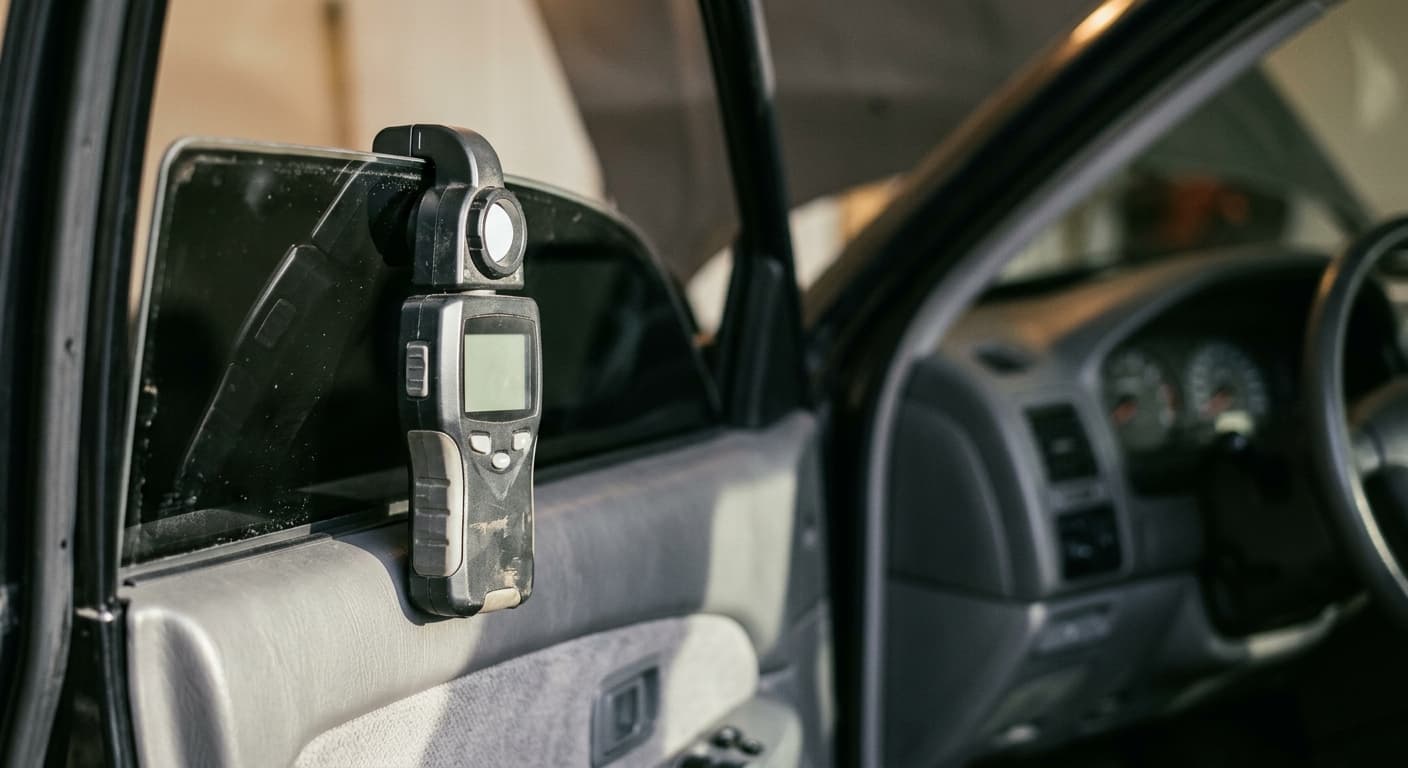
Oklahoma sets the same 25% VLT minimum for the front side windows, back side windows, and rear window, and that standard applies uniformly to all current vehicles, not just sedans. A narrow grandfather clause allows vehicles manufactured before the 1996 model year to run windows behind the driver as dark as 10% VLT if the vehicle has dual outside mirrors.
What is the legal tint limit in Oklahoma?
Oklahoma's window tint rules are codified at 47 O.S. 12-422. The front side windows, meaning the windows immediately beside the driver and the front passenger, must allow at least 25% of visible light through the glass and film combined. That is one of the more permissive front-window standards in the country; states like Ohio require 50%, while Oklahoma lets you go considerably darker upfront.
Before getting into the numbers: a higher VLT percentage means lighter tint, and a lower percentage means darker tint. A 25% VLT window lets in only one quarter of available light, which produces a noticeably dark, limo-style appearance from the outside. Factory glass typically starts around 70-80% VLT, so adding a 25% film will bring the combined reading down close to or at the legal minimum.
The rules for the windows behind the driver do not depend on vehicle type for current vehicles. Every vehicle, sedan or otherwise, must hold to the same 25% VLT minimum and 25% reflectance cap on the back side windows and the rear window. The only relief tied to dual outside mirrors is a narrow grandfather clause: vehicles manufactured before the 1996 model year may run those windows as dark as 10% VLT, not any darkness, if the vehicle has dual outside mirrors (one on each side) so the driver can see rearward.
| Window | Standard VLT Minimum | Pre-1996 Model Year with Dual Mirrors |
|---|---|---|
| Front side windows | 25% | 25% |
| Back side windows | 25% | 10% |
| Rear window | 25% | 10% |
| Windshield (below AS-1 line) | No film permitted | No film permitted |
Windshield tint rules in Oklahoma
Oklahoma allows transparent material along the very top of the windshield, so long as it does not extend below the AS-1 line or more than 5 inches from the top of the glass, whichever is closer to the top, consistent with the approach most states take. Below that band, no tinting film may be applied to the windshield. The driver needs unobstructed forward sightlines, and the law reflects that priority.

Oklahoma's statute does ban one specific color: the material at the topmost portion of the windshield may not be red or amber in color. Those two conditions, that the material be transparent and that it not be red or amber, are the entire statutory test for the windshield strip. No color ban applies to the side or rear windows.
The 25% luminous reflectance cap is worth reading carefully, because it is written into the side-window and back-window provisions rather than the windshield provision. The statute sets no numeric reflectance limit on the windshield strip itself. Separately, the statute's definitions section excludes materials with a mirrored or mirror-like finish from what counts as a glass coating material or sunscreening device at all.
Because the windshield strip is the most visible part of the tint to approaching drivers and officers, a neutral, clearly transparent film is the practical choice. Avoid anything metallic or mirrored in that area, which is sound practice as well as a poor fit with the statute's definition of a sunscreening device.
Medical exemptions
Oklahoma does provide a medical exemption path for drivers and passengers who need greater sun protection because of a medical condition. Under 47 O.S. 12-422, a physician must attest to the condition in writing, and the vehicle's owner or occupant then applies to the Commissioner of Public Safety for an official exemption.
Once the Commissioner issues an exemption, that documentation should be kept in the vehicle so it is available to show during any tint inspection or traffic stop. The exemption can allow tint darker than the standard legal limits, though the extent depends on the physician's attestation and the Commissioner's determination.
If you believe a medical condition warrants darker tint, start by consulting your treating physician before making any appointment at a tint shop. They will need to provide the written attestation that begins the exemption application process. Do not install non-compliant film first and seek approval afterward; install film that complies with the standard limits until the exemption is officially issued.
How tint is measured and certified
Section 12-422 prescribes no measurement device, no testing procedure, and no tolerance. It states the 25% light transmission standard and stops there, so the legal standard is the stated 25% minimum without a published buffer. As a matter of ordinary enforcement practice rather than statutory command, officers generally check tint with a handheld photometric meter, which reads the combined light transmission of the glass and the film together.
Because factory glass absorbs some light, the combined reading of glass plus film will always be lower than the film's standalone specification. A film sold as "35% VLT" will read below 35% once combined with factory glass. Have your installer measure the combined reading before you leave the shop to confirm compliance.
Unlike several other states, Oklahoma does not require a compliance sticker on the vehicle window itself. However, the seller or installer of the tinting material is required to certify compliance in the sales contract. Ask your installer to note the combined VLT readings for each window in the sales documentation and keep that paperwork in the vehicle. If you are ever stopped, the installer's written certification can support your case.
Penalties for illegal tint in Oklahoma
Oklahoma classifies a violation of the window tint statute as a misdemeanor. A conviction on a misdemeanor in Oklahoma can result in a fine, and repeat or aggravated violations may involve additional consequences. The statute at 47 O.S. 12-422 does not set a specific dollar amount, so fines are set by the court within the general misdemeanor range.
Enforcement typically begins with a visual inspection during a traffic stop. If the tint looks darker than the legal limit, an officer may take a meter reading, though the statute itself prescribes no device or procedure for doing so. An out-of-spec reading can result in a citation requiring you to remedy the violation and potentially appear in court. Having installer certification with compliant combined-VLT readings on record can help demonstrate good faith, though it does not override a current out-of-spec measurement.
Importantly, the misdemeanor classification means a tint conviction can appear on a criminal record, distinguishing Oklahoma from states that treat illegal tint as a simple civil infraction or fix-it ticket. That makes compliance more than just a minor inconvenience to ignore.
If you want to tint your windows in Oklahoma
For the front windows, 25% VLT is your darkest legal option. Choose a film rated at or above 25% VLT and verify the combined reading with your installer before leaving. Many installers will run the VLT meter across each window on completion; insist on it and get the readings noted in writing.
Apply the same 25% minimum to the back side windows and the rear window regardless of whether you drive a sedan, SUV, van, or truck. The only exception is a narrow grandfather clause for vehicles manufactured before the 1996 model year: those vehicles may run windows behind the driver as dark as 10% VLT if equipped with dual outside mirrors.
Reflectance matters too. On the side and back windows, whatever film you choose must not push luminous reflectance above 25%. Avoid metallic or mirror-finish films: beyond that cap, the statute's definitions exclude mirrored and mirror-like finishes from the sunscreening materials it permits.
Oklahoma's statute bans red or amber color specifically for the windshield strip; no other color is named for the side or rear windows, but a neutral gray, charcoal, or smoke tint is the safest choice there. Vivid red or highly reflective metallic films attract officer attention and may raise reflectivity concerns even where a specific color is not expressly prohibited.
Get the installer's certification in writing and store it in the glove box. If you later change the film or have a new window installed, get updated documentation. Keep in mind that any film significantly alters the combined VLT reading, so even a tinted replacement window glass needs to be rechecked against the 25% standard.
This article is general legal information, not legal advice. Window tint limits vary by state and change, and enforcement depends on local practice and your specific vehicle. For a definitive answer, check your state DMV or consult a local attorney.
Related
Oklahoma's window tint rules are part of a broader set of vehicle glass regulations. For rules about what you can mount on or attach to your windshield, see our guide to Oklahoma Windshield Mounting Restrictions. For a full comparison of tint limits across every state, visit the Window Tint Laws by State hub.
More Oklahoma Laws
Frequently Asked Questions
What is the legal tint in Oklahoma?
Oklahoma requires at least 25% VLT on the front side windows, back side windows, and rear window, and that minimum applies uniformly to all current vehicles, not just sedans. The only exception is a grandfather clause for vehicles manufactured before the 1996 model year, which may run windows behind the driver as dark as 10% VLT if the vehicle has dual outside mirrors.
How dark can my front windows be in Oklahoma?
The darkest legal front-window tint in Oklahoma is 25% VLT, meaning the glass and film combined must let in at least 25% of visible light. Going darker than 25% on the front windows is a misdemeanor.
Is 20% tint legal in Oklahoma?
No, not on any window of a current-model vehicle. Oklahoma requires at least 25% VLT on the front side windows, back side windows, and rear window, so 20% film would push any of them below the legal limit. Only vehicles manufactured before the 1996 model year with dual outside mirrors may go as dark as 10% VLT on windows behind the driver.
Do SUVs have different tint rules in Oklahoma?
No, not based on vehicle type alone. SUVs, vans, and trucks must meet the same 25% VLT minimum on all windows as sedans. The only exception is a grandfather clause for vehicles manufactured before the 1996 model year, which may run windows behind the driver as dark as 10% VLT with dual outside mirrors.
Can I get a medical exemption for window tint in Oklahoma?
Yes. A physician must provide written attestation of your medical need, and you then apply to the Commissioner of Public Safety for an official exemption. Keep the exemption documentation in the vehicle whenever the exempt tint is installed.
What is the penalty for illegal tint in Oklahoma?
Illegal window tint is a misdemeanor on conviction under 47 O.S. 12-422. Fines are set by the court within Oklahoma's general misdemeanor range, and a conviction can appear on your criminal record.
Is windshield tint legal in Oklahoma?
Only transparent material at the topmost portion of the windshield is permitted, and it may not extend below the AS-1 line or more than 5 inches from the top of the windshield, whichever is closer to the top. That material also may not be red or amber in color. No tint film may be applied below that line. The 25% luminous reflectance cap is written into the side-window and back-window provisions, not the windshield provision.
Updates
Corrected the windshield rule to match the statute, which requires transparent material that is not red or amber rather than non-reflective film, scoped the 25% reflectance cap to side and back windows where the statute puts it, and reframed VLT meter use as enforcement practice rather than a statutory requirement.
Repointed Oklahoma's window-tint statute citation from a chapter index page to the specific section text.
Independently fact-checked against the cited primary sources; governing law re-checked for recent changes
Removed a fabricated 'sedans vs. multipurpose vehicles' exemption: Oklahoma's 25% VLT floor applies uniformly to all current vehicles, with only a narrow pre-1996-model-year grandfather clause (10% VLT with dual mirrors), and corrected the claim that Oklahoma has no tint color restrictions -- the windshield strip may not be red or amber.
Corrected FAQ Q1 (What is the legal tint in Oklahoma?), which still carried the fabricated 'multipurpose vehicles with dual mirrors can use any darkness' claim after the wave-3 fix corrected the rest of the page; it now matches the corrected rule (uniform 25% VLT/25% reflectance, with a pre-1996-model-year grandfather clause capped at 10% VLT).
Governing law re-checked for recent changes
Reviewed and approved by an editor
The Law Behind This Article
This article rests on the statutory provisions below, held in our own legal record and retrieved from the official source. Tap a section to read the operative text.
Oklahoma Statutes, Title 47: MOTOR VEHICLES
§ 12-422Restrictions on use of glass coating materials orIn forcecited in 2 of our articles
sunscreening devices on windshields and windows. A. As used in this section: 1. "Glass coating material" or "sunscreening devices" means materials, films, applications or devices which are used in conjunction with approved vehicle glazing materials for the purpose of reducing the effects of sun, but shall not include materials, films, applications, or devices with a mirrored or mirror-like finish; 2. "Light transmission" means the percentage of total light which is allowed to pass through a window; 3. "Luminous reflectance" means the ratio of the amount of total light, expressed in percentages, which is reflected outward by the glass coating material or sunscreening device to the amount of total light falling on the glass coating material; 4. "Manufacturer" means: a. a person who engages in the manufacturing or assembling of sunscreening devices, or b. a person who fabricates, laminates, or tempers glazing materials, incorporating the capacity to reflect or to reduce the transmittance of light during the manufacturing process; and 5. "Window" means the windshield, side or rear glass of a motor vehicle, including any glazing material, glass coating or sunscreening device. B.
Official text (excerpt) · last checked 2026-09-01 · Read the full text in our law library · Verify at oklegislature.gov
Also relied on in: Oklahoma Windshield Mounting Laws (2026 Guide)
Oklahoma Statutes, Title 12: CIVIL PROCEDURE
§ 422Affidavit definedIn forcecited in 2 of our articles
An affidavit is a written declaration, under oath, made without notice to the adverse party. R.L. 1910, § 5068.
Official text (excerpt) · last checked 2026-07-31 · Read the full text in our law library · Verify at oklegislature.gov
Search our full record of US law — 2.1 million sections, every state + federal →