
New York
New York Window Tint Laws (2026): Legal VLT Limits
Independently fact-checked against primary sources (last audited August 18, 2026). · Reviewed by the RecordingLaw editorial team. · Law checked current as of August 18, 2026. · 1 primary source cited on this page. How we verify our legal content
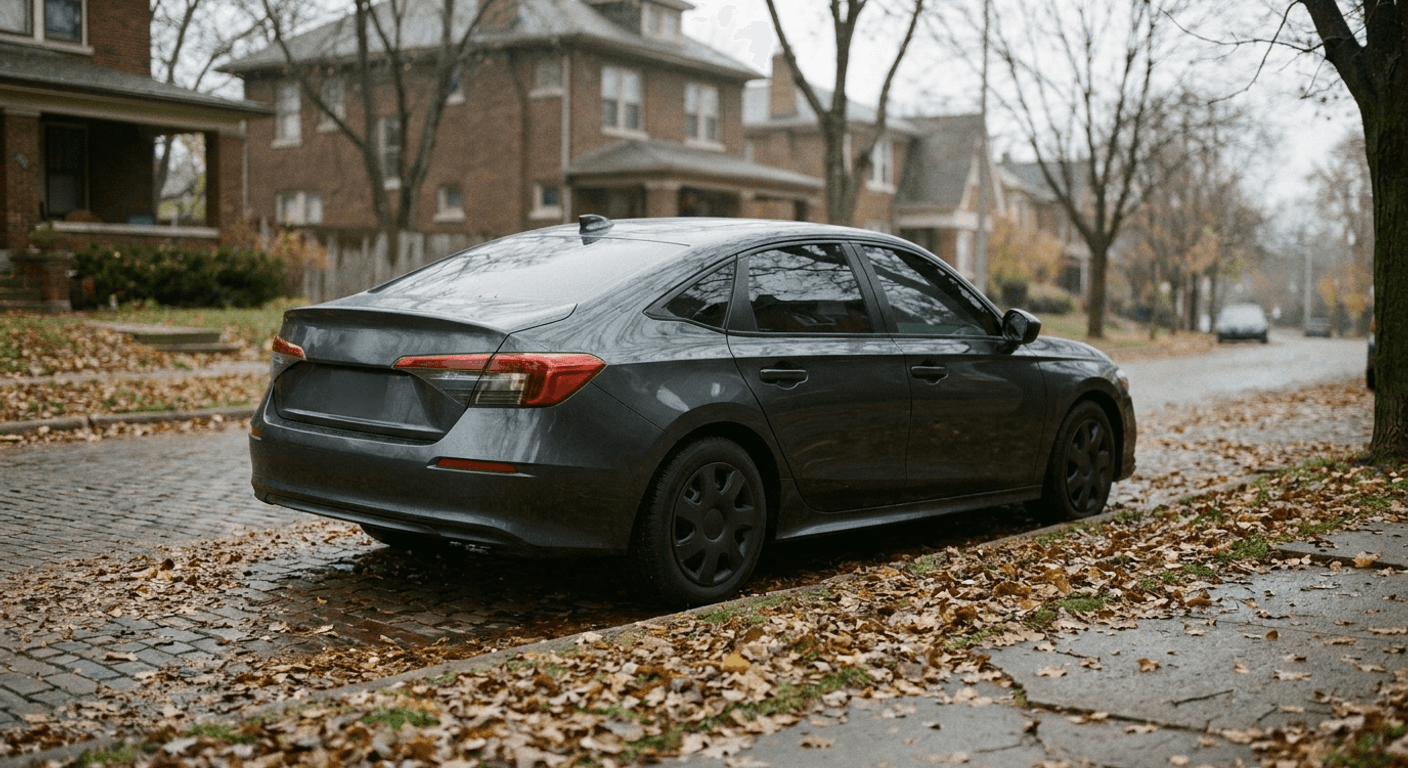
New York requires the windshield and the front side windows of every vehicle to allow at least 70% VLT, making it one of the strictest tinting states in the country. The rear window must also meet 70% unless the vehicle is equipped with outside mirrors on both sides, and the 70% rear side window rule reaches only vehicles classified as a station wagon, sedan, hardtop, coupe, hatchback or convertible.
What is the legal tint limit in New York?
New York sets a 70% VLT minimum on front side windows for all vehicles, meaning the tint film must allow at least 70% of visible light to pass through. Remember that higher VLT% means lighter tint, while lower VLT% means darker tint. At 70% VLT, a window must stay nearly clear, blocking only about 30% of incoming light. This effectively limits New Yorkers to a very light factory-style shade or clear UV film on front windows.
The 70% minimum reaches rear side windows only on a vehicle "classified as a station wagon, sedan, hardtop, coupe, hatchback or convertible" under VTL 375(12-a)(b)(3). That list is exhaustive. New York DMV explains that a vehicle falls into one of those categories if it is labeled "Passenger Car" on the Federal ID label on the driver's door. A vehicle labeled Multipurpose Passenger Vehicle or Truck, which covers most SUVs, minivans, vans and pickups, is outside the rule, so its rear side windows are not held to the 70% standard. The rear window itself must reach 70% VLT on any vehicle, with one exception: if the vehicle has outside mirrors on both sides adjusted to give a clear view behind, there is no VLT restriction on the rear window.
| Window | Passenger Car (station wagon, sedan, hardtop, coupe, hatchback, convertible) | SUV, Minivan, Van or Pickup (MPV or Truck) |
|---|---|---|
| Front side windows | 70% VLT minimum | 70% VLT minimum |
| Rear side windows | 70% VLT minimum | Not covered by the 70% rule |
| Rear window | 70% VLT minimum, or no limit with outside mirrors on both sides | 70% VLT minimum, or no limit with outside mirrors on both sides |
| Windshield | Top 6 inches only | Top 6 inches only |
Vehicles of the 1991 or earlier model year are grandfathered. VTL 375(12-a)(e) lets them be operated if their windows conformed to the subdivision as it existed on December 31, 1991, and the DMV inspection regulation at 15 NYCRR 79.21(f) applies a 35% light transmittance standard to those older vehicles.
Windshield tint rules in New York
The windshield in New York may carry non-transparent material only on the uppermost 6 inches. Below that strip, the windshield must remain completely clear of any tint or film. Clear UV-blocking or protective film that still transmits close to 100% of visible light is generally acceptable, but any visible tinting below the 6-inch line violates VTL 375(12-a).
No reflectivity limit is specified separately in the New York tint statute, and no specific colors are banned by the tint law. However, the windshield restriction effectively bars dark or colored strips from the viewing area. Officers enforcing the law focus on visible light transmission rather than reflectance.
Medical exemptions
New York provides a medical exemption under VTL 375(12-a)(c) for a person who must be shielded from the direct rays of the sun for medical reasons. The Commissioner may grant it only where the certified condition appears on the list of medical conditions prepared by the Commissioner of Health, which includes conditions such as albinism, lupus erythematosus, porphyria and xeroderma pigmentosum. The applicant must provide a physician's or nurse practitioner's statement giving the reason for the exemption, the name of the person with the condition, the specific condition, and the minimum level of light transmission required. That statement is submitted on Form MV-80W (Application for Window Tint Medical Exemption).
The exemption is narrower than many drivers expect. By its terms it excuses only subparagraphs one and two of VTL 375(12-a)(b), which are the windshield and the sidewings or side windows forward of or adjacent to the operator's seat. It does not reach rear side windows or the rear window, so darker film on rear glass is not made lawful by an approved exemption.
Once approved, the DMV Commissioner issues a sticker that is affixed to each window shielded or altered under the exemption. Without the Commissioner-issued sticker, a front window with tint darker than 70% VLT is subject to the standard penalty. Drivers should keep a copy of their approved Form MV-80W in the vehicle as backup documentation.
How tint is measured and certified
New York law enforcement and state inspection stations use calibrated VLT meters to measure window tint. The meter is placed against the glass, and the reading is compared to the 70% legal minimum. VTL 375(12-a) sets no measurement tolerance, so a reading under the applicable minimum is a failure. A bill that would add a plus-or-minus 7% tolerance to the Commissioner's own test under VTL 375(12-a)(d) passed both houses of the Legislature in 2026, but it has not been enacted and no tolerance is in force today.
Separately, VTL 375(12-a)(d) lets the Commissioner test a window for a person who has been charged under the subdivision; if the window is found to conform, a small label attesting to the conformity is affixed to it.
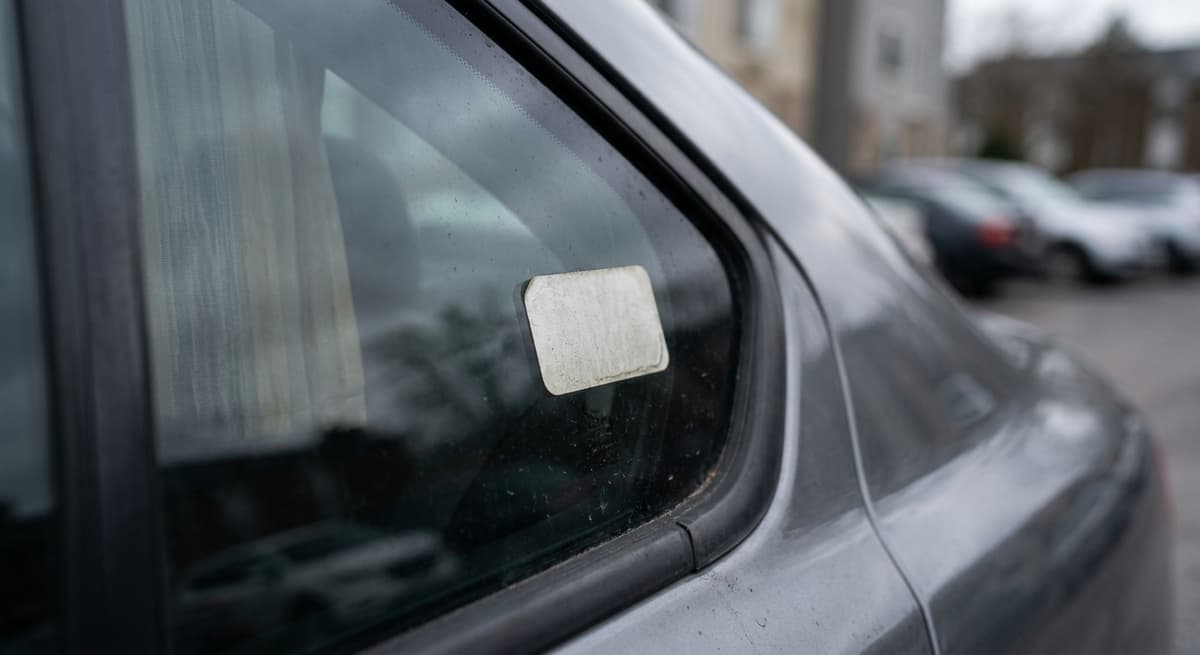
There is no general installer sticker required in New York for standard tint installations. The only sticker the statute requires is the Commissioner-issued exemption sticker for medically approved windows. Despite this, many installers voluntarily affix a certification label showing the film's manufacturer VLT specification, which can help during inspections. Keeping the installer's documentation or a certificate of compliance is a good practice, especially for film that is close to the 70% line.
Penalties for illegal tint in New York
VTL 375 sets no separate penalty for subdivision 12-a, so a window tint violation is a traffic infraction penalized under VTL 1800(b)(1): a fine of not more than $150 for a first conviction. There is no statutory minimum fine. A second violation within 18 months carries a fine of not more than $300, and a third within 18 months not more than $450.
Mandatory surcharges are added on top of the fine. Under VTL 1809, a conviction for a traffic infraction under Article 9 of the Vehicle and Traffic Law, the equipment article that contains section 375, carries a $25 mandatory surcharge plus a $5 crime victim assistance fee, and a town or village court adds $5 more. A vehicle with illegal tint will also fail the annual state safety inspection until the offending film is removed or replaced with compliant tint.
In addition to the fine, a court may order tint removal. Repeat violations or willful non-compliance can result in additional fines and scrutiny during future inspections. Removing the illegal tint and replacing it with compliant film before any scheduled inspection avoids both the inspection failure and additional enforcement action.
If you want to tint your windows in New York
New York's 70% standard leaves very little room for visible darkening on the front side windows of any vehicle, and on the rear side windows of a passenger car. Tint shades marketed as 35%, 20% or 15% are not legal on the front side windows of a 1992 or newer vehicle, or on the rear side windows of a 1992 or newer passenger car. The practical options for those windows are very light films rated at 70% or higher VLT, or clear UV-protection films. Darker film may be lawful on the rear side windows of an SUV, minivan, van or pickup, on a rear window when the vehicle has outside mirrors on both sides, and on a 1991 or earlier model year vehicle held to the older 35% standard.
To stay compliant, start by confirming the VLT rating of any film you plan to install and the body classification printed on your driver's door label. Choose a film rated at 70% VLT or higher for any window the rule reaches. Ask the installer to measure and document the final VLT of the glass-plus-film combination, since some factory glass already absorbs a small amount of light and may push a nominally compliant film below the legal threshold.
If you have a qualifying medical condition, complete Form MV-80W with your physician or nurse practitioner before installation, submit it to the DMV, and wait for the Commissioner-issued sticker before applying darker film to the windshield strip or front side windows. Installing darker tint without the sticker in place, even with the paperwork pending, exposes you to a fine at any traffic stop or inspection.
This article is general legal information, not legal advice. Window tint limits vary by state and change, and enforcement depends on local practice and your specific vehicle. For a definitive answer, check your state DMV or consult a local attorney.
Related

For rules on what you can and cannot mount on your windshield in New York, see New York Windshield Mounting Restrictions.
More New York Laws
Frequently Asked Questions
What is the legal tint in New York?
New York requires a minimum of 70% VLT on the front side windows of every vehicle. Rear side windows must also meet 70% VLT, but only if the vehicle is a station wagon, sedan, hardtop, coupe, hatchback or convertible. The rear window must meet 70% VLT unless the vehicle has outside mirrors on both sides. The windshield may only have tint on the top 6 inches.
How dark can my front windows be in New York?
Front side windows must allow at least 70% of light through (70% VLT minimum). This is one of the strictest limits in the country, and only a very light or nearly clear film qualifies. VTL 375(12-a) sets no measurement tolerance, so a meter reading below 70% fails.
Is 35% tint legal in New York?
Not on the front side windows of a 1992 or newer vehicle, and not on the rear side windows of a 1992 or newer passenger car, because 35% VLT is far darker than the 70% minimum. It can be lawful on the rear side windows of an SUV, minivan, van or pickup, which the 70% rear side window rule does not reach, and on a 1991 or earlier model year vehicle, which the DMV inspection regulation holds to a 35% standard.
Can I put dark tint on the rear side windows of my SUV in New York?
The 70% rear side window rule in VTL 375(12-a)(b)(3) applies only to a vehicle classified as a station wagon, sedan, hardtop, coupe, hatchback or convertible, which DMV ties to a Passenger Car label on the Federal ID label on the driver's door. An SUV, minivan, van or pickup labeled Multipurpose Passenger Vehicle or Truck is outside that rule, so its rear side windows are not held to 70% VLT. The front side windows still must meet 70%.
Is 70% tint legal in New York?
Yes, 70% VLT is the minimum legal tint for the windows the rule reaches. Because the statute provides no tolerance, buying film rated at 70% or higher and having the finished glass measured gives the most protection against a citation.
Can I get a medical exemption for window tint in New York?
Yes. Under VTL 375(12-a)(c), the Commissioner may grant an exemption where the condition is on the list prepared by the Commissioner of Health, which includes conditions such as albinism, lupus, porphyria and xeroderma pigmentosum. The application must include a physician's or nurse practitioner's statement, submitted on Form MV-80W, and the DMV Commissioner issues a sticker for each exempt window. The exemption covers only the windshield and the front side windows, not rear glass.
What is the penalty for illegal tint in New York?
A tint violation is a traffic infraction under VTL 1800(b)(1), which sets a fine of not more than $150 for a first conviction with no statutory minimum, not more than $300 for a second violation within 18 months, and not more than $450 for a third. Mandatory surcharges are added, and a vehicle with illegal tint fails its annual safety inspection. A court may also order tint removal.
Is windshield tint legal in New York?
Only on the top 6 inches of the windshield. Below that line, no non-transparent material is permitted. Clear UV-protection films that do not visibly reduce light transmission are generally acceptable.
Updates
Corrected the New York tint rules: removed a plus-or-minus 7 percent measurement tolerance that exists only in pending legislation, limited the 70 percent rear side window rule to passenger cars rather than SUVs, vans and pickups, removed an invented $50 minimum fine and a garbled surcharge figure, narrowed the medical exemption to the windshield and front side windows on a physician or nurse practitioner statement, and added the pre-1992 vehicle grandfathering.
Independently fact-checked against the cited primary sources; governing law re-checked for recent changes
Governing law re-checked for recent changes
Reviewed and approved by an editor
The Law Behind This Article
This article rests on the statutory provisions below, held in our own legal record and retrieved from the official source. Tap a section to read the operative text.
New York Vehicle and Traffic Law
§ 375EquipmentIn forcecited in 6 of our articles
Equipment. 1. (a) Every motor vehicle, operated or driven upon the public highways of the state, shall be provided with adequate brakes and steering mechanism in good working order and sufficient to control such vehicle at all times when the same is in use, and a suitable and adequate horn or other device for signaling, which horn or device shall produce a sound sufficiently loud to serve as a danger warning but shall not be used other than as a reasonable warning nor be unnecessarily loud or harsh. (b) Every such motor vehicle shall be equipped with suitable wipers or other device which shall clear a sufficient area of the windshields to provide reasonable driving vision. (i) The use or placing of posters or stickers on windshields or rear windows of motor vehicles other than those authorized by the commissioner, is hereby prohibited. Notwithstanding any other provision of law, a summons for operating a motor vehicle in violation of this subparagraph shall only be issued when there is reasonable cause to believe that the person operating such motor vehicle has committed a violation of the laws of this state other than a violation of this subparagraph.
Official text (excerpt) · last checked 2026-09-08 · Read the full text in our law library · Verify at legislation.nysenate.gov
Cited in 254 court opinions in our collectionLatest citing opinion in our collection: 2026
In the courts (editorial summary, independently checked):New York courts apply section 375 mainly in suppression rulings. People v. Biggs (2022) applied the tint provision, section 375(12-a)(b), and stated the test is whether the officer reasonably believed the windows were over-tinted; People v. Bookman (2015) found probable cause under section 375(30) for an ornament hung from the mirror.
Opinions citing this section in our collection:
- The People v. Rebecca Guthrie (New York Court of Appeals 2015, 25 N.Y.3d 130)“…ng that its windows were excessively tinted in violation of Vehicle and Traffic Law § 375 (12-a) (b) (4) (People v Estrella,…”
- People v. Pealer (New York Court of Appeals 2013, 20 N.Y.3d 447)✓An officer following a gray Subaru stopped it for an illegal rear window sticker under section 375(1)(b)(i) and arrested the driver for DWI; a footnote rejected the suppression claim, stating that no exception exists for infractions characterized as de minimis.
- People v. Biggs (Appellate Division of the Supreme Court of the State of New York 2022, 175 N.Y.S.3d 117)✓Officers stopped a Nissan at night for dark rear window tint and a marijuana odor; the majority held the officer's testimony that he could not see into the car met the test of a reasonable belief the windows were over-tinted under section 375(12-a)(b).
Identified automatically from the court opinions citing this section — not a ranking of which case controls.
Also relied on in: New York Dashcam Laws: Legality, Mounting Rules, and Evidence Use, Window Tint Laws by State (2026): Legal VLT Limits, New York Windshield Mounting Laws (2026 Guide)
§ 1800Penalties for traffic infractionsIn forcecited in 2 of our articles
Penalties for traffic infractions. (a) It is a traffic infraction for any person to violate any of the provisions of this chapter or of any local law, ordinance, order, rule or regulation adopted pursuant to this chapter, unless such violation is by this chapter or other law of this state declared to be a misdemeanor or a felony. (b) 1. Every person convicted of a traffic infraction for a violation of any of the provisions of this chapter or of any ordinance, order, rule or regulation adopted pursuant to section sixteen hundred thirty or sixteen hundred thirty-one of this chapter for which another penalty is not provided shall for a first conviction thereof be punished by a fine of not more than one hundred fifty dollars or by imprisonment for not more than fifteen days or by both such fine and imprisonment; for a conviction of a second violation, both of which were committed within a period of eighteen months, such person shall be punished by a fine of not more than three hundred dollars or by imprisonment for not more than forty-five days or by both such fine and imprisonment; upon a conviction of a third or subsequent violation, all of which were committed within a period of…
Official text (excerpt) · last checked 2026-07-29 · Read the full text in our law library · Verify at legislation.nysenate.gov
Cited in 14 court opinions in our collectionLatest citing opinion in our collection: 2021
Opinions citing this section in our collection:
- Corbin v. Hillery (New York Court of Appeals 1989, 74 N.Y.2d 279)“…cause, in this instance, those provisions are superseded by Vehicle and Traffic Law § 1800 (d), which purports to authorize a subs…”
- Krieger v. City of Rochester (New York Supreme Court 2013, 42 Misc. 3d 753)“…ayment range of $163 to $313 and/or 15 days in jail. (See Vehicle and Traffic Law §§ 1800 [b] [1]; 1809 [1] [a], [c].) Consequent…”
- Podstupka v. Brannon (New York Supreme Court 1975, 81 Misc. 2d 338)“…ine of not more than $50 or 15 days’ imprisonment or both. (Vehicle and Traffic Law, § 1800, subds [a], [b].) That being so, it sho…”
Identified automatically from the court opinions citing this section — not a ranking of which case controls.
Also relied on in: New York Open Container Law (2026): VTL Section 1227
§ 1809Mandatory surcharge and crime victim assistance fee required in certain casesIn force
Mandatory surcharge and crime victim assistance fee required in certain cases. * 1. Whenever proceedings in an administrative tribunal or a court of this state result in a conviction for an offense under this chapter or a traffic infraction under this chapter, or a local law, ordinance, rule or regulation adopted pursuant to this chapter, other than a traffic infraction involving standing, stopping, or parking or violations by pedestrians or bicyclists and except as otherwise provided by subdivision one-a of this section, there shall be levied a crime victim assistance fee and a mandatory surcharge, in addition to any sentence required or permitted by law, in accordance with the following schedule: (a) Whenever proceedings in an administrative tribunal or a court of this state result in a conviction for a traffic infraction pursuant to article nine of this chapter, there shall be levied a crime victim assistance fee in the amount of five dollars and a mandatory surcharge, in addition to any sentence required or permitted by law, in the amount of twenty-five dollars.
Official text (excerpt) · last checked 2026-07-29 · Read the full text in our law library · Verify at legislation.nysenate.gov
Cited in 18 court opinions in our collectionLatest citing opinion in our collection: 2024
Opinions citing this section in our collection:
- People v. Hakes (New York Court of Appeals 2018, 32 N.Y.3d 624)“…tory surcharge or a crime victim assistance fee. Similarly, Vehicle and Traffic Law § 1809 details a different amount of payment f…”
- Krieger v. City of Rochester (New York Supreme Court 2013, 42 Misc. 3d 753)“…duces the punitive impact of a red light infraction. (See Vehicle and Traffic Law § 1809.) In comparison to the red light camera…”
- People v. Baker (Appellate Division of the Supreme Court of the State of New York 1987, 130 A.D.2d 582)“…requested a waiver of the mandatory surcharge (CPL 420.35; Vehicle and Traffic Law § 1809 [1]). Nor did they request a hearing on…”
Identified automatically from the court opinions citing this section — not a ranking of which case controls.
Search our full record of US law — 2.1 million sections, every state + federal →
Sources and References
- N.Y. Vehicle and Traffic Law Section 375(12-a) - Window Tint Requirements(nysenate.gov).gov
- N.Y. Vehicle and Traffic Law Section 1800(b) - Penalties for Traffic Infractions(nysenate.gov)
- N.Y. Vehicle and Traffic Law Section 1809 - Mandatory Surcharge and Crime Victim Assistance Fee(nysenate.gov)
- New York DMV - Tinted Windows: inspection standards, Passenger Car classification, and qualifying medical conditions(dmv.ny.gov)
- 15 NYCRR 79.21(f) - Windshield and other glass inspection standards, including model year 1991 and older vehicles(law.cornell.edu)