Montana
Montana Window Tint Laws (2026): Legal VLT Limits
Independently fact-checked against primary sources (last audited August 18, 2026). · Reviewed by the RecordingLaw editorial team. · Law checked current as of August 18, 2026. · 2 primary sources cited on this page. How we verify our legal content
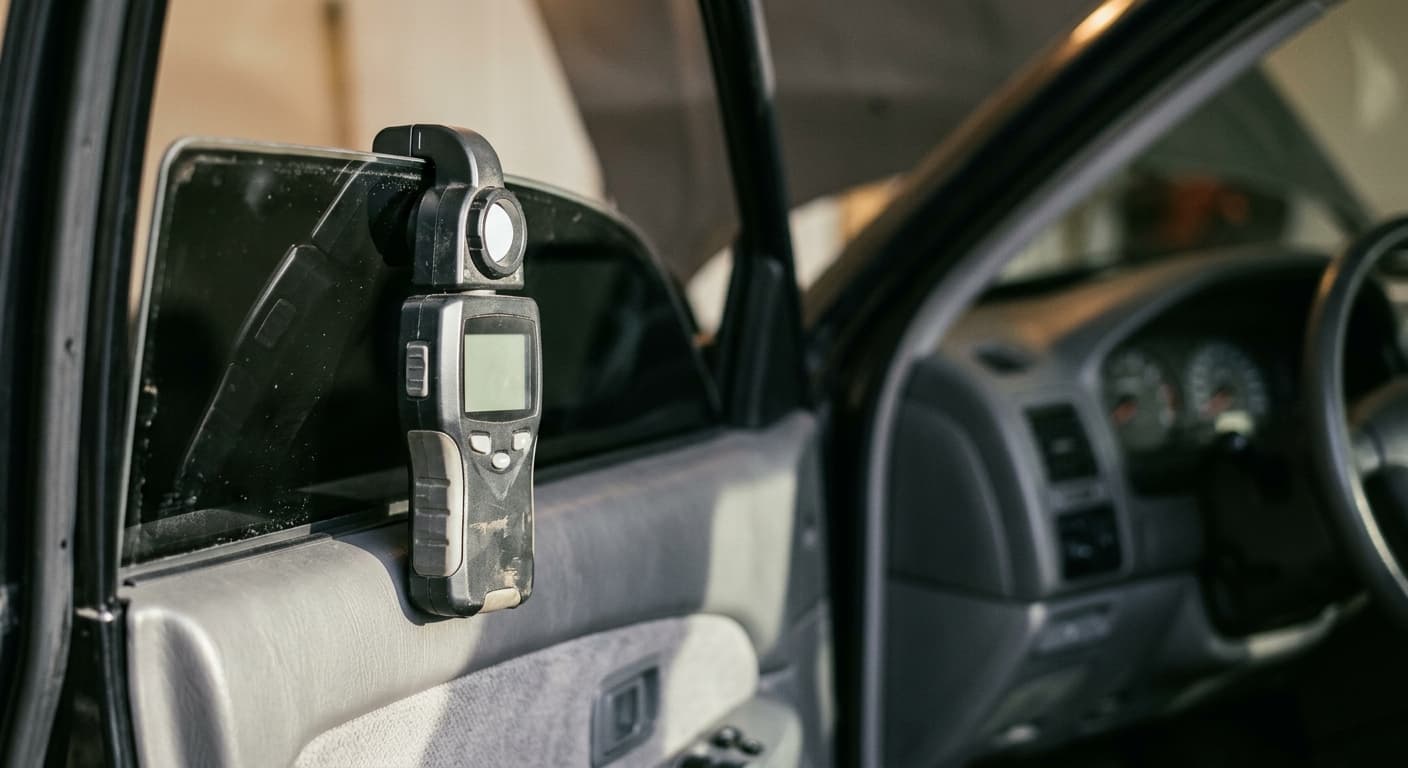
Montana law requires front side windows to allow at least 24% visible light transmission (VLT). Most vehicles must have at least 14% VLT on rear side and rear windows, while multipurpose vehicles, vans, and buses face no restriction on those windows.
What is the legal tint limit in Montana?
Montana allows some of the darkest legal tint in the country. The front side window minimum is 24% VLT, which is among the loosest front-window limits in any state. A higher VLT percentage means lighter tint; a lower VLT percentage means darker tint. At 24%, your front windows can be fairly dark while remaining legal.
The rules differ on the windows behind the driver, but the dividing line is not simply "car versus SUV." MCA 61-9-405(4)(c) sets a 14% VLT floor and a 35% reflectance cap on the rear window and the side windows behind the front seat, then carves out one group: multipurpose vehicles, vans, and buses. Every vehicle outside that carve-out, not just sedans, keeps the 14% and 35% limits.
The carve-out term is defined, and the definition is narrower than most drivers assume. MCA 61-9-405(5)(d) defines a multipurpose vehicle as a motor vehicle designed to carry 10 or fewer passengers that is constructed on a truck chassis or with special features for occasional off-road use. A body-on-frame, truck-based SUV fits. A modern unibody crossover built on a car platform with no off-road features generally does not, so its rear windows remain subject to the 14% VLT and 35% reflectance limits. If you are unsure which category your vehicle falls into, check whether it is built on a truck chassis before assuming the carve-out applies.
| Window Position | Most vehicles | Multipurpose vehicles, vans, buses |
|---|---|---|
| Front side windows | 24% minimum VLT | 24% minimum VLT |
| Back side windows | 14% minimum VLT | No restriction |
| Rear window | 14% minimum VLT | No restriction |
| Windshield (below AS-1) | Clear and transparent only | Clear and transparent only |
Note that the 24% front side limit applies equally to all vehicle types. Montana only creates the multipurpose vehicle distinction for the windows behind the driver.
Windshield tint rules in Montana
Montana requires the windshield below the AS-1 line to remain clear. The AS-1 line is the manufacturer-marked line near the top of the windshield that indicates the upper portion of the safety glass. MCA 61-9-405(4)(a) prohibits sunscreening material below that line that is not clear and transparent, so a clear, transparent film such as a UV-protective layer is permitted there. Any darkening or tinted film below the AS-1 line is not.

Above the AS-1 line, Montana permits a top strip. However, red, yellow, and amber colors are prohibited on that upper strip. A non-reflective, non-colored top strip is acceptable.
Montana also limits reflectivity to 35% luminous reflectance. That cap always applies to front side windows under MCA 61-9-405(4)(b). Behind the front seat it sits in subsection (4)(c), whose exception clause lifts that entire subsection for the rear window and rear side windows of a multipurpose vehicle, van, or bus, so those vehicles have no rear reflectance cap either. Windows that appear highly mirrored or metallic would likely exceed the 35% threshold where it applies. Red, yellow, and amber are the expressly prohibited colors on the windshield strip; no other color restrictions apply to side or rear windows under the main statute.
Medical exemption and certificate of waiver
Montana does provide a medical exemption for window tint, through a mechanism separate from the state's registration grandfather clause. MCA 61-9-428 lets the Montana Highway Patrol or a local law enforcement agency grant a written waiver of the 61-9-405(4) VLT and reflectance standards for safety, security, or medical reasons. A medical waiver requires an affidavit signed by a licensed physician, physician assistant, or advanced practice registered nurse describing the medical reason. The written waiver itself must identify the vehicle (VIN, registration number, or other description), the owner's name, the reason for the waiver, the date issued and effective dates, and the signature of the officer who granted it, and it should be kept in the vehicle for a traffic stop.
This is separate from the certificate of waiver in MCA 61-9-405(7), which is a vehicle-registration grandfather clause: it applies only to a vehicle that was registered in Montana on October 1, 1991, and already had noncompliant sunscreening material on that date, and it has no connection to a medical diagnosis.
The same statute also exempts manufacturer-installed tinted windows on multipurpose vehicles, and vehicles such as hearses, ambulances, and government vehicles, from the standard VLT limits. None of these exemptions is based on the driver's or a passenger's health.
Drivers who need extra sun protection for a medical reason can pursue the MCA 61-9-428 waiver described above through the highway patrol or a local law enforcement agency, supported by a physician, physician assistant, or APRN affidavit. Absent that waiver, drivers must meet Montana's standard VLT limits; options that do not require a waiver include UV-protective clear film, sun visors, and protective clothing.
How tint is measured and certified
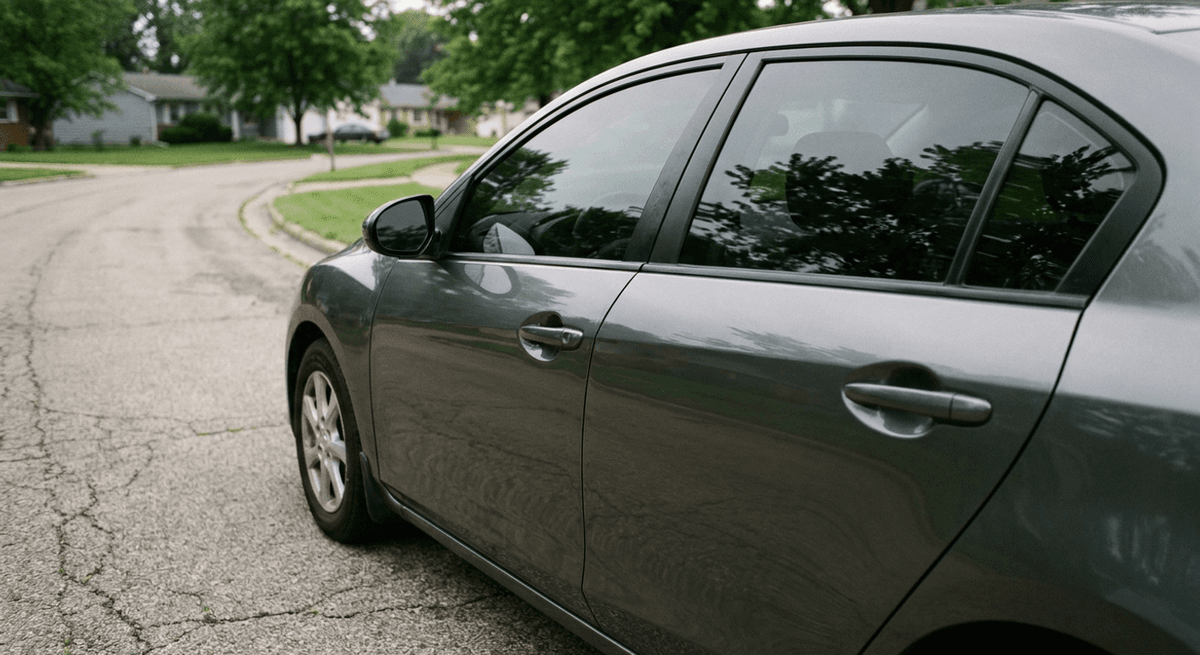
Tint compliance in Montana is measured using a VLT meter that reads how much visible light passes through the window. The officer or inspector places the meter on the glass and takes a reading. Montana statute does not specify a measurement tolerance, so readings are compared directly against the statutory minimums: 24% for front side windows and 14% for sedan rear windows.
Montana does not appear to require a specific compliance sticker or installer label by statute. However, getting documentation from your installer showing the VLT rating of the film is a practical step. Film can degrade over time, and factory VLT specs from the installer give you a record of what was installed. If there is ever a dispute at a stop, a certificate from the installer can clarify the situation.
Ask your installer to provide a receipt or certificate listing the film brand, VLT percentage, and which windows were treated. Keep that in the glove box with your registration and insurance card.
Penalties for illegal tint in Montana
Driving with non-compliant window tint in Montana is a misdemeanor under MCA 61-9-429. As a misdemeanor, it carries the potential for fines and, in theory, more serious consequences, though tint violations in practice are typically resolved through fines and correction rather than jail time.
Installing non-compliant tint can also expose the installer. MCA 61-9-429(2) reaches a person who applies sunscreening or glass-plastic glazing material in a manner that results in a window violating 61-9-405(4). The offense is the application, not the sale, so selling film is not itself an offense under that section. The practical outcome for most drivers is a citation, a fine, and an instruction to remove or replace the offending tint. Correcting the violation promptly is the most straightforward resolution.
If you receive a citation, removal and replacement of the non-compliant film before your court date typically results in a more favorable outcome. Check with local courts about whether Montana allows a fix-it ticket resolution in practice.
If you want to tint your windows in Montana
Montana is one of the more permissive states for window tint, especially for multipurpose vehicles. Here is how to stay legal:

For front side windows on any vehicle, choose a film rated at 24% VLT or lighter. Given that Montana does not specify a measurement tolerance, selecting a film at exactly 24% is the legal minimum. Many drivers choose 20% film on front windows in states with tolerances, but in Montana it is safer to stay at or above 24% to leave no room for dispute.
For back side and rear windows, the minimum is 14% VLT on any vehicle that is not a multipurpose vehicle, van, or bus. That is quite dark and allows meaningful privacy. Vans, buses, and vehicles meeting the MCA 61-9-405(5)(d) multipurpose definition (10 or fewer passengers, built on a truck chassis or with special features for occasional off-road use) have no VLT or reflectance limit on those rear windows, so limo tint at 5% VLT is legally available there. Do not assume your SUV qualifies on badge alone: a car-based crossover that is neither truck-chassis nor off-road-featured is held to the 14% floor like any sedan, and going darker is a misdemeanor under MCA 61-9-429.
Avoid red, yellow, and amber tints anywhere on the windshield strip. Those colors are expressly prohibited. Confirm your film does not produce a highly metallic or mirrored appearance that could push reflectivity above the 35% cap, which applies to front side windows on every vehicle and to rear windows on everything outside the multipurpose vehicle, van, and bus carve-out.
Ask your installer for a certificate listing the VLT and reflectance values. If you have a documented medical need for darker tint, ask the Montana Highway Patrol or your local law enforcement agency about a waiver under MCA 61-9-428, which requires an affidavit from a licensed physician, physician assistant, or APRN. That is separate from the certificate of waiver in MCA 61-9-405(7), which is limited to vehicles registered in Montana on October 1, 1991 that already had noncompliant tint at that time.
For related rules on what you can mount or hang near the windshield in Montana, see Montana Windshield Mounting Restrictions.
This article is general legal information, not legal advice. Window tint limits vary by state and change, and enforcement depends on local practice and your specific vehicle. For a definitive answer, check your state DMV or consult a local attorney.
More Montana Laws
Frequently Asked Questions
What is the legal tint in Montana?
Montana requires at least 24% VLT on front side windows. Most vehicles must have at least 14% VLT on back side and rear windows. Only multipurpose vehicles, vans, and buses escape that limit on windows behind the driver, and MCA 61-9-405(5)(d) defines a multipurpose vehicle narrowly as one carrying 10 or fewer passengers that is built on a truck chassis or has special features for occasional off-road use.
How dark can my front windows be in Montana?
The darkest legal front side window tint in Montana is 24% VLT. Any film that allows less than 24% of visible light through the front side windows is non-compliant under MCA 61-9-405.
Is 20% tint legal in Montana?
A 20% tint is too dark for front side windows in Montana, which require at least 24% VLT. It is legal on back side and rear windows, where the floor is 14% VLT, and there is no limit at all on the rear windows of a van, bus, or vehicle meeting Montana's narrow multipurpose vehicle definition.
Can I get a medical exemption for window tint in Montana?
Yes. MCA 61-9-428 lets the Montana Highway Patrol or a local law enforcement agency grant a written waiver of the VLT and reflectance standards for medical reasons, based on an affidavit signed by a licensed physician, physician assistant, or advanced practice registered nurse. That is different from the certificate of waiver in MCA 61-9-405(7), which is a registration grandfather clause for vehicles registered in Montana on October 1, 1991 that already had noncompliant tint on that date, not a medical accommodation.
What is the penalty for illegal tint in Montana?
Non-compliant window tint in Montana is a misdemeanor under MCA 61-9-429. In practice, penalties typically involve fines and a requirement to correct the violation.
Is windshield tint legal in Montana?
Below the AS-1 line, MCA 61-9-405(4)(a) allows only material that is clear and transparent, so a clear UV film is permitted but tinted film is not. A top strip above the AS-1 line is allowed, but red, yellow, and amber colors are prohibited on it.
Do SUVs have different tint rules in Montana?
Only some do. Montana's exemption for the windows behind the front seat covers vans, buses, and multipurpose vehicles, and MCA 61-9-405(5)(d) defines a multipurpose vehicle as one designed to carry 10 or fewer passengers that is constructed on a truck chassis or with special features for occasional off-road use. A truck-based SUV generally qualifies and has no VLT or reflectance limit on those rear windows. A car-based unibody crossover generally does not, so it keeps the 14% VLT and 35% reflectance limits. Front side window rules are the same for all vehicle types at 24% minimum VLT.
Updates
Corrected Montana's multipurpose vehicle rules: added the statutory definition (10 or fewer passengers, truck chassis or off-road features), clarified that the rear-window exemption also lifts the 35% reflectance cap, limited installer liability to applying rather than selling film, and corrected the windshield rule to permit clear transparent film below the AS-1 line.
Corrected a wrong denial that Montana has a medical exemption for window tint: MCA 61-9-428 lets the highway patrol or local law enforcement grant a written waiver of the VLT/reflectance standards for medical reasons on a licensed physician, physician assistant, or APRN affidavit, separate from the pre-1991 vehicle-registration grandfather waiver the page had described as the only waiver type.
Independently fact-checked against the cited primary sources; governing law re-checked for recent changes
Removed a fabricated medical tint exemption: Montana's certificate of waiver under MCA 61-9-405(7) is a pre-1991 vehicle-registration grandfather clause with no medical basis, and the state's tint statute does not offer a medical exemption.
Governing law re-checked for recent changes
Reviewed and approved by an editor
The Law Behind This Article
This article rests on the statutory provisions below, held in our own legal record and retrieved from the official source. Tap a section to read the operative text.
Montana Code Annotated, Title 61
§ 61-9-405Windshields Required, Exception -- Unobstructed And Equipped With Wipers -- Window Tinting And Sunscreening -- Restrictions -- Exemptions -- DefinitionsIn forcecited in 3 of our articles
61-9-405. Windshields required, exception -- unobstructed and equipped with wipers -- window tinting and sunscreening -- restrictions -- exemptions -- definitions. (1) A motor vehicle, except a motorcycle, quadricycle, motor-driven cycle, or farm tractor, must be equipped with a front windshield meeting the requirements of 61-9-408, unless the driver wears safety glasses, goggles, or face shields at all times during the operation of the motor vehicle. (2) A person may not drive a motor vehicle with: (a) a sign, poster, substance, or other nontransparent material upon the front windshield, side wings, or side or rear windows of the vehicle that materially obstructs, obscures, or impairs the driver's clear view of the highway or an intersecting highway; or (b) a windshield that is shattered or in such a defective condition that it materially impairs or obstructs the driver's clear view. (3) The windshield on a motor vehicle must be equipped with a device for clearing rain, snow, or other moisture from the windshield. The device must be maintained in good working order.
Official text (excerpt) · last checked 2026-09-08 · Read the full text in our law library · Verify at mca.legmt.gov
Also relied on in: Montana Windshield Mounting Laws (2026 Guide), Montana Dashcam Laws: Recording Rules, Audio Consent, and Windshield Mounting (2026)
§ 61-9-428Window Tinting And Sunscreening -- Waiver -- ConditionsIn forcecited in 2 of our articles
61-9-428. Window tinting and sunscreening -- waiver -- conditions. The highway patrol or a local law enforcement agency may grant a waiver of the standards of 61-9-405(4) for reasons of safety or security or for medical reasons based on an affidavit signed by a licensed physician, licensed physician assistant, or advanced practice registered nurse, as defined in 37-8-102. The waiver must be in writing and must include the vehicle identification number, registration number, or other description to clearly identify the motor vehicle to which the waiver applies and the date issued, the name of the owner of the vehicle, the reason for granting the waiver, the dates the waiver is effective, and the signature of the law enforcement officer granting the waiver. The highway patrol or the local law enforcement agency shall keep a copy of the waiver until the waiver expires.
Official text (excerpt) · last checked 2026-07-29 · Read the full text in our law library · Verify at mca.legmt.gov
§ 61-9-429Window Tinting And Sunscreening -- PenaltyIn forcecited in 2 of our articles
61-9-429. Window tinting and sunscreening -- penalty. (1) A person who owns or operates a motor vehicle in violation of 61-9-405(4) is guilty of a misdemeanor and is punishable as provided in 46-18-212. (2) A person who applies a sunscreening material or a glass-plastic glazing material in a manner that results in a motor vehicle having a window that violates the requirements of 61-9-405(4) is guilty of a misdemeanor and is punishable as provided in 46-18-212.
Official text (excerpt) · last checked 2026-07-29 · Read the full text in our law library · Verify at mca.legmt.gov
Search our full record of US law — 2.1 million sections, every state + federal →
Sources and References
- Montana Code Annotated, MCA 61-9-405 - Window tinting(mca.legmt.gov).gov
- MCA 61-9-428 - Certificate of waiver for safety, security, or medical reasons(mca.legmt.gov).gov
- MCA 61-9-429 - Window tinting and sunscreening material - penalty(mca.legmt.gov)